Rotting Limbs and Frozen Hearts — Discussing Stupid Never Dies With GPTRACK50
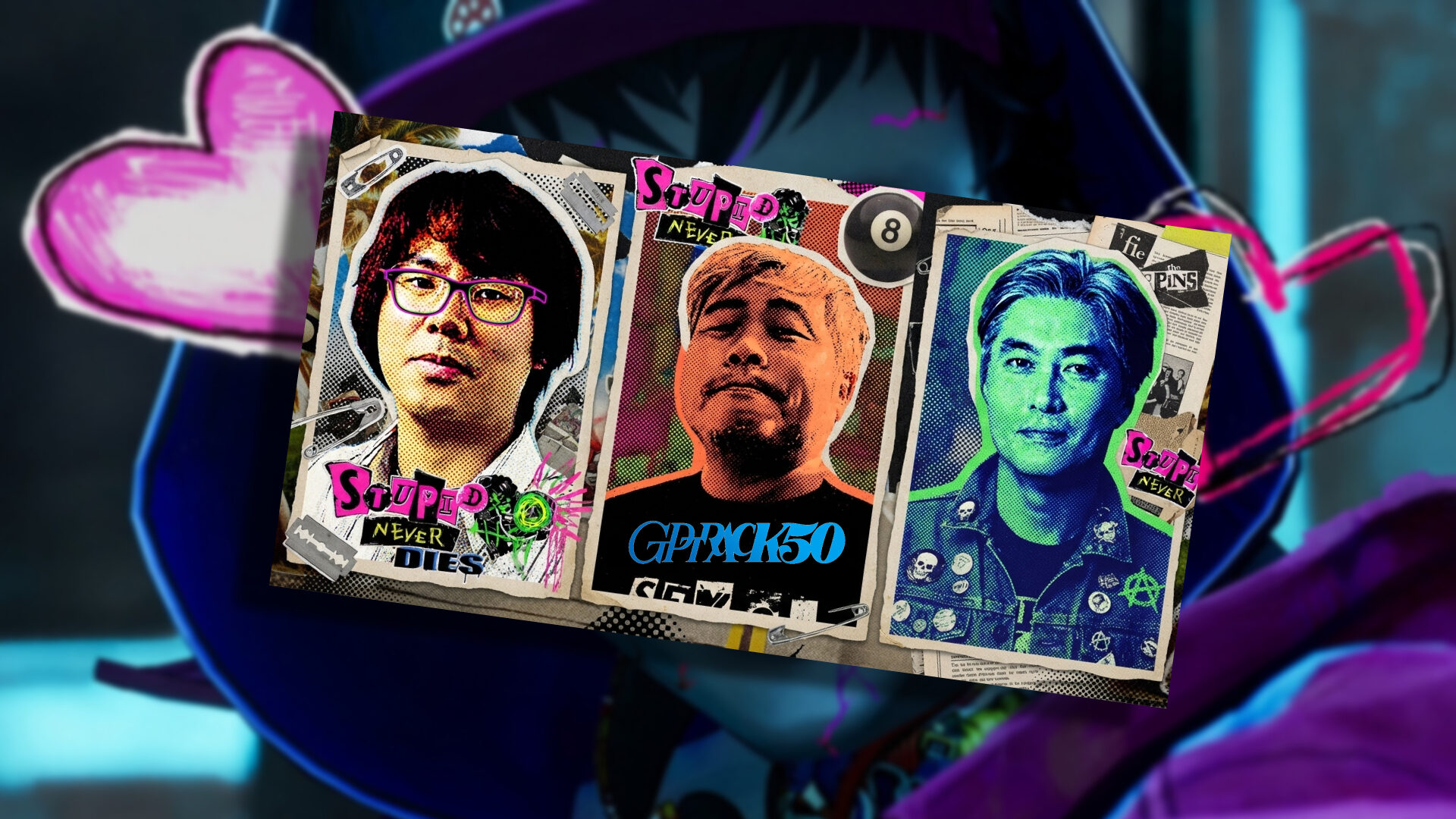
CGMagazine had the opportunity to sit down with a legendary trio of gaming veterans, which included Genseki Tanaka, who has previously worked on properties such as Far Cry and Assassin’s Creed; Hiroyuki Kobayashi, known for his time working on survival horror icons such as Resident Evil and Dino Crisis, and action games such as Devil May Cry; and Eiichiro Sasaki, who directed several Resident Evil titles, including some hidden gems on the Wii, such as 2007’s Zack & Wiki: Quest for Barbaros’ Treasure.
This iconic trio have come together to form GPTRACK50 and sat down with us to discuss their debut title, Stupid Never Dies. The recently released title promises to deliver a unique action RPG experience from ex-Capcom powerhouses in an over-the-top punk-rock-inspired love story of the ages.
Stupid Never Dies follows the exploits of Davey, a lowly Zombie who falls rotting head over heels with a college girl named Julia, whom he finds frozen inside a derelict shopping center. The title evokes classic adventure game beats in its narrative, but puts a fresh or rather, undead twist on the “Save the Princess” trope.
Instead of relying on a linear story, Stupid Never Dies uses roguelike elements to give players the opportunity to take concise bites out of the experience that promises to distill down satisfying moment-to-moment gameplay mechanics within a 30-minute or less play session. With the release being their debut title, we took the time to ask the team what prospective players can look forward to when they jump in.
Stupid Never Dies features a robust demo. In it, players get to experience the opening hours of the game and get a sense of its core gameplay loop, which features a lot of roguelite elements. How early in development was it decided that Stupid Never Dies would incorporate roguelite gameplay mechanics?
Eiichiro Sasaki: It was something we considered in the very beginning of the project, but more than that, we wanted to condense the experience of a 20- to 30-hour game into a more condensed 30 minutes; that was the starting point, and in order to realize that, we implemented the roguelike elements in the game.
Stupid Never Dies features a strict time mechanic on top of encouraging players to consume as many power-ups and monsters as possible — it almost feels reminiscent of a buffet. Was that concept something that inspired the game when it was being developed?
Eiichiro Sasaki: [laughs] It is purely a coincidence; however, during development, someone on the staff did mention, “Hey, this feels like a buffet”. From there, we realized it and actually put that line into one of the cutscenes of the game as a joke!
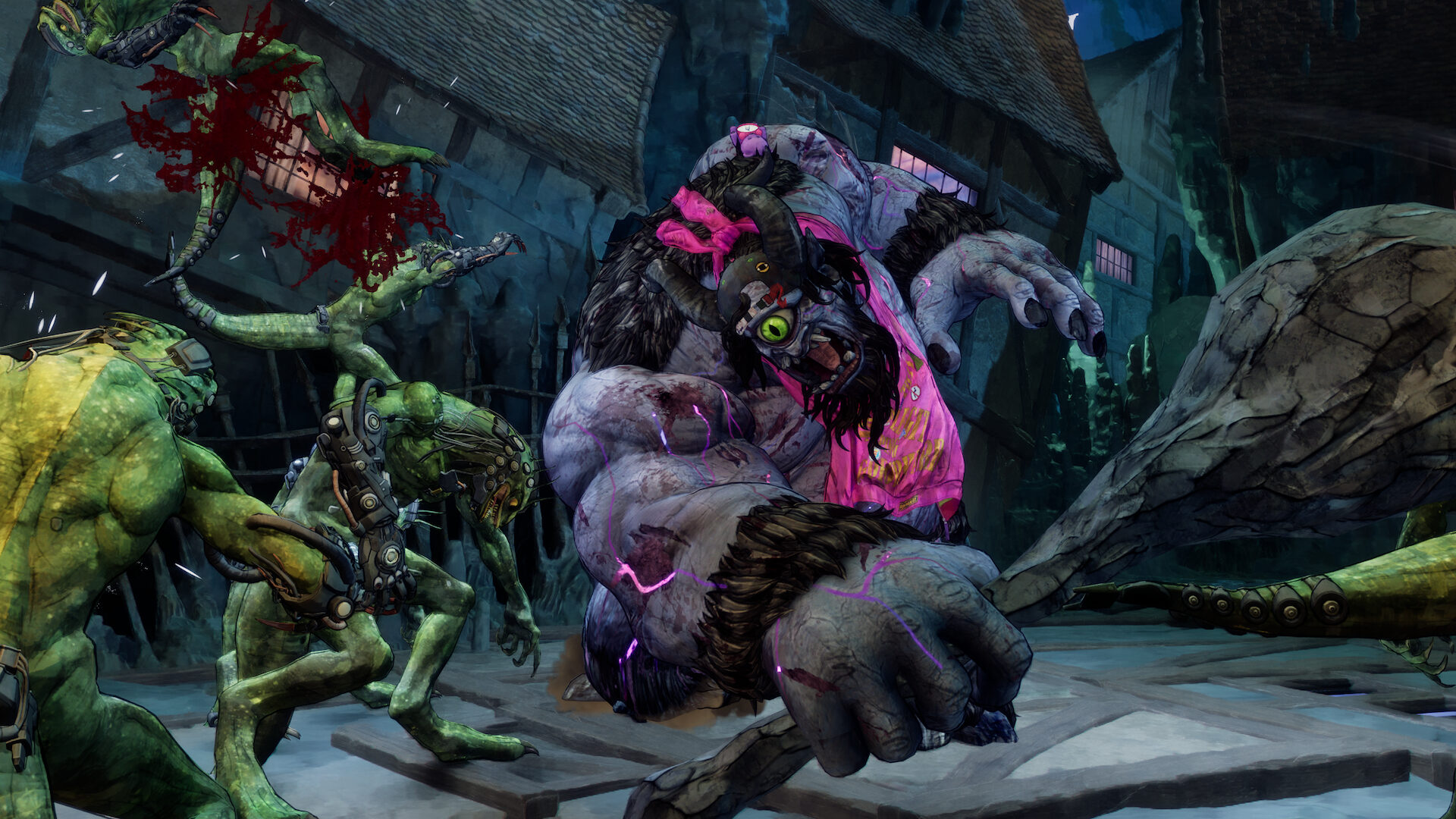
During my time with the demo and now the full game, I noticed Stupid Never Dies forgoes any traditional blocking options, instead relying on parrying and a more aggressive approach to combat encounters. What was the process in finding the balance?
Eiichiro Sasaki: So in this game, attacking takes priority over defence, even more than dodging; attacking and parrying above all else. But on the other hand, it doesn’t mean you can just keep attacking without any strategy or without any tactics.
Hiroyuki Kobayashi: The biggest challenge during the development of Stupid Never Dies was finding the balance between keeping the pressure on the player from attacking. When we balanced Davey against his enemies, we based it on the assumption of not one-versus-one, but one versus multiple. Distance, enemy attack priority, and ordering were all heavily considered.
Also, the strengths and weaknesses of Davey’s different power-ups and abilities are defined very clearly, highlighting to the player what works and what doesn’t against different enemy encounters. Taking into consideration what to attack first will become important as players delve deeper into the game.
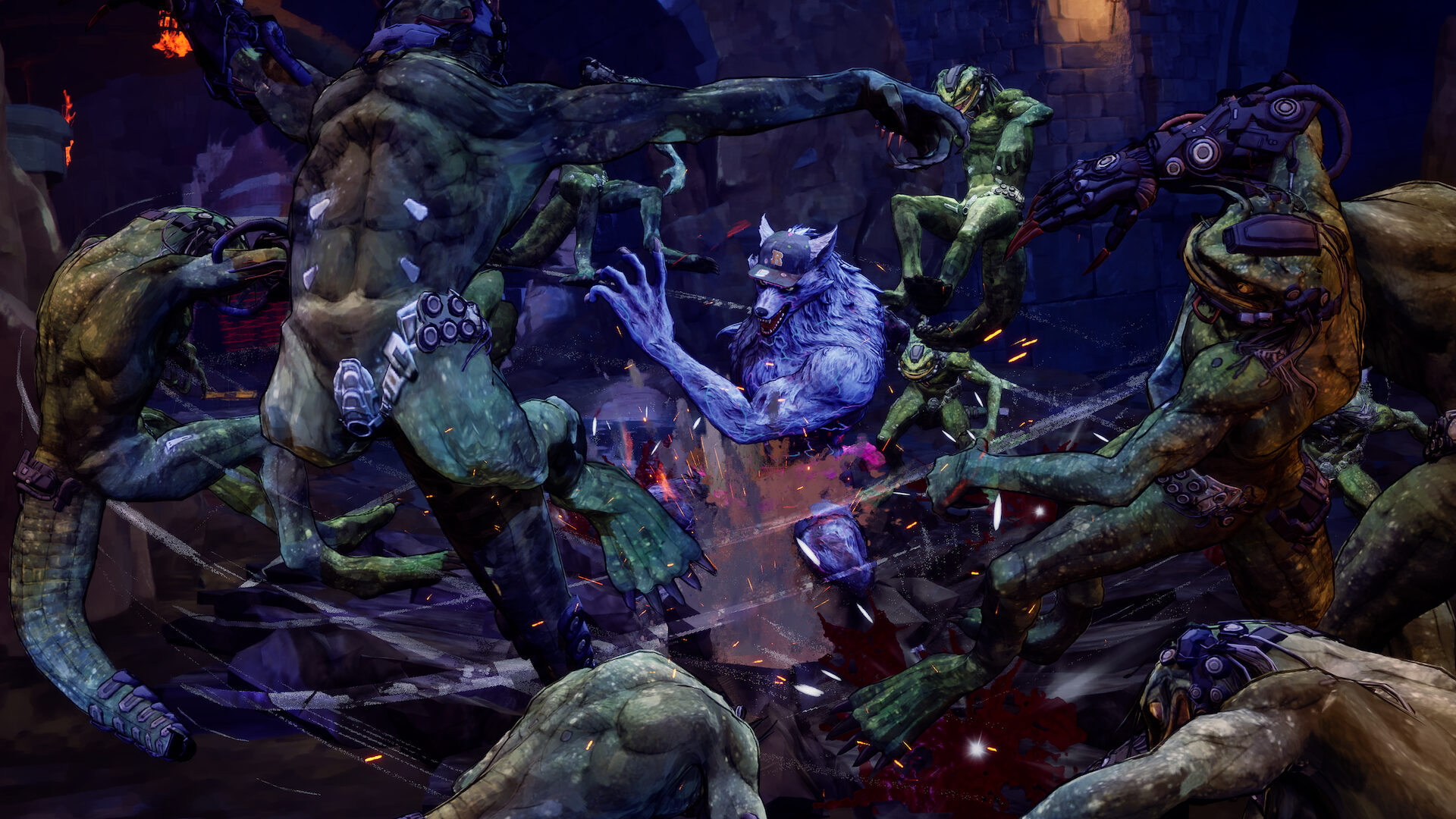
Davey has what felt like, to me, an Altered Beast-inspired transformation system. Were there any permutations, combos, or synergies that surprised the team?
Hiroyuki Kobayashi: There is one that comes to mind: the Lich transformation, which is a little bit manaic (over the top). Lich has a skill to summon skeletons, and those skeletons will support the player. We found that during gameplay, the skeletons will draw aggro away from Davey in all directions. So we found that the Lich can fit any playstyle, allowing the player to switch to other transformations while the skeletons have the attention of the MOBs.
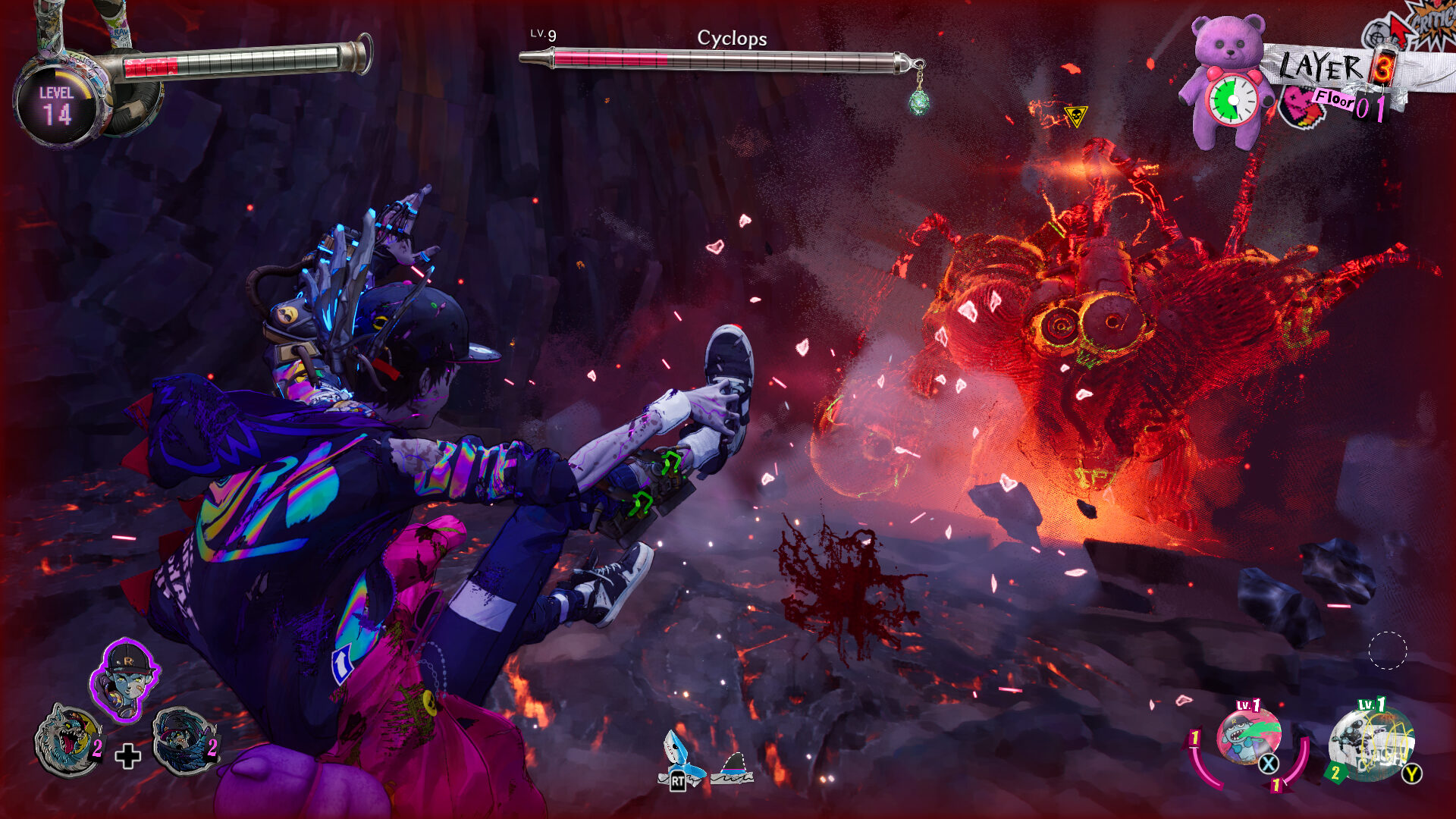
Stupid Never Dies features the ever-present time mechanic, something that adds to the tension during harder encounters. What was the reasoning for this mechanic, and how did you approach balancing it to avoid the player from either becoming overpowered or not strong enough to beat the dungeon boss?
Hiroyuki Kobayashi: Very good question. Actually, balancing this was the most difficult part during the development of the game. To be honest, it took until, like, the last two or three weeks of development to balance this out. And as you now know, the root of this game’s development is to experience the feeling of a 20- to 30-hour game within the 30-minute session per dive.
Each dive cannot surpass the 60-minute mark, which is one hour. So we tried to concentrate this down to 30-minute sessions. With that basic assumption, we calculated that each battle might be one minute, which was also something we took into consideration during the design phase. Combining all these elements and putting it into a formula, we were able to accomplish the balance in the end thanks to a mathematical genius on the development team; after he made a formula, we were finally able to strike the perfect balance!
Prior to the formation of GPTRACK50, the developer pedigree is heavily related to the realm of survival horror, specifically the gritty and dark atmospheric world of Resident Evil. What inspired the pivot to a vibrant, punk-rock, hyper-stylized aesthetic for GPTRACK50’s debut title?
Eiichiro Sasaki: Basically, when we started development, the theme of zombies was already established. We thought, “Hey, we should just challenge a new aspect of the zombie theme,” and that was a starting point. I also believed there are more and more angles related to the theme of zombies as entertainment content, so I wanted to try something new. The tone of the game, the punk rock style, is because I personally like punk rock.
Hiroyuki Kobayashi: I wanted to move away from Japanese battle established from my work on the Sengoku Basara series, so it was not in the scope from the beginning, and Tanaka-san also had experience in the photorealism. So he wanted to do something new as an Art Director from a new perspective.
With the game’s launch being the debut title for GPTRACK50, what are your hopes for the future, and what is the number one thing fans should take away from their time with Stupid Never Dies?
Genseki Tanaka: We were very passionate and serious about this game’s development, as it is our debut title. Still, it is a very stupid game, so basically we made this very stupid game in a very serious manner. So please enjoy it, have fun, and try to feel refreshed when you play it!
Eiichiro Sasaki: There are a lot of unique aspects to Stupid Never Dies, but if I had to choose one for players to look forward to, it would be the Blazing Fast Growth mechanic, which is the idea of condensing a 20- to 30-hour experience into a 30-minute run.
Hiroyuki Kobayashi: This game is created for the action gamer who loves action games, so please enjoy it. New IPs are hard to create, so I sincerely hope you enjoy it. GPTRACK50 promises to deliver more action titles in the future!
Stupid Never Dies was released on October 21, 2026, on PlayStation 5 and Steam.