
When I saw the trailer for Metroid Prime 4: Beyond during Nintendo’s Sep 2025 Direct, I was hit with a wave of emotions. At first, I was elated that Retro was making one of the most badass female protagonists in video games even cooler by giving her a motorcycle. But then I became genuinely worried at what looked like an “open-world” in Metroid Prime 4: Beyond…
Nintendo’s recent attempts at adopting the open-world format have been something of a mixed bag—always containing the spark of something truly innovative, but coming with the caveat of design decisions that are more restrictive than liberating. It got me thinking, should Nintendo stop attempting to make open-world games?
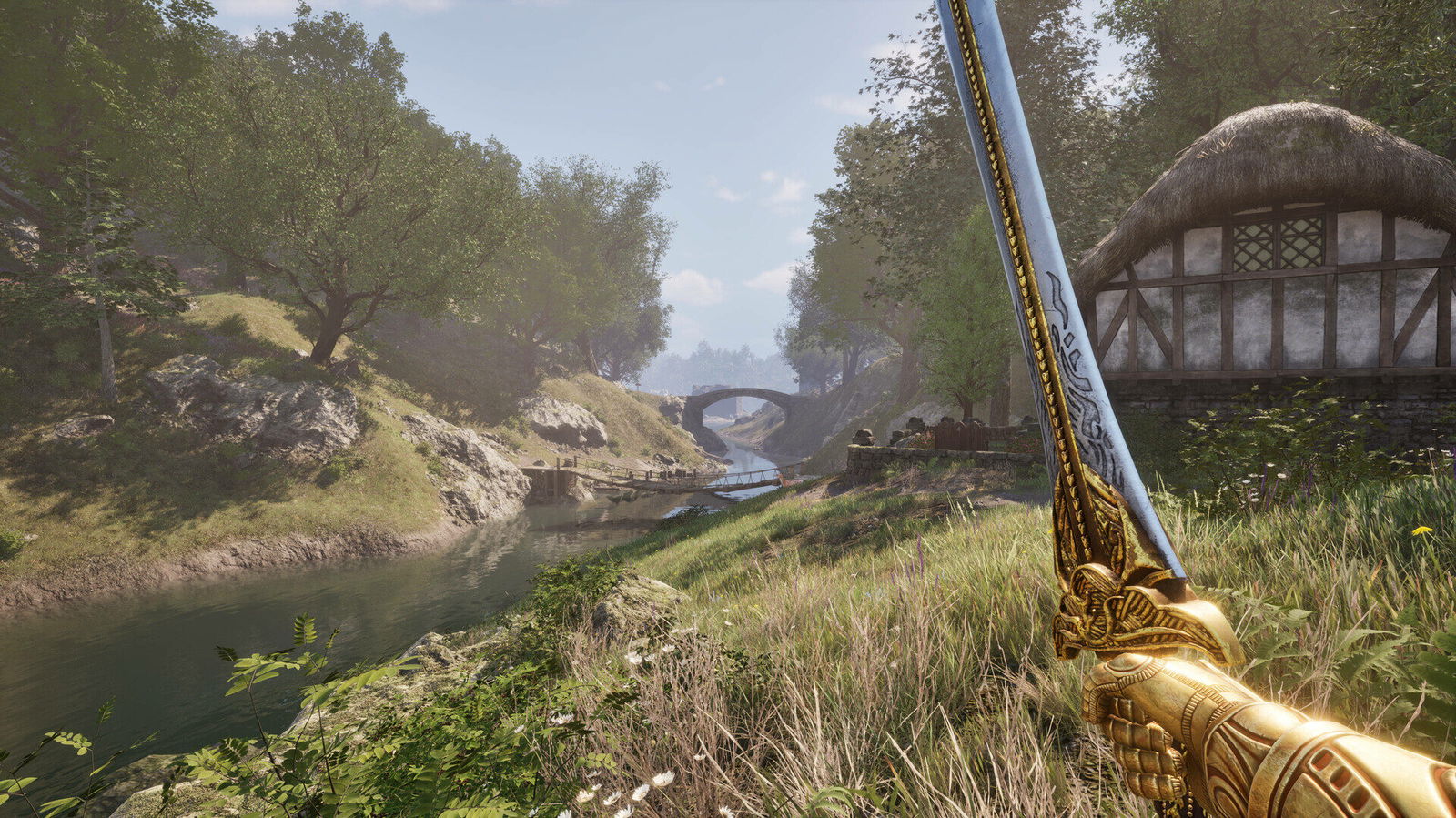
See, it may be weird to think now, but back in the early 2000s, an “open world” game was MINDBLOWING. Games like Grand Theft Auto III, The Elder Scrolls III: Morrowind, and Far Cry 2 had set new standards in what games were capable of, and it seemed like everyone was trying to get a piece of that pie. If you were growing up in the seventh console generation, having a game with a massive world to explore, with tons of content to discover, could keep you busy for MONTHS.
But in more recent years, the concept of an open world has felt much more like a crutch than a groundbreaking design decision. Games like Assassin’s Creed, Dynasty Warriors 9, Sonic Frontiers and a no shortage of open-world-survival-crafting slop on Steam have made it easy to generate a big map, fill it with tedious busywork, and call it a day. Nowadays, open-world games like Elden Ring have become the exception rather than the rule.
How this concerns Nintendo—and what brought me to this train of thought—was when I finally decided to try the online multiplayer in Mario Kart World after a good month or so of owning the game. I was initially more concerned with exploring in Free Roam, learning shortcuts and perfecting the parkour. I played both the standard Versus and the Knockout Tour, and after about an hour of feeling like nothing I did mattered, a wave of melancholy washed over me, followed by a depressing realization.
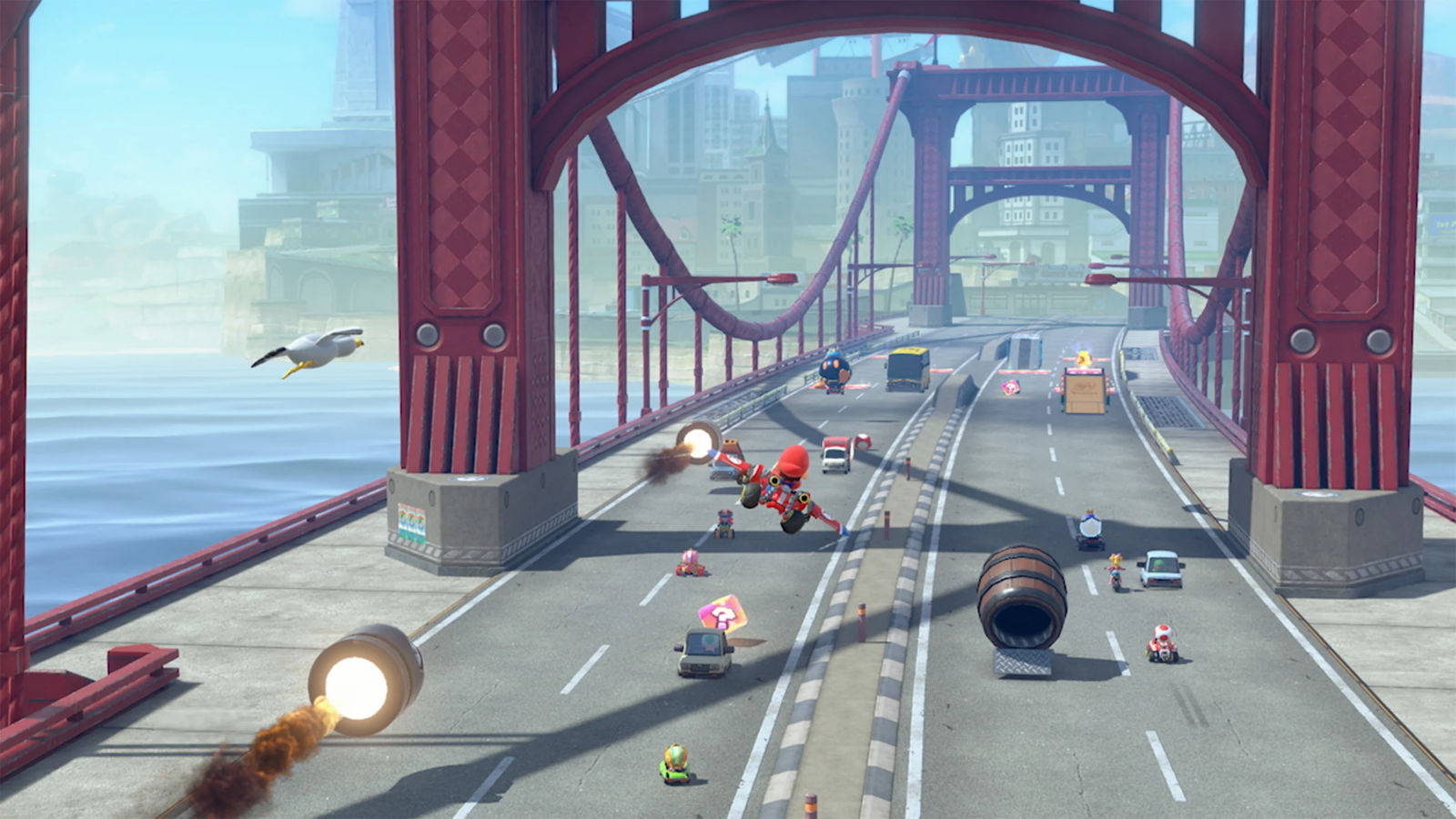
Now, this isn’t going to be about Mario Kart World’s bizarre restrictions when it comes to online multiplayer (though that is a problem), but something I noticed in tandem with those restraints. See, if you played Mario Kart World’s Free Roam mode before anything else, you might mislead yourself into thinking the game wants you to explore the world in order to learn shortcuts and develop an edge in all the other modes.
However, once you play the more “standard” modes, you learn this is a complete falsehood. Grand Prix and Versus (online versus anyway) make practically every race a “drive to.” And while Knockout Tour is much more linear in terms of overall design, eschewing even one lap in any track, it forces players along a rigid path with little room for off-roading or shortcut creation. It tries to utilize the length of an open world, but doesn’t actually utilize the depth.
“To quote Stephanie Sterling, ‘an open world is a world, not a genre.'”
And this was what really didn’t sit right with me. As far as I can tell, Nintendo felt that Mario Kart World should cost $79.99 ($109.99 CAD) for the simple fact that it has an “open world,” and it does absolutely nothing with it. If anything, the game actually sacrifices the amount of creativity it could have for the sake of the “open world.”
Mario Kart World feels, from a design perspective, to me at least, like tracks aren’t as big or creative as they have been in previous Mario Kart games because they’re, theoretically, designed to only be played through in one lap—the idea being the straight roads to the map are the real race.
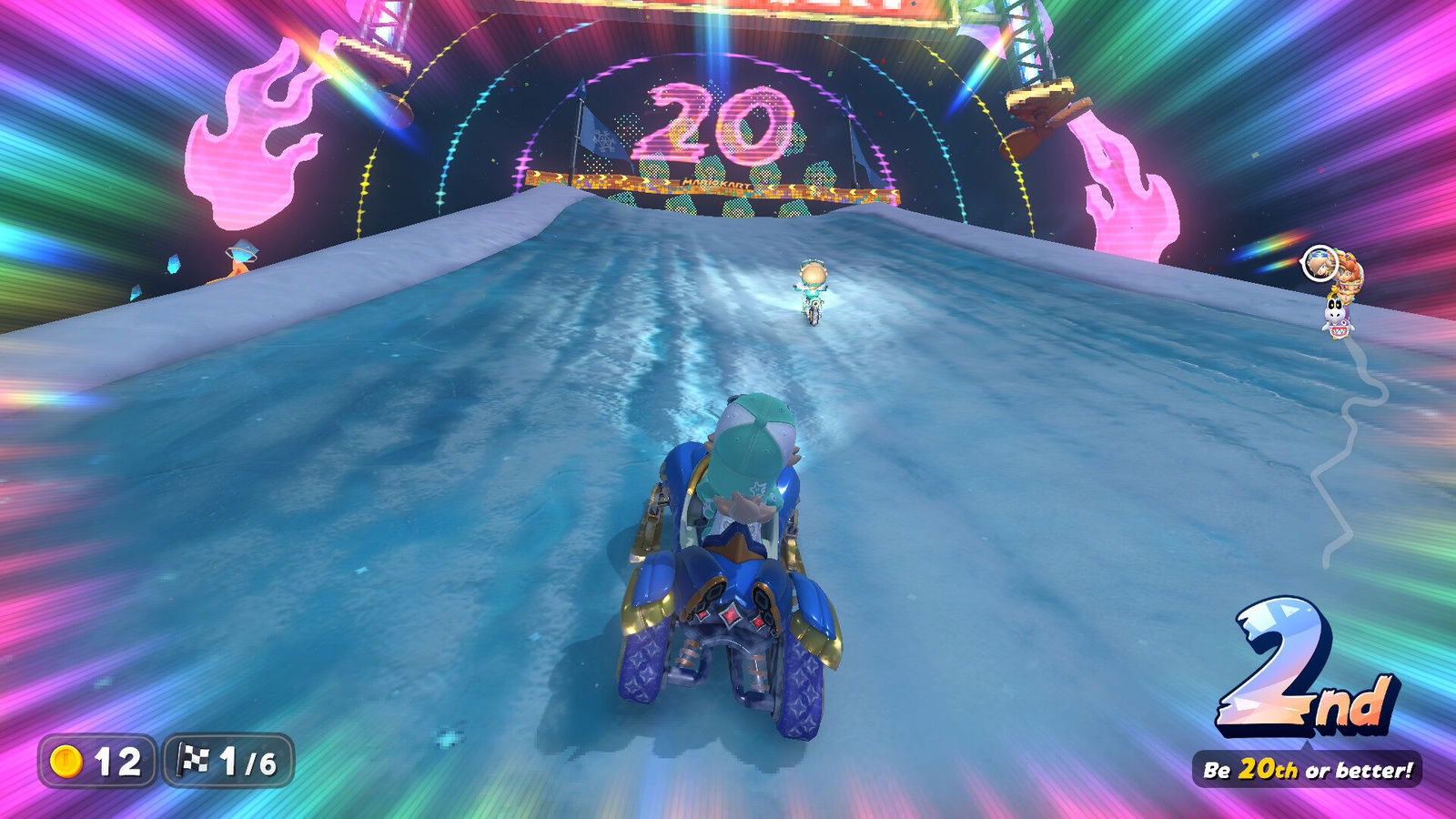
Knockout Tour—which seemed to me like the true selling feature of the game—actually could have utilized the open world, since the concept of a placement cut-off would incentivize players to develop unique routes to the next checkpoint. But instead they’re funnelled along a linear path, and there’s no room for creativity or experimentation—just the hope you can get a Gold Mushroom from 15th place and maybe get into the higher placements before a barrage of Red Shells.
But it’s not just Mario Kart World that suffers from this problem. I’ve mentioned in the past that the first game I noticed this open-world issue with was The Legend of Zelda: Breath of the Wild. Now, I genuinely love Breath of the Wild; it’s easily my number 5 of the top five Zelda Games. However, the way the game benefited from an open world was also to its detriment.
The Legend of Zelda was, at its core, a game about exploration. About going on an adventure, travelling across a strange land, and discovering new and exciting things. And to this, Breath of the Wild NAILED IT. However, it was also a series that was defined by excellent storytelling, and because of the open-world nature of the game, Breath of the Wild couldn’t tell a story that was too specific, lest any players experience something out of order.

As such, no matter where you went or when, every new encounter—be it Zora, Goron, Ruto or Gerudo—had to play out exactly the same. You meet the new Champion, do a thing together, fight the Guardian; wash, rinse, repeat. At the very least, Link’s memories could be experienced out of order because they were memories and not really tied to a linear story (even though they had a linear sequence).
Tears of the Kingdom suffered even worse from this since the linear story of Zelda in the past needed to be found in the world, and could be found out of order, which made no sense—just program it so every new tear opened the next part of the story: [if get: Tear(#), play: cutscene(#)]. They didn’t need to be tied to specific Tears…but I digress…
“Nintendo has demonstrated little to no understanding of what needs to go into crafting an open world, even less so than the rest of the ‘AAA’ industry.”
And while it’s easy to dunk on Pokémon Scarlet and Violet for the absolute truckload of technical troubles that game had, due in large part to its open-world structure, my issues with it were far more fundamental. Pokémon, as a series, has always been “open-world,” but because it was an RPG, the way you explored it was in a far more linear sequence. As such, it was able to have locations that were memorable, visually distinctive, and complemented by both narrative and gameplay that were well-paced and balanced appropriately.

Pokémon Scarlet and Violet, on the other hand, tried to adopt Breath of the Wild’s “go anywhere, whenever you want” structure and had to sacrifice its sense of balance, create a world that lacks any distinct areas, and hang it all on a “story” that feels more like its happening to the player, rather than actually involving them because nothing can be allowed to happen in too specific an order.
Which is why I always find it weird when I see people online saying that Super Mario Odyssey 2 should absolutely be a big open world like Breath of the Wild, because it would fundamentally have to sacrifice what made Odyssey’s sandbox levels so great. If you compare it to Bowser’s Fury add-on for Super Mario 3D World, the addition of an “open-world” added next to nothing, taking a small collection of jungle-gyms and dotting them around an empty ocean. Had it maintained the main game’s linear level structure, rather than trying to make it feel big in an empty open world, it would’ve actually been a much better experience.
Now I want to specify that this next part was written before I reviewed Metroid Prime 4: Beyond, but I wanted to include it, because it highlights where my thinking was at before going into the game:
Which brings us back to Metroid Prime 4: Beyond. While I have no doubt Retro is capable of delivering a solid experience, under Nintendo’s watch, so many of their flagship franchises have suffered from this “open-world” design problem. Video games in general have little or nothing to offer when making the shift nowadays, so why take a series that is defined by tight level design and claustrophobic atmosphere, and blow it up into a massive open world?
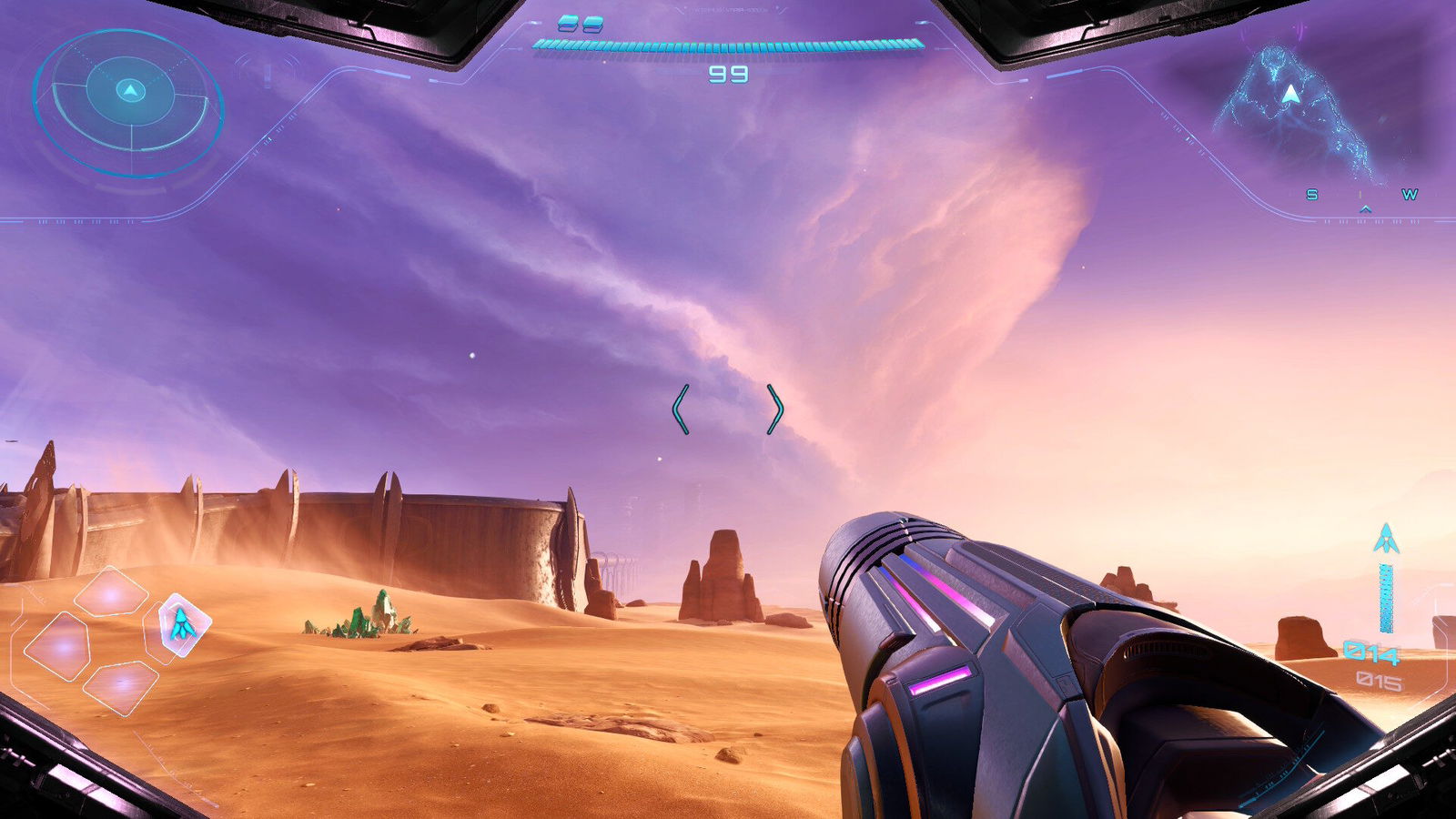
Is there an argument to be made that a vast, empty world would suit Metroid’s iconic isolating atmosphere? Maybe. But I can’t help but feel like it will come at the sacrifice of something else. See, this is exactly the core of the issue I have with so many open-world games—Nintendo’s “open-world” games specifically. Much like with linear games, open-world games need to have deliberate design, and Metroid’s design, in particular, was VERY deliberate.
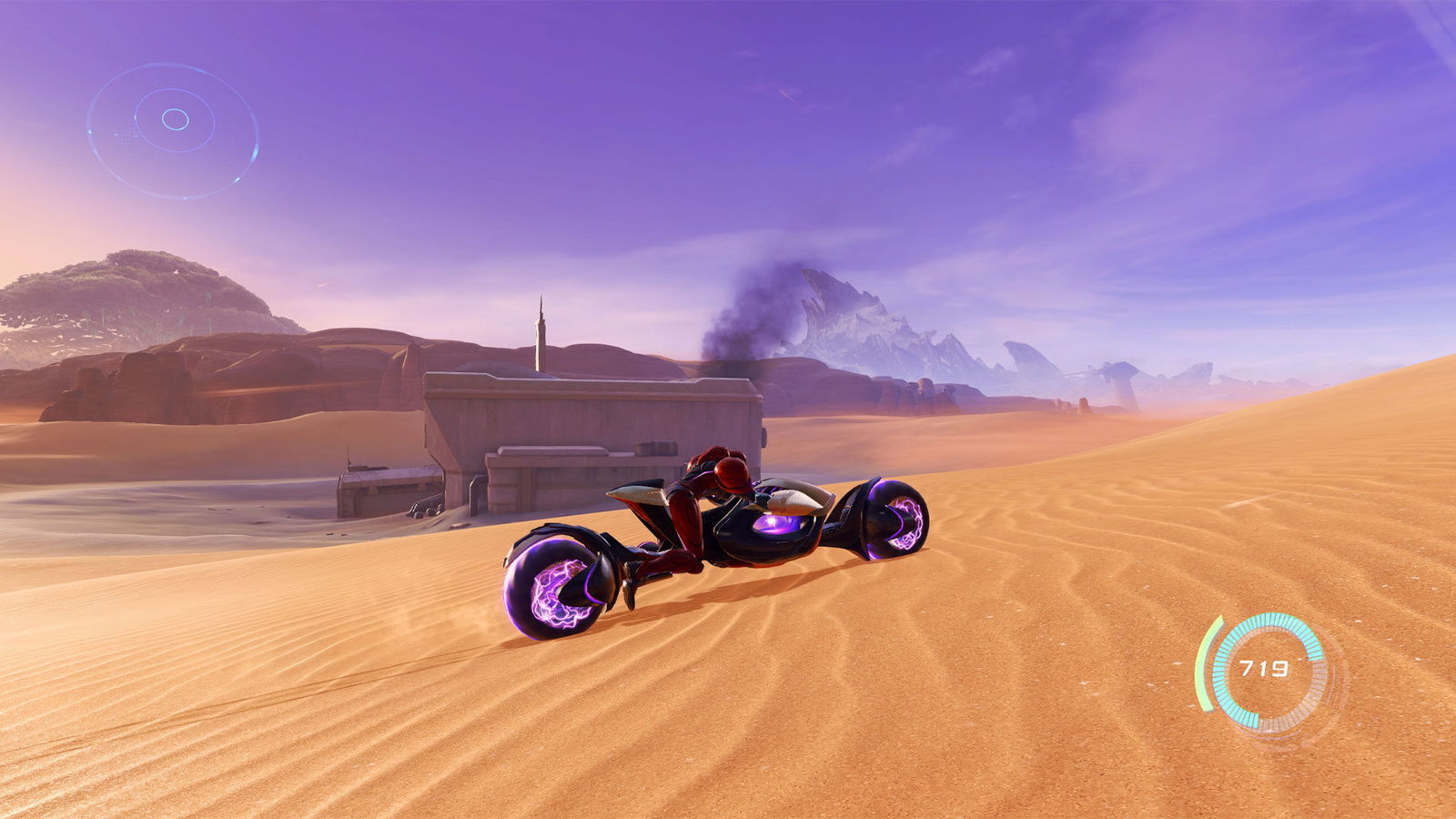
Its worlds are constructed like mazes; you’re meant to hit a brick wall, backtrack, find a small corner you missed initially, which leads you to a whole new area where you find an item that allows you to tear down that previous brick wall. Can you truly have that kind of game design when you’re blasting around a barren desert at 700mph?
The answer, as it turns out, was…not really.
After playing Metroid Prime 4: Beyond, the best they could come up with for the open-area Sol Valley ends up being “a barren wasteland that is completely superfluous and adds nothing to the game.” And again, I’m not against the idea of using a big area you get around on a vehicle as a way of communicating a sense of scale in your game world. They wanted to give Samus a cool motorcycle, and I’m here for that idea.
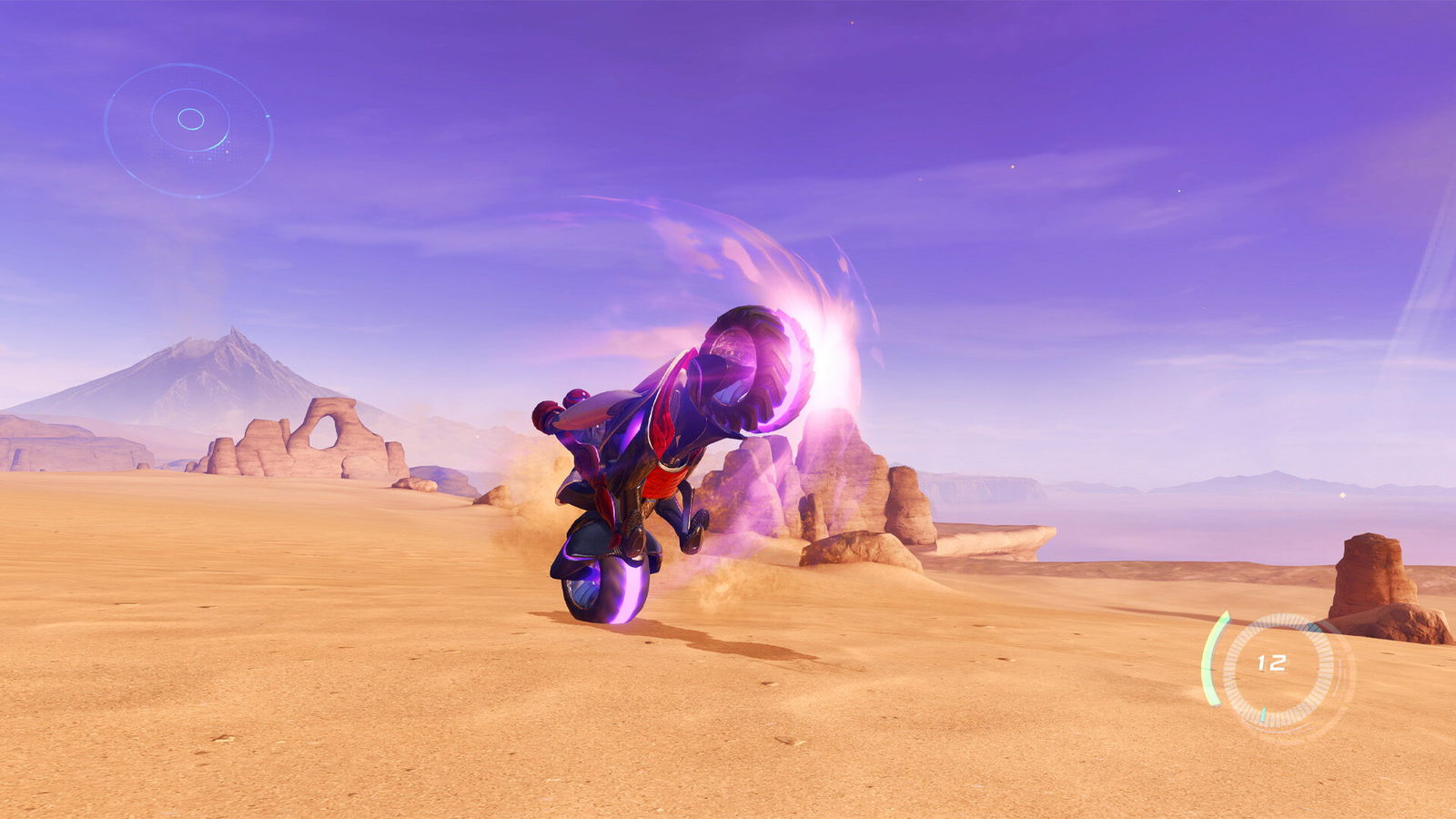
But something I didn’t mention in my review, because I was already pushing 2600 words, as well as embargo stuff, was how Sol Valley effectively acts as a late-game length extension as you drive around smashing into green crystals for the sake of the plot. And since there’s so little to see and do in Sol Valley, it takes what otherwise could’ve been an interesting area and just makes it unbearably tedious.
Nintendo has demonstrated little to no understanding of what needs to go into crafting an open-world, even less so than the rest of the “AAA” industry. To quote Stephanie Sterling, “an open world is a world, not a genre.” You can’t just plop a kid in a sandbox, throw a handful of tangentially connected toys in and say, “Have fun.” We live in a post-Elden Ring world now, and this kind of hackneyed “world” design just isn’t going to cut it anymore.
Something that Nintendo always had over almost everyone else in the business was imaginative worlds that were enhanced by incredibly tight game design. Even in the one series that utilized sandbox design—The Legend of Zelda—its worlds were designed with purpose and intention, in ways that informed the plot. I don’t understand why Nintendo is trying to jump on the open-world bandwagon when it’s so far down the road they’re just eating pavement.
So I think it’s genuinely time to ask, “Should Nintendo retire the open world and go back to what made their games so incredibly fun to play?” Should they stop making empty sandboxes in the hopes players will fill the gaps and make their own fun, and actually give them fun games to play? It’s okay to not be good at a certain type of game design, Nintendo. Stick to what you’re best at, because I genuinely do not want to see the Super Mario version of Sonic Frontiers.