Jonathan Blow and the team at Thekla have always had an interesting way of designing challenging and thought-provoking games, not through twitchy reflex checks or sudden difficulty spikes, but through deliberate, thoughtful problem-solving that keeps rolling in your head long after you put the controller down. The Witness perfected that idea, trusting players so completely that it barely spoke at all.
Now, nearly a decade later, Order of the Sinking Star feels like the next logical step. It is bigger, stranger, and far more layered. It is also shaping up to be unapologetically niche, which might be precisely why it seems so compelling. After watching around thirty minutes of hands-off gameplay, it is clear that Blow and his team are not chasing broad appeal. They are following a much more interesting trail.
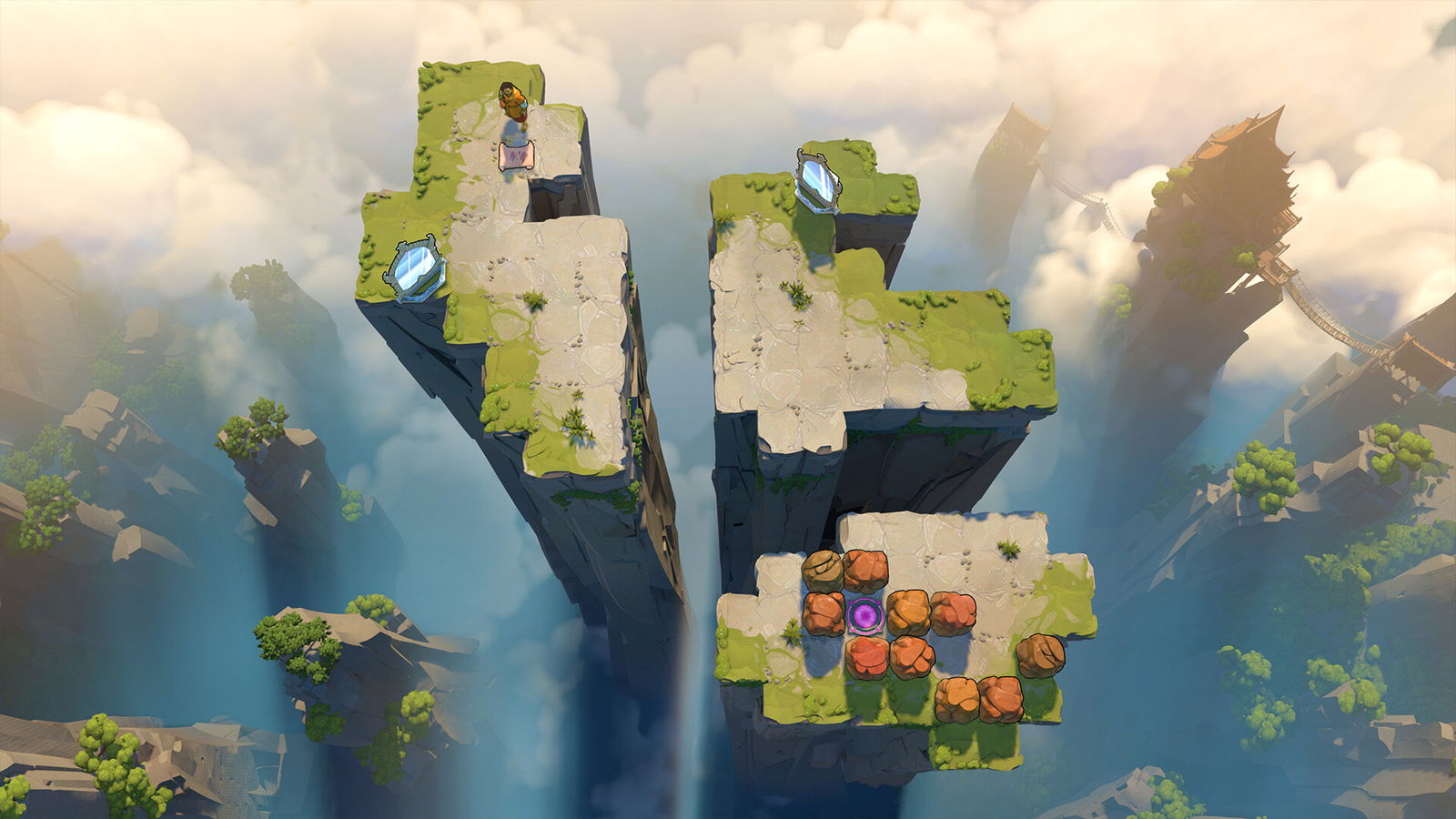
The Game Awards trailer gave a taste of the concept, but seeing it in motion paints a very different picture. The scale is impressive from the outset. Order of the Sinking Star is described as a narrative puzzle adventure with more than a thousand handcrafted puzzles, and it does not feel like marketing exaggeration. Even in the short preview we had earlier this month, you can see how carefully everything is built. The design is dense. A sense that each idea is stacked on top of another until the whole thing becomes something far more ambitious than a set of logic puzzles.
Having a guided tour through roughly thirty to forty minutes of it by Jonathan Blow, I was able to get a sense of the game’s themes, the larger gameplay loop, and pick his brain about his puzzle design philosophy
I was able to discuss the game with Blow during that time and asked about combining the ideas behind Braid and The Witness for this new project. “When I did The Witness, one of the main layers was learning puzzle symbols and watching them combine into more complex ideas. This time, I wanted to start from a different place. What if instead of building simple symbols and scaling upward, you start with complete, fun games and then mash them together? It became like a game-design supercollider, generating way more interaction complexity than a typical puzzle game.”
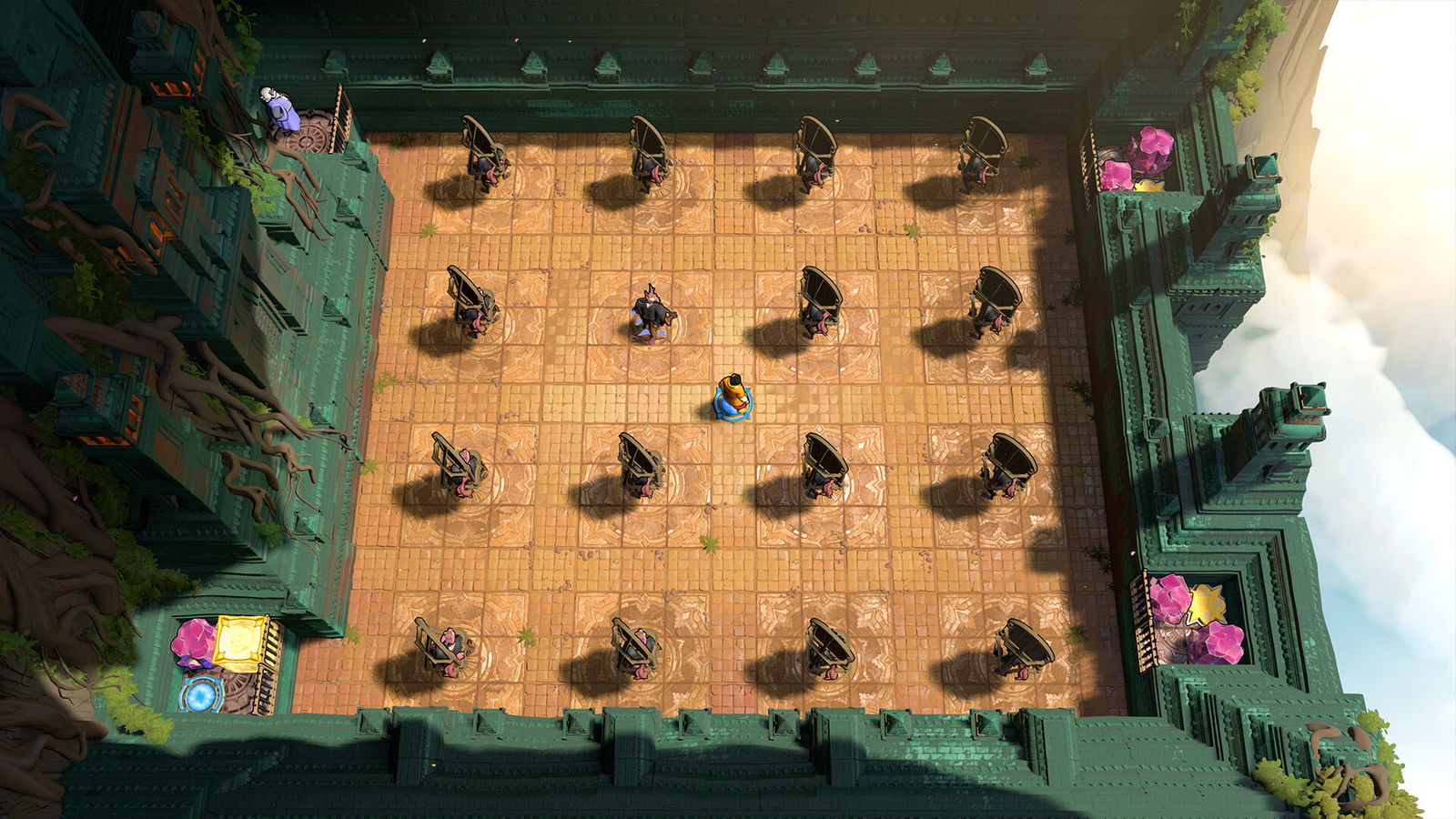
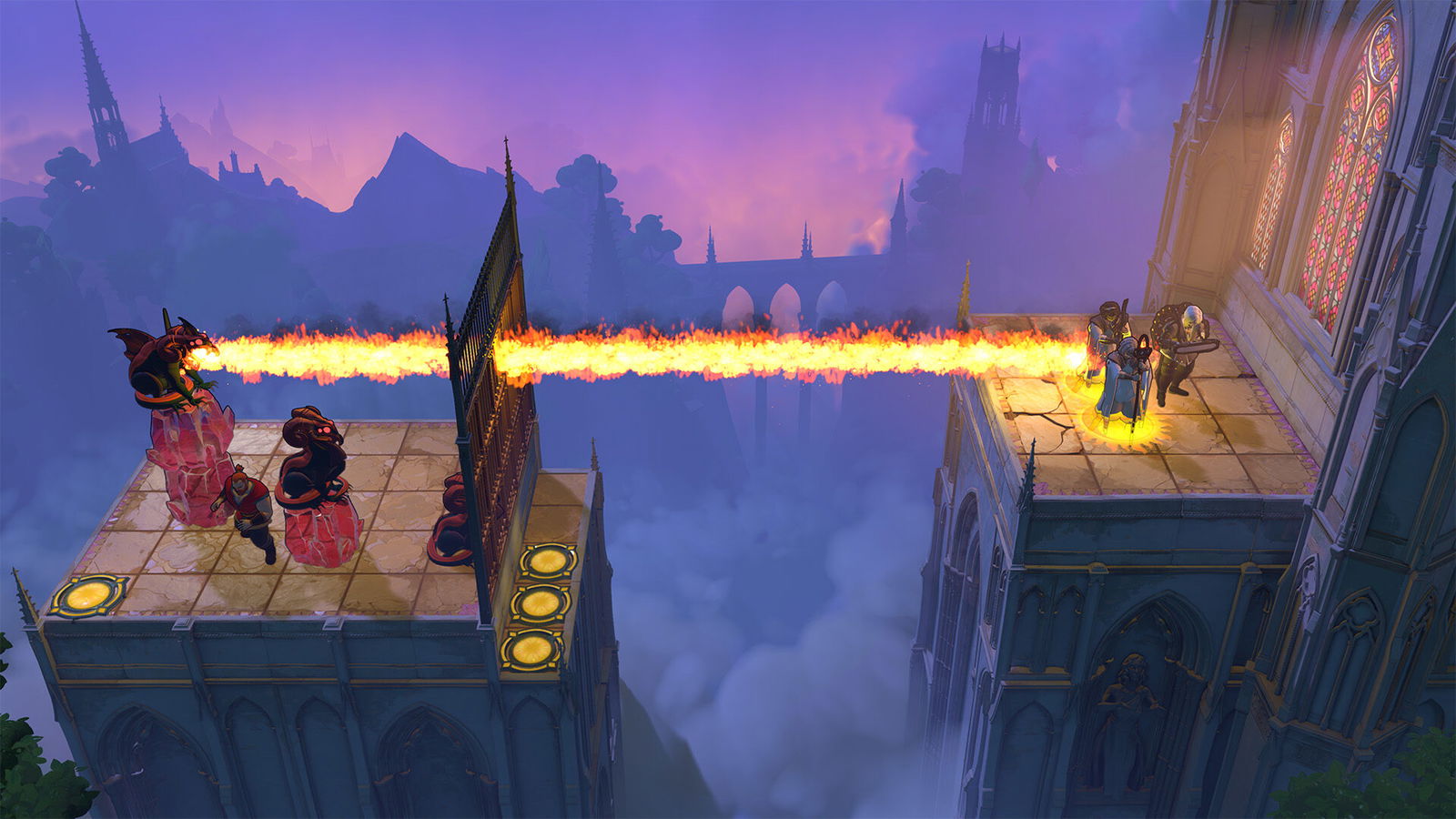
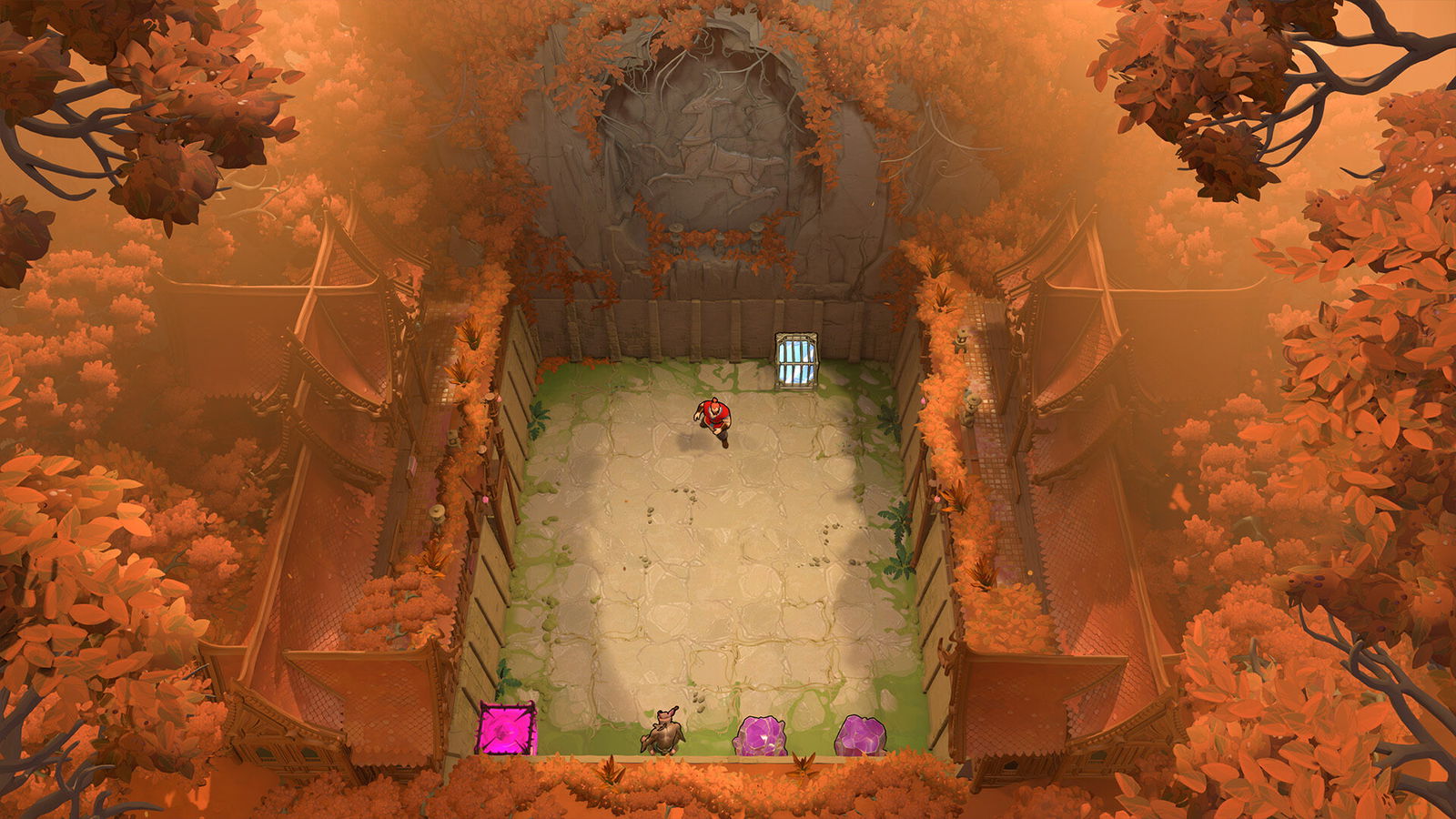
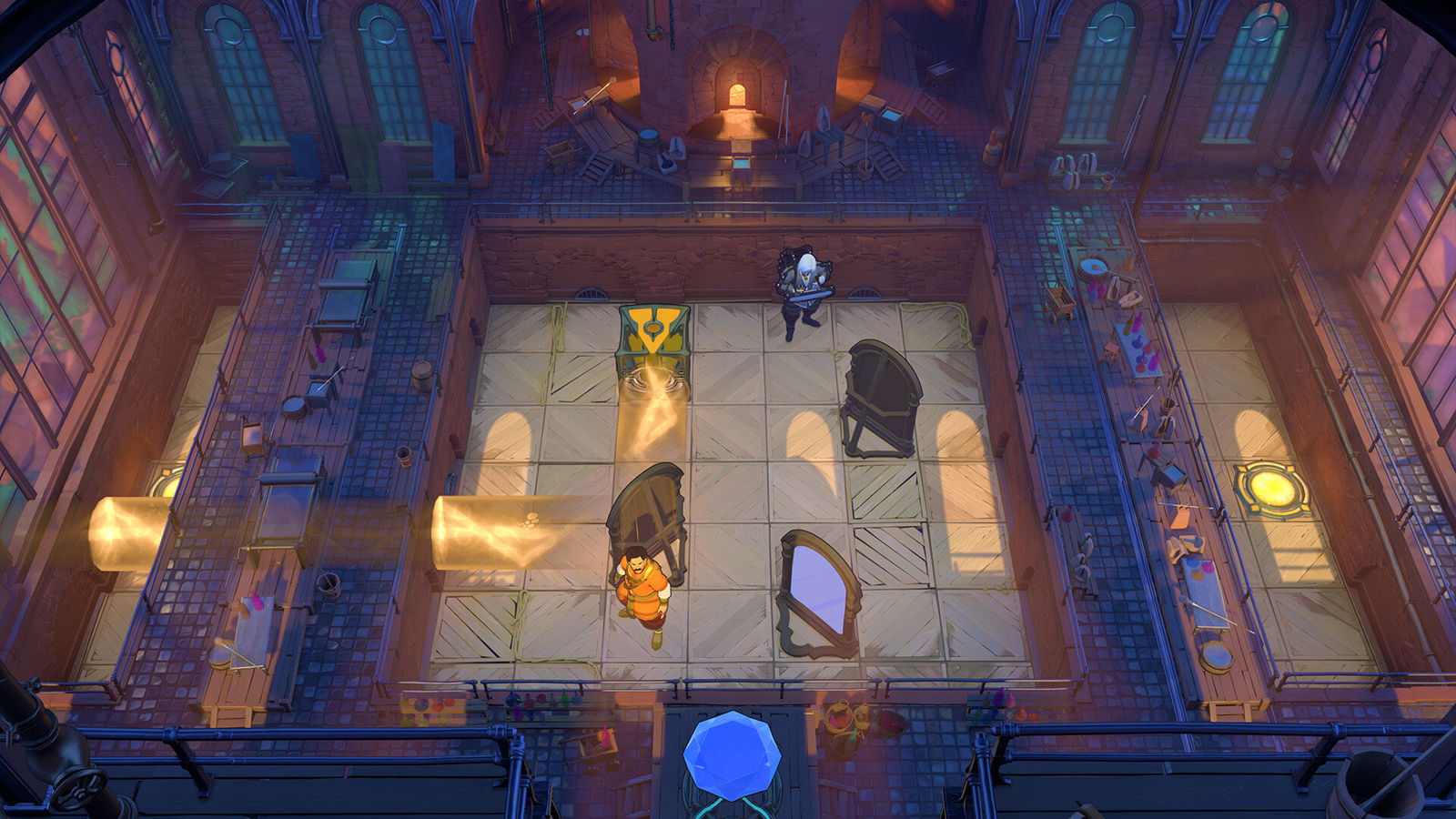
That description proves surprisingly accurate. Order of the Sinking Star begins with four distinct puzzle systems, each pulled from or inspired by well-respected indie puzzle designers. In the section I saw, each system existed within its own world, complete with its own rules and playable characters. As you progress, those systems begin to bleed into one another. Hazards behave differently when pulled into a new framework. Traversal rules bend around these multiple words, and you need to start melding together gameplay mechanics. Objects take on new functions simply by being placed in a different context. It feels like a controlled explosion of ideas.
“Order of the Sinking Star is described as a narrative puzzle adventure with more than a thousand handcrafted puzzles…”
Even in the short slice I saw, the shift away from the stark isolation of The Witness is immediately noticeable. The worlds feel alive, not because of narrative beats or set pieces, but because it reacts to the mechanics themselves. When one world faded into another, there was a sense of anticipation that came directly from wondering how the rules might shift this time.
The influences from Thekla’s collaborators are clear. Alan Hazelden, Jonah Ostroff, Marc ten Bosch, and others leave visible fingerprints on the design. Each world feels like a tribute to a particular philosophy of puzzle building, whether that is Sokoban logic, spatial patterning, or recursive design. Despite that, Thekla says these influences only define the first five percent of the game. The rest is focused on seeing what happens when these ideas twist and merge.
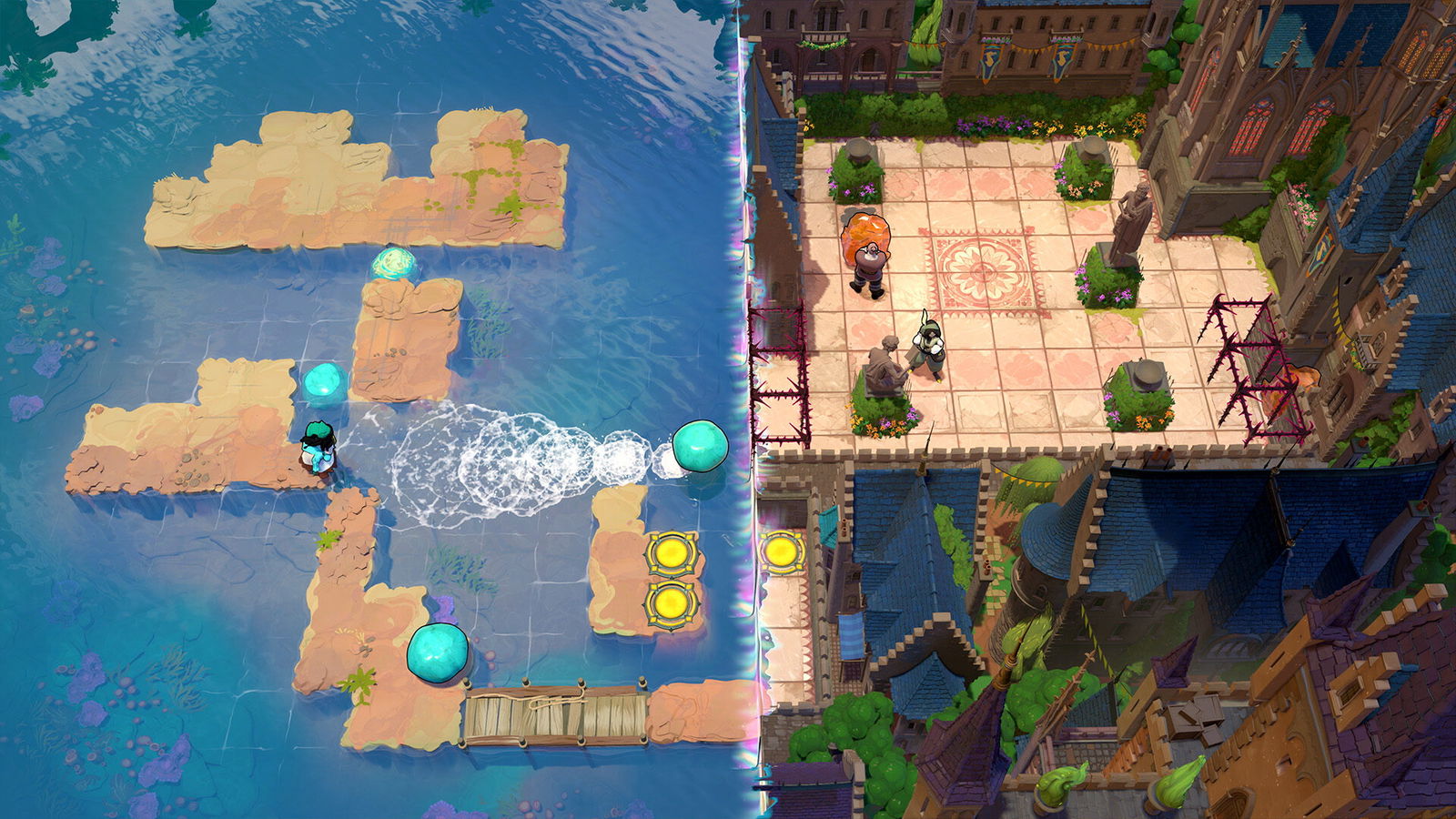
The characters themselves push that experimentation even further. The queen, thief, warrior, and wizard each change how the player interacts with the grid. The thief can only pull objects, which completely alters the rhythm of movement. The wizard teleports in unpredictable ways. None of these ideas exists for flavour. They exist to keep players fully aware of their surroundings at all times.
I was curious about whether Blow preferred designing with single or multiple solutions. “Mostly single solutions. Not because we want to limit creativity, but because each puzzle is trying to highlight a specific idea. Multiple solutions make it harder to guarantee the player sees the point of the puzzle. But there is flexibility. Sometimes it does not matter exactly what you do with an object as long as you are working within the same family of ideas.”
The open structure is another evolution of The Witness, but with a more deliberate purpose this time. Instead of simply easing difficulty by letting players roam, Order of the Sinking Star seems built around the idea that wandering is part of the learning process. A puzzle that feels impossible at first may suddenly click thirty minutes later because a different world taught you a new way to look at an object. It is not just a design choice. It feels central to the entire experience.
Blow went on to discuss how he balances pacing and difficulty in a bigger game, “What matters most is the rate of flow of ideas. If ideas come too slowly because you are stuck for forty-five minutes, that is bad pacing. So we make puzzles only as tricky as they need to be to express an idea. There are very hard puzzles, maybe harder than anything in The Witness, but they are optional. In a five-hundred-hour game, you do not want people exhausted.”
It is an innovative approach, and it shows. Blow’s team seems increasingly focused on respecting the player’s time while still presenting ideas that require actual thought. That difference in priority gives Order of the Sinking Star a very different feel from most modern puzzle games. This prompted me to ask about if his perspective on puzzle design has changed since The Witness.
“Definitely, but it is subtle. We have refined the idea of good versus bad difficulty. Good difficulty is when the struggle is directly tied to the idea of the puzzle. Bad difficulty is when you are doing 50 moves of arbitrary busywork that has nothing to do with the idea. We are very careful now about trimming the bad difficulty and keeping the good.”
After seeing it in action, Order of the Sinking Star feels like a bold and genuinely exciting evolution of what Blow and Thekla have been building for years. It will almost certainly be more niche than The Witness or Braid, but it also feels like the kind of project that advances the genre simply by aiming higher. If Blow wanted something massive, mysterious, and quietly brilliant, he is right on track.