
Chuck Norris mattered because he arrived at the point where physical skill, film mythology, and mass-media repetition could lock together. Most actors played hard men, but Norris was that both on and off screen. He had already built a real martial arts record before Hollywood used his face and stance as shorthand for control under pressure. On March 20, 2026, Norris died at 86, one day after his family said he passed away peacefully on March 19.
His appeal was built on something very simple. He looked believable. That sounds obvious, but action cinema has always depended on whether an audience accepts the body in the frame. Norris had won six straight world professional middleweight karate titles before he became a screen name, and that gave him a kind of authority that acting classes alone can’t. He later founded Chun Kuk Do, his own martial arts system. He moved with the blunt economy of someone who had spent years doing the real thing, and filmgoers could see the difference.
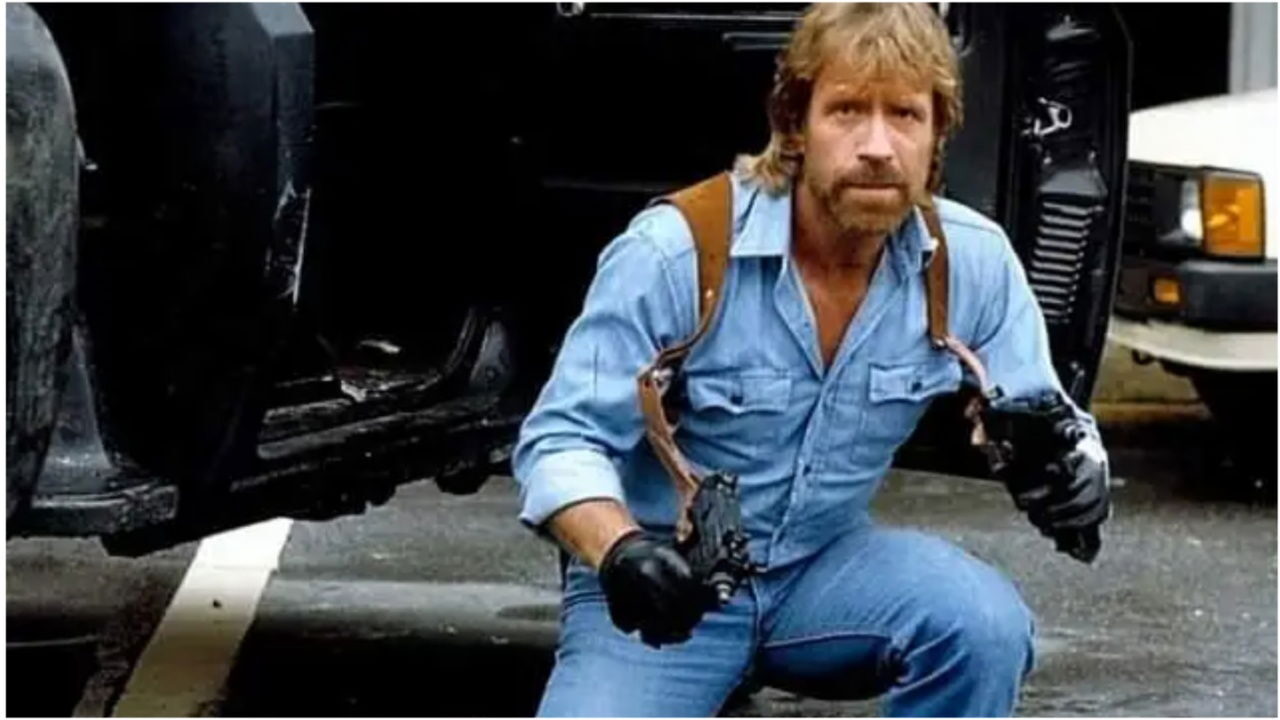
Timing helped his star rise. American action cinema in the 1970s and 1980s loved men who could look calm in ugly situations. His fight with Bruce Lee in Way of the Dragon gave him an early place in martial arts film history, then titles such as Good Guys Wear Black, Missing in Action, Code of Silence, and The Delta Force turned him into a dependable box-office presence. The point was certainty. When Norris walked into a scene, his presence made all of the ass-kicking that followed believable.
Why the Persona Travelled So Well
His biggest television hit widened the audience. Walker, Texas Ranger ran from 1993 to 2001 and turned Norris into a weekly household presence rather than a cinema specialist. The series made him a television staple, which matters because that repeated exposure let Norris become familiar to children, parents, and the kind of viewer who might never have rented an action tape on purpose.
The other piece was his face. He had a look that was, well, manly. The beard, the stare, the stillness, the denim, the boots, all of it was readable at once. He looked like he had already decided what to do. Pop culture loves that fit because it travels well across posters, trailers, VHS covers, cable reruns, memes, and clips passed around online. It works the way a famous sports silhouette works. You know who it is before the caption gets there.

A Classic Norris Role
If you want a taster of the strange combination of over-the-top action and everyday realism that Norris was able to merge, check out Forced Vengeance. Released in 1982, early on in the process of Norris becoming a household name, it sees him play Josh Randall, the head of security at the Lucky Dragon Casino in Hong Kong. The plot turns on casino ownership, organized crime, and the pressure and tension that comes with the territory. Could anyone else have pulled it off? Maybe, but not like Norris. While he worked in that high-stakes casino world on screen, you can step into a similar atmosphere through an online social casino app and get a taste of that tempo for yourself.
The Joke Helped Him Last
Many stars disappear once their peak era ends. Norris did not, partly because the internet turned him into a joke and he was smart enough to let that happen. The “Chuck Norris Facts” meme wave that spread online in 2005 made him famous to a younger audience that knew him first as an exaggerated symbol of impossible toughness. Those facts became central to his second life as a pop-culture figure. The joke worked because his screen image was already oversized. The meme pushed his myth further and made it playful.
That self-aware turn mattered. A lot of tough-guy stars have no comic give in them. Norris had enough distance from his own legend to survive the internet without looking bitter or confused by it. That is rare. A pop icon needs reinvention, but reinvention doesn’t mean you have to rip up what got you to the dance in the first place. Norris became stronger in memory because he became lighter in tone. He was still the hard man from old action films, but he was also in on the laugh. That made him easier to keep.

A Career Built on Usefulness
He also stayed useful as a symbol because his image was never hard to explain. Bruce Lee was a genius and a philosopher as well as a movie star. Arnold Schwarzenegger became a blockbuster machine, then a politician, then a public elder statesman of fitness and show business. Norris stayed narrower, and that helped him. He stood for one thing done well. He represented discipline, force, and a kind of old American bluntness that popular culture could keep quoting whenever it wanted immediate stakes.
That is why news of his death carried past the normal obituary cycle. Reuters reported tributes from politics and entertainment, including Sylvester Stallone, Dolph Lundgren, and Texas Governor Greg Abbott. Those reactions showed that Norris had moved beyond film credits into the larger museum of instantly legible American types. He was a real athlete, a durable action lead, a TV lawman, and then a self-parody strong enough to keep the original image alive. Few careers hold all of that without coming apart. His did.