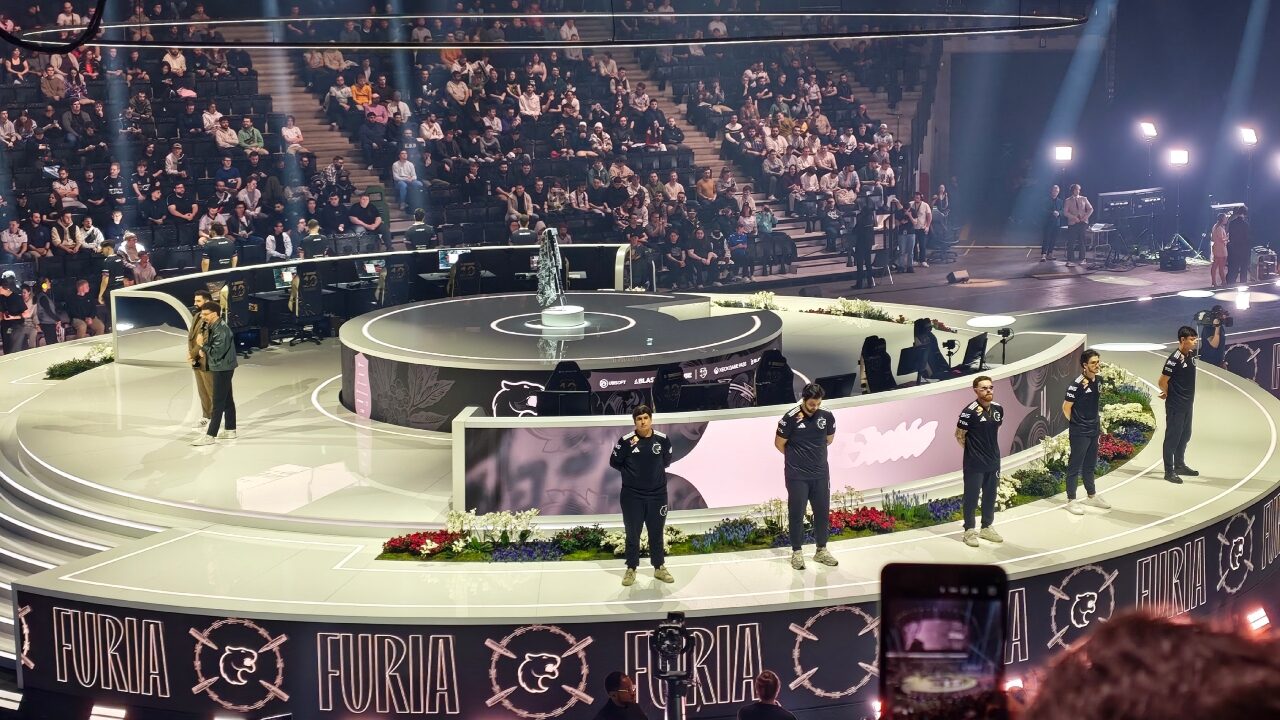
This weekend marks 10 years of Rainbow Six Siege in esports, with the Six Invitationals taking place all weekend in Paris, France. Thanks to Ubisoft, we were able to attend SI live from the ground at the Adidas Arena, watching the game’s top 20 esports teams battle it out this Valentine’s Day weekend—and they say romance is dead!
Before the tournament began, some of the Ubisoft team gave us a sneak peek at what is to come this year for Rainbow Six Siege in the esports scene. Esports Director Maxime Vial and Senior Director Competitive Products Sebastien Ratto sat down with us to answer some questions we had about the Six Invitational and to learn more about esports in general.
After learning about their roles on Rainbow Six Siege, we were able to discuss what goes into creating an esports title and maintaining interest in a franchise for more than a decade, plus they shared their expertise on what can help players prepare for their esports journey and what the Siege team at Ubisoft is doing to help.

If you could do me a favour, just share your names, titles, and a little bit about your role on Rainbow Six Siege.
Sebastien Ratto: Okay, my name is Sebastian Ratto. I’m a Senior Director of Rainbow Six Esports, and I’m overseeing all of our esports activity in Rainbow Six.
Maxime Vial: And my name is Maxime Vial. So I’m the Esports Director, part of Sebastien’s team. And I work specifically out of the Montreal studio with the development team, where my team and I will oversee everything that pertains to the structure of our ecosystem, the regulations, and also how esports is integrated or affects things in games. So, things about esports skins we release, or features specifically about esports in the game.
OK, so today we talked a little bit about Rainbow Six Mobile and how they want to get themselves into a competitive esports section of gaming. How does one go about officially making their game an esports title? How does it work?
Sebastien Ratto: It’s a long journey, to be honest. So this is something that we discussed before, during the production process, of course. But we don’t believe that starting an esport right at the release of any game, actually, is something that we want to approach. So for the mobile team, it’s mainly that they are having a competitive take, but within a game, starting an esport will depend on how the game performs, how they build a community around it. Also, if there is any interest from a professional organization, and at that point we’ll figure out how we can put together an ecosystem gradually.
What has Rainbow Six Siege specifically done to maintain interest in their game in esports?
Maxime Vial: Once you have all the ingredients to make your game an esport, and you’re starting to have this scene, it’s about keeping a close touch on the pulse of your community because they kind of dictate what matters. So, which regions of the world are really growing into requiring a level of support that you can have regionally?
Like when we started Siege for the first year, it was mostly in North America and Europe, but quickly Brazil rose, and we started developing a scene there. Within a year and a half, the Asia-Pacific region was there as well, so it was time for us to bring them to the global stage. And then it’s about building bridges or paths that allow players to really evolve and understand how the journey from a competitive player in the game transforms into a potentially professional experience with teams and attending international events.

And when it comes to a game like Rainbow Six Siege, what does it have compared to other esports titles that makes it stand out? What makes people want to come to Siege instead of, say, Call of Duty?
Maxime Vial: Well, I think it starts with the game itself, first and foremost, because Siege has a very unique premise. The game released over 10 years ago now, back in the days when hero shooters were not as prominent as they are today. So we were one of the first games to do that, adding a unique layer with the destruction of our environments and our maps that really created that sandbox feeling of how you can approach the game. Combining all those gameplay mechanics and tools together. And the game stood out first and foremost that way.
And then when it comes to the esports scene, it’s more about coming back to my previous answer, like where your game is going to resonate and how you’re going to provide these elements that allow these specific communities to grow. Brazil, again, as an example, very quickly rose to prominence in Siege. And it’s not necessarily the same in the mobile scene. They have very strong teams in the mobile scene, but they’re not as strong. We know that mobile is probably dominated more by Asian teams. So it’s about keeping a touch on the pulse of the global scenes.
How do changes that you make to Rainbow Six Siege—so something like a new operator or balancing—how does that send a ripple effect through the esports side of things?
Maxime Vial: Yes, it affects everything really for us because the game, we have this philosophy that we always want the game that players experience at home when they hop on the server for the casual or ranked experience to be the same one that our pro players experience on the live broadcast on the big stage.
So from there on out, it’s this balancing exercise that our development team does through workshops, through data analysis, through talking at a workshop with different parts of the community. We talk to casual players as much as to pro players to understand their needs, and sometimes tailor some of the changes or some of the adjustments that are made in the game to one part of the scene or the other.
We sometimes see feedback on social media that, “Hey, this change might not do much for us on the professional level,” yes, but this one is more catered towards what the casual community needs to enjoy playing that specific operator or map. And the other way around, sometimes changes are really focused on, “Okay, how can we strike the perfect balance here, because we know this is something very strong at the pro level.”

Are there any differences between the regular Rainbow Six Siege and the esports version, or is it the exact same game?
Maxime Vial: Gameplay-wise, no. Only in terms of how the matches are played, because in esports, we play matches in the best-of-13 format, first to seven rounds. But the first to seven rounds is too long, sorry, for a ranked or casual experience. So on the server, it’s a little bit more compressed so that players can go through matches quicker. But even moving forward, that is something that we might want to adjust to provide an opportunity for some of our more engaged players to have a very competitive-like experience in the game.
And we’re talking about changes to the game. Is there anything in place to ensure those changes don’t happen too close to a Rainbow Six Siege tournament?
Maxime Vial: I think there are two things to distinguish here. There are content releases, and you have a new map, and those happen on a quarterly basis, which our esports calendar is structured in such a way that our big international events always take place two and a half or three months after such big content releases. So there’s no brand new art that players have to learn a couple of weeks or days before competition.
Balancing or fixing it—because sometimes there are bugs, we need to fix them. Those happen when they need to happen. It can be based on the time it takes us to fix them, but also on when we identify them, because sometimes that can be something that’s dormant that no one notices in the community, and if the community starts noticing it a couple of days or weeks before the competition, we still need to fix it in time.

And how do esports players react to that when something comes up with that short an amount of time?
Maxime Vial: I mean, I’m not going to lie, they don’t enjoy it, but they know it’s necessary. At this point, we’ve been operating in esports for over 10 years, and they understand that it’s necessary. And I think everyone is on the same page when it comes to the fact that competitive integrity is of the utmost importance in esports. So everyone understands that if we’re fixing a bug, then yes, it needs to get done, basically.
And with a game like Rainbow Six Siege, you have so many operators. When you jump into esports, what goes into balancing that and making sure that there isn’t just one set of operators or items that you use to dominate? Do you end up with a bunch of teams that are all playing with the same loadouts?
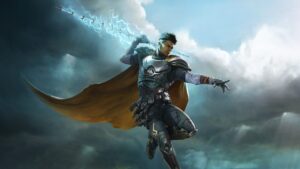
Maxime Vial: Well, there’s always the notion of what we call the “meta”, in other words, to build the most efficient strategy available, but really our goal is to give each character and each Op and also each map its unique flavour and its value in the game. So, we’re a game about destruction, as it’s called in its strategy. And so yes, breaching operators or the ones that bring destructive power will always have a special place because it’s a very fundamental element of the core gameplay.
But that doesn’t prevent all the other layers from having an important role to play. And that’s one of the beauties of a game like Siege, with the strategic depths we see in it, is that teams can rely on strategies that are heavily breaching center. There will be the counter breaching going on with the characters and defence, but some strats will also sometimes be heavy intel-focused with roamers all over the map, and then you have to bring different Operators.
So it’s really like all those layers of strategy intertwining and making sure that each Operator fits the niche and is relevant at some points for some of those strategies.

Now, going into a tournament like the Six Invitational, can you kind of predict what you think you’re going to see on the stage, like who will use what Operator or what strategies? Is knowing what they will do something you, at your level in working with Rainbow Six Siege, can predict?
Sebastien Ratto: We see some of the top Operators that teams play, but again, it’s very map-dependent, and it adjusts a lot. We’ve seen that shield operators currently are quite strong in the game. So obviously, they are regularly picked. We see Clash, we see Black Beard, we see Blitz pretty often across the matches. But then teams are always very creative also about how they can counter them. And I’m sure some of the top teams here haven’t shown all their cards yet, so there might be a couple of surprises.
And what is the Rainbow Six Siege team doing specifically to help people who want to get into esports? Not those people that are already at the top level, but bringing new people into it?
Sebastien Ratto: One of the things that we mentioned this morning, what we call the Path to Pro. Obviously, what we are talking about is SI [Six Invitational], the major event, but to ascend to those big events, you need to start the journey somewhere. And that’s the focus of multiple teams that we have internally that are based in each region. So that’s why we are trying to have a tailor-made approach, because the events that you are doing in Brazil are different from Asia or in Canada.
The main purpose for us is to provide as many opportunities for any type of player to start somewhere, to give them a first taste of what is it to be an esports player, even if you are starting as an amateur one. So you can go from online competitions that are open on a regular basis worldwide or in some regions, but also from local tournaments, LAN or community tournaments that want to do a Siege tournament and offer to support them, even with social media support or some prize pool payments, giving them more visibility.
So it’s this ongoing relationship with local partners and making sure we connect them with their Siege community as well. So we start from here, and then more and more we are developing national, even regional, leagues where players who maybe have a dream to become professional, we need to go to.

And on the other side of that, does the Rainbow Six Siege esports team have any advice for players who do want to become esports players? Not what you’re doing for them, but what they can do for themselves?
Maxime Vial: I think that there are two things. Obviously, in the game, refining your mechanics, being strong at it, that goes without saying. I think the path of a professional player’s journey that can be overlooked because it’s less glamorous is the effort and discipline it takes. If you ask any of those guys who are competing at SI, they’ll tell you about how much time they spent refining communication, being better, more efficient at communicating key information quickly to their teammates, the time and discipline that it takes in your practice regimen, in your practice schedule.
Also, in maintaining a healthy body, because at the end of the day, sure, you’re playing in front of your computer, but your reflexes have to be sharp, you have to be well rested, you have to be in good physical condition in order to be able to compete at that level for a sustained amount of time. Like SI, that’s two weeks. That’s huge. And you’re travelling in another country in doing so. So there are those layers that aren’t as obvious about it.
And then, of course, don’t underestimate the value of team play, because this is a team-based game. There are fantastic solo-based esports, but this one is team-based, so if you want to be able to make it, you need to know how to work with others, and there’s almost a psychological element to being able to work with teammates like that.
Absolutely. Just for fun, what do you each consider the biggest or most exciting change to esports when it comes to Rainbow Six Siege this year, out of all the things you talked to us about today?
Sebastien Ratto: There are many. That’s a tough question. I would say ENC for me is something that is really unique and particular because it could have a huge impact not only on Siege but the entire esports industry. So, even though we know that Siege, Rainbow Six Siege, in this competition, is not connected to our ecosystem, but still, it’s so new, I think it’s disruptive in the way this is going to be approached.
As far as I’m concerned, this [ENC] is the most exciting one, because this is great, this could be a good motor force to enable esports, maybe, to reach a new type of region, more “mainstream,” of course. That might be interesting within, you know, the national pride that such an event could celebrate. So this could change drastically the face of the sport.

Maxime Vial: Yeah, for me, I would say it’s probably what we’re doing for the challenger circuit, the notion of like really consolidating. I’m a competitive gamer as well, definitely not on par with those guys, but I know what it’s like to grind the game for hours and to feel like you want to make it, and you want to know about all the opportunities and ways you can get involved with competition.
The efforts we’re making this year to really focus and streamline our tier two circuit, make it more understandable also for players so that they can clearly in their heads project themselves and be like, “Okay, if I want to make it and I’m a player from Germany, this is where it’s happening in the next couple of months for me. I can participate in those competitions. I need to be ready then, and maybe I can qualify here.” This whole path being clearly laid out for them, I hope it is going to have a great impact on just encouraging new players to come and develop in this team.
Okay, and the final question: Do you guys have any predictions for the Six Invitational this weekend? Is there anybody you think is gonna come out on top?
Maxime Vial: I think we’re gonna be heavily biased.
That’s alright!
Sebastien Ratto: Well, I would say, I mean, obviously there are many teams we are rooting for…But no, I will say that the best team is going to win.
Maxime Vial: I’m French. I’m French and Canadian now. But still, I’m French, and I really want the Falcons to make it. They’re a fantastic roster. A few of their players are French and have been having a hard time. As much as all the other teams are amazing, and I love them, and I respect them, a little biased there!
Rainbow Six Siege’s Six Invitational takes place this weekend, February 13-15, at the Adidas Arena in Paris, France, with the finals taking place on February 16th.