

ASUS announced the new ROG XREAL R1 gaming glasses, promising a floating 171‑inch virtual display running at up to 240 Hz, built to plug into everything from handhelds to full gaming rigs.
We at CGMagazine have been fans of what XREAL has been doing in the AR glasses space, and it seems ASUS has taken notice and partnered with XREAL on its latest offering. The new ROG XREAL R1 seem like a significant step in the right direction for people who want to get performance gaming on their AR glasses. Like many XREAL glasses already on the market, the R1 is built around a pair of full-HD micro‑OLED panels, but what makes this exciting is that these are gaming-focused headsets that deliver a 240 Hz refresh rate in such a compact form factor.

Across its marketing materials, ASUS positions the setup as a way to turn fast-paced shooters, fighting games or big-budget single-player titles into something closer to a personal theatre, while still leaving enough of the real world visible to check another screen or look around the room. The company says the 57-degree field of view is tuned so the virtual display feels like sitting a few metres back from a 171-inch TV, rather than being jammed right up against it. This approach mirrors the XREAL 1S, but when combined with the high refresh rate, the ROG XREAL R1 feels like a near-perfect collaboration created by two exciting brands.
As we saw with the XREAL S1, the new R1 is designed to behave much like a traditional monitor, just one that happens to sit in front of your eyes and can be adjusted with the touch of a button. Out of the box, the R1 keeps the virtual screen locked in front of you as you move your head, keeping HUD elements centred rather than drifting off to the side, a key detail for anyone trying to keep up with modern games.
ASUS is also trying to sidestep one of the biggest complaints about wearable displays: sound that either leaks everywhere or feels thin and tinny. The R1 includes audio tuned with Bose, built directly into the glasses’ arms instead of relying on separate headphones. The goal is to give players clear game audio, movies and music without isolating them as much as over‑ear cans might, particularly when using the glasses in public or crowded spaces.
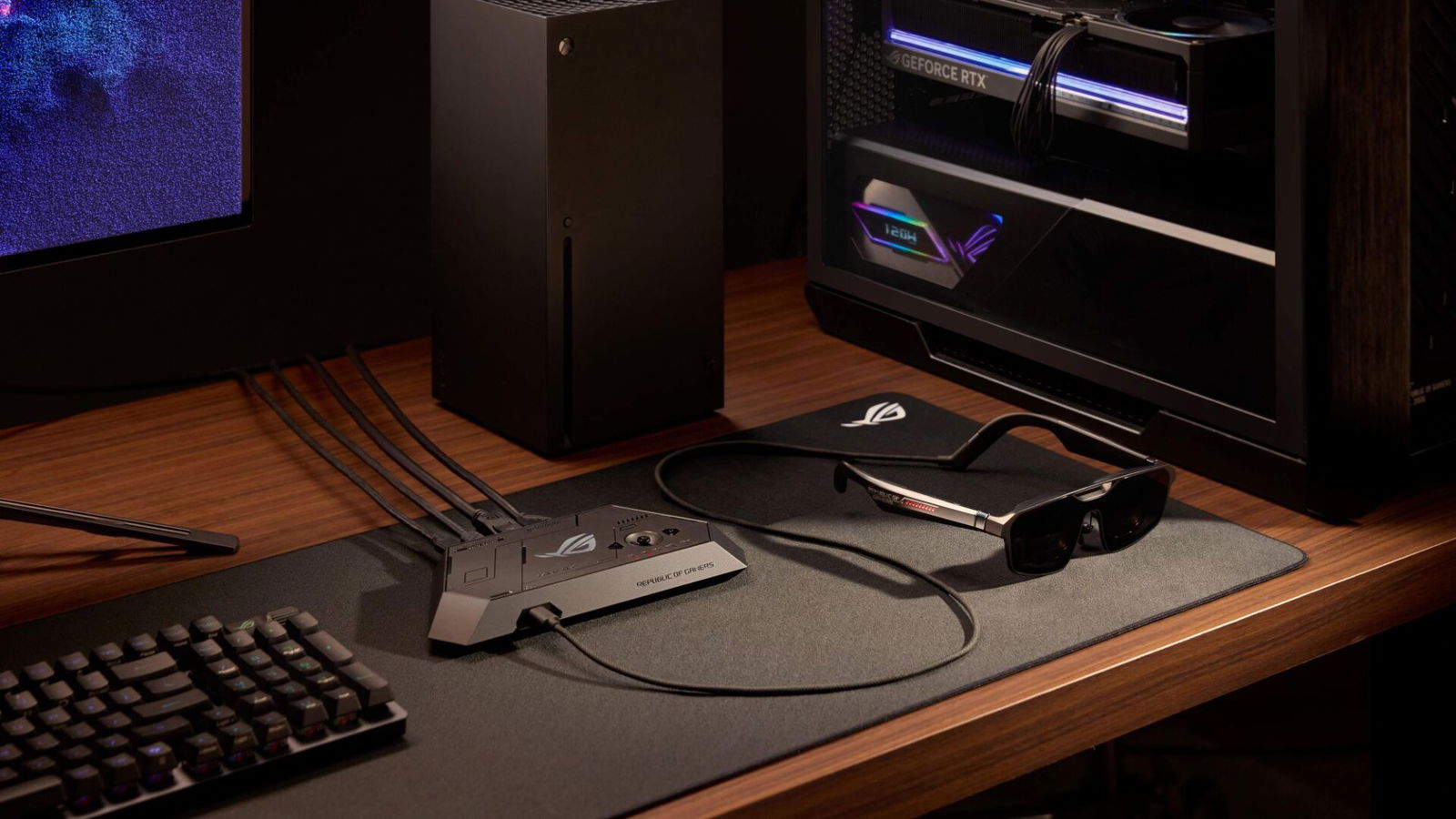
Launching alongside the R1, the ROG Control Dock features two HDMI 2.0 ports and a DisplayPort 1.4 input, allowing users to connect both a PC and a console and switch between them with a single button press. This makes using the R1 in a gaming setup straightforward. A single USB-C connection runs from the dock to the glasses, reducing cable clutter while delivering a 4K 60-Hz signal that the R1 can display within its virtual screen.
According to ASUS, the ROG XREAL R1 will integrate with its existing software, creating a unified experience. Owners can adjust image settings for the R1 through the company’s DisplayWidget Center app on a laptop or desktop, the same utility used to tweak recent ROG monitors, so users with current ASUS setups should feel right at home. That setup allows users who already know their preferred picture profiles to bring those habits over to the wearable without learning a completely new interface, with it all making the process easier and much more streamlined.
Stay tuned for more from ASUS and XREAL this week. We have full coverage of those announcements at CGMagazine, along with the latest news and features from the CES 2026 show floor.