
Last year at CES, NVIDIA introduced its RTX 50-series GPUs and DLSS 4, offering an early look at what was possible with multi-frame generation. This year, the company has improved on that formula significantly.
NVIDIA used its CES 2026 stage to unveil DLSS 4.5, the latest update to its AI-powered upscaling technology for GeForce RTX graphics cards. The update promises smoother gameplay, cleaner image quality and a stronger push toward ultra-high frame rates in modern PC games. While DLSS 4 was impressive, it also came with several issues that critics, myself included, noted while evaluating the GPUs and the broader potential of the technology. The new version relies on a second-generation transformer model and a revised approach to frame generation. On RTX 50-series Blackwell GPUs, performance can scale up to 6X the original frame rate. Older RTX hardware also sees performance gains, although with clear limitations.
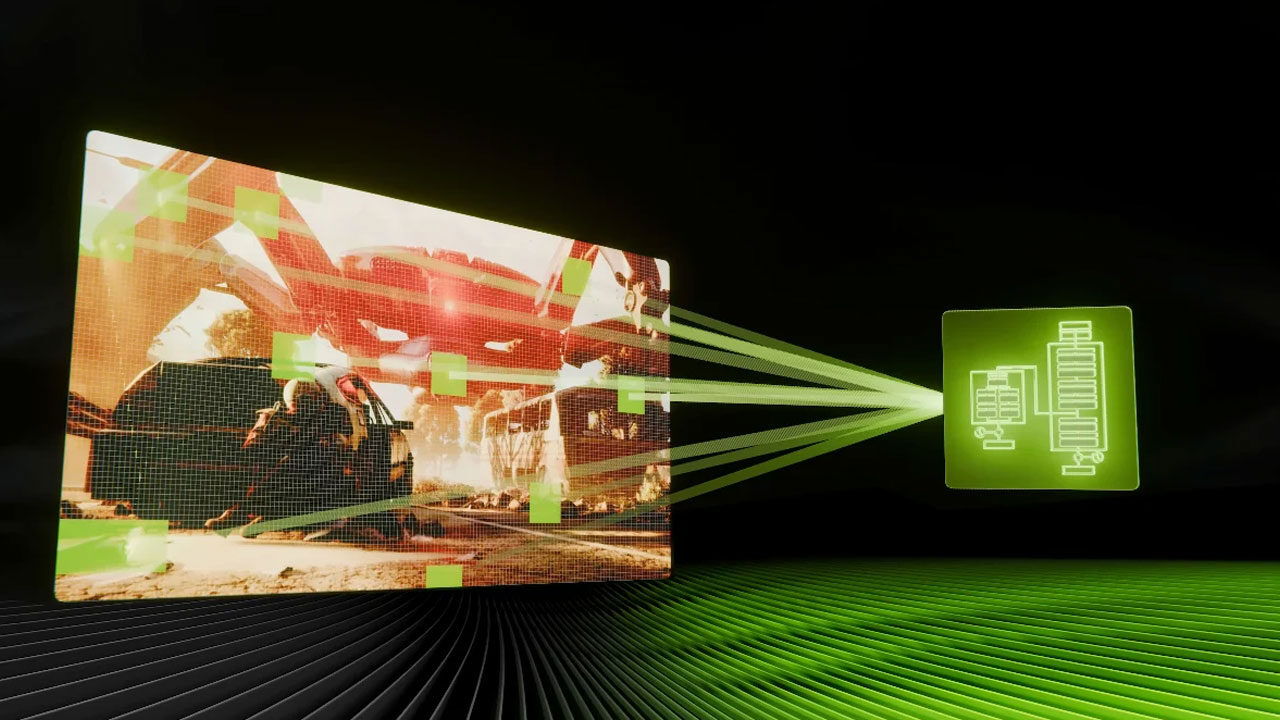
For anyone who has not been following the latest features introduced with each new DLSS launch, DLSS 4.5 builds on NVIDIA’s existing Deep Learning Super Sampling system. The technology renders games at a lower internal resolution and then uses AI to reconstruct a higher-resolution image, delivering genuinely impressive results.
The company says more than 250 games and applications already support DLSS features. The new version is designed to slot into existing integrations, allowing developers to roll it out through relatively simple updates rather than rebuilding pipelines or completely rewriting existing software. In practice, this means many current PC titles that already use DLSS could see image-quality and performance improvements once DLSS 4.5 support arrives through driver and application updates.
The biggest feature NVIDIA showcased during on-site demos at CES 2026 is what the company calls Dynamic Multi Frame Generation, paired with a new 6x Multi Frame Generation mode designed for RTX 50-series cards. In this mode, DLSS 4.5 can generate up to five AI-created frames for every frame the game actually renders. This allows the system to target 240 frames per second and beyond on supported high-refresh displays, even in path-traced games.
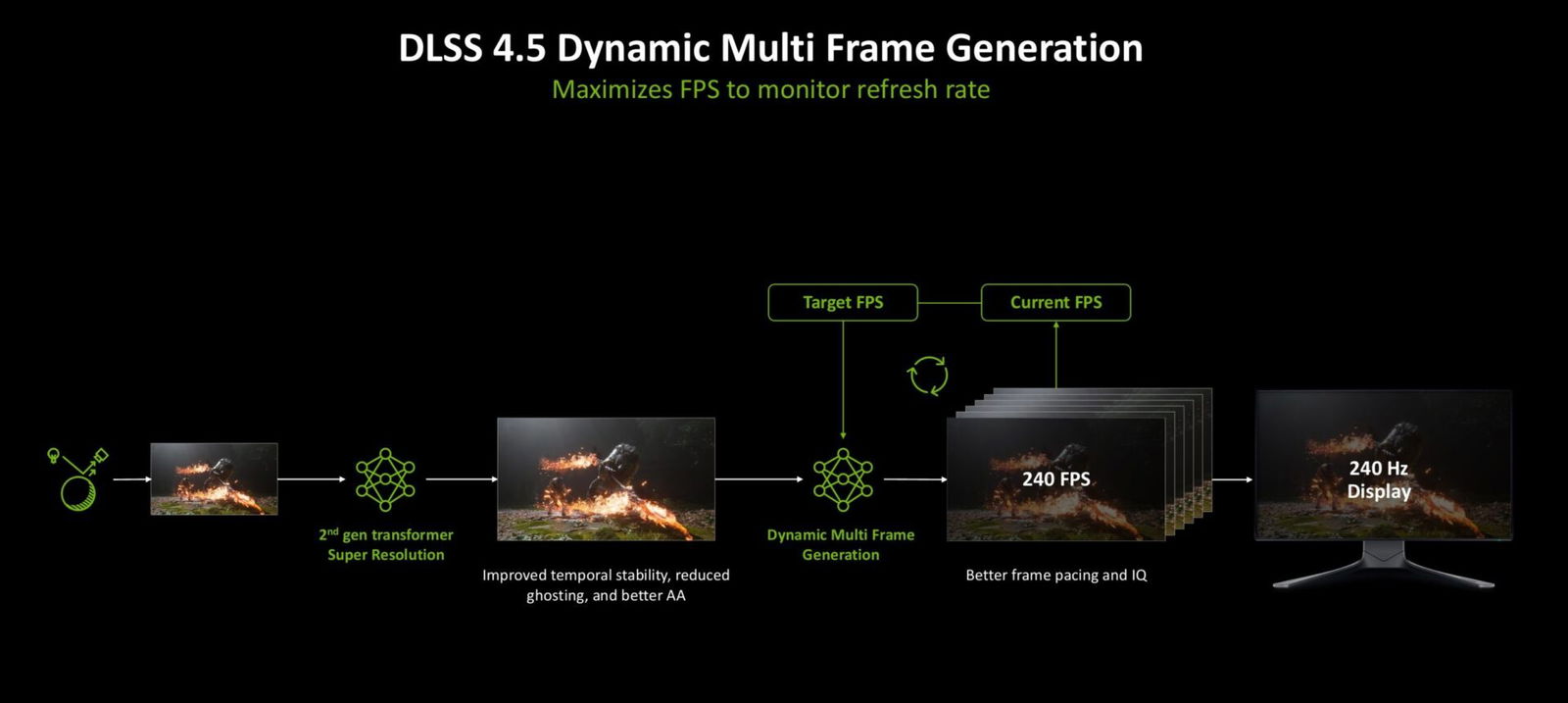
Dynamic Multi Frame Generation monitors how closely the GPU’s output aligns with a display’s refresh rate and adjusts the multiplier on the fly. The goal is to keep gameplay feeling fluid without overproducing frames when system load decreases, and surprisingly, it looked excellent during demonstrations. If you are trying to hit a specific frame-rate target, it makes sense to allocate resources toward reaching that goal rather than generating frames that will never be displayed. It is a smart approach, and one I am eager to test further as support rolls out across more titles.
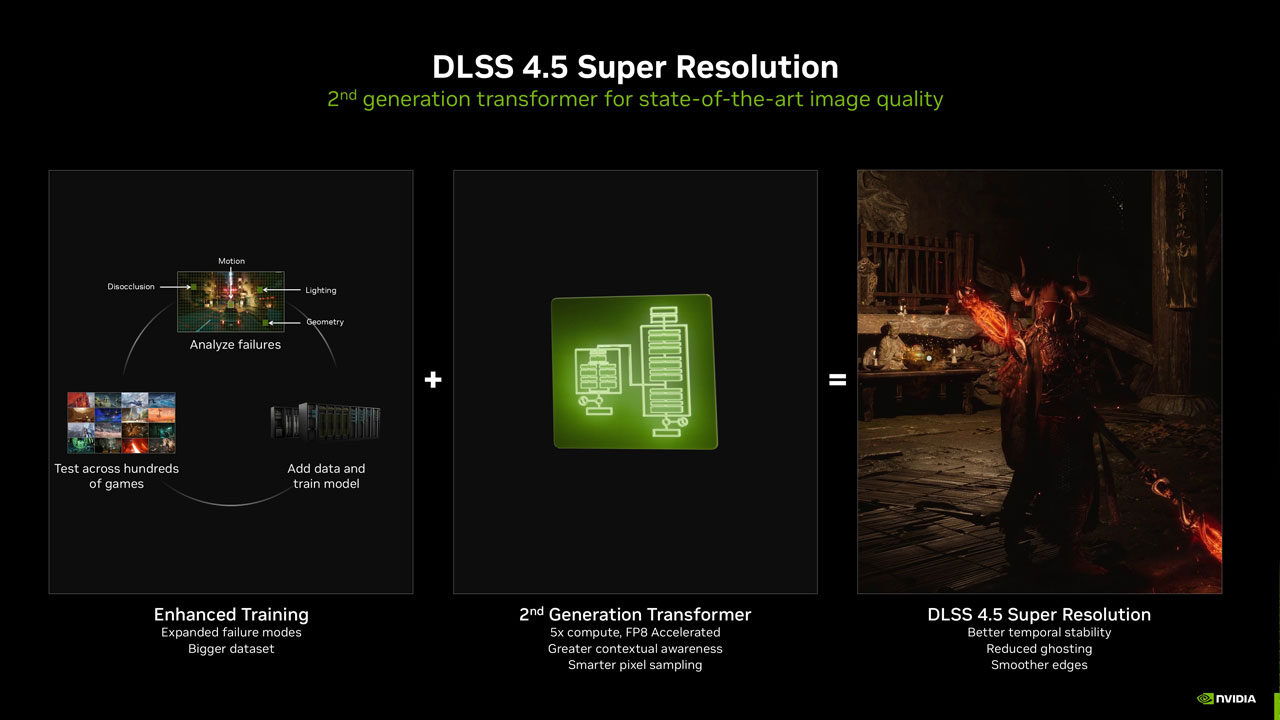
DLSS 4.5 introduces a second-generation transformer model for DLSS Super Resolution, which sits at the core of how the technology cleans up and scales images. The updated model has been trained on a larger, higher-quality dataset and uses significantly more compute than the first transformer-based version introduced with DLSS 4. The goal is to make challenging scenes, including fast motion, fine detail and high-contrast edges, appear more stable and less noisy.
NVIDIA has also focused on addressing specific visual issues, such as shimmering on static surfaces and ghosting around weapons or objects close to the camera. These have been among the more common complaints with older DLSS versions. We have noted these issues before, so it is great to see NVIDIA taking the time to address them and deliver fixes that still allow users to enjoy the titles they prefer, even if they cannot afford the absolute best GPU on the market.
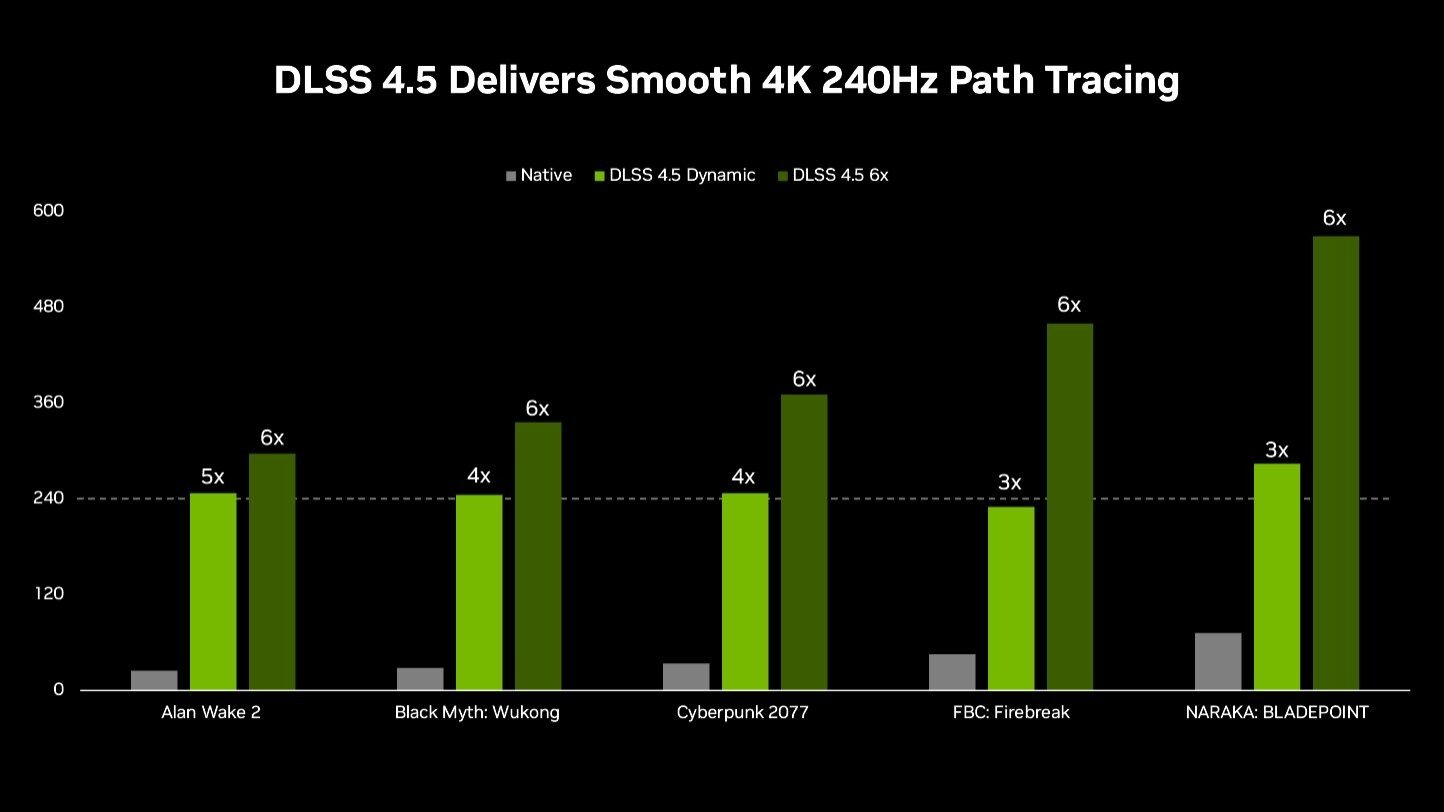
NVIDIA says the updated transformer model is available across all RTX generations, meaning RTX 20-, 30-, 40-, and 50-series owners can access the improved super-resolution path once they update to the latest software. That said, the largest performance gains are reserved for RTX 50-series GPUs. On that hardware, the combination of DLSS Super Resolution, 6x Multi Frame Generation and Reflex low-latency technology is designed to deliver the best 4K, path-traced experiences at more than 240 frames per second on supported monitors.
Earlier RTX generations are expected to see improved image stability and some performance uplift, but without access to the full 6x frame-generation feature set. That limitation makes sense based on what the technology allows, even if it is disappointing for those waiting on the next generation of NVIDIA GPUs, which were notably absent from this year’s CES.
NVIDIA is also positioning DLSS 4.5 as a straightforward upgrade path for developers already shipping DLSS-enabled games. The company’s latest PC app, currently available in beta, allows players and studios to move existing DLSS titles to the new version with only a few configuration changes. Future updates will roll out 6x frame-generation capabilities to RTX 50-series owners later in the year. For players, that means many games they already own could quietly gain higher, more consistent frame rates and cleaner visuals as studios patch in support.
You can find full coverage from CGMagazine from the CES 2026 show floor, including our Best of CES 2026 selections, along with additional news, features and previews from our time in Las Vegas.