
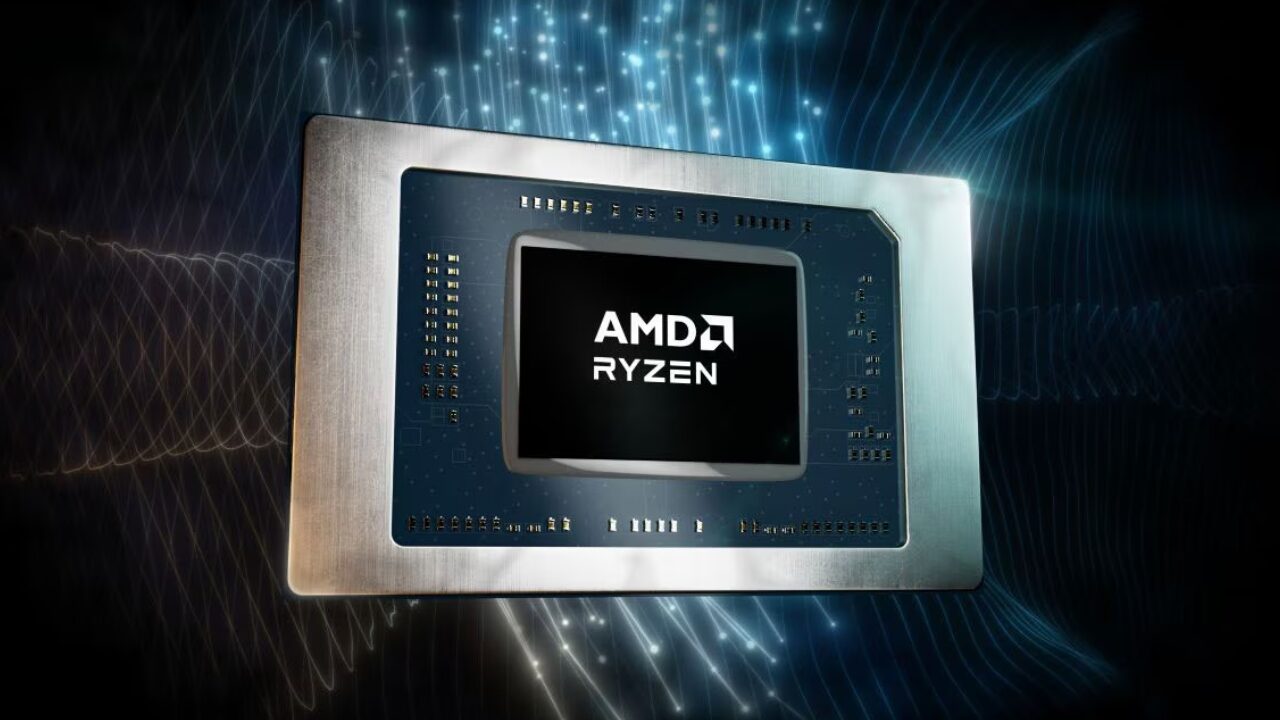
AMD used CES 2026 to announce a major expansion of its computing portfolio, headlined by the new Ryzen AI 400 Series processors and the gaming-focused Ryzen 7 9850X3D.
For those less familiar with the strategy, AMD has aggressively targeted the “AI PC” market, positioning neural processing units (NPUs) as a standard feature across laptops and desktops. Building on that momentum, the company launched the Ryzen AI 400 Series as its flagship mobile platform for the year. The processors are designed to power the next generation of “Copilot+ PCs,” delivering integrated AI performance aimed at outperforming rivals in productivity and content creation.
The Ryzen AI 400 Series is based on the new Zen 5 architecture paired with AMD’s XDNA 2 NPU. Together, the technologies deliver notable gains in multitasking efficiency and battery life, with the top-tier Ryzen AI 9 HX 475 offering up to 12 cores and 24 threads. According to AMD’s press materials, the new chips provide up to 1.7X faster content creation and 1.3X faster multitasking compared with previous generations and competing platforms such as Intel Core Ultra 9 processors.
If you are a gamer, you will be well aware of how strongly the X3D range of processors from AMD has been promoted for performance-focused systems. It appears Team Red was listening, announcing the Ryzen 7 9850X3D as a new milestone for desktop gaming performance.
The processor builds on the legacy of the X3D line, including the Ryzen 9 9950X3D and the widely praised Ryzen 7 9800X3D, by using AMD’s 3D V-Cache technology to deliver higher frame rates in demanding titles. It features eight cores, 16 threads and 104 MB of combined L2 and L3 cache. A summary of the Ryzen 7 9850X3D specifications appears below.
Processor: AMD Ryzen 7 9850X3D
Cores/Threads: 8 Cores / 16 Threads (“Zen 5” Architecture)
Boost Clock: Up to 5.6 GHz
Cache: 104 MB (L2 + L3)
TDP: 120W
Socket: AM5 (Drop-in Upgrade)
Memory: DDR5 (AMD EXPO Ready)
Availability: Q1 2026

AMD did not stop at hardware. The company also announced FSR “Redstone,” the next evolution of its FidelityFX Super Resolution technology. The machine-learning-powered suite of graphics tools introduces Neural Radiance Caching and Ray Regeneration, features designed to significantly improve ray-tracing performance and visual fidelity in supported games. The update also brings FSR 4 upscaling, which promises near-native image quality even when rendering from lower resolutions, something I am personally very excited to see in person.
Finally, AMD revealed updates to its software ecosystem with the release of ROCm 7.2, a move expected to draw strong interest from developers working with AI technologies. The update unifies support across Linux and Windows, making it easier to optimize AI workloads on Ryzen and Radeon hardware. The release also adds support for the new Ryzen AI 400 processors and integrates directly with popular tools such as ComfyUI, streamlining image generation workflows.
Stay tuned to CGM for full CES 2026 coverage, including on-the-show-floor updates from Las Vegas, where we will bring you all the news, announcements, and exciting tech.