

When I finished my preview of Aniimo back in January, I wondered if it would be able to win me over in a more effective way than its obvious inspiration. I had been somewhat at odds with the Pokémon series until I played Pokémon Legends: Z-A and saw a spark of life shine back into the series. If any game is going to replicate the iconic monster-catching game, they really need to bring something new to the table.
The answer to that question is… kind of. There’s a lot I like about Aniimo in terms of fundamental design; it’s also a game that kind of stands in its own way. Its take on the monster-catching genre borrows inspiration from a lot of different places to make a really unique experience, but its free-to-play design limits how much fun those elements can be. Simply put, it’s not fully evolved.
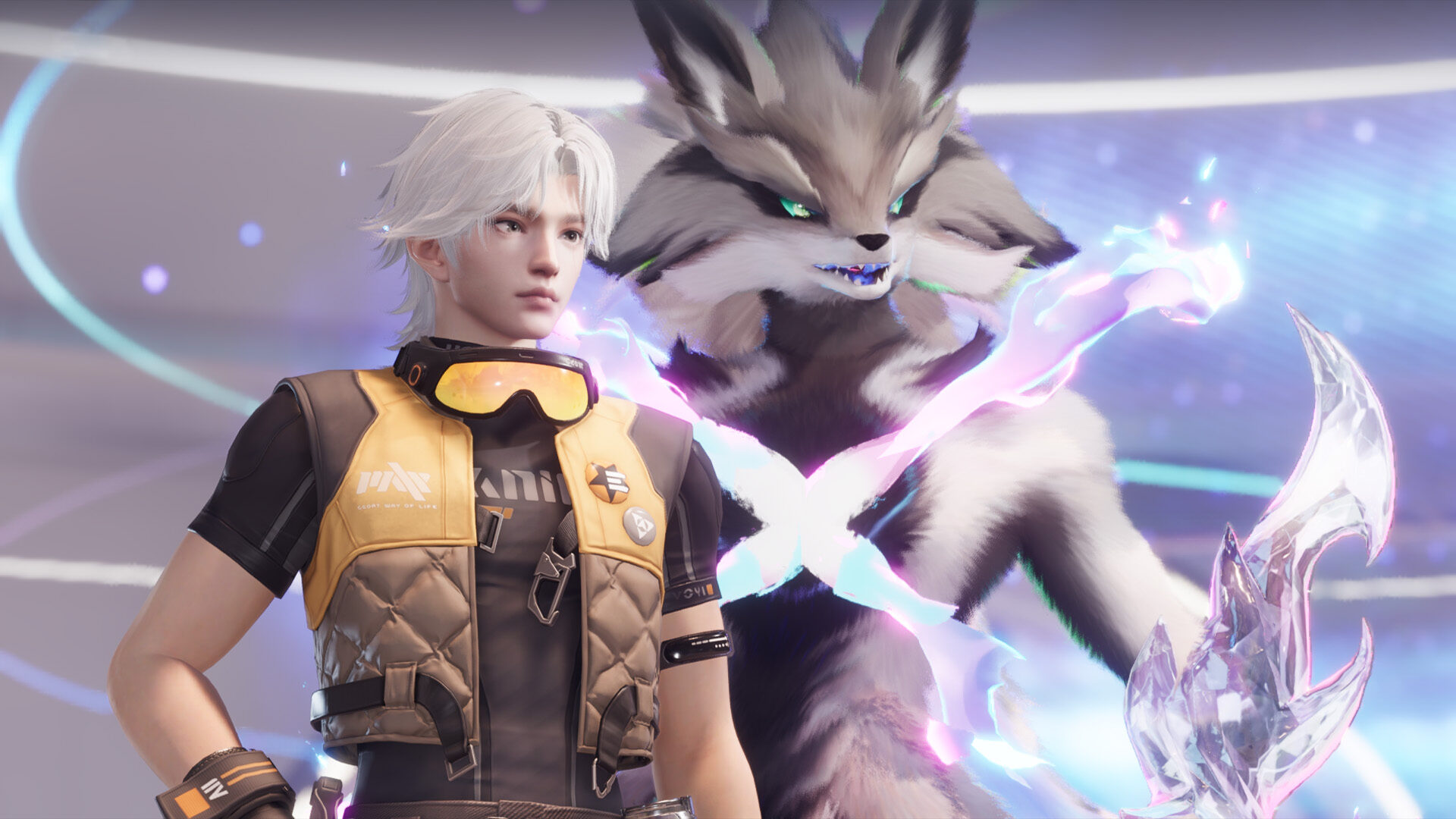
Like I mentioned in my preview, the story of Aniimo centers around a collection of humans from the planet Astra who come to the planet Idyll to research its unique ecology and mysterious creatures known as Aniimo. The player begins as a kind of Aniimo influencer but is quickly swept up in a whirlwind journey when a strange artifact pulls them into a realm possessing two legendary Aniimo.
After a battle with a particularly powerful Aniimo, one of the two legendary Aniimo is trapped within a mural, and it’s up to the player and his new partner to unravel the mysteries of Idyll and the secrets of Aniimo. It’s a pretty solid story that does feel thematically similar to something you’d get from Pokémon. There’s a sense of wonder and adventure that comes from discovering this new place and its strange creatures that I feel hasn’t been part of the game that inspired Aniimo in some time.
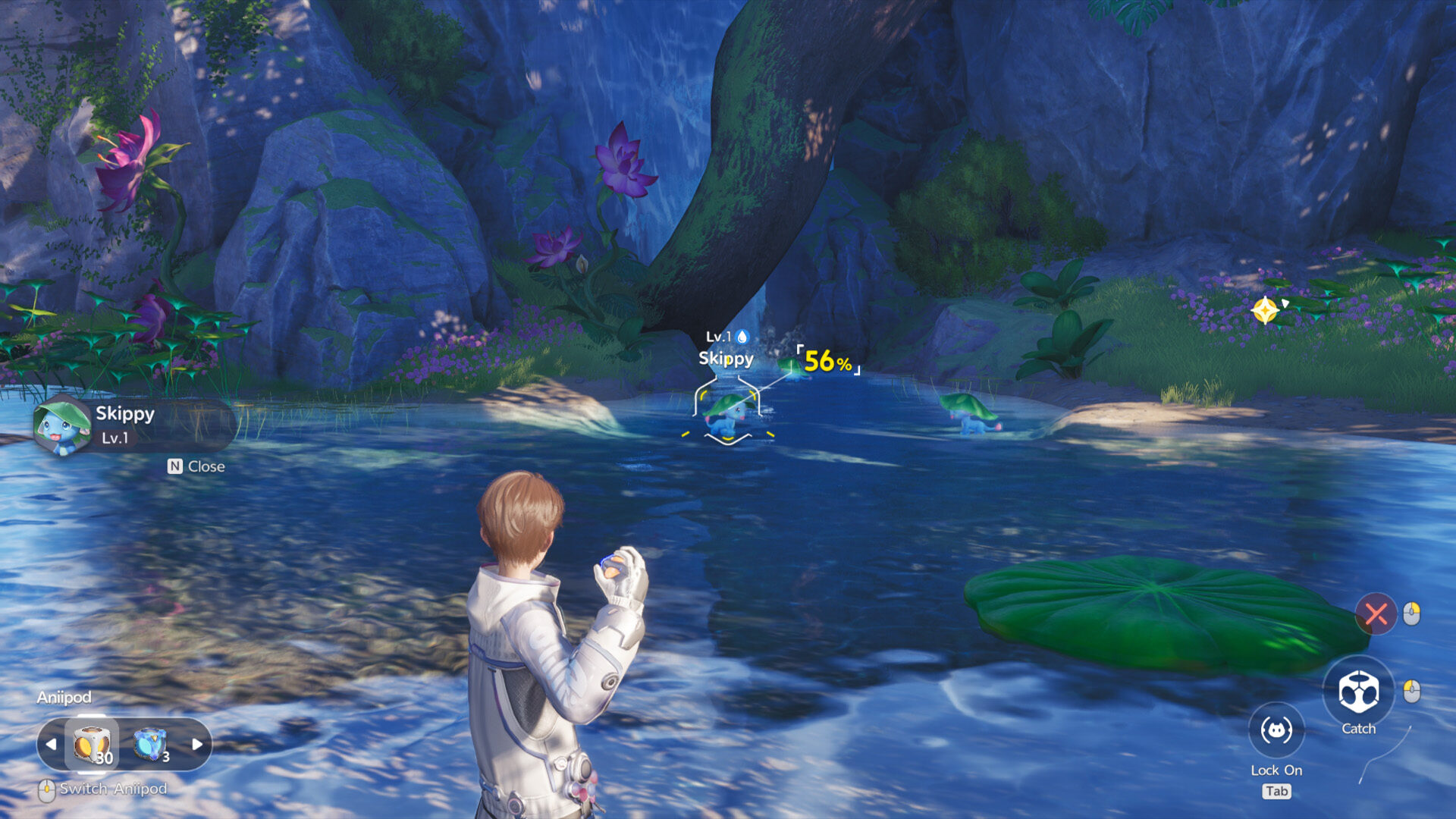
I mentioned this in my preview as well. I really like how much of Aniimo’s story is centered around being part of a research institute. Like I said there, “I’ve always wanted is a Pokémon game where you play as an aspiring Pokémon professor,” and Aniimo really does a decent job of emphasizing the discovery aspect of a creature-capture game in its theming as well as its gameplay.
“There’s a sense of wonder and adventure that comes from discovering this new place and its strange creatures that I feel hasn’t been part of the game that inspired Aniimo in some time.”
And there’s a lot going on in Aniimo’s gameplay. Like I mentioned in my preview—and above—the game takes inspiration from a lot of different sources. It’s mainly Pokémon, as players will battle wild Aniimo, weakening them enough to be captured. Capturing Aniimo, as well as completing certain objectives, contributes to the research survey being conducted by the Polaris Institute.
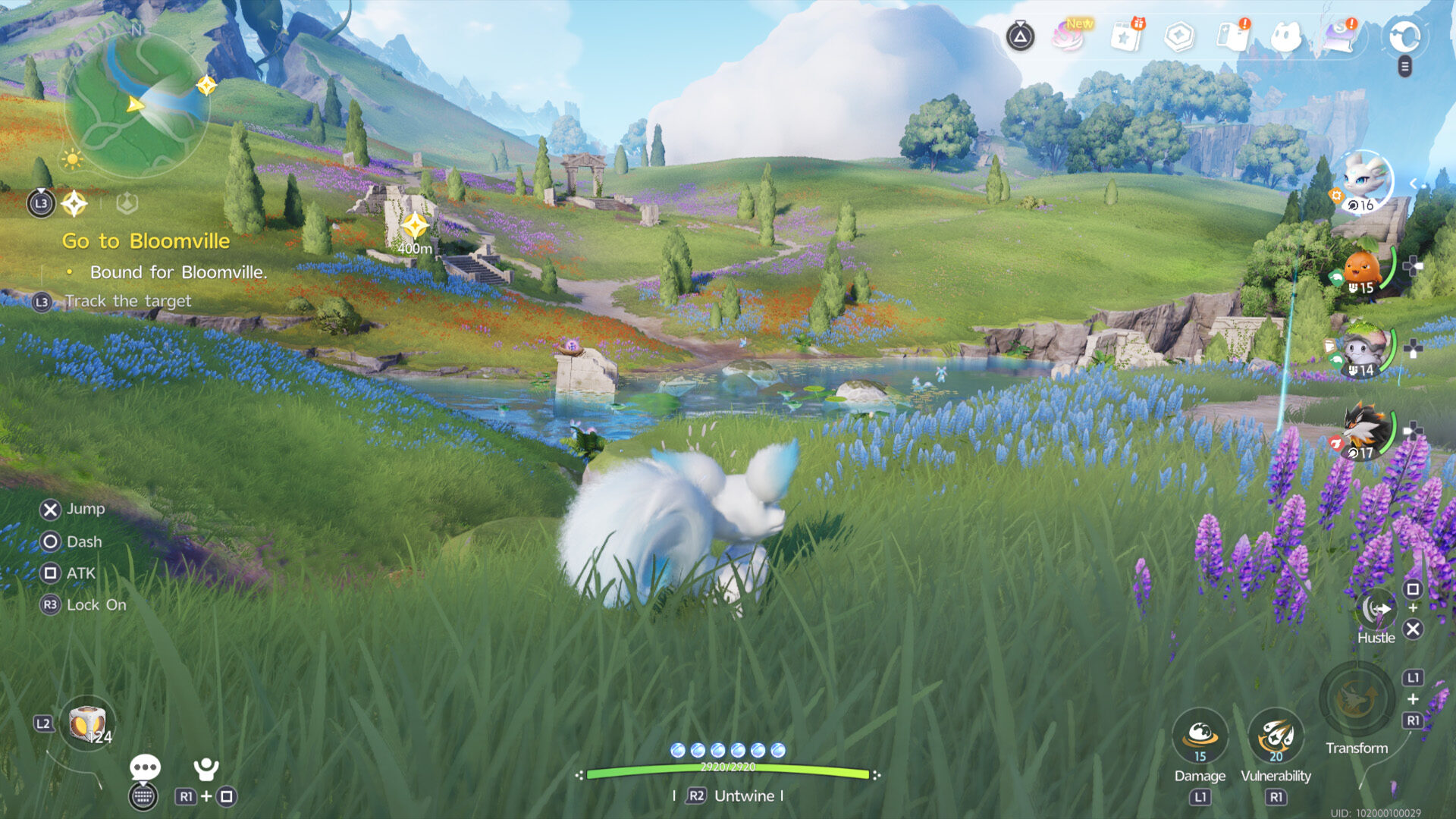
Similar to Pokémon Legends, players can control up to four Aniimo—calling them to their side in battle, and even fighting alongside them. However, dissimilar to Pokémon Legends is the player’s ability to “Twine” with their Aniimo, allowing them to take control of them and utilize their unique abilities. While this works for allowing players more direct control during combat, it also serves to expand exploration by giving them access to different Aniimo types’ unique abilities.
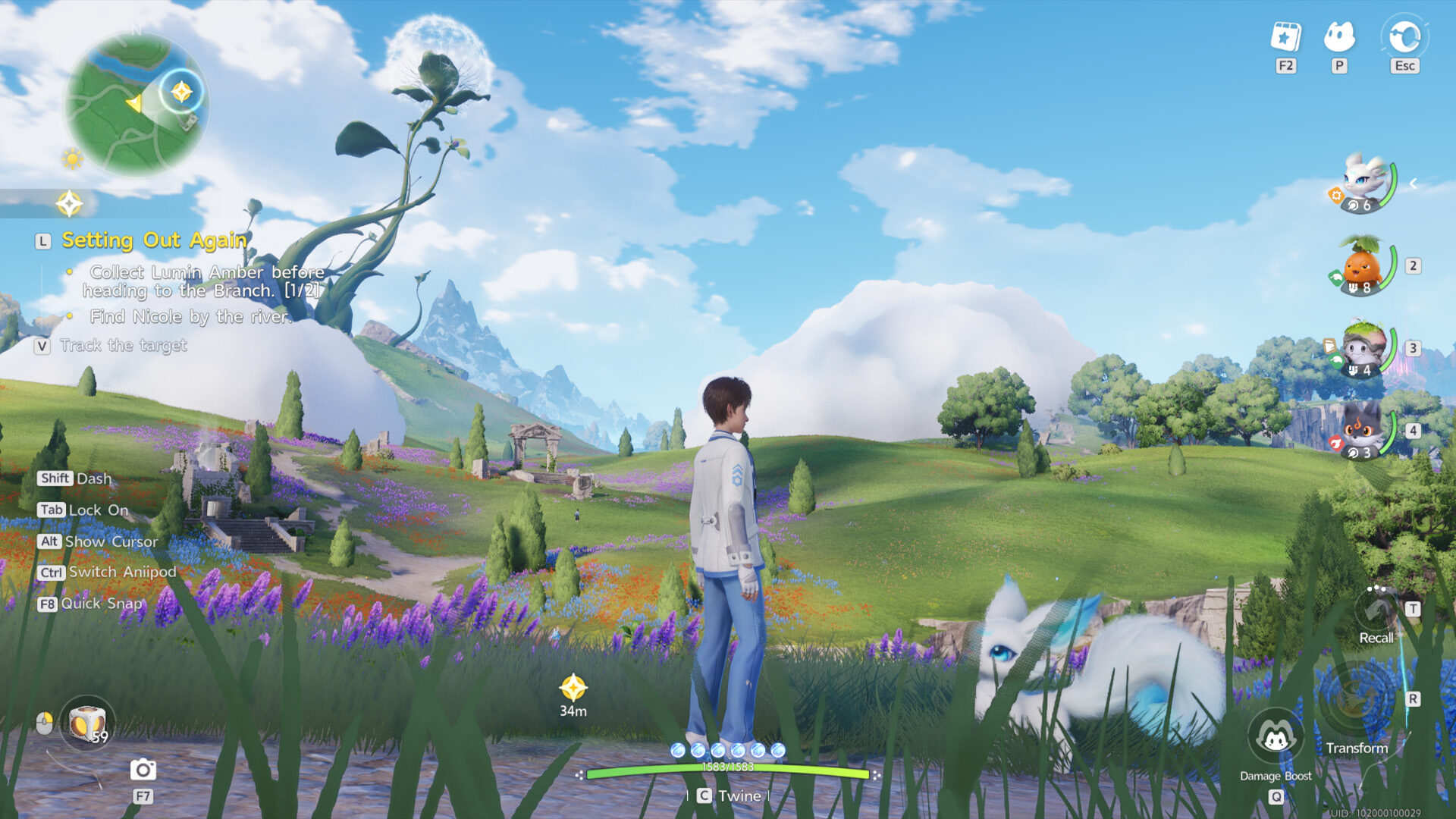
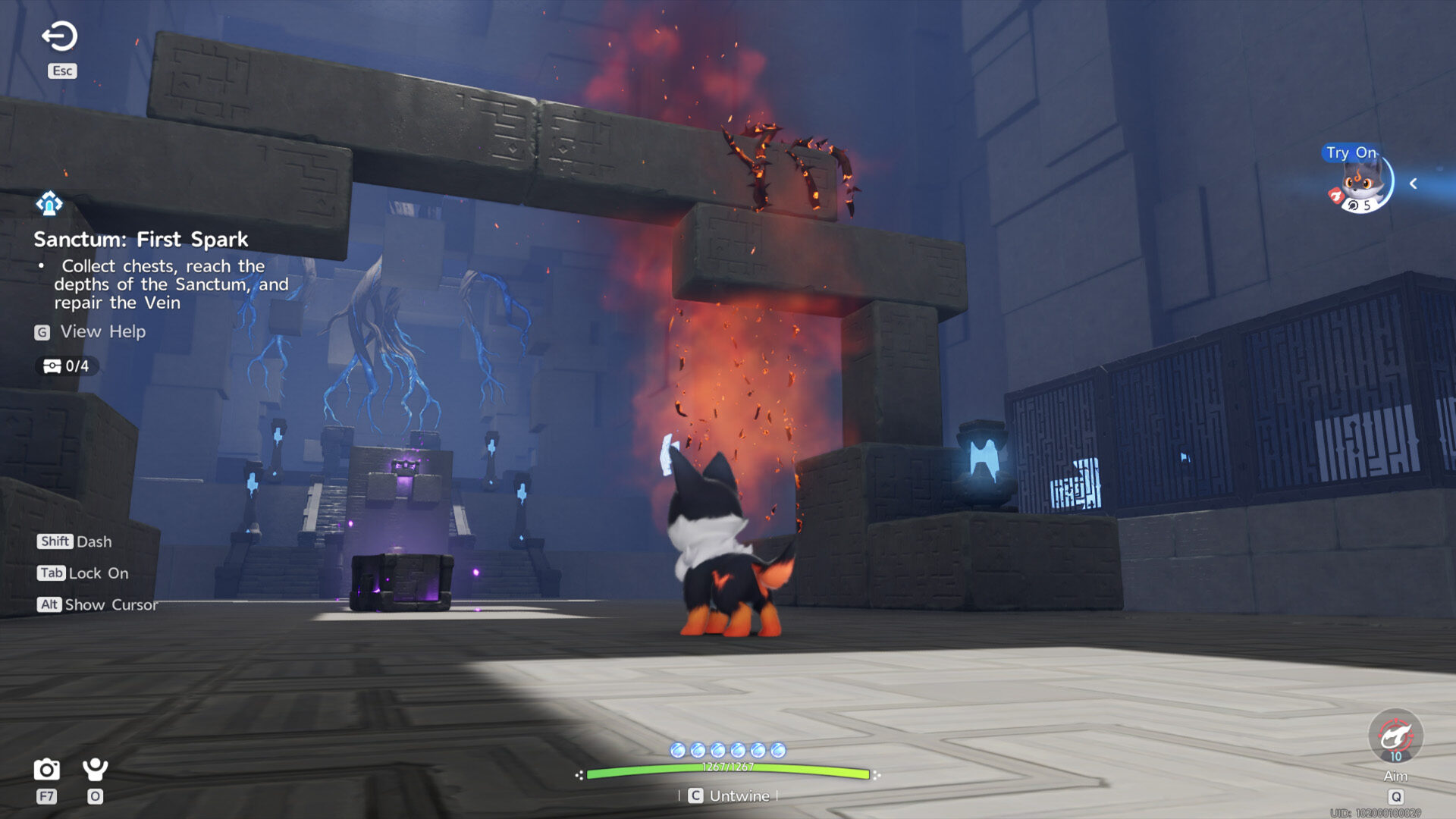
Honestly, it can feel like a little too much and makes the gameplay a little chaotic, as there are so many functions mapped to so many buttons; it’s easy to mis-press and end up doing something you didn’t want to—particularly if you’re playing with a controller. And there are other little inspirations here too. There’s some Breath of the Wild in there with the exploration and literal Shrine challenges. The evolution system is similar to that of the Digimon World games, where players can choose different evolution paths based on completing certain objectives.
However, all of Aniimo’s good ideas are somewhat squandered, due in large part to its free-to-play, live-service design. I knew the game was going to be a problem when I opened the menu and saw a dizzying 16 icons for players to select from. While a few of these are necessary for player and Aniimo management, so many are dedicated to “achievements” that are tied to claiming rewards, which require a constant amount of clicking in-game buttons and watching little “Item Get” splash screens.
It’s that kind of constant dopamine quick-hit design that keeps players “engaged,” but also has them spending more time in menus than they are actually playing the game. As such, nothing about Aniimo’s gameplay feels as fleshed out as it could be, since it constantly has to spread itself out in order to keep players diving into those menus and collecting those rewards. Thankfully, Aniimo shows some restraint with its premium currency by only having one—as far as I can tell—but that really feels like a low bar to clear.
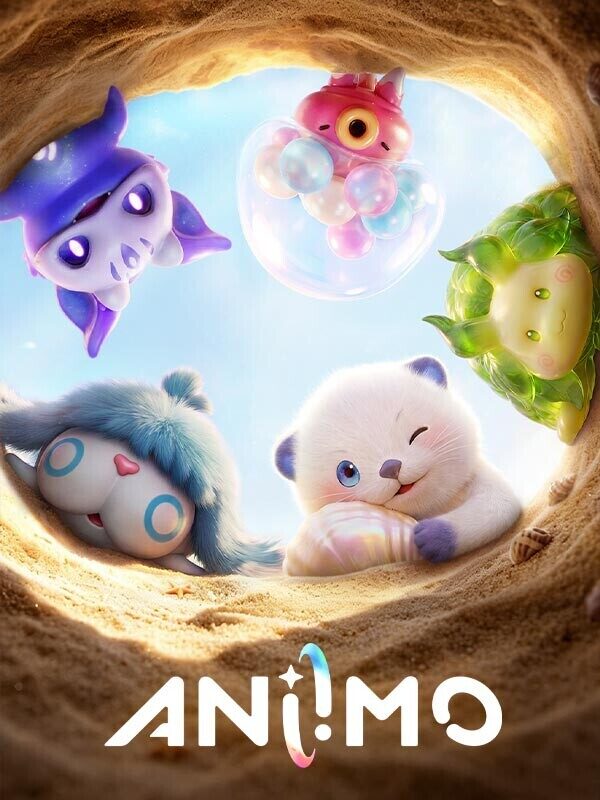
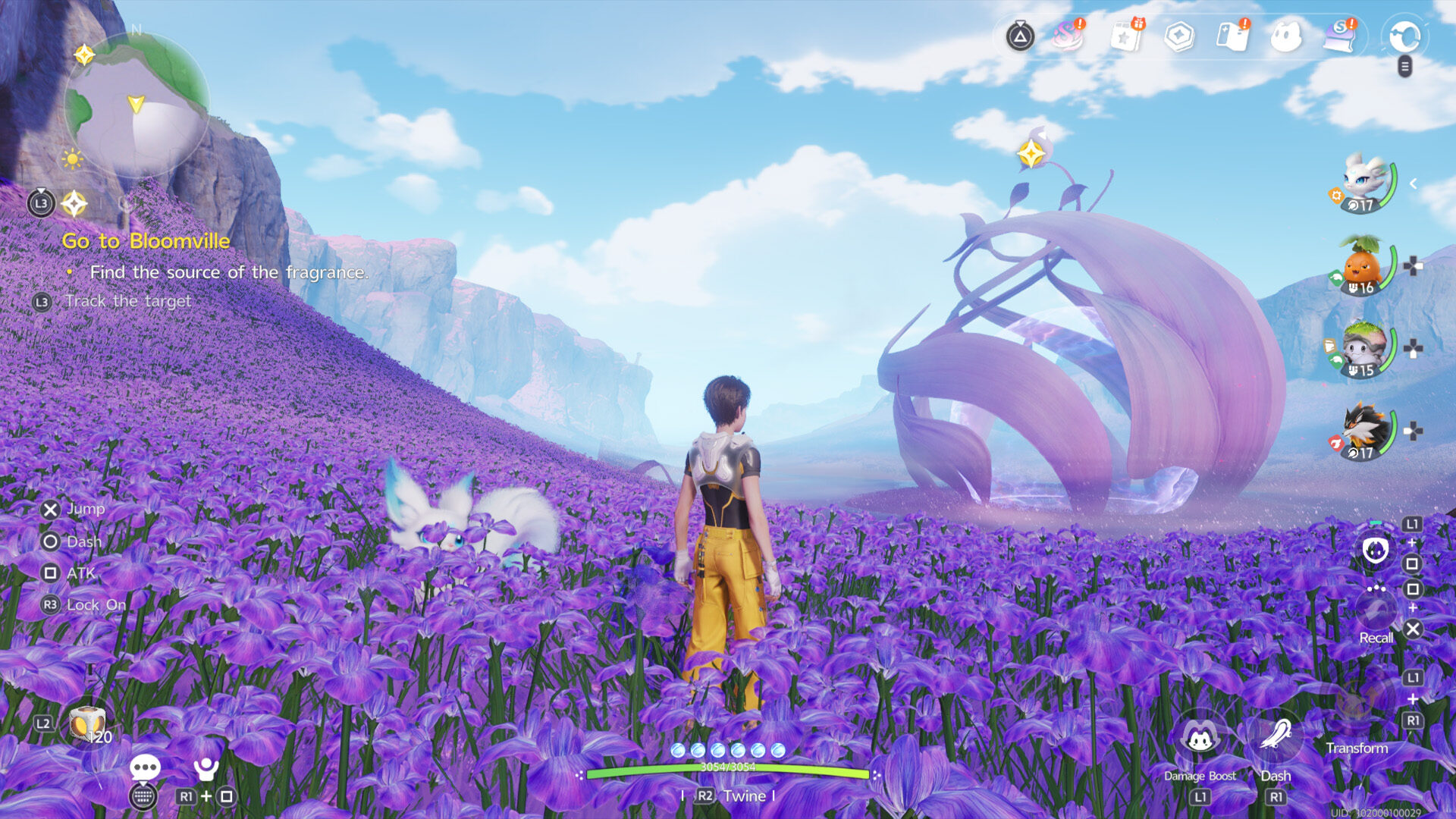
Visually, Aniimo does have a really solid aesthetic—combining the depth and detail of high-definition graphics with a fun and fantastic world. Idyll is a massive world with several unique biomes, brought to life with colour and dynamism. The Aniimo themselves are pretty creative and far less shameless in their… inspiration than other games.
However, if there’s one thing I don’t love about the visuals, it’s the human characters. It’s something I’ve noticed with a few of these games—from Where Winds Meet to Starsand Island—and perhaps it’s specific to the Chinese-based studio style, but the human characters are so indistinct and lack any kind of real personality. No matter how you design your character, they always look like perfect Saja Boys, and they lack a sense of distinct personality.
“Visually, Aniimo does have a really solid aesthetic—combining the depth and detail of high-definition graphics with a fun and fantastic world.”
Also, there are some weird audio/visual hiccups that cause Aniimo to appear unpolished. Characters often snap to a direction during cutscenes, the player character’s audio can often sound tinny and strange during cutscenes, follower Aniimo will snap to any direction the player moves the joystick, causing them to wobble around chaotically, and there is a certain degree of noticeable pop-in when exploring the world.
There was also one specific battle with a Boss Aniimo out in the wild that I’m pretty sure was meant to have battle music—much like when you engage with normal creatures in the wild—but it just continued playing the serene overworld music, genuinely ruining the tension and threat of the battle. I’m sure these are all things that can be fixed with future patches, but it certainly soured my experience.
Overall, Aniimo is a serviceable enough Pokémon-like that doesn’t really offend but probably won’t blow a lot of minds either. It’s a decent alternative for people who want the style and vibe of a more traditional Pokémon experience, but may be restricted from accessing both a Nintendo Switch 2 or the $80 games themselves.