
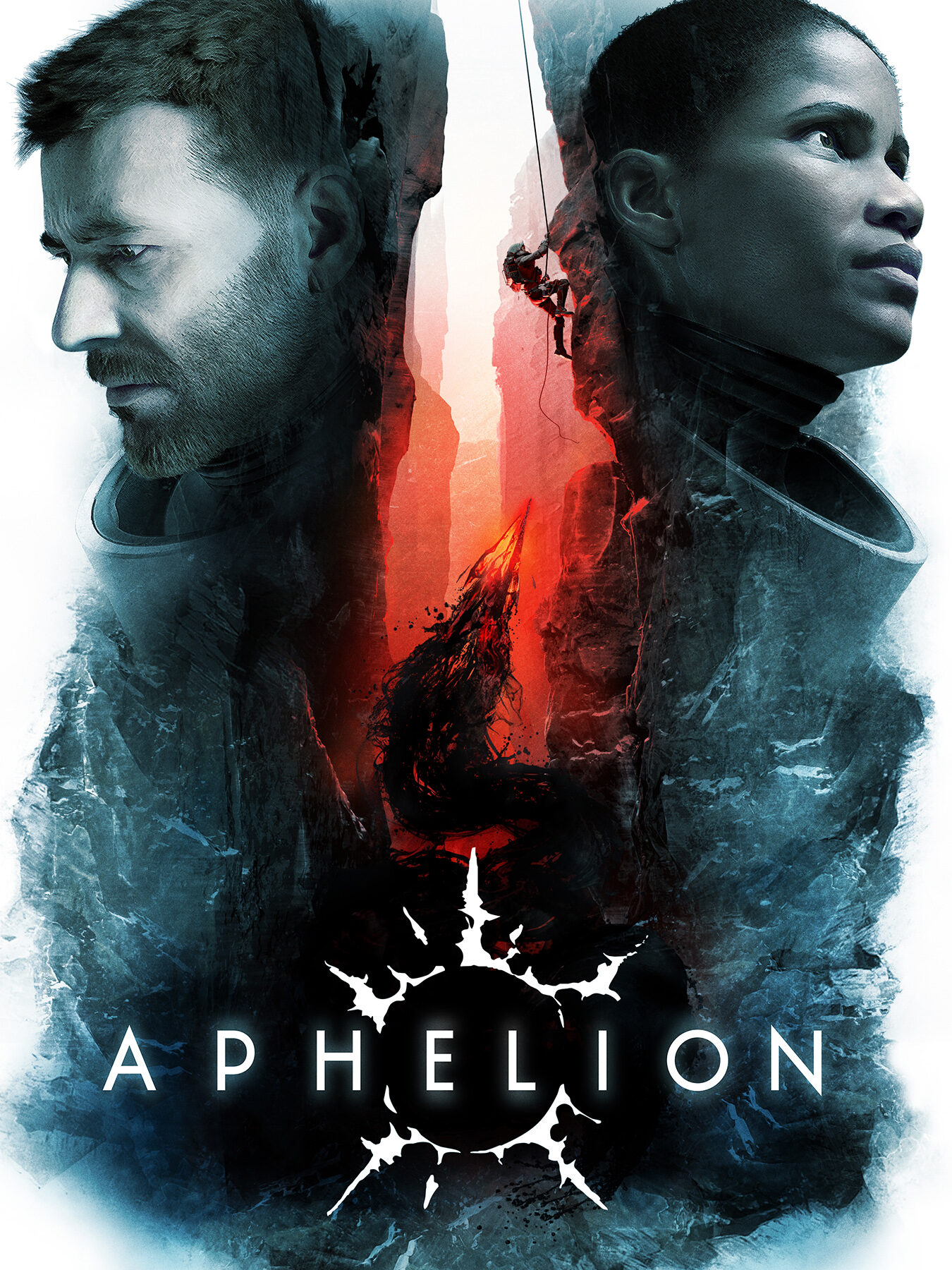

When I had a chance to preview Aphelion back in February, I was initially pretty optimistic about it. DON’T NOD is famous for their storytelling, and seeing them step outside their comfort zone of choice-based narrative experiences was genuinely interesting. Not only that, Creative Director Florent Guillaume described a game made that clearly had a lot of passion and thought put into it, so I was excited to see where it would go.
The preview I got with it was brief, and perhaps that led my imagination to build up the game higher than it should have. While Aphelion isn’t a particularly bad game, it’s not a particularly memorable one either, and I can’t help but wonder if the change in genre affected a change in the storytelling DON’T NOD is so well known for.
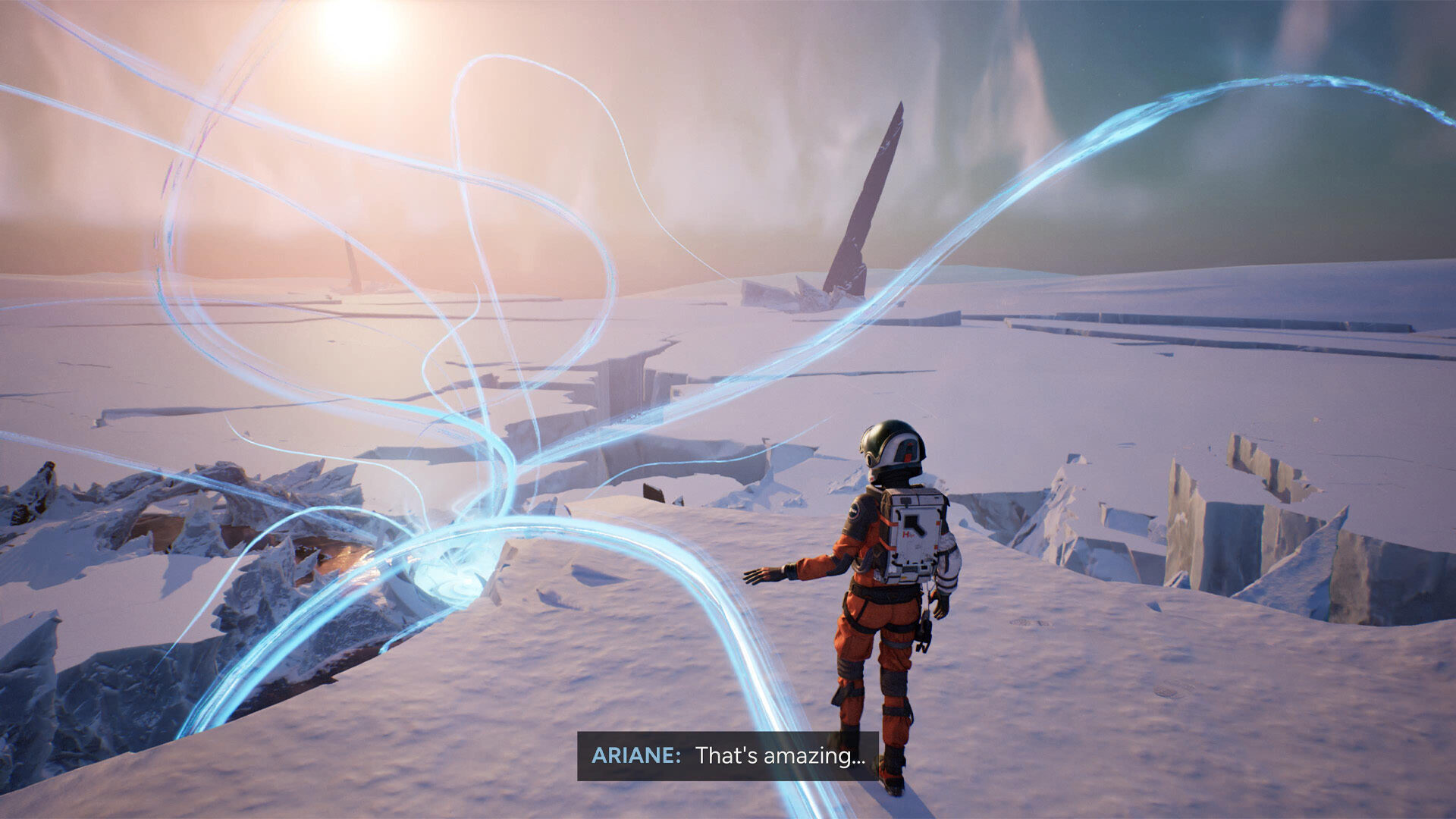
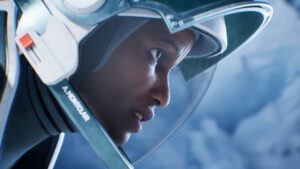
Like I mentioned in my preview of Aphelion, the story concerns two astroscientists—Dr. Arianne Moncler and Officer Thomas Cross—who crash-land on the mysterious planet “Persephone” during a research expedition to see if it is habitable, as climate change has effectively destroyed Earth in the year 2062. The two become separated in the crash and must work to not only unravel the mysteries of the planet but also reunite with each other.
“I’ll say this: Aphelion has some of the best ice-cracking visual and sound design I’ve ever seen/heard in a video game EVER.”
The story itself is fine, setting the stakes high with a personal struggle to survive, alongside an obvious romance where Arianne and Thomas fight across a hostile world to find each other. It also introduces a decent amount of intrigue not just with the planet itself, but with the potential machinations of the company that sent the two there, as it becomes increasingly clear Arianne and Thomas are not the first people to charter Persephone.
But for a DON’T NOD game, the story feels a bit safe and kind of lacking, considering the studio behind it. It’s so middle-of-the-road okay that I couldn’t help but wonder if the absence of player choice in directing the plot and seeing the consequences of their choices is a big part of why it feels so basic and kind of uninteresting.
However, Aphelion makes a mistake I’ve complained about several times in the past in the way it tells its story through its two protagonists — namely, the way the two cannot shut up for two seconds. Now, look, I understand that in a story-driven experience, centered around two characters who are alone on an empty world, you need a way to get exposition to the player in order to tell your story, and having your characters speak their thoughts is an easy way to do that.
But this isn’t a book where readers need to intuit certain things. This is an interactive medium where the people experiencing it are going to see, hear and feel what’s happening — both emotionally and, to a certain degree, physically. In an interactive experience, exposition needs to be woven into the narrative in a natural way, and having characters feel the need to comment on every little thing, at every single moment, completely robs any scene of resonance.
During the first interaction with “The Nemesis,” Arianne is wandering through a cavernous maze and feels the need to say out loud, “I feel like a rat in a maze,” completely undercutting the tension of the scene. If it had taken place in silence, allowing the player to feel nervous and disoriented, it would’ve been much more powerful. Again, this is an interactive medium — SHOW, don’t TELL.
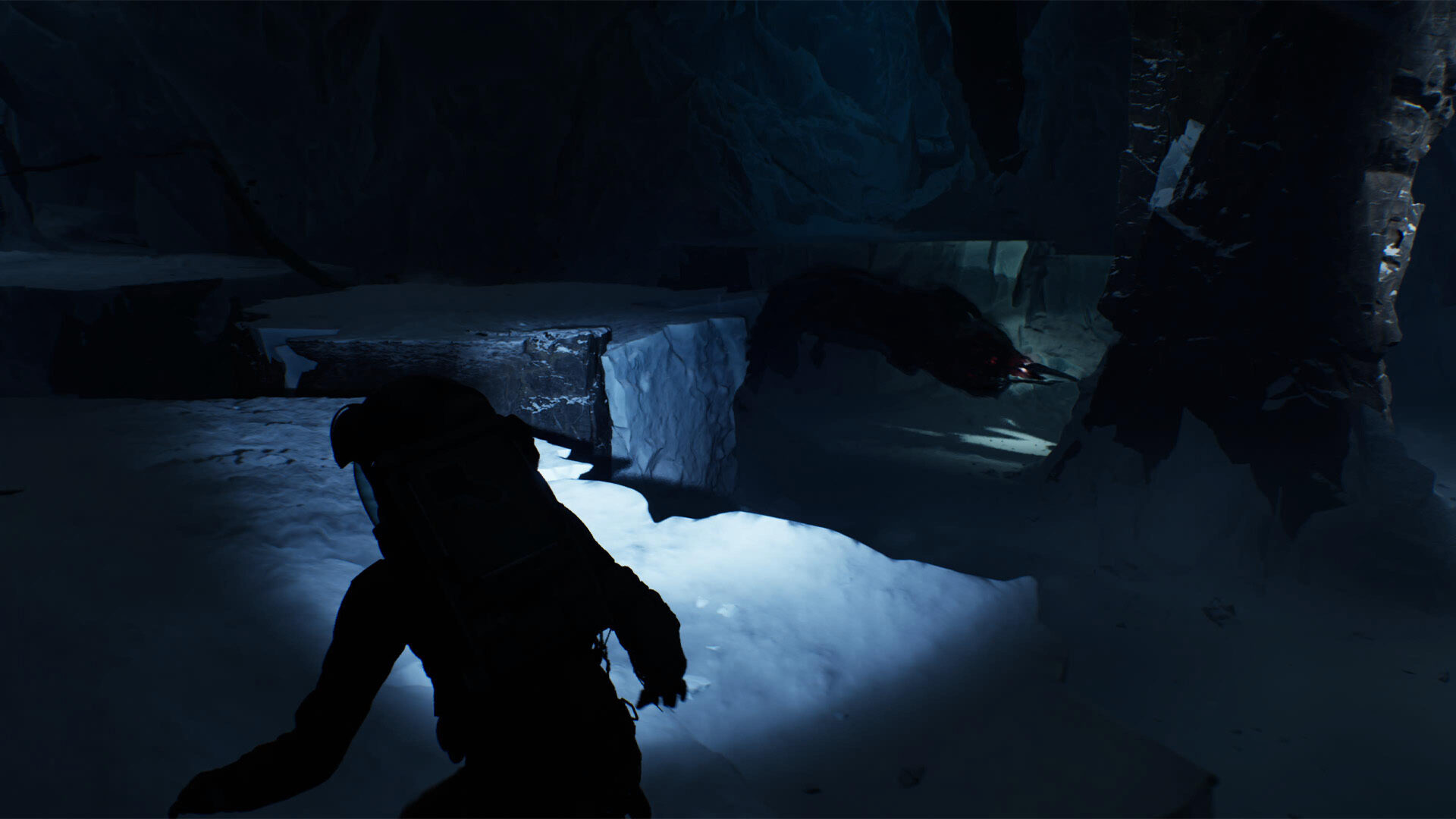
This continued into every moment where Arianne needed to sneak around The Nemisis since its established that it can only hear her, but is unable to see her. Even while trying to sneak, Arianne repeatedly whispered, out-loud, to herself, meaningless platitudes like, “need to go nice and slow,” or “gotta try to do this quietly,” and I found myself almost yelling at the screen “WHY ARE YOU TALKING TO YOURSELF IF THIS THING SEES THROUGH SOUND!?”
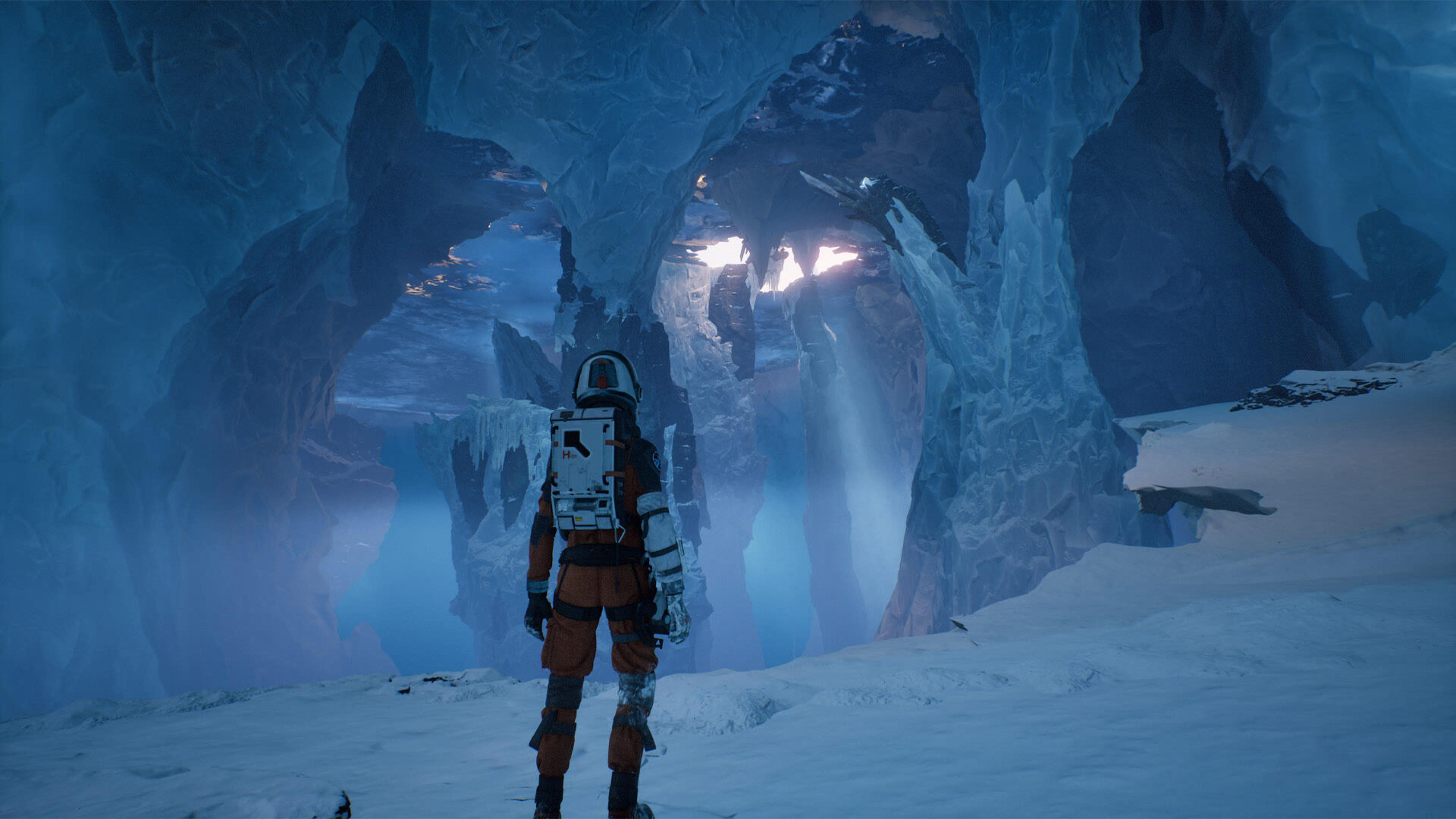
“At the very least, I can say visually, Aphelion is superb — creating a world that is both alien and familiar.”
It makes the writing feel amateurish when every moment is undercut with obvious observation, punctuated by pondering about what the other would think, or longing for them to be there. At a certain point, it feels like the game is beating you over the head with its themes, and you start to think, “We get it, you’re in love. Can you not think of any other thing besides each other?”
And what’s weird is there are brief moments where Aphelion almost understands how to exposit properly, since these are two scientists on an expedition, and every now and again they record audio logs for future study. If this had been done, sparingly mind you, then it could’ve been an excellent way to highlighting the characters’ knowledge, explain certain gameplay/plot to the player and slipped small glimpses into Arienne and Thomas’ relationship without feeling overbearing.
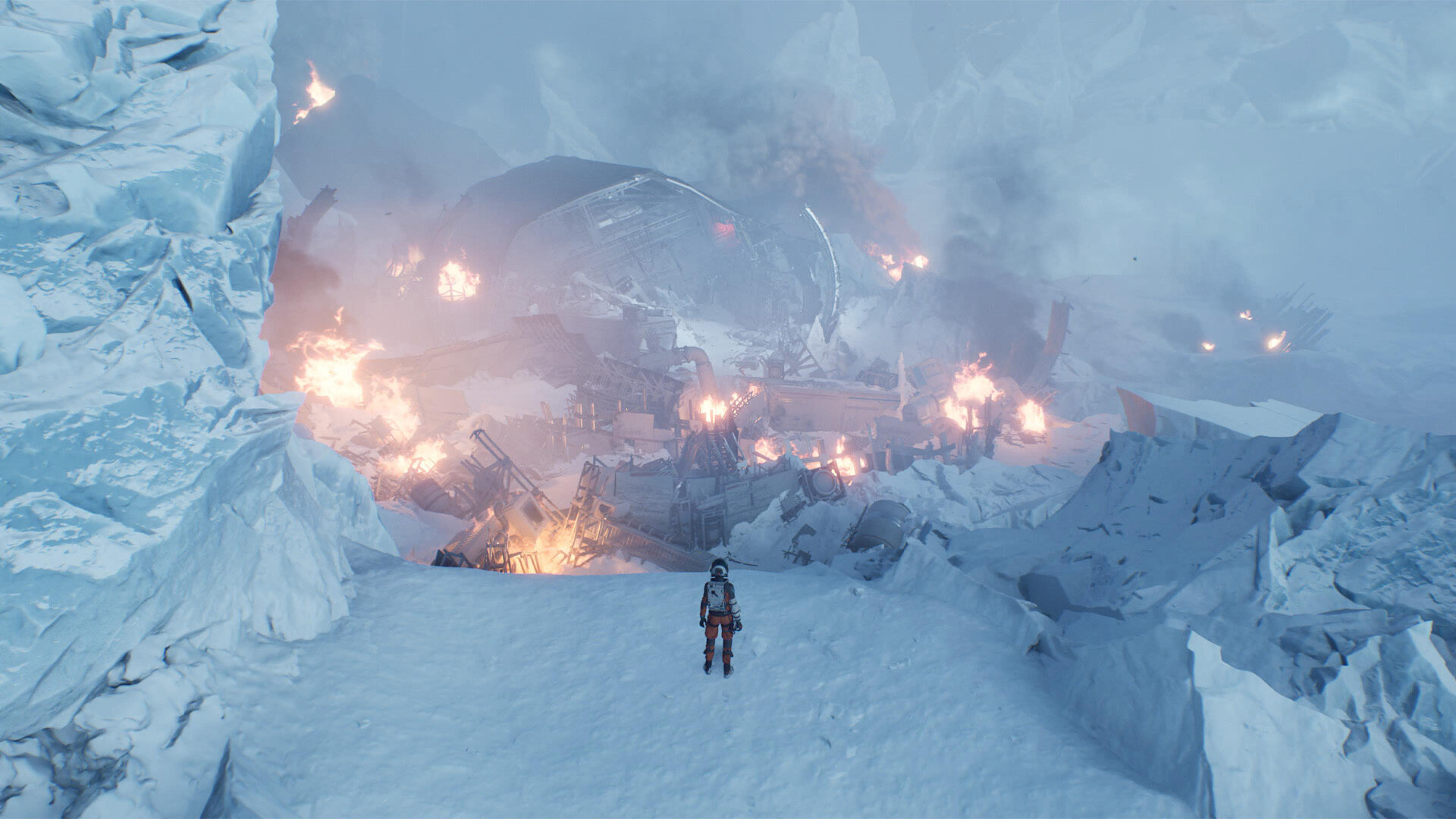
And the narrative isn’t helped by the gameplay, which, again, is perfectly serviceable. The bulk of the game is straightforward platforming and some pretty generous stealth segments. There are some interesting ideas at play. As Arianne, players will face a wide variety of platforming challenges, but Aphelion never really captures the sense of tension and danger the developers clearly intended.
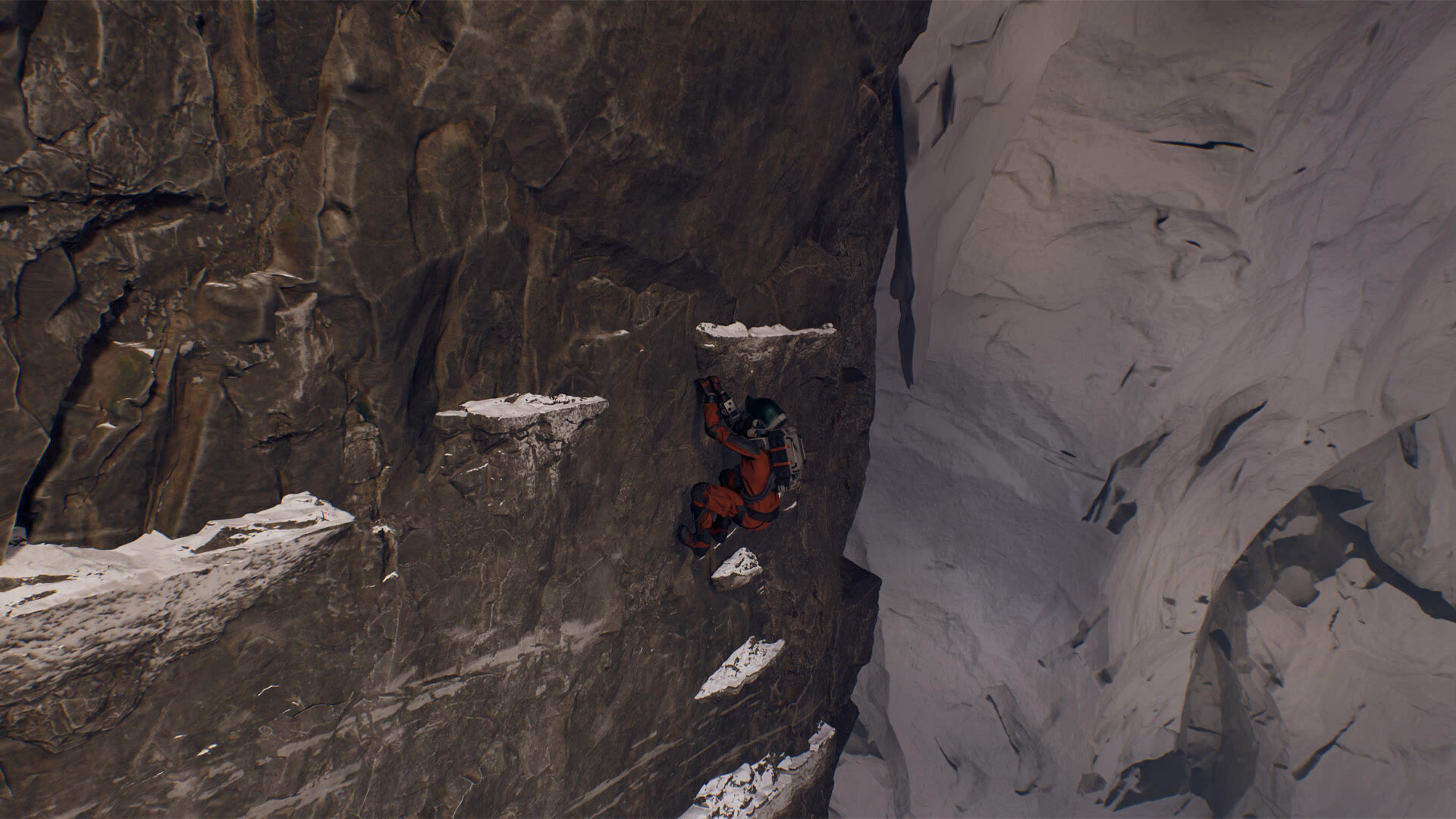
A big deal is made of the Aphelion‘s “active platforming,” where players need to press a button to grab ledges after a jump, and, in theory, this could’ve given players a greater sense of peril while platforming. However, the timing window for these grabs, even on the standard setting, is so wide that Arianne practically magnetizes to every ledge, making it feel impossible to fail these “challenges.”
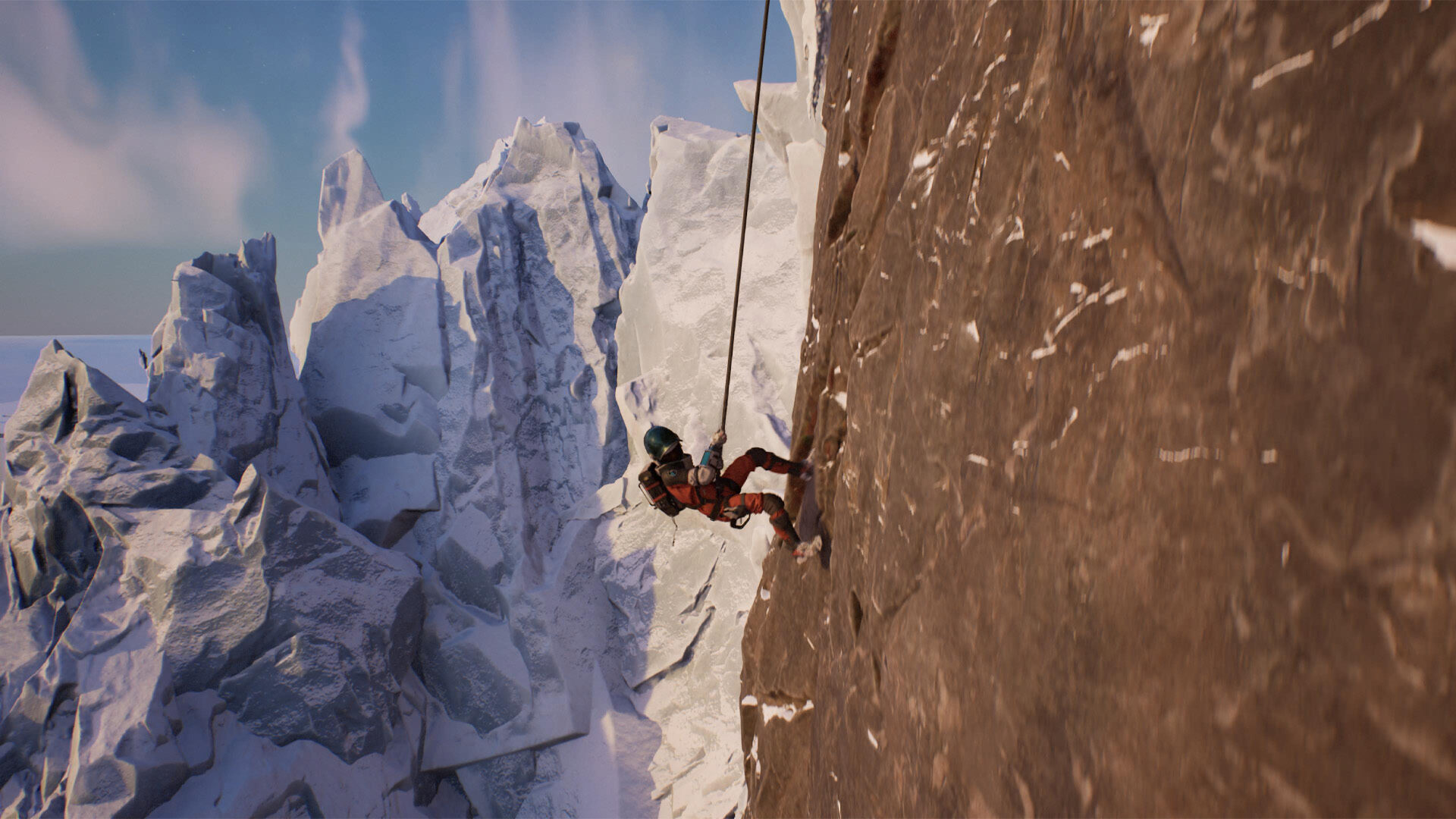
And any kind of “challenge” is immediately undercut by the introduction of Arianne’s never-ending Grapple Winch, which lets her rappel and climb insurmountable distances with unbelievable ease. I genuinely laughed the first time she shot her grappling hook at a crystal formation that was a solid 100 feet above her, and the wire came out of a 2-inch box on her belt, thinking to myself, “Where is that wire even coming from?” I’m just saying, for a game about scientists, someone should’ve considered the physics on that.
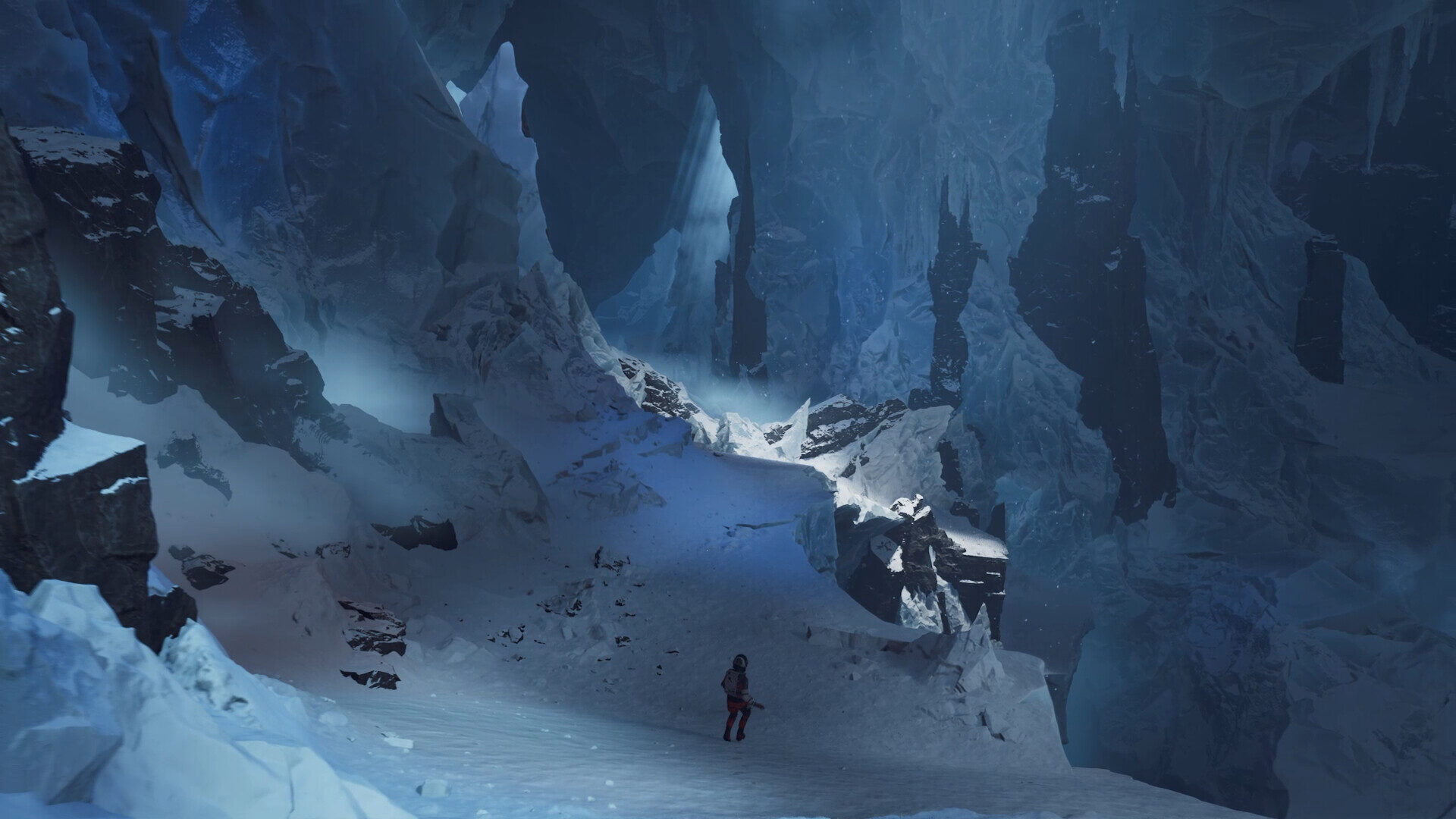
Even stealth segments are pretty breezy as The Nemsis, who I remind you was “inspired by sci-fi films like Alien, Interstellar and Arrival,” mindlessly patrols in obvious routes and only really moves if you accidentally make noise, in which case it’ll usually do a small circle around where you are and go back to patrolling. At no point during these scenes did I ever feel on edge or like this creature was ever going to get me.
Things are at least a bit more interesting while playing as Thomas, who is injured in the crash and unable to platform like Arianne. What’s worse, because his kit was also damaged, he is figuratively and literally tethered to his oxygen tank, which is constantly leaking and needing to be refilled. While this is interesting in theory, it basically just sets a series of checkpoints that are pretty easy to navigate to before Thomas asphyxiates.
So easy, in fact, it actually led to a funny audio glitch where, after connecting to an oxygen tank behind a gate, walking up to the gate had Thomas deliver the line, “An oxygen tank … need to figure out how to get behind that gate.” Like, you could see where they set the audio trigger and didn’t account for what would happen if players didn’t approach the gate from the other side.
And it’s kind of sad to see the PlayStation 5 version of Aphelion doesn’t utilize the hardware in any meaningful way, because there are so many ways it could have. Moments where Arianne has to balance along narrow paths could’ve utilized the gyroscope. Both characters’ EMF Scanners (mapped to R2/L2) could have used the adaptive triggers for more precise control. Even the haptic feedback isn’t used in an interesting way, nor is the DualSense speaker.
“Aphelion is fine, but I honestly wish it could have been better, because you can see the myriad ways it could have been while playing it.”
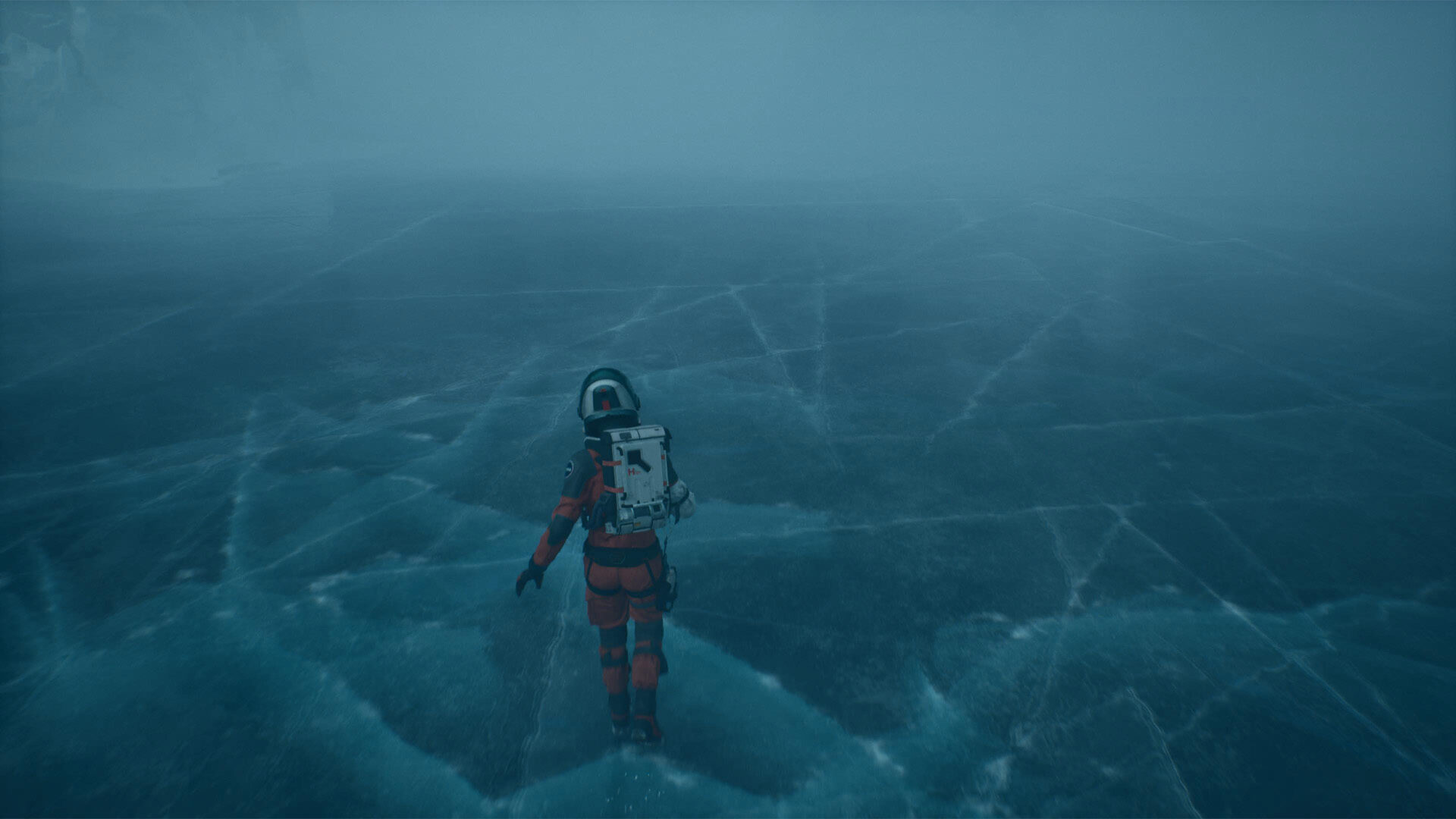
At the very least, I can say visually, Aphelion is superb — creating a world that is both alien and familiar. The use of shifting landscapes and varied terrain makes Persephone incredibly interesting and dynamic, and the stark colours highlighted against vast snowscapes is beautiful and effective. I’ll say this: Aphelion has some of the best ice-cracking visual and sound design I’ve ever seen/heard in a video game EVER.
The visuals in Aphelion are backed by an outstanding score that captures the haunting beauty of this alien world and really punctuates the tragedy and solitude these two characters face. It’s incredibly interesting because at no point is the music ever happy, ranging from sombre to tense, and only ever feeling uplifting in the face of minor triumphs. It makes the soundtrack feel very personal and desperate and genuinely complements the story.
And while I wish they wouldn’t muse on every little thing, I will say the voice work by Vanessa Dolmen and Eric Geynes is commendable. The entirety of the storytelling is placed upon their shoulders and they do bring a lot of personality and life to these characters.
Aphelion is fine, but I honestly wish it could have been better, because you can see the myriad ways it could have been while playing it. Its story is compelling and engaging, but undone by constant narration ruining the atmosphere. Its gameplay is exciting and interesting, but could’ve been better with higher stakes and more danger. In the end, it’s too safe to be offensive, but ends up less interesting than it could’ve been.