
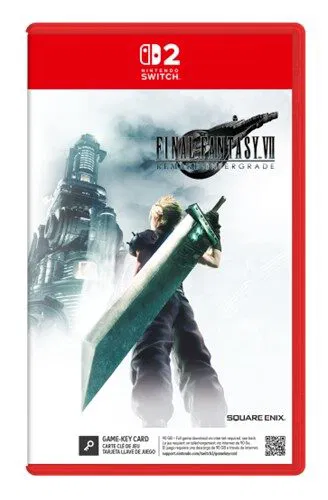

Six years ago, I was eagerly waiting to play Animal Crossing: New Horizons and Final Fantasy VII Remake. Now, through some kind of chronomancy or fate manipulation, I’ve spent the month eagerly waiting to play Animal Crossing New Horizons and Final Fantasy VII Remake Intergrade on the Nintendo Switch 2.
In those six years, we’ve seen part two of the “Remake trilogy,” CGM’s 2024 Game of the Year Final Fantasy VII Rebirth; presumably, we may see the third installment around the PlayStation original’s 30th anniversary next year (or at least, I hope so), bringing this new interpretation and expansion of one of gaming’s biggest successes to a close. In light of that, now is a pretty great time to go back to where it all began again.
And even more so, it’s a great time to replay Final Fantasy VII Remake because its Nintendo Switch 2 port is exemplary.
Even though the original version is half a decade old and debuted on last-generation hardware, Final Fantasy VII Remake seemed like a major canary in the coal mine when it was announced alongside the Switch 2’s grand reveal last spring. If Nintendo’s new hybrid console could handle the PS5-upgraded edition, it would bode extremely well for the Switch 2’s technical potential. Luckily, it seems Square Enix has landed pretty close to the PlayStation 5 version’s Performance Mode.
“If you’ve been holding off from playing Final Fantasy VII Remake all this time because you don’t have a PS5 or gaming PC, the Switch 2 port is practically a must-play.”
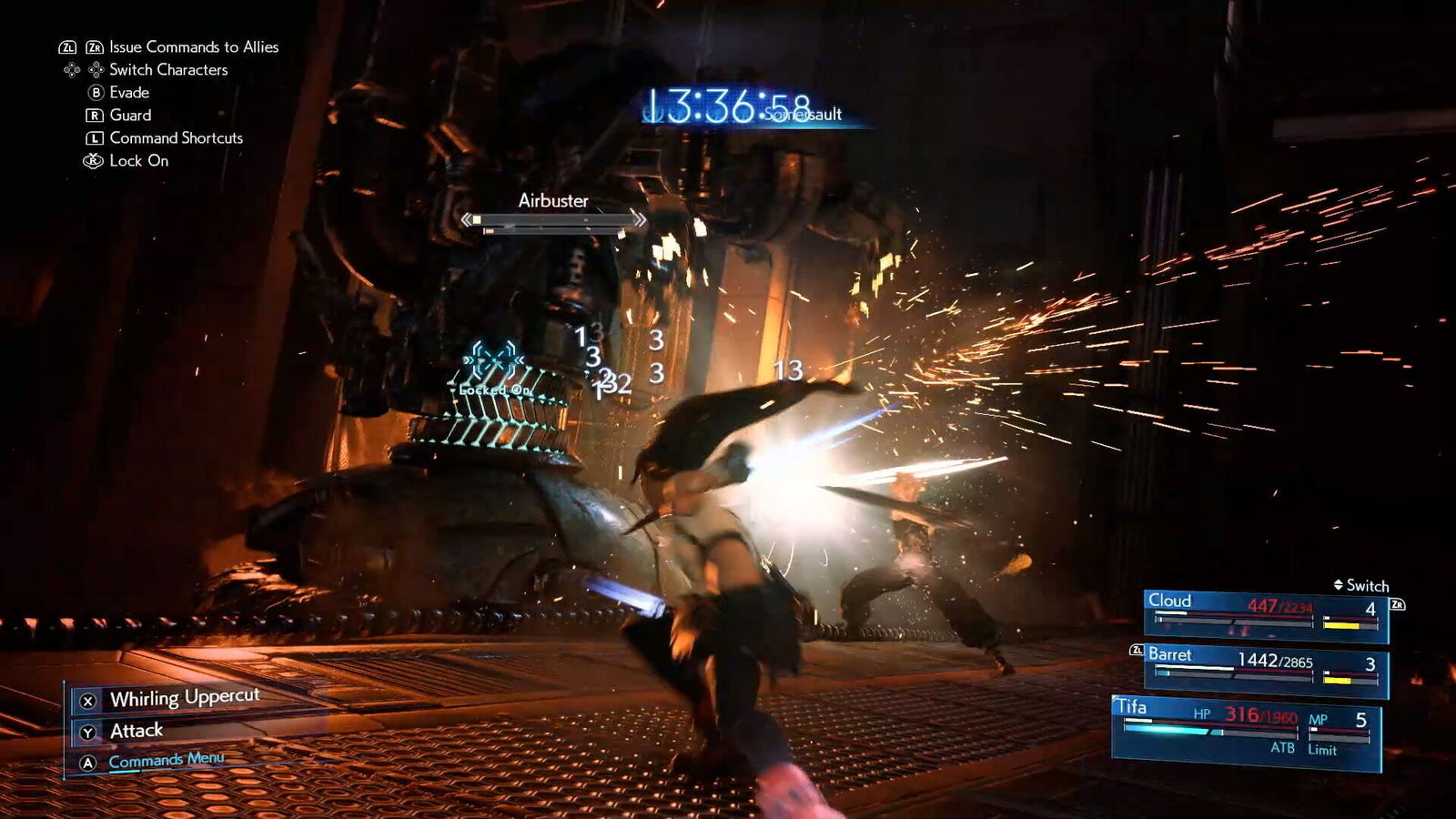
On Switch 2, Final Fantasy VII Remake holds to a stable and consistent 30fps and 1080p resolution—a slight dip from the PS5—while implementing other bells and whistles from the PS5’s Performance mode. Frame count purists may object, but that stability goes a long way, and the game looks fantastic in both docked and handheld mode. If not for the fact that my brain is hardwired to the PlayStation controller’s inputs after so much time in the Remake‘s world, and the lack of trophies, I might have lost track of which version I was actually playing at times.
There is a very slight dip in handheld mode, and the increased graphical load did seem to take its toll on the battery, so the portability factor may not be the most compelling sales point. Still, it’s nothing that broke immersion or negatively impacted gameplay.

Though it may not hit that 60fps sweet spot, it’s still an impressive feat of engineering for a Nintendo console and by all means, a great substitute for the original platform. If you’ve been holding off from playing Final Fantasy VII Remake all this time because you don’t have a PS5 or gaming PC, the Switch 2 port is practically a must-play. While I can’t say my concerns about the inevitable Final Fantasy VII Rebirth Switch 2 port have been totally assuaged, this experience has me optimistic that the team will find a way to get the true next-gen sequel up to snuff as well.
As for the actual game being remastered, I was impressed by how well Final Fantasy VII Remake held up after Rebirth evolved and expanded its formula. Additional party members, revamped development systems, and an open world formula set the second installment considerably farther ahead, but Remake was every bit as fun the second time around.
The battle system remains an absolute highlight, combining action-RPG elements with a dash of turn-based elements that harken back to the original PS1 game. Regular attacks build up your Active Turn Battle gauge. Everything slows to a crawl when the Command Menu is opened, from which ATB charges can be spent to cast spells, unleash special abilities, or use items. Gameplay focuses on protagonist Cloud Strife, but players can freely swap between party members during battle or just issue them commands, and each of the four possible party members has a very distinct playing style.

Exploration plays as big a role as combat, and this is one area where Final Fantasy VII Remake‘s PS4 design feels a smidge dated—there are loading corridors galore. I didn’t miss having to shuffle sideways or crawl through gaps this often.
Sidestepping aside, exploring the expanded city of Midgar is still thrilling years later. The first installment of the remake focused solely on the opening segment of Final Fantasy VII, turning the densest portion of the game and its world into a full-course meal. At best, the additions make a compelling case for expanding FFVII into three separate games, allowing the struggle against the evil Shinra corporation to be realized in far more depth than anyone could’ve dreamed of in the late 90s. At worst, there are moments that feel padded and fetch quest-y, but mostly this occurs with the optional side quests.
Some additions and tweaks to the story still feel a little goofy or “Kingdom Hearts-ian” without seeing how they pan out in part 3—poor Wedge’s writing is still embarrassing, the Whispers are a bizarre complication, and there’s an attempted deviation from the original story in the Shinra HQ section that still boggles my mind. But overall, it was a joy to relive Final Fantasy VII Remake and appreciate all the layers this project has added to a game that’s lived rent-free in my head since I got a PlayStation for Christmas in 1998.
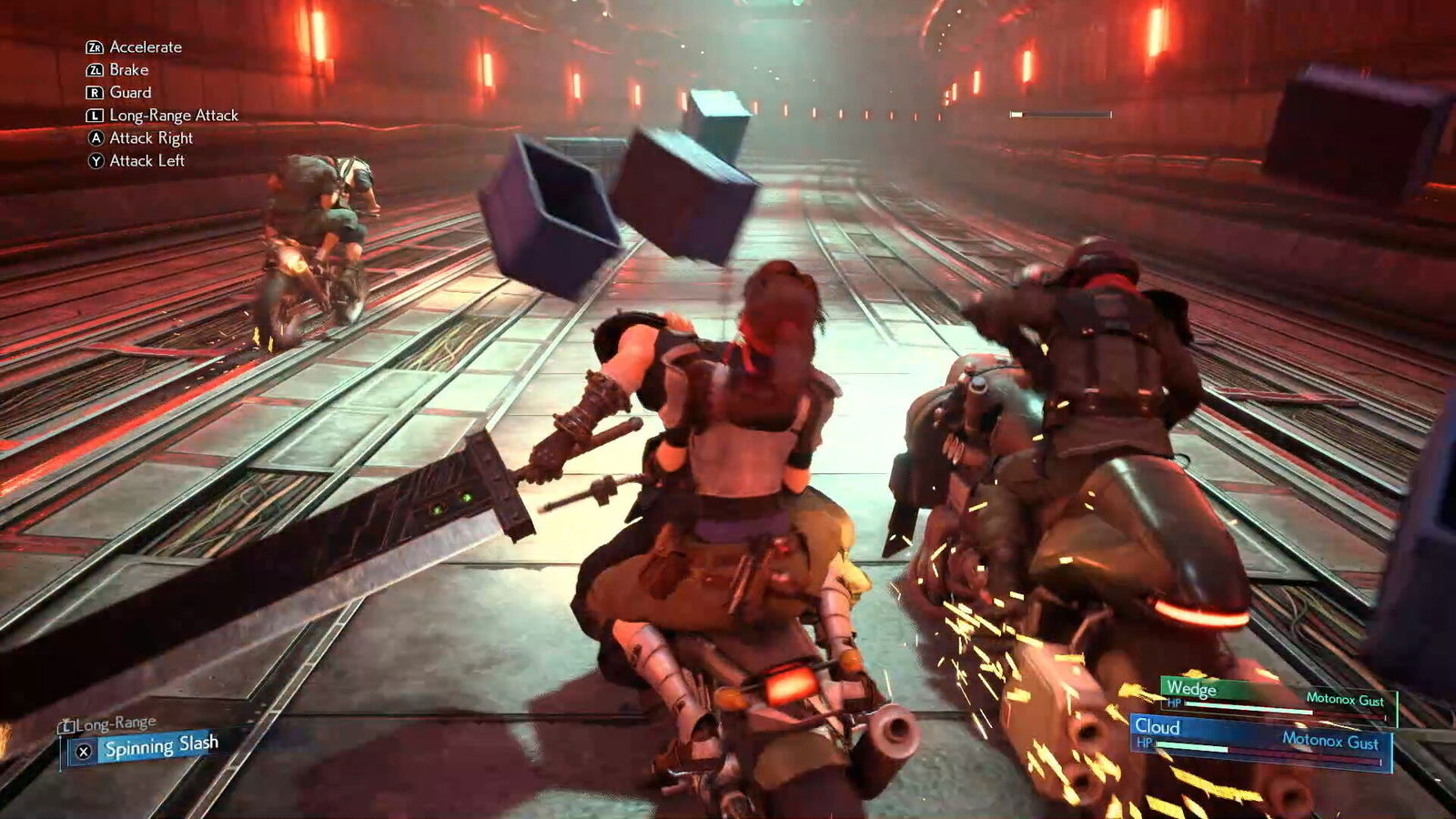
Now, this new edition introduces “Streamlined Progression” settings that can be toggled in the Settings menu at virtually any time. Like a GameShark in your pocket, these options are practically God Mode: keeping HP, MP, Limit Gauge, and/or ATB constantly full, dealing max damage with every hit, unlimited money, easy mastery, and so on. I really can’t condone using these if it’s your first time playing Final Fantasy VII Remake. The game’s Normal mode is quite well-balanced, keeping the challenge firm but surmountable, and if you want some mercy, the existing Easy mode is a good compromise. Cheesing every encounter deflates the story somewhat, by comparison.
All told, if this port is any indication of how the new era of Square Enix multiplatform support is going to go, then I’m looking forward to enjoying my favourite series even more on Nintendo platforms again. It’s good to have Final Fantasy VII Remake thriving on Nintendo all these years after the historic schism that drove Square to make the original FFVII.