
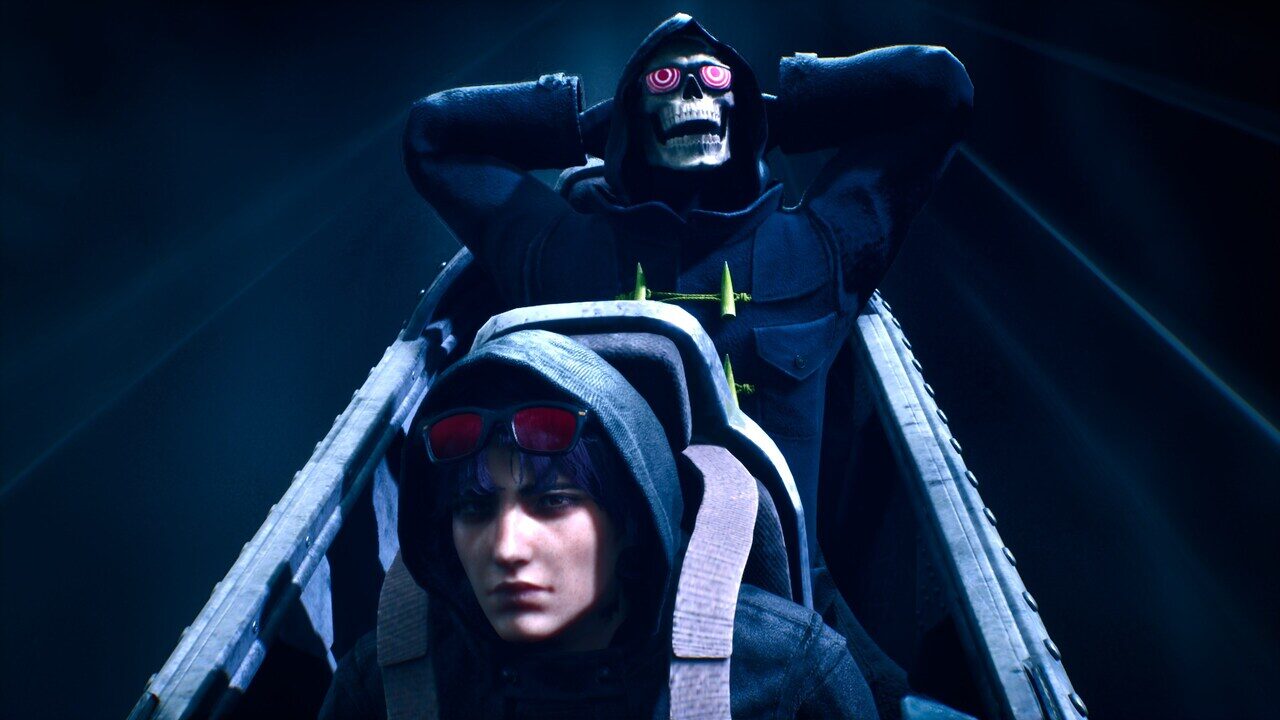
When I first saw Let it Die: Inferno earlier this year, I was glad to see one of my favourite but technically amiss roguelikes would be getting a sequel. The prospect of a sequel to Let it Die meant players would not only get more outlandish content, with Uncle Death shepherding them to their doom, but also a follow-up that might address some of the issues that held the original release back.
Sadly, despite some solid improvements over its predecessor, which I will touch on in a moment, Let it Die: Inferno is more frustrating than rewarding. Available at different tiers, with the base game costing $24.99 US, and higher tiers that offer an expanded roster of character archetypes and the ability to create lobbies, I can only recommend getting the game — and even suggest some of the higher tiers as the only viable option — because the base experience offers too little to help players along their journey down below.

In other words, if you’re a fan of the original Let it Die and are willing to put up with the cheap and frustrating deaths, Let it Die: Inferno does offer an interesting and varied world to explore, with the same quirky and outlandish style of the original, improved with better hit detection, smoother animations and distinct character classes (some of which seem to be locked to higher tiers) that make it the better sequel.
In terms of the story, Let it Die: Inferno has players descend into the depths of Hell Gate, a sprawling underground network of nightmarish amalgams that combine elements of urban Tokyo with fleshy creatures of the nether. In essence, instead of climbing the Tower of Barbs, as Raiders, players are tasked with helping Uncle Death secure the Eye of the Reaper, which lies deep within the depths of the Earth.
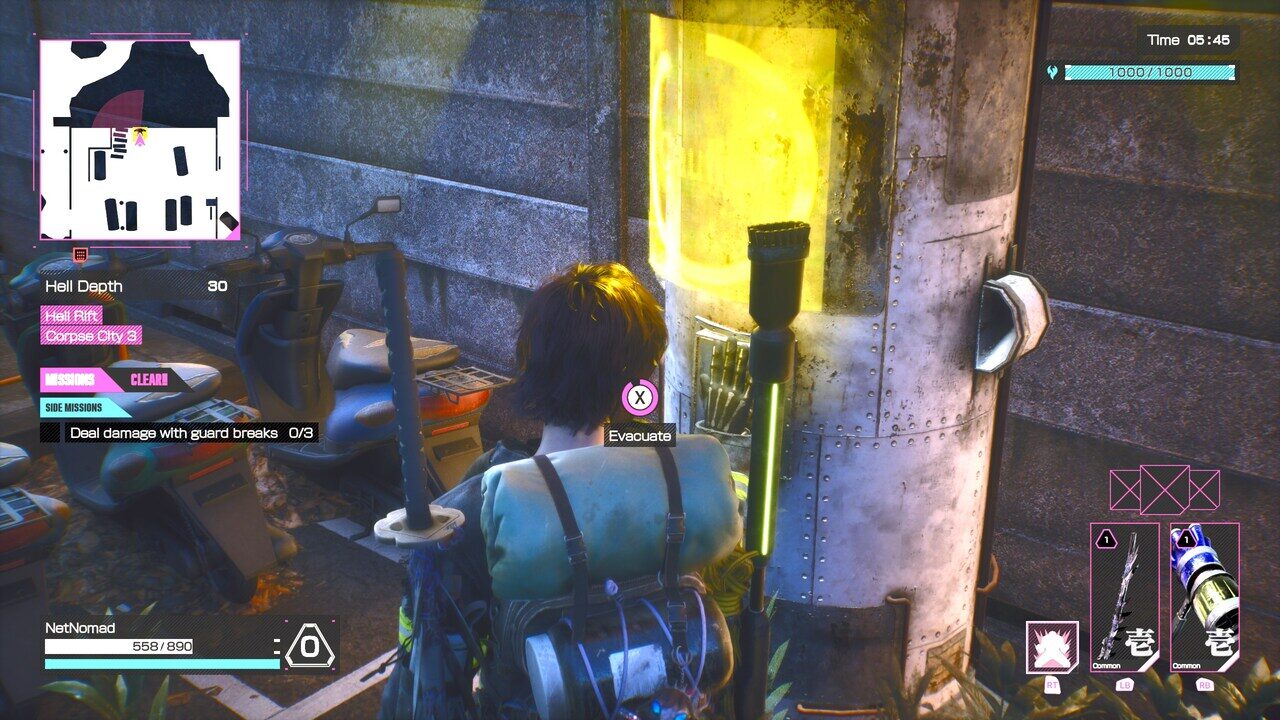
Let it Die: Inferno features several distinct biomes, broken up by levels, or depths, which the player advances through by taking out special enemies who are tethered to the gates that block progress. Missions can initially be completed in the starting zone, but they eventually require players to move deeper into the Hell Gate and meet certain depth thresholds in order to escape. Each randomized run in Let it Die: Inferno also has a time limit, after which escape pods begin to appear on the map. Players can only use these pods once they have completed the main objective of the run, which becomes more difficult the farther they progress without dying.
“If you’re a fan of the original Let it Die and are willing to put up with the cheap and frustrating deaths, Let it Die: Inferno does offer an interesting and varied world to explore.”
One of the most significant points of frustration in Let it Die: Inferno relates to these escape pods. They spawn in random parts of the level, and players are given only a simple radar, toggled by crouching, that shows a yellow indicator pointing toward the general direction of the pod. On paper, the system supports the unpredictable nature expected of a roguelike. In practice, you will often find yourself running toward an inaccessible pod on a different elevation, which can ruin a run early on.
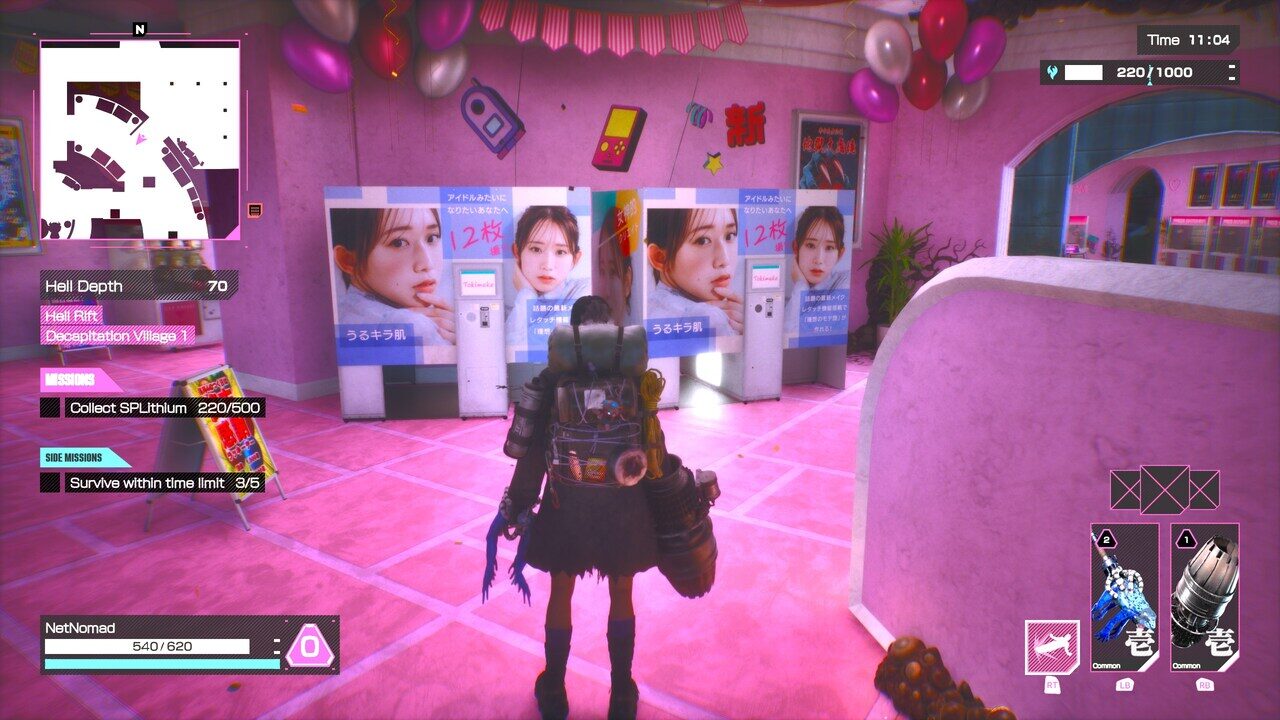
Another major pain point in Let it Die: Inferno is its uneven spike in difficulty. Everything has the potential to kill you, which works well early on. As soon as you move past the second or third zone, however, the game begins to replace most mobs with hard-level enemies. This shift makes even minor monsters overwhelmingly difficult and makes any sense of progress feel moot. Uncle Death offers a few permanent upgrades, but these feel overly grindy and only soften the gauntlet of punishment that defines Let it Die: Inferno.
“Weapon variety and character classes are easily the highlight of Let it Die: Inferno, featuring non-conventional weapons.”
Weapon variety and character classes are among the strongest parts of Let it Die: Inferno, offering non-conventional weapons such as Mega Man-style arm busters, oversized swords, haunted portraits and area-of-effect pistons that create a shockwave to interrupt some of the game’s more annoying encounters. Character classes determine your starting weapon type, your special ability and your character trait, which can offer benefits such as expanded inventory space or a wrestling-style drop kick. The first class is the strongest of the three available in the base game, giving your Raider the ability to heal after a cooldown. This makes it possible to survive a little longer, even with a limited stock of healing items.
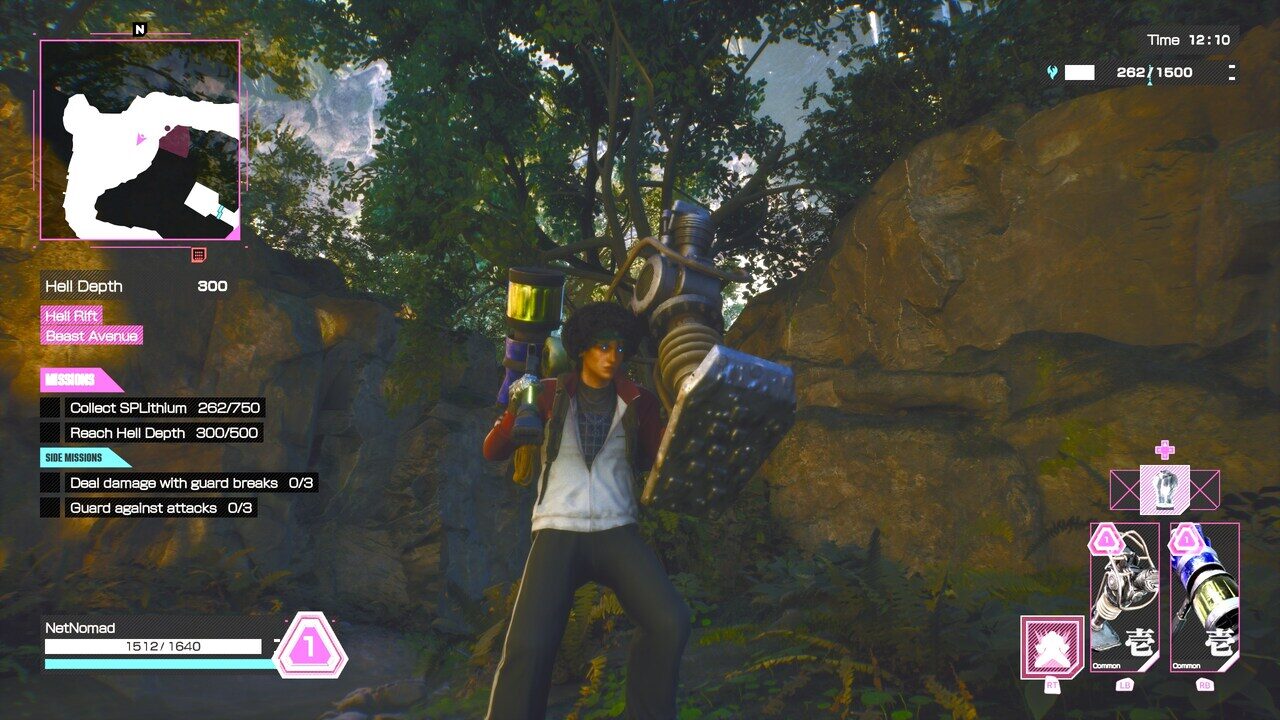
Aesthetically, Let it Die: Inferno is a mixed bag, offering the same over-the-top visuals of its predecessor, but gone are the distinct cel-shaded graphics that were indicative of Grasshopper Manufactuering, made worse by texture pop-in that gives the game a muddy and muted look.
In closing, despite an overall less janky feeling game, Let it Die: Inferno still feels it goes against the ethos of the roguelike genre due to its uneven difficulty and a fractured feeling game economy tied to the various SKUs made available for purchase.