
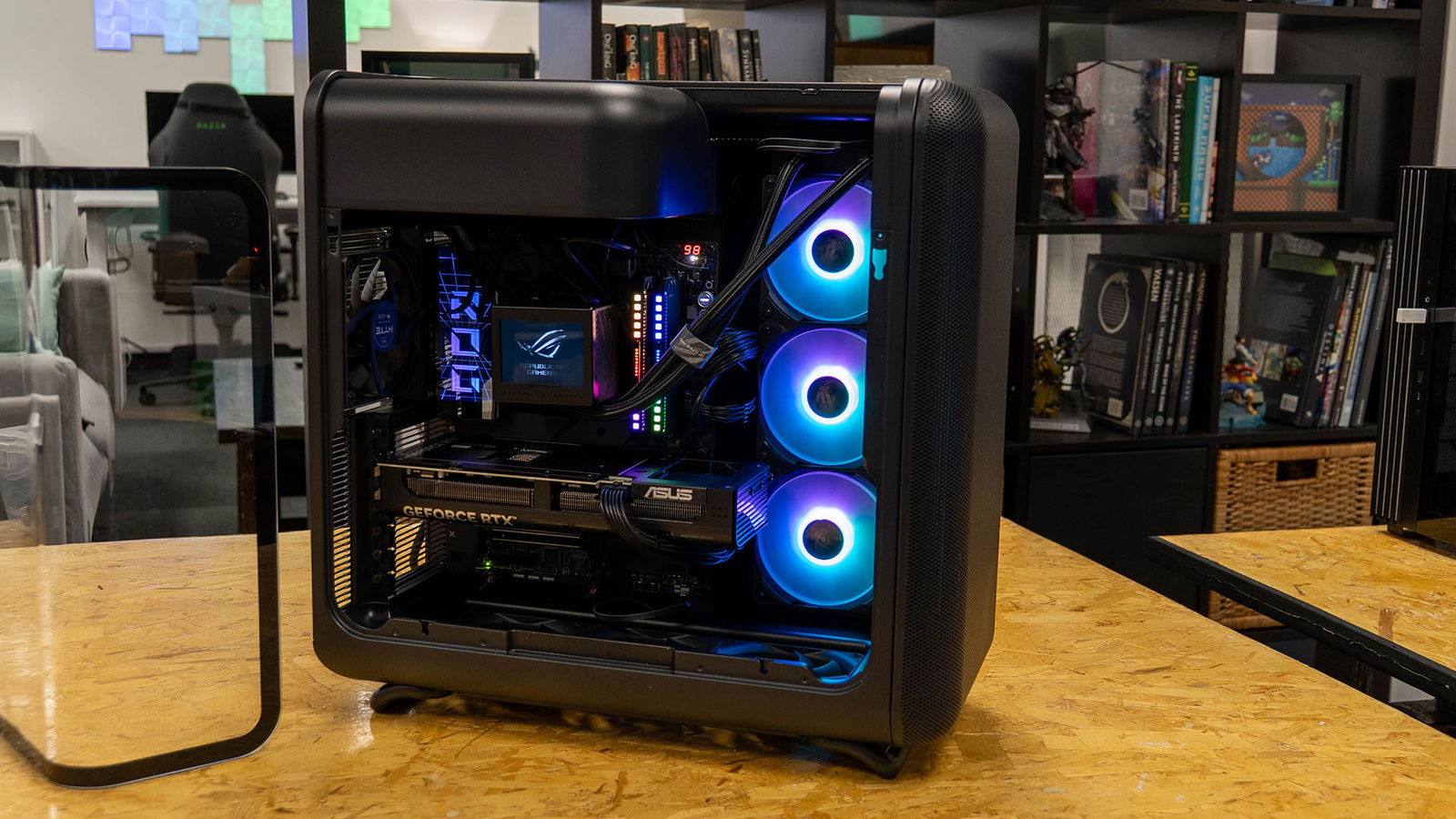


I am a sucker for a unique and fun case, so when I received the email offer to look at the new HYTE X50, a desktop PC case that delivers soft curves, bold colours and a build approach that goes well off the beaten path, you can believe I wanted to give it a look. HYTE, known for putting a memorable spin on case design, including the Y70 we reviewed last year, breaks free of the usual boxy look with the X50.
I love what this case brings to the table. It is a case made to be shown off, one that begs for a build as expressive on the inside as it is on the outside. Past the playful shape, the HYTE X50 reveals practical choices and trade-offs that matter in day-to-day use. Even with those in mind, this is without question one of my favourite cases of 2025.

Unboxing the HYTE X50 surprised me because it looks fantastic in person, even compared with the photos. This is a striking case, and even though we picked a black colourway, it still managed to stand out and add a pop of colour to our test bench. The main feature is the gently rounded silhouette, which contrasts sharply with the lines common in modern PC cases. The case also comes in a range of colour options that go far beyond monochrome. I am not sure everyone wants a case coloured like bubble tea, but I am happy to see HYTE giving people that option.
Whether you want a striking but standard Snow White or Pitch Black, or one of several pastel-inspired hues with creative names such as Taro Milk or Matcha Milk, the X50 aims to fit a wide variety of personal tastes. Combined with the overall look, this helps the case stand out in a sea of dull rectangles. The colour extends across the shell and through silicone grommets and small case details.
The smooth, curved front panel and sweeping side window bring a retro pop that stands apart from the angular look of rivals, and even the feet change depending on the colourway. It all feels intentional, making the HYTE X50 case a fitting centrepiece on display rather than something meant to hide under a desk.
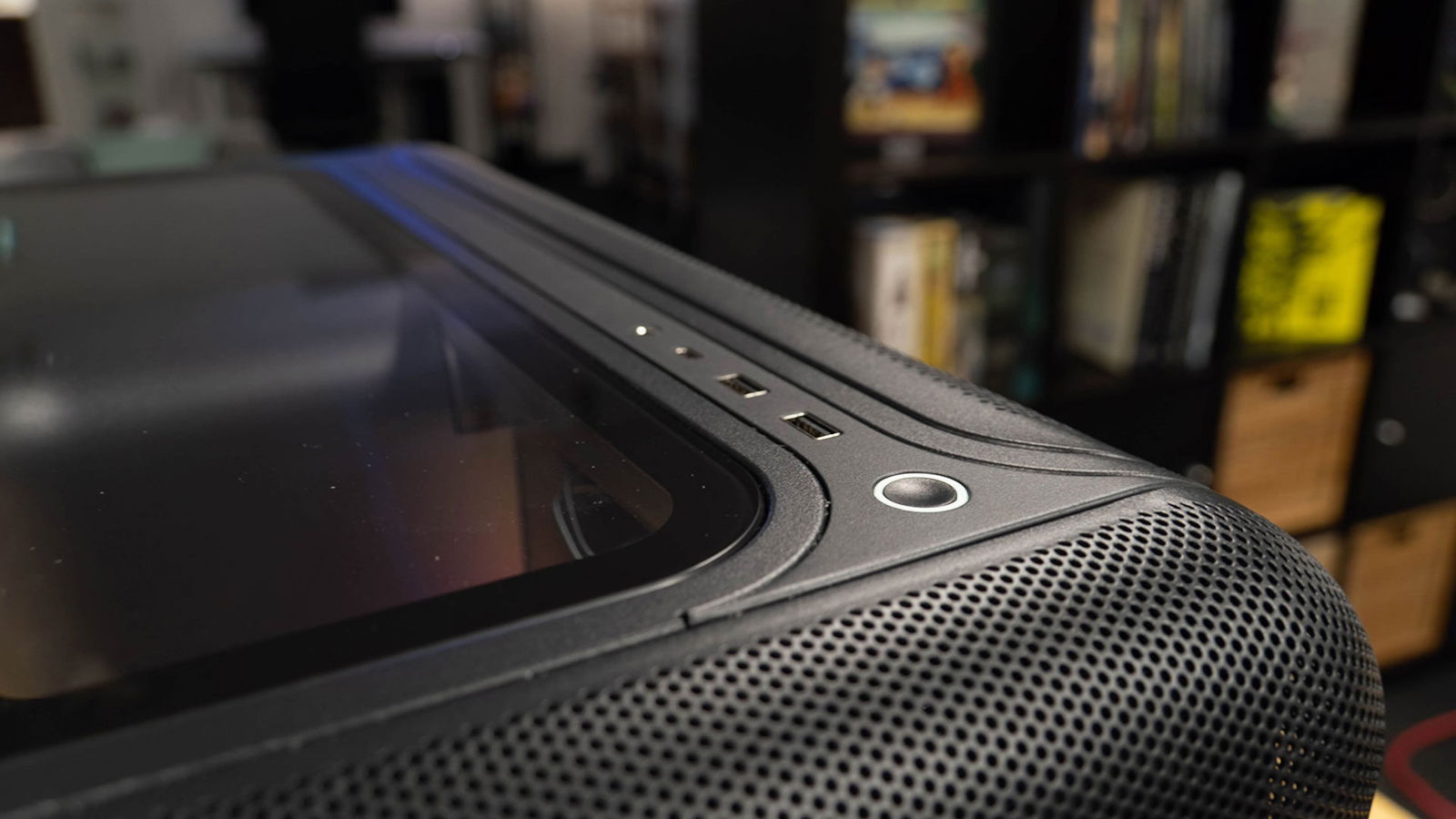
Thankfully, HYTE put real engineering and thought into the X50 case, and it feels built to last as long as the computer inside it, if not longer. The panels are solid and thick, and they are engineered to pop off quickly without tools, thanks to sliding latches and clever push-fit mechanisms. The build relies on 1 mm steel with dense laminated glass, resulting in a window that is quieter and more robust than standard tempered panels.
“Past the playful shape, the HYTE X50 reveals practical choices and trade-offs that matter in day-to-day use.”
Despite the generous perforation, including a mesh front that extends edge to edge, there is minimal flex, which speaks to the quality of the metalwork. This attention extends to ventilation, with a blade pattern that reinforces the chassis while guiding airflow. The openings are broader than what you often see in mid-tower cases. That does mean there will be some noise, although if you are using modern fans and modern AIO coolers, as we did in the test build with the X50, it is no noisier than many cases on the market. The airflow is worth the tradeoff.
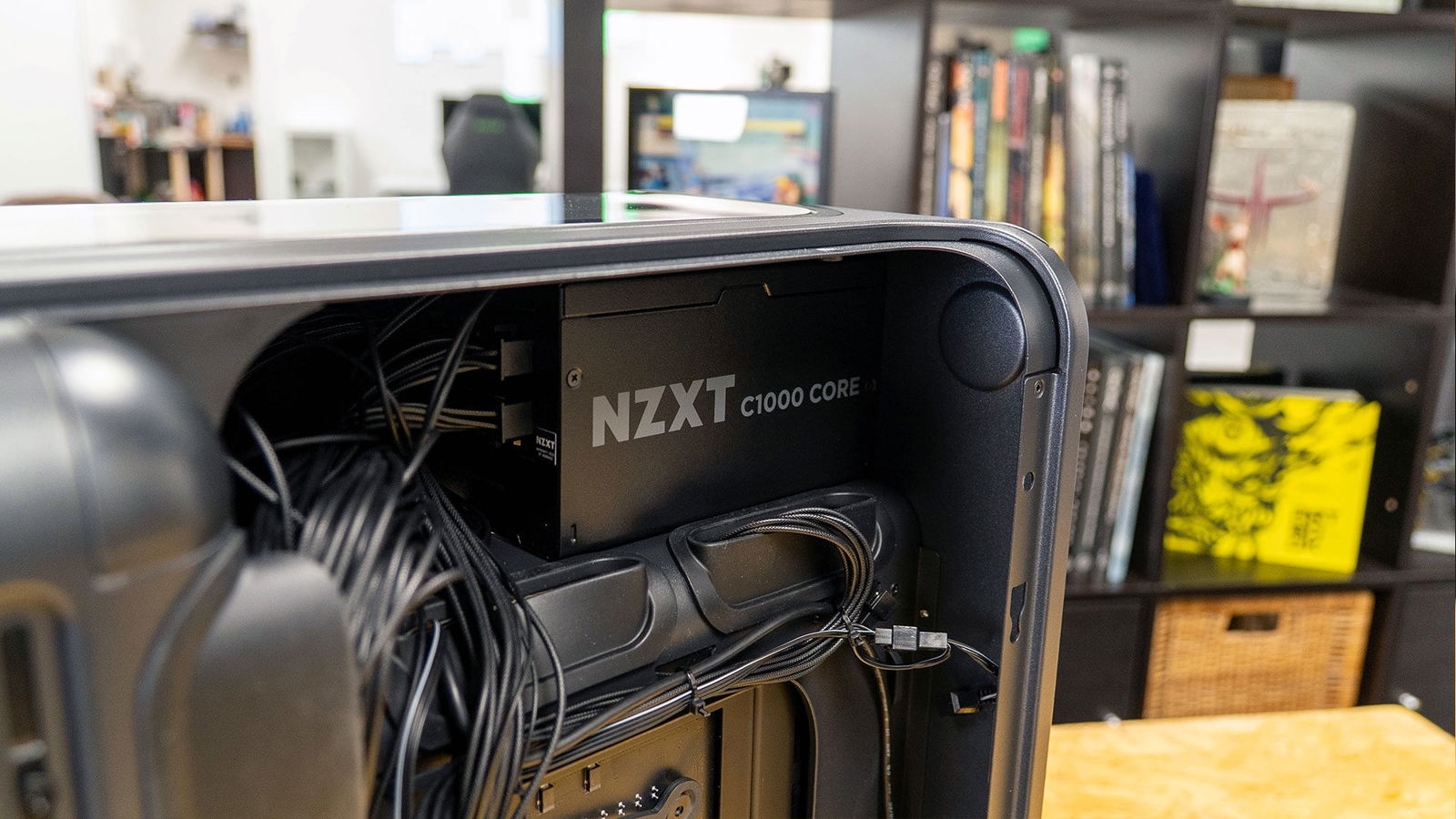
Inside the shell, the layout diverges from expectations in ways I did not expect to like. Rather than a dual-chamber divide, the X50 positions the power supply at the top, freeing up internal space. This makes it chunkier than a typical mid-tower, but it lets the case support large graphics cards up to 430 mm long and a pair of thick 360 mm radiators at the side or front.
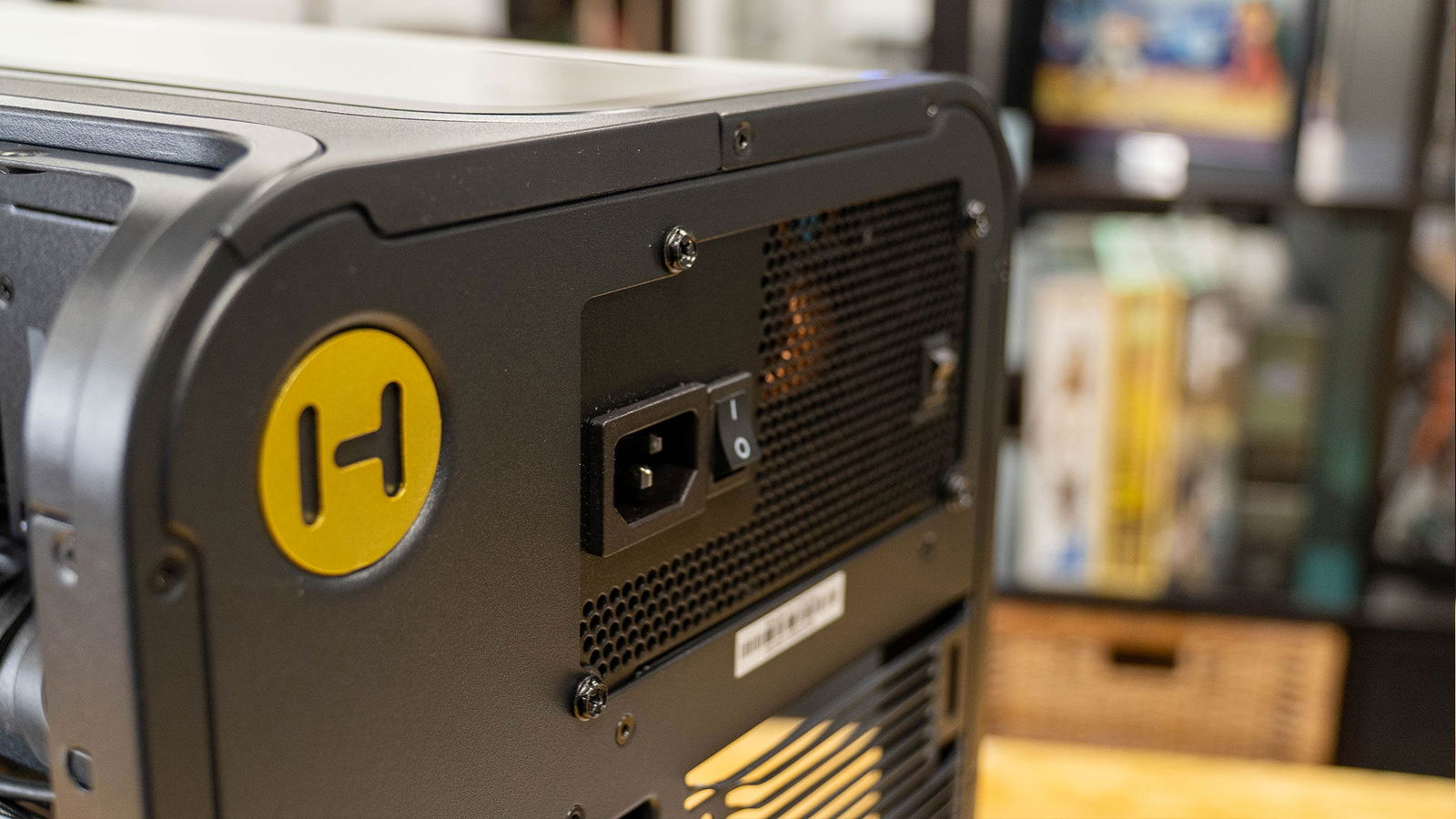
This setup reminds me of how cases used to look years ago, and beyond the annoyance of running a power cable down the back of the case, it works well and makes building in this single-chamber case easy. Big cooling does not mean a cramped workspace, either. The flexible correctame supports E-ATX, ATX and smaller motherboards, and installation is helped by tool-free panels and wide access points. Still, cable management is only average, with fewer routing channels and a reliance on colour-matched grommets and Velcro ties to keep things tidy.
As I alluded to earlier, the design, while unique, has plenty of perforations to ensure strong airflow and room for as many fans as you want to install. Thermal performance appears to be a core focus of the X50, with a potential 10-fan capacity and generous space for airflow optimization. This is a case built with cooling in mind, and it gives you the room to configure it any way you like.
There is one catch, however. The HYTE X50 PC case ships without fans, so builders must add their own. We tested the case with HYTE FA12 fans at 120 mm, which fit the pitch black aesthetic, although you can choose from a wide range of fans to match your taste, including RGB options if you prefer.
In testing, using hardware such as the Intel 14th Gen 14900K and RTX 4080-class components, the X50 maintained solid CPU and GPU temperatures when populated with a full fan setup. It also avoided sounding like a jet engine, even with all fans running. The multiple mounting spots at the front, side, floor and rear allow creative intake and exhaust configurations.
Swapping positions results in only minor differences in temperatures because of the roomy mesh and open layout. Airflow tuning is flexible, and most layouts perform within a few degrees of one another. For the best acoustics, slower fan speeds are easy to maintain without sacrificing much cooling, although some configurations can become noisy if pushed to maximum RPM, but that is all based on how far you want to push your system.
“It all feels intentional, making the HYTE X50 case a fitting centrepiece on display rather than something meant to hide under a desk.”
I particularly like how well the cable management works in the HYTE X50. The single-chamber design gives the system a clean look that does not make it feel as though it will take up a full desk, and the silicone channels built into the design are smartly arranged. They make cable runs easy, with simple ties that keep everything in place and looking clean. While some cases opt for flush cutouts or even bars that hide the connections, the X50 opts for recessed channels that sit lower than the board. This makes routing incredibly easy and leaves the final result looking slick and orderly, which was something I worried about when I first unboxed the X50.
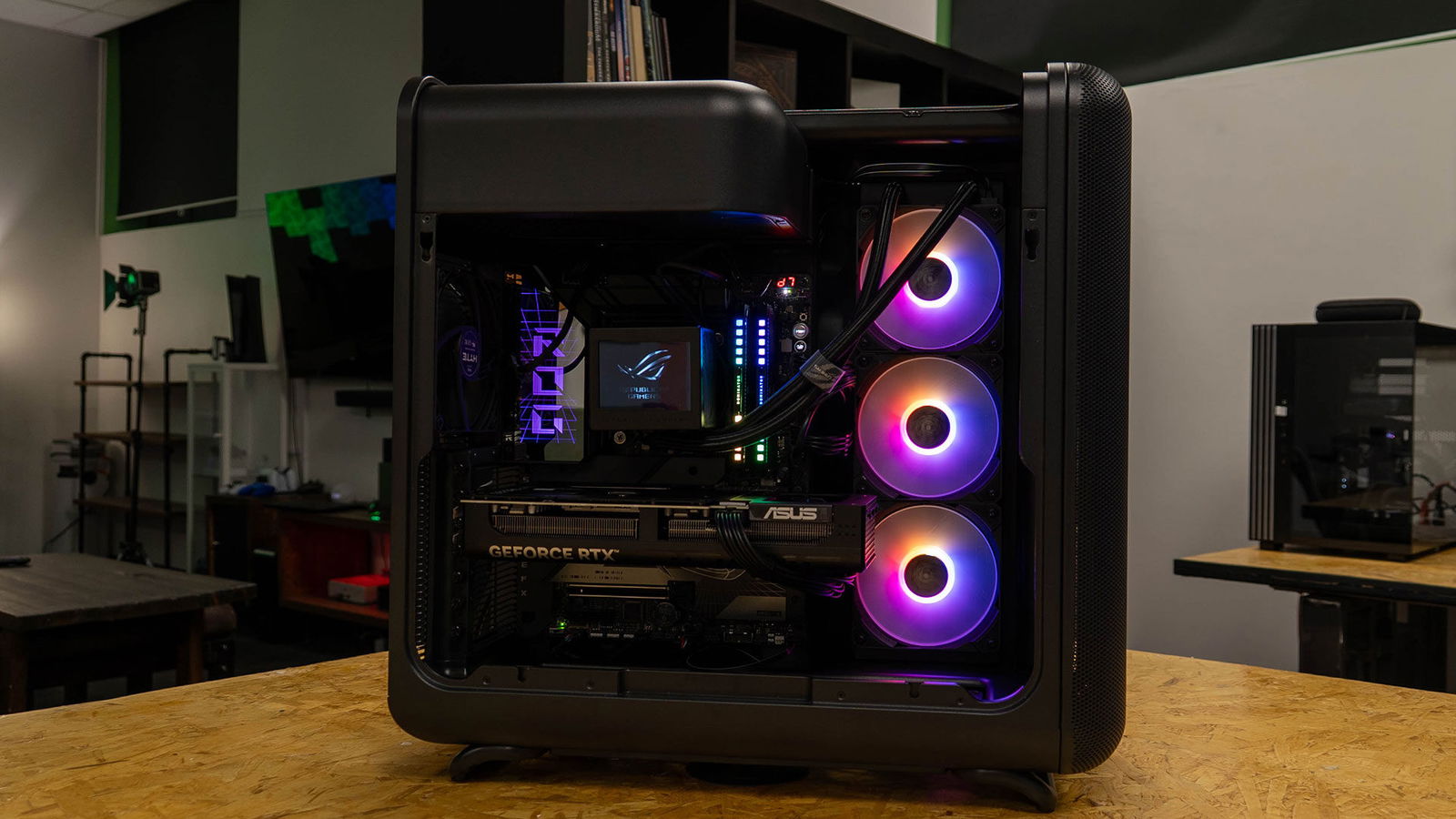
I did not have any major issues building in the case using an NZXT 1000-watt PSU, but I can see some builders encountering quirks with the top-mounted PSU. Depending on the parts you choose, certain configurations may be more challenging. Although the design allows for a wider GPU bay and contributes to the case’s signature look, longer cable runs can be a nuisance, particularly with native 12V connectors that may only just make the distance.
This can require extra care during assembly to keep power connections neat and secure. I will also note that even with the roomy interior, there is no support for motherboards with rear connectors, a trend on recent higher-end boards. That might limit upgrade paths for some builders, although unless you are planning something very specialized, the X50 should meet most people’s needs.
Once everything is built and sitting on my desk, I have to say I really like what the HYTE X50 PC case offers. This case is geared toward people who care as much about the look of their setup as its performance and who do not mind adding the final touches themselves, and that is perfectly fine.
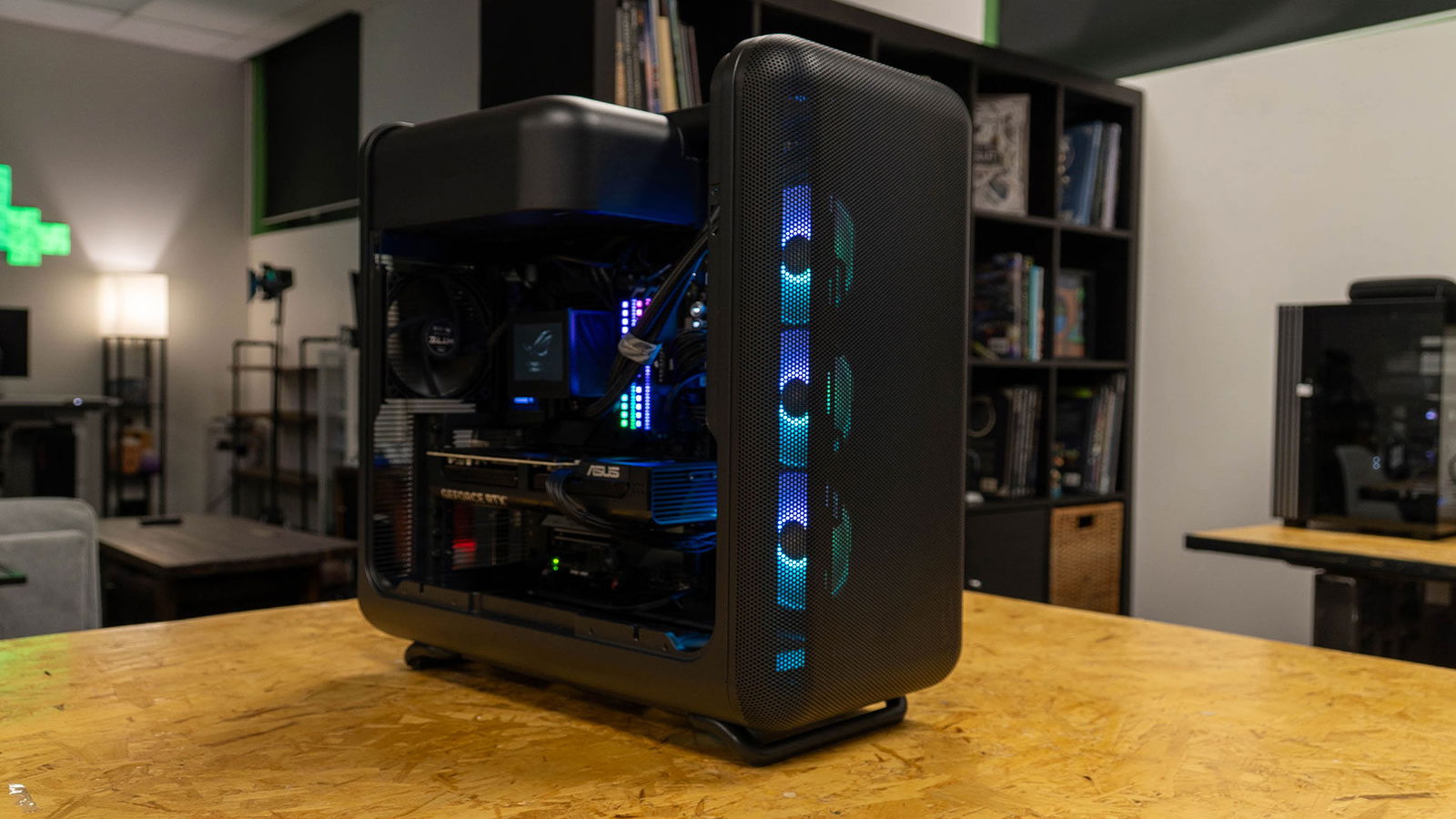
While cable management and included features could be tighter for the price, the HYTE X50 delivers on its promise to break free from the sea of rectangular boxes, offering a fun and expressive alternative that keeps temperatures and attention levels cool. I only wish HYTE had included some fans in the package, as that would have made this a must-buy for anyone who wants a splash of personality with their performance.

- Front micro-mesh panel serves as a low-pressure low-resistance air intake for optimal temps & noise levels.
- Louvered blades reduce exhaust impedance by slicing through hot air while reinforcing chassis rigidity.