
The Maxell Sound Bar is a two-in-one speaker system that provides both a Bluetooth speaker and a voice amplifier solution for classroom settings. Designed as a compact, easy-to-use tool for teachers, the Maxell Sound Bar features a 40 mm dual-speaker setup and a wireless 2.4 GHz transmitter and receiver. Rated for four hours of wireless use, it aims to be a versatile option for educators.
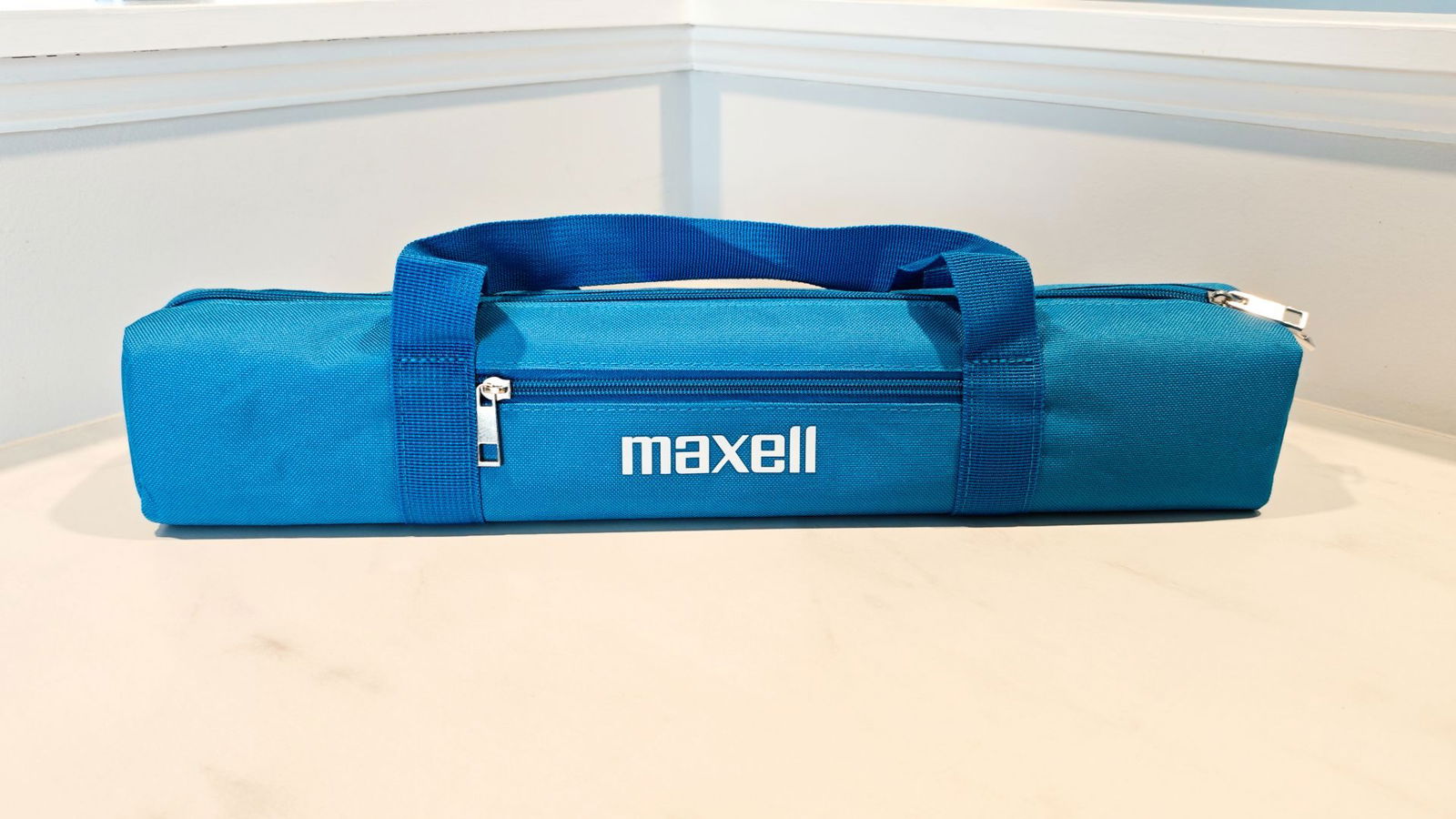
Measuring 431.8 mm (L) x 63.5 mm (W) x 57.2 mm (H) and weighing just 669 g, the sound bar is incredibly compact and lightweight. Thanks to the included carry case—which comes with both a handle and a strap—transporting the Sound Bar requires minimal effort. As someone who taught high school for many years, I know that carrying one more item from class to class can be a hassle when books, binders and other materials are already in tow. However, the small-scale design of the Sound Bar makes it a breeze to bring along.
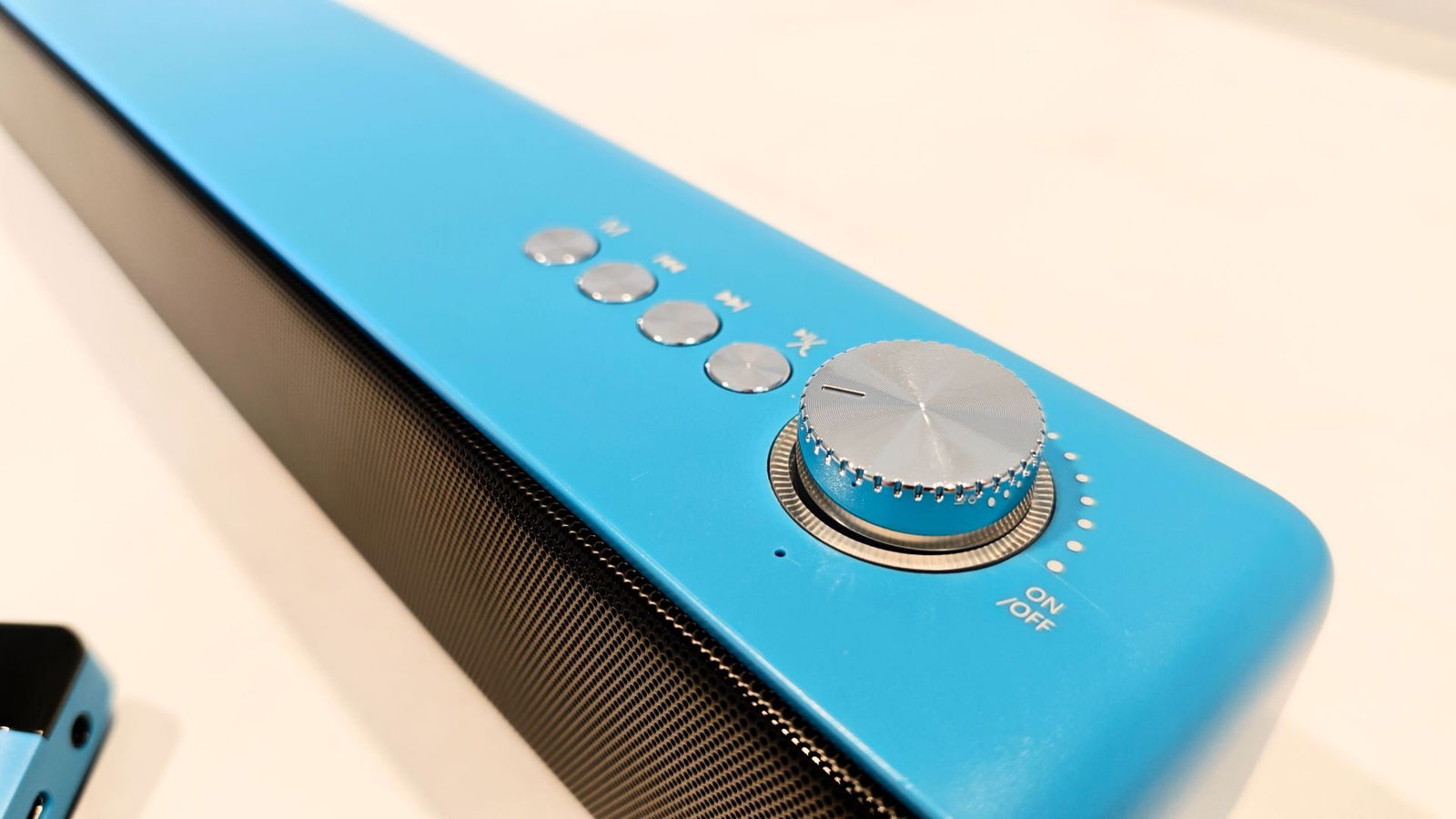
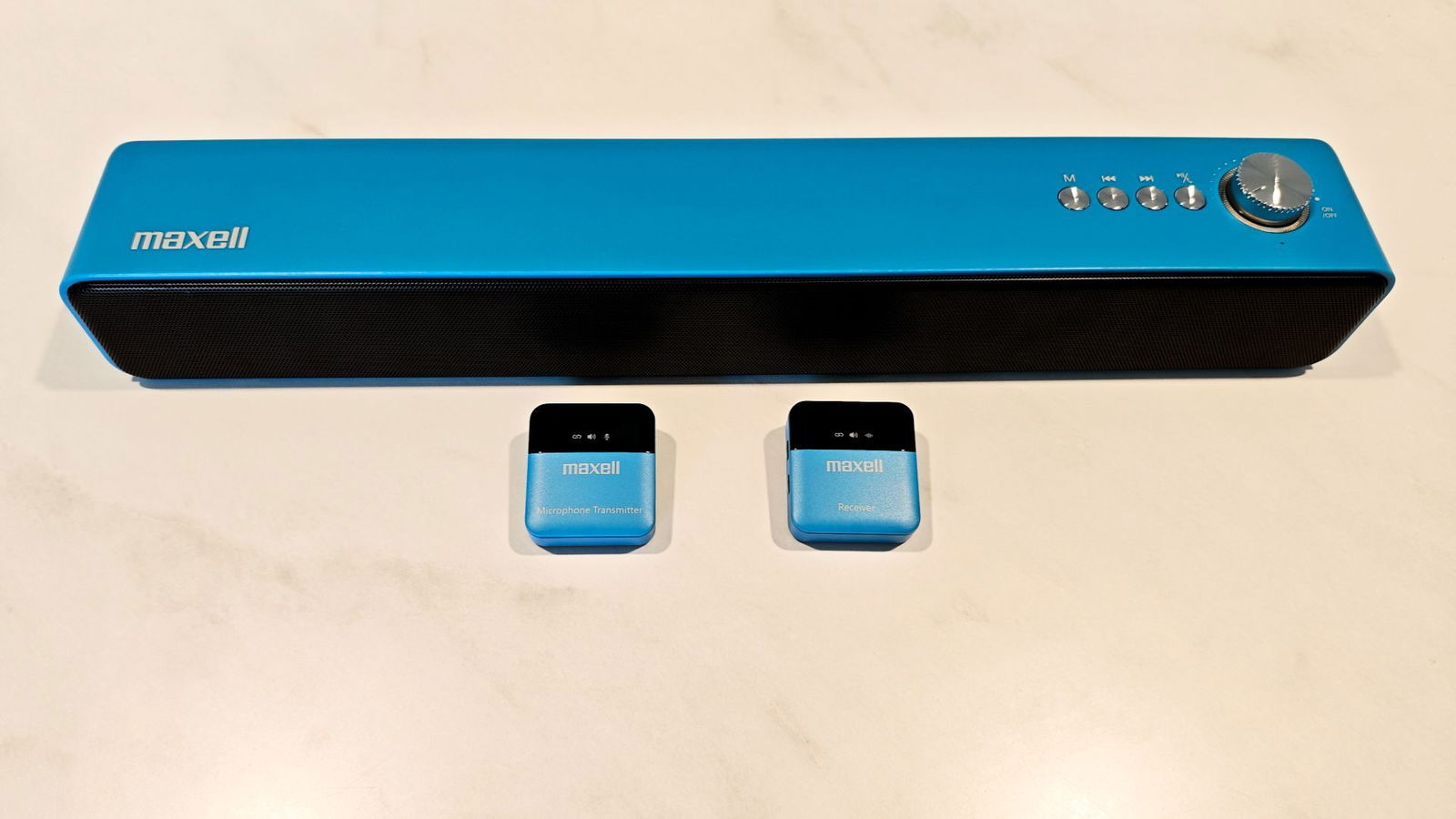
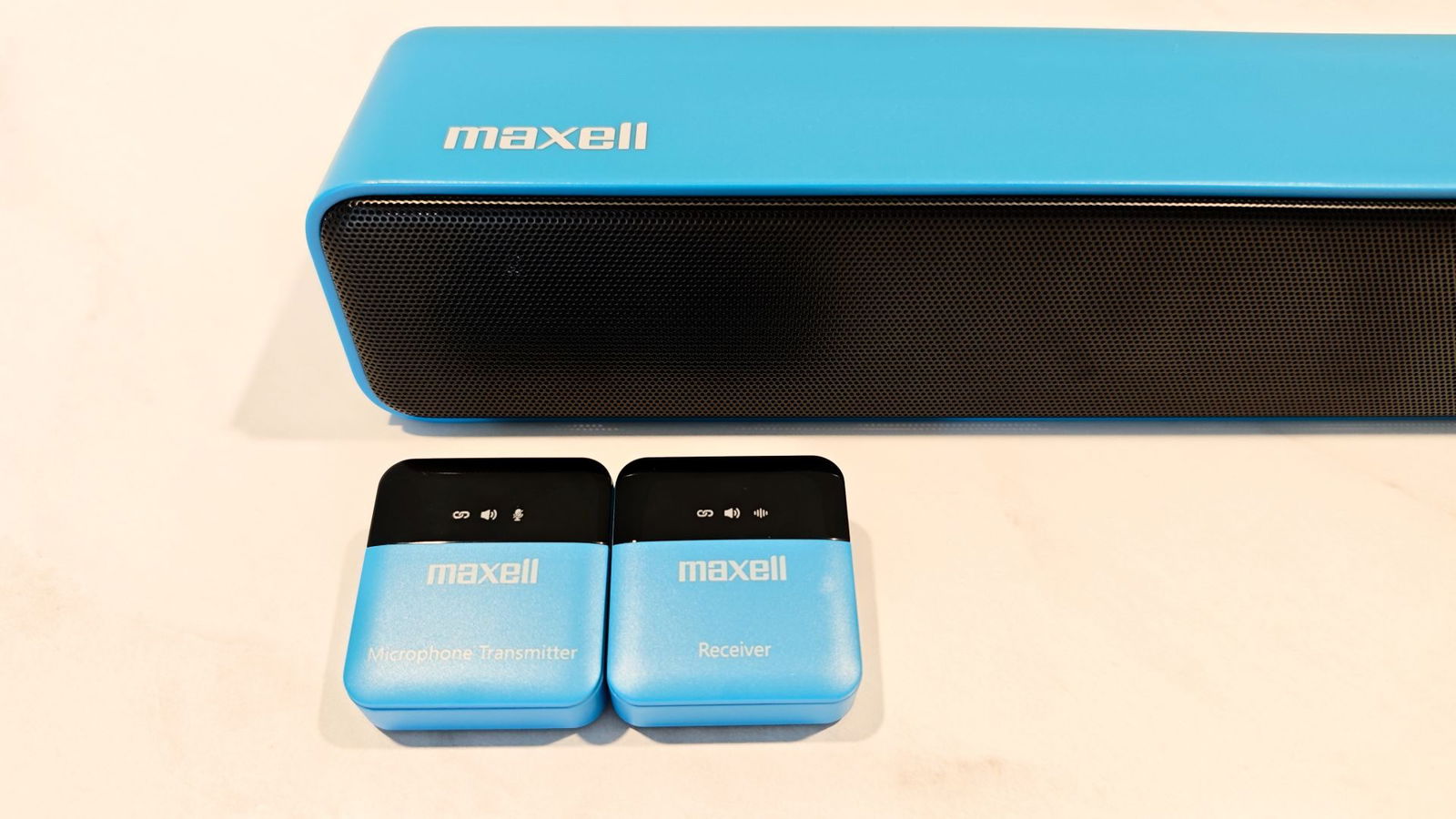
As for the transmitter and receiver, both are relatively small, comparable in size to the Saramonic Ultra’s TX and RX, though considerably lighter. All three elements of the hardware package include onboard controls; the Sound Bar houses a volume knob as well as a mode selector and track control, and the TX and RX both feature power, gain and noise reduction controls. It’s a fairly straightforward design that functions well and is easy to use.
“The Maxell Sound Bar is a two-in-one speaker system that provides both a Bluetooth speaker and a voice amplifier solution for classroom settings.”
Setting up the Maxell is also a straightforward affair. Once unpackaged, turn the Sound Bar on, plug the receiver into the Sound Bar via the included 3.5 mm cable, and power on the TX and RX. Within a few seconds, the system will sync automatically, and you’ll be ready to use the voice amplifier.
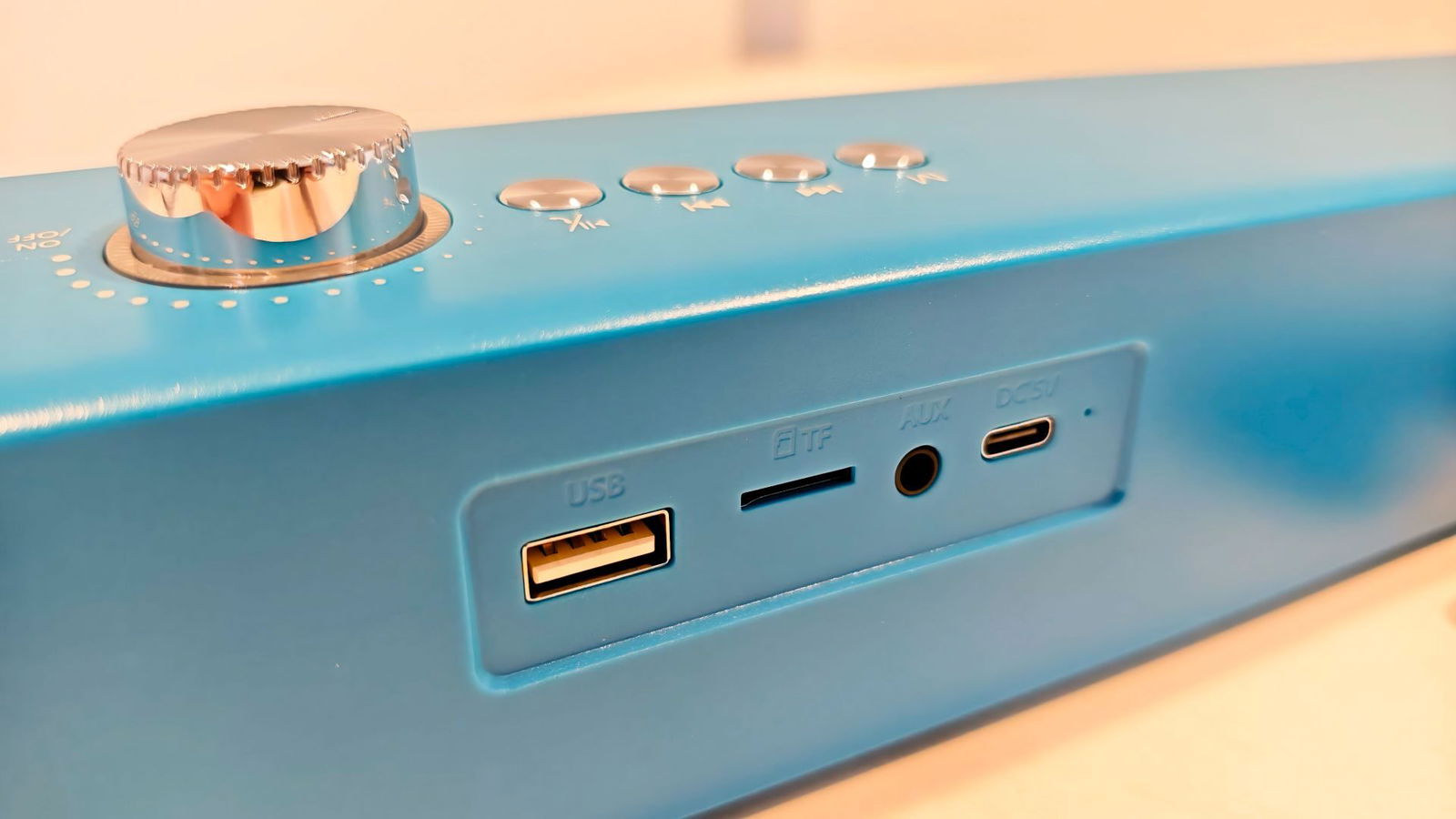
However, voice amplification is only part of what the Sound Bar has to offer. It also functions as a traditional Bluetooth or wired speaker system. Upon initial setup, the speaker automatically shifts to pairing mode the first time its mode is cycled to Bluetooth. At this point, you simply connect your mobile device via your system settings. It takes only a few seconds and pairs without issue.
If you like to kick it old school, the Maxell Sound Bar even includes a microSD card slot, allowing for quick, onboard access to your favourite or most-used audio tracks. When in this mode, navigating audio files is handled via the onboard track selection buttons located on top of the unit.
Shifting back to the voice amplification component of the system, I have to say I was both impressed and dismayed with the user experience. On the positive side, the TX is exceptionally light (22 g) and clips securely to a collar or pocket without pulling on your clothing. Once attached, the audio quality for vocal capture is incredibly clean and represents the source quite accurately. I was surprised at how clean and clear the audio profile is, considering its economical price point.
There was very little noise or frequency interference in the capture during testing. According to Maxell, this can be attributed to the intentional decision to leverage underused wireless channels, reducing the chances of competing electronics. In this regard, Maxell has done a great job of presenting a useful piece of equipment for teachers.
However, while I appreciated the clarity of the vocal broadcast, I was underwhelmed by the overall volume of the system. According to Maxell’s official YouTube promotional material, the system includes two 40 mm speakers to help bolster the vocal range of teachers in a large classroom setting. In testing, though, I found the speaker underwhelming in this regard. It simply could not compete with a classroom full of students in any meaningful way.
“The Maxell Sound Bar is a functional but underpowered voice amplification system.”
As for the audio profile for music playback, this again is a bit of a mixed bag. In vocal representation, Maxell has done a great job. The vocal files are clean and easy to understand. However, when shifting to music and video testing, the Sound Bar lacks any meaningful punch or presence. The bass is underwhelming, while the mids lack body. The result is an audio profile that, while clear, has no fullness.
There is an argument for use in a smaller setting with fewer students as a means of supporting a teacher who naturally has a quiet voice, though. With four hours of wireless operation, the Maxell Sound Bar could be a decent, cost-effective tool for tutoring a smaller group of students in a quieter classroom. However, in the larger setting, the Sound Bar is designed for, it simply lacks the power to overcome the challenges of that kind of environment.
The Maxell Sound Bar is a functional but underpowered voice amplification system. While it does many things right—namely, its ease of use, simple and intuitive setup, and compact, lightweight design—it falls short in one of the most crucial areas: power. My recommendation for the next iteration of the Sound Bar would be to sacrifice a bit of its compact form in favour of more powerful drivers. The result would be an excellent system that truly benefits teachers in the classroom.