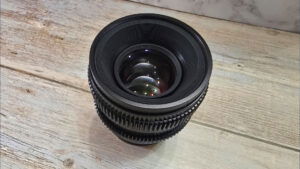



Thypoch’s latest line of cinema lenses has become a one-stop arsenal for virtually any need, offering 21mm, 28mm, 35mm and 75mm options, as well as the lens we are covering today, the Thypoch Simera-C 50mm. This is the lens that will likely handle the widest variety of use cases for photographers and cinematographers.
The Thypoch Simera-C 50mm, like the rest of the Simera-C series, is a solidly built lens with a fully metal body, weighing 380 g and measuring 69.6 mm in length. It does not add too much bulk to your camera when equipped. The highly textured grips on the lens, both for focus and aperture, feel great when manipulating them, as do the rings themselves, which glide smoothly with no metal grinding or resistance of any kind. The 210-degree focus throw allows for incredibly precise focus racking and adjustment.

The maximum aperture of the Thypoch Simera-C 50mm is T1.5, with a minimum of T16, in line with the other lenses in the collection. Using T-stops rather than f-stops measures the light reaching the back of the lens, providing more accurate exposure readings, which is especially important when maintaining consistent exposure across multiple cinema lenses. A T1.5 lens like this is excellent for low-light shooting, allowing you to capture professional-level portraits outside of the studio.


The Thypoch Simera-C 50mm lens’s 16 aperture blades produce a perfectly circular aperture, producing the smooth bokeh you want for your subject. A 50mm focal length is ideal for portrait photography for this reason and delivers beautifully clear images with creamy, soft backgrounds. The glass in the lens consists of eight elements in six groups, not the most complex arrangement, but it yields a well-balanced lens in terms of clarity and distortion correction.
“The Thypoch Simera-C 50mm lens’s 16 aperture blades produce a perfectly circular aperture, producing the smooth bokeh you want for your subject.”
What’s great about any 50mm lens, and particularly the Thypoch Simera-C 50mm, is its versatility. It excels at portraits, but for cinematographers, it is also well-suited to creating atmosphere and capturing strong dialogue shots. It works well for run-and-gun street shooting if you know what you are doing. A shallow depth of field can make shooting in motion more challenging if you are not experienced with racking focus, unless you open up the aperture. For quick setups, it can create some real magic.


Like the rest of the line, the Thypoch Simera-C 50mm is priced at US$879. Again, it is a high price for a manual-focus prime lens, but it delivers. Whether the pricing is meant to encourage buyers to opt for the full kit, which offers roughly US$400 in savings on the company’s website, rather than an individual lens, is debatable. What I can say is that I genuinely miss the Thypoch lenses I tested and have since returned. Going back to my own lenses has made me feel spoiled, which says a lot about their quality compared with what I use every day.