



I am a fan of unique approaches to wearable technology, so I was eager to try the Xiaomi Mijia Smart Audio Glasses. Rather than relying on cameras or mixed-reality features, the glasses focus on a discreet, open-ear audio experience built into a conventional-looking frame. Positioned between wireless earbuds and full smart glasses, they aim to make calls, music and voice control feel as natural as putting on a daily pair of spectacles. Surprisingly, I have been wearing the Xiaomi Mijia Smart Audio Glasses almost nonstop at the office.
Out of the box, the Mijia Smart Audio Glasses are designed to pass for standard eyewear. They are available in three frame styles, Browline, Pilot-style and Titanium, each inspired by classic optical designs rather than futuristic headsets. The pair I received closely resembles my everyday glasses. The temples measure about five millimetres thick, concealing the internal electronics while maintaining a relatively subtle profile compared with earlier audio wearables that featured bulkier arms. Despite their understated appearance, the glasses include a solid range of features.
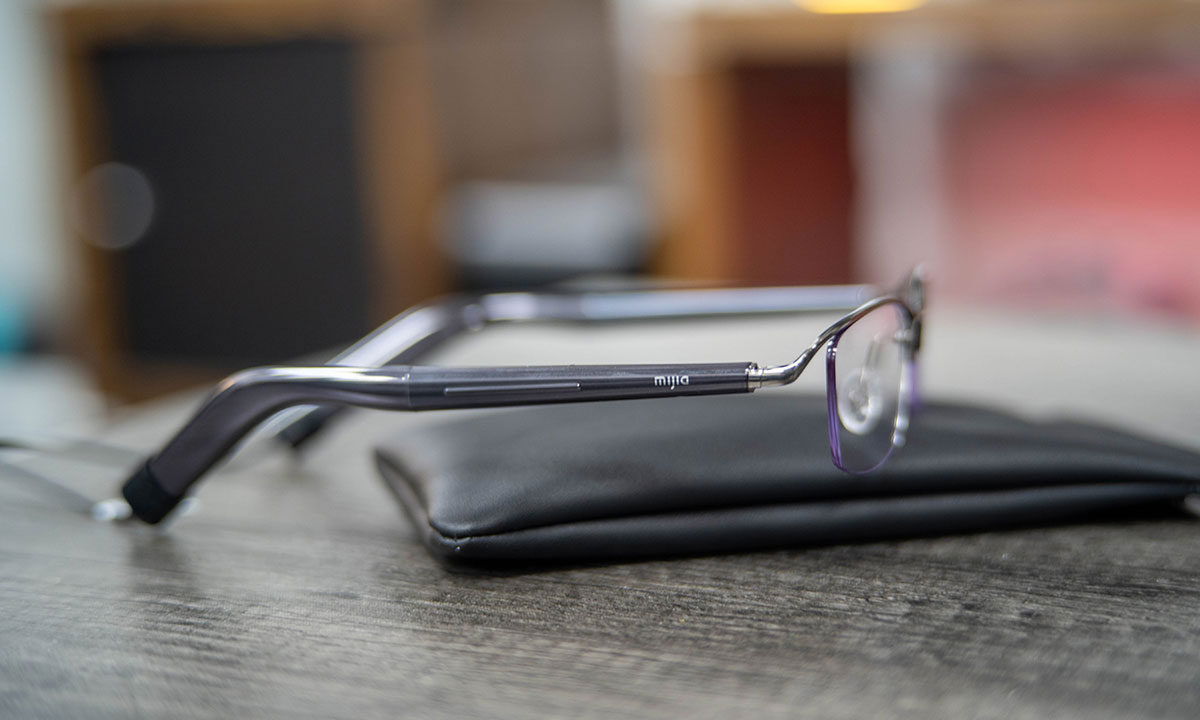
The lightest Titanium variant weighs just over 27 grams without lenses, which helps the glasses remain comfortable throughout a full workday rather than feeling like a headset resting on the nose. In use, the weight distribution favours the ears over the bridge, reducing pressure points. Those unaccustomed to wearing glasses may still notice some fatigue after a few hours, although I did not experience this issue and found the glasses comfortable and easy to forget I was wearing.
For outdoor use, the glasses offer IP54 ingress protection, providing reassurance during light rain or daily commutes. At least two frame options also include lenses with 25 percent blue-light filtering, aimed at office and screen-heavy environments. The frames support lens replacement, allowing users to switch to prescription or sunglass lenses through an optician. Prescription lenses, however, are not included in the box, so that will add to the cost of the overall package if that is something you need.
Turning to audio quality, I appreciate that the Mijia Smart Audio Glasses rely on dual speakers embedded in the arms rather than an in-ear design. This creates an open-ear sound field that keeps the ear canal unobstructed while still delivering directed audio. A quad-microphone array, with two microphones in each arm, works alongside noise-reduction algorithms, including wind reduction rated up to a claimed 4.5 metres per second, to keep voices clear during calls. Despite my initial skepticism, I was surprised by how well the overall package performed. The audio output is immersive enough for everyday use without blocking out ambient sound, which is the core appeal of open-ear audio.

Each arm houses a 114 mAh non-coaxial, steel-cased battery, providing a combined capacity that supports approximately 12 to 13 hours of continuous listening or about nine hours of call time on a single charge, depending on volume and usage. In testing, these figures closely matched my experience. I had no issue relying on the glasses for all my daily audio needs, often finishing a full workday with roughly 45-50% battery remaining when I shut down my PC.
Charging is handled through a proprietary magnetic cable that clips onto the ends of the temples and connects via USB-C. A full charge takes about an hour, while a 10 to 15-minute top-up delivers several hours of playback. The custom cable helps keep the frame slim, but it could be a potential drawback if misplaced, as the glasses do not include a standard Qi charging option or a built-in USB-C port.
“Surprisingly, I have been wearing the Xiaomi Mijia Smart Audio Glasses almost nonstop at the office.”
Before going further, it is important to address a key distinction. These are very much audio glasses, not AI-driven or fully featured smart glasses. They are purpose-built and deliver on that promise, but they do not offer the breadth of features found in products such as the Meta Ray-Ban line, nor do they include many of the advanced functions associated with more complex smart eyewear. That said, their focus is clear. They are designed to deliver audio, and on that front, they perform exceptionally well. In fact, I prefer them to many of the headphones and earbuds currently in use around the CGMagazine office.

In daily use, the glasses route system audio from a paired phone, including podcasts, audiobooks and music, through the open drivers. This creates an ambient listening experience that sits on top of the surrounding environment rather than isolating the listener from it. The tuning leans toward mids and treble, which works well for spoken-word content and lighter music. Bass presence is more restrained than what you would find on sealed earbuds or over-ear headphones, particularly at lower volumes.
At moderate listening levels, audio remains clear and detailed. Pushing the volume higher can introduce some harshness and mild distortion, especially with bright vocals or dense mixes. Because sound is projected toward the ears rather than directly into them, audio can also leak in quiet environments, and people nearby may hear what is playing if the volume is turned up, so much so that I was worried about wearing these on the plane to CES.
To address this, once the app is downloaded, Xiaomi includes a privacy mode that adjusts the sound profile to reduce audio leakage. This is achieved by altering output levels and relying more heavily on directional projection, although it comes with a noticeable reduction in richness and overall sound quality. In a quiet room, the mode still cannot fully mask what is being played, but it can be useful for calls or quick voice notes where discretion matters more than audio fidelity. While I found that it does reduce sound leakage, the tradeoff in sound quality was not worth it unless preventing others nearby from hearing the audio was a priority.

The Mijia Smart Audio Glasses rely on touch-sensitive panels on each temple, allowing users to tap or swipe to control core functions such as play and pause, volume adjustment, call handling and mode switching. The gestures are straightforward, consisting of taps and horizontal swipes. In testing, they registered reliably without requiring precise finger placement or excessive pressure, which helps the glasses feel less finicky while in motion.
“I appreciate that the Mijia Smart Audio Glasses rely on dual speakers embedded in the arms rather than an in-ear design.”
That said, I have never been a fan of touch-sensitive controls, and these did little to change that opinion. While they work reliably, physical buttons would have been preferable for quick interactions. For basic actions such as play or pause, a dedicated button would have been a welcome addition, even if that view puts me in the minority.
Bluetooth 5.4 helps keep latency low and supports dual-device pairing, allowing the glasses to maintain simultaneous connections to devices such as a phone and a laptop. Voice assistant integration enables hands-free commands through a companion app on iOS and Android, with microphones sensitive enough to capture normal speech during everyday activities like walking or doing chores. I tested call quality while working in the back of the office and sorting print issues, and experienced no problems with audio clarity or voice pickup.

One of the more distinctive features, and one I have not encountered on many audio products, is the built-in real-time recording function. Activated through a long-press gesture on the temple, the feature records conversations, calls or meetings while an LED indicator signals that recording is in progress. It is a function that journalists or dedicated note-takers are likely to find especially useful, and in practice it performs reliably.
During testing, it consistently captured a range of audio sources without issue, making it easy to review recordings when needed. I can easily see it proving valuable during interviews or events where capturing everything matters. As with any recording feature, users should ensure its use complies with local laws and regulations.
Pricing places the Browline and Pilot-style frames at €179, or approximately $208 USD, with the Titanium frame priced at €199, or about $231 USD. This positions the Mijia Smart Audio Glasses below high-end, camera-equipped smart glasses, while still above most mainstream wireless earphones. Whether they fit into a daily routine ultimately depends on individual needs.

At times, I wished they offered more features for the price. That said, the Mijia Smart Audio Glasses deliver everything I personally want from a pair of smart glasses. I do not need AI features, and I have yet to find a compelling reason to use the camera on the Meta Ray-Ban while walking around, which still feels intrusive. For those seeking those capabilities, other options are available. Xiaomi’s approach fills a clear niche, offering a practical alternative to in-ear audio with comfort that supports all-day use.
At this price point, buyers of the Mijia Smart Audio Glasses receive a device that functions more like an audio peripheral in a glasses form factor than a full smart-glasses platform. That approach is intentional and highlights Xiaomi’s focus on sound quality, comfort and subtle smart features rather than augmented reality or imaging. In a market where many products compete for attention through headline features, the Mijia Smart Audio Glasses occupy a quieter space, one that I genuinely enjoy. They are designed to blend into everyday life while gradually replacing both headphones and a hands-free calling solution, and they deliver on that promise perfectly.