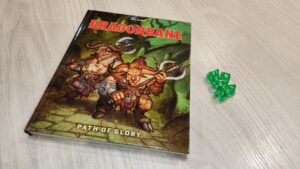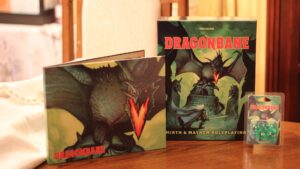

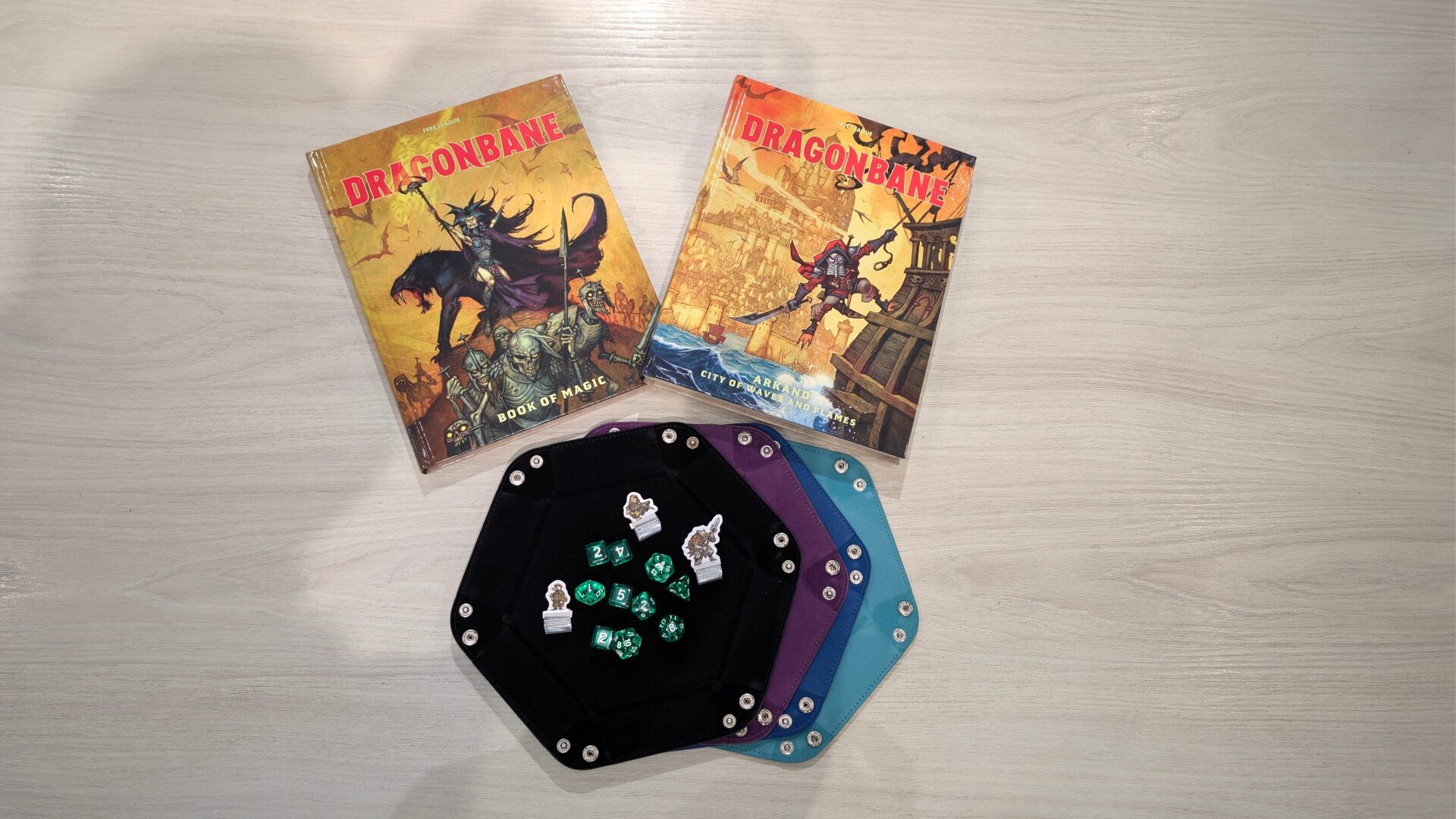
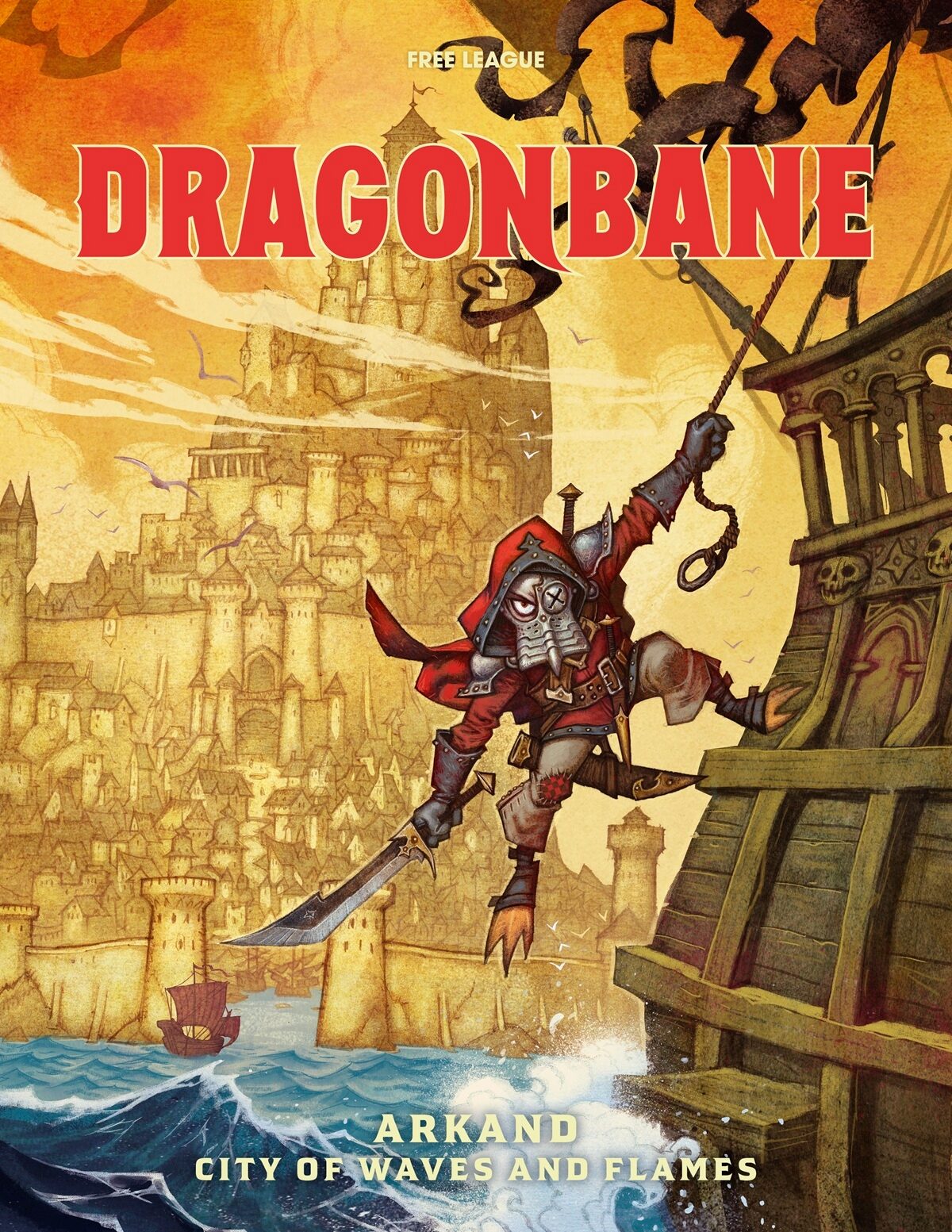

Finished adventuring through The Dead Forest and Heart of Darkness in Path of Glory; well, Free League Publishing has more to offer. Dragonbane is back with the Dragonbane: Arkand — City of Waves and Flames expansion—bringing way more adventures. Additionally, Book of Magic is also dropping on the same day, opening new paths for players and Gamemasters (GMs) looking to master the arcane and alchemic arts. Both expansions will be released on August 25, 2026.
Both Dragonbane: Arkand and Book of Magic have a base look of their books like previous Dragonbane books and other RPG books like Dungeons & Dragons 5E or Pathfinder. But there is also a special limited Collector’s Edition for each new expansion, featuring faux-leather covers and gold foil printing. These are available to pre-order exclusively through the online store. For only $30 USD more for each, it really is a clean gold and green leather binding. But only for the true collectors.
Free League Publishing was generous enough to send us a look at the base books to see and feel the new area of Arkand in Dragonbane. Initially, I was hooked by Arkand’s setting shifting from a mostly stereotypical fantasy forest, mountain, and plains of The Dead Forest and the Heart of Darkness settings. Arkand offered a cool mix of a castle city blended with sea shanty town vibes. Without giving away too much of the flavour text, the history is evidently steeped into every detail of Arkand’s geography.
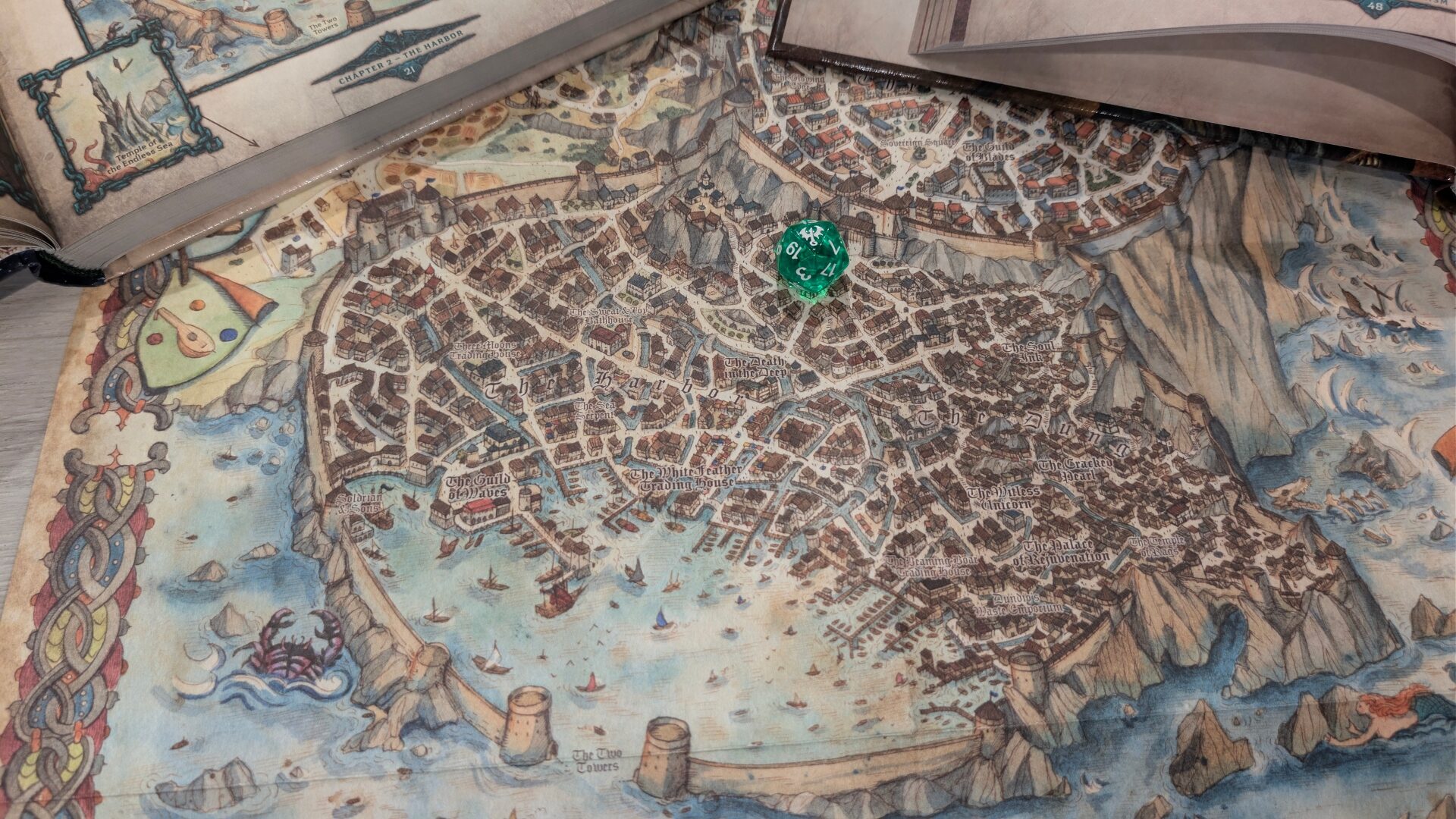
As the GM of this Dragonbane: Arkand campaign, I decided to have my adventurers begin at an inn near Arkand’s Harbour. From there, the party went for a little swim in Arkand’s waters, promoting more Swimming skill rolls compared to the other base Dragonbane adventures in places like Riddermound, which were more flatlands settings—or marshlands. There were swimming opportunities in the base adventures, but Arkand being a somewhat small island and its story background emphasized more water-based activities for parties to explore.
Like the Dragonbane: Mirth and Mayhem core rule set book, the terminology, or rather, the alternative decisions stated in Dragonbane: Arkand sometimes did not make sense. During one of the adventures I ran with the table, one of the potential monsters the party could run into was a giant octopus. In the book, it states: “Giant octopuses are described in the Dragonbane Bestiary. If you do not have access to the Bestiary, treat [the giant octopus] as a demon instead.”
“Visually, I liked that Dragonbane: Arkand came with a big map to give the table.”
This is a bit of an unwise compromise for new players because the stats difference is quite stark. A demon’s HP is double what a giant octopus has, with a bit more armour. The only compromise that makes sense is that a demon has a ferocity of 2 versus a giant octopus has a ferocity of 4.
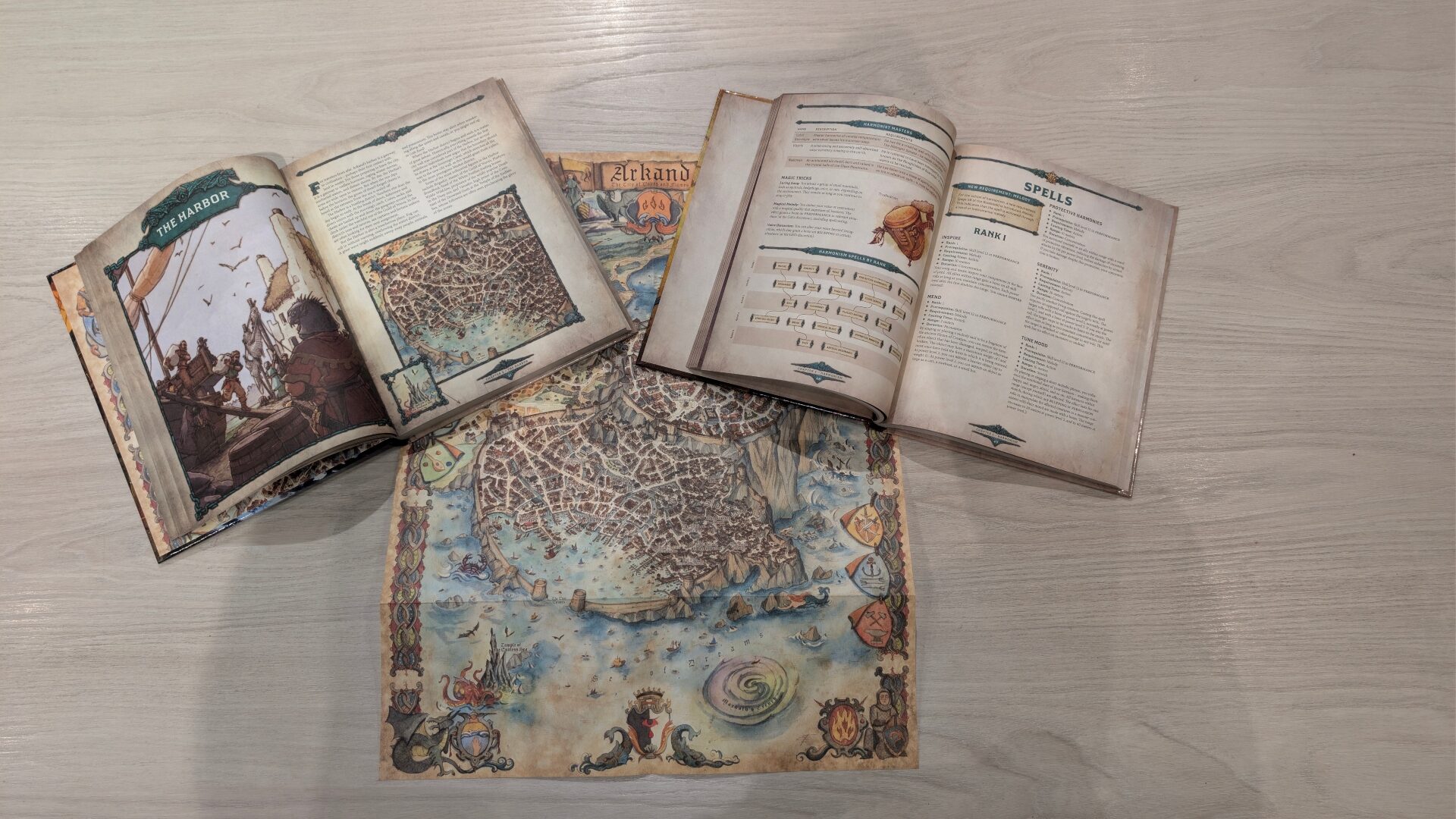
Aside from the sticky text alternatives, the Dragonbane: Book of Magic was clear with all of its branches of magic. Since none of the player characters were mages, I decided to create a mage in the school of Necromancy. This new book features nine new schools of magic: Demonology, Harmonism, Illusionism, Necromancy, Symbolism, Witchcraft, Alchemy, Enchanting, and Dracomancy. It also introduces new spells for the existing schools: General Magic, Animism, Elementalism, and Mentalism.
One of the enemies used Elementalism magic, so it was great to see these two types of magic in play. I read the other magic schools too and found them all straightforward to understand the benefits and drawbacks to each school. Necromancy was the one that caught my eye, especially seeing the type of spells that can be cast at the higher ranks. Not a terrible supplementary book to include over 300 spells, magical recipes, enchantments, and magic tricks for about $41—but might only be worth it if the base magic schools are a bit stale for the table.
While I did not get the opportunity to go hands-on with the Dragonbane: Friends and Foes Standee Set, it is also coming out the same day Arkand and Book of Magic drop too. One of the table members was new to RPGs and is more of a visual learner. Having this standee set makes it great for some adventurers who want to see the physical, tangible creatures or people on a board.
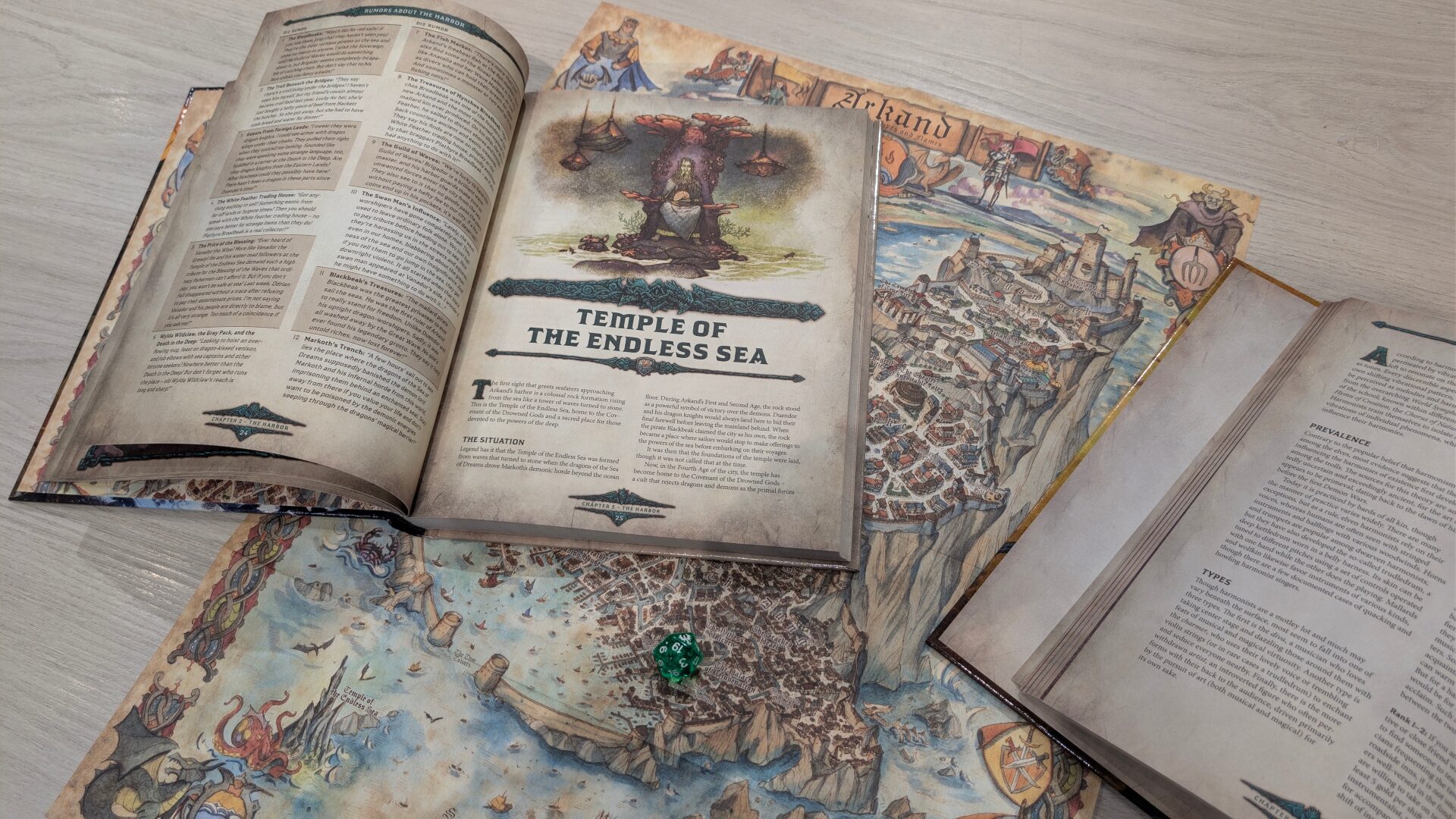
In general, it is easier to visualize a battle by seeing the exact person or thing you are facing. For $24.50, it could be worth it but not required to get started. We just substituted some of the standees from the core set to make do, while I described what the enemies looked like. Visually, I liked that Dragonbane: Arkand came with a big map to give the table. This was a major plus, rather than me having to scan and copy some of the map areas inside the book itself.
Dragonbane: Arkand and the Book of Magic was satisfactory, to say the least. Both experienced and novice RPG players had a good time and were immersed in the lore of Arkand. They mentioned how this half-pirate, half-medieval seaside city was a much more exciting setting than the simpler environments in the core set adventures and in Path of Glory. I would ultimately recommend this RPG mainly for those who want to continue building out a new campaign that branches out from the core set and Path of Glory—emphasizing more water activities for the party. Or also for those who were not impressed with the previous environments.