Animal Crossing New Horizons came along at just the right time, sparking a social phenomenon far beyond the success of any previous game in the series. And then, after nearly two years of semi-regular content updates, we got one last “planned update,” and since the game has faded into the background, leaving players feeling there were no worlds left to conquer.
So, when an 3.0 update and Nintendo Switch 2 Edition were announced last fall—about four years later after the last update—the news was cause for celebration. Now, with a week spent exploring the update’s “new horizons,” it almost feels like we never left.
With that in mind, let’s break down the highs and lows of Animal Crossing‘s latest additions, and dare to dream of where it could go from here, should Nintendo keep investing in this revitalized island getaway.
Long-Awaited Improvements
Months after Animal Crossing New Horizons came out, the next generation of consoles began, and soon the Nintendo Switch’s loading times were feeling glacial compared to the SSD-enhanced PlayStation 5 and Xbox Series X|S (or any comparable gaming PC). Animal Crossing was one of the worst offenders in this department, taking about a minute to go from choosing the game in the Switch menu to seeing the title screen (and another 30 seconds to see Isabelle’s daily message).
The Nintendo Switch 2 may not be packing an SSD, but it still made a marked difference for the game back in June, and now the Switch 2 Edition has knocked even more time off the process. It also brings a resolution boost, although this feels a little less monumental given the game’s cartoon style; jagged edges have been eliminated and the picture is crisper, but it’s the kind of update that’s hard to appreciate unless you compare editions directly.
Also, a huge quality of life improvement is the ability to craft items using ingredients from your storage, wherever you are on the island. Animal Crossing‘s success helped kick off a wave of cozy games, most of which included this convenience, so this addition feels long overdue.
Personally, these two issues were the biggest things holding me back from checking in on my island more often over the last few years has been the sluggish load times, so these tweaks alone were enough to bring me back around daily.
Happy Hotel Designer
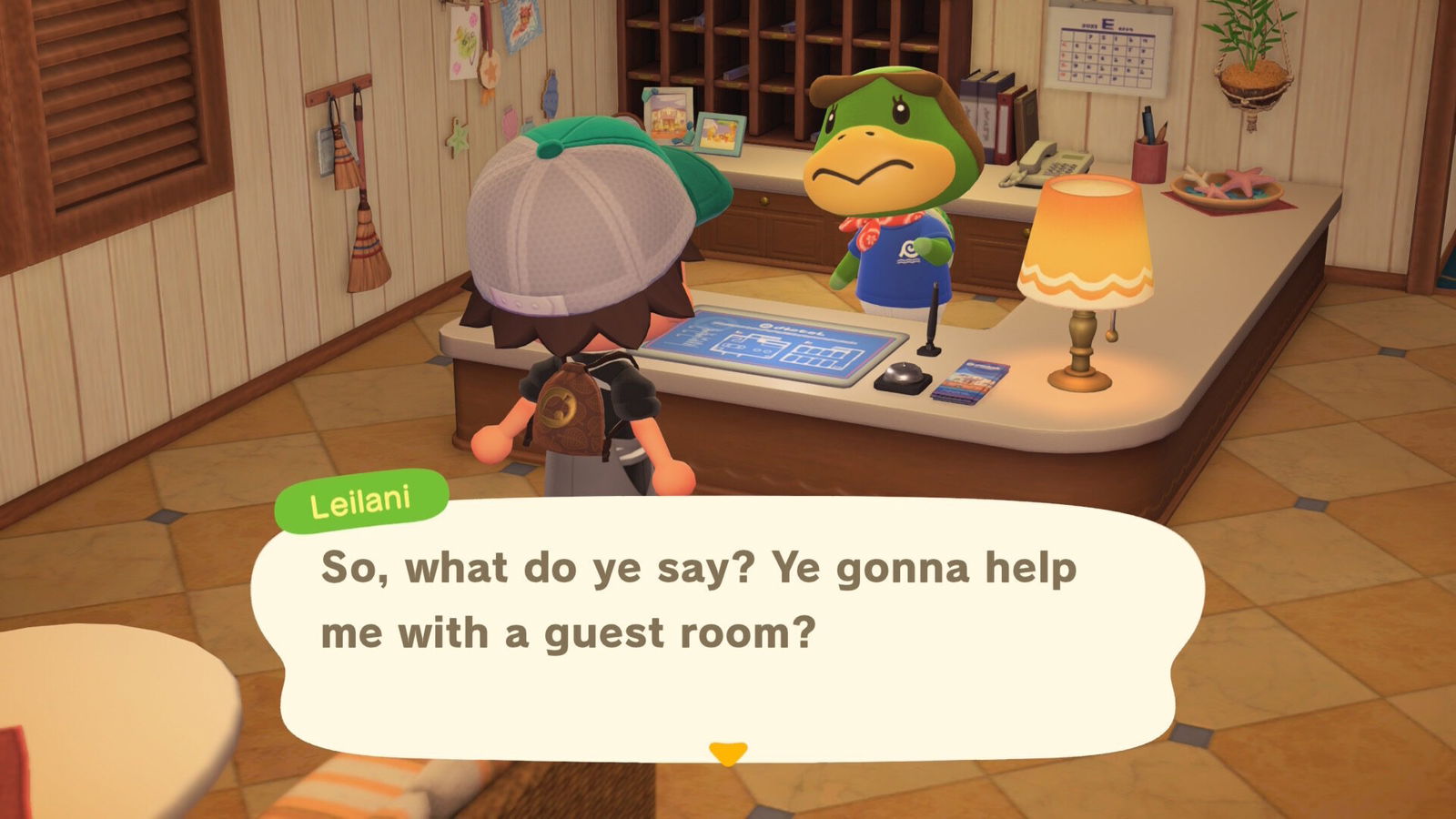
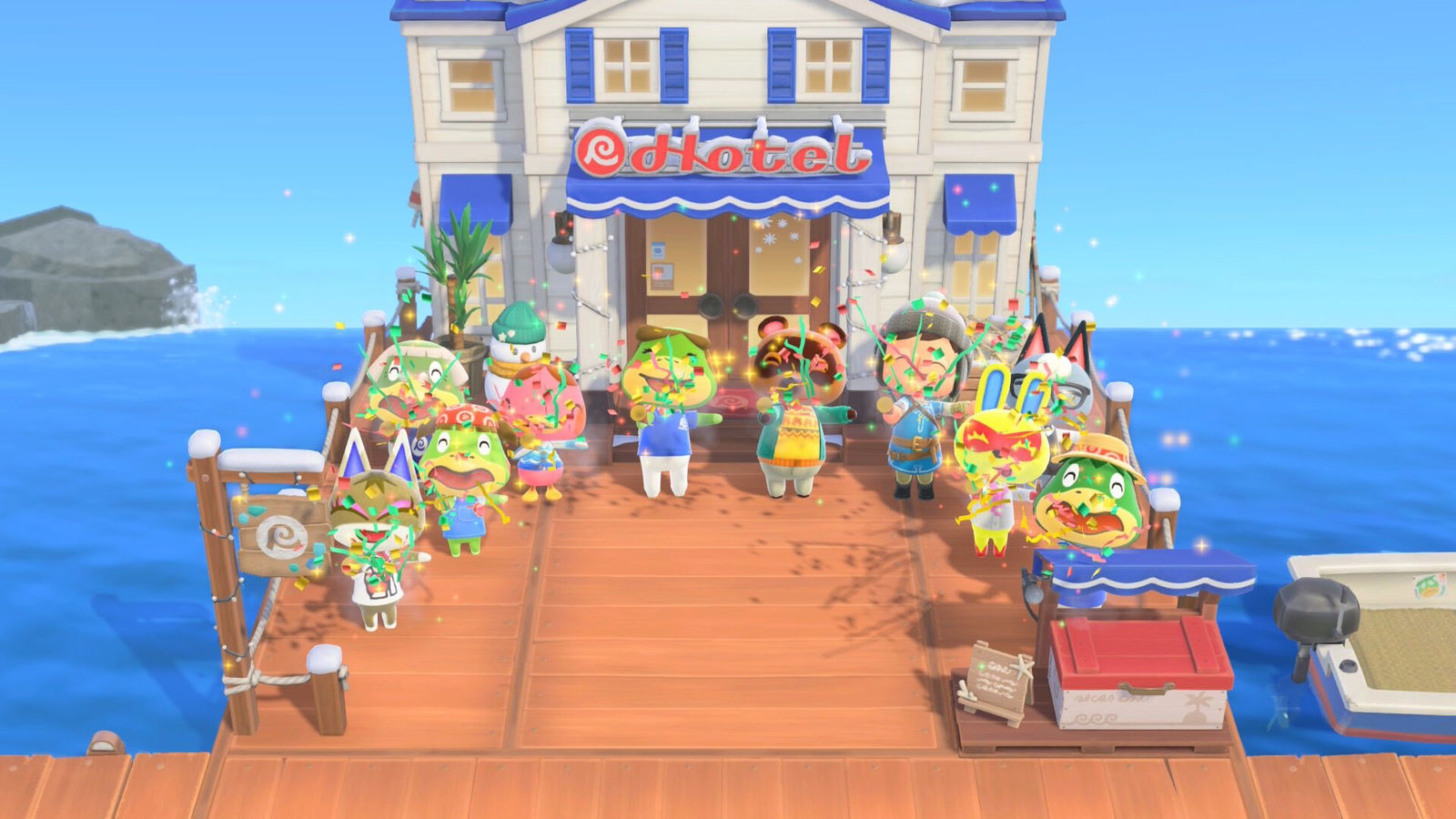
The biggest content addition to Animal Crossing New Horizons‘ 3.0 update is a hotel on your very own island, built as an extension to your pier. Kapp’n’s family operates this new facility, with its own daily decorating tasks, currency, and catalog of items.
While it’s nice having a new facility on the island after all this time, it’s also a little anticlimactic if you own the game’s Expansion Pass and have access to Happy Home Paradise. I finished the vacation home questline, so to speak, when I returned to New Horizons a week before the update, so the hotel’s debut was somewhat anticlimactic. It’s more of the same activity and grinding another new currency.
More contextual dialogue like this would do wonders for keeping New Horizons fresh after six years, more so than another outlet for decorating.
Most of the items obtained through the hotel are pretty good, granted; I’ve long lamented that the item catalog in this game wasn’t quite as robust as its predecessor, New Leaf, and collecting the Nintendo items has always been a personal quest for me in this series, so I’m happy for more variety. It might have been more stimulating if the gameplay loop behind it was more compelling.
The real advantage to the hotel, however, is the way it brings new people to your island. I have a well-cultivated roster of neighbours (still including my first and third villagers, Mira and Raymond, since I started the game on launch day), so random daily passersby have added a little variety to my daily rounds. Some pockets of the community absolutely despise the visitors, but the island feels more alive to me, especially fitting for a 5-star island which is supposedly in high demand.
Slumber Island Gets Creative
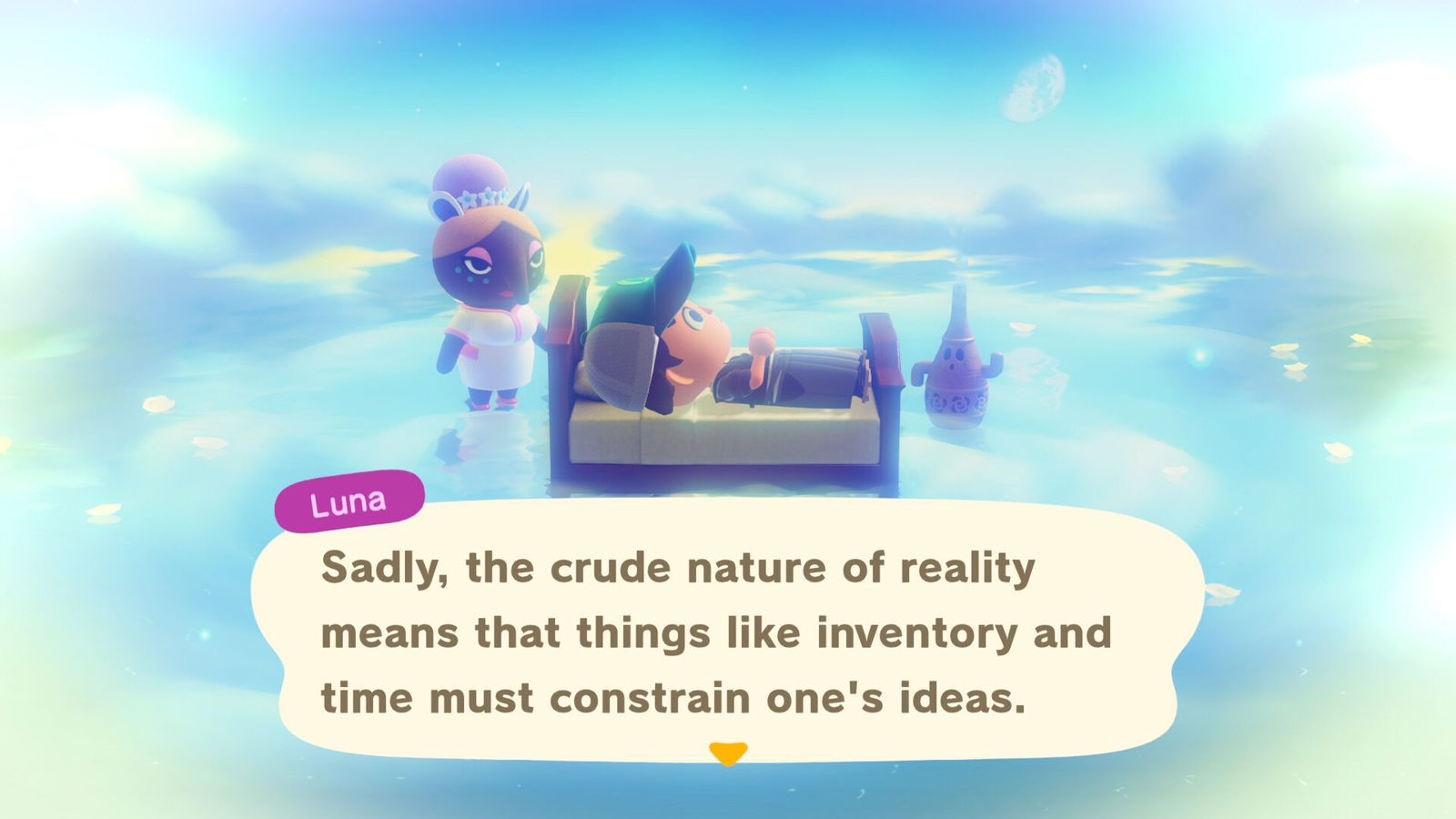
Likewise, I haven’t changed the landscape of my island much since 2021. I found a tiered structure that really worked well for me, and haven’t wanted to shake it up since. This is where Slumber Islands come in handy.
Hop in a bed to access Animal Crossing New Horizons‘ new “creative mode,” where players with Nintendo Switch Online can freely edit new islands—think of it like Minecraft creative mode. Free from the constraints of time and money, you can build inclines and bridges, or move buildings, without spending a bell or waiting for the next day to complete the work.
It’s not a perfect creative mode. You can’t add any old building you want; multiplayer is limited to online, so you can’t play with others who share your home island; and you can’t customize the season. Nor is there a top-down mode for landscaping, as there is for interior design, so the terraforming features remain a little tedious.
But, if you have other friends with the game, this freeplay mode has a lot of potential. Collaborate to build something, recruit help with terraforming, or use the Slumber Island like a playground and make your own games with the tools and timer. It’s a nice way to round out the gameplay after six years.
Overdesigned
Design in general has always been a big part of the Animal Crossing DNA, from customizing your home in the original to terraforming your island in New Horizons. Interior design itself was important enough to warrant its very own standalone game on 3DS and to be the focus of an expansion pack, but this latest installment is beginning to feel a little lopsided.
By contrast, the “village life” aspect of New Horizons continues to feel less developed. It lost some interactions with villagers, like the chance to play a hide-and-seek minigame or dig up time capsules, and didn’t add much in their place. Overall, being the Island Representative still seems inferior to being the Mayor in New Leaf. New Horizons is the most advanced version of the series in some ways, and yet we can’t do much with our animal neighbours, and there’s still the same four personality types that have always existed.
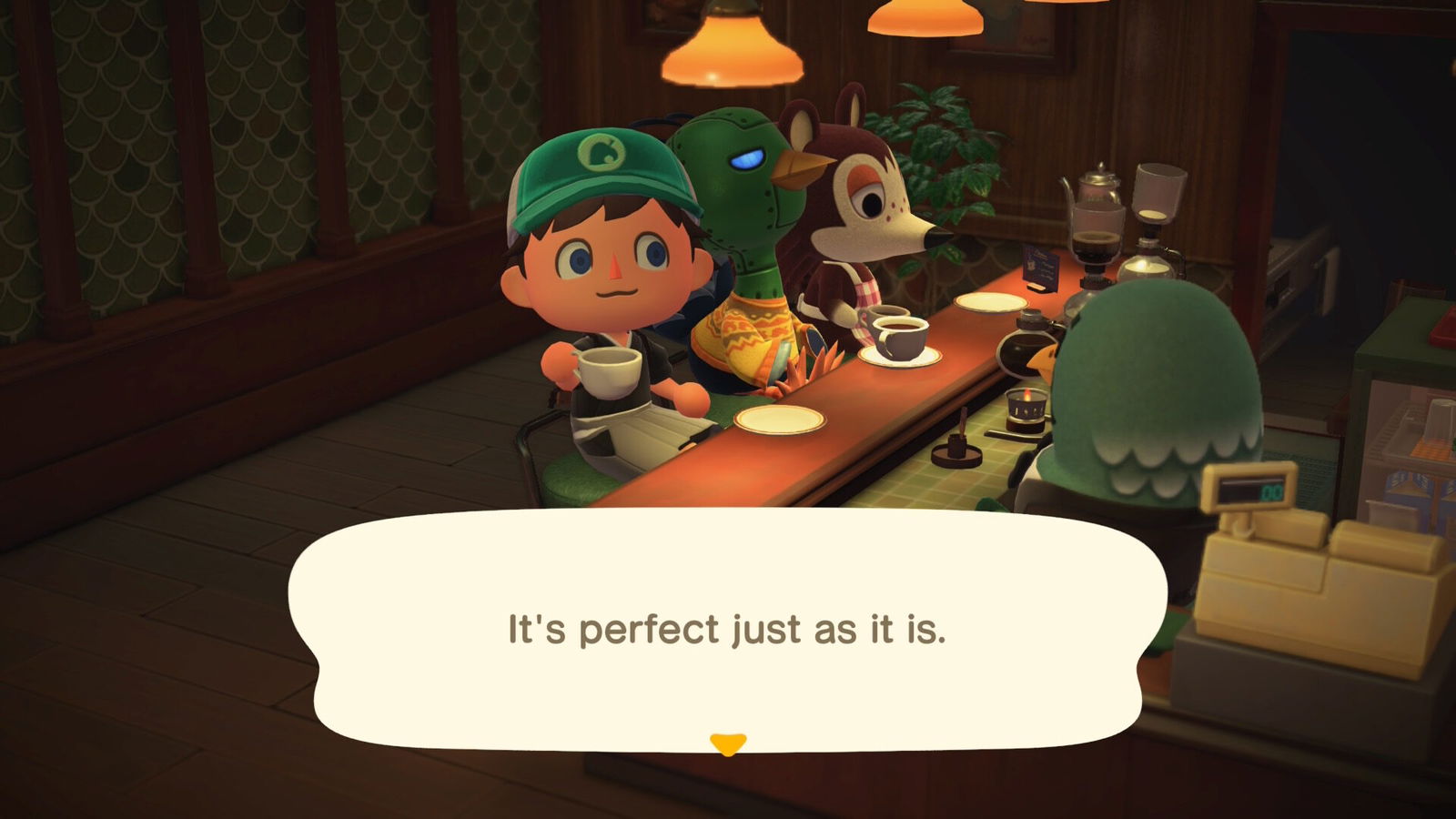
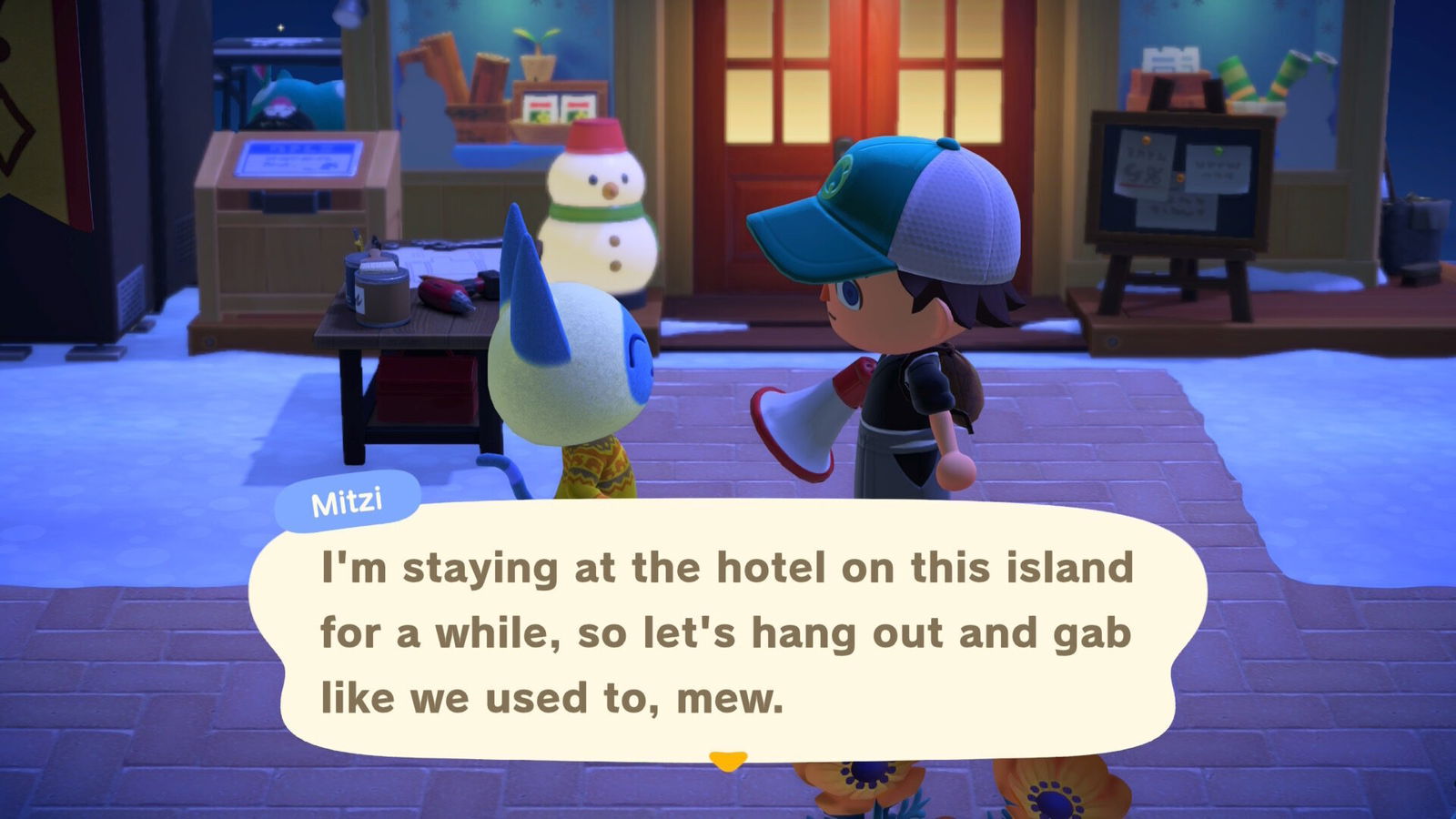
The hotel actually illustrated this to me, and not just by being a veritable reskin of Happy Home Paradise. By chance, one of my earliest villagers, Mitzi, appeared as one of the randomized hotel guests, and I was actually surprised to see unique dialogue that reflected her history on the island. More contextual dialogue like this would do wonders for keeping New Horizons fresh after six years, more so than another outlet for decorating.
What’s Next On The Horizon?
Animal Crossing New Horizons‘ updates seemed to trickle off abruptly back in 2021, so on one hand, I’m just happy to have something new to make it worth checking back in. And though I know this was probably a one-and-done update to bring the game up to the new hardware’s specs, it’s hard not to think about what else could be in the pipeline.
The new Amiibo rewards from The Legend of Zelda and Splatoon are great, but again, there’s potential left on the table—previous Amiibo villagers like Ganon, Wolf Link, and Inkwell didn’t make the jump to New Horizons, and with all the other Amiibo out there, there’s infinite potential for further Nintendo cross-promotions. Speaking of which, many previous items like the Metroid set and other Nintendo consoles are still stuck in New Leaf, and could easily be patched in.
The farming components we did receive for DIY cooking felt like the tip of an iceberg, of which we never saw the rest. Seasonal events could use an upgrade as well, and who wouldn’t appreciate it if Nintendo added even more villagers?
But at this point, it’s unlikely Nintendo would even bother updating a 6-year-old game further when they could begin investing in development of another installment. If New Horizons brought the series this far, imagine what a brand new game built from the ground up for Switch 2 could accomplish.
We just have to hope that if a sequel is the route they choose, Nintendo doesn’t give up as much ground as they did transitioning from New Leaf to New Horizons. This installment is a must-play for the Switch, and it patched out a lot of its own issues over time—but the state New Horizons has reached now should be the baseline its eventual successor starts out from.