

I have been living the cozy game life in the past year or two, often flocking to games that let me relax instead of amp me up. That’s why when I saw Beastro from Timberline Studio, I instantly wanted to take a look. The art style is beautiful, and when I caught wind that it was a cooking simulator, I was sold. However, after playing the Steam demo—which lasted quite a few hours since I love to collect ingredients—I learned that Beastro is so much more than a cooking simulator.
Diving into the game, I was introduced to Palo Pori, a beautiful little waterside village. You come to learn that this city is surrounded by a wall, protecting the village from monsters outside. No one really comes or goes, until now. You play Panko, a chef, whose teacher has gone missing, leaving it up to you to take over the restaurant. But it is more than just cooking, underneath it all.
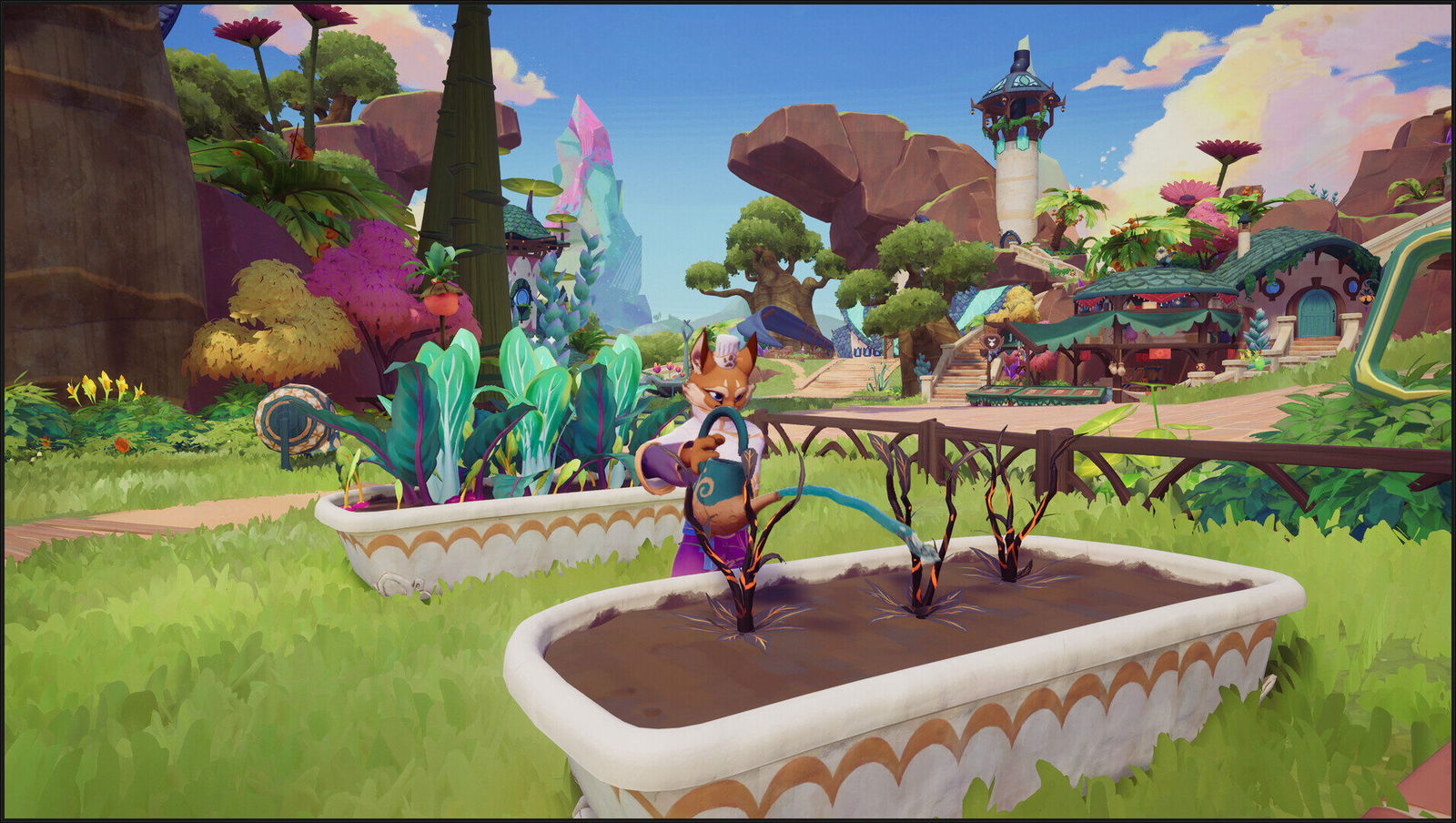
The game loop begins as many sims do: talk to villagers, collect ingredients, feed the animals…standard chores. There is a morning, day and evening cycle, but what I like in Beastro is that these are not timed sections. You can choose when to move into the next portion of the day, so you can spend as long or as little time in each one, really relaxing the pace of the game.
“The art style is beautiful, and when I caught wind that it was a cooking simulator, I was sold.”
In the morning, you will do the aforementioned chores, which can include daytime fishing and shopping as well. Once you move into the second portion of the day, this is where you will cook. You can choose the menu for each day, and then play through a series of mini-games to cook what your patrons choose. In my experience, it was the same dish for all, and the mini-games included chopping, avoiding burning in a pan and a basketball-like game to get things in the pot.
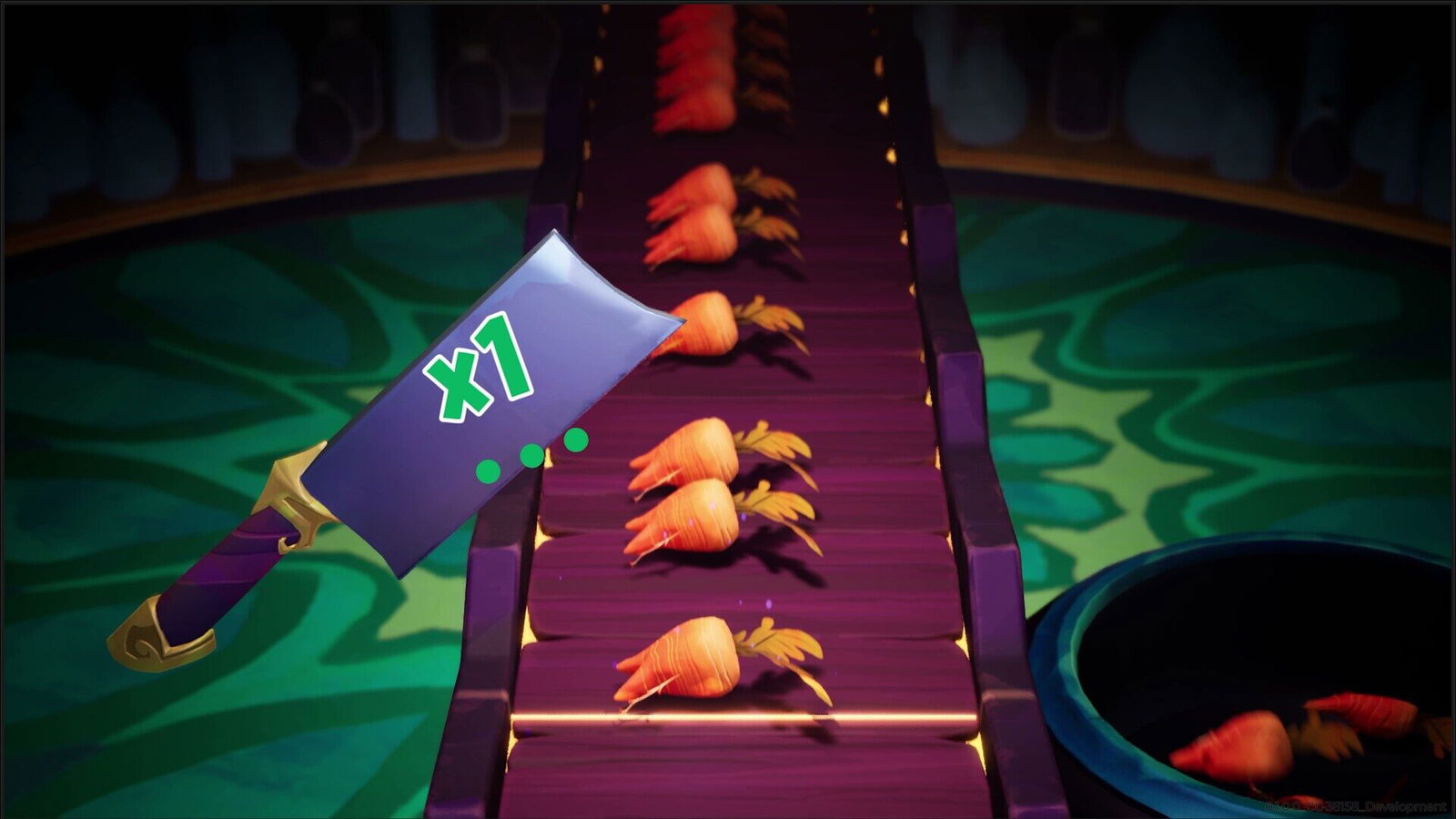

Sadly, for me, these mini-games were the weakest part of the gameplay. For Cloud Berry Jam Toast, I was chopping carrots every time, sauteeing cubes of something and boiling something else. The mini-games don’t seem to reflect what you’re cooking. That being said, overall, mini-games just aren’t my thing. That being said, I can understand that many may enjoy them, and they do add a slight bit of challenge. You will unlock more ingredients and recipes as the game goes on, so I am unsure if the mini-games vary at all, as I only had access to the demo.
After you feed your patrons, you will have one last person to feed, who plays into the overall story of the game, but I won’t spoil that part. This is where Beastro’s more complicated mechanics come into play. You will need to cook for a series of characters, and what you cook affects them on their journey. They will come in with cravings for ingredients or flavours or both, and you need to make something to meet those needs.
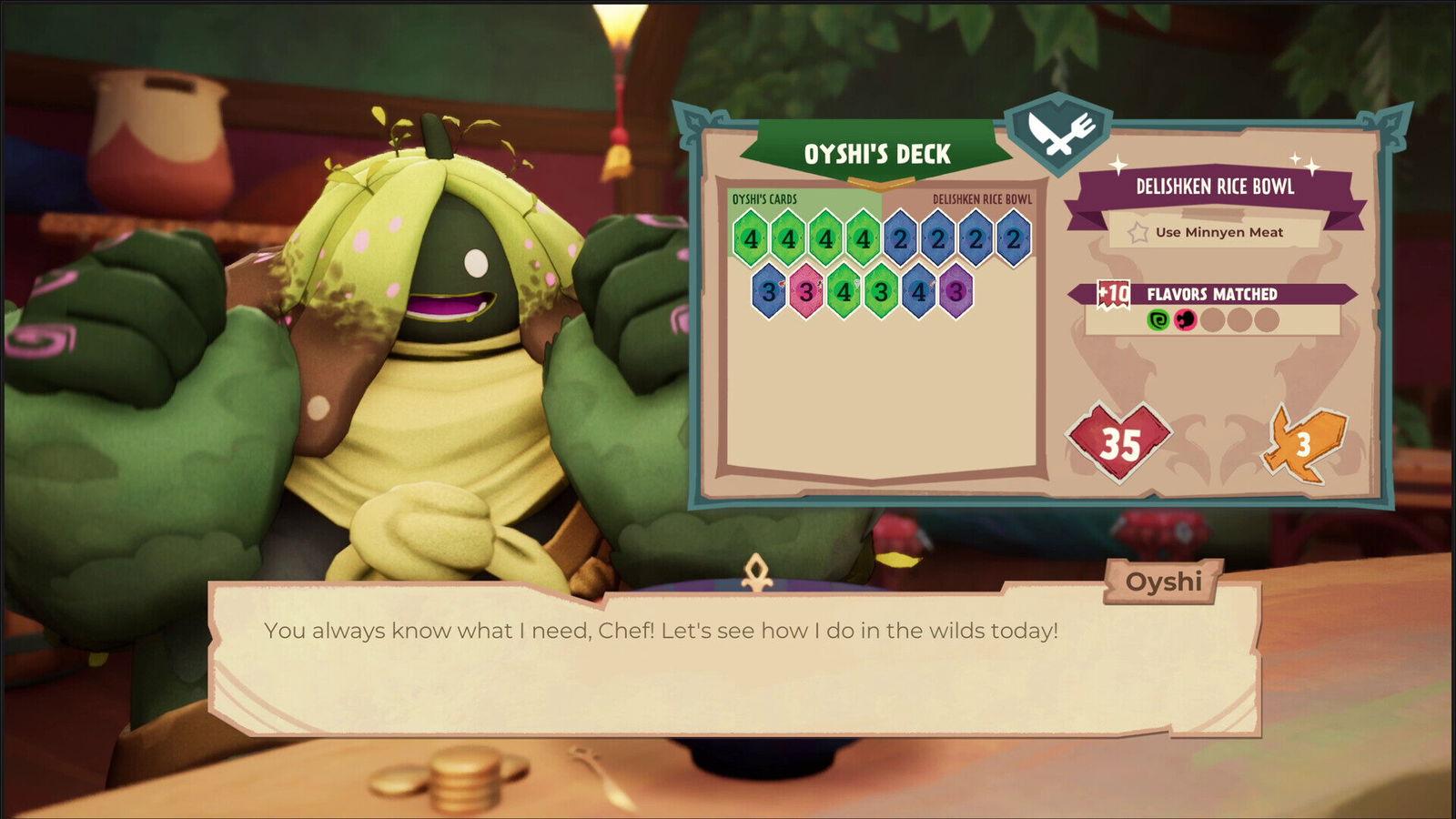
It goes much beyond that, though. I was familiar with these needs from Magical Delicacy and Cuisineer, but Beastro goes a step further and adds a deckbuilding game into the mix. What you cook for these patrons develops a deck that they will take with them out into the wilderness. Once you finish cooking for the evening, you will head into the last portion of the day, finish up chores, talk to some more people, work on some night fishing, and then let the patron you fed regale you with their tale of their trip beyond the walls.
“What surprised me most about Beastro is how seamlessly it blends cozy sim elements with a deckbuilding roguelite.”
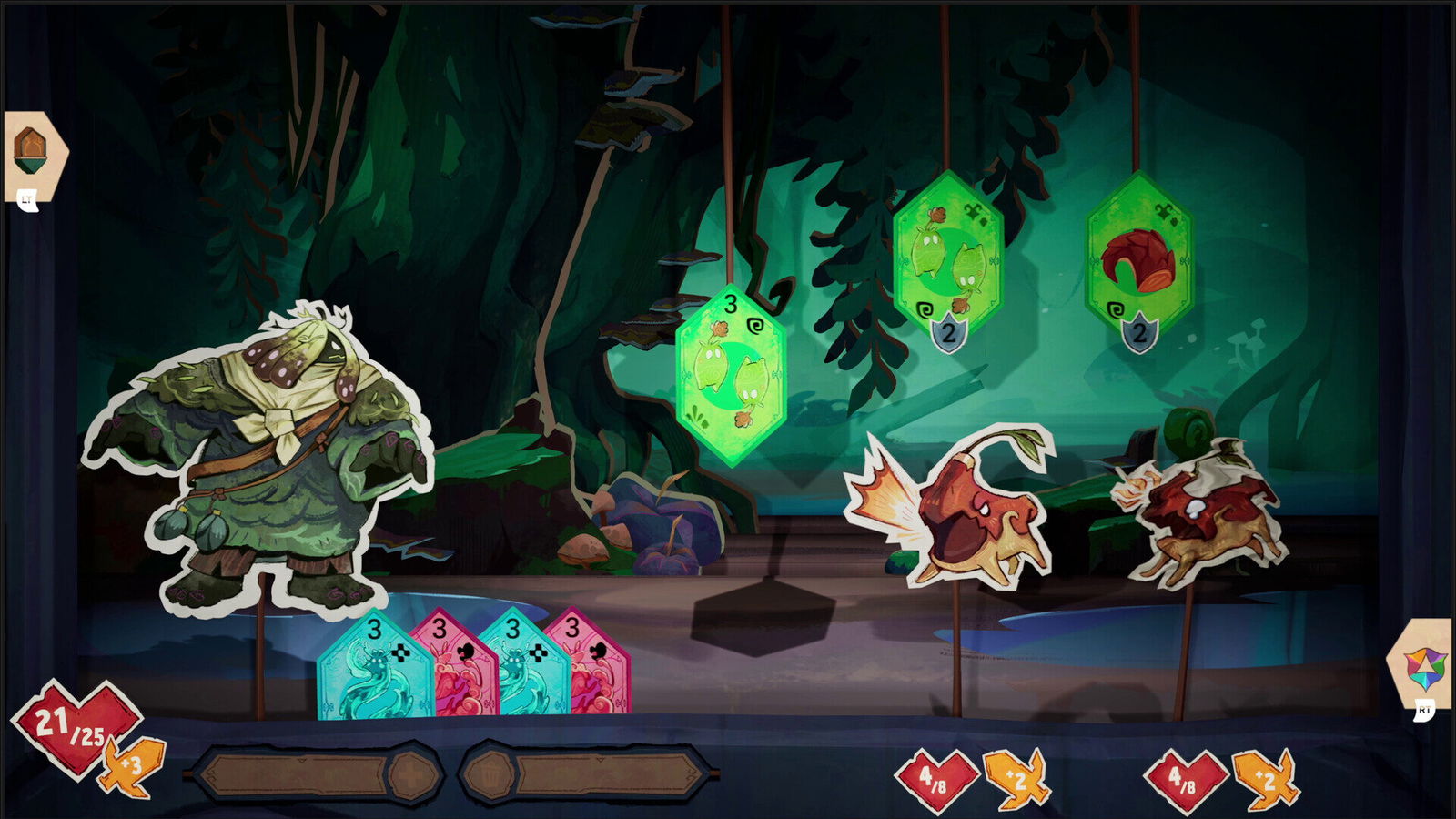
Now, you get to play out that journey, moving from a simulator to a deckbuilding roguelite. You not only get to see what happened on their trip, but you control the battles and choose what paths they take, similar to choosing your route in Cult of the Lamb. As this is a preview, I won’t dive too deep into the deckbuilding mechanics; we can save that for a future review.
When I learned this was how the game played out, I was not looking forward to it, as deckbuilders aren’t my thing. However, the more I played through Beastro and got the hang of this portion of the game, I became pretty hooked and was genuinely bummed when the demo ended.
There are some great quality-of-life features in Beastro that I was really happy to see. For one, you’re fast! You don’t need to mess around with sprinting or patience here. You also don’t have to pick up ingredients while you cook or worry about having them in your bag; you just collect, and the game knows what you have. However, it does say that it has full controller support, but fishing and throwing in the basketball game would not work with my controller; I HAD to have my mouse available for both.
All in all, I knew I would go into Beastro enjoying myself, but I was pleasantly surprised with how much the game hooked me and how invested I became in the deckbuilding portion of the game. There is no official release date for Beastro yet, but I am keeping my eye on it. It is definitely a game I want to jump back into.