
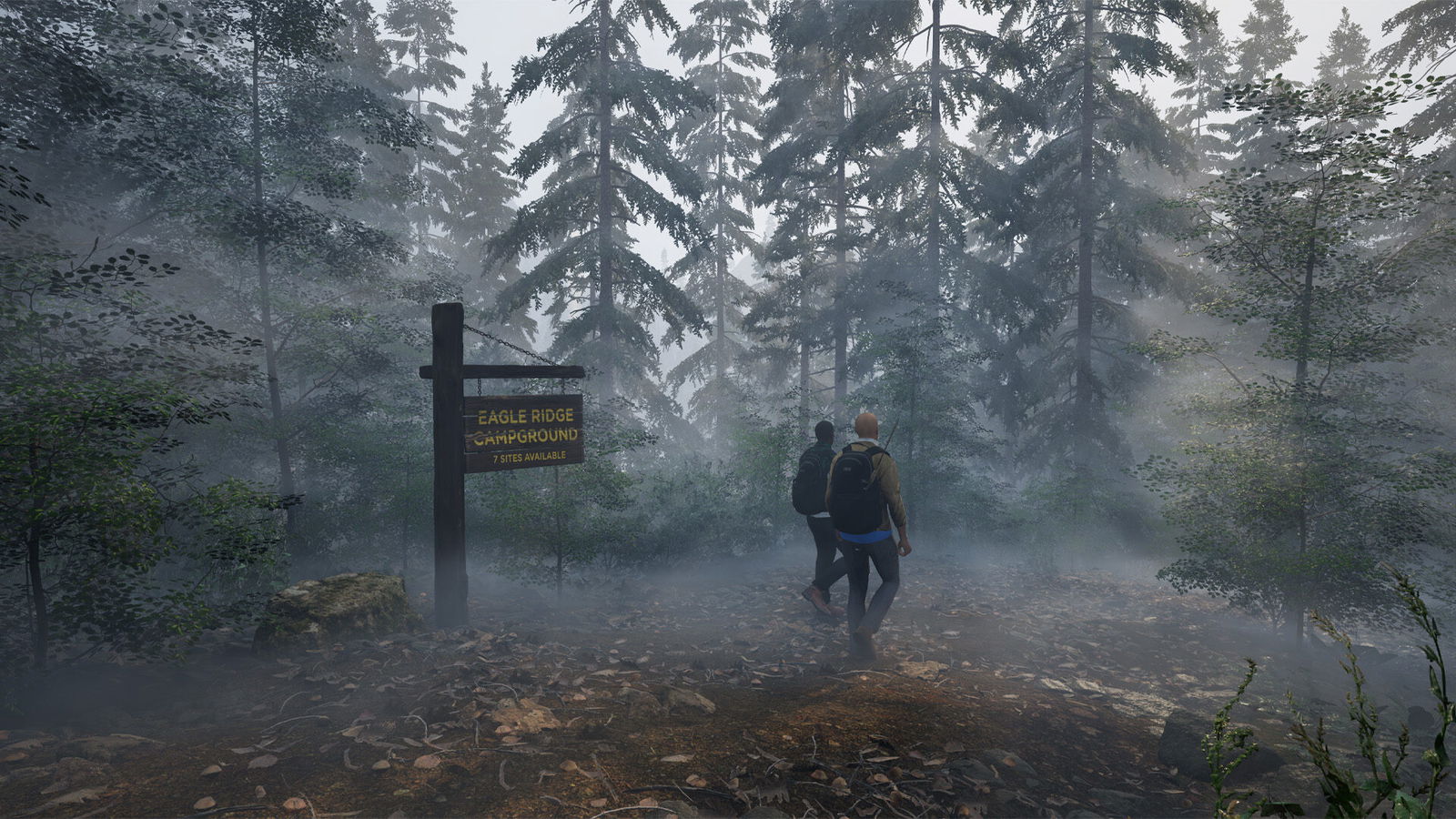
I’ve spoken at some length about being fatigued with open-world survival games with crafting mechanics, primarily because, for a little while, it really was a gold rush genre. But I’ve always been open to any kind of game as long as it has interesting ideas behind it, and The Gold River Project definitely has some interesting ideas.
CGM was invited to dive into the game with the founders of Fairview Games, Craig Martin and David Parkes, who also act as Lead Engineer and Lead Game Designers. They described a desire to create a game that was both familiar and new, utilizing its gameplay to create the sense of surviving a camping trip gone awry, but also throwing in some unique twists to keep players on their toes.
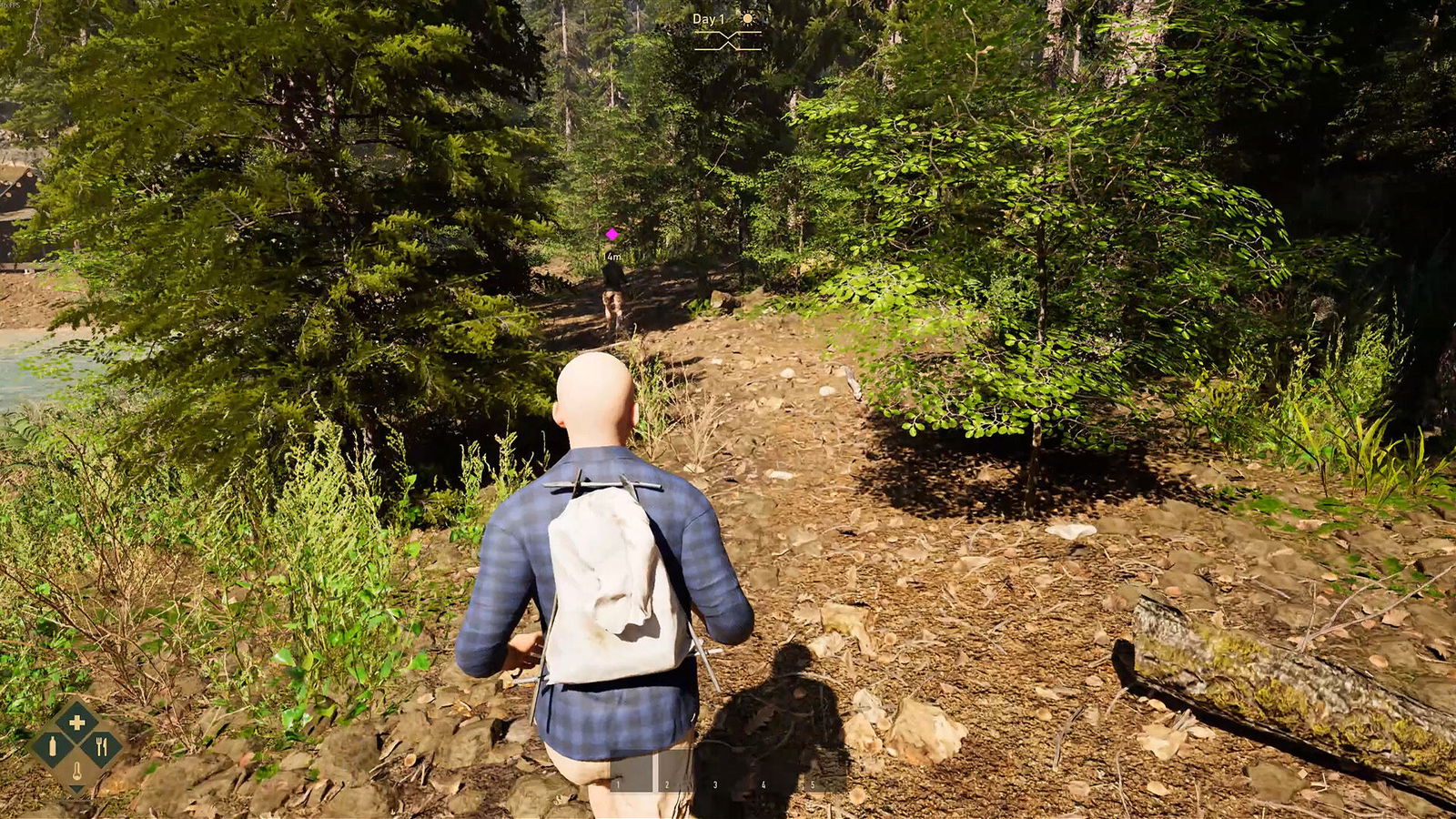
The Gold River Project starts inconspicuously enough. Players set out on what they think is a camping trip in a private nature reserve in the Pacific Northwest. However, things take a dangerous turn when it becomes clear the seaplane that is meant to retrieve you in a week isn’t coming back—the devs actually created multiple scenarios at the beginning to communicate this to players and keep them guessing. As players fight to survive the wilderness, another thing becomes increasingly clear: they are not the only ones here.
A sinister organization with unclear motives have created an artificial atmosphere, separated by massive electrified walls in order to test the unwitting entrants to this wilderness getaway and in order to truly gain their freedom, they must venture into strange underground facilities or fight their way through militarized substations in order to venture to the next “zone” and get one step closer to learning the truth and escaping.

But unlike similar games in the genre, like The Forest or The Long Dark, which tend to throw players headfirst into a dangerous place and start the survival clock, The Gold River Project tries to ease players in before delivering on its big ideas. Outside of giving players a straight-up tutorial, as Martin and Parkes described to me, each “area” takes place in a different season—starting in Summer and moving through Fall and Winter.
“The Gold River Project has some immersive sim elements…”
As Martin said, “We really wanted to set up the game as: play at your own pace. There’s no sort of push or anything like that, you could, if you wanted to, stay in summer for as long as you wanted to and to sort of live off the land…” But this was done with a degree of intention, as the summer biome has limited space and players are bound to find the wall eventually. This is going to spark their curiosity and push them to figure out how to progress forward.

In this way, The Gold River Project has some immersive sim elements, as the game gives players ways to progress that suit their preferred playstyle, or possible desire for difficulty. If they are resourceful, they can explore local landmarks to gain useful tools and crafting supplies, which will help them discover and progress through underground facilities or possibly overload power controls for the wall itself. If players are feeling particularly brave, they can choose to fight their way through a substation, but in summer, with limited weapons or crafting recipes, this would be incredibly challenging.
No matter how players choose to proceed, the challenge ramps up with every season as the weather begins to change, resources begin to dwindle, and new hardships are thrown at the player. Not only that, but seasons spread to previous biomes, so areas players thought they were familiar with become more difficult to navigate. Without proper preparation, players are at risk of freezing to death, starving to death, or dying to death against the trifold threats of human, animal and natural.

But since The Gold River Project is meant to be a more cooperative experience, players will be working together not only with each other, but with NPC factions that spawn randomly across the map. This gives players a chance to trade some of their less-than-useful items for useful crafting and survival supplies. However, not every faction is as trusting as the other, and players need to approach carefully if they want to leave with their lives alongside their goods.
From its style to its gameplay, The Gold River Project has a lot of promise behind its seemingly simple premise—combining cooperative survival, dynamic environments, and a steadily unfolding mystery. The team has been hard at work finalizing and optimizing the game in preparation for their January 26th, 2026, Early Access launch date, and I, for one, am looking forward to it.