
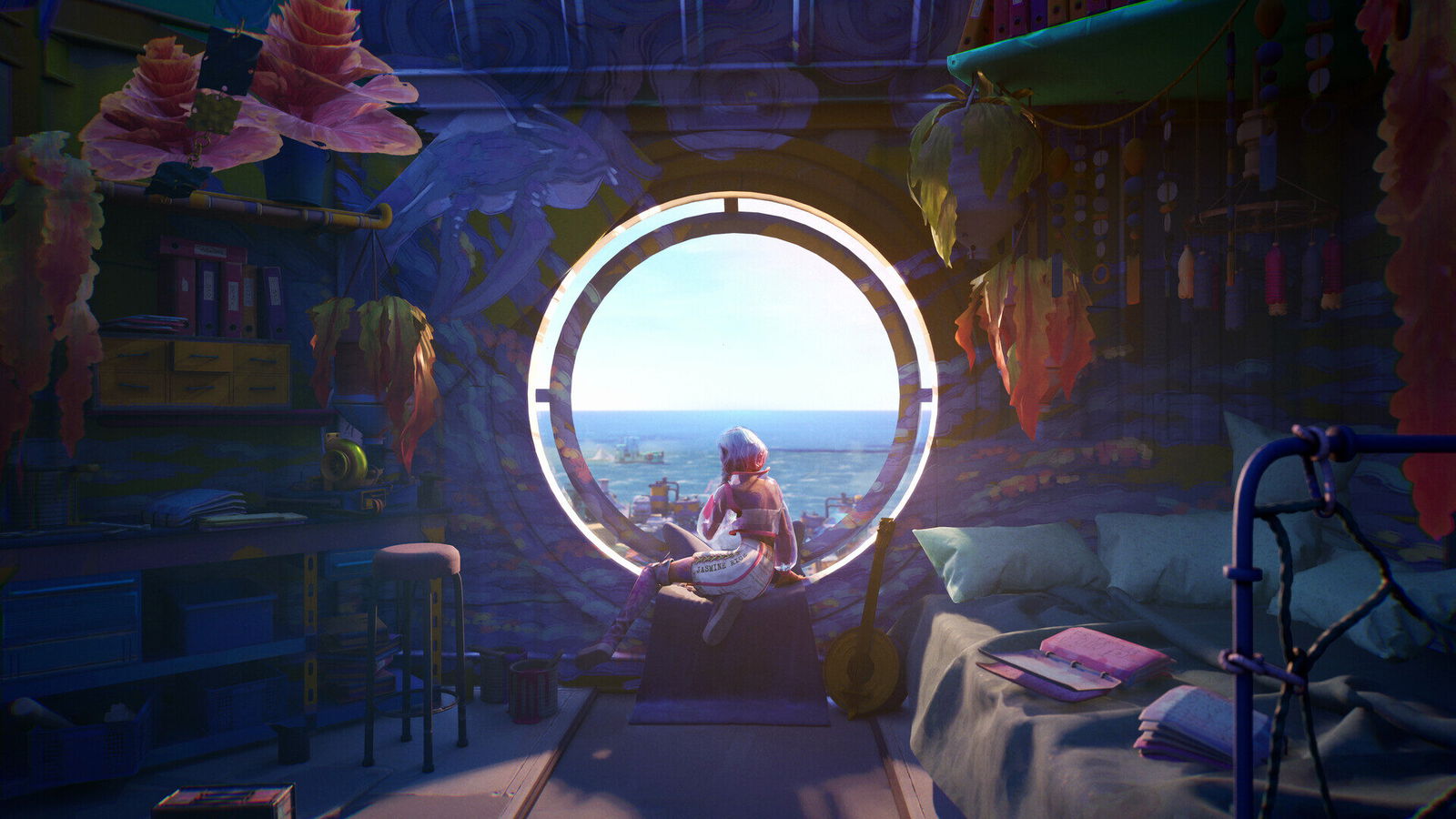
I know I say this a lot, but I’m genuinely surprised that Tides of Tomorrow flew completely under my radar. You’d think with a career covering the games industry, I would be aware of almost every video game that’s on the horizon, but sometimes you can end up missing the trees for the forest.
However, I knew this would be something interesting when CGM’s Dayna Elieen messaged me, “K CAN WE PLEASE TALK ABOUT TIDES OF TOMORROW,” since she doesn’t often message me in all caps unless something is genuinely good. I’ve repeatedly said that the Indie scene is infinitely more interesting than the “AAA” one because of the bold choices developers make to advance the medium. Tides of Tomorrow is one such example of this.
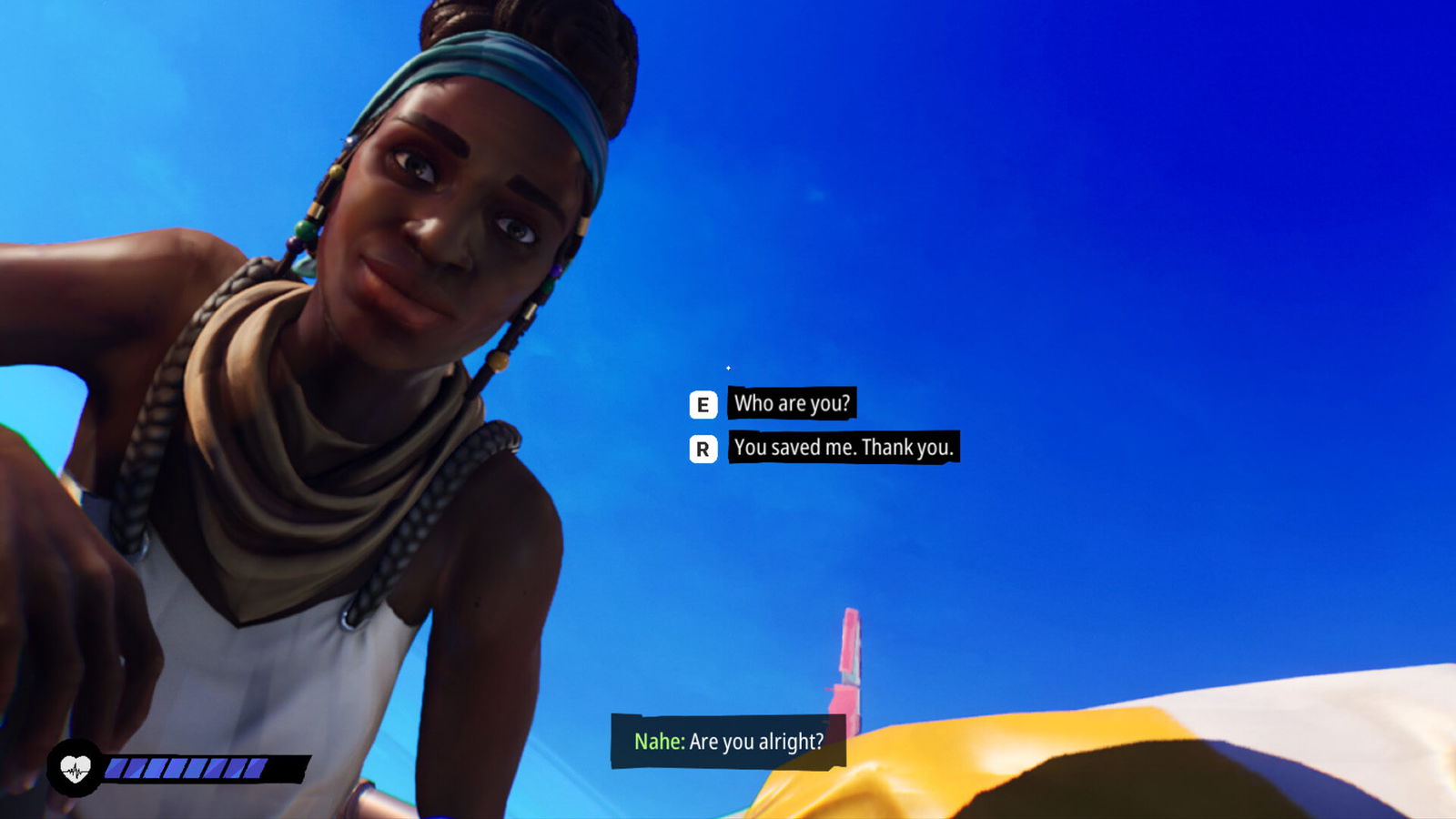
Developed by DigixArt, the studio behind Road 96 and Lost in Harmony, Tides of Tomorrow is a narrative adventure set in a vast, flooded world that has been all but destroyed by plastic pollution in the oceans. Players take on the role of a Tidewalker—unique humans who are able to connect with each other and harness visions of past events—suffering from the disease known as “Plastemia,” which is slowly killing them.
Players must navigate the world, fighting for not only their own survival, but the fate of the remaining mankind. Their choices will shape the world and potentially build a new one, or possibly destroy what little is left. It may sound simple, or like so many games that have come before it, but Tides of Tomorrow differentiates itself with its main gameplay mechanic: asynchronous multiplayer.
When players begin their game, they can choose to follow another player. As you play, you’ll be able to see what choices your followed player made both in dialogue and in action, how it affected the story and allow you to make decisions accordingly. You can either follow in their wake or attempt to diverge and see what new waters await you.
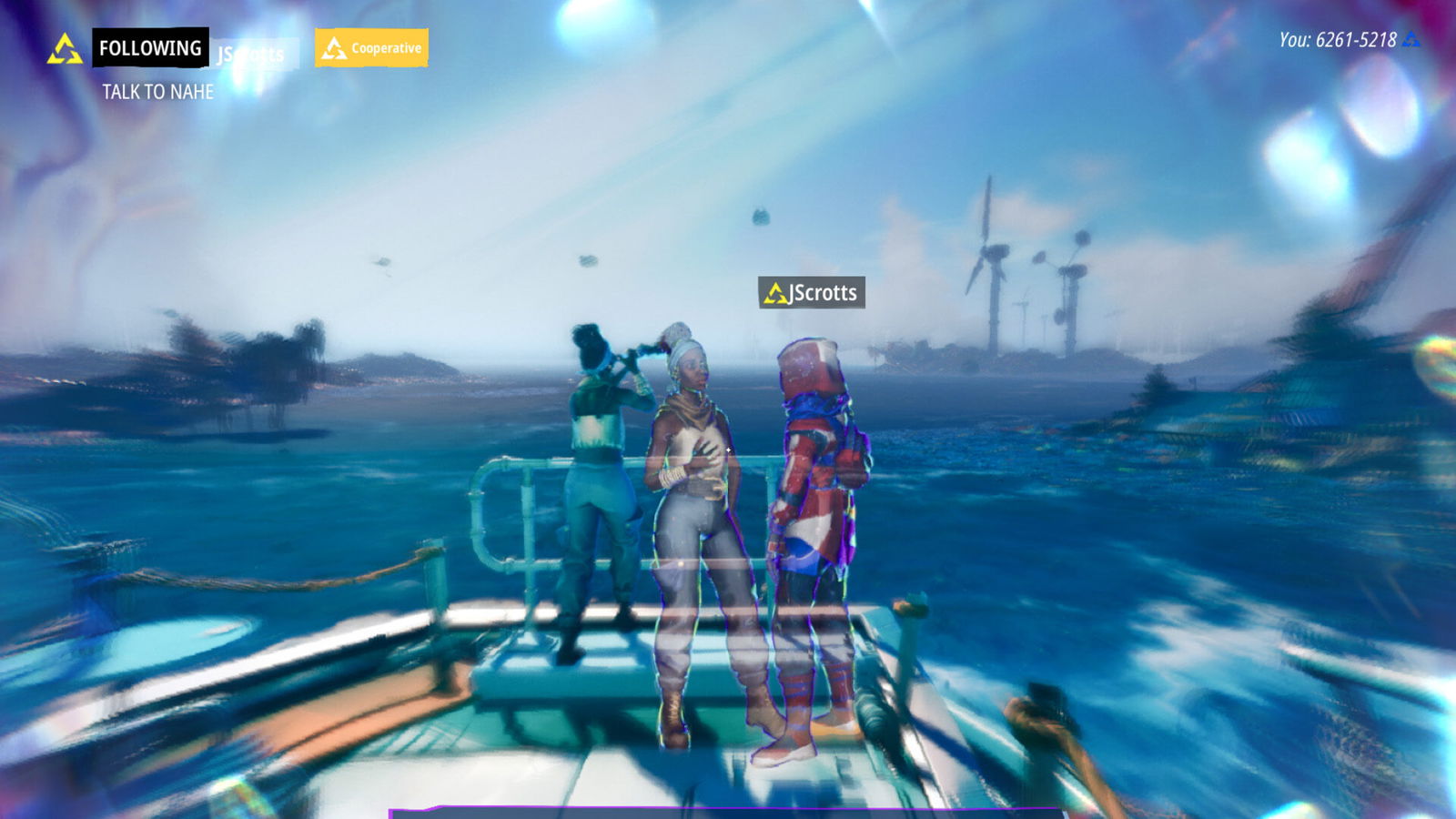
It’s an incredibly interesting idea that works on a lot of unique levels. In the moment-to-moment gameplay, it functions like a positive version of Dark Souls’ Messages system, where players are actually trying to guide each other instead of sending them into bottomless pits. But in the macro-design, it connects in a meta way to the game’s overall narrative by allowing players to learn from each other’s mistakes and try to forge a better path forward.
“Even though my time with Tides of Tomorrow was relatively brief, I’m genuinely impressed with what it’s doing. “
In the early moments of the game, I needed to collect some scrap in order to help one of the characters who was trying to guide me. There was a bunch littered around, but one of them was placed on a memorial to those who had died from Plastemia. By using my Tide-O-Vision, I was able to see that the player I was following had been reprimanded for taking some scrap that was on the monument.
In that moment, it gave me some pause to consider how else I could approach my current situation that wouldn’t put me in bad standing with the local population. Going forward, I tried to be extra considerate with my decisions, all while trying to navigate a whole that was being shaped by another player. It made the experience so incredibly interesting, as you can tangibly see how events were shaped by the person who came before you, and how I now had to move through newly opened doors as others were closed by another player.
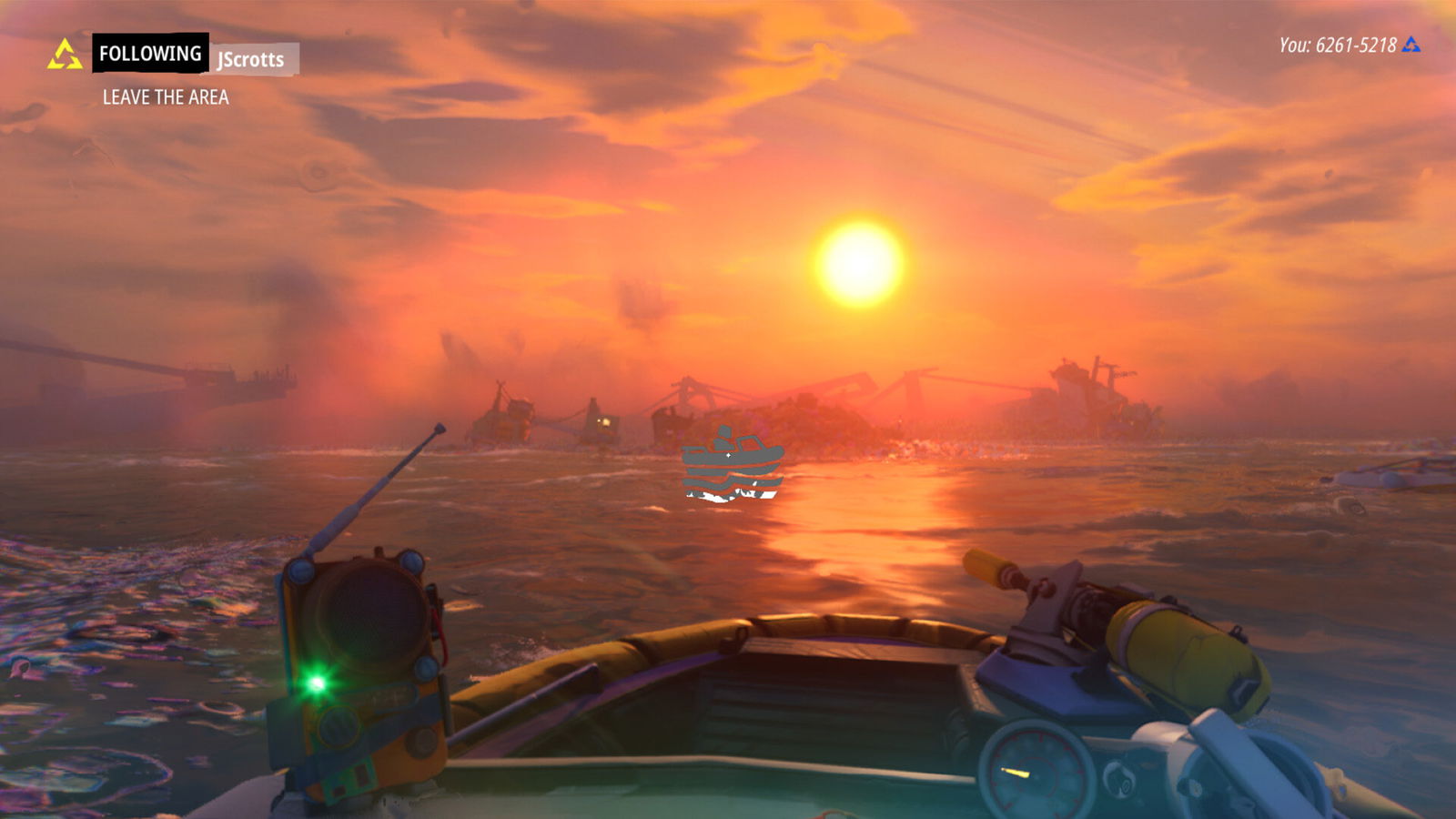
And what’s even more interesting is that players are not bound to another player for the entirety of their journey. At certain critical moments, players can choose to follow others, giving them the freedom to explore other perspectives and follow different threads of fate. Digixart clearly wants Tides of Tomorrow to be a deeply social game as players can share game seeds with one another, and there’s a big push for players to follow their favourite streamers—expanding the experience to a much broader platform.
Even though my time with Tides of Tomorrow was relatively brief, I’m genuinely impressed with what it’s doing. Not only is it creating an interesting world and telling an engaging story with truly resonant themes, but it’s doing so with such an interesting and dynamic gameplay hook that it genuinely keeps you involved. It’s going to be really exciting to see how Tides of Tomorrow connects and challenges players.
Tides of Tomorrow launches February 24, 2025, for PC, PlayStation 5 and Xbox Series S/X.