
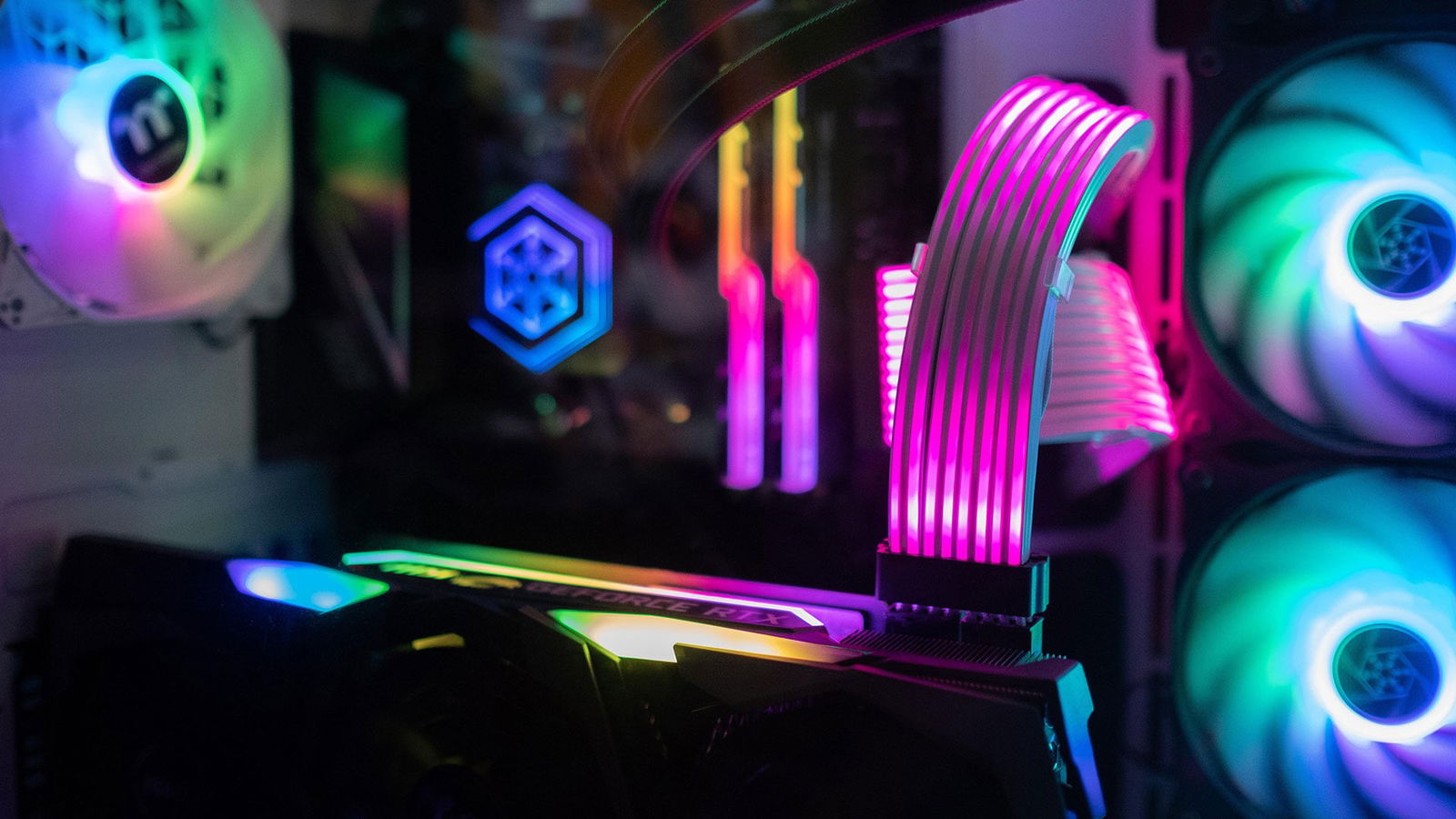
CES has long been a strange beast…
Never attended? This annual tech conference, held in Las Vegas—where else?—is a place where genuinely exciting consumer tech shares floor space with ideas that feel like they escaped a late-night bro hangout after one too many energy drinks! For every practical breakthrough, there’s something deeply unnecessary humming away behind a velvet rope.
Thankfully, CES 2026 leaned far more toward the former—at least where gaming tech was concerned.
This year’s show wasn’t stacked with jaw-dropping, industry-defining reveals, but it did offer something arguably much more useful: a clear picture of where gaming hardware is actually heading. Less Sci-Fi, more refinement, with power and accessibility being quietly distributed across the vast spectrum of gaming tech.
Whether such shifts will actually come into play over the next 12 months remains to be seen, but there’s certainly a lot that we’ll be budgeting for here in 2026. So, let’s dive in.
Gaming Hardware Isn’t Just for Hardcore Gamers Anymore
Before we round up the best in show this year, let’s pause for a moment to appreciate just how far gaming hardware has come. There was a time when cutting-edge products were built for and marketed to a very specific demographic.
Modern gaming tech is built for a much broader spectrum of players, focusing more on the needs of gamers, rather than the genre they’re playing. It isn’t just FPS that demand high refresh rate monitors with OLED panels and punchy machines with powerful GPUs anymore! Instead, visual clarity and responsiveness are key to all manner of gaming sessions, be they spent in sprawling RPGs or loading up visually rich slot games in an online casino.
Hardware advances that once existed purely to serve competitive PC players now benefit a much wider range of digital experiences. High refresh rates, for instance, aren’t just about shaving milliseconds off reaction times. Yes, they’re still fundamental to Call of Duty play, but they also deliver crisp visuals and reduce eye strain across lightweight gaming genres like iGaming.
Think about it: if you’re loading up real money slots on a desktop, with actual stakes involved, you’re gonna want to keep an eye on all those fast-moving visuals. You’re going to want to enjoy every element of the crisp, lush graphics. You’re going to want the animations to be absolutely seamless from start to finish. The games aren’t complex enough for them to tax hardware, but even a slight blip would be noticeable in these glossy titles. As it is, with modern gaming hardware, they run as smoothly as butter.
That’s especially true in games that center on free spins and bonus features, which often change the gameplay’s patterns and adjust how the atmosphere feels. Crisp graphics and transitions are a must. A cruddy old monitor simply won’t cut it; these games demand a beautiful display.
No wonder, then, that manufacturers have seriously rejigged how they design hardware of late.

The Best of the Best at CES 2026
And now, back to the main event. This big daddy of tech trade shows may not have screamed “future classic” with every reveal, but nevertheless, quite a few innovations stood out for polish, ambition, and a true understanding of modern gamer habits.
Top PC: ASUS ROG G1000

ASUS ROG’s G1000 gaming desktop doesn’t reinvent the wheel. But that’s exactly why it works! With configurations pairing up an AMD Ryzen 9 9950X3D CPU with AMD Radeon RX 9070 XT or NVIDIA GeForce RTX 5090 GPU, the specs are formidable.
Where the G1000 shines is its obsessive focus on airflow and sustained performance. Separate chambers for the PSU and graphics card, a dedicated ROG Thermal Atrium, and a liquid-cooled AIO setup all combine to keep things running cool under pressure.
Then there’s AniME Holo, ASUS’s new holographic lighting system that—yes—is embedded directly into the glass panels. With three distinct zones capable of projecting full-colour animations, it’s the kind of flashy aesthetics that’s missing in the era of safe and minimalist PC cases.
Mission make gaming fun again!
Top Gaming Monitor: LG UltraGear EVO AI 39GX950B
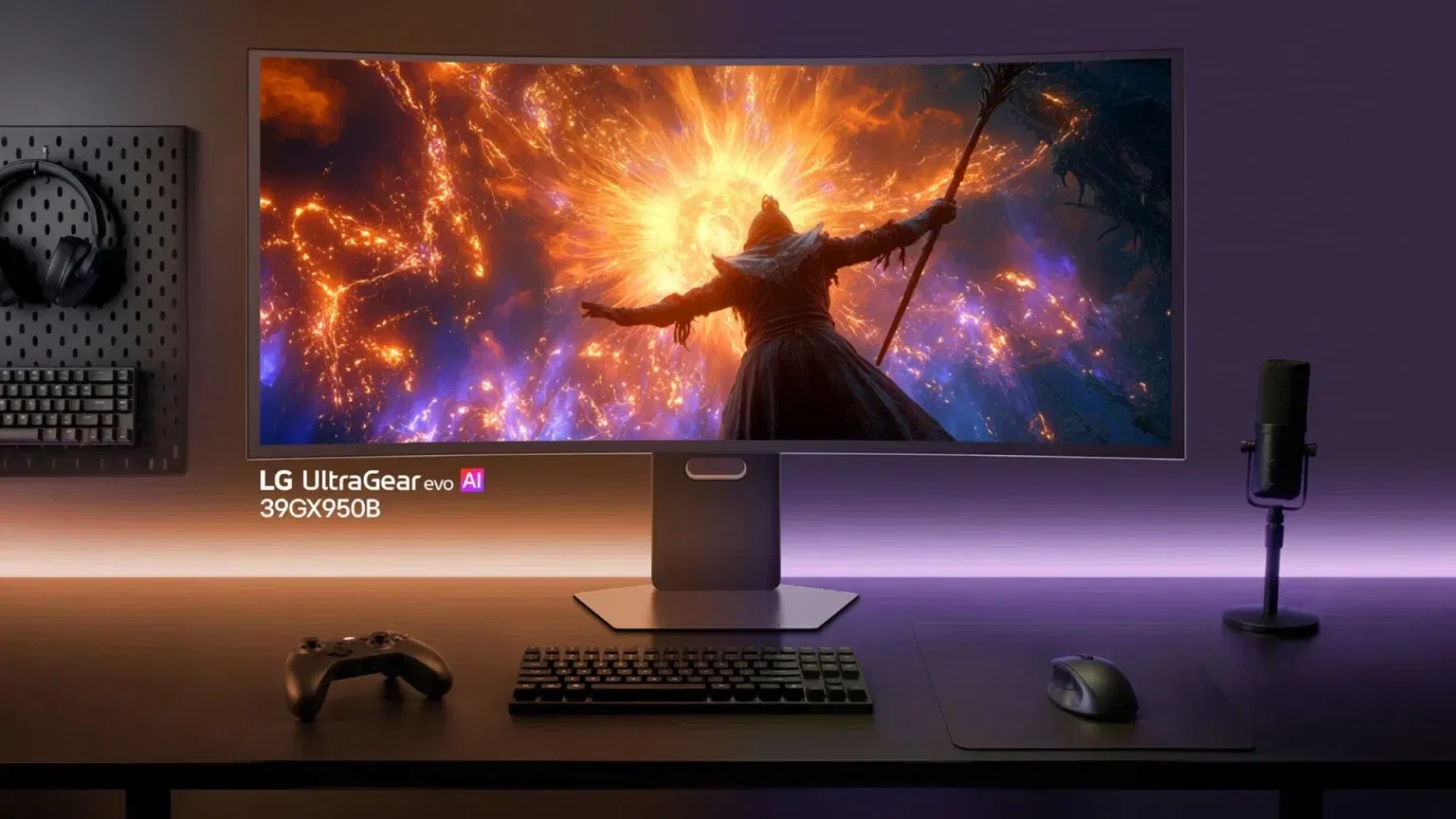
If there was a single piece of gaming hardware at CES 2026 that genuinely turned heads, it was LG’s UltraGear EVO AI 39GX950B. This 39-inch curved ultrawide tandem OLED monitor pushes a 5120×2160 resolution at refresh rates up to 165Hz. Yes, a more modest version at 2560×1080 with 330Hz is available, but who cares about modesty in 5K?
Of course, the pixel density leap over the more traditional ultrawides is the headline attraction here, but we have to say the UltraGear Evo feels like it’s been purpose-built for players who care about image quality.
The AI upscaling and audio enhancements are nice to haves, sure, but it’s the panel itself that’s the real star here. You will need some serious GPU muscle to run it at full tilt, but if you can, this might be the gold standard for immersive gaming in 2026.
Top Laptop: ASUS ROG Zephyrus Duo (2026)
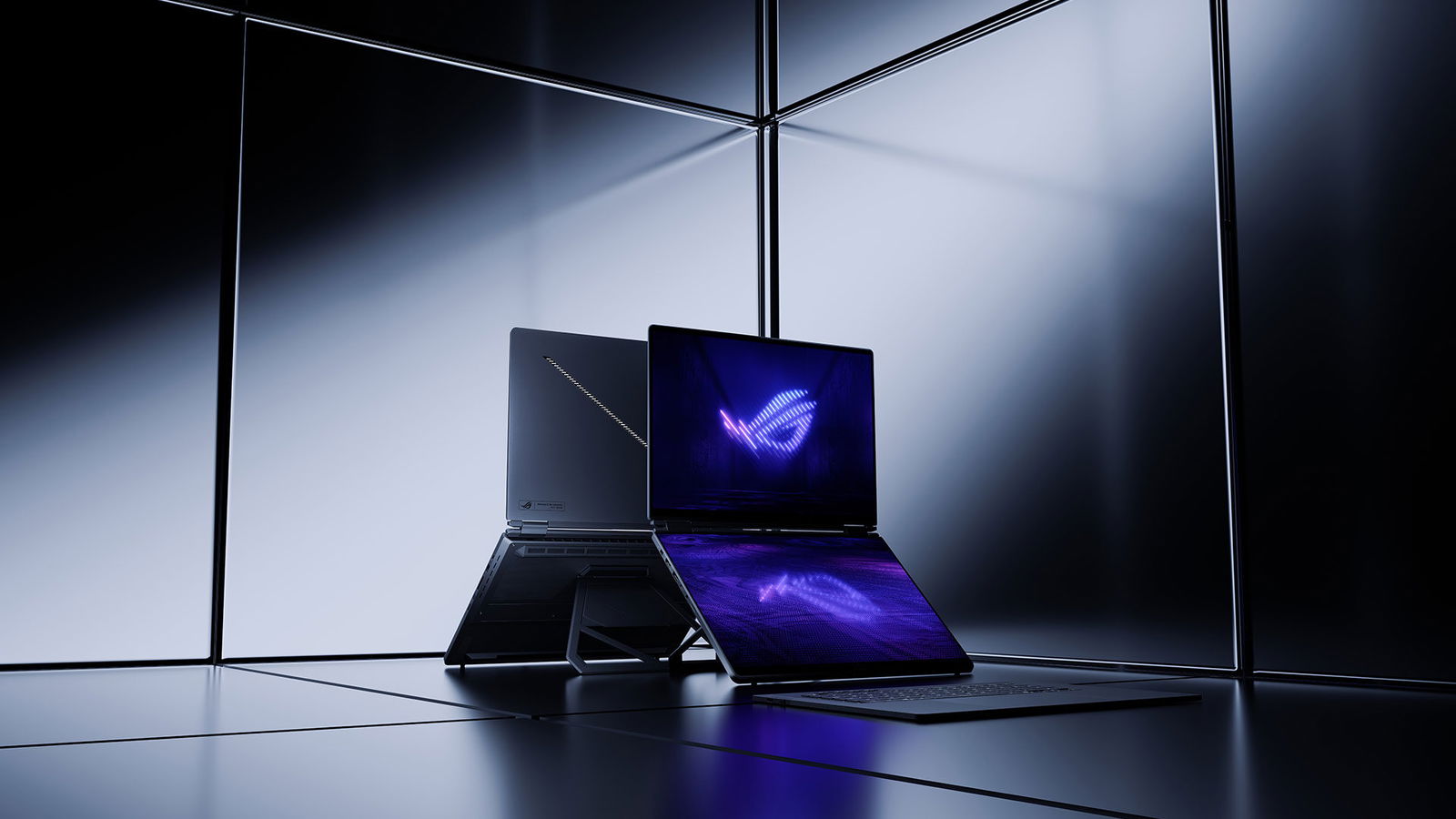
The Zephyrus Duo is the kind of device you don’t fully appreciate until you’ve spent hours sifting through tabs, windows, and workflows on a single cramped laptop screen. This new dual-screen hybrid—while being totally flashy—seems like an answer to a problem that we’ve all just accepted as normal.
So, what is it? Think of it as a gaming laptop-tablet hybrid, with a (wireless) keyboard that can be attached to transform it into a more conventional laptop. Yes, it’s chunky. Yes, it’s heavy. But it honestly feels genuinely flexible, rather than gimmicky.
Plus, with dual 3K OLED 120Hz displays, Intel’s Core Ultra 9 Panther Lake processor, and an RTX 5090 GPU all somehow fitting into a 1.9cm chassis, it’s hard not to admire the ambition.
Refinement over Revolution
No, CES 2026 didn’t promise a radical gaming revolution. But we’ll take what it did offer over that, any day. This increased focus on tech refinement and accessibility shows there’s a growing recognition among hardware manufacturers that gaming means different things to different people.
Yes, the more casual, entertainment-based genres like iGaming do deserve to be played on top-spec machines if you take them seriously. And yes, it’s time our hardware started adapting to us, rather than the other way around.


