
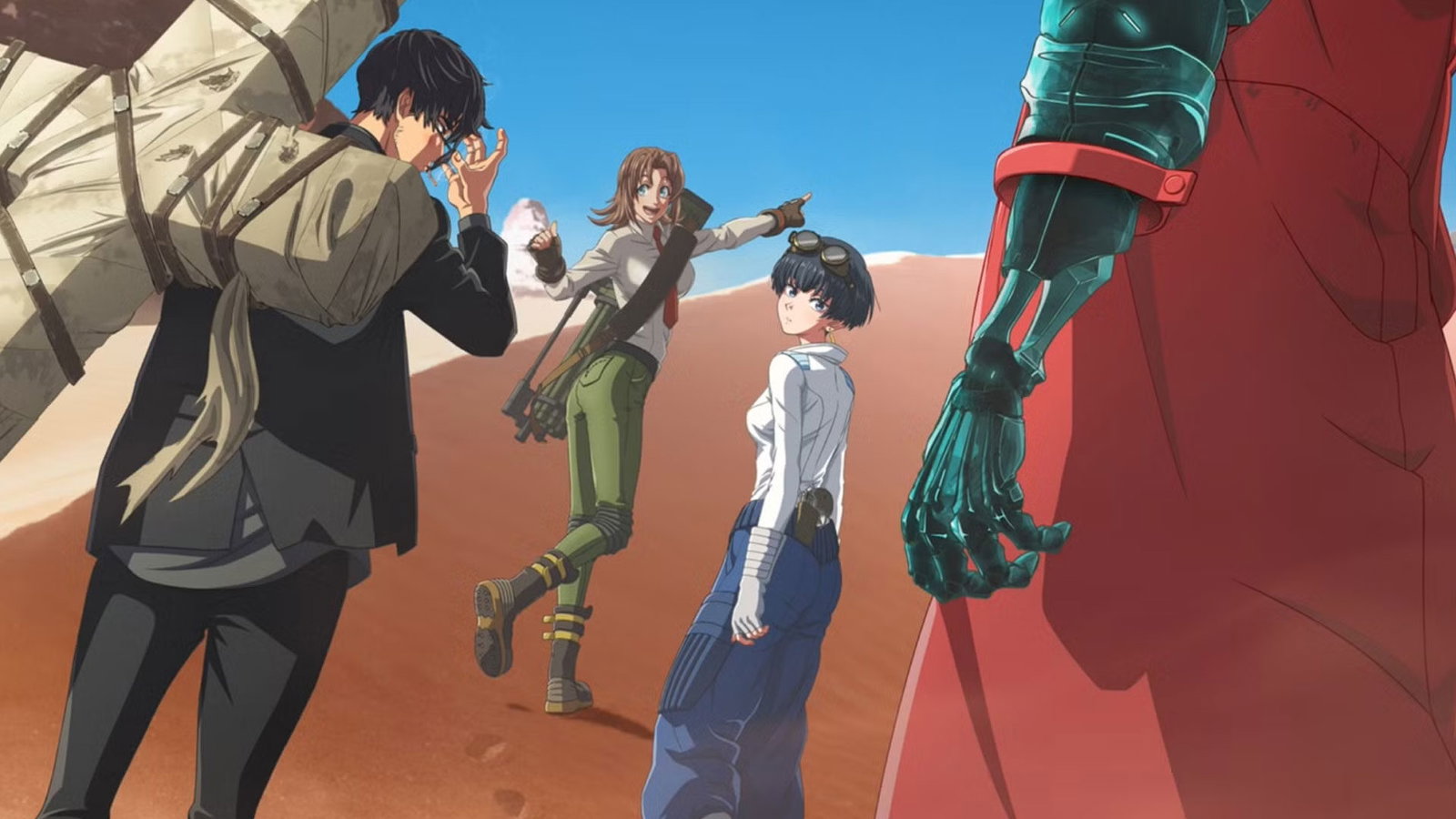
Trigun has been a quintessential 1990s anime of the decade, joining the likes of Cowboy Bebop, Slam Dunk, Neon Genesis Evangelion, Yu Yu Hakusho, and Detective Conan. One Piece counts as a 90s anime, but most would say it was popularized at the turn of the century. With the recent release of Trigun Stampede and Trigun Stargaze, Studio Orange revitalized a classic anime series and made it their own—bringing in a mix of returning and new fans. As much as I am always a skeptic of 3D CGI used in anime, this was the first time I was wrong.
Studio Orange utilizes high-end, cel-shaded CGI designed to emulate 2D animation, featuring dynamic, fluid action scenes, intense, detailed character models, and immersive 3D environments, often blending in limited-frame techniques to achieve a unique, artistic, and cinematic feel. And what is a feast for the eyes also came out of the best voice-capture experience for the English-dubbed cast.
CGMagazine had the amazing opportunity to speak with lead English VAs within Trigun Stampede and Trigun Stargaze: Johnny Yong Bosch (plays Vash the Stampede/Eriks), Sarah Roach (plays Meryl Stryfe), David Matranga (plays Nicholas A. Wolfwood), and Alexis Tipton (plays Milly Thomson). We talked about everything from their first reactions to receiving their roles to some of the takeaways from working with Studio Orange, and what their characters mean to each of them, now that this series is ending.

What were each of your first reactions to getting cast as your roles in Trigun Stampede or Trigun Stargaze?
Sarah Roach: When I was like five or six, I used to watch the first series with my brother growing up. So obviously, when I got the email that I was cast as Meryl, I was really nervous—but really excited. In the first session, there was a lot of energy that I was really using that was coming from those nerves and that excitement. And it’s just really awesome to be part of this series.
Johnny Yong Bosch: I was surprised to be asked to come back, but very grateful. [Vash is] a character that I’ve always loved, and to be able to see him in a different light and presentation. It gave me something to play with.
David Matranga: It was really exciting for me! [We’ve all] done a lot of different projects over the course of our careers. But the animation style and what it allows you to do differently with the voice acting was so exciting to me. It’s so cinematic; the reactions are very nuanced. It felt in many ways that I was shooting a film, that I’m on a film set. Combined with the animation and music, I was down the rabbit hole from episode one. I was like, ‘Can we do this all the time?’

Alexis Tipton: Yeah, same with Milly. Milly makes her entrance in Stargaze. She wasn’t in Stampede. By the time that opportunity came up, I was well aware of what was going on—and it was so exciting. I knew that Millie was an anticipated character, so that’s always really fun to have the honour of voicing a character where people are really excited for her to make her entrance.
But yeah, everything David said. (Alexis looks to David) I think you said something about the mouth movements and everything. I don’t know if this is the best way to say it, but it was so much more human. We also had an incredible writing team that did an amazing job of localizing that into English. And so to [David’s] point, with the on-camera style, it felt like we were doing more on-camera work than voice acting.
David Matranga: Yeah, that can be challenging too. That cinematic style is amazing, but it can be a challenge to kind of figure out breaths and different stuff. But it’s so fun. It’s not something that you always get to do.
Yes, and I felt that from the action scenes and dialogue during action scenes. We’ll shift gears to some of the individual growth of Trigun Stargaze and its characters. Going from the more cheery, energetic Vash in Trigun Stampede to a mature, heartbroken Eriks/Vash in Trigun Stargaze was a major character evolution shift. So, Johnny, how did you tap into this transformed Vash from Stampede to Stargaze?
Johnny Yong Bosch: I’ve fortunately or unfortunately gone through many traumatic things. When you’ve gone through stuff, you can kind of find that space. And when the story or the animation and things are in the right place, you can just kind of tap into it. I felt like it. For me, I wouldn’t say comfortable, but it was easier to slide into those moments.
Right. And I would say we feel this brokenness a bit too from Meryl at the end of Trigun Stampede as well. She goes through some trauma.
Sarah Roach: Yes, [Meryl] certainly does.

For you, Sarah, how did your performance change or transform between Trigun Stampede and Trigun Stargaze—especially with you becoming the teacher now to Milly?
Sarah Roach: Yeah. I think Roberto was super influential to her. He taught her so much, and he really, at the end, kind of taught her real integrity. And so I think she is almost excited to kind of get to fill Roberto’s shoes a little bit. She gives Milly a hard time sometimes, but she also has fun with it. But I think she carries him with her in everything she does, and he kind of informs how she moves through the world now.
And David, with Wolfwood, your character has also been through a lot in the two-year timeskip between Trigun Stampede and Trigun Stargaze. Were there any changes that you thought of bringing to Wolfwood to signify a change in him?
David Matranga: For me, I loved the first season so much and was so excited. I knew it was going to be a minute before we got Stargaze, so I was waiting anxiously for that moment when it came. It’s more of playing the truth of what’s there in front of me. I didn’t come in with any preconceived ideas of his growth or his journey. I know where we ended, and understand the story of what happened between the two seasons—so you bring that.
In acting, we talk a lot about what happened right before you started speaking or what was happening right before your character comes on screen. And so, you approach it that way. I had a teacher once say, ‘Change with the changes.’ If there’s a change, there’s a change—so change with whatever comes up for you there. So that’s how we started, and [Wolfwood has] had a ton of growth through Stargaze. I always say, ‘As long as I’m living truthfully in those moments, each one will string together.’

Speaking of changing with the changes, Milly comes into the middle of this story, being introduced in Trigun Stargaze. For your character, Alexis, how did you build your performance around a character who’s jumping into the middle of this story, but still feels like someone who fits into this lived-in world?
Alexis Tipton: For the storyline of Stargaze, Milly is introduced for the first time—so it’s kind of a clean slate in a way. But she and Meryl clearly have a rapport already. They show up together, and they’ve been working together. One of the things I just love about her is how seamlessly she has integrated herself into this group.
She brings a really beautiful new flavour to the dynamic of the group. And when you have a character that’s written so well and is written like that, where their integration is so seamless, there’s really not a whole lot for me to do. It’s all there in front of [me] and [I just] go along for the ride.
And with Trigun Stargaze’s series finale coming up for both the English and Japanese releases, were there any last general thoughts each of you would like to share about your time on these two seasons, certainly with the connections to your characters?
Alexis Tipton: Wow, like all projects I have loved being a part of, I just wish it would go on forever, you know? It’s always amazing how quickly time passes too. Oh man, I feel like we just started this. Time flies when you’re having fun. But yeah, I don’t think we can say enough just how special this project has been.
It has all the elements of a really good production, a good show, a good title, a good story, good relationships, good music, and good animation. It has everything. Selfishly, it’s kind of hard to say goodbye to this because it’s so much fun.
Sarah Roach: I’m going to miss Meryl. I mean, she’s so expressive. Studio Orange is so great with how dynamic and expressive all the characters are, and it’s really a treat to see what kind of face she’s going to make next.
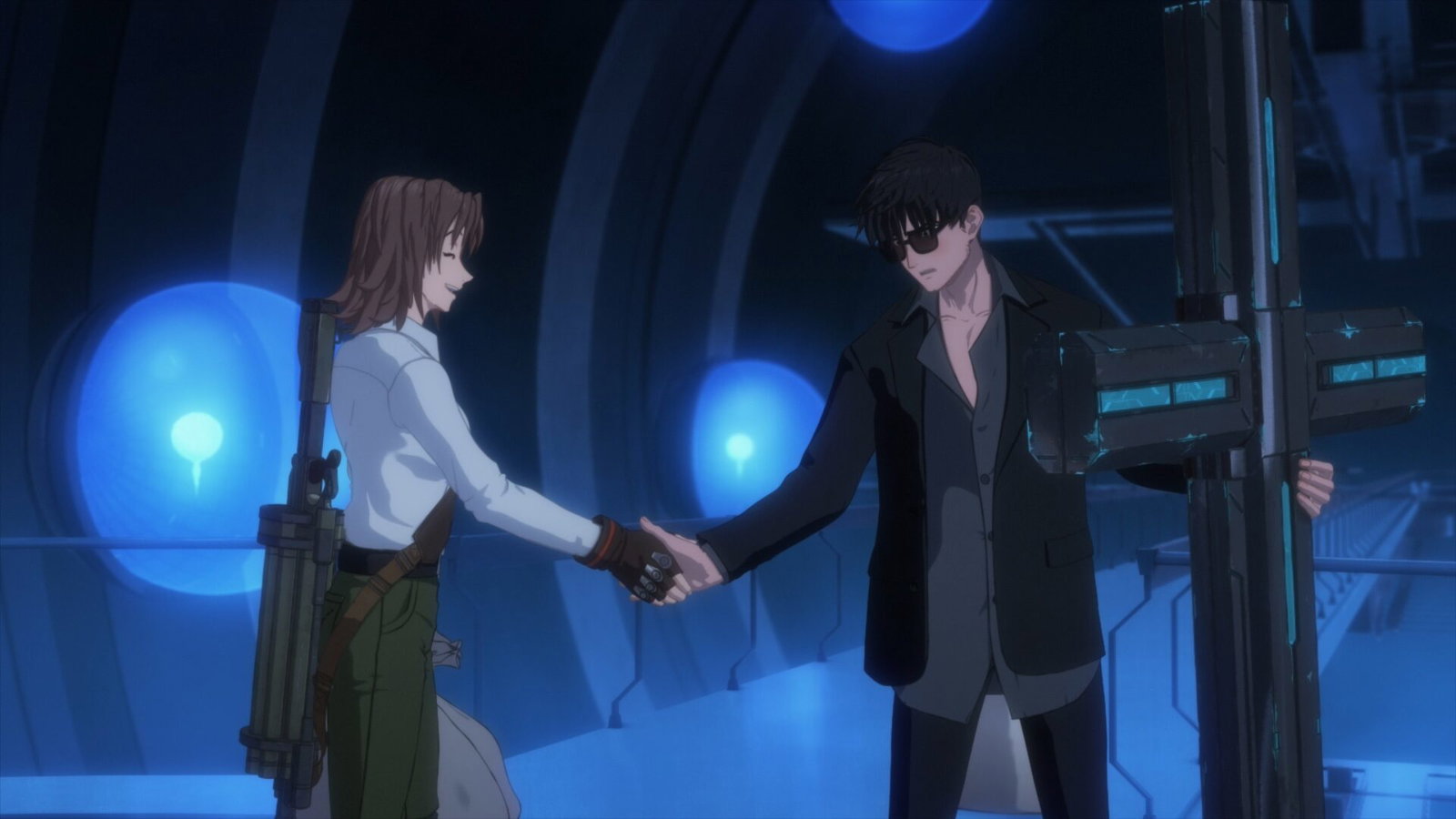
David Matranga: Yeah, I love getting to work on this project for so many different reasons—some of which we’ve spoken about. There is something about the character of Wolfwood that I really connect to. I don’t want to say goodbye to living in his skin, so to speak, to being able to put an English voice to that. It’s been really impactful for me, the kind of performance that it allows me to do. I’m so grateful to be a part of it, but I really don’t want to say goodbye to it. I’m like, ‘Let’s keep going! Let’s keep going!’
Alexis Tipton: Again, these characters are so beautifully-written. All of these characters start feeling like real people. So, it’s almost like saying goodbye to a friend that you’ve gotten to hang out with for the past however many weeks.
Johnny Yong Bosch: Vash will always live with me. He’s always in my head, and it makes me a little sad to say goodbye again. I love what [Studio] Orange has already kind of set up with this. I love the music in this one. So yeah, I’m just gonna watch it a few times to kind of remember being there and doing it.
For sure, and I’ll probably get to watch it again, too. Anyways, thank you all again so much for your time, for this quick chat!

Be sure to catch all episodes of Trigun Stampede and Trigun Stargaze on Crunchyroll! The English dub series finale will air on Saturday, April 11, 2026, at 7:00 am PT/ 10:00 am ET, but all episodes are out in the original Japanese subtitled edition.