
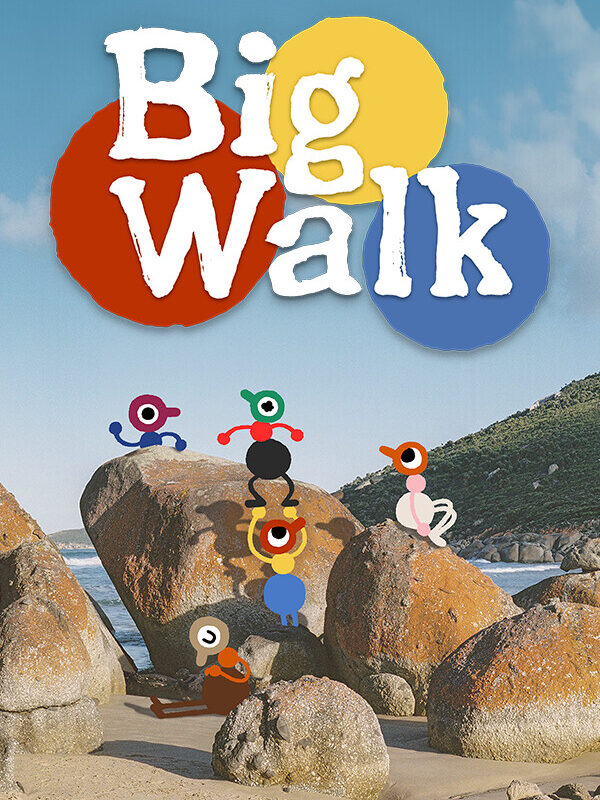

Big Walk is one of those games that is almost impossible to judge fairly after a single playthrough because so much depends on who you are playing with. I found that out the hard way. I played a significant portion of it twice with two different groups and came away with two genuinely different impressions of what should have been the same game.
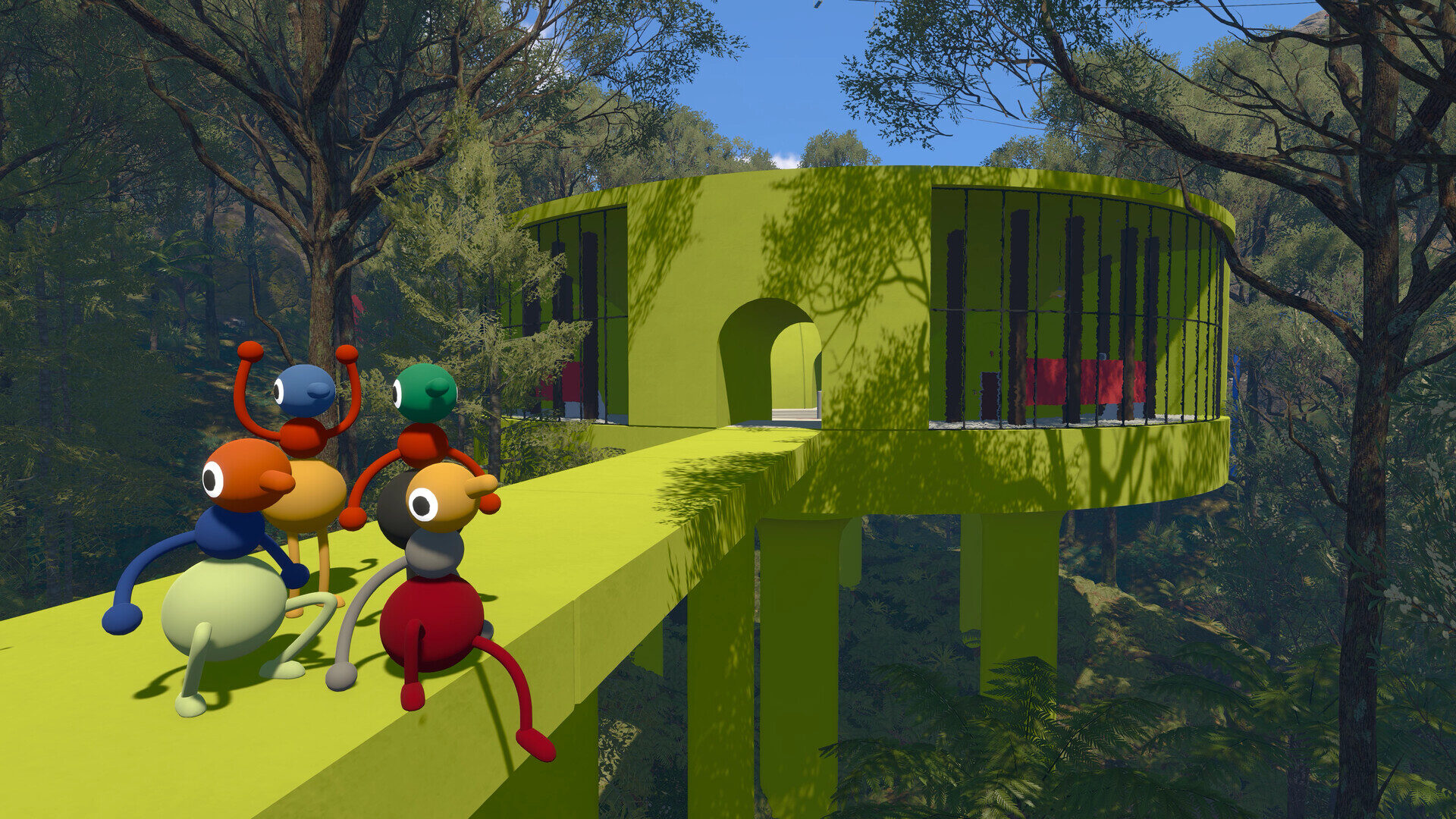
House House, the studio behind Untitled Goose Game, has not tried to repeat that formula here. There is no mischief and no single-player comedy of errors. Instead, Big Walk drops you and a group of friends into a large, overgrown world and tells you to go for a walk. Puzzles scattered across the map require more than one person to solve, and working through them together is essentially the entire game. There is no story, no twist and no real sense of progression beyond reaching the next puzzle. That is a deliberate choice, and it mostly works because Big Walk is less interested in telling you a story than in giving you the tools to create your own.
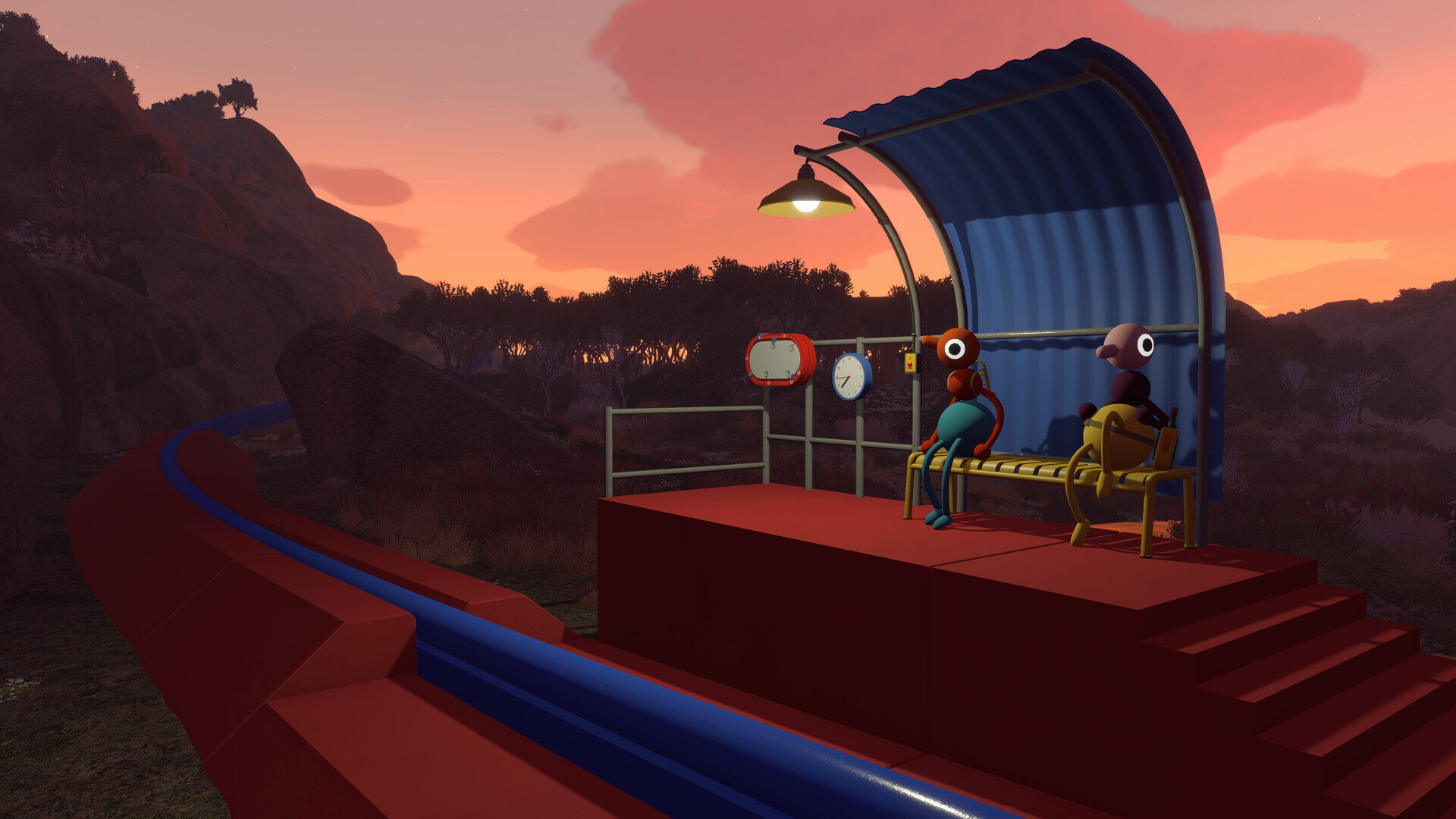
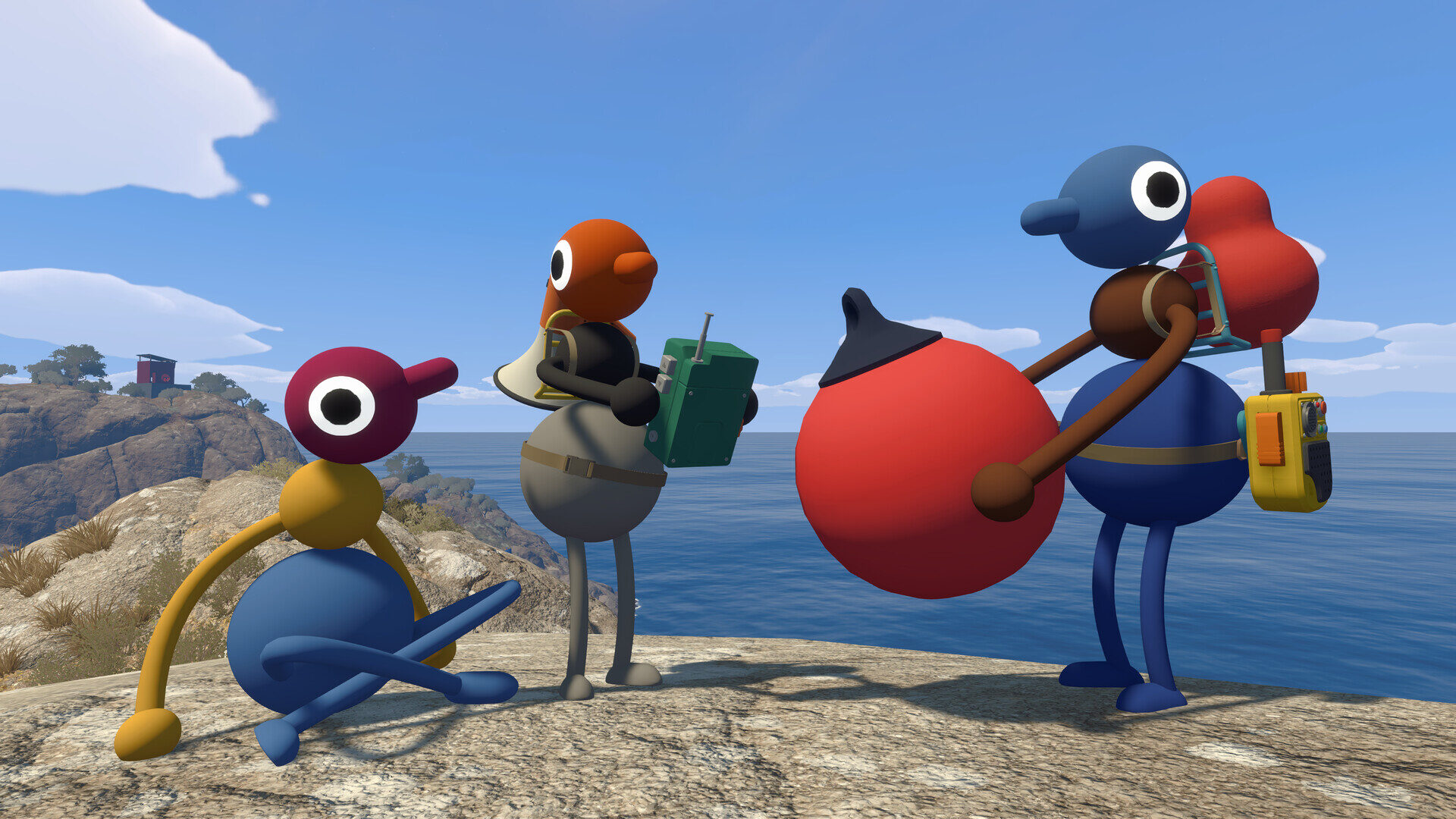
Those tools are refreshingly simple and tied to items scattered throughout the world. A laser pointer lets you gesture at objects across the map instead of trying to describe “the weird rock next to the other rock” over Big Walk’s proximity voice chat. An item finder turns the group into a makeshift scavenger-hunt team. A walkie-talkie becomes the backbone of almost every puzzle because most require one player to see something the others cannot and guide them through it. That becomes even more important when someone enters a room with soundproof glass and must help from inside. None of this requires a tutorial.
“Big Walk is one of those games that is almost impossible to judge fairly after a single playthrough because so much depends on who you are playing with.”
You pick up each tool, use it once and immediately understand how it works. Within the opening hour of the roughly eight-hour game, depending on your problem-solving skills, you may be pointing a laser at a strange formation while someone triangulates its position over the radio, a third person runs over with an item finder buzzing in hand, and a fourth either uses another tool or acts as the designated backpack. Together, you move strange, nose-like pieces to unlock keys and reach the next area. It is fast, physical and easy to understand, which matters because so much of Big Walk depends on players communicating in real time.
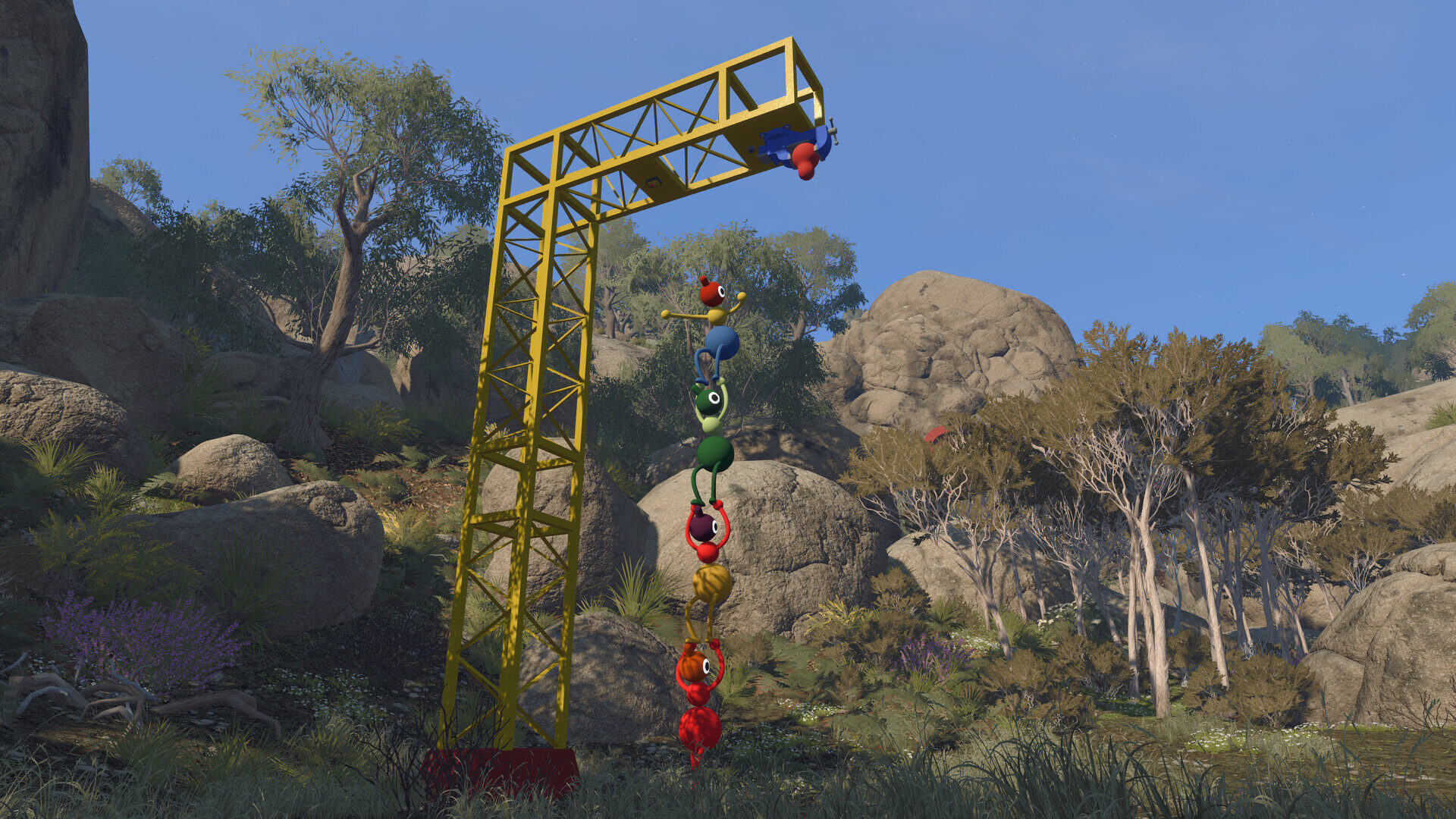
My first session was with a full group of four, all of whom I had played similar games with before. We knew going in that we would have to create much of the fun ourselves, which is why I cannot simply write Big Walk off. We spent hours wandering through hills and ruins, solving puzzles that were not especially difficult on their own but became genuinely funny the moment four people got involved.
At one point, someone confidently walked in the wrong direction for nearly 10 minutes while the rest of us solved a puzzle, causing us to lose track of them. They eventually stumbled across a train and honked its loud horn, leading us to their location. It was chaotic, loud and very funny. By the end, none of us were thinking about the puzzles anymore, only the ridiculous things we had done. That is Big Walk doing exactly what it set out to do. It does not need a plot because the story becomes whatever happened while everyone argued about where the laser pointer was aimed.
Then I played it again with three people instead of four. I had played games with all three before, but not this style of game, and the entire experience changed.
Nothing broke, exactly. Every puzzle was still solvable, but the rhythm that made the first session so easy to fall into was no longer there. Many of the puzzles are clearly built around four distinct roles: one person spotting, one relaying information, one navigating, and one confirming. With only three people, someone always ends up handling two jobs at once.
The back-and-forth that felt like organized chaos with a full group became actual chaos without the fun attached. Instead of losing ourselves in the world, we spent much of the session trying to solve four-person puzzles with only three players. It was the same map, the same puzzles and the same tools, yet it played like a noticeably worse version of what I had experienced a few days earlier.
“Big Walk is less interested in telling you a story than in giving you the tools to create your own.”
That is the core of what Big Walk is. It is built around four people, clearly tested with four people and at its best when the full group is present. Playing with a different number does not necessarily result in a broken game, but it does create a different experience, and that version does not highlight what the design does best.
The puzzles in Big Walk are not especially deep, and the tools do not hide an elaborate system beneath the surface. This is a simple game, and it knows it. What makes it work is that it trusts the group to bring the energy. When that trust pays off, it becomes one of the most purely enjoyable co-op experiences I have played in some time.
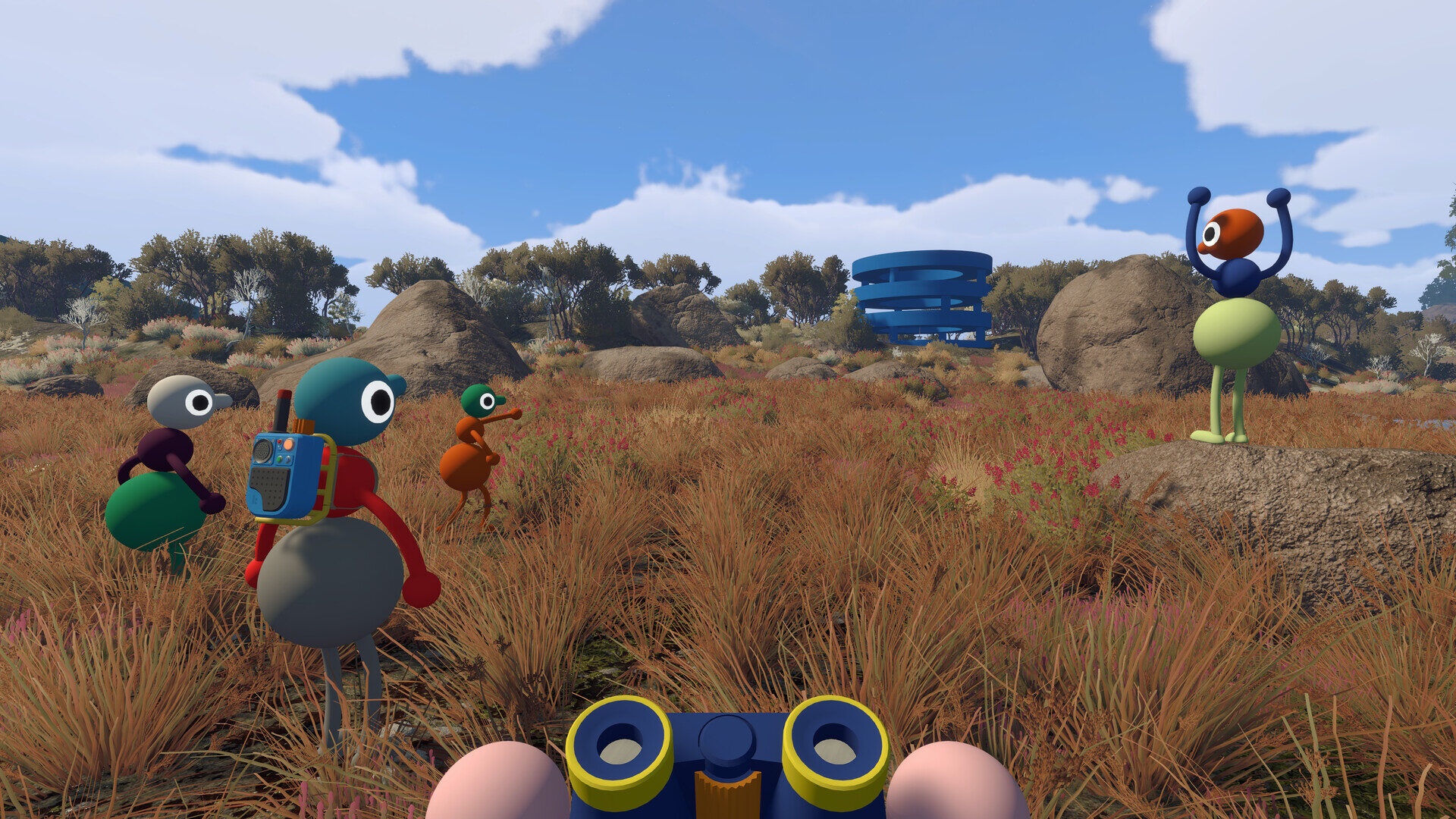
The problem is that Big Walk does little to protect the best version of itself when your group is not the right size or does not have the right mix of personalities. It hands you the map and tools, then steps back, for better or worse. That restraint is admirable from a design perspective, but it also leaves Big Walk unusually vulnerable to circumstances outside its control. A talkative group of four will likely have a great time. A quieter group, or one missing a player, will feel exactly what is absent, even if the game never explains what that is.
Anyone expecting intricate puzzle design or a meaningful sense of progression will likely be disappointed because that is not what this game offers. However, with the right group, Big Walk delivers on a promise that is rare in co-operative games: nothing here is scripted, and the funniest moments are ones the developers could not have planned. With the right four people, it creates the kind of session you will still be talking about weeks later. With the wrong number, you will notice the difference immediately. Round up three friends, not two, and go for a walk.