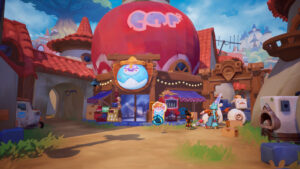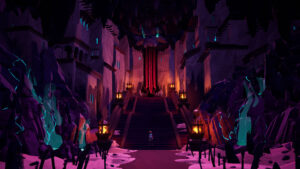

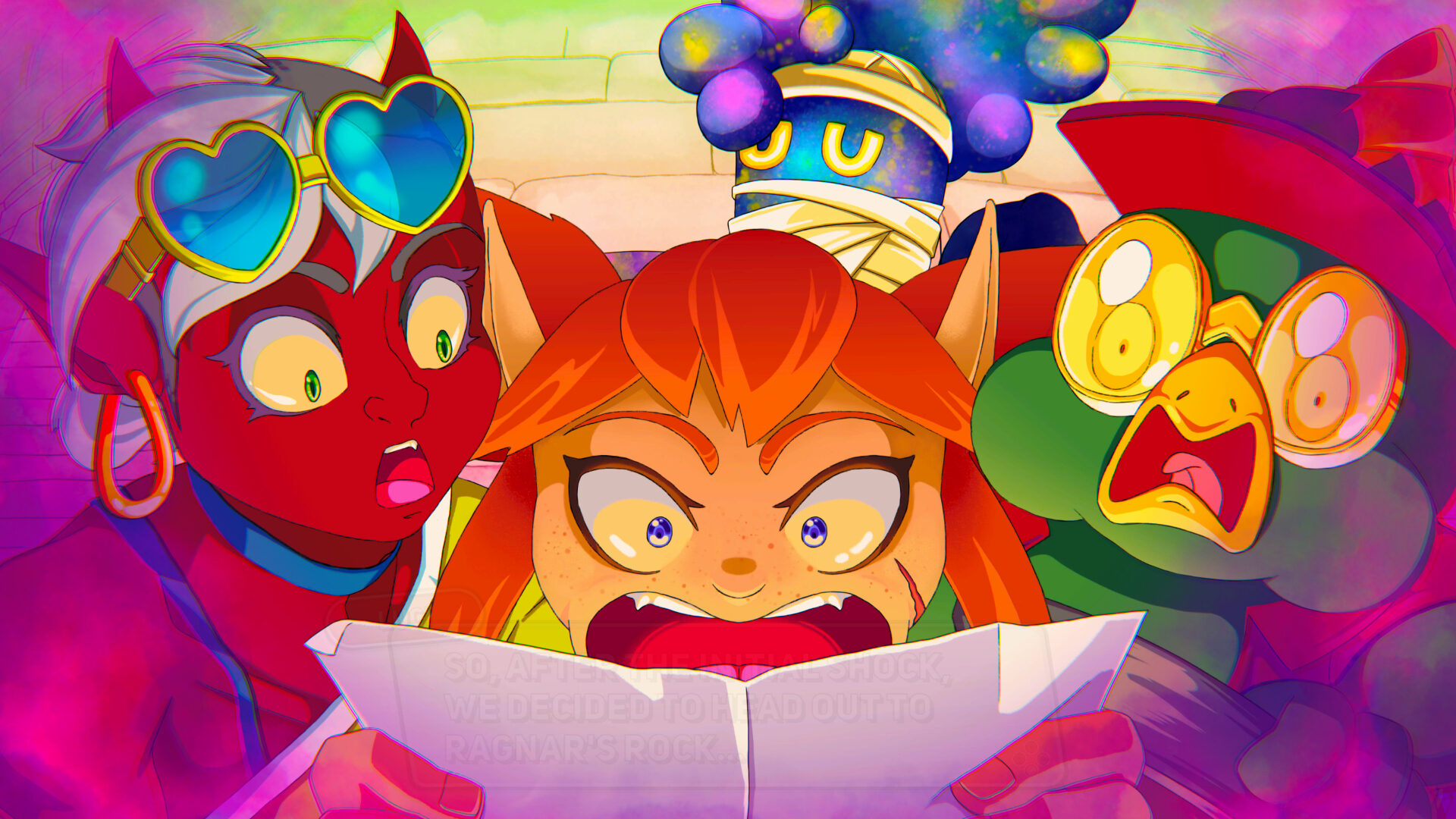
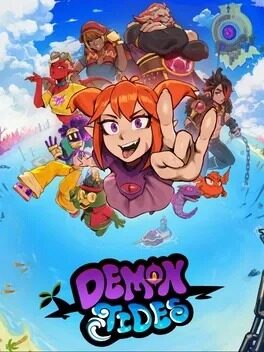

Free from its charming yet decidedly indie 2.5D roots, Demon Tides transforms Beebz and her friends into fully realized polygonal misfits embarking on a seafaring adventure after the newly appointed queen receives an invitation from her estranged father. The shift to a fully 3D world introduces an expansive open environment with more than 30 locations, each featuring its own densely populated collection of micro-levels and points of interest.
Demon Tides opens with Queen Beebz and company crashing their ship as they approach the game’s watery new setting. The sequence acts as a tutorial, helping both newcomers and returning players familiarize themselves with the core mechanics. Like Demon Turf before it, Demon Tides emphasizes precision-based platforming, a design choice that works even better in 3D.
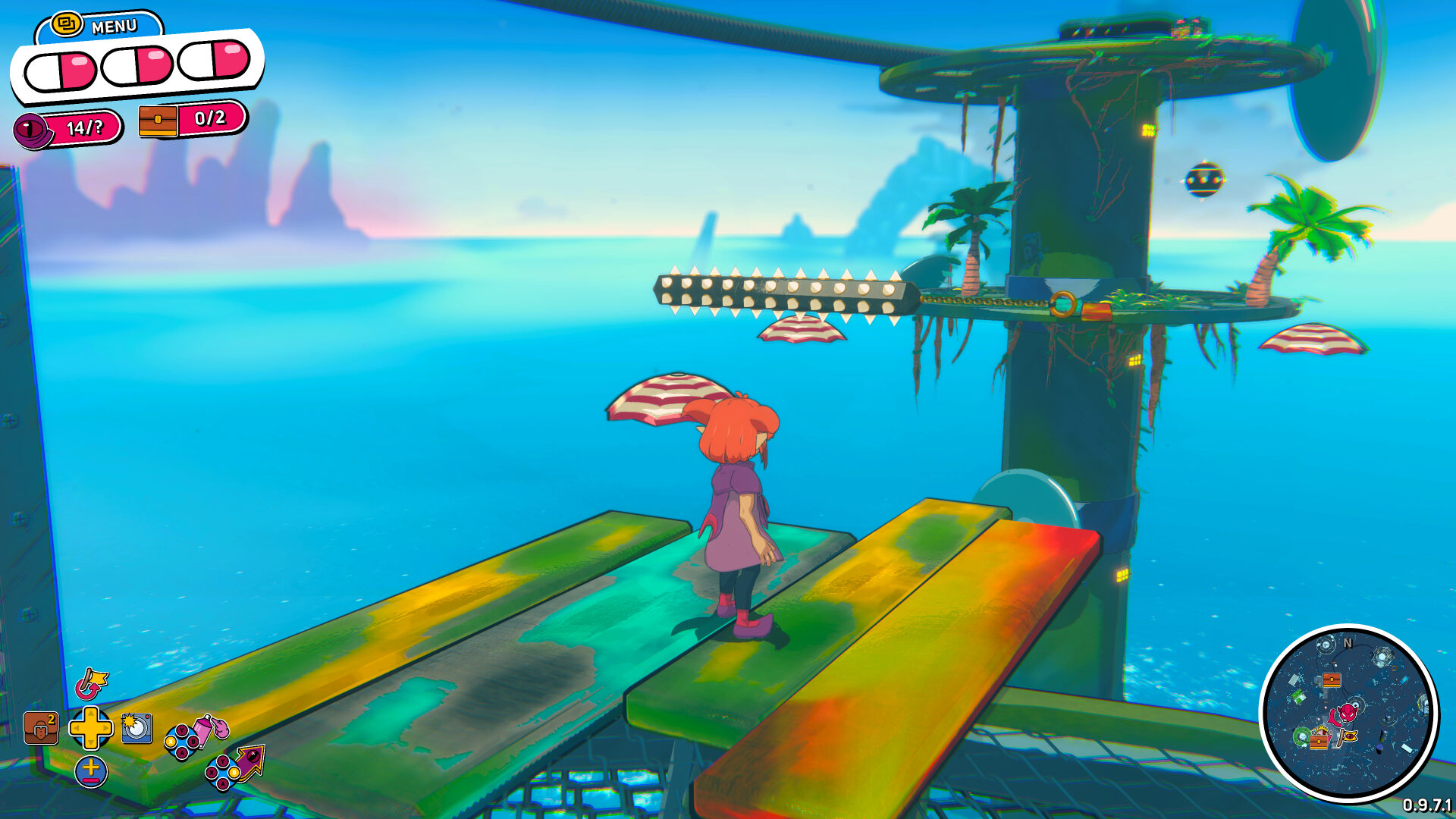
In addition to Beebz’s bat form, which players can use to navigate more precarious platforming sections, she can also transform into a small sea serpent. The sea-snake form allows players to traverse the vast ocean setting while quickly building speed for momentum-based gameplay sequences.
“Like Demon Turf before it, Demon Tides emphasizes precision-based platforming, a design choice that works even better in 3D.”
The snake form is particularly useful for the many races scattered across the map in Demon Tides, transforming the experience from a Nintendo-inspired 3D platformer into something that feels closer to Sonic the Hedgehog. Speaking of the blue hedgehog, Demon Tides also introduces several rail-grinding sections reminiscent of the Sonic Adventure games. These rail segments blend well with the game’s often flooded metropolitan and beach-resort aesthetic, creating a cohesive mix of influences drawn from popular 3D platformers.
In addition to the bat and snake forms, Beebz has access to a range of modifiers in the form of talismans, similar to the mod system from the first game. Talismans slightly augment Beebz’s kit, opening up a variety of bonuses for players to experiment with, such as a drill dive, extra jump height and passive abilities like auto-collecting nearby items.
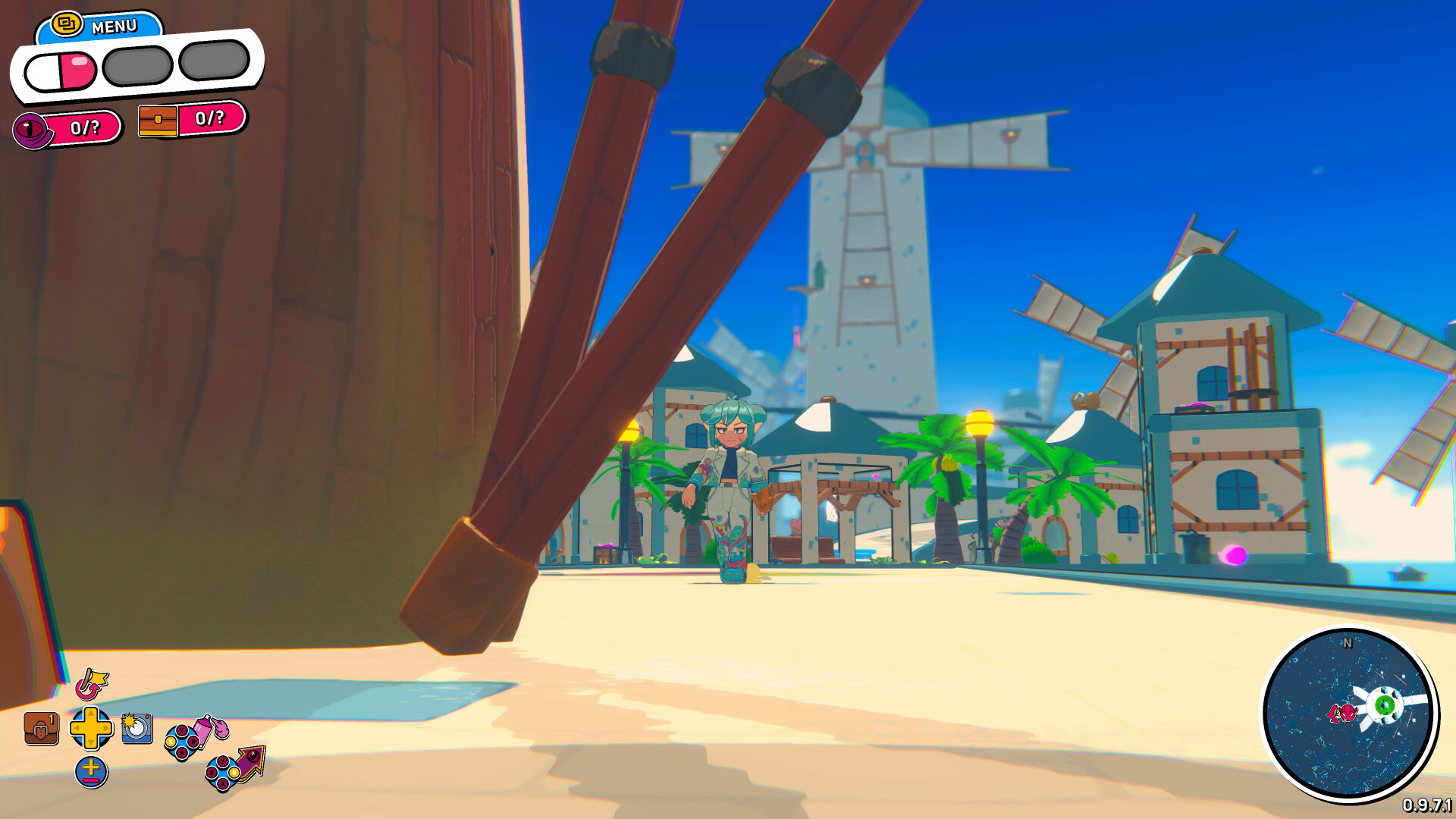
On top of the talisman modifiers, some sections of Demon Tides introduce something called the Optica system, which further augments Beebz’s powers. For example, it enhances her bat ability by allowing her to hover mid-air before arcing upward for additional distance. Optica skills are area-specific, meaning players revert to their standard skill set and talismans outside those power-up zones.
Like any strong 3D platformer, Demon Tides includes a wide range of collectibles and unlockables. These include talismans, as well as a healthy selection of costumes and hair dyes for Beebz. Costumes go beyond simple palette swaps and feature distinct clothing pieces, offering substantial customization potential. Completing side activities, which involve exploring the open world, will often reward players with a costume or talisman after finishing a short challenge course or optional objective.
The expansive open world of Demon Tides also introduces a soulslike mechanic in the form of graffiti that players can tag onto most surfaces. These tags serve as bragging rights for reaching new heights, but they can also be genuinely helpful for pathfinding or uncovering secrets. On the topic of navigation, one issue I have with Demon Tides’ shift to an open-world formula is that it can sometimes feel as though there is a lack of direction or intent.

That said, if you enjoy getting lost in a game world and discovering things at your own pace, you will likely appreciate Demon Tides and its open-ended approach. However, despite a button dedicated to helping players find the nearest collectible, I often found myself unsure of where to go when it came to gathering golden gears, the main currency required for story progression. Thankfully, most side activities in Demon Tides are a lot of fun and provide meaningful content to complete, even when venturing off the main story path.
Demon Tides culminates in a faceoff with your dear old dad. Before you can reach him, players must first defeat a slew of Champions, boss characters who reside in distinct biomes or sections of the oceanic open world. Additional bosses also appear throughout the game, creating a healthy mix of traditional platforming sections and enemy encounters.
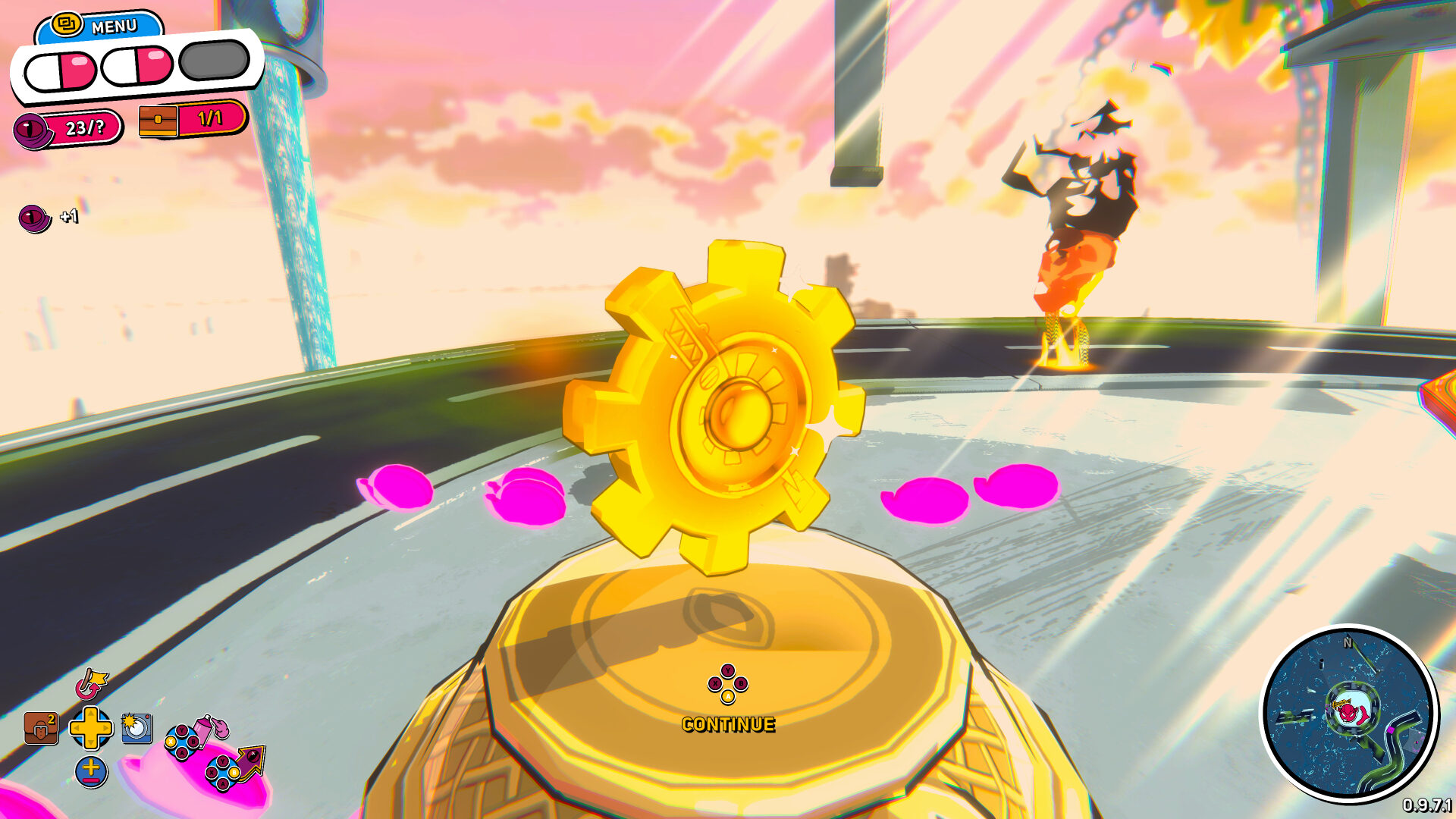
Combat in Demon Tides is less of a focus than it was in the first game. Most enemies go down with a single melee attack, instead of requiring players to pinball them into specific sections of the environment, which was often the case in Demon Turf.
Platforming, racing, delivering lost babies, jumping through hoops and battling inventive bosses are just some of the activities that shape your time in Demon Tides. The sense of progression and challenge feels well-tuned for serious platforming fans, making it worthwhile to explore the game’s large open world, which can take upward of 30 hours to complete for dedicated players.
“Demon Tides represents a significant leap over its predecessors in terms of technical achievement.”
If I had one major complaint with Demon Tides, it would relate to the new dash mechanic, which works well most of the time. However, the dash button is bound to the melee trigger, requiring players to push forward on the stick while positioned against an angled wall to run across it. In practice, I often found myself accidentally triggering a melee attack and launching past my target, resulting in frustrating deaths and resets. Fortunately, the flag system from the first game returns, and due to the open-ended nature of Demon Tides’ world, flags can be placed in most areas, easing some of the frustration that comes with missing a platform.
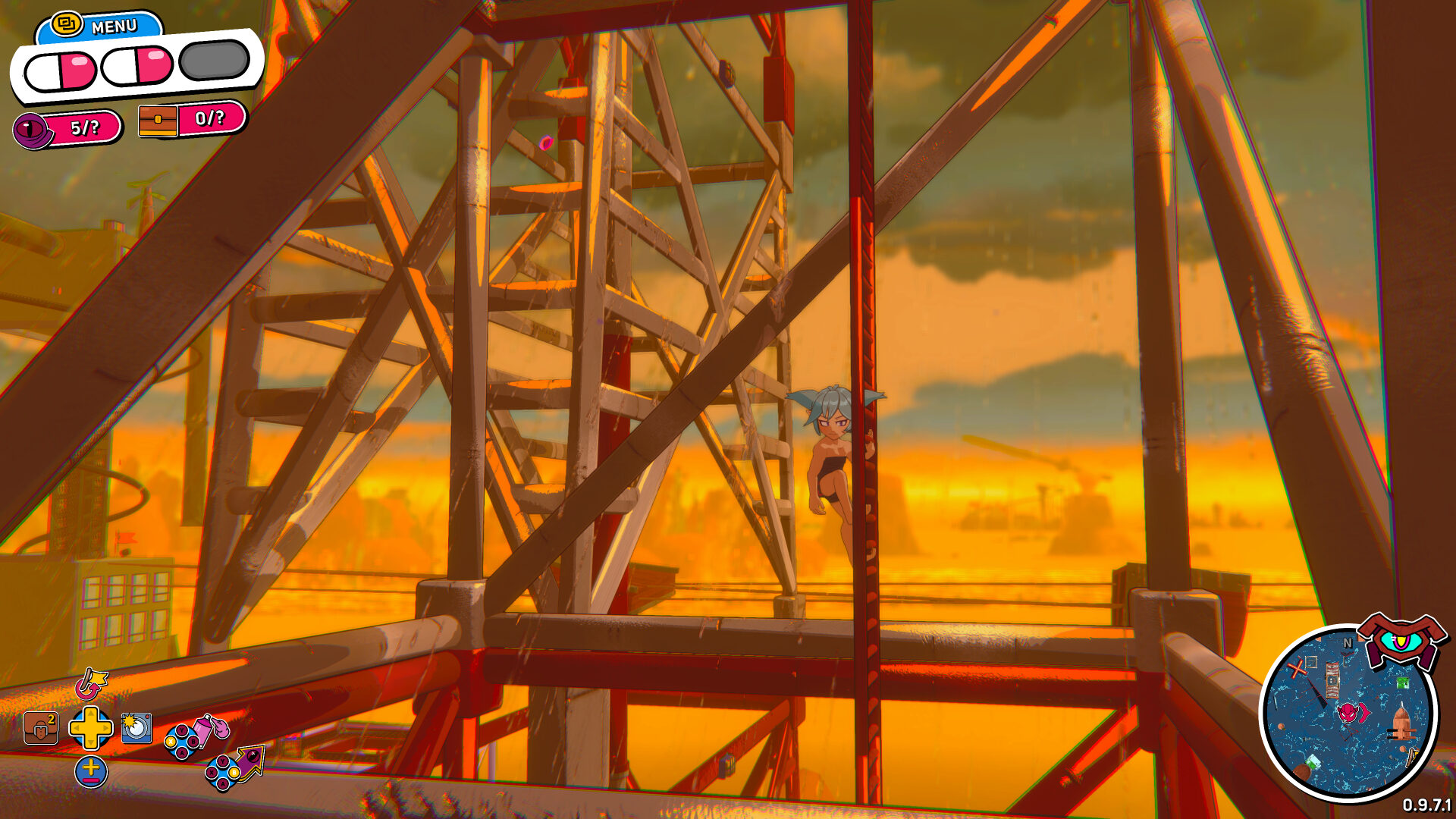
In closing, Demon Tides represents a significant leap over its predecessors in terms of technical achievement. It largely sticks the landing and delivers a fun 3D open world for platforming fans to explore. For those who played the original, Demon Tides is a must-play.