
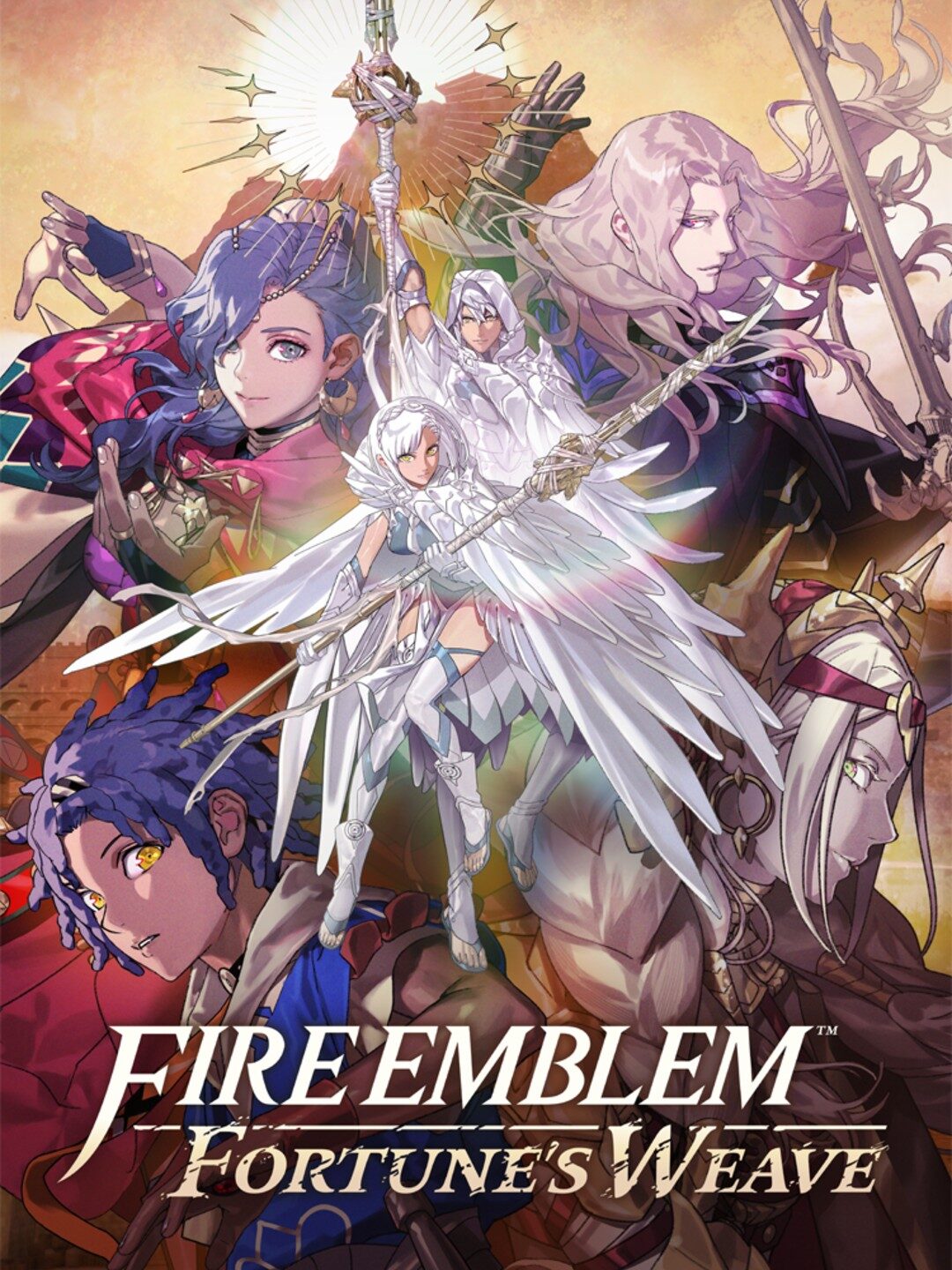

Fire Emblem: Fortune’s Weave is a GIANT game. I was about 40 hours in when I hit my first character’s end of the first, and it hit me that I had only actually seen a quarter of the game in front of me. That’s a daunting thing to sit with, but it’s also exactly the kind of ambition I’ve come to expect from this series at its best. Four heroes, four reasons to throw themselves into the Heroic Games, four completely different vantage points on the same empire quietly falling apart. This is a sprawling, beautiful, occasionally uneven tactics epic that has me still thinking about it long after I’d set the controller down, even when a few of its systems tested my patience.
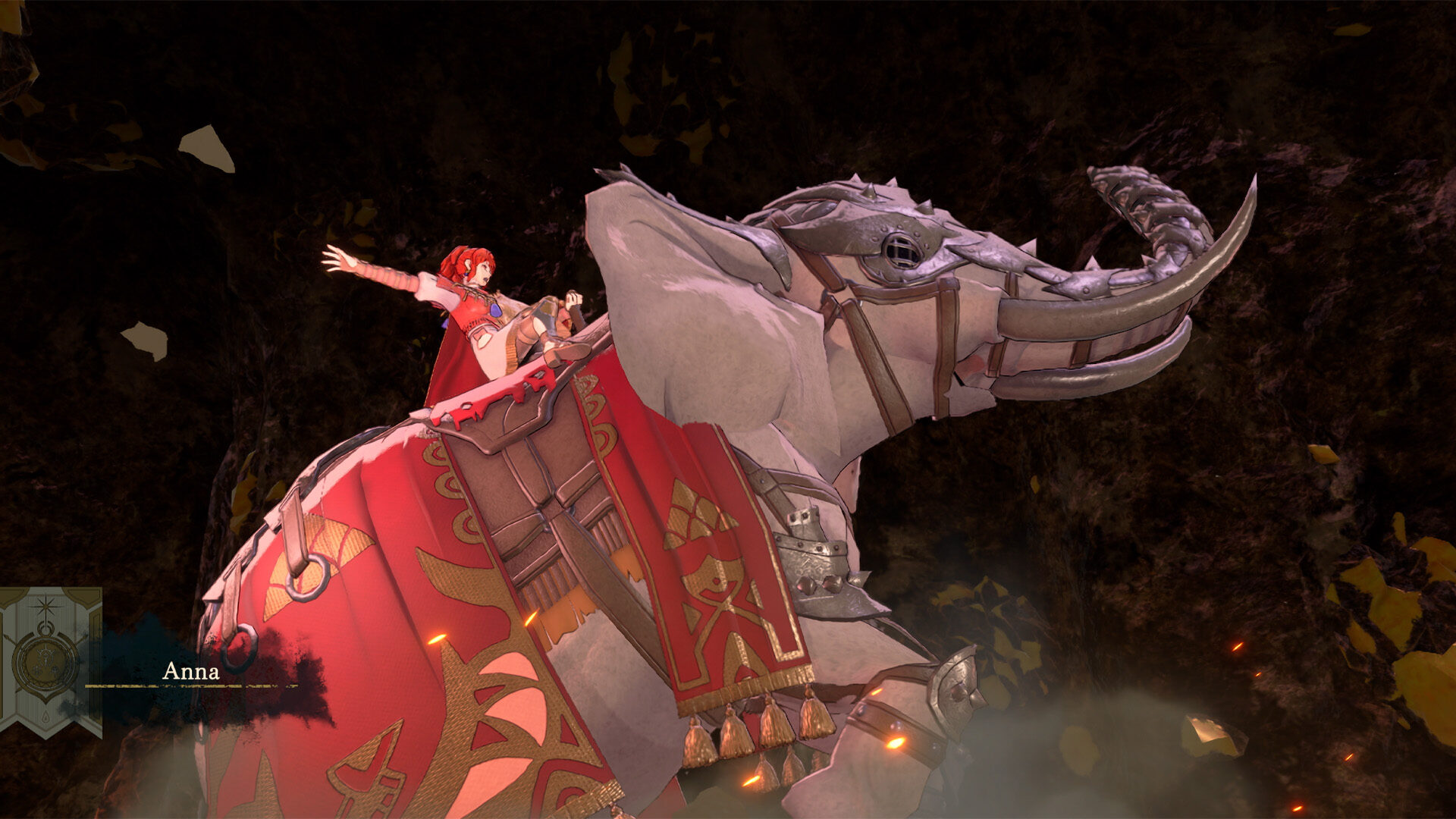
Coming off of Three Houses, where it split its cast across three academic factions. Fire Emblem: Fortune’s Weave takes this idea even further by handing the player four separate heroes, four separate reasons to enter the Heroic Games, and four separate lenses through which to view the same crumbling empire. It’s an enormous undertaking, and for the most part, Intelligent Systems pulls it off. And what really sold me almost instantly is the story.
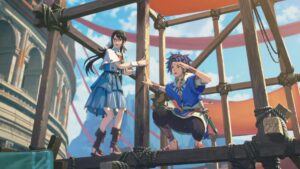
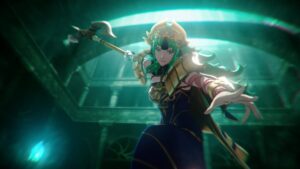
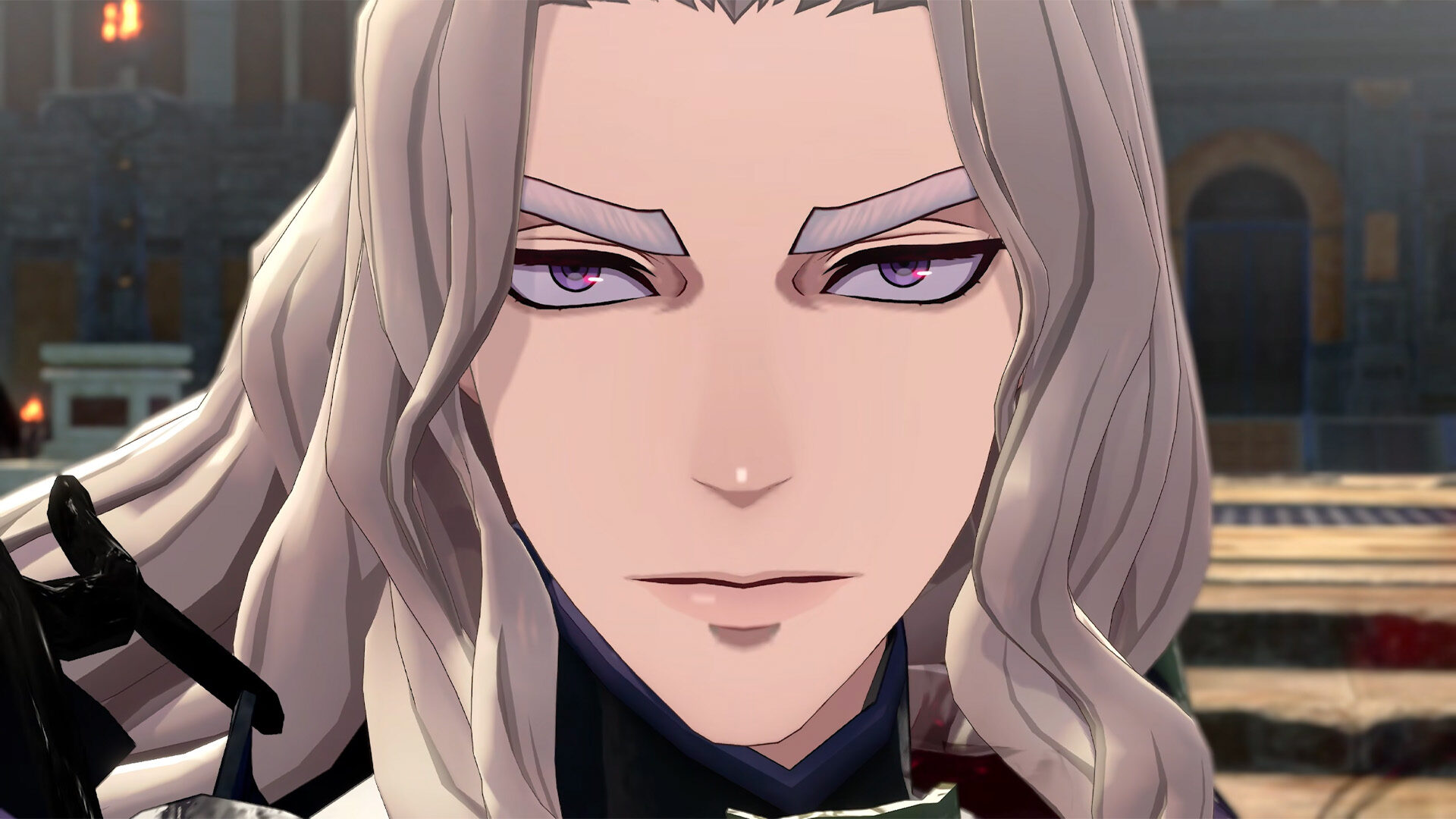
Fire Emblem: Fortune’s Weave is set on the continent of Dagda, mostly in the empire’s capital of Dagsion, a city that has lived under the rule of its gods. Every generation, the empire hosts the Heroic Games, a tournament where the champion is granted a single wish by the Divine Sovereign. In 1449, our four Flame Lords enter the tournament: Cai wants to free his imprisoned father, Dietrich is chasing a fight worth losing to, Leda is on the hunt for revenge no matter the cost, and Theodora is trying her best to keep her kingdom’s enemies at bay.
“What was very interesting—and we’ve seen it before to a point in Fire Emblem games in the past—but in Fire Emblem: Fortune’s Weave, with its giant recruitable cast, is just how fundamentally different everyone plays.”
But that is just the opening, roughly eighty hours. The levels you gain, the power you obtain, and the recruitment you do come into full swing in the next arcs, which are genuinely where the best story beats of the game happen, and I think that you best go in as unaware as possible, but the story issues I do have with the opening chapter of the game easily melt away, especially how hard everything goes in the last two thirds. The one issue I have is that, while the game lets you choose which characters to play and when from our four heroes, each one with a different sprawling story. They aren’t all built the same, and the order in which you play them will affect how well the story lands.
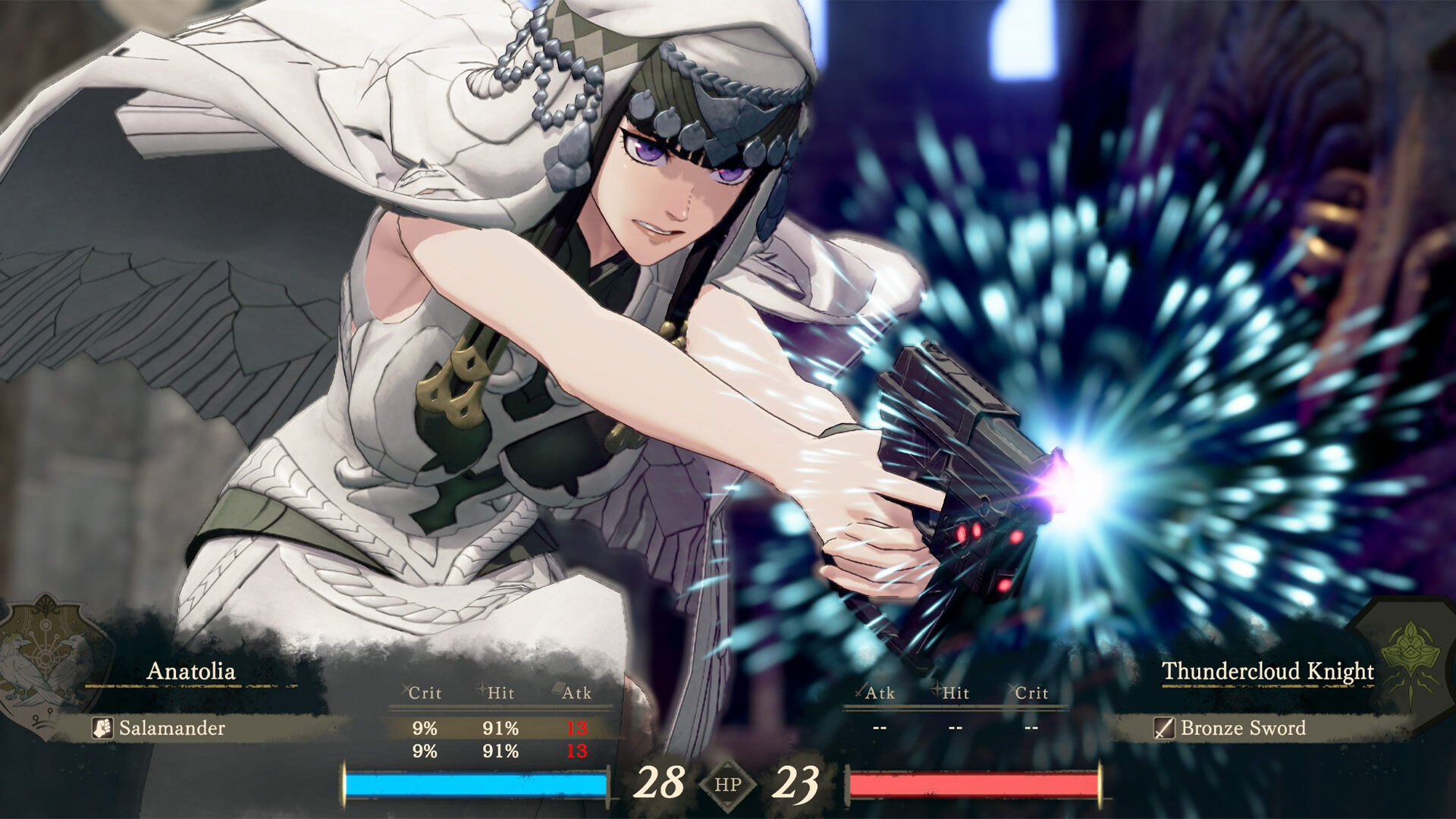
I know this because I started with the queen, Theodora, and in hindsight that was probably the wrong call if I wanted the best possible first impression of the other three. Her chapter is the emotional center of gravity for the entire game. Her story in the world is quieter than the others, built around the weight of leadership, family trauma, and what cost she will go to to save her people, and by the time her thread paid off, I was emotionally wrecked. Coming off that high, jumping into the other three storylines felt like a step down, at least initially.
Dietrich’s tale of a swordsman hunting a worthy death has a real swagger to it and some terrific high points, but it doesn’t build to anything as devastating as what Theodora goes through. Cai’s story, about a boy fighting to save his father, is the most straightforward of the bunch, and while it’s perfectly serviceable, it occasionally reads as though it’s there to give newer players an easier on-ramp into the cast. Leda’s revenge plot is also a very strong one, though sharp in its best moments, but a little predictable by the end. None of the four are bad by any means; it’s just that Theodora’s and Leda’s stories are so strong that everything else has to live in their shadow.
What was very interesting—and we’ve seen it before to a point in Fire Emblem games in the past—but in Fire Emblem: Fortune’s Weave, with its giant recruitable cast, is just how fundamentally different everyone plays. Each hero pulls from a distinct set of tools, and learning how to build your NPC army around complementing them is a whole new level of tactics because of one major addition to the game.
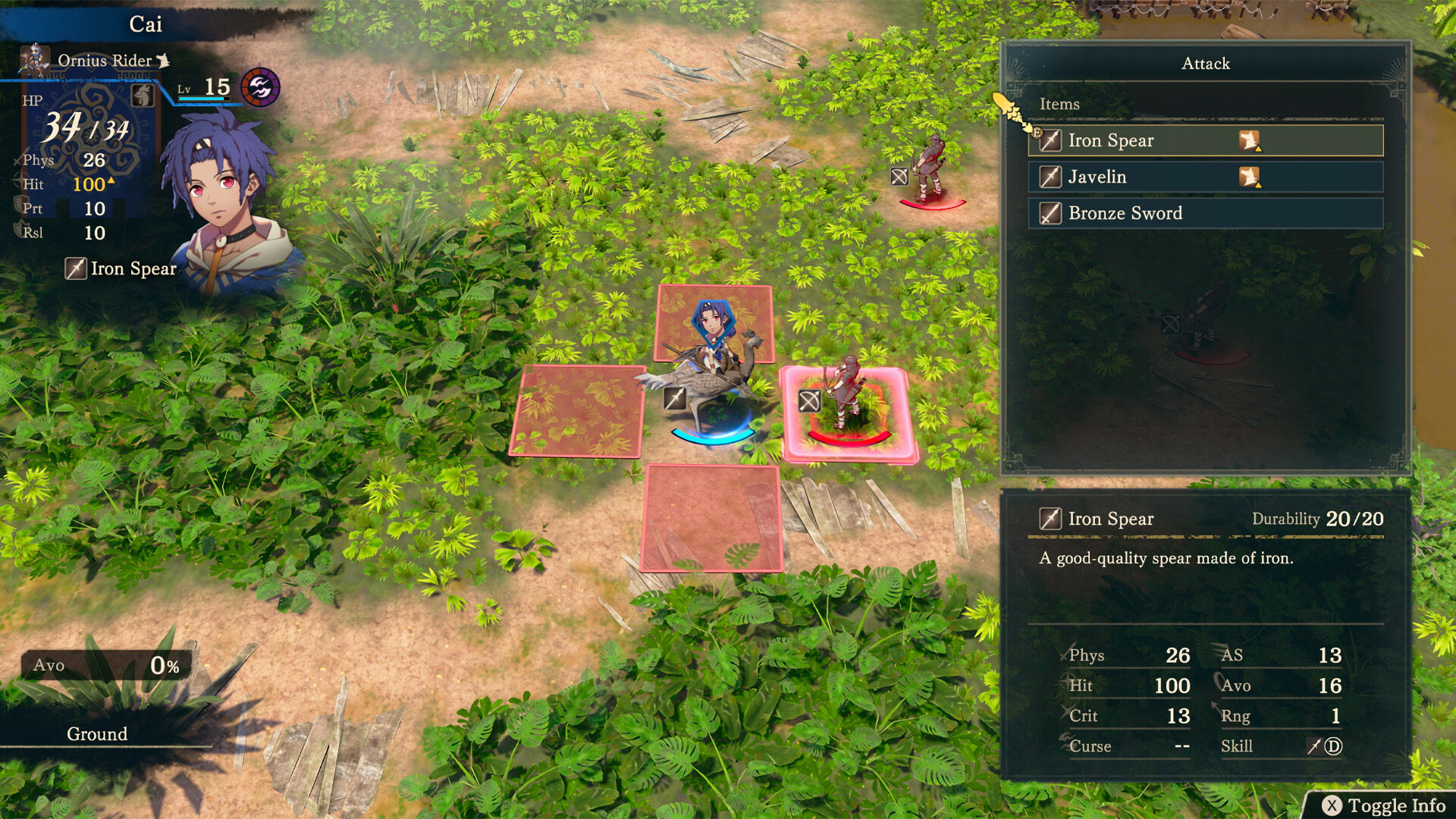
The new Blaze Arts system, which lets units burn their own health to unleash devastating battlefield techniques, adds a layer of risk-reward calculation that pairs nicely with the returning combat arts and gambits, and it’s used differently depending on whose army you’re heading up. Positioning still matters enormously, and as always, permadeath still makes every decision feel heavy. The terrain and weapon triangle fundamentals that have defined this series for decades are all present and accounted for. If you’ve bounced off Fire Emblem’s tactical layer before, nothing here is going to convert you, but if you’re already a believer, this might be one of the meatiest combat systems the series has offered.
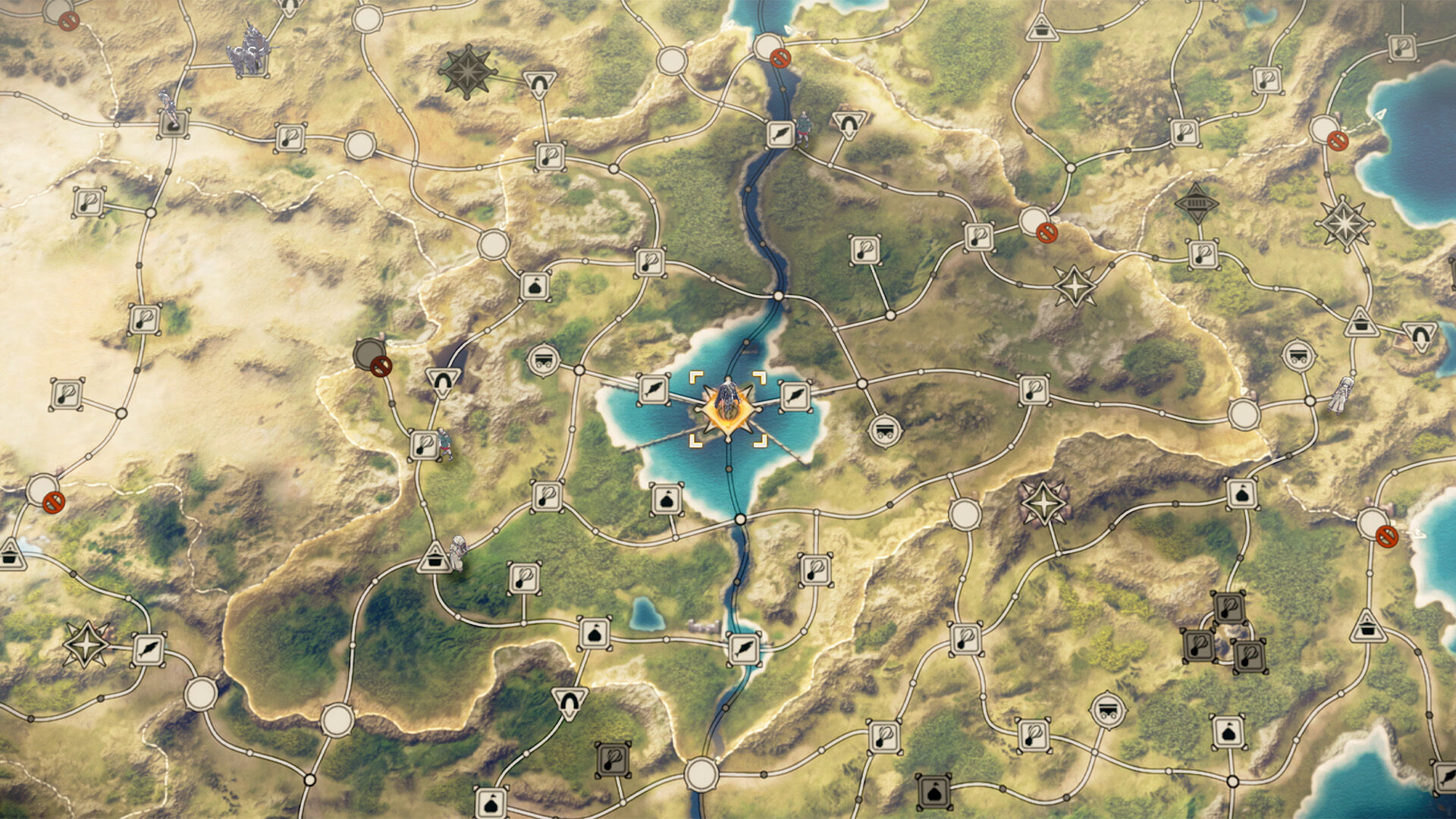
But with all that, Fire Emblem: Fortune’s Weave gets right, there are a few things that, over the 100+ hour campaign, really started to irritate me. Between battles, you’re free to roam the major city and the world map to train at Dagsion’s grounds, do some shopping, recruit new allies, and venture out for extra experience, and it’s here that Fortune’s Weave shows the biggest crack. Movement on the map is locked to one time segment per turn, meaning if you want to get somewhere that is ten time segments away—which happens quite frequently—you have to move toward it ten times, with a lot of nothing happening in between, and it makes the movement drag on.
“…Fire Emblem: Fortune’s Weave is a genuinely massive achievement, in scale and in ambition.”
And then there comes a time when you mindlessly click to get to the next movement, where the cursor, if you land on a town or material location, defaults to search or wait, meaning you can lose time segments unless you are more meticulous about every map movement. It’s a minor friction point, especially if only for one character’s chapter, but across a campaign this long, it adds up into a genuine drag on pacing, and it’s the one piece of the structure that feels like it should have been smoothed out before launch.
With four full campaigns eventually converging, there’s an understandable pressure to give each character enough emotional weight to justify their own arc, and it shows. Some of the main story chapters, particularly in the back half of Cai’s chapters, feel more padded out than they needed to be. With wanting to complete the side quests and with recruiting being important to the long game, you can’t just skim over these parts either; the game requires a lot from you, even when it’s not on its best footing. It never tanks the experience, but there’s a leaner, tighter 70-hour game buried inside this 100-plus-hour one, and I found myself wishing Intelligent Systems had trusted its strongest material to carry more of the weight.
None of that changes the fact that Fire Emblem: Fortune’s Weave is a genuinely massive achievement, in scale and in ambition. Four fully realized campaigns, a combat system with real depth and variety across its cast, a score that ties the whole thing together, and at least one storyline in Theodora’s that ranks among the best the series has produced. The world map friction and the padding in places keep it from being a flawless recommendation, but they’re the kind of flaws that come from a team that clearly wanted to give players too much rather than too little. If you’re fortunate enough to have the time to sink into it, and I’d budget plenty, there’s a lot here worth weaving through; you’ll agree that Fire Emblem: Fortune’s Weave is easily the best Fire Emblem game.