



The Intel Core Ultra 200 series CPUs were a major step forward for the brand, but they did not have the impact many had hoped for. They showcased a new direction for Intel and demonstrated some of the features the new design could enable, but in raw performance, it felt like a slight step backward. Intel is taking the lessons it learned and improving what Arrow Lake can offer, ushering in the Arrow Lake refresh with the Core Ultra 200S Plus CPUs. The Core Ultra 7 270K Plus is now a major option for people looking to get the most from their Intel-based desktop PC experience.
This new launch comes as AMD showcases its gaming potential with the recently released 9850X3D chip, delivering strong gaming performance. The landscape is more competitive than ever, but Intel has several reasons to be considered again: a solid price point (Ultra 7 270K $299, Ultra 5 250K $199), new optimizations to improve gaming performance, new memory support and a more balanced approach to delivering a desktop-class CPU. For those considering an upgrade, Intel has made the new 200S Plus range compelling.

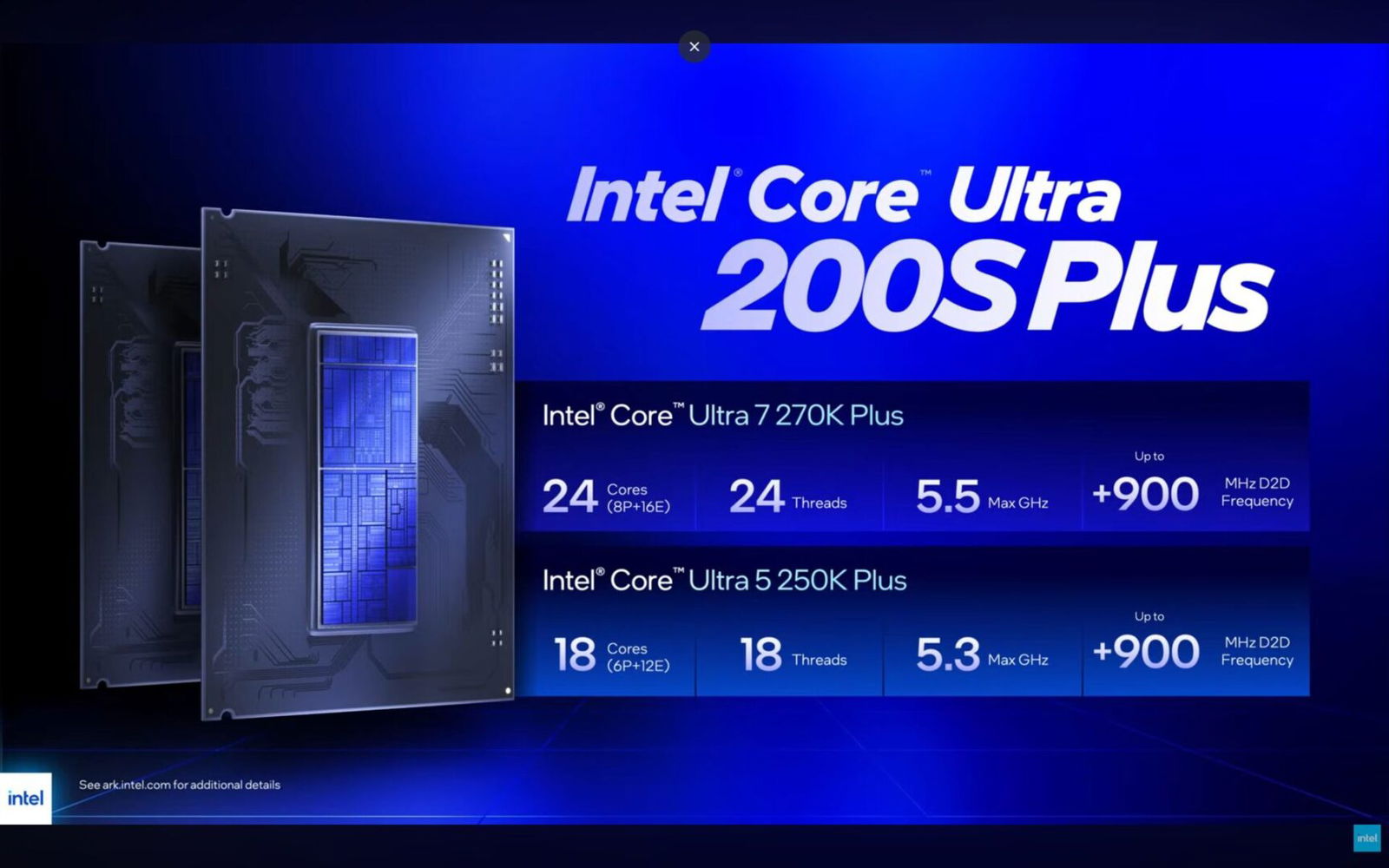
At first glance, the Core Ultra 7 270K Plus looks like the chip people wished Intel had launched when the 200S series first hit the scene. The Core Ultra 7 270K Plus packs eight Performance cores and 16 Efficient cores for a total of 24 threads, while the Core Ultra 5 250K Plus delivers six Performance cores and 12 Efficient cores. This is very much in line with what we saw when the 200S series launched, although that is only part of the picture.
The real story, looking at the raw specs, is the clock speed. Intel has pushed frequencies higher across the board, giving the Performance cores a noticeable bump that translates into snappier single-threaded work. The Efficient cores received a similar increase, which helps when heavier multi-threaded loads are spread across available cores. It is not a dramatic architectural overhaul, but more of Intel refining and tightening performance, and that is not a bad thing when the base of the 200S series we generally liked, just wanted to see a bit more performance from the range.
As with the 200S series, the new 200S Plus range is compatible with the LGA 1851 socket. Anyone building a new system will need a compatible 800-series motherboard, including Z890, B860 and H810 boards, among others. The good news for those who already bought into the platform with the original Core Ultra 200S launch is that a straightforward BIOS update is all it takes to run one of these Plus chips. There is no need to swap the board or start from scratch, which reduces the impact of a mid-cycle refresh. Intel clearly aimed to make the upgrade path as smooth as possible, and to its credit, it has done so.

As expected, this new launch is very much a DDR5-only platform when it comes to memory. There is no DDR4 fallback, so builders need to budget for DDR5 kits if they have not already made the switch. The platform natively supports DDR5 at competitive speeds, and Intel has improved the memory controller to enhance both bandwidth and latency compared to the original 200S parts. For those looking to push performance further, overclocked DDR5 configurations, including CUDIMM options, are available, though results will vary by board and kit.
While it would have been welcome to see major overhauls in what this range could support, the Plus refresh does not change the core platform layout in a significant way. It still includes PCIe Gen 5 support for both graphics and storage, keeping the platform relevant for the fastest NVMe drives and next-generation GPUs. The socket, chipset and fundamental building blocks are all carried over.
What Intel has changed are the elements that show up in benchmark results and daily use: higher clock speeds, better out-of-the-box tuning and a more refined overall package. It is less a new product and more a refinement, but in some cases, that is exactly what is needed, and from what we saw of the 200S when we reviewed it before launch, this is exactly what we wanted to see Intel tackle.
On the motherboard side, Wi-Fi 7 support is standard across most Z890 and refreshed 800-series boards, paired with Bluetooth 5.4. In practical terms, Wi-Fi 7 means wider channels and improved handling of congested home networks, which is the kind of upgrade that often goes unnoticed until downloads are no longer bottlenecked. Bluetooth 5.4 is a quieter improvement, but it keeps the platform current for low-latency wireless peripherals and audio devices. Neither feature is unique to Intel at this point, but having both available out of the box keeps the platform competitive with AMD offerings, and it is encouraging to see Intel continuing to bring the latest features to new chips.
“The Core Ultra 7 270K Plus is now a major option for people looking to get the most from their Intel-based desktop PC experience.”
While it has been fairly standard so far, Intel has introduced new software features designed to take advantage of what the 200S Plus brings (at least according to Intel, which says some of these features may come to the 200S in the future). The Intel Application Optimization tool works at runtime to fine-tune how specific games and applications use the chip’s Performance and Efficient cores. It acts as a traffic controller, ensuring demanding tasks run on the appropriate cores at the right time, without requiring user input in the BIOS or Task Manager.
While that is a notable development, the Binary Optimization Tool goes a step further, recompiling installed application binaries to better suit the processor’s specific instruction set. It runs in the background after installation and can deliver modest performance gains in supported titles. It is a thoughtful approach, and while the gains are not dramatic, they can add up across a full workload.

When Intel demonstrated this tool before the review process, it seemed too good to be true. However, testing did show measurable performance gains, though they are not dramatic and vary by title and level of optimization. For example, Hitman 3 is already well optimized, so gains were minimal, while Shadow of the Tomb Raider saw an increase of about 15 to 25 percent in performance. At present, support is limited, with only about 12 games listed in the application, making the feature promising but still somewhat constrained.
With the specs covered, it is time to place these CPUs into our test bench and evaluate their real-world performance. The chip was installed in our newest Intel test build, featuring an MSI Z890 Gaming Plus WiFi 6E motherboard provided by MSI. This was paired with 32 GB (2×16 GB) of G.Skill RAM, a Samsung 980 M.2 SSD, a GIGABYTE 1000W power supply, a Cooler Master 360 AIO cooler and an AMD RX 7900 XTX, all housed in a Cooler Master MasterCase 360 Panorama case. The system is designed to give the CPU the resources it needs to perform without bottlenecks during testing.

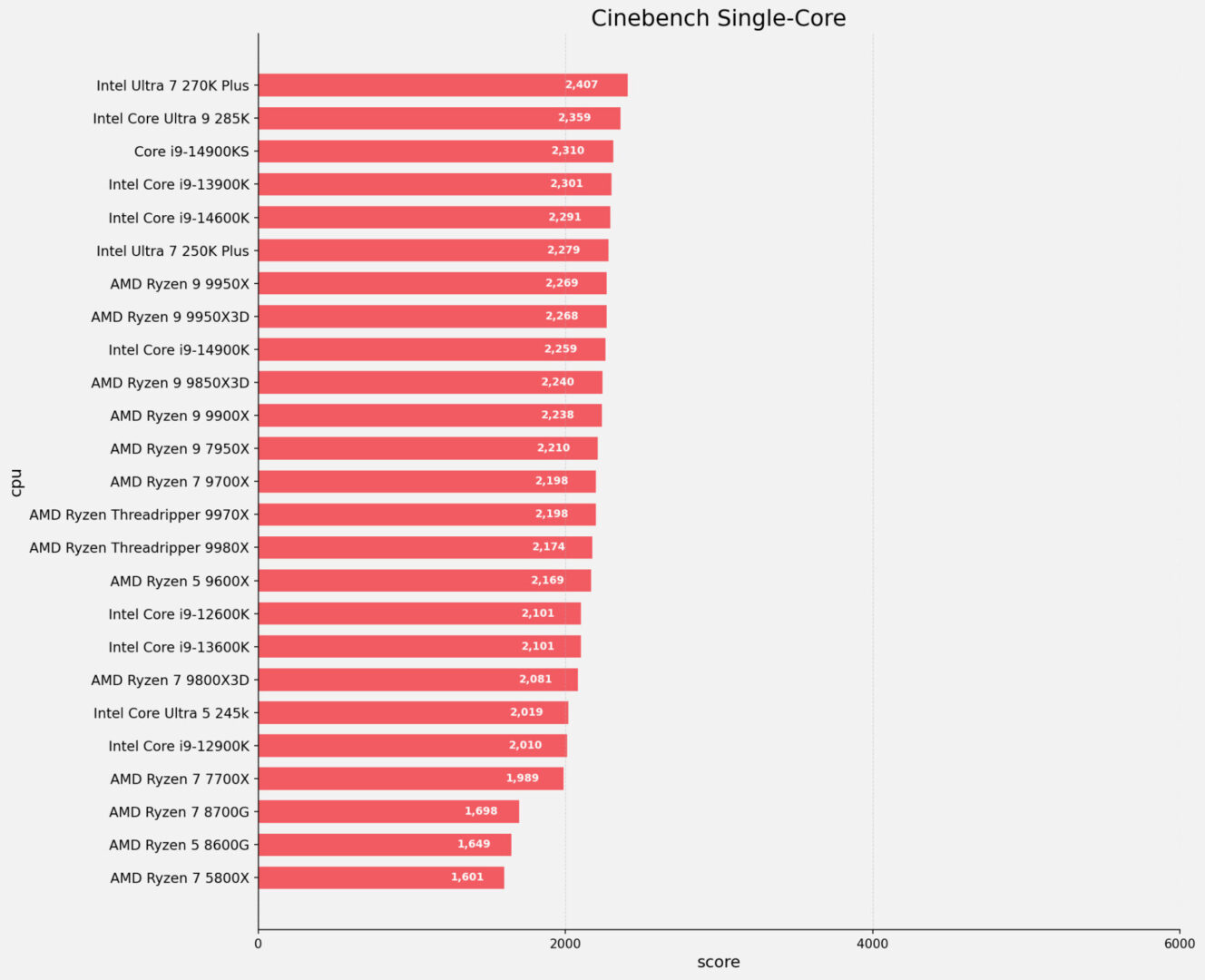
Starting with Cinebench, both the Intel Core Ultra 7 270K Plus and the Intel Core Ultra 5 250K Plus delivered strong results, with multicore scores of 42,388 and 31,142, respectively. On the single-core side, the Ultra 7 270K Plus scored 2,407, while the Ultra 5 250K Plus reached 2,279. Both results represent a clear improvement over the Intel Core Ultra 9 285K and Intel Core Ultra 5 245K, and even surpass the 41,249 multicore score achieved by the AMD Ryzen 9 9950X. While synthetic benchmarks provide only part of the picture, these results show a strong out-of-the-box performance.

In 3DMark Time Spy, the Intel Core Ultra 7 270K Plus posted a CPU score of 18,666, while the Intel Core Ultra 5 250K Plus followed closely with 18,082. Both processors performed well overall, delivering some of the strongest results in this generation. As with all synthetic benchmarks, these results offer only a partial view of performance, but they remain useful for comparison.
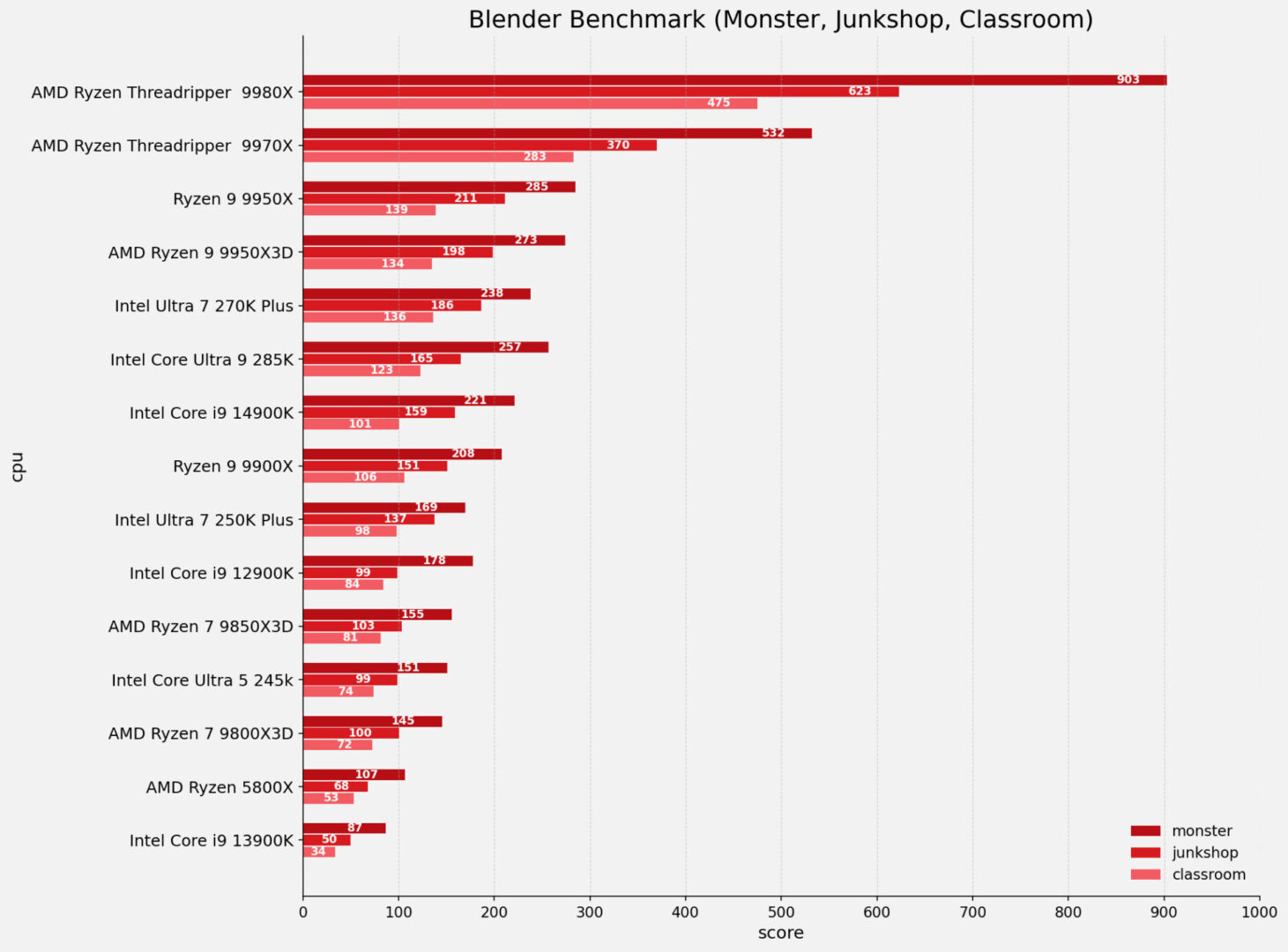
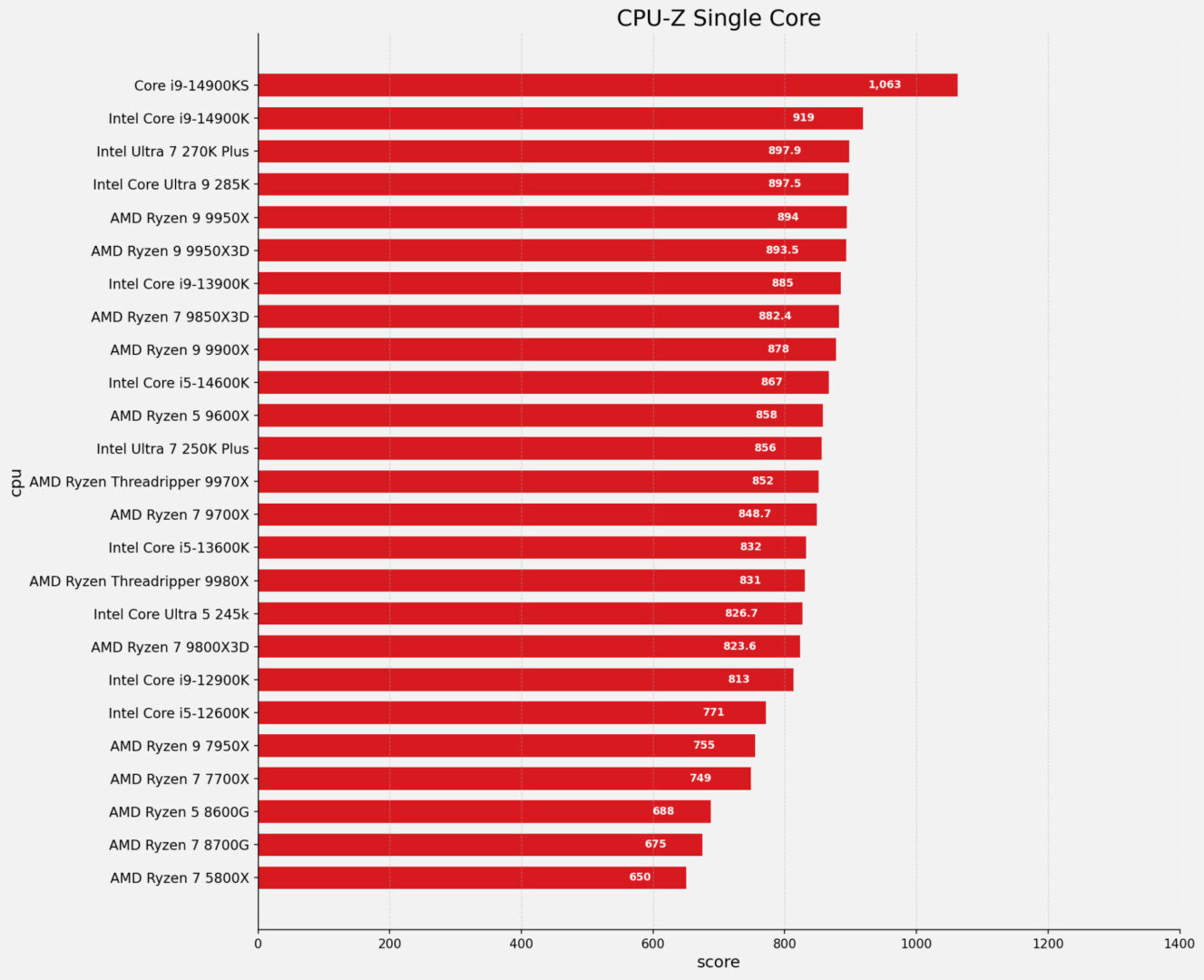

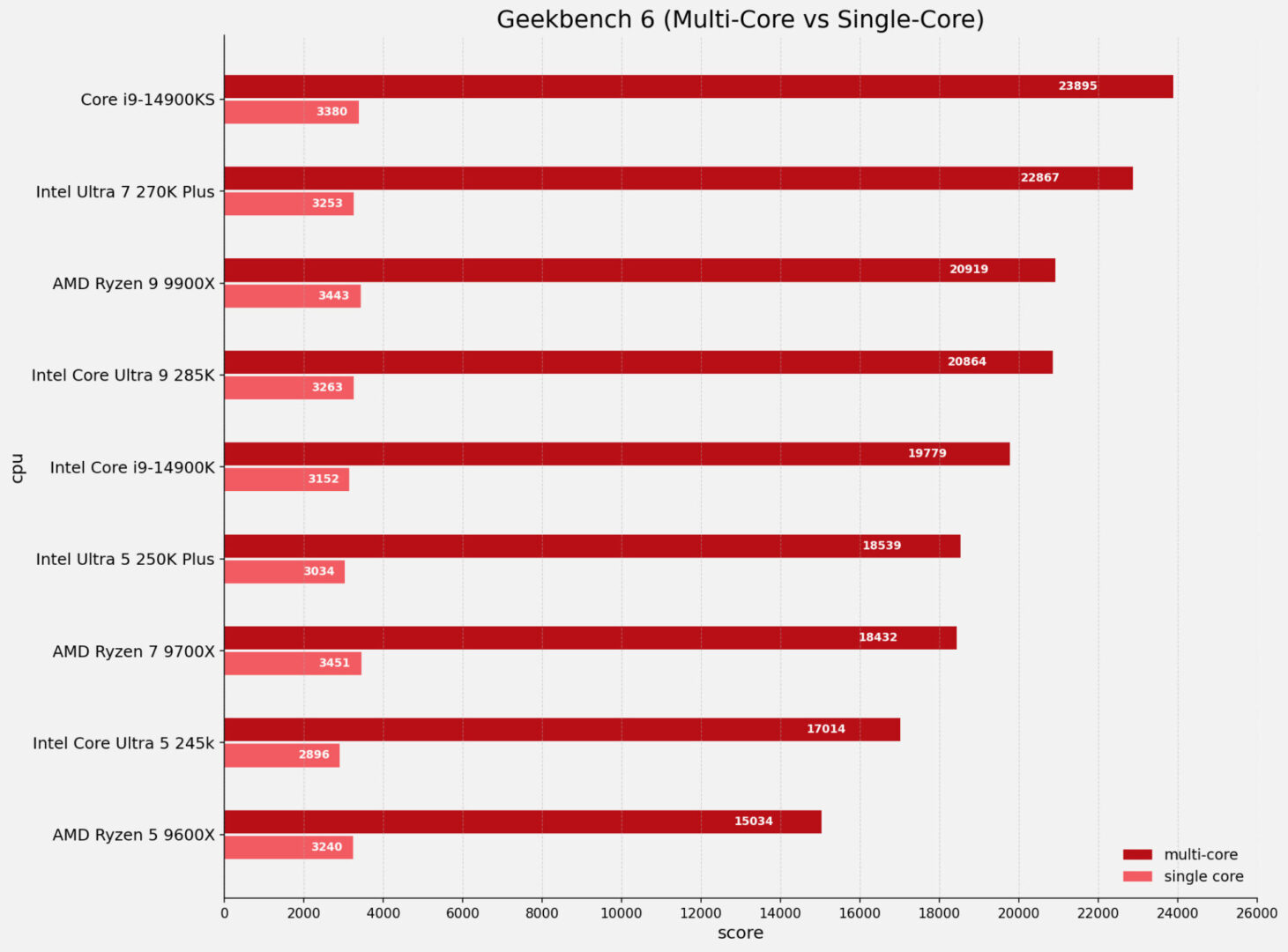
A similar trend appears across a range of benchmarks, including Blender, Geekbench 6 and CPU-Z, all of which highlight the improvements in the 200S Plus compared with the 200S. These results provide a clear view of how Intel has built on its most recent desktop launch and improved performance across the board.
As a refresh, the goal is to refine what already worked and push performance further, rather than deliver a full generational leap. While this does not always result in major gains, the improvements here are solid. Even when compared with the latest AMD chips, the Intel Core Ultra 7 270K Plus and Core Ultra 5 250K Plus hold their own and, in some cases, pull ahead in several benchmarks.
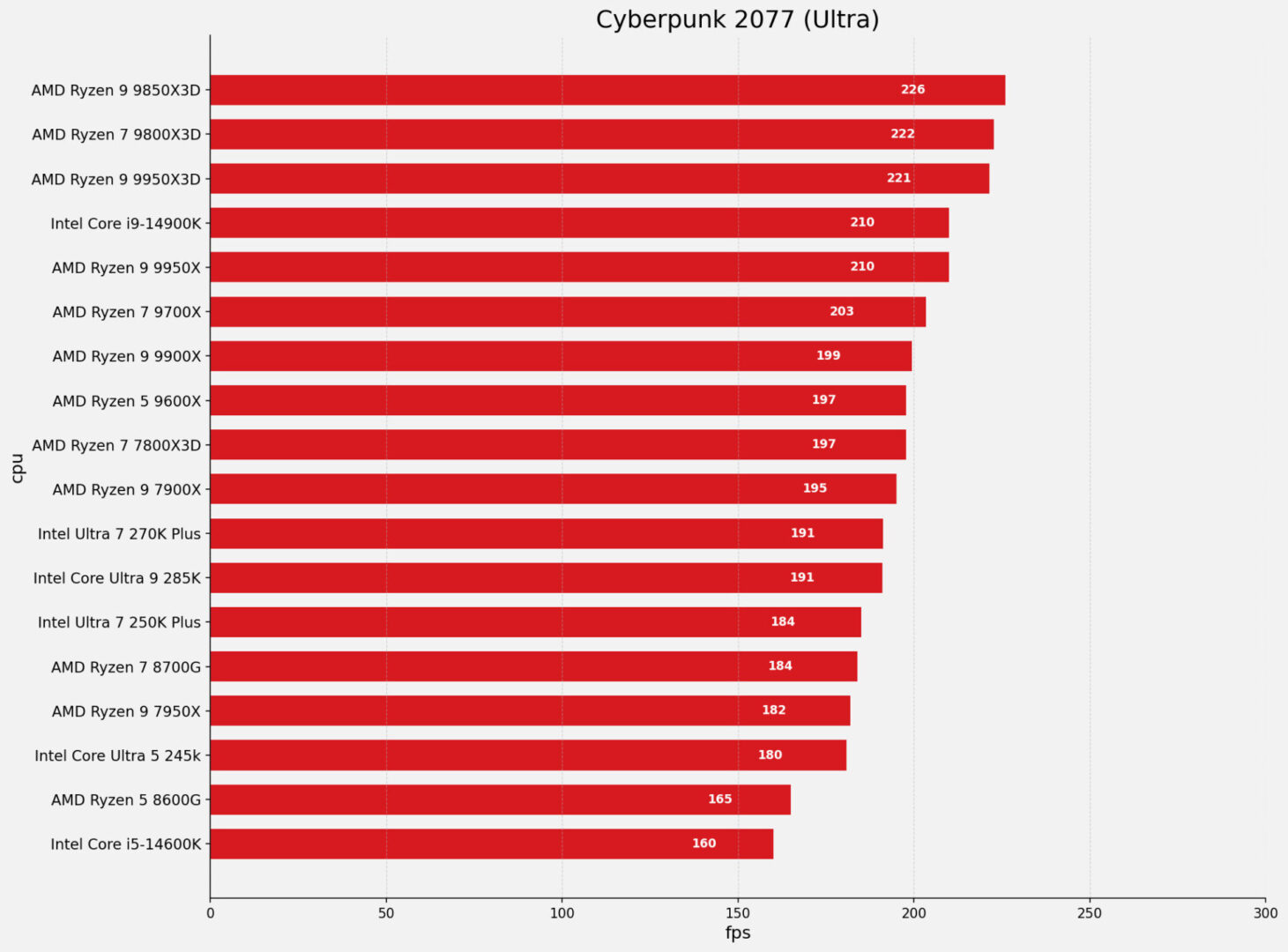
This brings us to gaming, where the 200S Plus showcases its strengths. The new optimizations, including the Binary Optimization software, help deliver results that make the chips feel faster and more competitive with higher-priced models. In Cyberpunk 2077 (Ultra, 1080p), the Intel Core Ultra 7 270K Plus delivers a stronger overall score than the Intel Core Ultra 9 285K and comes close to some AMD offerings, although it still falls short of the more powerful X3D lineup.
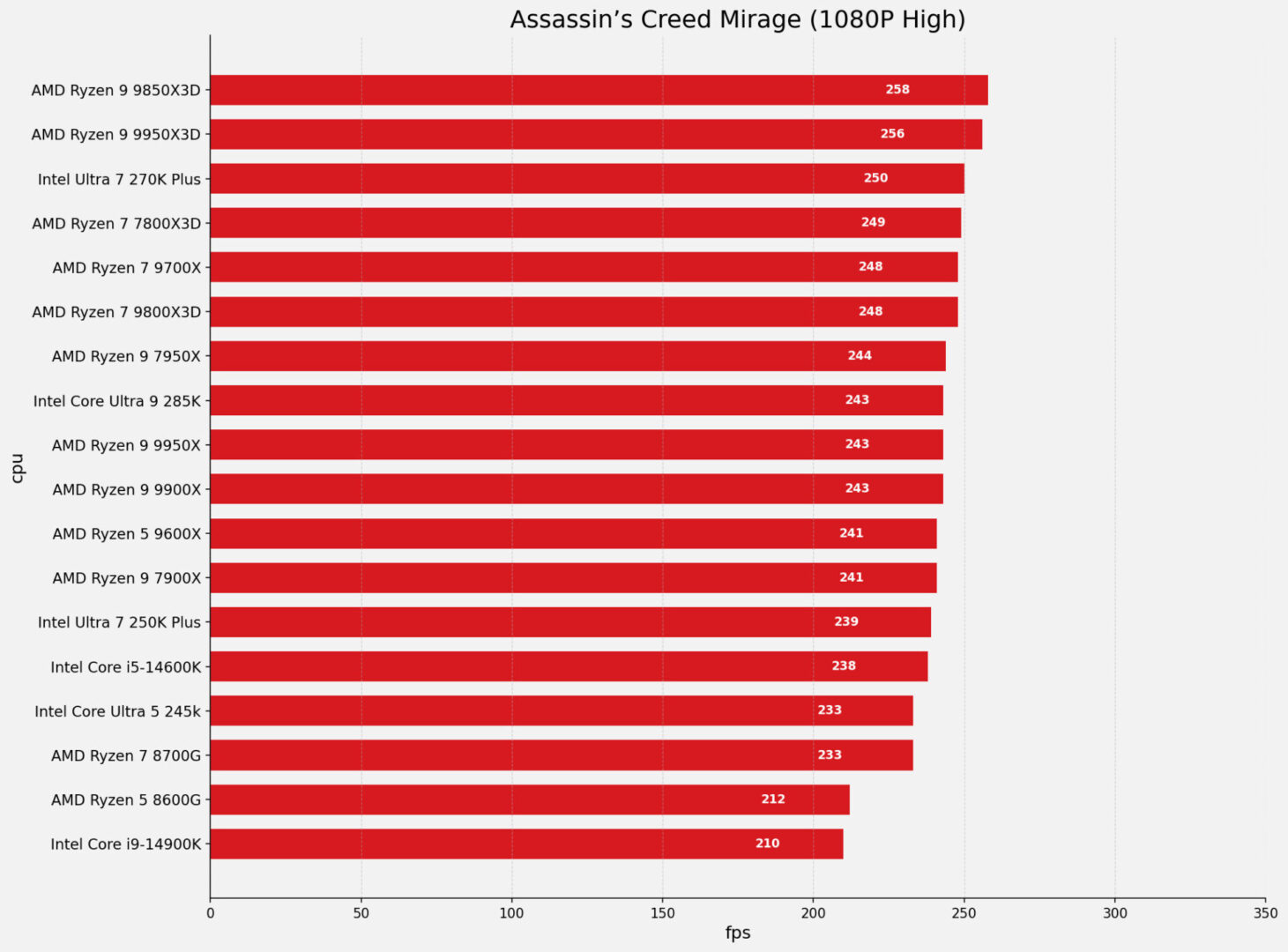
In Assassin’s Creed Mirage, the Intel Core Ultra 7 270K Plus outperforms most other chips in our benchmarks, with only the AMD Ryzen 9 9850X3D and AMD Ryzen 9 9950X3D ahead. This is a notable result given the CPU’s price. The Core Ultra 5 250K Plus also delivers a solid showing, although it does not match the top AMD competitors.

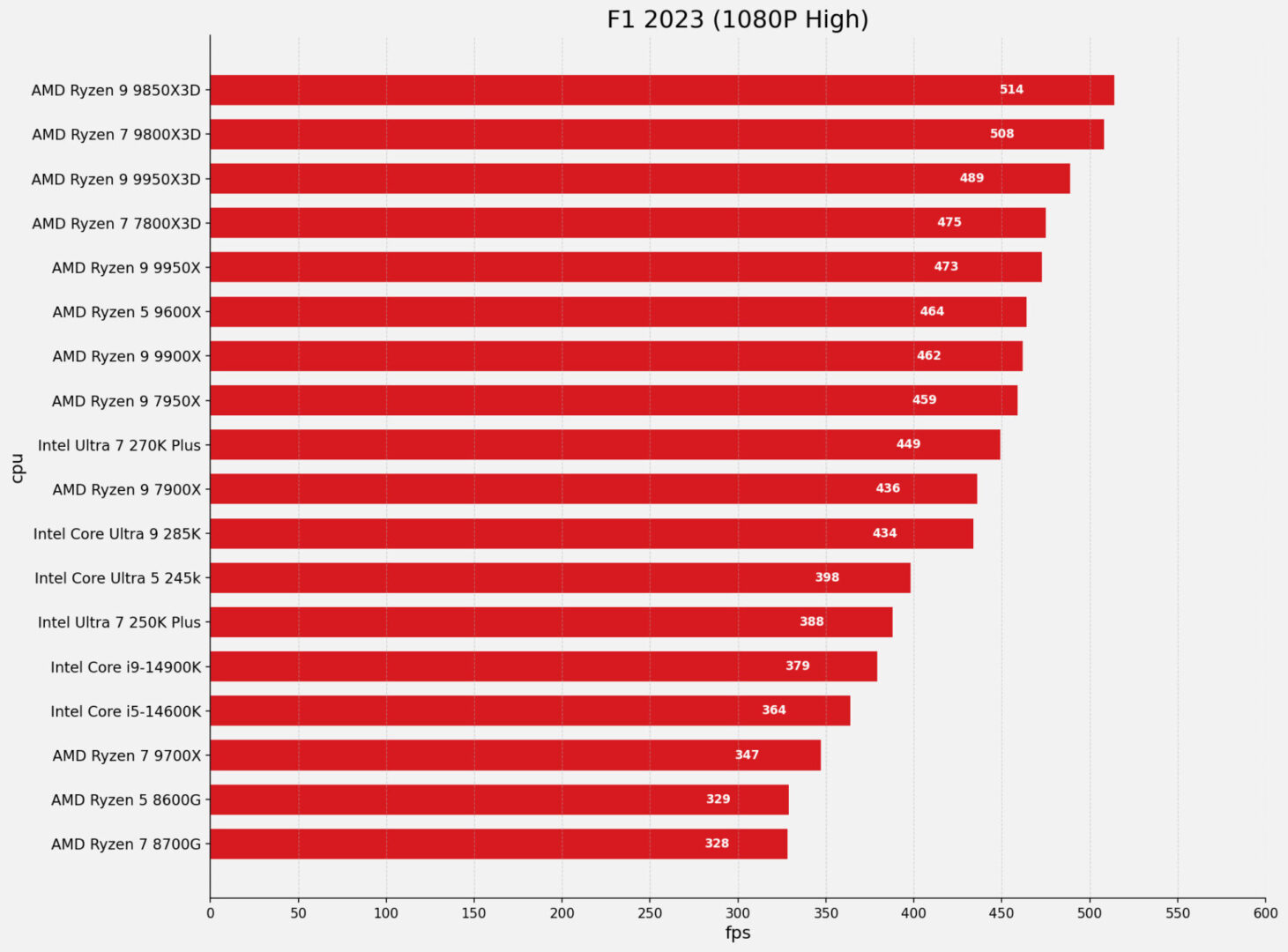
Intel continues to lead in Total War: Warhammer 3, and that remains true here. The Intel Core Ultra 7 270K Plus delivers an average of 216 frames per second on ultra settings and 539.6 in the secondary test, while the Core Ultra 5 250K Plus records 211.4 and 538.2, respectively. This trend continues in F1 2023 at 1080p on high settings, with scores of 449 for the Intel Core Ultra 7 270K Plus and 388 for the Intel Core Ultra 5 250K Plus. While these results are not class-leading, they represent a strong showing and make these CPUs a solid choice for a gaming system that balances performance, features and compatibility.
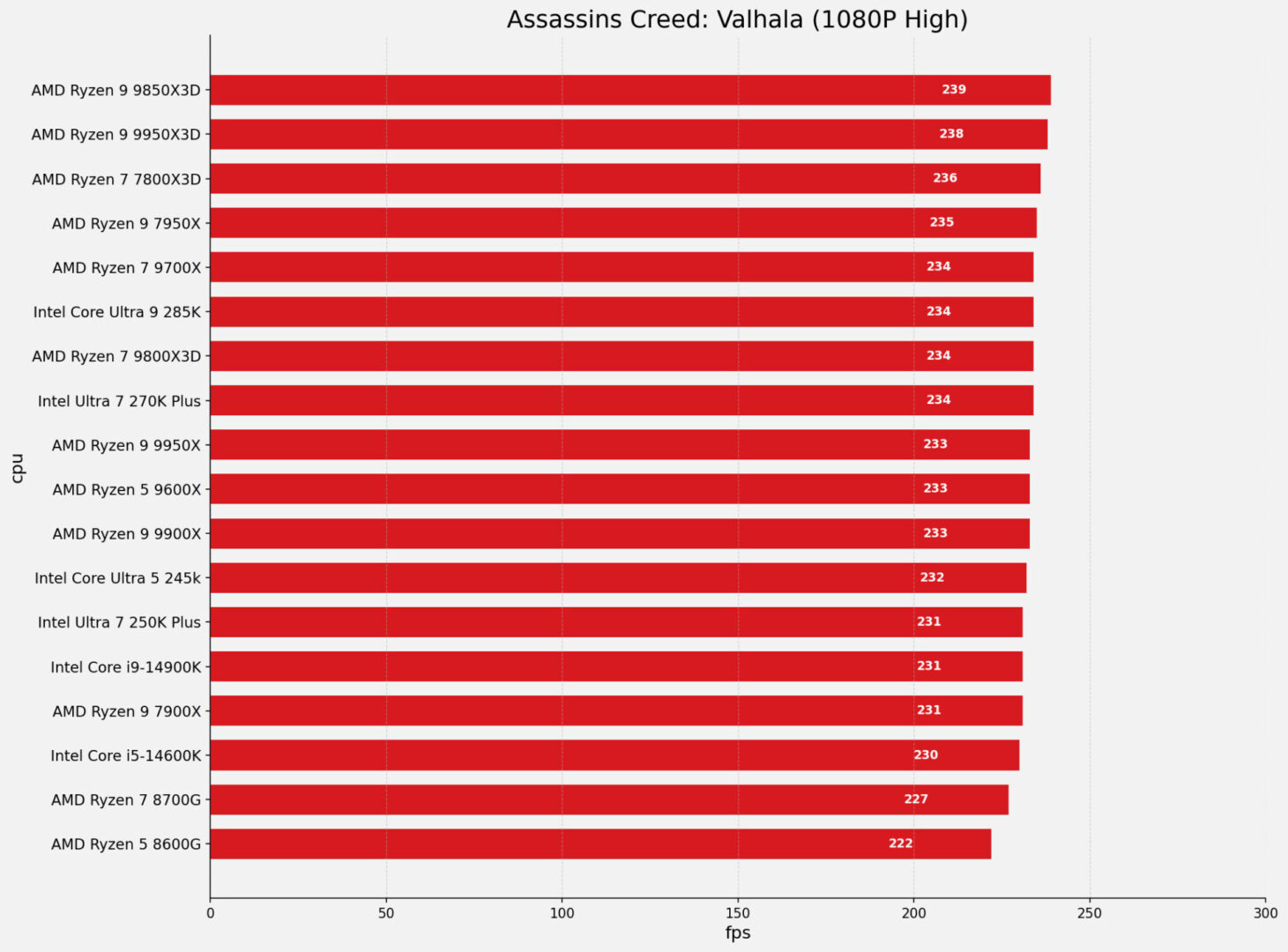
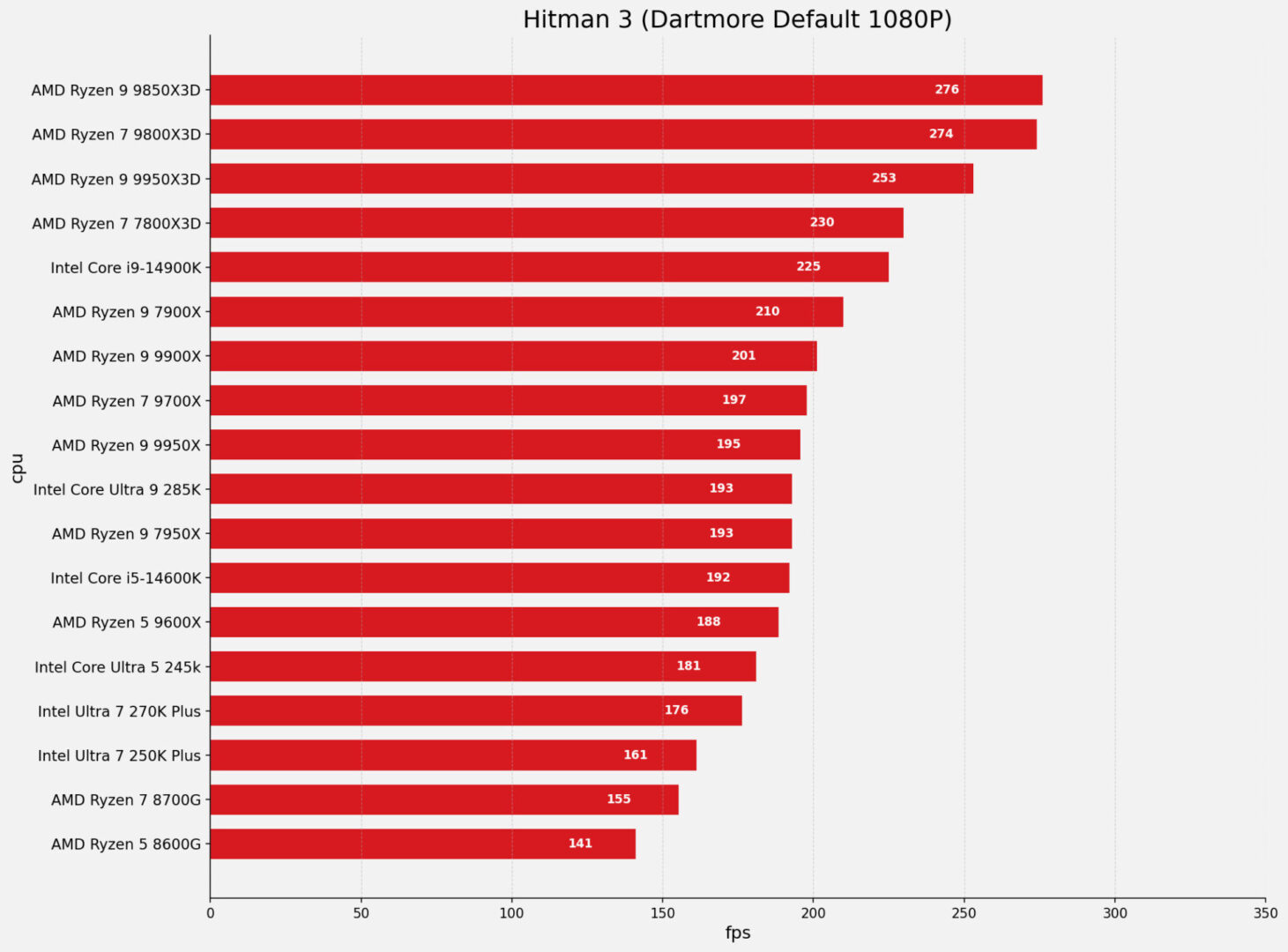
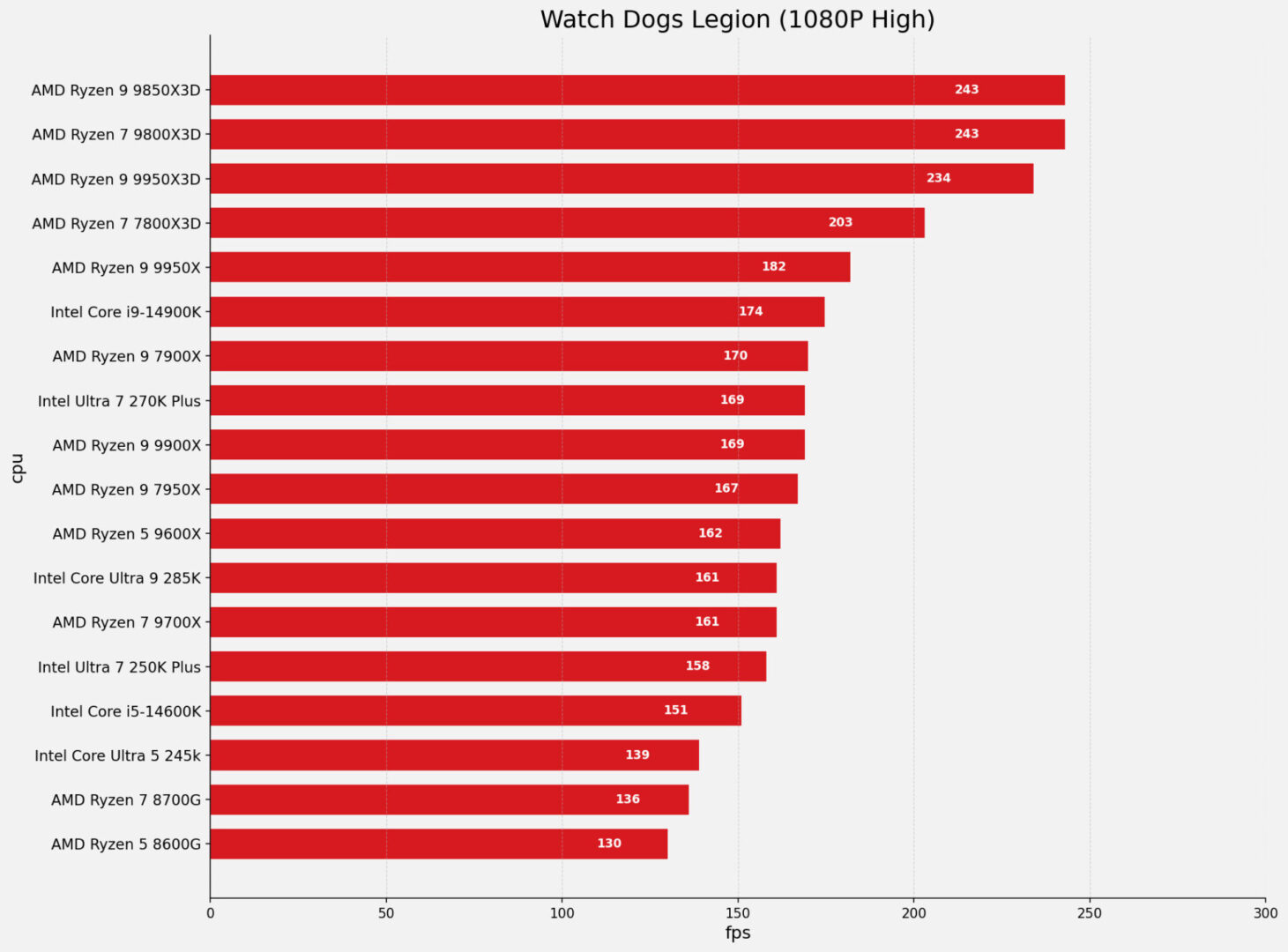
As noted, not all games show significant improvement with the 200S Plus refresh. Titles such as Assassin’s Creed Valhalla and Hitman 3 saw very little change. However, Ashes of the Singularity: Escalation showed a notable performance increase, delivering nearly a 10 frames-per-second gain over the Intel Core Ultra 9 285K and matching the Intel Core i9-14900K, which was unexpected. Based on our testing, the gaming performance of the 200S Plus range is solid. It highlights both the improvements these chips bring and the limitations they face in real-world scenarios.
On the content creation side, the Intel Core Ultra 7 270K Plus and Core Ultra 5 250K Plus delivered consistent results across a range of applications, including DaVinci Resolve, Adobe Premiere Pro and Photoshop. Performance compares well with the Intel Core Ultra 200S range and many AMD Ryzen 9000 series chips, although it falls short of the AMD Ryzen 9 9950X3D and some Intel 14th-generation processors tested under the same conditions. In real-world use, these chips are more than capable of handling complex editing workloads, live streaming and various export tasks. For more demanding workflows, investing in a stronger GPU will often yield greater benefits, but the Intel 200S Plus refresh remains capable of handling most tasks without issue.

While the Intel Core Ultra 7 270K Plus and Core Ultra 5 250K Plus did not stand out significantly in raw benchmark scores, their value becomes clearer when considering price and performance. Intel has priced these CPUs aggressively and, compared with AMD’s offerings, it is difficult to justify the additional cost for relatively small performance gains. At the time of writing, the AMD Ryzen 7 9850X3D is priced at $499 US, while the AMD Ryzen 9 9950X3D reaches $675.49. In comparison, the Core Ultra 7 270K Plus is set to launch at a $299 MSRP, with the Core Ultra 5 250K Plus at $199, significantly undercutting AMD’s pricing.
While AMD chips still deliver stronger gaming performance, Intel has narrowed the gap, and the improvements translate into meaningful real-world results. Depending on gaming needs, Intel appears to be hitting a strong balance with this launch, offering solid overall performance while remaining competitively priced. It is notable to see Intel positioned as a strong value option, even if this release does not dramatically redefine performance expectations.
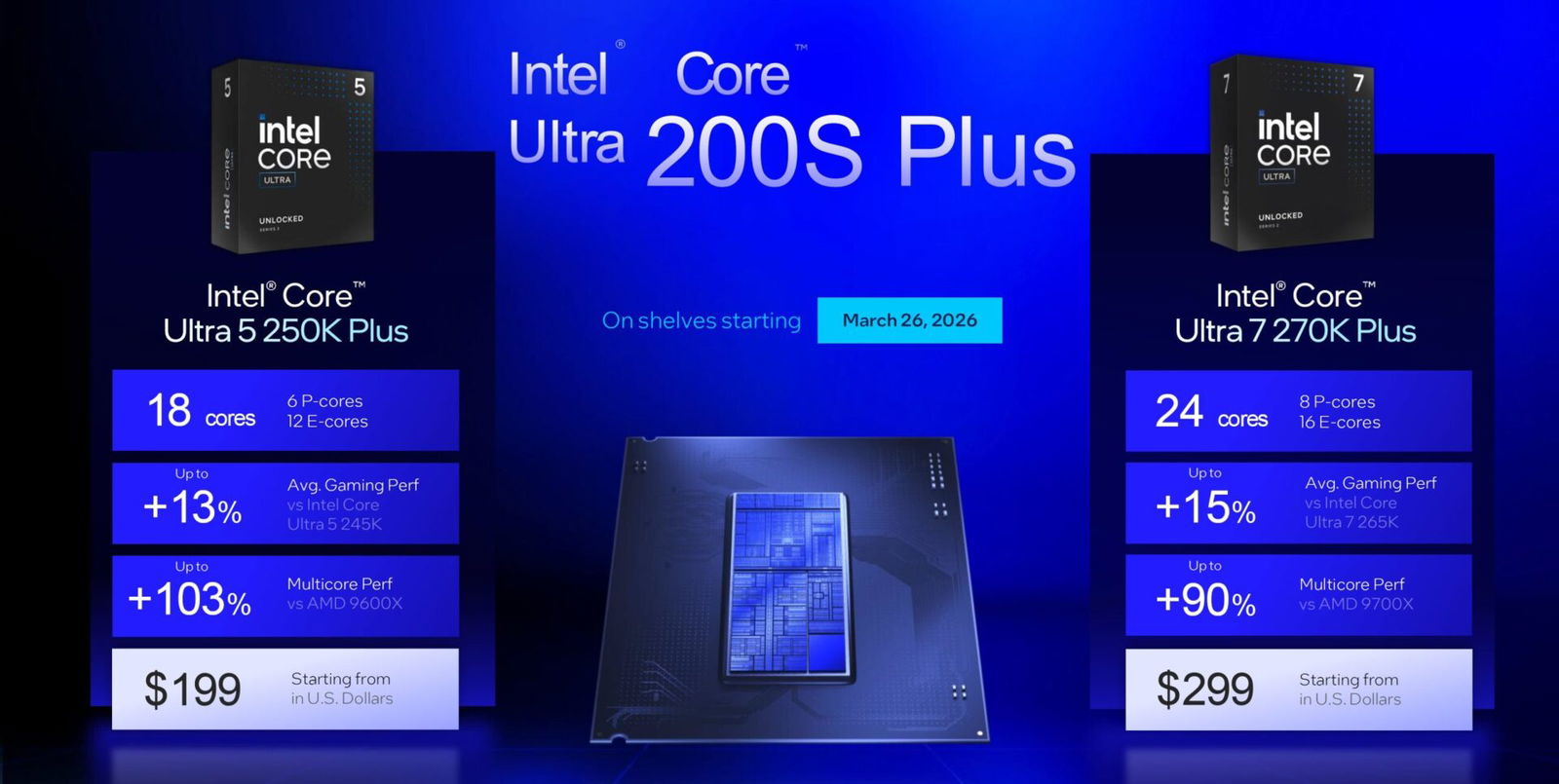
The Intel Core Ultra 200S Plus refresh is exactly what it needed to be. It does not reinvent the wheel, and it was never meant to. What it does is take the foundation Intel laid with the original 200S series and sand down the rough edges, pushing clock speeds higher, tightening optimization and delivering a more complete package at a price that is genuinely hard to argue with. The Core Ultra 7 270K Plus at 299 USD and the Core Ultra 5 250K Plus at 199 USD offer a level of performance that punches well above their price bracket, even if they do not dethrone AMD’s X3D lineup in pure gaming scenarios.
For anyone building a new system on a reasonable budget, or sitting on an 800-series board waiting for a reason to upgrade, the 200S Plus lineup makes a convincing case. Intel is not back on top just yet, but it is closer than it has been in a while, and that alone makes this refresh worth paying attention to.