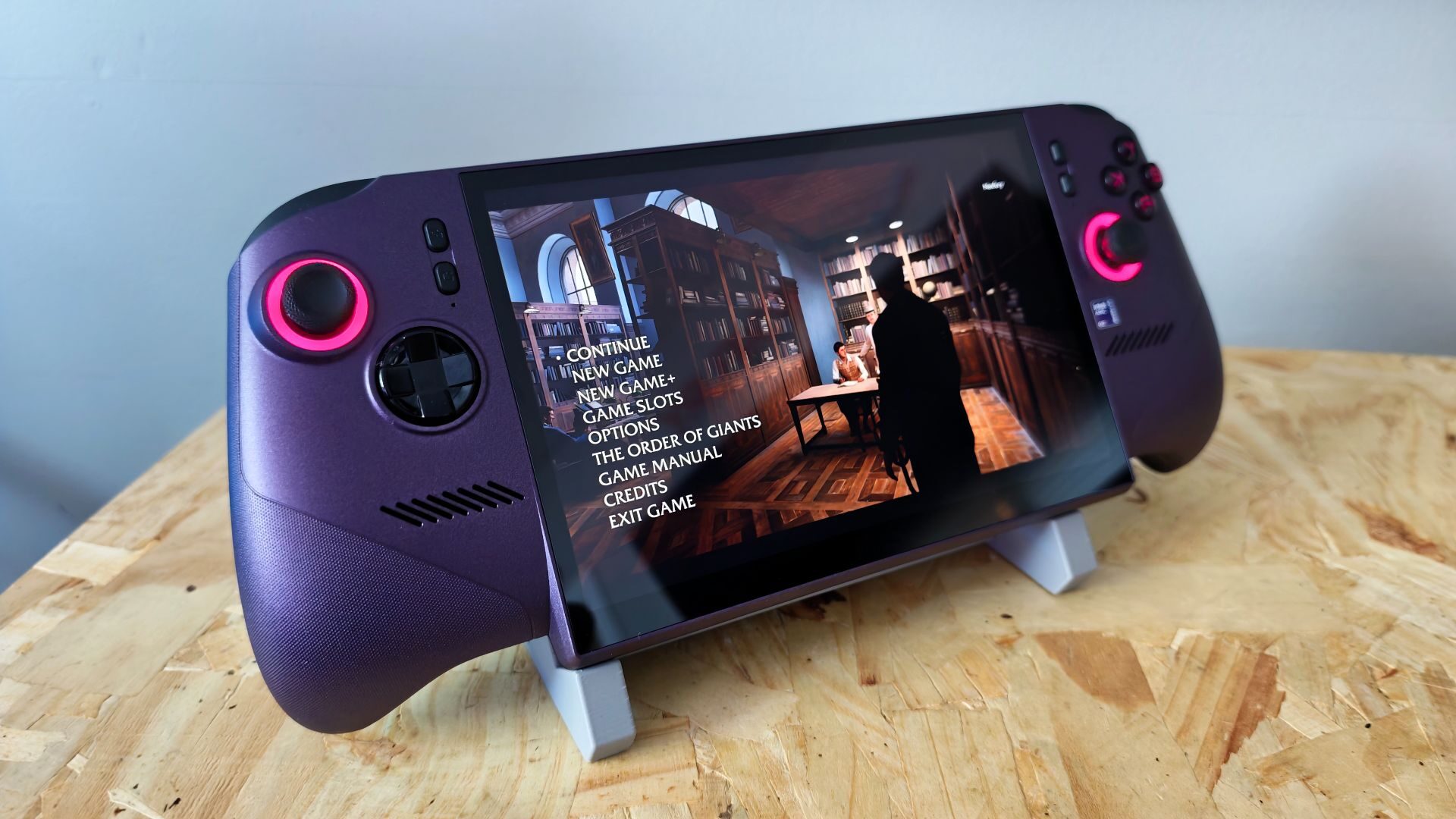


The MSI Claw 8 EX AI+ introduces gamers to a whole new level of handheld gaming. In collaboration with Intel, the Claw 8 EX AI+ is the first handheld PC to house the new Intel Arc G3 Extreme processor. Promising an exceptional boost in performance and longevity, the Claw 8 EX AI+ also offers a smart redesign of the housing and many hardware components, creating a fresh take on the Claw 8 design. After a week of extensive testing, I am convinced that the introduction of the Intel Arc G3 Extreme processor is ushering in a new era of handheld gaming. Let me explain.
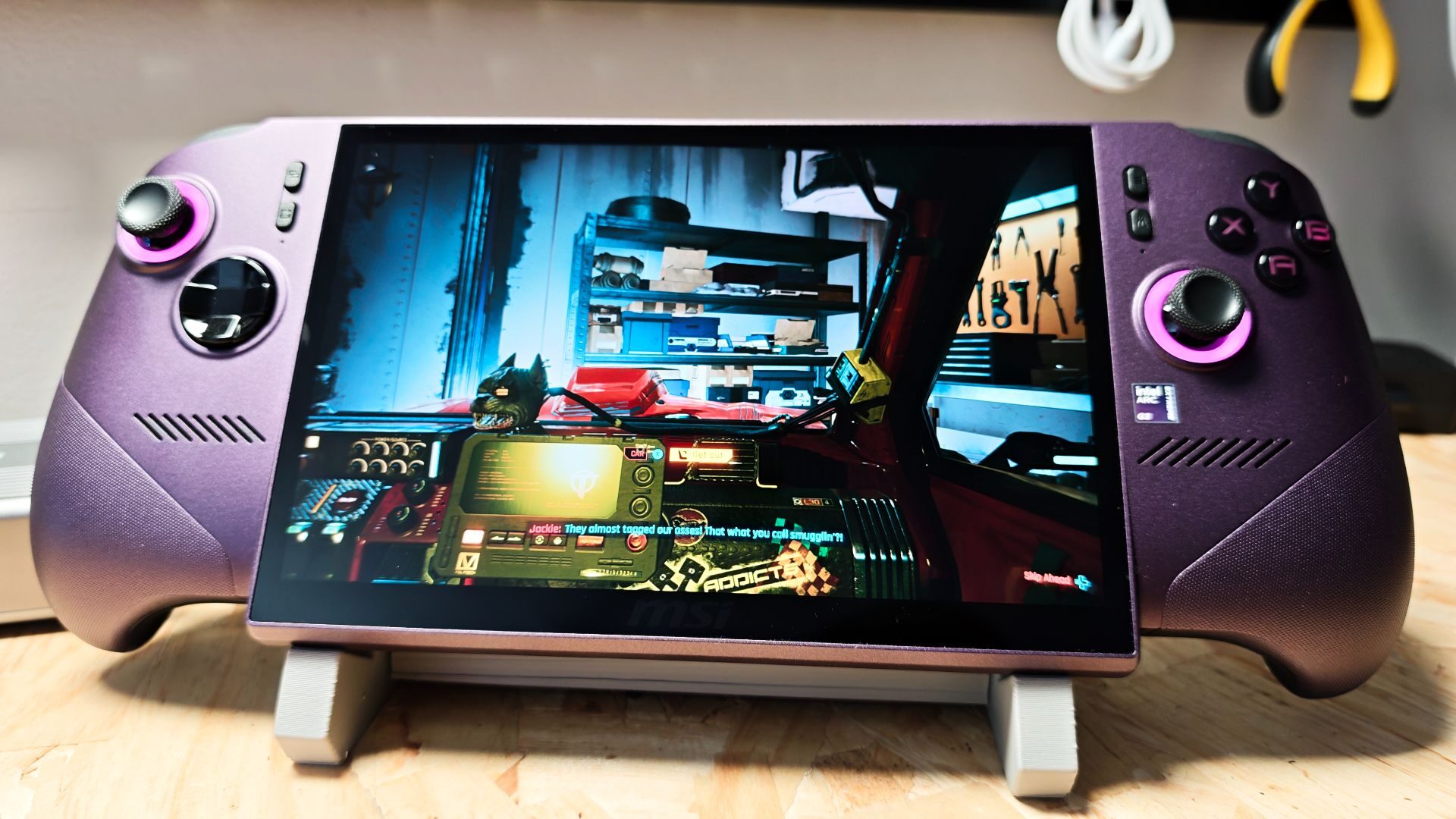
While its predecessor took many notes from the Stream Deck in its overall design, the Claw 8 EX AI+ finds its inspiration in the ROG Xbox Ally X. Offering a new flared grip design and a dotted texture grip, the Claw 8 EX AI+ feels, at least in the hand grips, like an Xbox controller. This is a welcome design change that offers more comfort for longer play sessions. Due to this design change, the screen, while still maintaining the 8” diagonal, 16:10 aspect ratio, feels more prominent with the speakers raised in response to the grip redesign.
The 8-inch display is absolutely beautiful to game on, thanks to its 120Hz refresh rate, full VRR, and 100% sRGB. The IPS panel is touch-enabled like its predecessor, and the 500-nit brightness is wonderful for gaming. While direct sunlight makes it a bit more of a strain on the eye, games are still playable, and in every other setting, everything on the display is vibrant and sharp.
“The Claw 8 EX AI+ is the most comfortable system I’ve gamed with to date.”
As for the button layout, most everything carries over from the Cals 8 EX AI+, though both the face buttons and Dpad have seen some refinements: the former offers more rounded edges, and the latter has a metal dome beneath the pad that provides a noticeably more tactile response when pressed.
The grips themselves are thicker, offering better overall grip. I also noted during testing that, as a result of the grip design, all buttons feel much easier and more natural to reach. Overall, I’m impressed with the updates and refinements. Having tested several handheld PC’s over the past year, the Claw 8 EX AI+ is the most comfortable system I’ve gamed with to date.
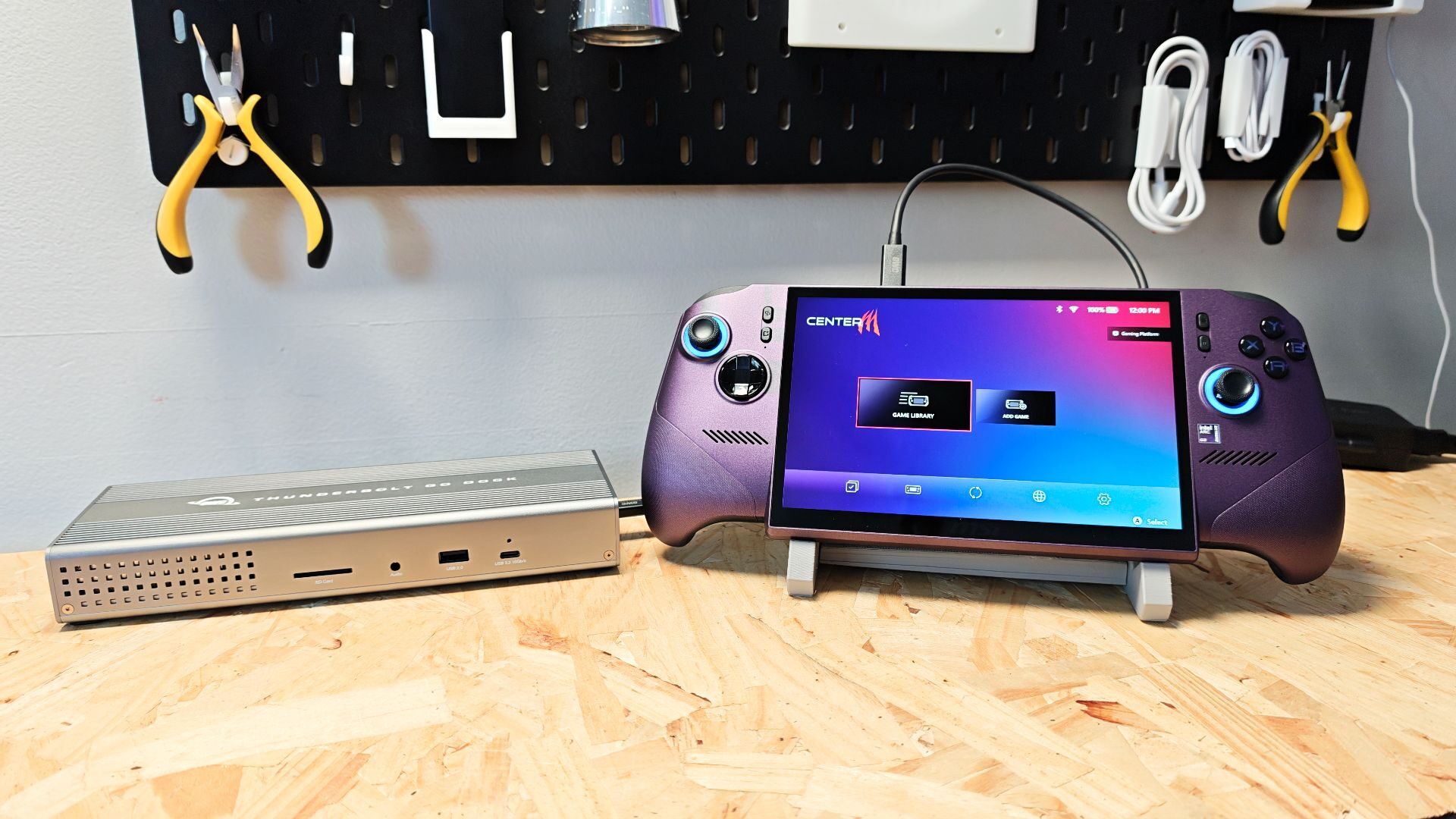
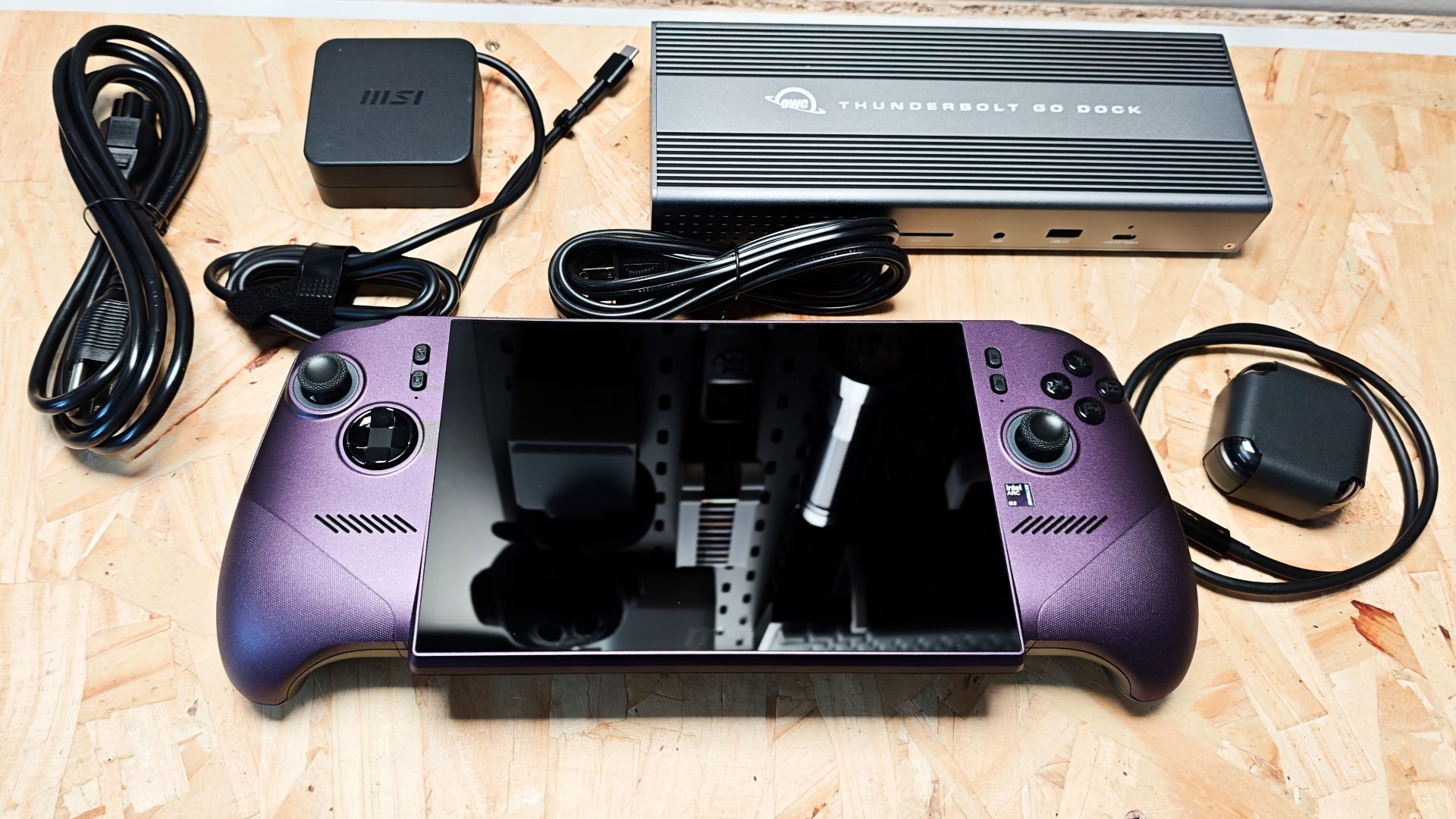
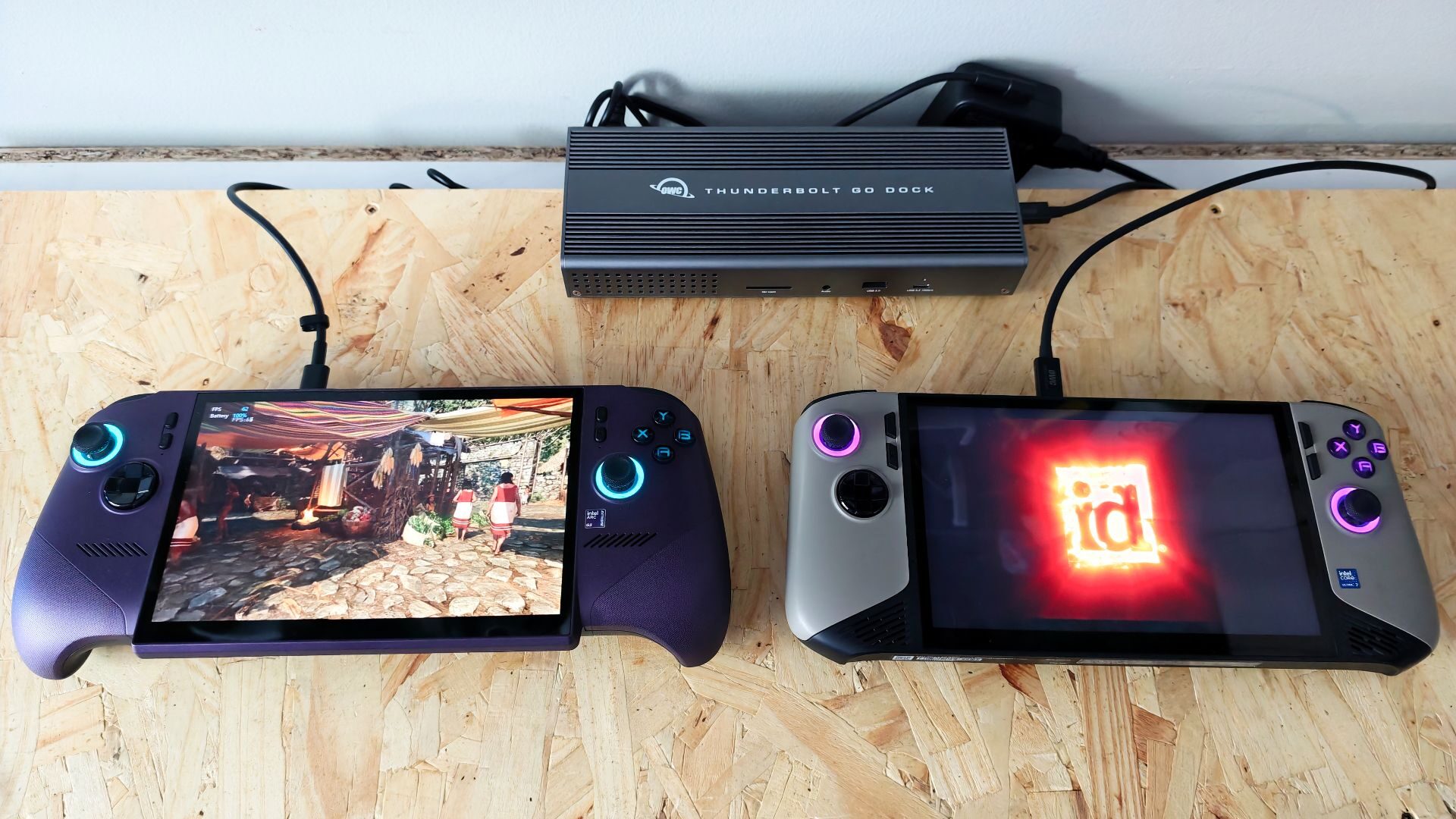
As for IO, the Claw 8 EX AI+ carries over key elements such as the microSD Express reader for expandable storage, the Audio Combo jack and two Thunderbolt 4 ports. The review unit even included a Thunderbolt 4 dock with a host of additional ports, such as USB-A 3.2 and an HDMI output, allowing the Claw 8 EX AI+ to function as a workstation if needed.
While all of these design refinements are welcome and appreciated, it’s the performance that garners the most attention with Claw 8 EX AI+. Intel’s new Arc G3 Extreme with B390 graphics is a game-changer for handheld PCs. Built specifically for handheld gaming systems and equipped with 32GB LPDDR5x RAM and a swappable 1 TB PCIe Gen4 M.2 2280 SSD, the new Arc G3-Series processors are designed from the ground up to leverage every element of modern upscaling and frame generation toolsets.
While opinions on these two features will always be debated within the gaming community, this is the perfect case study for determining when such tools should be implemented. The Arc G3 Extreme not only handles Ray Tracing, DirectX 12 Ultimate and multi-frame generation like a champ; it also achieves longer play sessions via Endurance gaming mode and speeds up load times thanks to precompiled shaders. While I’ve seen other processors adapted for handheld gaming, the Intel Arc G3 Extreme is built from the ground up for handheld gaming, and the proof is in the pudding, or at least the benchmarks.
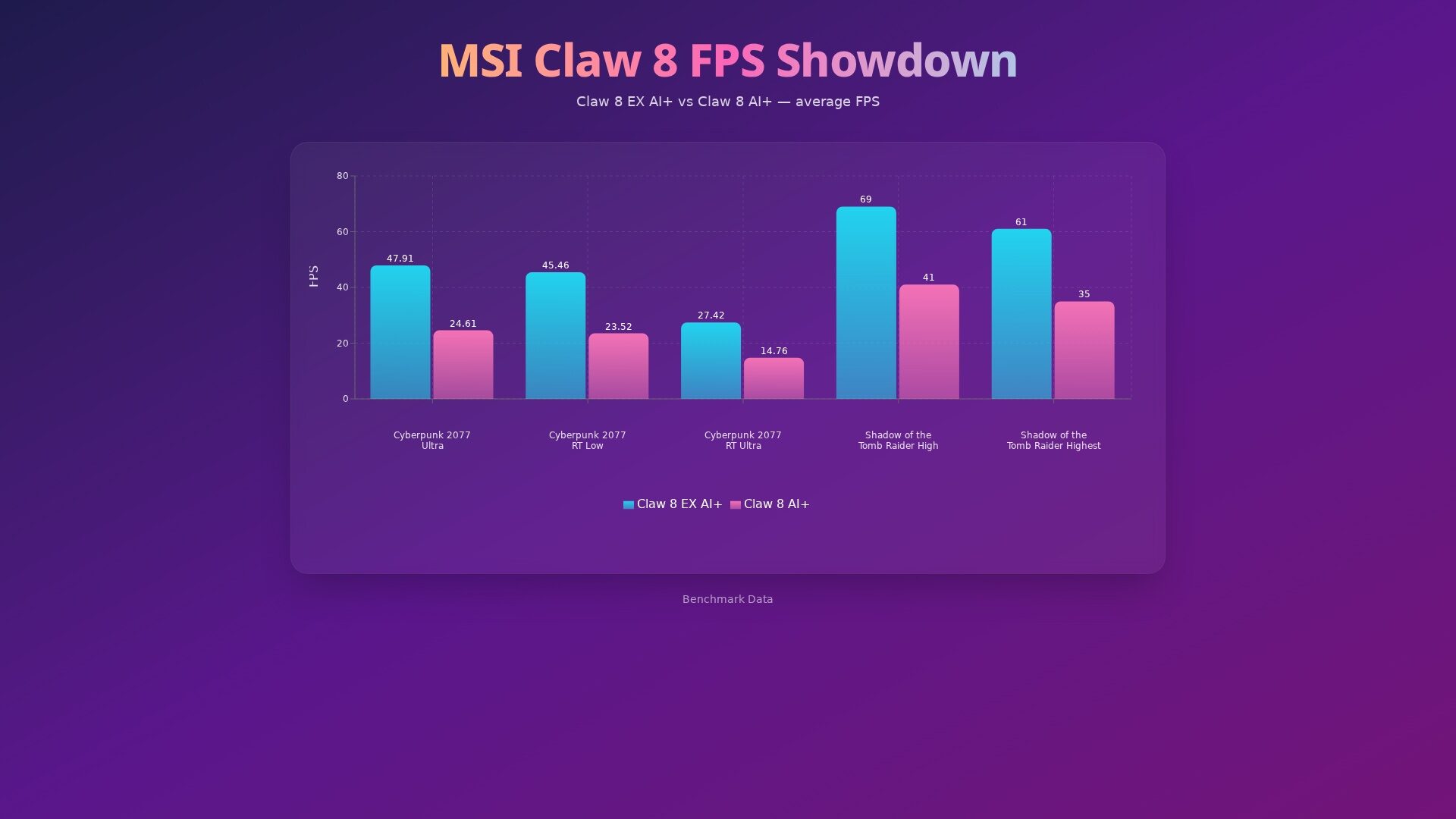
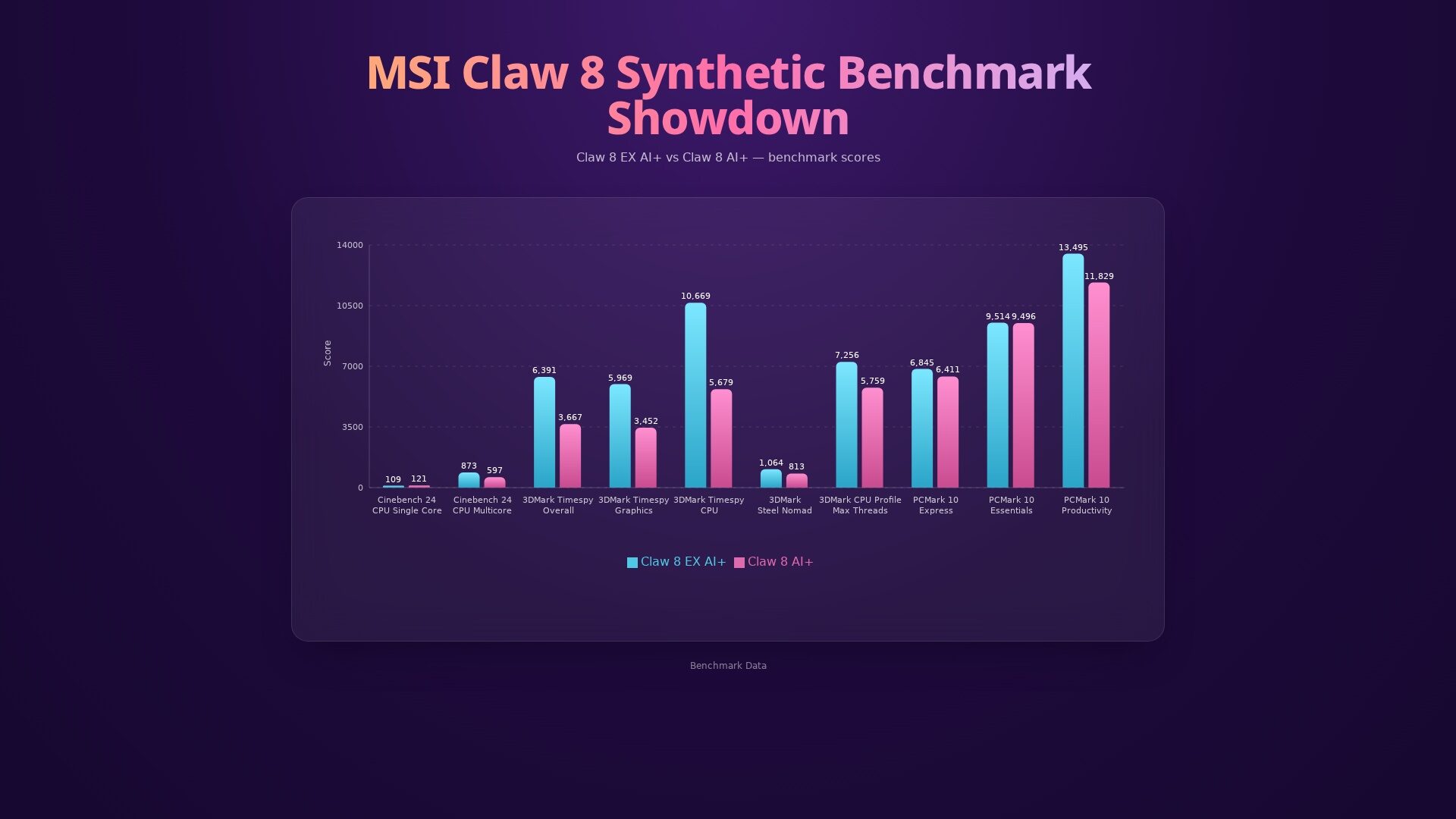
While I tested a plethora of games from Indiana Jones and the Great Circle (finally getting around to the DLC), DOOM: The Dark Ages, and the new Call of Duty: Vanguard, all of which ran exceptionally well, it was the comparable benchmarks on Cyberpunk 2077 and Shadow of the Tomb Raider that really show off the performance boosts of the new Intel Arc G3 Extreme processor. In the chart below, the performance boosts between the Claw 8 EX AI+ and the Claw 8 AI+ are notable. In every benchmark, the EX AI+ is the clear winner.
“In real-world testing, the Claw 8 EX AI+ performed well beyond what I expected.”
In real-world testing, the Claw 8 EX AI+ performed well beyond what I expected. While I do appreciate what the previous generation of handheld PCs, such as the Legion Go S SteamOS Edition, there is an understanding that top-tier games will always struggle to run acceptably. While frame generation does help get many of them to a playable level on the lowest settings, it’s historically been a bit of a roll of the dice as to whether it’s a playable experience.
With the Claw 8 EX AI+, this hasn’t been my experience. Every title I’ve tested, including those mentioned above, along with a handful of other titles such as Diablo IV and No Rest for the Wicked, has run well at medium to high settings every time. I mentioned playing through Call of Duty: Vanguard above and enjoyed it so much on the Claw 8 EX AI+ that, while I’ve downloaded it on my gaming PC, I have yet to use it there, as it played at over 90 FPS throughout the whole campaign on high settings.
Synthetic performance tests taken across multiple benchmarks show a marked improvement on every front. Cinebench 2024 shows marked improvements over the Claw 8 AI+, and all 3D Mark and PCMark 10 benchmarks further affirm the results. The Intel Arc G3 Extreme processor is a literal game-changer for handheld gaming.
Digging into Intel’s new purpose-built Intel Arc G3 Extreme chip, a few design elements explain this impressive increase in performance. For starters, the new processor is driven by a new high-fidelity AI-based upscaling process that leverages XeSS 3 Super Resolution. The result is machine-learning-based processing of lower-resolution textures and upscaling them in real time, producing higher resolution while optimizing power usage. In essence, the Intel Arc G3 Extreme process requires less power to deliver higher image resolution.
As it takes full advantage of the XeSS 3 architecture via the integrated Arc B390 GPU, the Intel Arc G3 also supports up to 4x multi-frame generation. While 4X multi-frame generation was introduced on PCs with the introduction of DLSS 4, this is the first application of this type of system in a handheld, and, as noted, it performs exceptionally well.
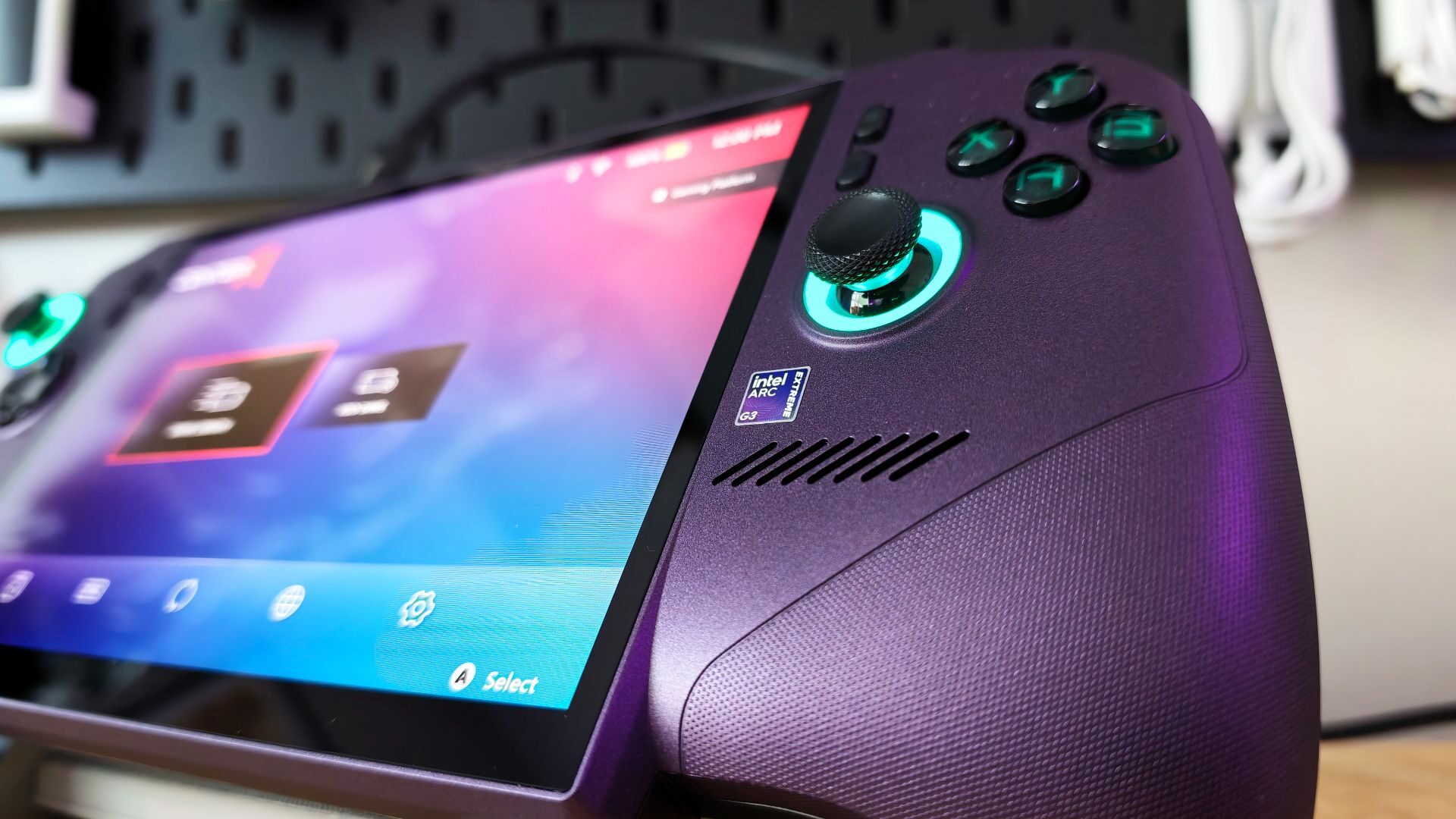
It also means that the Arc G3 can handle DirectX 12 Ultimate and Ray Tracing. While I only tested it on a few titles that had Ray Tracing support, I’m impressed at how well it handled the graphical feature. Cyberpunk 2077 had only a small frame rate drop, and these tests were performed without frame generation enabled. Once frame generation was enabled, I could easily run Cyberpunk 2077 smoothly with ultra settings and Ray Tracing enabled. Take a moment to appreciate that this is all happening on a handheld PC. Colour me impressed.
“The Intel Arc G3 Extreme processor is a literal game-changer for handheld gaming.”
One notable feature of the XeSS 3 multi-frame generation system is the types of frames it’s generating. In traditional multi-frame generation, the end goal is to push as many rendered frames as possible to boost the FPS counter in the top-left corner of the screen. In more compact and power-constrained applications, such as a handheld PC, Intel has opted to trade some rendered frames for smoothed frames.
This essentially means that players can have a smoother gaming experience at a still-relatively high frame rate, but with far less of a power draw than other frame-generation technologies. In the case of the Claw 8 EX AI+, that difference is noticed and felt in a good way. Games are consistently smooth and not just playable, and still visually impressive, compared to the lower-resolution version typical of handheld PCs.
One key reason for this impressive power boost is the increase from 8Xe cores introduced in Xe2 up to 12 Xe cores with the new Xe3 architecture. More cores mean more AI engines working to produce better upscaling and multi-frame generation, as seen in the test results. While it’s easy to get lost in the details of core counts, L1 and L2 chases sizes, and XMX Engines, the point is that Intel has, with the development of the Xe3 architecture, created a processor that can easily handle the most modern and robust triple-A titles, all while being more efficient in the process.
While there is marked improvement in the quality of the gaming experience, battery life when playing at this level of visual fidelity comes at a cost. The three triple-A titles tested all averaged around the three-and-a-half- to four-hour mark when playing at medium to high settings, which is still fairly solid.
However, when Intel’s Endurance Gaming mode is engaged, battery life is extended by a couple of hours with a couple of caveats. For starters, frame generation will need to be disabled. Second, the length of the extension, like battery life in general, depends entirely on the game. Still, when travelling and there is no AC power in sight, Endurance Gaming is a nice feature to have.
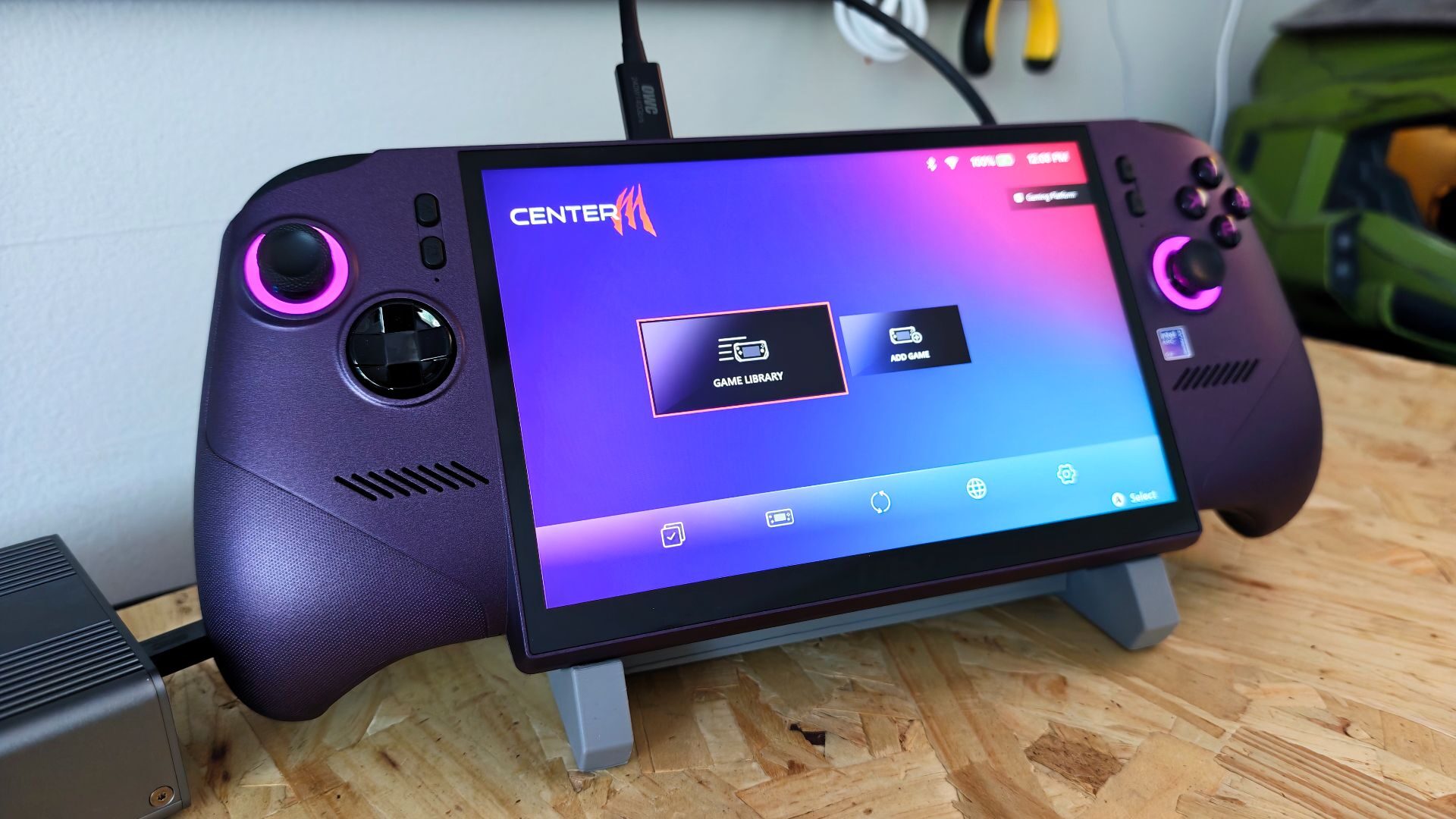
Shifting from performance, I want to circle around to cooling on the Claw 8 EX AI+. MSI has made a couple of design improvements and introduced a new cooling system called Cooler Boost HyperFlow. This new system leverages a positive pressure draw and sucks cool air straight into the chassis through a cooling chamber designed to cover all internal parts. MSI has also increased the fan height by 0.5mm, resulting in better airflow and higher static pressure, allowing the fans to push more air through the system. It works great and is impressively quiet.
There is so much to love about the MSI Claw 8 EX AI+. From design to performance, this latest iteration of the Claw outperforms any handheld I’ve tested. The partnership with Intel and the introduction of the Intel Arc G3 Extreme processor are an actual game-changer for handheld gaming. The biggest challenge with the otherwise impressive new handheld is the price point. While this is, in large part, due to the sheer insanity of the RAM market at the moment, $1,799.99 is a large price tag for a handheld, even with its impressive performance.
Despite this, the Claw 8 EX AI+ is a seriously impressive machine that introduces the first real innovation we’ve seen in handheld PC’s in the past year. It marks the first triple-A-ready handheld PC and, as such, is the first of what I hope will be a long line-up of next-generation handhelds that could shift the perception of this market from a fun addition to a gaming setup to a main driver for your gaming setup.