


The Prusa Core One was one of CGM’s favourite 3D printers of the last year, delivering fantastic performance and a solid build that helped make the hobby relatively easy to jump into. Now, with the release of the company’s new Core One L, it has taken that rock-solid foundation and sized it up, ready to take on a range of bigger and more complex projects.
Having tested the Core One L extensively over the past few weeks and witnessed what this desktop-sized powerhouse can accomplish, it is clear Prusa has delivered one of the most compelling large-format 3D printers available for professional and enthusiast applications, and one of my favourite 3D printers of 2026 so far.
If you read our review of the Prusa Core One (and if not, you should give it a look), the printer was a solid machine, but it was limited by its size. The new Core One L fixes this issue and marks a major evolution in Prusa’s design philosophy, with a 300 by 300 by 330 millimetre build volume that effectively doubles the print capacity of its smaller sibling.

What makes this new machine remarkable is that its footprint increases by only 10 percent, achieved through a clever combination of steel exoskeleton construction and strategically placed aluminum panels that maintain rigidity while reducing weight. The printer arrives 98 per cent assembled and ready to print within minutes of unboxing, embodying Prusa’s commitment to accessible professional-grade equipment.
This new machine arrived just as I started a new personal project: taking the AMD BC-250 and building a tiny gaming machine from a single-board computer. If you are not aware, the BC-250 is essentially the internals of a PlayStation 5, built for use in a server farm for crypto mining. Since that market dried up, these boards have made their way onto marketplaces, and at a relatively low price of entry, they are a great hobby PC that you can install Linux on. But there is one problem: there are no cases you can buy. Enter 3D printing.
My goal was to use the Prusa Core One L and craft some of the case pieces. Since many of them were too big to fit on smaller bed printers, this felt like a great project to put the Core One L through its paces, and it would push the limits of what the size would allow. It turned out to be a project that took plenty of time to get underway, but it also helped identify the strengths and weaknesses of this printer.
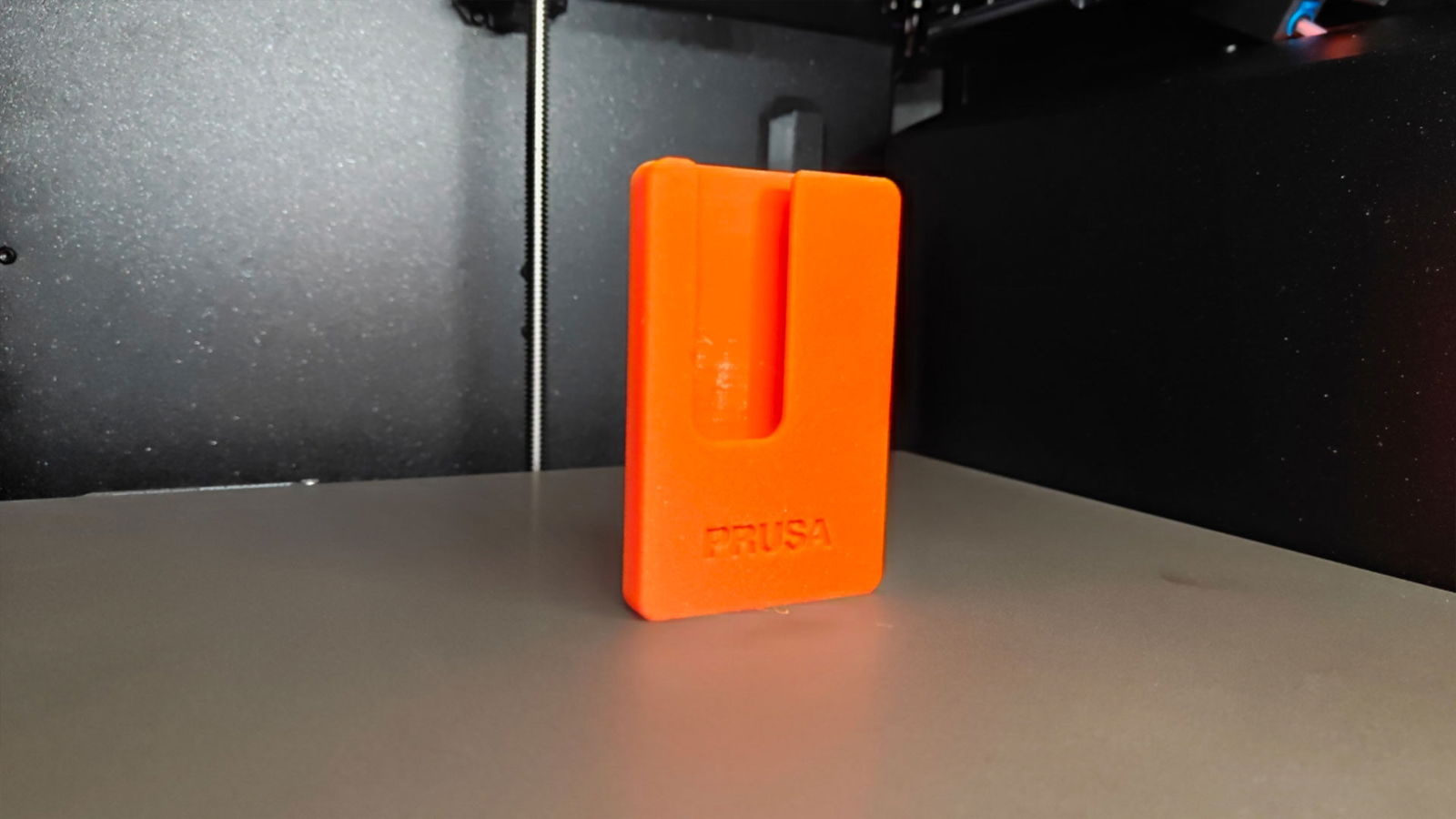
Jumping into this review and the project, I was impressed by what I saw of the machine, and Prusa has done a fantastic job refining the formula for the larger format. Starting with the thermal management, the Prusa Core One L introduces an aluminum heat bed powered by alternating current with convection fans underneath, creating uniform temperature distribution across the entire surface with less than two degrees variance.
This engineering choice proves critical for large-format printing, where temperature inconsistencies typically lead to warping and failed prints. The actively heated chamber reaches 60°C, enabling reliable printing with engineering-grade materials such as acrylonitrile styrene acrylate, polycarbonate, and nylon, without the warping issues that plague lesser machines.
Starting with some of the test files I got with the machine, I was impressed by how fast the Prusa Core One L prints, even given its size. The CoreXY motion system at the core of the machine manages to be incredibly quick without sacrificing dimensional accuracy — a balance many competitors struggle to achieve, especially compared with cheaper options on the market. With the first files printing, I was shocked at how well the machine handles complex geometries with exceptional precision, maintaining tolerances that rival specialized industrial equipment.
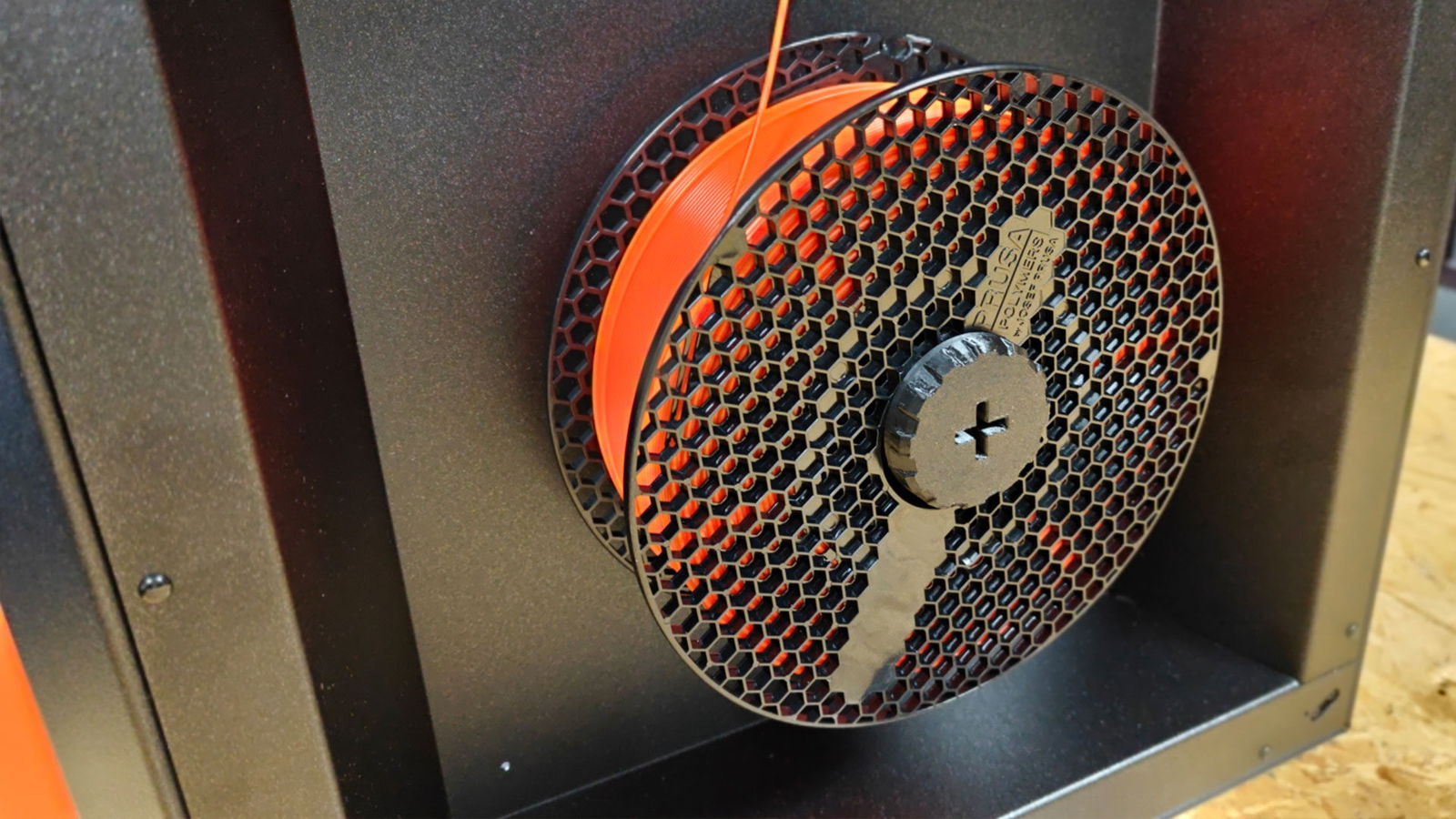
The Nextruder toolhead features 360-degree cooling that enables printing of overhangs up to 75 degrees without support structures, significantly reducing material waste and post-processing time. Factory-calibrated input shaping and load-cell bed levelling eliminate the tedious manual adjustments typically required with large-format machines, allowing users to focus on design rather than constant recalibration. I was also impressed by the quality of the files the machine produced, even when it was just set up and ready to go.
“I was impressed by how fast the Prusa Core One L prints, even given its size.”
Prusa has thoughtfully addressed material handling with several practical refinements. A simple switch near the filament entry point optimizes the feed path for flexible materials like thermoplastic polyurethane, making what is typically a frustrating experience surprisingly straightforward. The printer ships with both high-flow and hardened steel nozzles, providing versatility for different material types and printing speeds straight out of the box. An automatically controlled top vent adjusts airflow based on material requirements, maintaining optimal chamber conditions without manual intervention.
These features came in very handy as I began my BC-250 case-printing journey. This board gets hot, so to ensure the components were cooled while running the mini PC, I needed to use a material that could withstand the heat. I opted for carbon fibre-infused PETG for any parts that would be exposed to heat. For those who have not worked with it before, it can be hard on print heads and prone to breaking, which poses a significant challenge for this project.
Thankfully, I had zero issues testing it with the Prusa Core One L. Everything printed perfectly, and by using a hardened steel nozzle, I avoided any damage to the machine. It was something I had not considered at the start of this review, but I am glad it worked out so well.
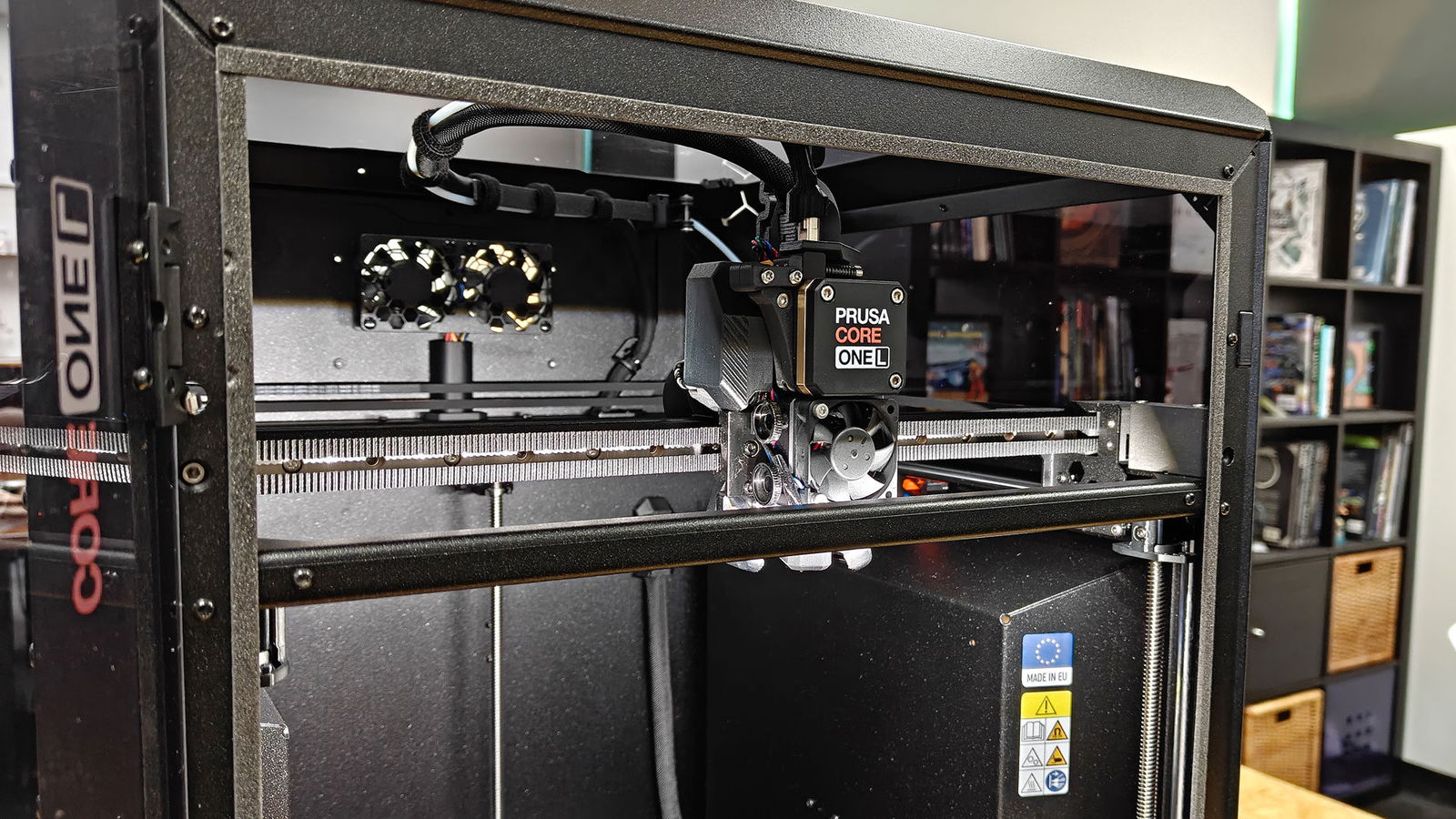
While it is not something I often consider with 3D printers, the Core One L distinguishes itself through its security-focused design. The machine can operate completely offline if required, with no cloud dependency for core functionality. A critical infrastructure edition ships with a Wi-Fi-free mainboard and encrypted storage options, addressing concerns in government, defence and enterprise environments where air-gapped operation is mandatory.
This flexibility extends to connectivity, with support for USB, local area network and optional wireless connections through a removable module. The included 1080p camera enables remote monitoring when desired, but all features remain optional.
Returning to the process of printing files on the Prusa Core One L, when working with files sourced online and preparing them for the printer, you will need to use PrusaSlicer. This software provides factory-tuned profiles for more than 200 filaments, dramatically reducing the trial-and-error typically required when working with new materials. Integration with Printables provides access to over one million downloadable models, while Prusa Connect enables remote printer management for users who opt for cloud connectivity. The printer will be among the first to support OpenPrintTag, an open-source near-field communication standard for filament spools that automatically identifies material properties and batch information.

When I printed more files on the Core One L, I was truly impressed by the consistent quality and precision of all the prints, even the more complex models I attempted. Unlike some large-format 3D printers that prioritize speed benchmarks over real-world performance, the Core One L maintains print quality across extended operations. Multi-day prints are completed successfully, with consistent layer adhesion and surface finish — a testament to the rigid frame construction and thermal stability.
The machine operates remarkably quietly for its size and speed, making it suitable for office environments where noise pollution is a concern. An optional advanced filtration system connects to the chamber exhaust, addressing particulate and odour concerns when printing with technical materials (although I did not test this aspect for the review, it was good to see it as an option).
“When I printed more files on the Core One L, I was truly impressed by the consistent quality and precision of all the prints, even the more complex models I attempted.”
One thing I want to highlight is how serviceable Prusa printers are, thanks to a range of online tutorials that help you through any issues that arise. Every component is designed for replacement, with detailed documentation and readily available spare parts backed by a five-year availability guarantee. The open-source design philosophy means repairs and modifications remain possible long after purchase, protecting the investment for users who depend on consistent production capacity. This approach reflects the company’s own reliance on these machines, as Prusa’s print farms use Core One and Core One L printers to manufacture components for new machines.

I also found it incredibly easy to fix issues when they occurred. I had problems with jamming, and the online guides made addressing them relatively easy. The company designs machines that are meant to be opened up, and that philosophy is evident throughout the Core One L’s design.
What made me most excited about the printer at the end of the day is the fact that it delivers on its promise. I took on the review and pushed it for the project I had in mind, along with a few other projects just for fun around the CGM offices, and I managed them all perfectly. I had very few issues, and the ones I did have were well documented and easy to address. The results were also striking, delivering very clean, surprisingly detailed final outputs, with the BC-250 case coming out perfectly.
“The company designs machines that are meant to be opened up, and that philosophy is evident throughout the Core One L’s design.”
That said, while I do love how well-designed this printer is, it does come at a premium. The Prusa Core One L will set you back about $1,819.00, including import duties and tariffs, positioning it at the premium end of the large-format market. However, this is one of the only brands manufactured in Europe, and after using this machine extensively, I can safely say it is built like a tank, with the value clearly evident in every aspect of its construction. This is a machine built to last, and thanks to solid support and extensive documentation, even when problems arise, it is straightforward to resolve issues and minimize downtime.


You will notice I did not discuss multi-colour printing in this review, and that is because the Prusa Core One L is a single-colour machine out of the box. Prusa does offer the MMU3 multi-material unit, already on the market, and the Bondtech INDX toolchanger system, expected in early 2026, but these are additional expenses rather than included options at the base price.
I believe this design makes sense, as it allows you to choose the options that fit your needs; if you do not need multi-colour printing, why pay for it? Since it remains an option for the future, you can always choose to upgrade later. For some, however, this could be a deal-breaker, so it is worth noting before you invest in this machine.
The Prusa Core One L is one of the best large-format 3D printers I have used to date. It achieves what many large-format machines promise but fail to deliver: genuinely dependable production printing at a scale that matters for serious work. While the lack of multi-material support out of the box leaves some potential unfulfilled, the underlying platform demonstrates the engineering excellence and thoughtful design that define Prusa’s best work.
For anyone who prioritizes quality, craftsmanship, attention to detail and upgradability, the Prusa Core One L is one of the best large-format 3D printers on the market and is a joy to use. If you can justify the cost of entry, this is a machine that delivers on its promise and produces truly fantastic results.