
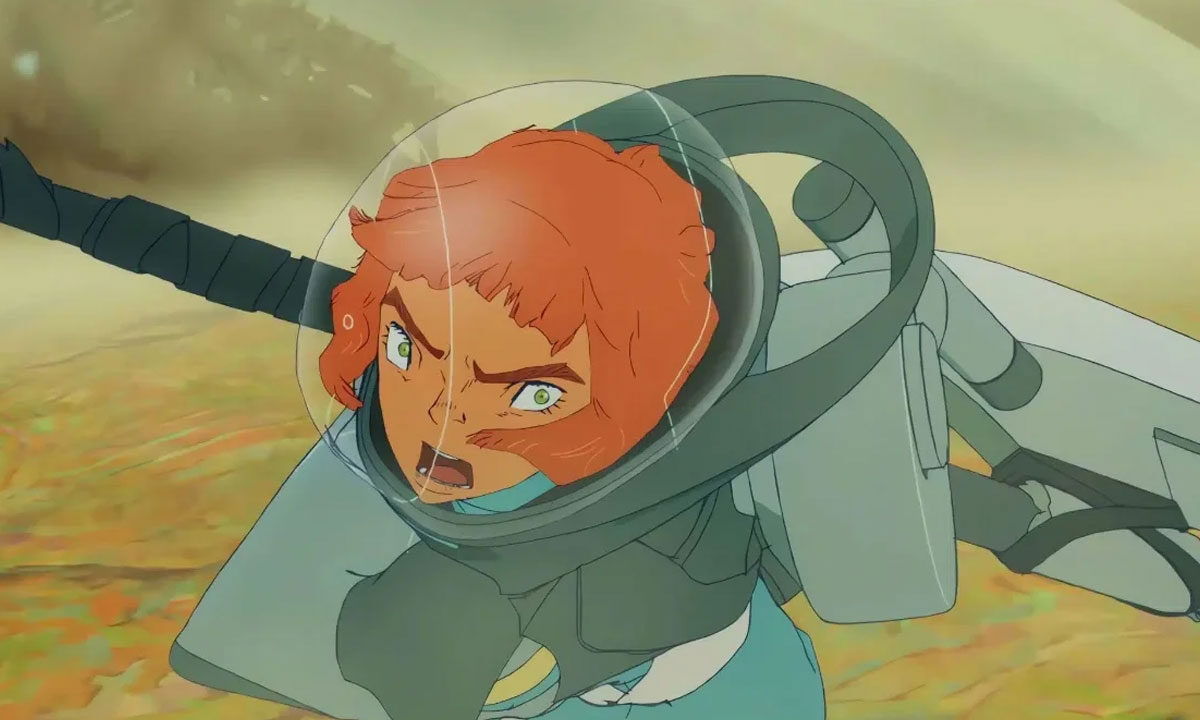
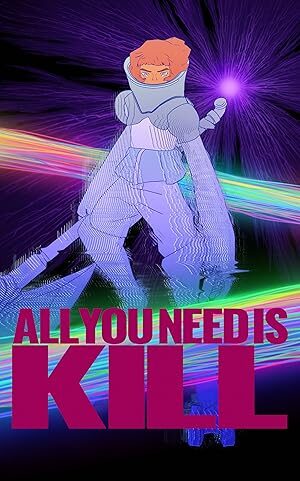
I did not know what I was stepping into when I agreed to review All You Need Is Kill, but it turned into a memorable journey. The latest anime feature from Studio 4°C breaks free of genre repetition by returning to its roots and delivering one of the most human and impactful visual showcases I have seen in quite some time.
Directed by Kenichiro Akimoto, this adaptation of Hiroshi Sakurazaka’s acclaimed light novel distinguishes itself not only from the 2014 Hollywood blockbuster Edge of Tomorrow, but also from the many imitators that followed. By focusing on the psychological toll of infinite resurrection and pairing it with a striking visual style, All You Need Is Kill delivers a concise 82-minute burst of adrenaline that feels both fresh and deeply introspective.
All You Need Is Kill invites viewers to experience a near-future Japan where the mysterious alien entity Darol has taken root, looming over the landscape like a massive electromagnetic tree stretching nearly 25 kilometres. Unlike the soldier-centric portrayal seen in Edge of Tomorrow, this version follows Rita, a young volunteer who spends her days trimming back the invasive organism’s sprawling roots in what amounts to cosmic landscaping.
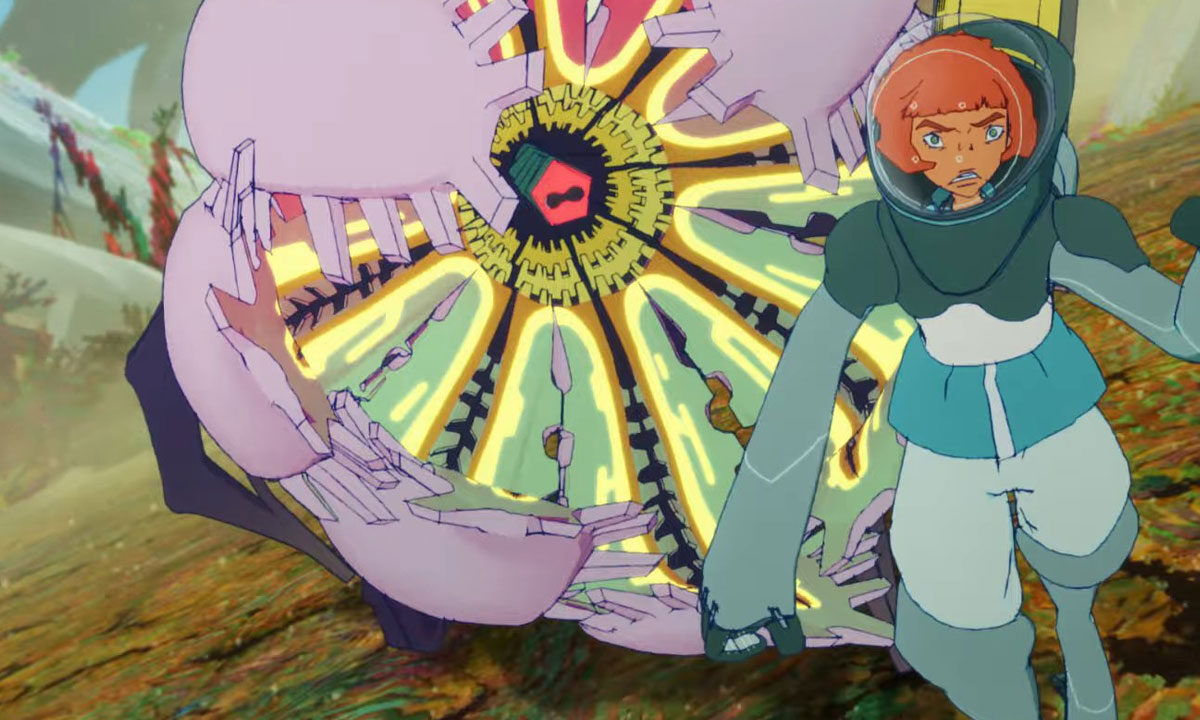
When the anniversary of Darol’s arrival triggers a violent awakening and unleashes waves of monstrous, spider-like plant creatures, Rita becomes trapped in a fatal loop, dying repeatedly only to wake each morning to the same jarring alarm and relive the same day continuously. What begins as pure survival gradually evolves into something more meaningful when she encounters Keiji, an introverted young man caught in the same temporal prison. Together, they begin pushing forward with a fragile but hopeful determination to escape the repeating nightmare.
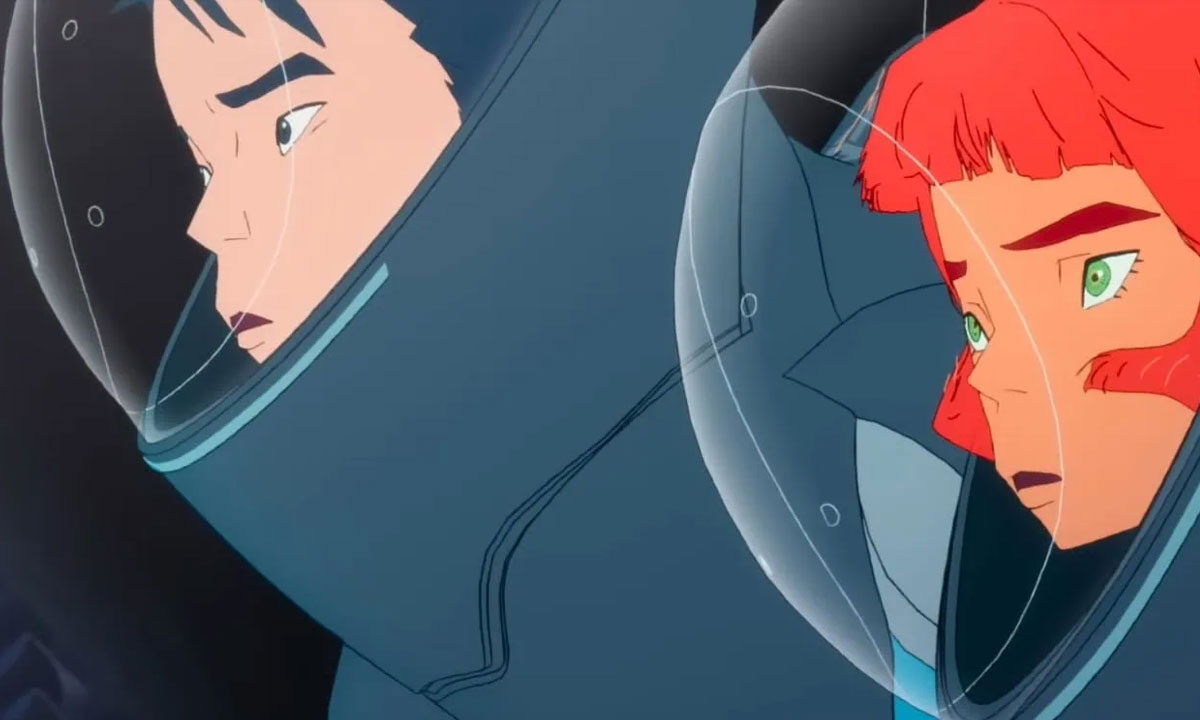
Readers familiar with the original story on which All You Need Is Kill is based will notice several changes that, in my opinion, work extremely well for this adaptation. The screenplay by Yuichiro Kido makes deliberate departures from the source material, most notably by reversing the gender dynamic and centring Rita, rather than Keiji, as the protagonist. This version moves away from the novel’s military framework, as well as that of previous adaptations, and reimagines Rita not as a hardened soldier but as an isolated survivor of childhood abuse searching for an escape from her circumstances.
This shift transforms what was once a more action-driven concept into something far more introspective and emotionally grounded, anchoring the science-fiction premise in human experience even as the film moves briskly through its compact runtime. Keiji, meanwhile, evolves from a warrior figure into an awkward gamer, his nervous laughter masking deeper vulnerabilities that closely mirror Rita’s own defensive exterior.
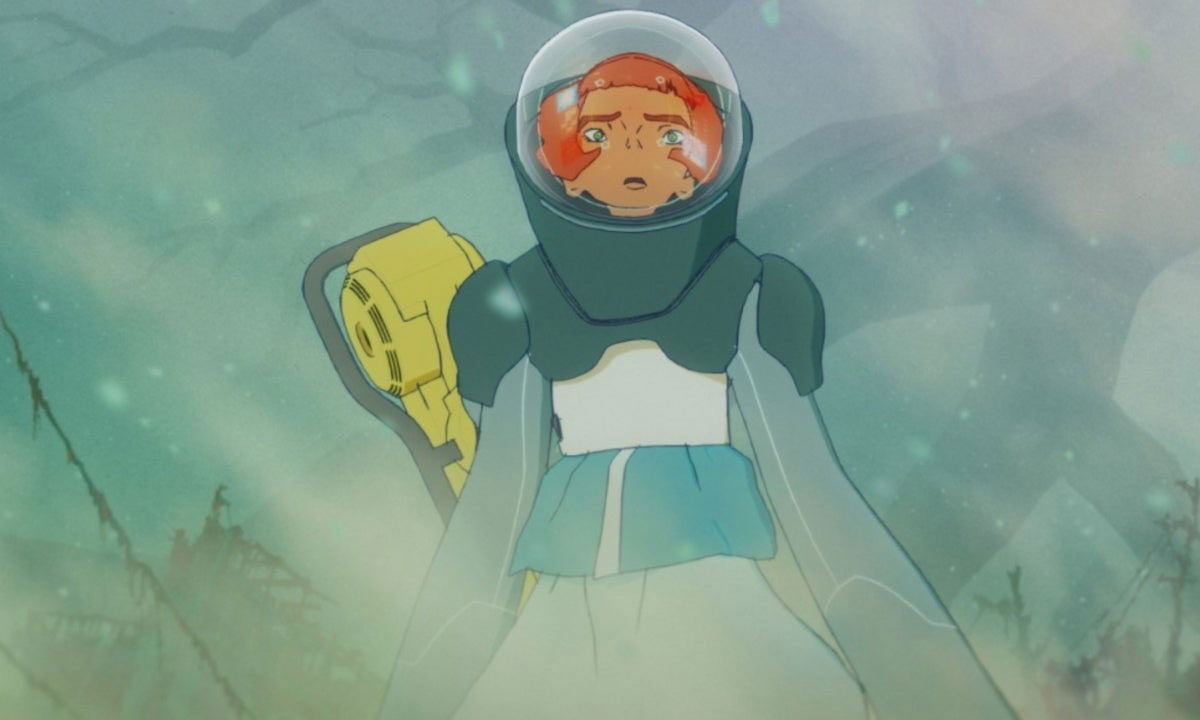
I have only seen a handful of films and series from Studio 4°C, but with All You Need Is Kill, the studio truly impressed me. The film is a striking visual showcase, delivering animation that feels both retro-futuristic and progressive. Its character designs move away from traditional anime aesthetics in favour of a more stylized approach that feels human and emotionally grounded as the story unfolds.
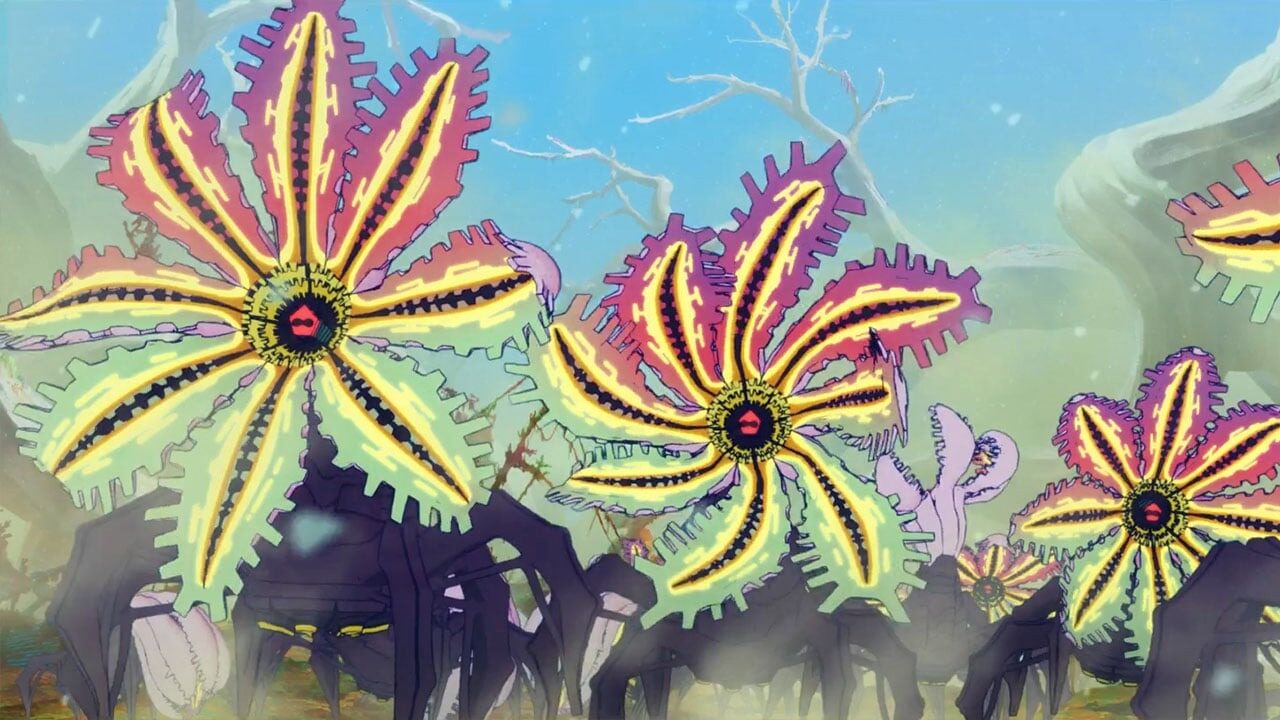
There is a painterly quality to the world as a whole, and it is difficult not to be swept up in the environment the film brings to life. This style is especially effective in its depiction of Darol, which appears through psychedelic waves of acid-like rainbow colours and rigid white branches. The creature design balances organic beauty with an unsettling sense of the unknown. The spider-flower entities resemble enormous, enraged blossoms that pursue their victims on four legs, evoking a blend of otherworldly horror and surreal fantasy.
“All You Need Is Kill delivers a concise 82-minute burst of adrenaline that feels both fresh and deeply introspective.”
It feels like a fever dream inspired by hallucinatory imagery, and the film embraces that sensation fully, inviting viewers along for the experience. Composer Yasuhiro Maeda’s eerie score fits right into the unique look, deepening the extraterrestrial atmosphere and creating layered soundscapes that complement and enhance the film’s vivid visual identity.
From my description, it might sound as though this is a purely introspective film that avoids action in favour of meditating on life and identity. That is not the case. All You Need Is Kill is one of the most action-packed anime films I have seen in some time. The scale and intensity escalate as Rita accumulates knowledge through countless deaths. Each loop introduces new weapons, larger axes and increasingly elaborate combat choreography, all rendered by Studio 4°C with impressive fluidity and weight.
These sequences justify the theatrical experience, delivering a level of kinetic energy that lesser productions often struggle to achieve. The result is a visual spectacle that can be overwhelming at times, but is also breathtaking to witness.
There is much to admire in this film, and I only wish the overall experience had been given more room to breathe. All You Need Is Kill is ultimately constrained by its 82-minute runtime and, despite a middle section that drags slightly, still feels too brief to fully explore its world. The characters remain compelling sketches rather than fully realized individuals, with Rita and Keiji’s backstories suggested but never fully examined.
All You Need Is Kill effectively establishes Rita’s isolation and Keiji’s social anxiety, and their tentative bond carries genuine emotional weight as two lonely people find connection amid insanity. However, the relentless pacing leaves little space for introspection or deeper world-building, rushing through emotional beats that deserved more time to resonate. I wanted to know far more about the world and how it functions. Several characters introduced late in the story feel pivotal to the outcome, yet they are given only minutes of screen time. As a result, the experience ends just as it feels ready to expand further.
The narrative follows a largely predictable problem-and-solution structure, with limited deviation from familiar storytelling patterns. A sharp shift in pacing during the final act, which slows almost to a standstill after sustained escalation, creates noticeable tonal dissonance. The time-loop mechanics serve a clear thematic purpose, framing repetition as a metaphor for healing from trauma and reinforcing the idea that nothing is meaningless. However, these concepts feel more stated than fully internalized.
As a result, the ending does not feel as earned or as complete as it could have been. Many questions remain unanswered, which in some ways aligns with the film’s depiction of the protagonists’ cyclical and often futile daily struggle. Still, viewers hoping for a more traditional or climactic resolution may walk away disappointed.
All You Need Is Kill delivers an energetic and visually engaging experience that is truly a sight to behold. Studio 4°C once again proves why it remains a unique and exciting voice in animation, crafting sequences that transcend the story into something truly unforgettable. While the film’s reluctance to explore its characters more deeply limits its emotional impact (at least to me), it is compensated for by relentless kinetic energy and striking visual design. For audiences seeking polished animation and sustained action within a science-fiction framework, this adaptation of All You Need Is Kill succeeds even with the limitation of scope and runtime.