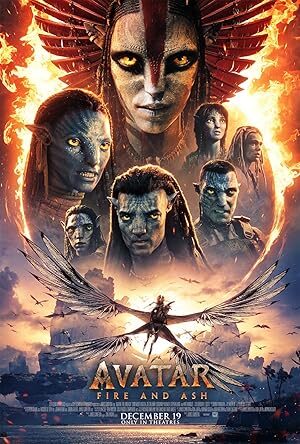

In James Cameron’s Avatar: Fire and Ash, the Sully family lives by the motto: “Sullys never quit.” This phrase perfectly captures the spirit of the third film in the Avatar series, which delivers an almost nonstop barrage of everything audiences loved in the previous hit, Avatar: The Way of Water. Cameron, who shot both films back-to-back over three years, draws from his legendary skills as a filmmaker, inventor and innovator in the fields of deep-sea exploration, underwater filming, 3D camera technology, and advanced motion capture. His commitment to creating the finest cinematic images possible is clear throughout the entirety of Fire and Ash.
But at a runtime of nearly three and a half hours, is it possible for the most visually and aurally stunning Avatar film to wear out its welcome before the credits roll?
Please note: The following review contains spoilers for Avatar: The Way of Water.
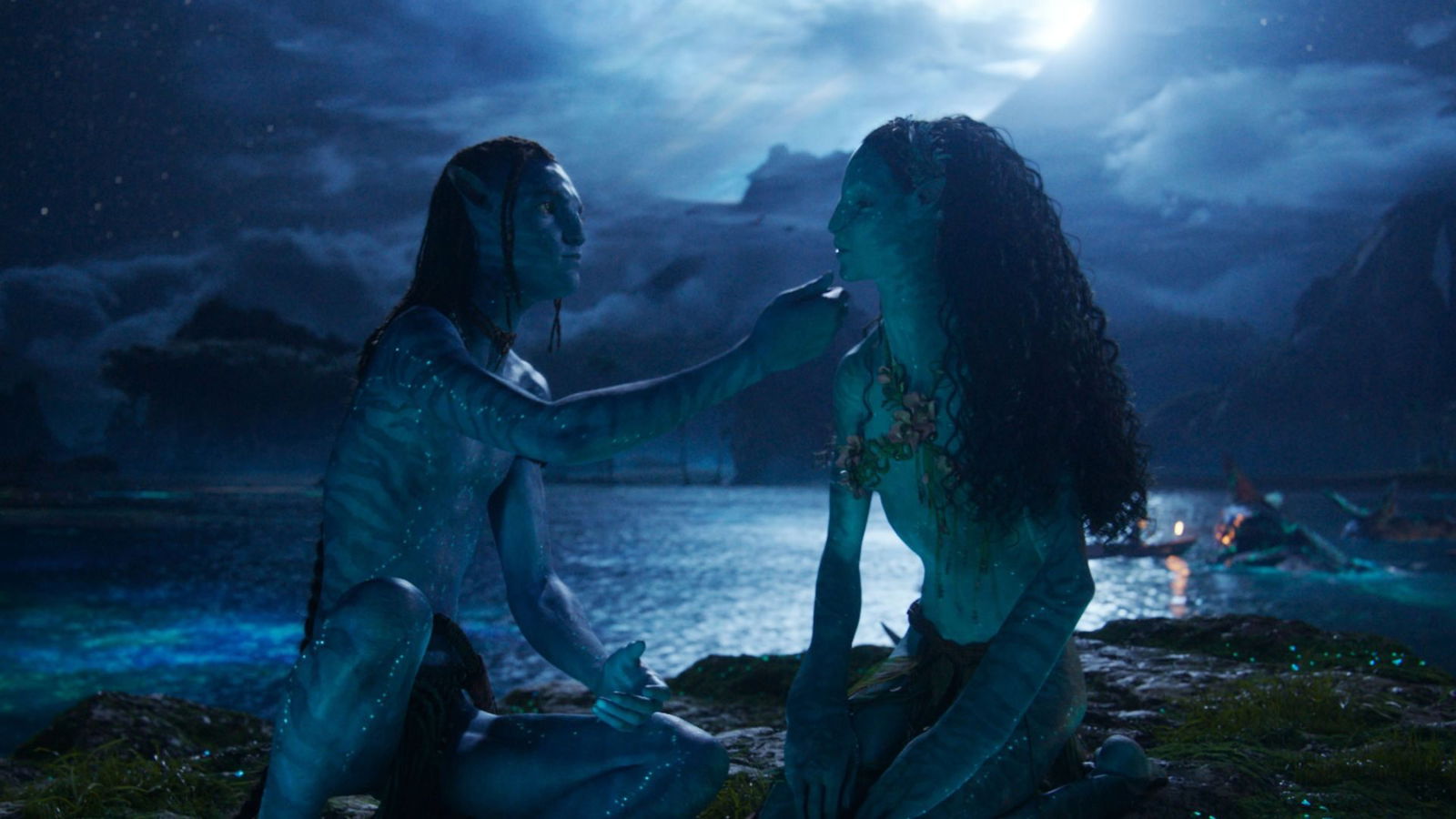
Avatar: Fire and Ash picks up mere months from where The Way of Water left off, with Jake Sully’s large family still processing the loss of Netayam, Jake and Neytiri’s eldest son. While the Sully children (Tuk, Kiri, Lo’ak and Spider) are coping with Netayam’s untimely death at the hands of the RDA and the resulting survivor’s guilt each in their own way, it has arguably struck Lo’ak the hardest, who considers himself directly responsible for drawing Netayam into a rescue attempt to save Spider, which in turn led to his older brother getting shot.
“Avatar: Fire and Ash will undoubtedly prove to be a lot for total newcomers.”
With Lo’ak already regarded by Jake as an impulsive son who doesn’t follow orders (sorry, but he is) and constantly takes foolish risks (again sorry, he does), the death of Netayam has only strained the relationship between Lo’ak and his father even further (despite both father and son already having seemed to address those issues at the conclusion of The Way of Water).
Sadly, there’s no time for a proper father-son heart-to-heart as the Sullys have plenty of other urgent concerns keeping them busy, including the second, ongoing invasion of Pandora by the Sky People (humanity, i.e. the RDA). It is a war that Jake and Neytiri have been tirelessly attempting to prepare their children for, as well as protect the people of their newly adopted family, the free-diving Metkayina Na’vi, but they are being met with resistance as the Metkayina refuse to use metal weapons and technology salvaged from the RDA.
Then there’s the matter of Spider, the Sullys’ adopted human son, whose dependency on RDA masks to breathe Pandora’s air has become dangerously unsustainable ever since the Sullys relocated from their former home and resistance science lab in the Hallelujah Mountains to Metkayina territory. Furthermore, the recombinant Na’vi clone of Spider’s biological father, Colonel Miles Quaritch (remember, he’s technically an Avatar now), and the RDA are still relentlessly searching for both Jake and Spider with all the available resources they can muster, putting yet another target on the backs of the Sullys and their allies.
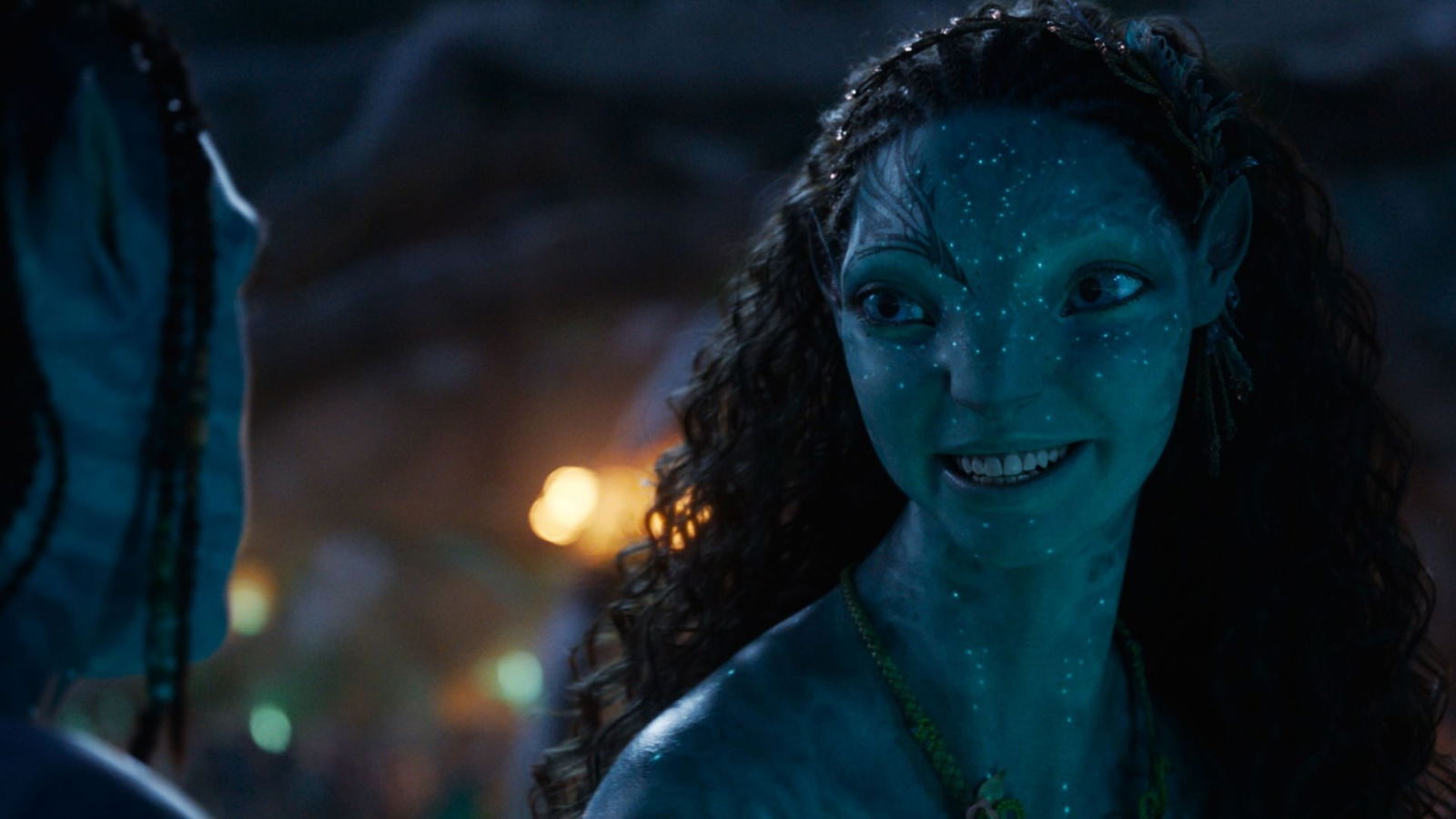
Oh, and in other news, Kiri can somehow tap into the seemingly limitless power of Eywa and bend Mother Nature to her will…but Eywa won’t hear her prayers. There’s definitely no lack of mommy and daddy issues to deal with here.
All of the above and more is thrown at the viewer within the first 10-15 minutes of Fire and Ash’s well-over 3-hour runtime (quite efficiently, if I might add), but while Avatar fans who have watched The Way of Water will likely find it surprisingly easy to “dive in and catch themselves up in the first 10 minutes or so even if their memories of the second film have lapsed, Avatar: Fire and Ash will undoubtedly prove to be a lot for total newcomers. I highly recommend that viewers watch both the original 2009 film and The Way of Water beforehand. Failing that, watching the second film at the bare minimum should be considered mandatory if one wants to get the most out of the story.
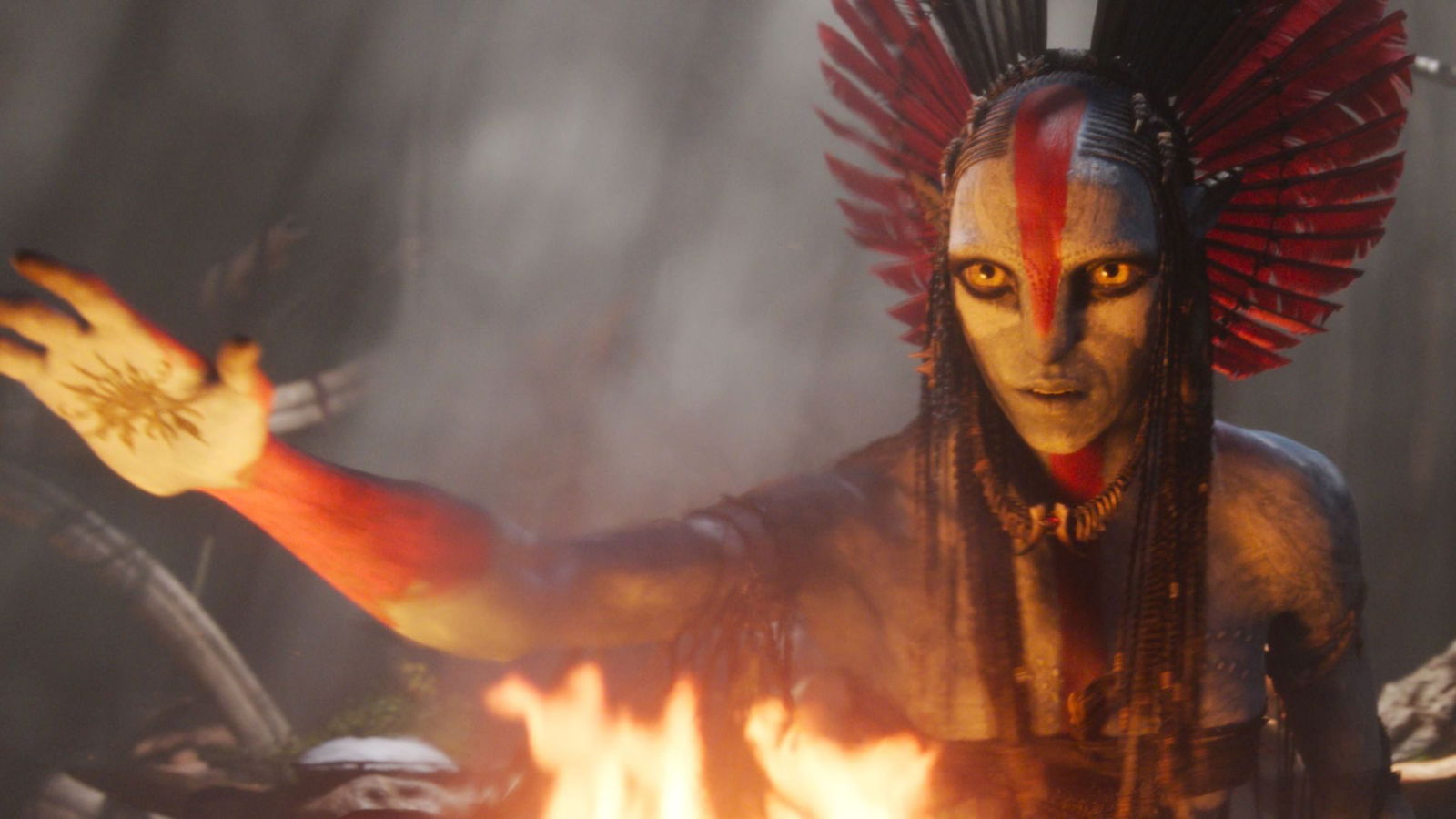
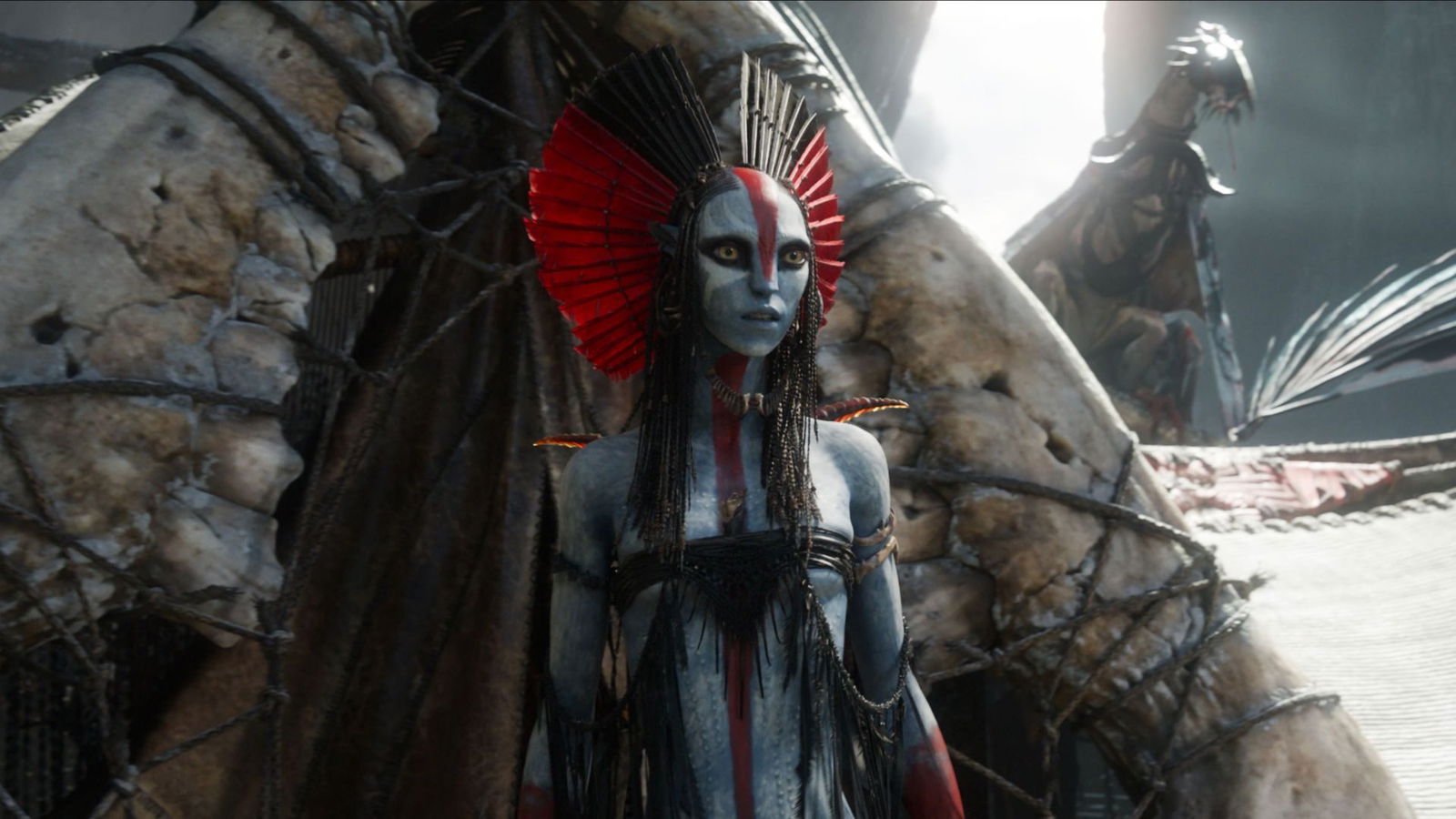
Fire and Ash also introduces a new Na’vi clan to the world of Pandora, the hostile Mangkwan, or “Ash-clan,” who are led by Varang, a dark sorceress who rules as both the Clan leader and Spiritual leader. Convinced that Eywa has forsaken the Mangkwan following a volcanic eruption that destroyed the clan’s Hometree decades ago, the Ash clan rejects Eywa and instead worships the destructive power of fire.
Long story short, the Mangkwan’s expansive raiding activities ultimately bring them to cross violent paths with both the Sully family and the RDA, and in true “the enemy of my enemy is my friend” form, the cunning Colonel Quaritch swiftly brokers an alliance with the Ash Clan: RDA technology for Mangkwan Na’vi muscle, a seemingly perfect, ideological match.
The ”friends with benefits” love affair that quickly and inevitably sprouts between Quaritch and Varang is easily the best part of Fire and Ash, as it all but fully acknowledges and embraces the weird, not-so-family-safe and yet perfectly reasonable questions about adult Na’vi relationships without making things too awkward (let’s not even start on Kiri and Spider’s budding romance that perilously skirts a number of lines that younger audience members and parents might have questions about). Oona Chaplin’s Varang and Stephen Lang’s Quaritch share an undeniable, sensual chemistry on screen from the instant they meet, which feels strange for me to say while recognizing that they are gangly, 10-foot-tall, perpetually half-naked blue cat people, but well…there it is.
“Without Stephen Lang’s masterfully villainous turn as Quaritch, I probably would have only liked Fire and Ash half as much as I did.”
Also, for a cold, calculating, serious-as-a-heart-attack Marine, Quaritch not only possesses a blood-curdling sense of humour, he’s also quite unabashedly clownish in how he continues to pursue the nigh-impossible goal of killing Jake Sully while also somehow rebuilding the father-son relationship that his human progenitor failed to build with Spider, as the accomplishment of either task will inherently lead to the failure of the other. Additionally, Quaritch’s complicity in Netayam’s death in The Way of Water almost guarantees that any path to redemption has long been squandered, but it’s still oh so compelling to watch Quaritch try to somehow have his cake and eat it too.
One thing is certain: without Stephen Lang’s masterfully villainous turn as Quaritch, I probably would have only liked Fire and Ash half as much as I did. Each time he appears, flashing his deadly Cheshire cat smile and menacing with his tall, imposingly chiselled Na’vi frame, all while effortlessly tossing out sardonic one-liners, I can’t help but chuckle at his bravado. Lang’s performance kept me fully engaged and yearning for more trouble for him to get into, even after several of the film’s battle scenes, chases, rescue attempts, and narrow escapes had already made their second or third trip to the well.
Best of all, Quaritch feels no shame in looking absolutely ridiculous when the mission calls for it (viewers will know what I’m talking about when they see it).
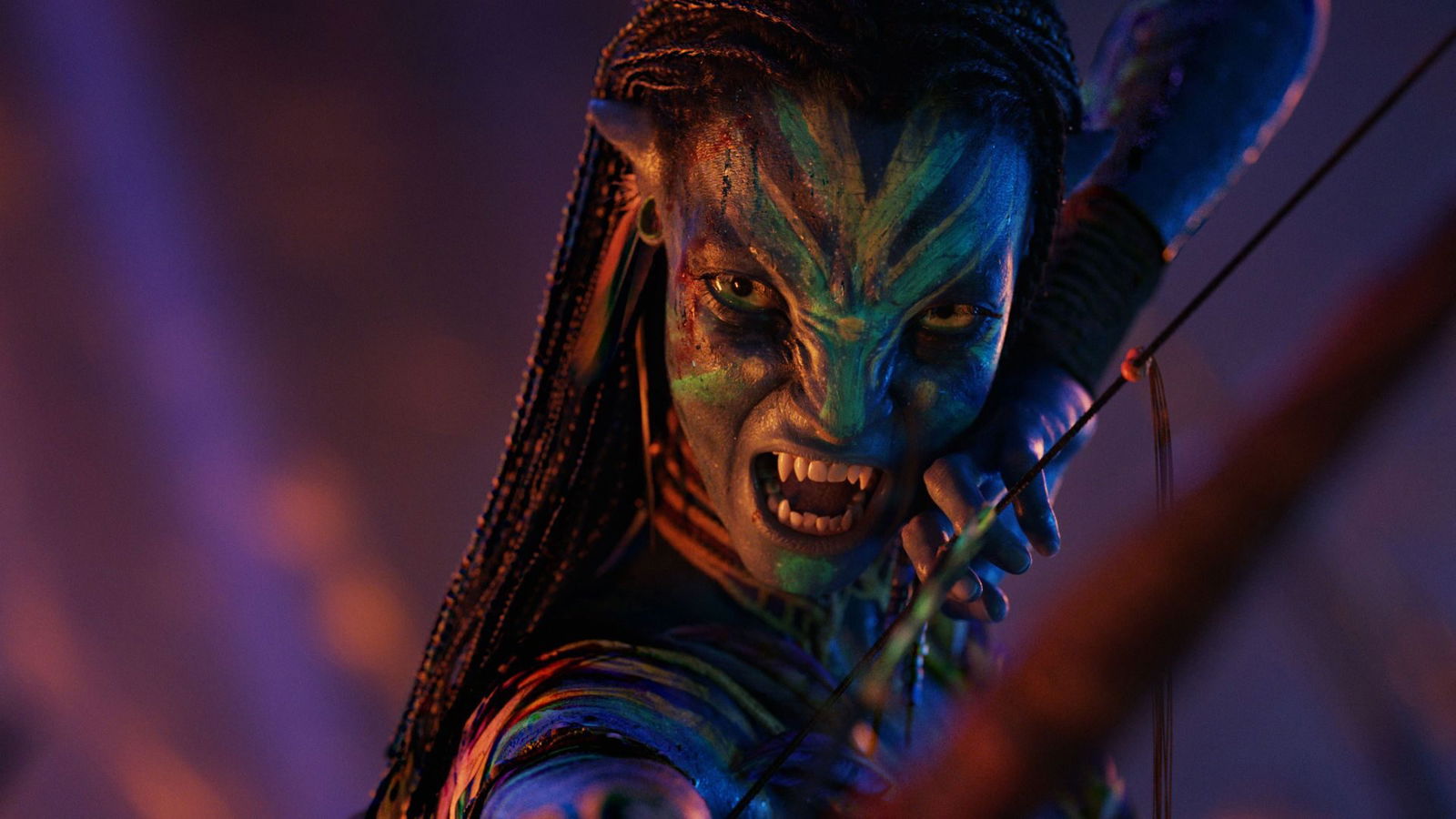
Beyond Lang and Chaplin’s aforementioned performances, it should surprise no one that the rest of the star-studded cast in Fire and Ash are also excellent in large part thanks to the film being shot concurrently with its predecessor, enabling the cast to grow as characters between films without missing a beat. Much like in The Way of Water, the focus in Fire and Ash is largely about family and the trials and tribulations that one must be willing to endure in order to keep them together.
“Fans are in for an absolute visual treat with Avatar: Fire and Ash, as long as they are willing to accept that a sizeable chunk of the film is ‘more of the same.’”
There’s a more sombre tone this time around that takes the Sullys to some dark emotional places, including grief, guilt and thoughts of suicide, but the film doesn’t dwell on these topics long as another action scene is always right around the corner. I will admit that I personally did get misty-eyed a number of times.
I was fortunate enough to attend a preview screening in IMAX, and honestly, the special effects, sound, orchestral musical score, 3D and IMAX implementation were all top-notch. I’ve grown accustomed to watching 3D content at home or in theatres to the point that I easily forget I’m wearing 3D glasses at times, but there were genuinely some scenes taking place in RDA facilities or aboard RDA aircraft where I felt I was actually in the control room, embedded with the panicking soldiers and science teams when all Pandora lets loose.
Naturally, there’s a drawback; to achieve convincing 3D, the film’s framerate bounces between HFR 48fps for kinetic action scenes and 24fps for slower, dialogue-driven scenes, and those jumps are often frequent. As a gamer, I felt those alternations to be a bit jarring, but I managed to push past them and enjoy the 3D presentation without much difficulty, thanks to film being a more passive medium.
Despite how much I enjoyed it, I do have a couple of critiques to level at Fire and Ash that I feel are entirely warranted. The first is that there’s little too much…too much of everything, and that’s a tall order given how action-packed The Way of Water was. As I insinuated earlier, we’re talking even more high-noon-style standoffs, more hostage exchanges, more escapes, more hydrophobia-inducing free-diving fight scenes, and so on. While all of that sounds like it should be fun, it actually gets to be a bit tiring, and it becomes easy to lose track of which characters are where when the action jumps back and forth from one locale to the next.
The second (and in my view, the more serious flaw) in Fire and Ash is that several of its characters conveniently appear to suffer from selective amnesia just so that they can be placed in the same or similar scenarios as they were in The Way of Water, where those action scenes and emotional conflicts can be mined once again to pad out the story. Jake’s struggle to forgive Lo’ak; Lo’ak’s repeated defiance to follow orders (even after Netayam’s death); and Quaritch’s bizarre attempts to somehow mend relations with Spider are all revisited in Fire and Ash, sometimes even with scenes that closely mirror those that occurred in The Way of Water. It just feels a bit too déjà vu to not notice.
In any event, fans are in for an absolute visual treat with Avatar: Fire and Ash, as long as they are willing to accept that a sizeable chunk of the film is “more of the same,” which is totally fine when one recalls that The Way of Water was quite the awesome ride. James Cameron has said on a number of occasions that he still has two more sequels planned, provided that this film performs well at the box office, but the only reason that you and all your friends really need to go see Fire and Ash in theatres apart from its mind-blowing HFR and IMAX 3D presentation is so that you too can learn the fate of Colonel Miles Quaritch for yourselves. Do that, and the box office should take care of itself.