

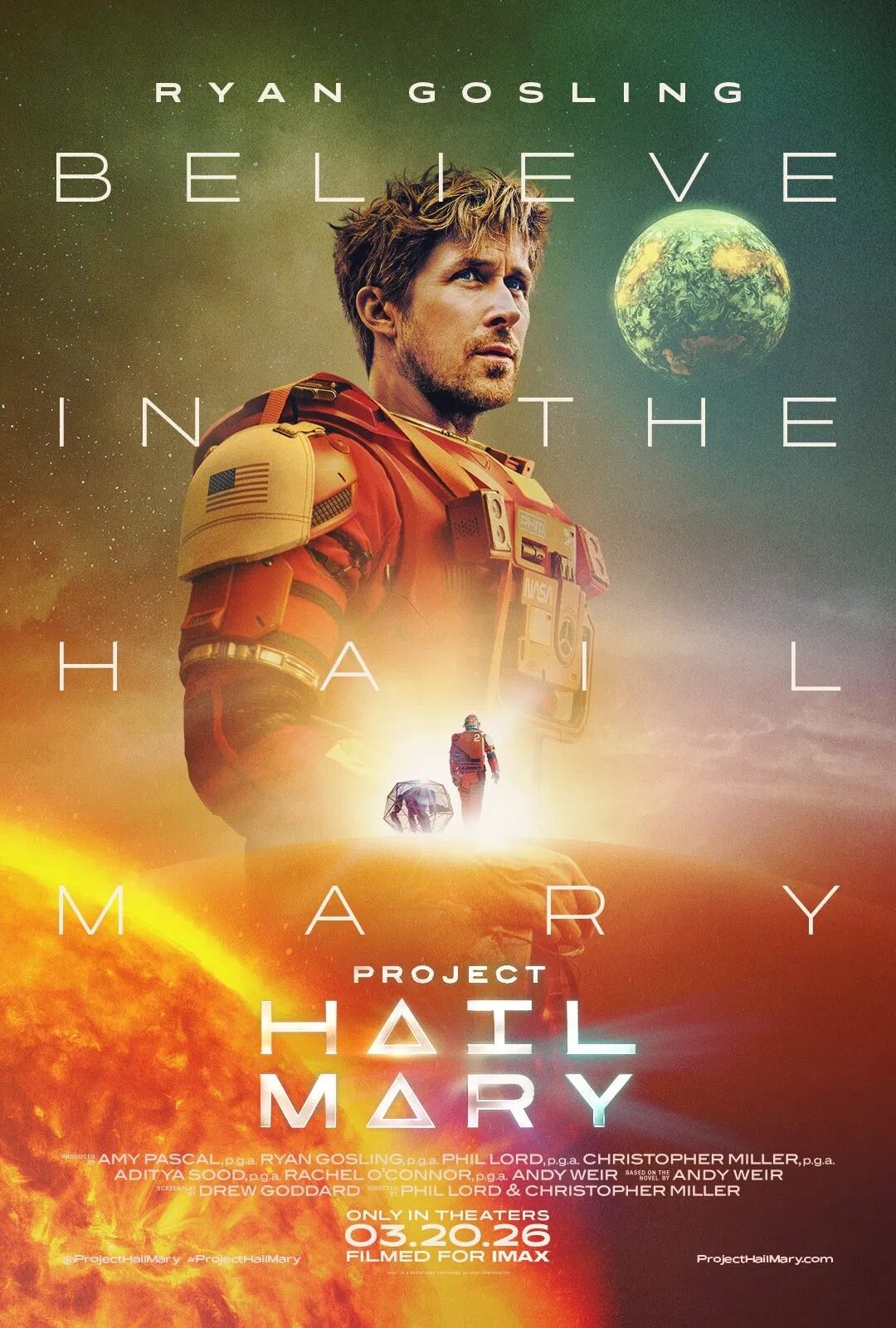

It’s hard to believe it’s been over a decade since Phil Lord and Chris Miller directed a movie. Having cemented their names, turning seemingly impossible properties into hilarious masterclasses like Cloudy With A Chance of Meatballs, The Lego Movie and the two Jump Street films, the duo has spent the past decade producing a variety of different shows and movies, most notably the series. Now they’ve returned to their director chairs for Project Hail Mary, a massive, non-franchise blockbuster that works as both an audiovisual feast and a very entertaining adventure.
Based on the beloved 2022 Andy Weir novel of the same name, Project Hail Mary stars Ryan Gosling as Dr. Ryland Grace, a former molecular biologist-turned-schoolteacher who, in the film’s opening moments, wakes up on a spaceship with no memory of who he is or how he got there. He can’t contact Earth; he’s light-years away. Nor can he ask any other crew members for help, as his two other shipmates died long before he woke up.

Through a series of flashbacks, Grace slowly pieces together why: Scientists discovered that a microorganism dubbed Astrophage is causing the sun and every star in its path to die out, dooming Earth to a new Ice Age within the next 30 years. Grace was recruited against his will by Eva Stratt (Sandra Hüller) onto Project Hail Mary, a one-way mission travelling to the very distant star of Tau Ceti—the only star seemingly unaffected by the astrophage—and figure out how to stop the microorganism and save the world.
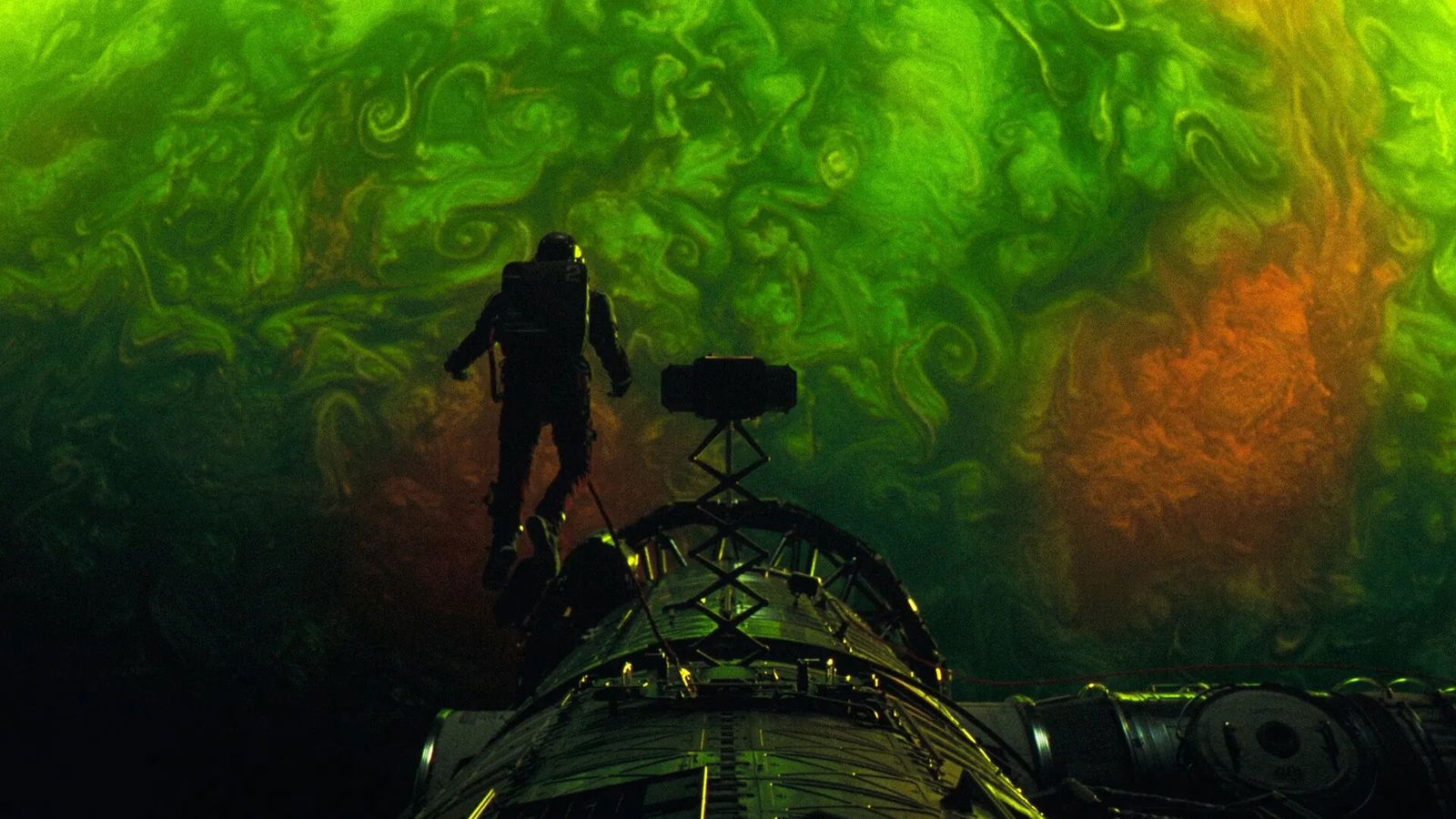
Right off the bat, to call Project Hail Mary visually astonishing would be a huge understatement. On IMAX screens, the film shifts between standard widescreen during all the Earth flashbacks and full IMAX 1.43:1 ratio during every scene in space. Greig Fraser’s cinematography completely engulfs you in the film’s gigantic scale. There are certain shots of Tau Ceti where I found myself awestruck by the visuals in front of me in sheer disbelief. Even with such grandiose effects on display, Charles Wood’s production design keeps things remarkably tactile, as the ship’s interior was completely built on practical sets.
“Right off the bat, to call Project Hail Mary visually astonishing would be a huge understatement.”
Just like in another Weir story, The Martian, Project Hail Mary grounds its story in hard science and problem-solving. Thankfully, writer Drew Goddard (who also wrote the Matt Damon-starring The Martian adaptation) manages to capture the essence of Weir’s novel without overwhelming the general audience in equations or jargon. It helps having the easily likable Ryan Gosling in nearly every frame of the film in one of his best performances to date.

For almost the entire first act, the film operates as nearly a one-man show for Gosling. He flexes his comedic chops to great effect, especially in the dishevelled state he’s in during that opening. With Lord and Miller’s previous films all being laugh-a-minute comedies, I was surprised at how the film plays it very straight for a large portion of the runtime. Grace wasn’t trained in being an astronaut or even in how to fly a spaceship. A lot of the time, he’s a full-on coward. But in the end, as he remembers what’s at stake, his intellect and intuition are what’s going to keep him alive.
Around the second act, Project Hail Mary takes an interesting shift when Grace surprisingly makes contact with another spaceship and meets a friendly, rock-like alien who shares the same goal as him. From there, the film turns into somewhat of a buddy-comedy as Grace and the alien—whom he nicknames “Rocky”—learn how to communicate and combine their respective science know-how in hopes of finding the solution to the astrophage crisis.
Rocky is an impressive blend of puppetry and CGI, voiced and puppeted by James Ortiz. Even while being a faceless, spider-like alien made of rocks, he himself is just downright adorable. Their growing kinship does lean on the sillier side, but it doesn’t thankfully undercut the danger of their shared mission.
My few issues are ones that are also embedded in the source material, as the film is faithful to the book. Project Hail Mary’s structure makes for a very compelling opening hook. However, as the film goes on, some of the later flashbacks begin to feel less necessary to Grace’s character arc and more to pad the story out longer than it needs to be without adding anything new to the plot.
That’s not to say the flashbacks are unnecessary at all. Sandra Hüller gives a great performance bouncing off Gosling’s goofiness, and brings surprising nuance and humanity to what would otherwise be a generic, cold government official. Lionel Boyce (of The Bear and Loiter Squad fame) doesn’t have much to do as Officer Carl, but his mini-bromance with Gosling in the early parts of the film is a very fun highlight.
I do wish Project Hail Mary had also given a bit more time to get to know Grace’s crewmates prior to the launch, as it’s hard to get emotionally invested in their passing while giving almost no time to connect with them otherwise. Also, while the third act was thrilling and the film is mostly well-paced, it’s also where I started to feel the length spin its wheels a bit. By the time the film reached its conclusion, I felt it had already ended at least 3-4 times prior to it.

Ultimately, Project Hail Mary is a certified crowd-pleaser. For many, it’s gonna bring back the sense of wonder one gets from big-hearted sci-fi masterpieces of the Spielberg variety like E.T. or Close Encounters. While I don’t think the film fully attains the rarefied air of those masterpieces, Project Hail Mary balances spectacle and substance well enough to make it certainly worth a trip to the movies, ideally on the biggest screen possible.