

While my free trial adventure in World of Warcraft once-upon-a-time didn’t turn into a long-term stay in Azeroth, I admit I’ve often seen snippets of the lore and wish I’d caught it at a better time. Luckily, two worlds are colliding in a collaboration I’d never have expected.
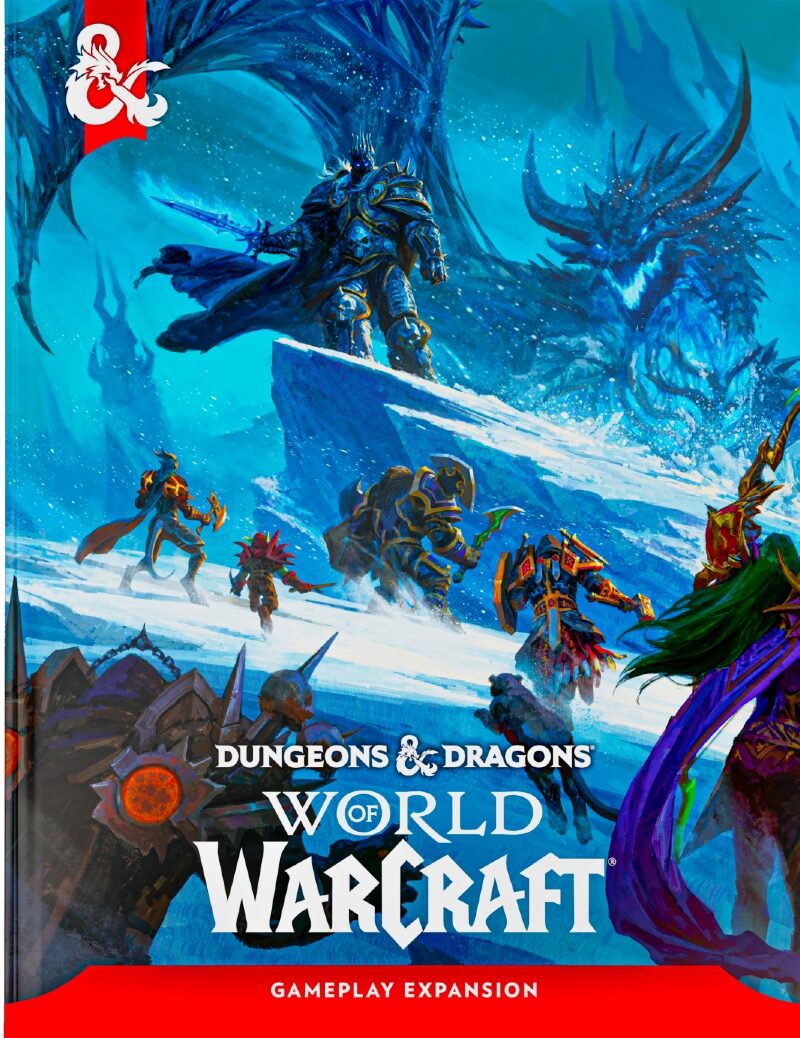
The boundaries between multiverses (or at least between intellectual properties) continue to warp and meld around Wizards of the Coast, spearheaded by Magic: The Gathering‘s Universes Beyond initiative. And now, the D&D: World of Warcraft Gameplay Expansion has arrived to turn your digital MMORPG exploits into an analogue TTRPG form (or, well, a digital TTRPG, if you play that way).
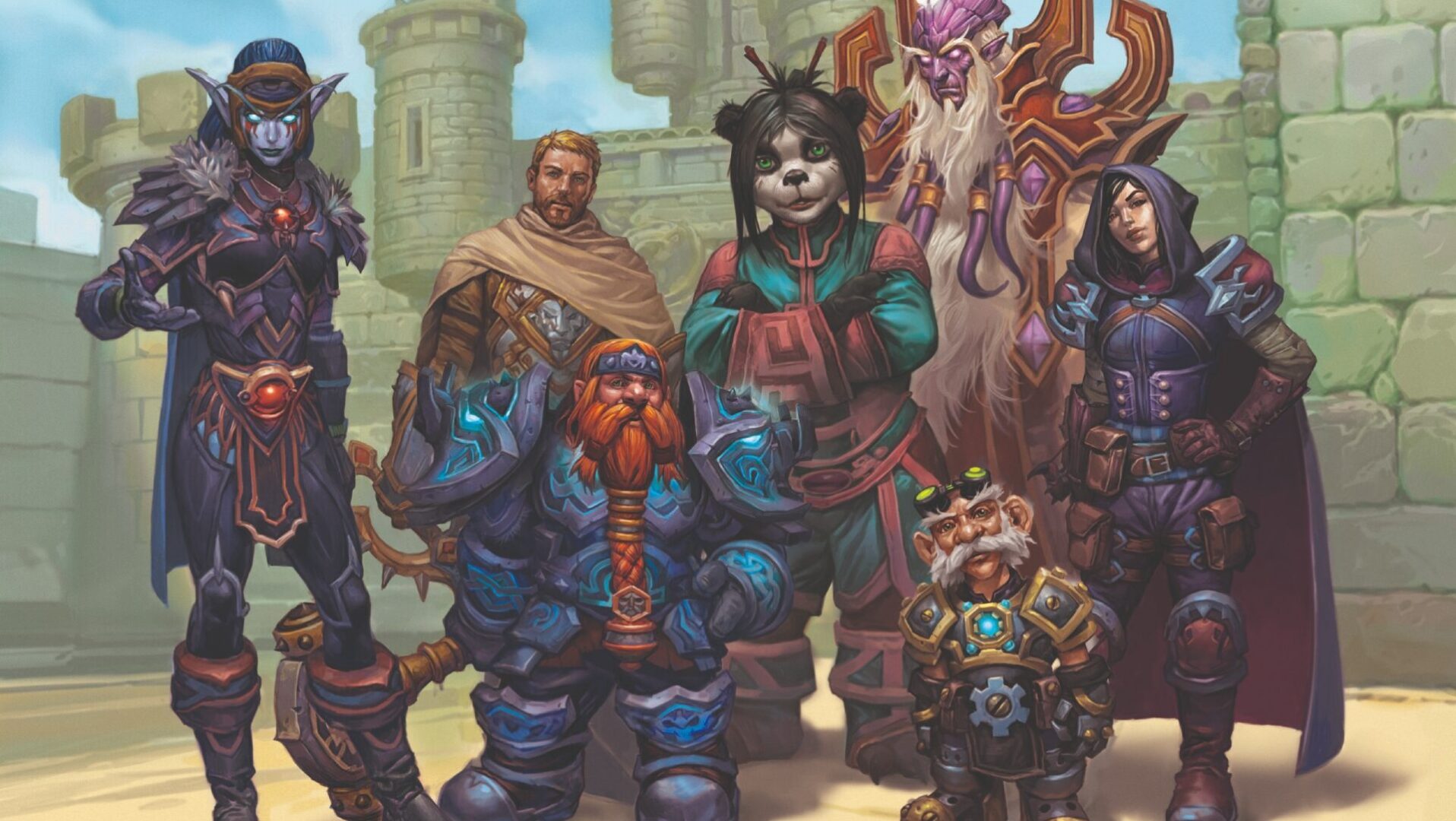
This unprecedented collab attempts to offer World of Warcraft players the tools they need to translate their champions into Dungeons & Dragons adventurers—covering all 13 classes and introducing 16 new or variant species. Dungeon Masters can also access a huge repository of new Magic Items and stat blocks for adversaries to help recreate pivotal encounters and elements of the long-running MMORPG, and there’s plenty of lore summaries to either teach newcomers or refresh veterans on the finer points which may come up in roleplaying.
“Where D&D: World of Warcraft stands out are the class options, as the book takes a unique approach to put WoW‘s square peg into D&D’s round hole.”
It certainly sounds like a ton of new content. D&D itself has thirteen classes to begin with, so does D&D: World of Warcraft truly double the character-building options? Well, not exactly. Some of the species are brand new in D&D terms, like the Forsaken or Pandaren; others are WoW-flavoured variants for humans, elves, and dwarves, with lore and options specific to their Azeroth counterparts. That, in itself, is pretty par for the course for D&D supplements; any campaign setting book like Forgotten Realms: Heroes of Faerun will do something similar.
Where D&D: World of Warcraft stands out are the class options—as the book takes a unique approach to put WoW‘s square peg into D&D’s round hole. Given the logistics involved in adding so many entire classes, the WoW classes are essentially presented instead as variant classes, achieved through taking certain subclasses or specializations. To roll a WoW Priest, for example, you make a D&D Cleric, take Thaumaturge as your Divine Order at level 1, then one of the book’s new Specializations (Discipline, Holy, or Shadow) at level 3, depending on which flavour of Priest you’re chasing.
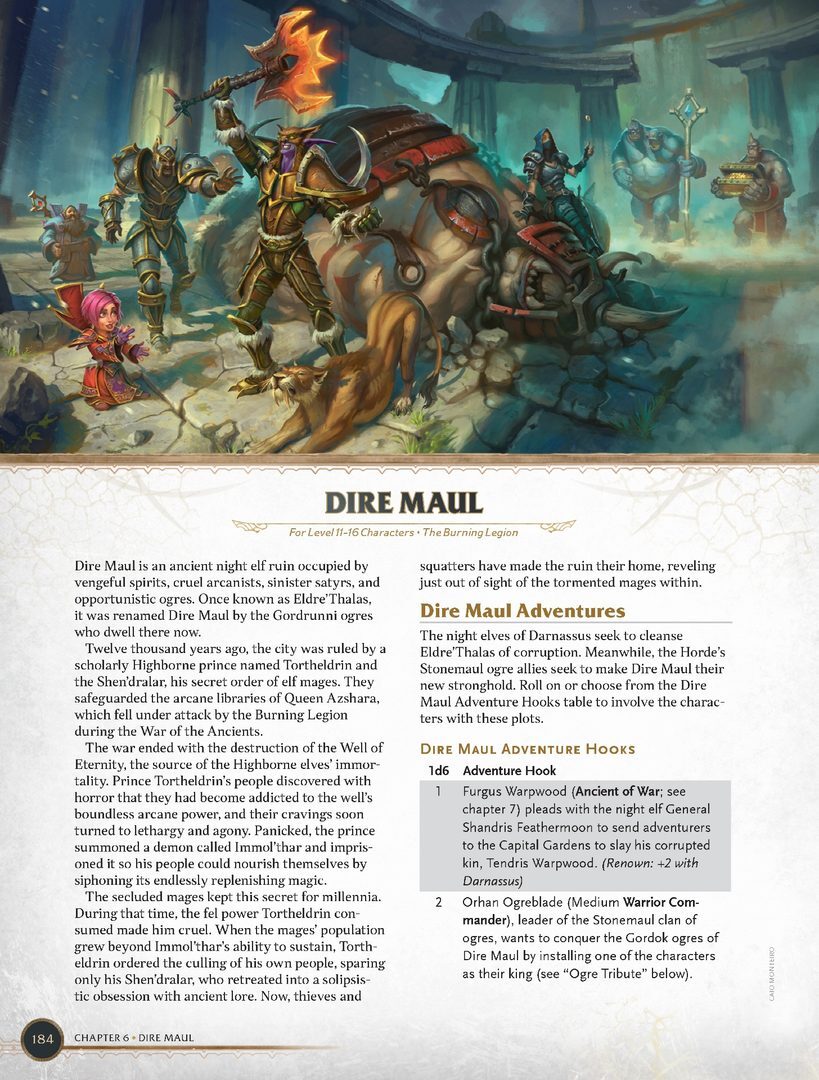
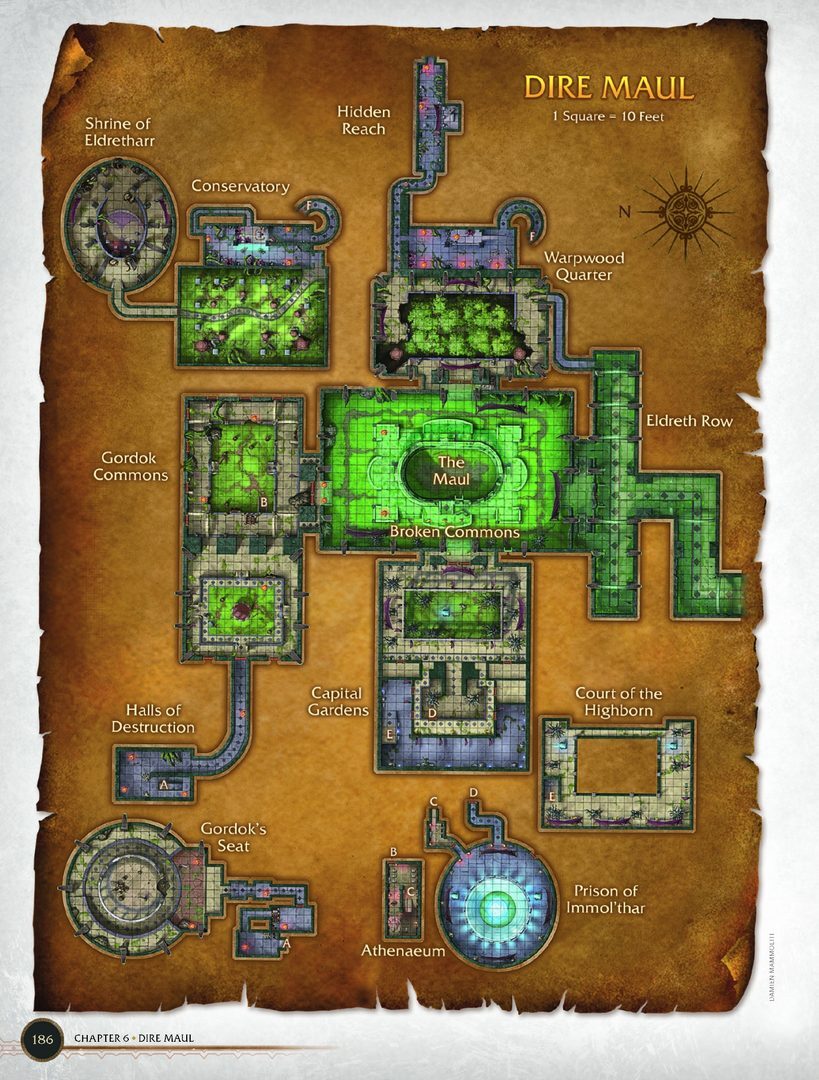
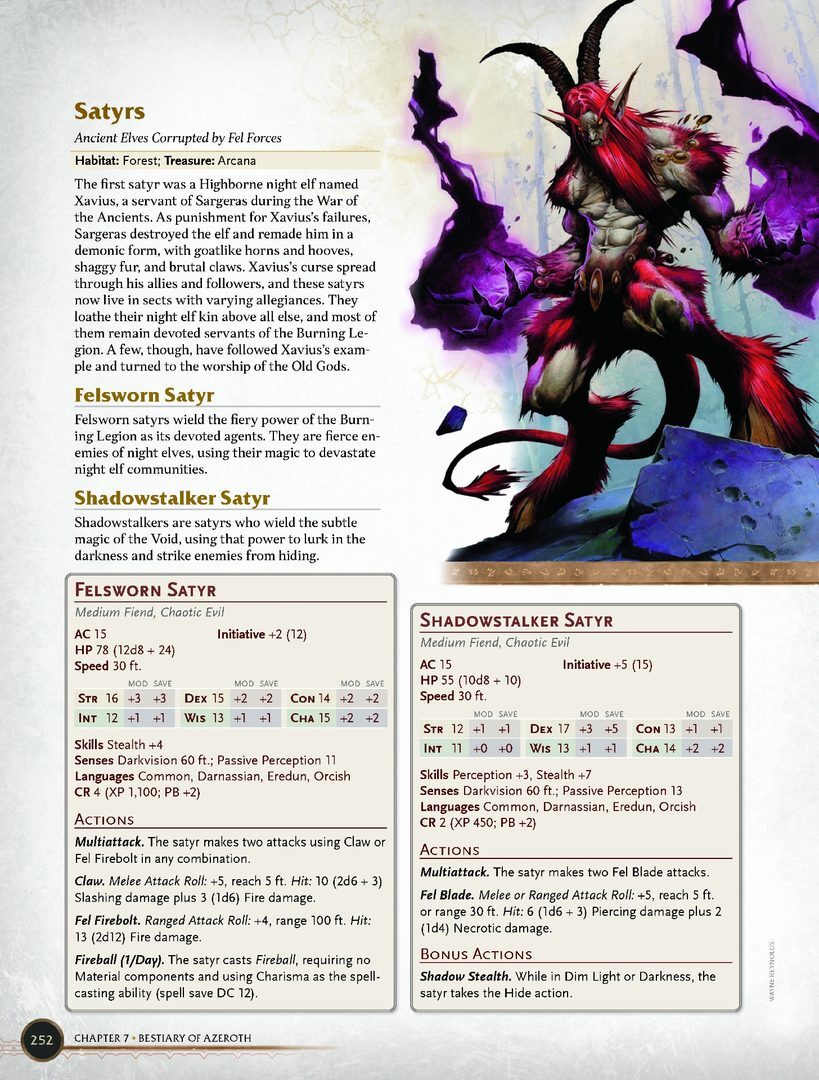
Surely, there will be fans out there who take serious umbrage with the way their favourite World of Warcraft class is presented. As someone on the Dungeons & Dragons side of things, I found it an interesting compromise… on a case-by-case basis. The Death Knight, for example, is a dark twist on the Paladin that other subclasses, like Blackguard, haven’t quite achieved: a capital-E Evil Paladin. The Order of the Ebon Blade subclass has an inverted Lay On Hands feature and a unique spell list, and I’m curious to try it in other settings.
Meanwhile, other classes don’t get a shiny subclass, but rather instructions on how to use existing D&D subclasses to feel like the World of Warcraft equivalent—like Druids being told to take the Circle of Stars to represent the Balance Specialization, for example. For magical classes, these shortcomings are typically offset with new spell options. The Warrior, meanwhile, gets some recommendations for existing feats to take later on, or at most, additional maneuver options for the Arms Specialization/Battle Master subclass.
D&D: World of Warcraft sounds like a massive expansion of Dungeons & Dragons‘ class system in theory, but in practice, it’s achieved through heavily guided character-building guidelines. It glosses over a lot of the fun and thought-provoking elements that go into making a TTRPG character by prescribing choices through a veritable flow chart. Yet conversely, this may make it all the more compelling as a first adventure for WoW veterans looking to learn this style of game.
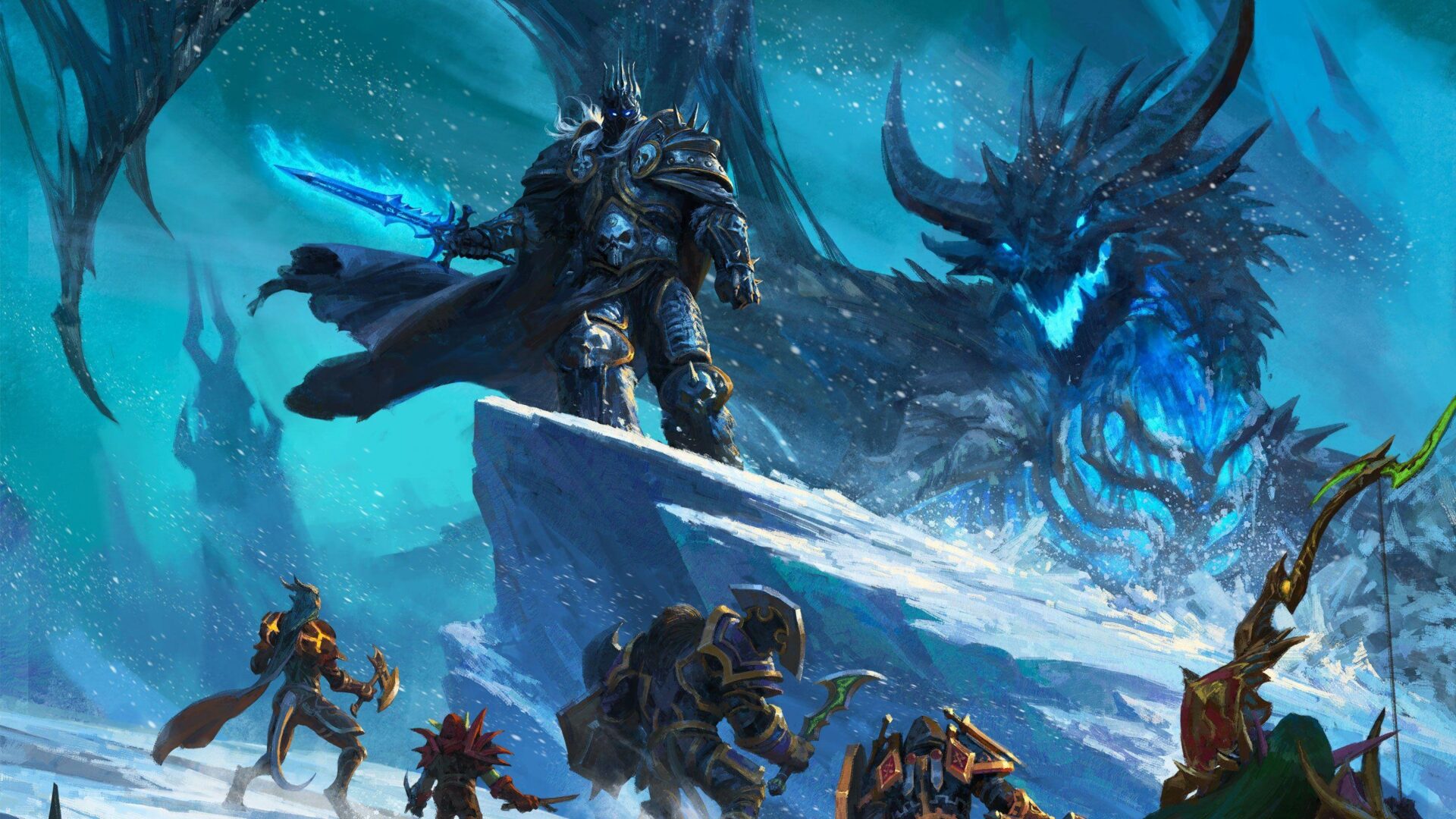
Chapter 1 covers the classes, and Chapter 2 lays out the Character Origins choices, like the various species. Chapter 3 stands out for converting other World of Warcraft systems into D&D terms, and here DMs may want to take a look even if they aren’t planning to run any adventures in Azeroth. Here, a character’s tool proficiencies (such as Smith’s Tools or Carpenter’s Tools) can become Professions, allowing them to put a skill that’s often overlooked to good use and earn some coin. Or, consult the trusty list of new magical items, from the greatsword Frostmourne to Troll’s Blood Elixirs to Experimental Goblin Jetpacks.
Perhaps most notable here, though, are the rules for Companion Creatures, recreating the cute pets who can follow players around in the MMORPG. This codifies your heroes’ pets into a mechanical benefit—earn enough loyalty with a Beast Companion, for example, and earn a small boon like gaining proficiency and Expertise in Animal Handling and Survival.
Chapter 4 dips into World of Warcraft lore to explain factions, from the Alliance and Horde to the Kirin Tor mage’s guild and the Valdrakken Accord. Each group here is detailed with basic history and perks players can earn if they accumulate enough renown with them. Chapter 5 continues the lore lectures but with no mechanical elements to speak of, before Chapter 6 picks up the pace again—with full-fledged premade adventures and general guidance on setting a campaign around the game’s events. The lore here is a good introductory survey; it’s not going to win you any trivia contests, but you’ll have a foot in the door.
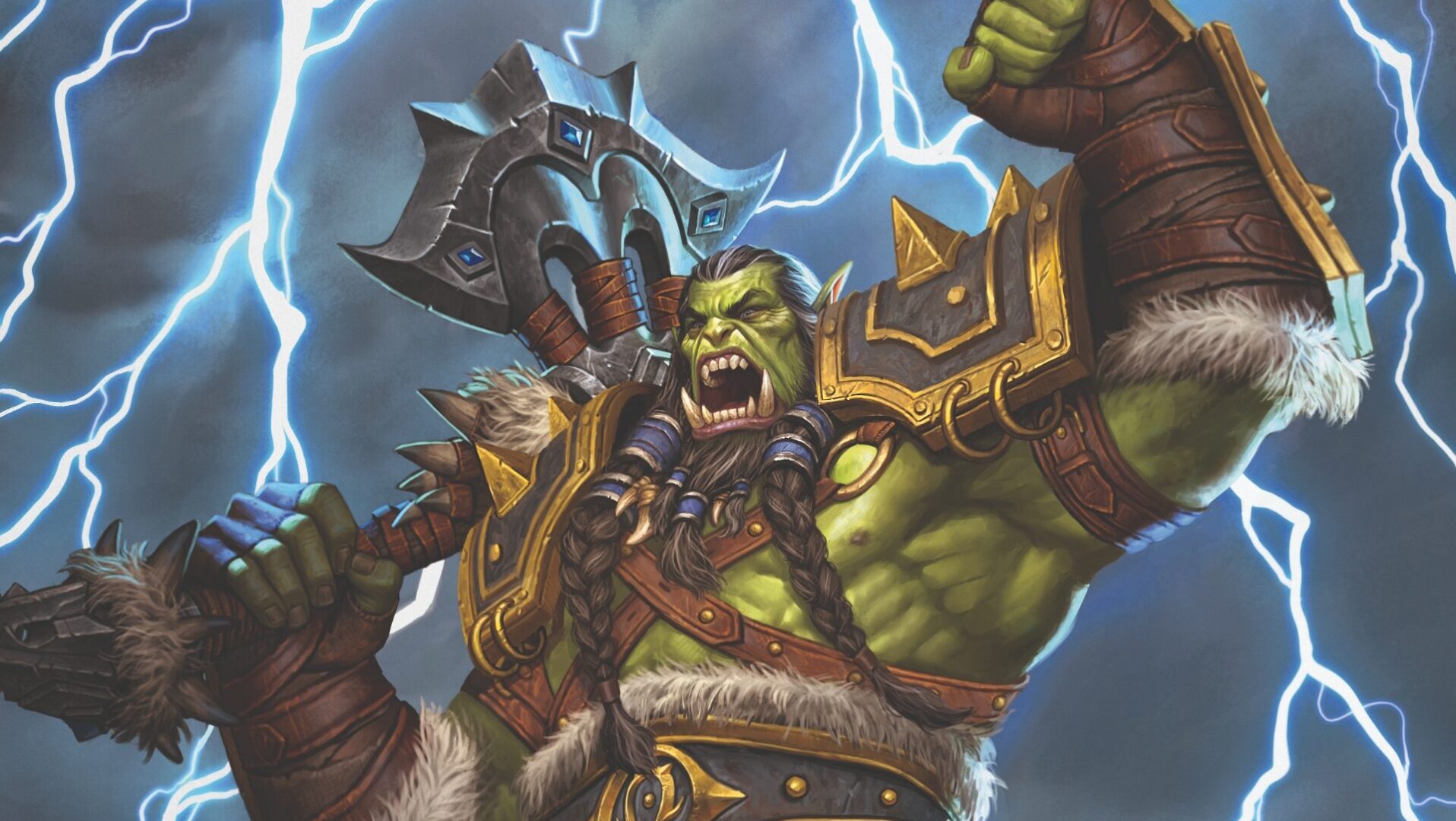
Rounding out D&D: World of Warcraft is a thrilling menagerie of stat blocks for monsters and other enemies. More than other D&D supplements, the book has more humanoid adversaries, many of them at considerably high Challenge Ratings. Legends like the Lich King Arthas, Sylvanas Windrunner, and Jaina Proudmoore are included as truly fearsome foes, a la carte. (As someone who doesn’t love the D&D approach to different colours of dragons, I may be referencing the Dragonflight stat blocks presented here very often.)
I’m impressed with the setup many of the mighty bosses have, but it feels like a missed opportunity to simply drop their stat blocks and not include, at least, some mini-encounters or example battle maps to help serve them up. Those who want to build their own encounters will have a field day, but some of these foes (particularly Arthas) would have excelled if they’d received just a little more attention.
It’s a little strange to say, but D&D: World of Warcraft comes across as somewhat subdued. Wizards of the Coast could have done a second book to go along with this “Gameplay Expansion” book, perhaps with a series of encounters based on the game’s most memorable fights. Instead, there’s a separate Map Pack based on the Icecrown Citadel raid, which includes a digital adventure for levels 16–20.
If this is the future of Dungeons & Dragons‘ cross-IP collaborations, I’m passably pleased. There’s enough love for the source material put in to warrant the exercise altogether, but not a lot more than that. Since I have much more investment in Star Wars, I really hope that collaboration next summer gets a little more ambitious—it may need to, in order to bring Jedi and Sith to D&D convincingly. A “paint-by-numbers” suggestion for character building and some cool magic items won’t quite cut it there.

- AZEROTH AWAITS—D&D: World of Warcraft brings the storied MMO world from desktop to tabletop, where your choices shape every battle, every alliance, and every legend; recreate your main character, roll a new alt, or play a hero the world has never seen
- BUILD A CHAMPTION WORTHY OF AZEROTH—Includes rules for 16 World of Warcraft-authentic species and all 13 World of Warcraft classes, featuring 9 new and revised subclasses and 40+ specializations

Ultimately, when it comes to sourcebooks for Dungeons & Dragons and other TTRPGs, I think there’s value in checking out the vast majority of them if only for inspiration on how to do things at your own table. For my own DMing, I think D&D: World of Warcraft will be more of an inspiration than something I pick up and run for my groups as-written. The gallery of monsters and other opposition, as well as the magic items, will very likely be reskinned for other settings for years to come, and I’ve found a new swell of inspiration for homebrewing subclasses (even if some of that inspiration is of the “what not to do” variety).
And yet at the same time, if someone joins who’s a big fan or a former player joins my games, I know I may be able to put something together quickly that speaks to their bygone days of glory in Azeroth, despite never having held personal investment in the tension between the Alliance and the Horde. Thus, I can see World of Warcraft fans having a lot of fun with these options… just, maybe not as much as they could have had.