Before Werner Herzog’s new film Bucking Fastard properly starts, it opens with a title card dedicated to the late David Lynch. As touching as it is for Herzog to pay tribute to another legendary oddball director, it also doubles as a signal for the audience: don’t expect to understand anything you’re going to see, nor will you receive any explanation for it. It’s certainly why its reception at TIFF was extremely polarizing. You’re either going to get with it or it’s gonna completely go over your head. I’m in the latter camp.
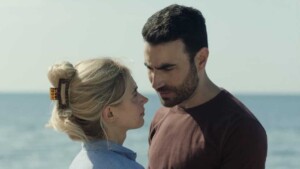
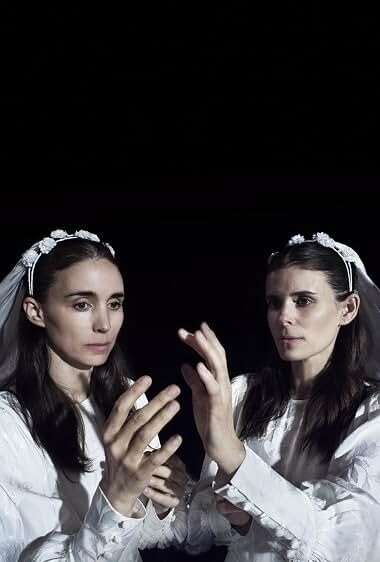
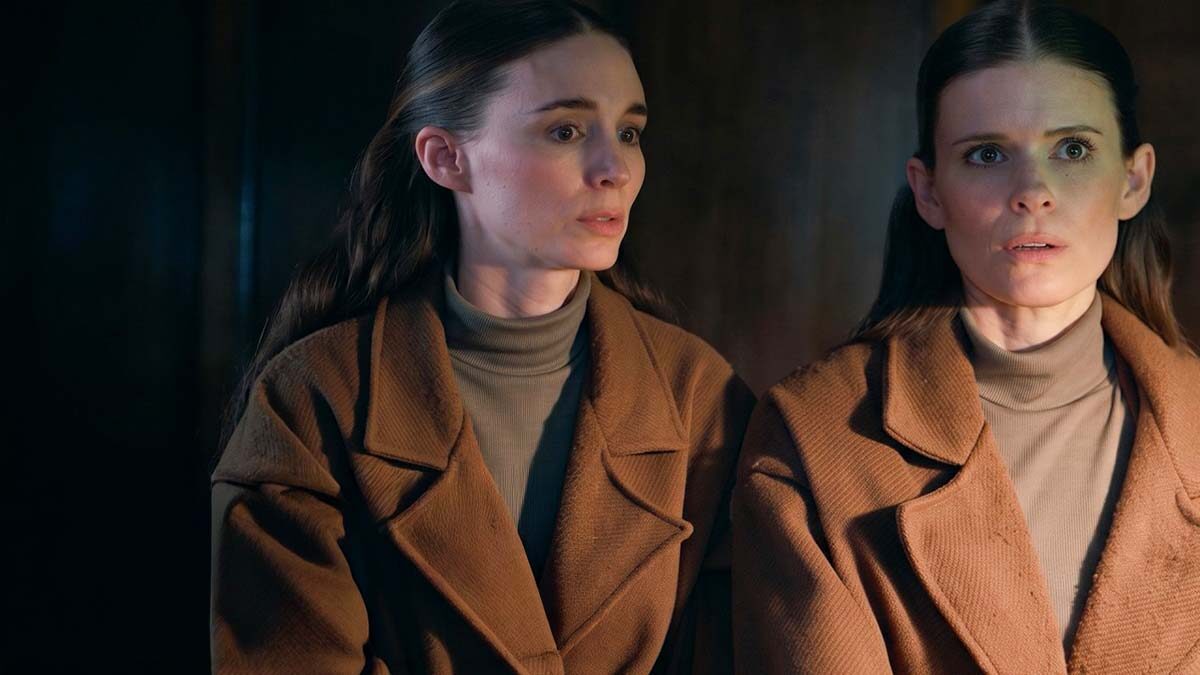
Set in Ireland, Bucking Fastard stars real-life sisters Kate and Rooney Mara as Jeanie and Joanie Holbrook, sisters who, despite not being twins, are completely in sync with each other. They constantly speak in unison, dress the same, act the same, and think the same. They may as well be the same person split into two bodies. In the opening moments, it’s shown they’re both deeply in love with the same man, their neighbour Gareth Mulroney (Orlando Bloom).
“The only bit of praise I can give Bucking Fastard is seeing how committed the Mara sisters are to the bit.”
Funnily enough, the opening scene is actually a court case, as Gareth is filing a restraining order against the two. The three of them were in a shared relationship until he left them to get married with someone else. They weren’t happy about that. This opening section is easily the strongest portion of the film. There’s some great comedy from Bloom and the Maras, and it sets the film up to be a sort of quirky revenge rom-com. But then the case is resolved in about 10 minutes, Bloom more-or-less vanishes from the film entirely, and it basically goes all over the place from there.
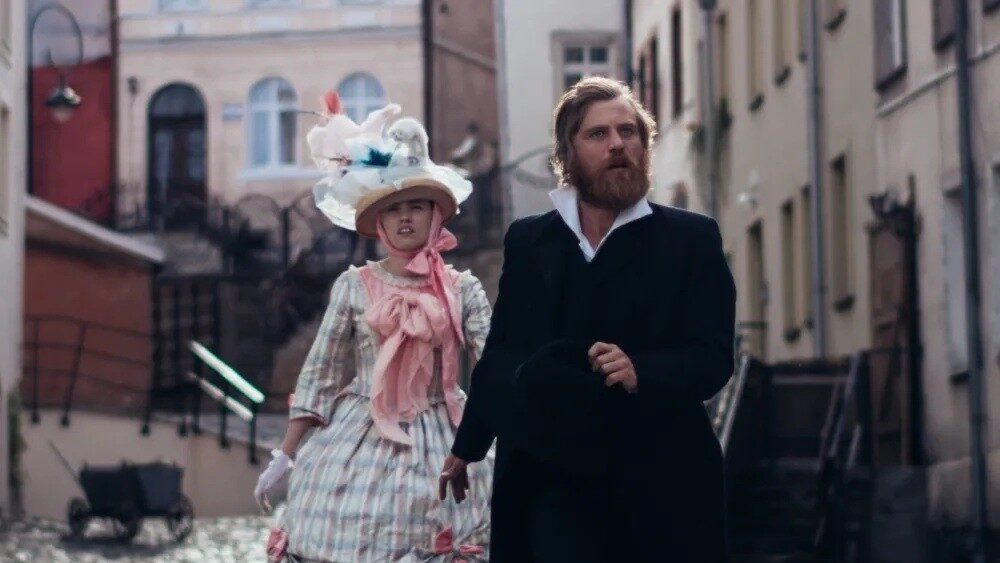
As best I can understand, the film suddenly shifts into a series of miscellaneous sequences, with the general idea being the sisters trying to make their way in a world that doesn’t understand their idiosyncrasies. They meet people who strangely lust after them, some who are irritated by them, and a few, like social worker Timothy (Domhnall Gleeson) who genuinely want to help them. But there was no real sense of momentum on a scene-per-scene basis. It felt more like I was watching a long-running TV series, but every scene was from an entirely different season of it. Even the Lynch films I didn’t understand still felt like they were going…somewhere.
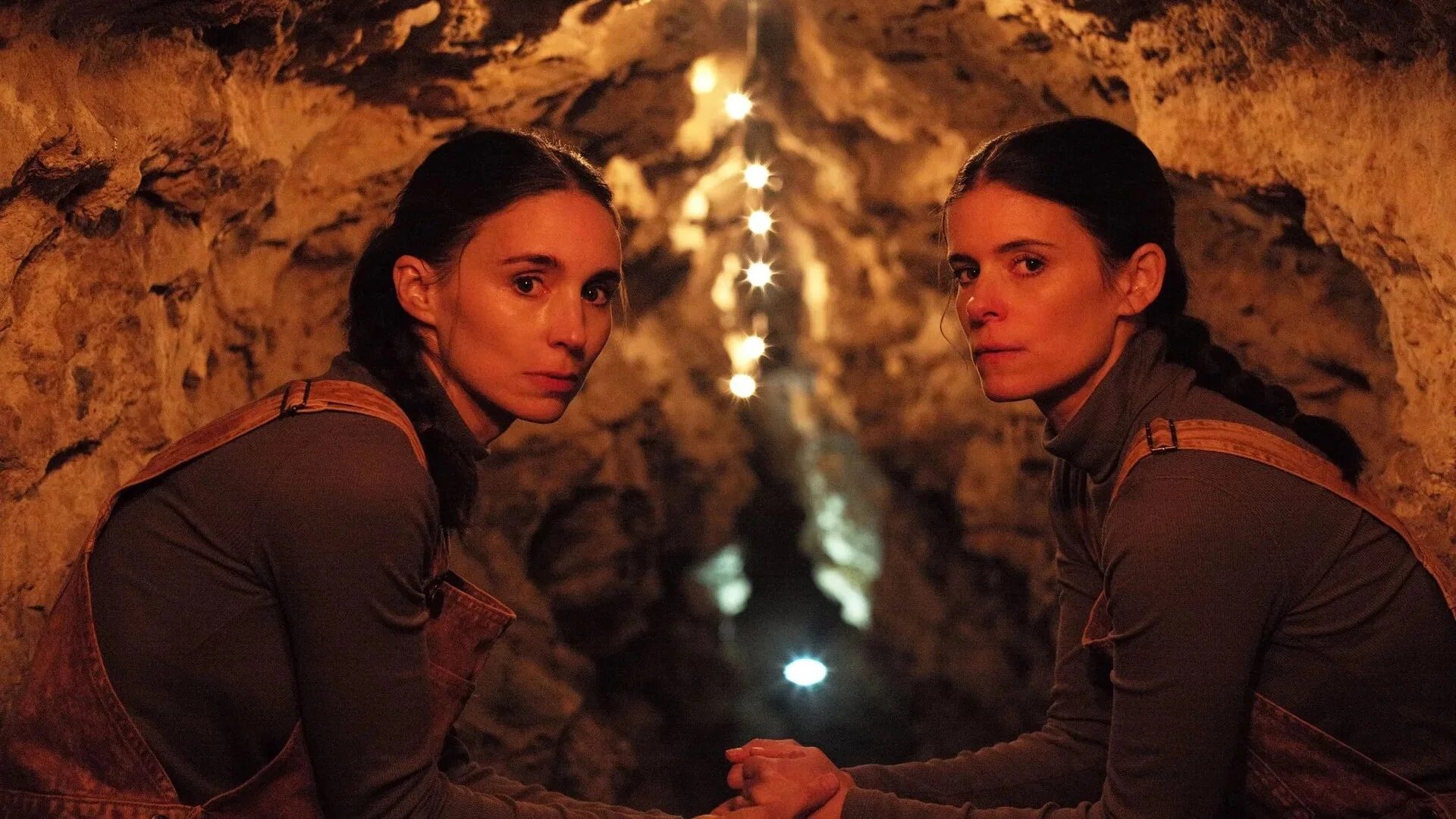
Eventually, the Holbrookes make their way through the Irish countryside, which is stunningly captured by cinematographer Peter Zeitlinger. However, once we get there, the third act shifts into a bizarre internal revelation that leads the sisters to dig a tunnel through a mountain. And we’re basically stuck there for nearly the entire third act. Why? I still don’t know. I just know that it was tedious to sit through, making the 1hr. A 40-minute film felt like 3 hours.
The only bit of praise I can give Bucking Fastard is seeing how committed the Mara sisters are to the bit. Their first time ever acting on-screen together, they truly embody the Holbrookes’ bizarro kinship. They really do speak every single line in unison in the same tone, and the few moments they don’t, they still complete each other’s sentences. That near-perfect unison even extends to their general body language or how they stare at certain people. If there’s any reason that’s worth seeing the film, it’s their dual performance.
There are those for whom Bucking Fastard will certainly appeal, but the large majority of people are going to find it inaccessible as all hell. There were other critics I expected to love it who hated it, and vice versa. The film was a long-time passion project for Herzog (who’s had this in mind since the early 90s), and I’m glad he got to make the movie he wanted to make. Even if I didn’t get it or like it.