

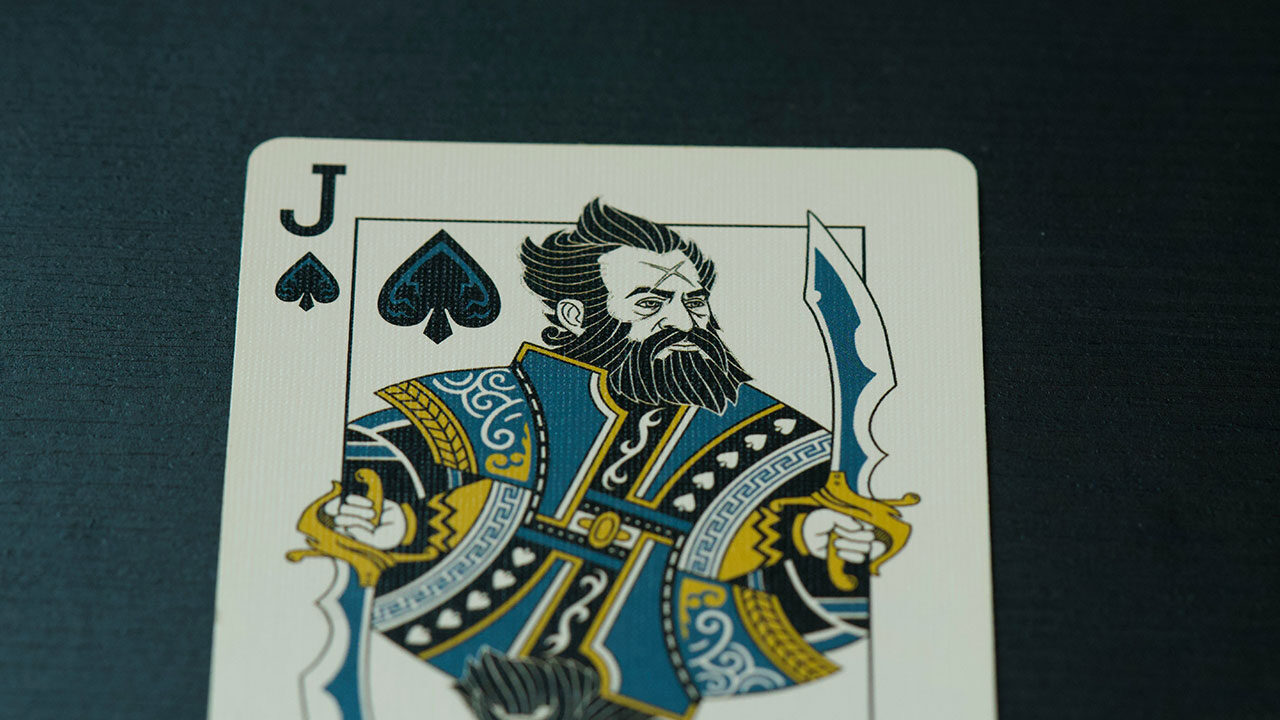
A card game can keep the same basic objective for centuries and still pick up new rules, new names and new ways to play. Blackjack did exactly that, with a history stretching from old European card tables to the version you can sit down and play today.
Blackjack has a strange name when you think about what happens at the table. Reach 21, and you have the number everyone wants. Go past it, and your hand is quite literally bust. For centuries, versions of the game were known as Twenty-One for exactly that reason, so where did “blackjack” come from? The answer starts long before anyone used the newer name.
Twenty-One Was the Game Before Blackjack Was the Name
One of the earliest detailed written references takes us back to Spain. Miguel de Cervantes published Rinconete y Cortadillo as part of Novelas ejemplares in 1613, and the story mentions a card game called veintiuna. The name means Twenty-One, and its basic premise already sounds familiar: players aimed to reach 21 without going over, while an ace could count as either one or 11. So far, not much has changed!
The name followed the game as it spread across Europe. In France, vingt-et-un also meant Twenty-One, while English speakers had little reason to complicate things. The target number told you exactly what the game was about.
That basic rule remains intact more than 400 years later. Modern blackjack, including the version found in the table-game library at Spinbet online casino, still asks players to build a hand as close to 21 as possible without going over.
The interesting part, then, is not where Twenty-One got its name. It is why blackjack eventually replaced it.
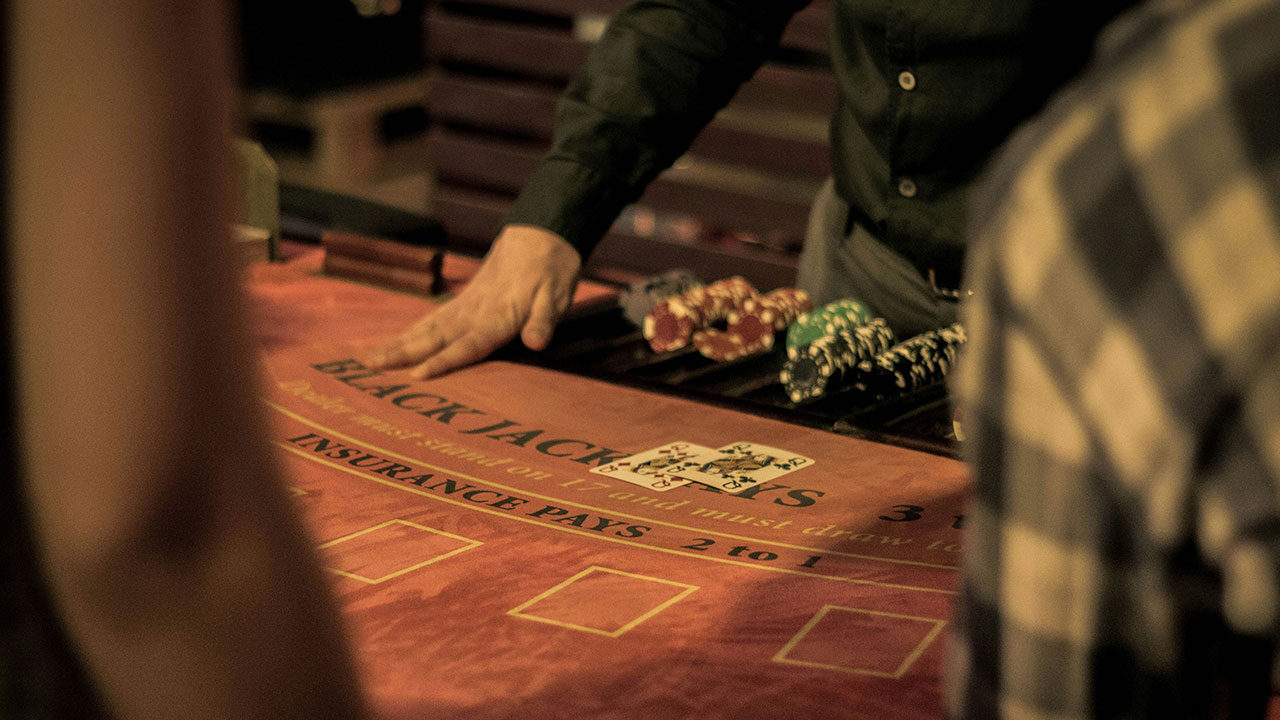
One Game Collected a Surprising Number of Names
The journey from Twenty-One to blackjack was hardly straightforward. Different countries developed their own names and variations of the game, while the rules continued to evolve along the way.
- Veintiuna was the Spanish name, literally meaning Twenty-One.
- Vingt-et-un carried the same meaning in French.
- Twenty-One became the straightforward English version.
- Blackjack became the American name that eventually travelled much further.
Pontoon adds another branch to the family. The name became established in Britain, where the game developed its own rules while keeping the same basic goal of reaching 21. Although Pontoon and blackjack are closely related, they follow different rules. The blackjack game at SpinBet uses the more familiar version, where players aim to beat the dealer without going over 21.
The origin of the name “blackjack” itself is less straightforward. One popular story claims that American gambling establishments once offered a special payout when a player received an ace of spades alongside a black jack, either the jack of clubs or spades. According to the story, the bonus eventually disappeared, but the name stuck.
It makes for a good story, but historians have yet to establish contemporary evidence for the promotion. Another theory connects the name to the Klondike Gold Rush of 1896 to 1899, when “blackjack” was also associated with a mineral found in mining regions. The exact origin remains disputed, although the name was becoming established in North America around the turn of the 20th century.
The Deck Was Already There Waiting
Twenty-One needed playing cards, of course, but the 52-card deck was already centuries old by the time Cervantes wrote about the game.
The Metropolitan Museum of Art dates its Cloisters Playing Cards to around 1475 to 1480. The complete deck contains 52 cards divided among four suits, each featuring a king, queen, knave and 10 numbered cards. The suits depict hunting equipment rather than the familiar hearts, diamonds, clubs and spades used today.
Those cards are not evidence that people were playing Twenty-One in the 15th century. Instead, they demonstrate something more fundamental: the 52-card format used in many modern card games was already established more than 130 years before Cervantes published Rinconete y Cortadillo.
| Period | Name or Development | What Happened |
| c. 1475–80 | Cloisters Playing Cards | Complete 52-card deck survives |
| 1613 | Veintiuna | Twenty-One appears in Cervantes |
| 1896–99 | Klondike Gold Rush | Period associated with an alternative theory for the name blackjack |
| c. 1900 | Blackjack | American name becomes established |
| 1956 | Optimum strategy | Blackjack receives formal mathematical analysis |
Over the years, some rules were added while others fell away. Doubling down let players increase their bet in exchange for one additional card, while splitting let a matching pair become two separate hands. Some casinos also introduced bonus payouts for combinations such as three sevens. The rules still vary between tables, but the basic game of reaching 21 without going over has been around for more than four centuries.
Card games continued to evolve into new formats. That same basic appeal survives in modern digital card games, where simple rules can still lead to surprisingly complex decisions.
Twenty-One Became a Mathematics Problem
Those decisions, whether to hit or stand, split or double down, eventually caught the attention of mathematicians. By the middle of the 20th century, blackjack was treated as a mathematical problem to be analyzed rather than a game played entirely on instinct.
Roger Baldwin, Wilbert Cantey, Herbert Maisel and James McDermott tackled that problem in a 1956 paper published in the Journal of the American Statistical Association. Their research examined the optimal blackjack strategy based on mathematical expectations, covering decisions about drawing or standing, doubling down and splitting pairs.
Their conclusions differed significantly from published expert advice and the way people typically played in casinos at the time. A game with a seemingly simple objective, getting as close to 21 as possible without going over, turned out to contain a far more complex mathematical problem beneath the surface.
Edward O. Thorp took that mathematics even further. In a 2017 interview with the Society for Science, he recalled his first encounter with blackjack: “After playing for about 40 minutes, I saw how you could beat the game.” His discovery eventually led to his 1962 book, Beat the Dealer, which explored card counting and the mathematics behind blackjack. While mathematical strategy can reduce the house edge, and card counting can sometimes shift the odds in a player’s favour, winning is never guaranteed. Interestingly, the book’s full title brings us straight back to the game’s original name: Beat the Dealer: A Winning Strategy for the Game of Twenty-One. More than three centuries after Cervantes used the Spanish equivalent, the number still told readers exactly which game Thorp was discussing.
The Old Name Never Really Left the Table
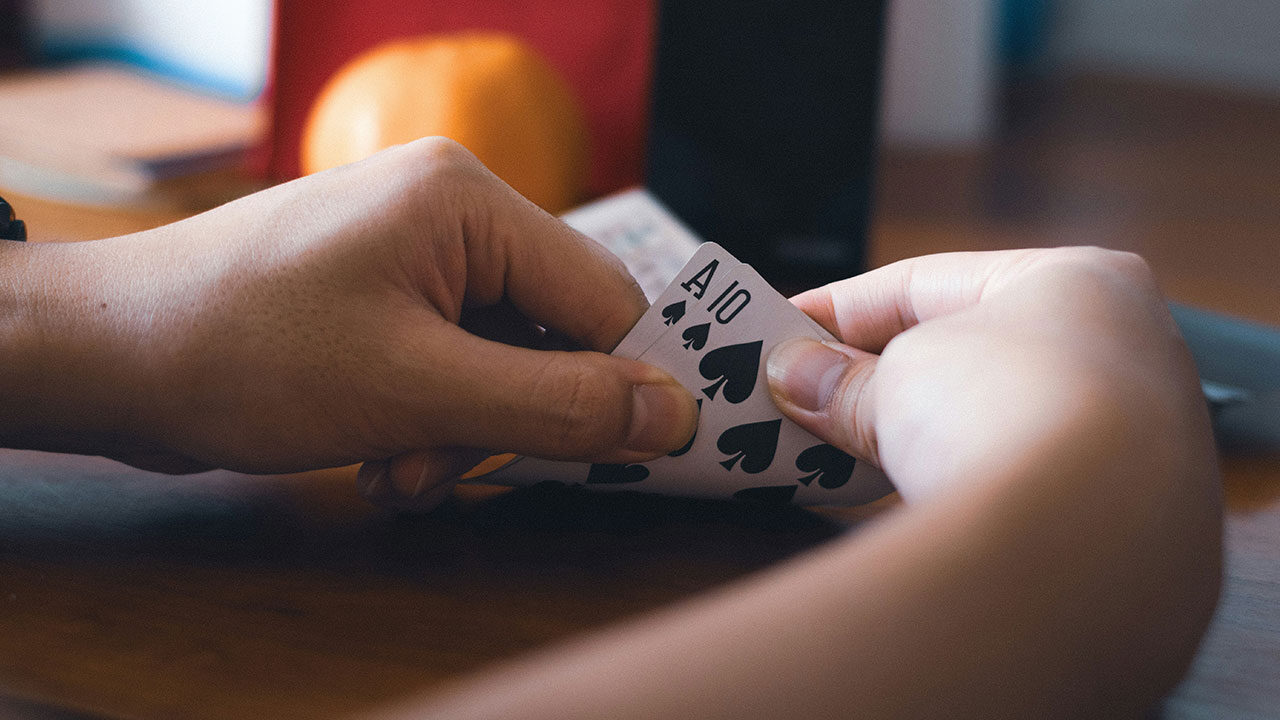
Blackjack may have won the naming contest, but Twenty-One still describes the game’s central objective. A hand worth 18 means something because it sits three points below the target. Twenty is stronger because it is just one point away. Twenty-two ends the hand because you have crossed the line.
That same logic survives whether cards are dealt across a physical table or displayed on a screen. The blackjack game available through SpinBet still centres every decision on the same target that gave Twenty-One its original name, even though the American term eventually became the one most players recognize.
There is a nice bit of continuity in that. The cards evolved, the rules gained new variations, and the game picked up different names as it travelled around the world, but 21 has remained at the centre for more than 400 years. A player from Cervantes’s Spain would probably have plenty of questions about an online blackjack table, but the importance of reaching 21 would need very little explanation.
Gambling is intended for entertainment and carries financial risks. It is restricted to adults of legal gambling age. Never treat gambling as a way to get rich or escape debt, and only gamble with money you can afford to lose.