Avatar Studios and Nickelodeon Animation Studio are hard at work creating new Avatar projects for the foreseeable future. News out of New York Comic Con (NYCC) 2026 gave new and returning fans a solid look at the projects ahead. Now, Avatar: Seven Havens is airing on Paramount+, with episodes releasing in weekly batches. As of writing, the first six episodes are available on the streamer. CGMagazine had a quick chat with several members of the team behind the latest show, which continues the main series storyline.
We spoke with Avatar co-creator Michael Dante DiMartino, Avatar: Seven Havens executive producer Ethan Spaulding, screenwriter and executive producer Sehaj Sethi, Saheli Khan, who voices Pavi, and Aishu Devan, who voices Nisha. They discussed how the story for the series came together, the importance of bringing South Asian and broader Asian representation into this world and how much the score and music will shape the story and its characters. They also confirmed the backgrounds of two characters whose ethnicities viewers have already been speculating about.
Thank you all for the quick chat. To start, I spoke with Lauren Montgomery on Avatar Aang: The Last Airbender a couple of weeks ago; she said something interesting about when “anytime the creators are exploring story opportunities, they’re really looking for what’s the most interesting story to tell. It doesn’t really matter where it falls in the timeline.” What drew you both, and Bryan [Konietzko], to Sehaj Sethi’s story and world set 225 years after The Legend of Korra?
Michael Dante DiMartino: Well, the idea for this story originated with me and Bryan. We created the story, and then Sehaj [Sethi] came in to help us develop it further. But yeah, we’re always looking for ways to change up the world, explore different things we haven’t explored before in the other shows—different types of avatars, and different personalities of avatars.
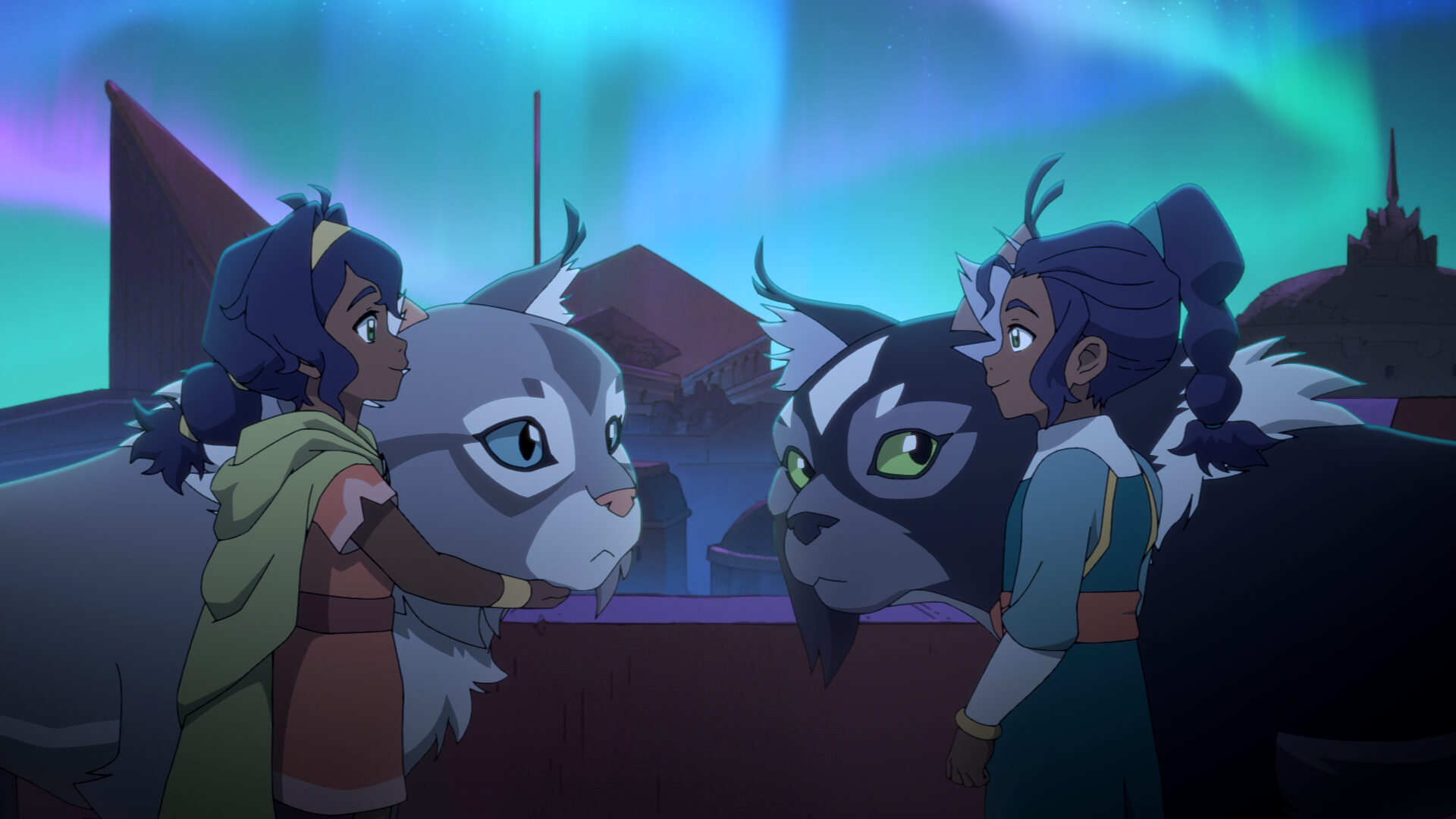
The setting of this futuristic, post-apocalyptic [world] was a really old idea Bryan and I had during the Avatar: The Last Airbender days. We took some elements of old ideas we had that were still lingering in the back of our brains, but then landed on the twin Avatar concept that we were really excited about.
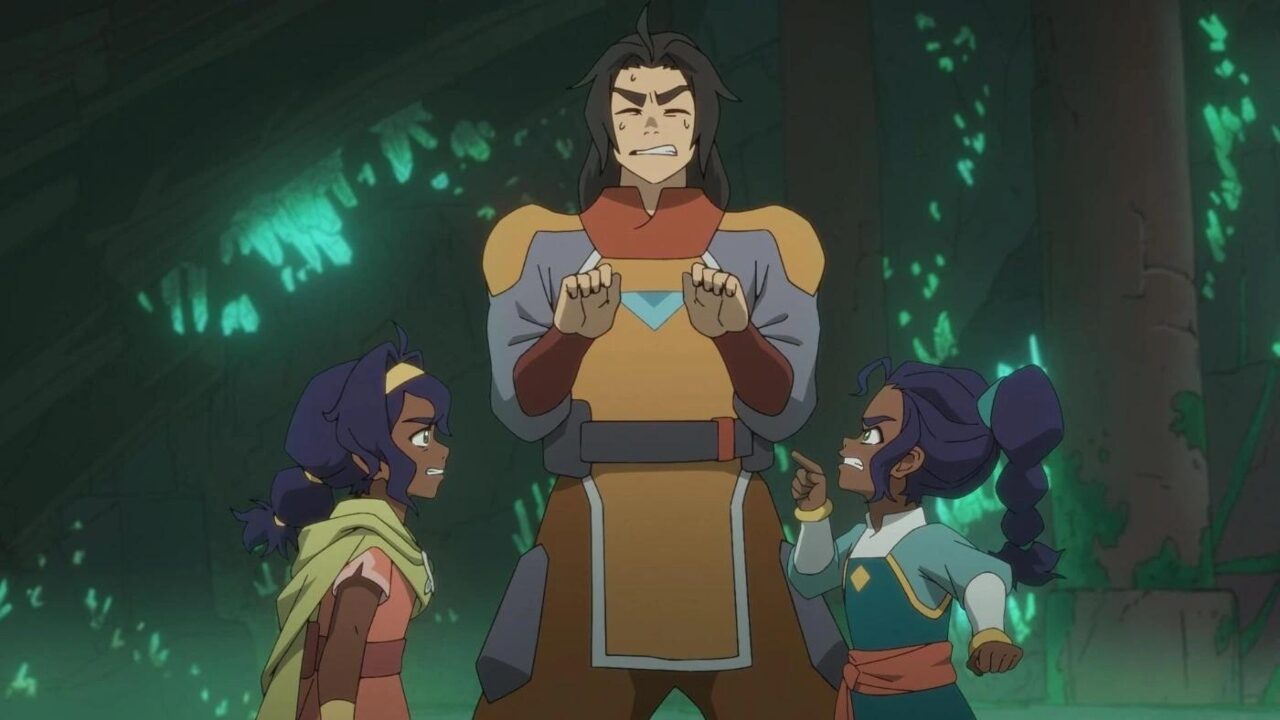
And was it always the plan to have two Avatars in this iteration?
Michael Dante DiMartino: Yeah, it came early on. That got us excited about this story.
Finally, we got Earthbenders taking center stage with the new Avatar [in the cycle]. We’ve also seen more diverse casting, as recently seen in Avatar Aang: The Last Airbender. Also, I really enjoyed [the episode this season on Avatar: Seven Havens] with having kachori’s. So, how did you, [Sehaj Sethi], want to honour South Asian representation, and Asian representation in general, from a writing perspective?
Sehaj Sethi: Yeah, when we started, Mike and Bryan were very generous. They were like, “Hey, we want to see where you take the story.” I always felt that something missing from South Asian representation was the details. So, it’s exactly things like kachori, the way people are dressed and the way people say things. There’s a line that Nisha says in a later episode that I love, where she’s kind of testing someone and calls them “auntie,” and I just love little things like that.
So, for me, it was really important that you see a myriad of South Asian representation and that you allow these characters to be human, rather than just archetypes, which is what we normally get, or very often get, with that kind of representation. There are often these model-minority kinds of portrayals, and that was never something I wanted in the show. They’re all human.
I think that’s really something that I really appreciate. We highlight that cultural identity, but also we highlight their humanity and that they have flaws, they make mistakes, they’re also trying their best, and they have empathy. All of these things are represented in these characters, I feel, and that was really, really important to me while we wrote the show.
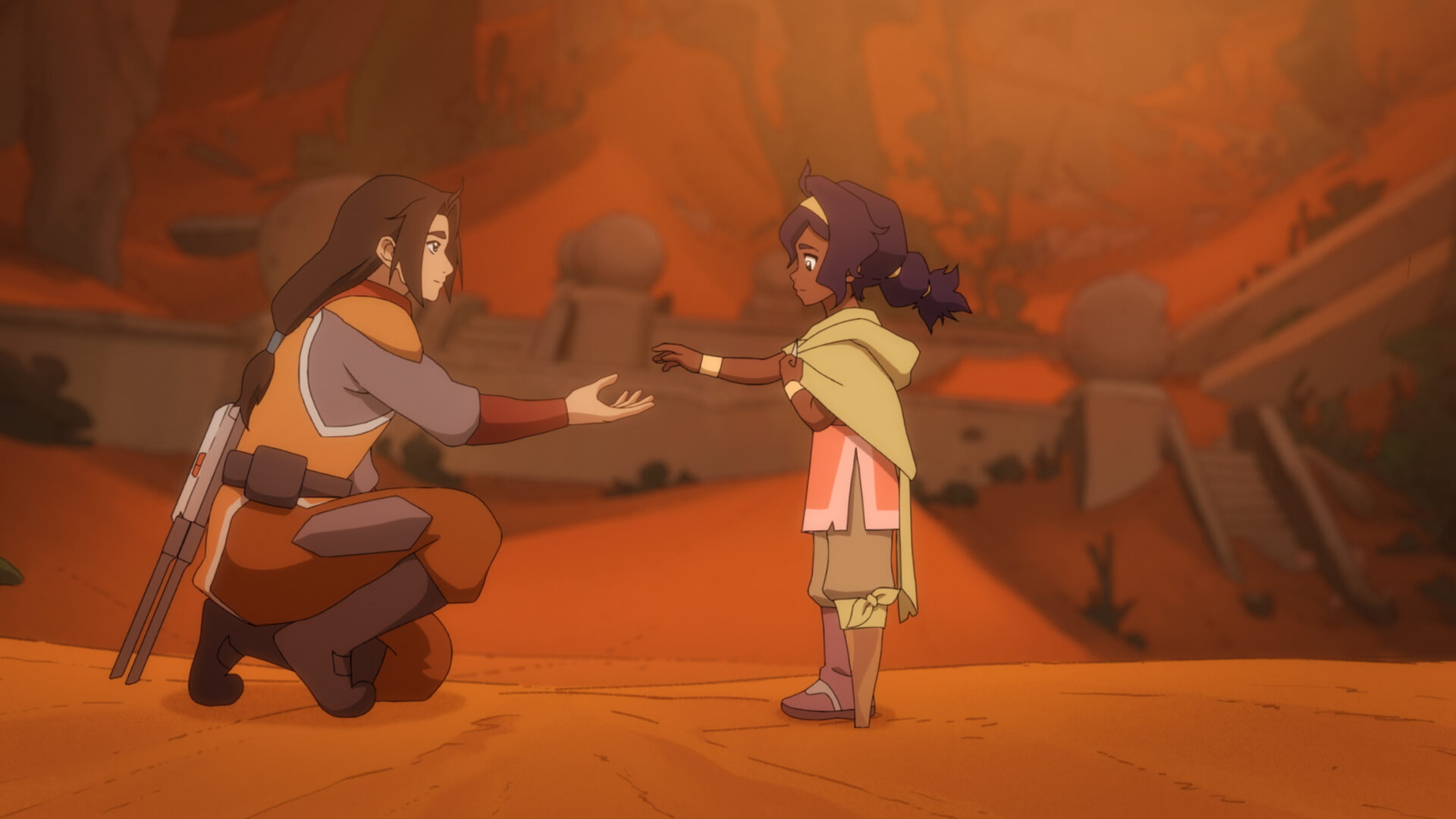
Makes so much sense. And how did each of you, [Saheli and Aishu], want to bring those unique voices to Pavi and Nisha?
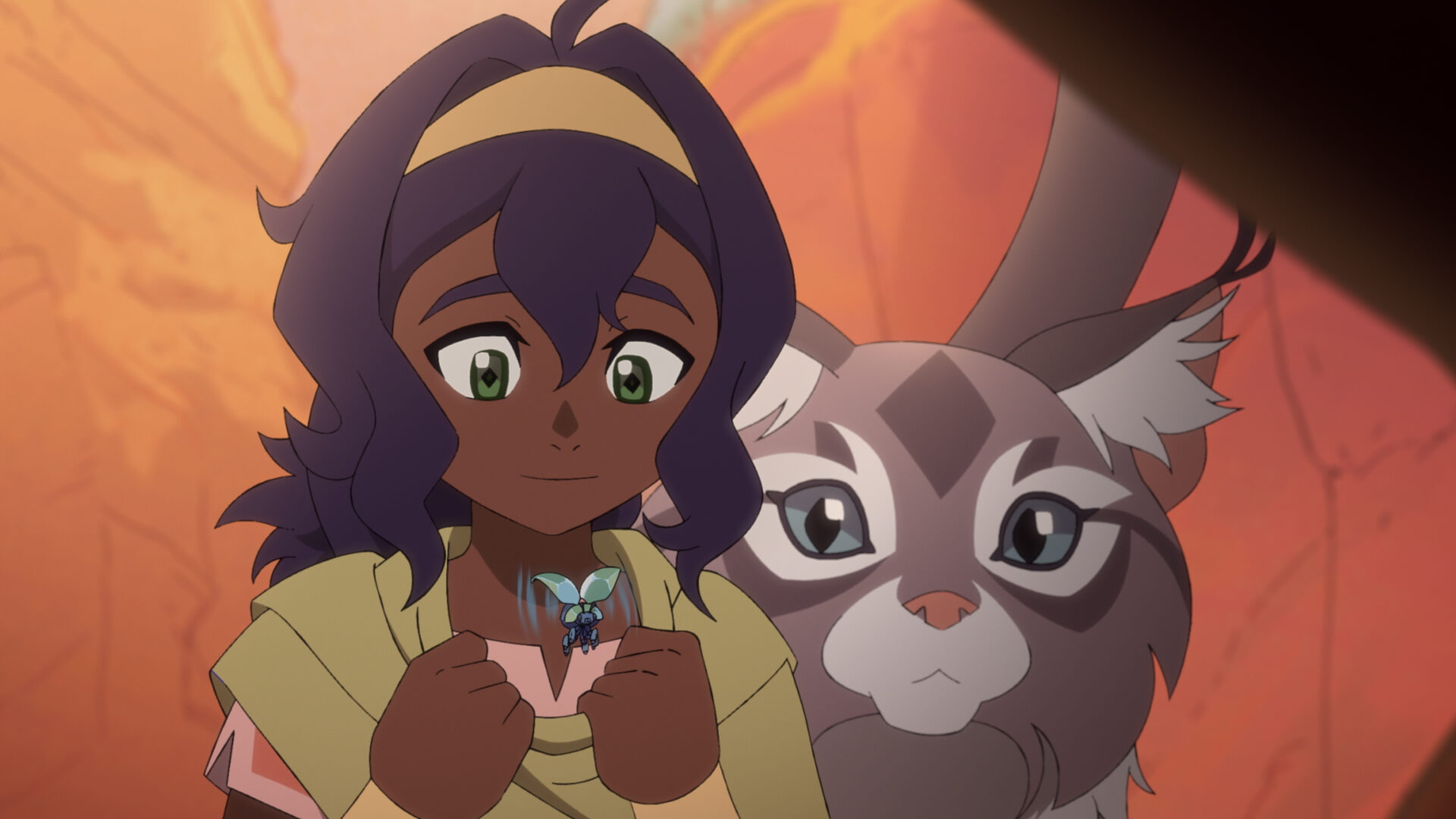
Aishu Devan: I think I connected with Nisha really early on—her sass—I was a very sassy 9-year-old when I auditioned for this. I think she’s shaped my personality as I’ve grown up. We started recording when I was 10, and now I’m 13. I think it’s kind of a prime time for teenage personality to develop, and I think that I’ve become a lot like Nisha. Definitely, resilience is a big part of her personality, and I think it’s becoming kind of one of my core values. I really aspire to have as much resilience and determination as she does.
She’s the avatar, and she’s definitely down a lot more than she’s up—as any avatar is—and I [love] her ability to add humour to the situations and kind of lighten it up a little bit. I think she’s a very funny character without trying to be funny. And so I think that humour has been a big part of my life, and I think that music has as well. We see Pavi and Nisha sing in the third episode, and I think music’s always been important to me, and singing has always been a huge part of my life.
I think the fact that we were able to bring that into the show and bring that into Pavi and Nisha’s lives and make that an important part of their lives was so important and meaningful. What can I say? I love to sing.
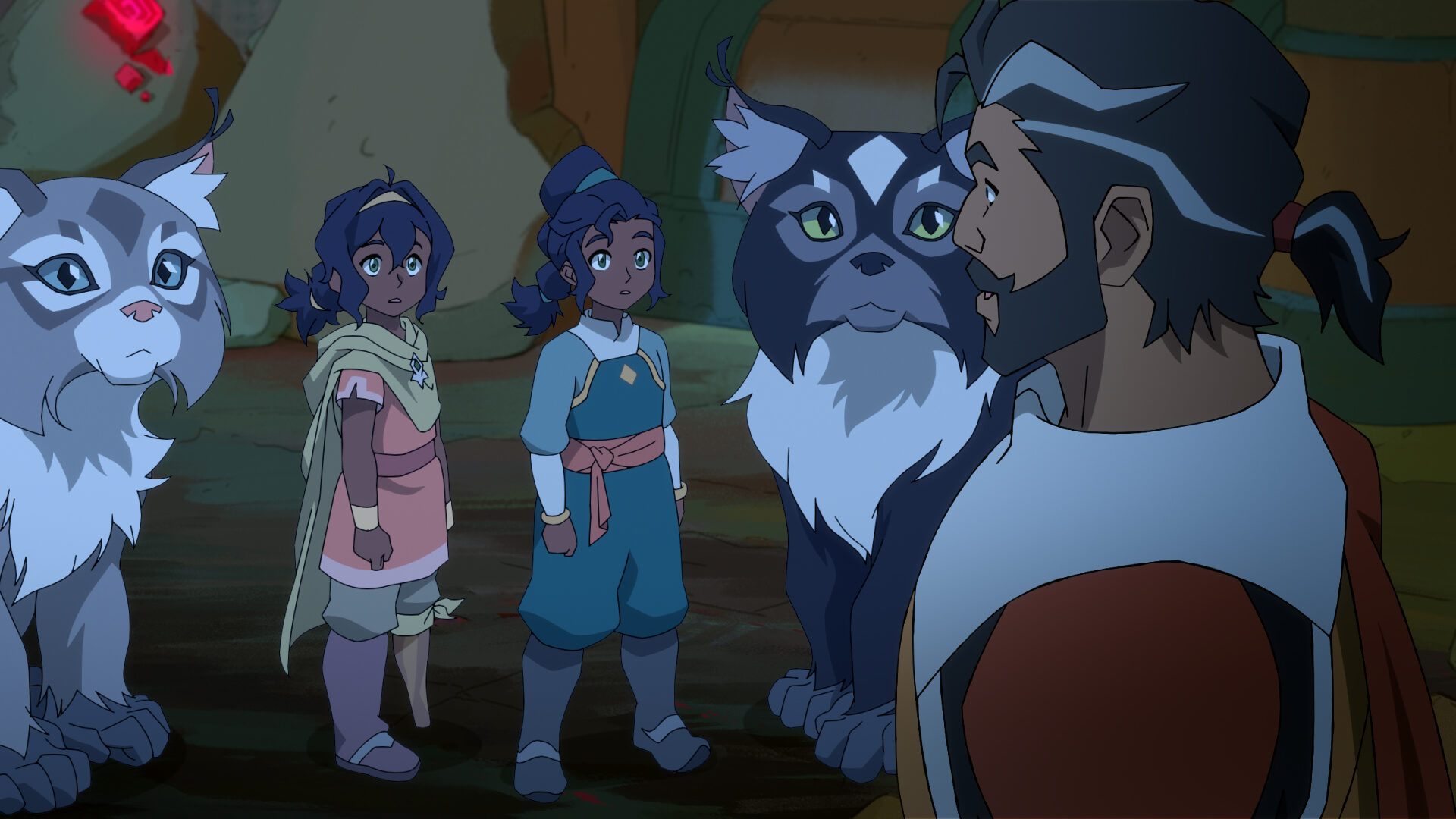
Saheli Khan: Yeah, I really brought everything and all of me to Pavi. I say that we’re practically the same person because we share so many similarities. You see Pavi, she’s always talking to rocks, and she has little bug friends. When I was younger, I used to collect rocks. I used to pretend to play with them, and I used to catch insects with my uncle in my backyard. I’m a Florida kid, so I was always outside.
And yeah, same with singing. Singing has always been such a major part of my life. My parents told me that I sang before I spoke, and I don’t truly believe that. But they say, ‘Yeah, you did’. And I was like, ‘Well, okay’. Getting to share that with everyone in such a big project like this has really, really meant the world to me.
And other things too, like the kachori. Fun fact: my nannie, she makes kachori’s, and she only makes them for me because she knows I love kachori so much. It’s my favourite food. So, that’s another thing that I relate to Pavi and so many other things. I love her so much because I am her.
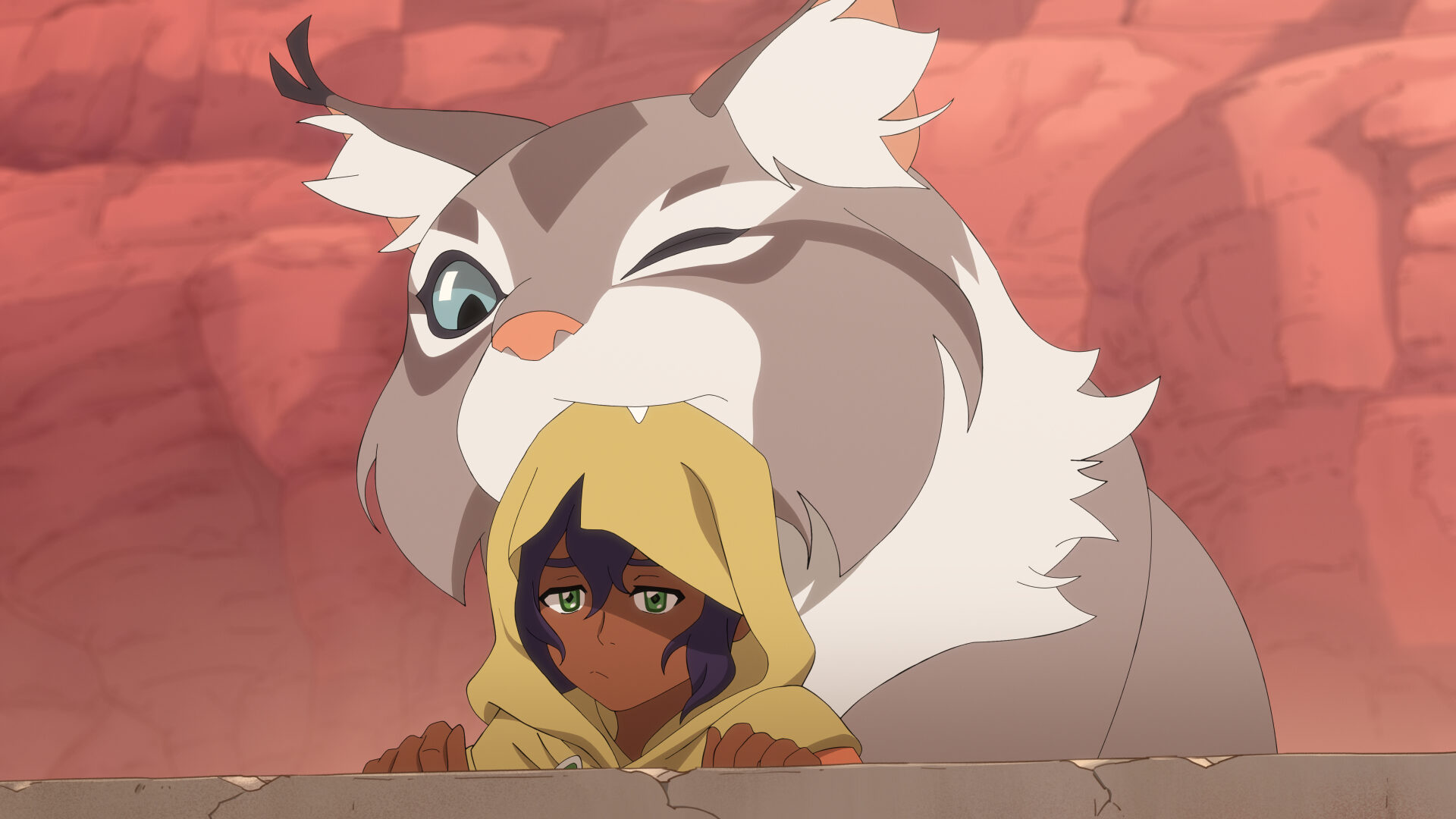
Wow, I feel that on the topic of singing because I’m half-Filipino and singing is a big part of our culture. And speaking on the music and hearing Pavi play the kalimba, it’s always a treat coming back to this world and hearing Jeremy Zuckerman’s compositions. I thoroughly appreciated how music is really baked into the storyline for this [Avatar project]. Now, I have to ask, was singing a prerequisite for these roles? And will we see the music play a bigger impact throughout the series?
Ethan Spaulding: Just establishing the fact that Pavi is a musician, we lucked out story-wise that both actresses were professional singers. We’re like, ‘Oh, this will be cool’. And that’s rare in animation. Usually, someone else handles the vocalizations and stuff. So, these actresses can handle it all. They will be singing in future stories.
Sehaj Sethi: Yeah, we knew that songs would be a part of it, so Aishu and Saheli both having a singing background was definitely a plus. It would not have stopped us from hiring them and casting them in their roles, obviously. But it was so nice to have that available to us, if we needed it. So, exactly for 103 (Episode 3), you hear the lullaby, which is a very important part of the story. It was really nice that we were able to let Saheli and Aishu really shine while playing [the kalimba] and singing.
Awesome, I love that. Unfortunately, I couldn’t make it down to NYCC 2026, but I heard that Avatar: Seven Havens has already been renewed through Season 4. Has the groundwork already been planned that far ahead, or is that still something you’re all working out?
Sehaj Sethi: Nope, we are in production. I think Paramount, to their credit, saw how good the series was becoming. I think they saw how strong it was. In animation production, you have to be careful of losing your team and stuff. I think they realized, no, let’s keep this going, let’s tell this whole story. I think it’s worth telling. Yeah, we’ve known for a little bit, and we are so glad we don’t have to keep that secret anymore.
Michael Dante DiMartino: Yeah, we have a plan for the four books. Things are rolling, so I can’t wait for people to see it all.
That’s really great to hear. One of the first things fans were quick to point out was the shift in art and animation style for this series. What kind of aesthetic were you trying to achieve with Avatar: Seven Havens?
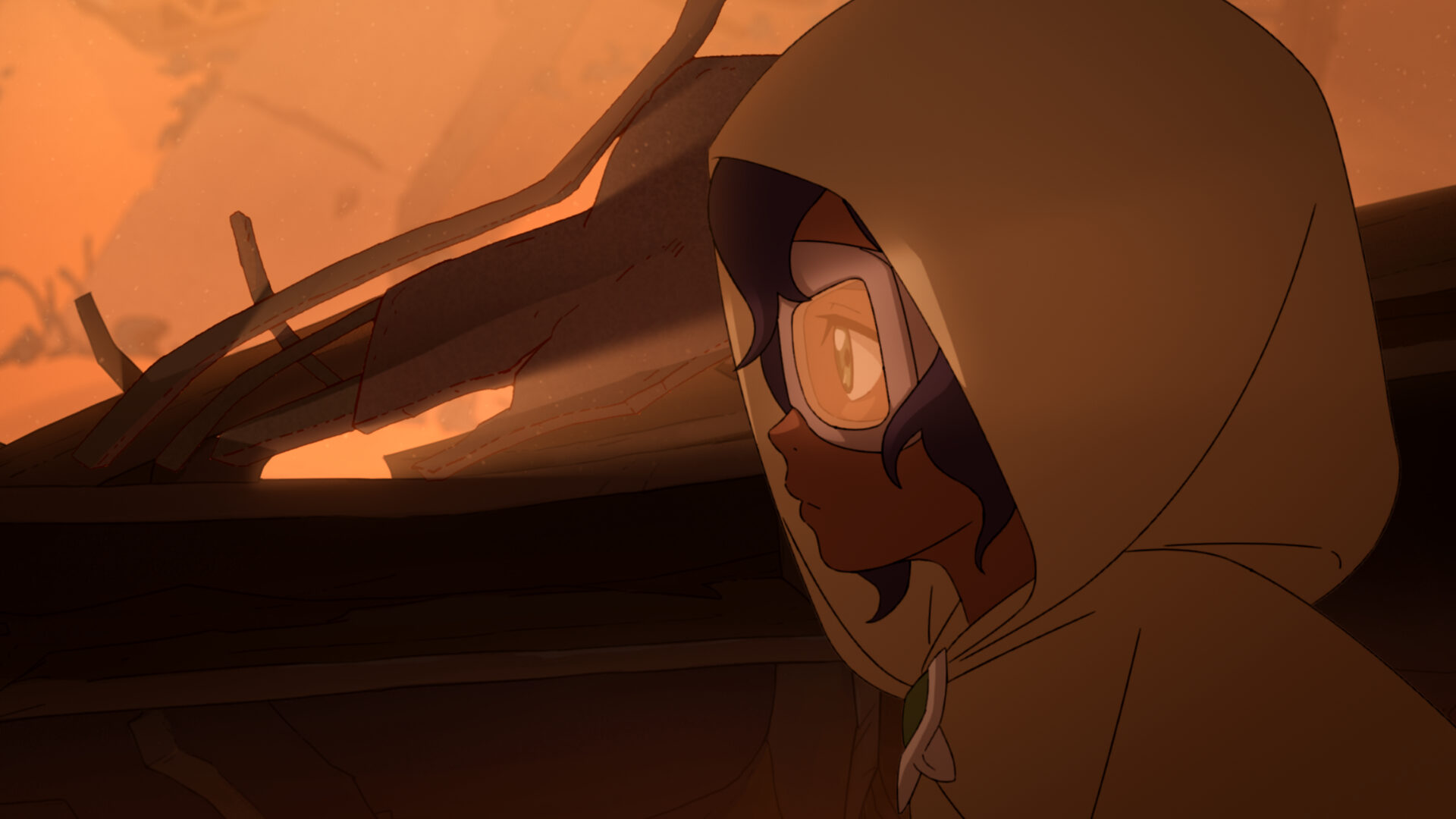
Ethan Spaulding: I think Mike and Bryan had already requested a simpler style. Bryan even talked about having no shadows on some of the stuff, [similar to] early [Studio] Ghibli movies that didn’t have really heavy shadows. That being said, Studio Mir was not available at the time, so they found an awesome studio in Paris, France—Chouette (or La Chouette Compagnie, meaning The Owl Company in English).
They’re steeped in traditional animation, like Disney, but they also love anime. So, that was another guidepost for this: more anime. They were a great choice. They did a test, and it looked awesome. So that’s some of the reasons for the new look.
Yeah, and I mean it’s you, Michael, and Bryan; you’re the reason Studio Mir is so busy now.
Michael Dante DiMartino: Yeah, we love working with them, and they did work on [Avatar Aang: The Last Airbender]. It’s always a trade-off. There are only a few studios in the world that…2D in general is harder to find studios to do that. Then, studios that are good at action, anime, sensibility, all that stuff—there’s an even smaller pool. But it’s great to work with Chouette.
They’ve done the whole series, and I feel the work gets better and better too—as the series goes on. It’s often the case with doing this stuff, where everyone’s figuring it out in the first season. Everyone kind of gets in the groove as it goes along.
And one last question that I need to know. Are Ulan and Malika confirmed to be Filipino-inspired characters?
Sehaj Sethi: Ulan and Malika, yeah, they were Filipino names. If we take a name from a certain ethnic background, our designers try to mimic that ethnicity as much as they can.
Okay, perfect! Well, thank you again so much for everyone’s time!