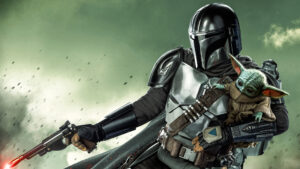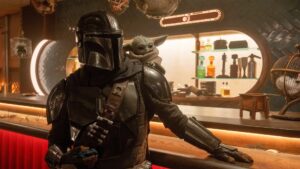

Star Wars returned to theatres this week with The Mandalorian and Grogu, a big-screen continuation of the acclaimed Disney+ series. The show debuted within a month of the last theatrical film in the series, 2019’s The Rise of Skywalker, and since then the Mandalorians have essentially served as the main face (or helmet) of the franchise in live action.
This faction of armoured mercenaries and commandos has been stealing the stage from the Jedi and the Sith for a long before Grogu and his adopted father hit the scene. The iconic shape of their helmets is a constant presence at comic cons and on toy shelves, as omnipresent as the very helmet of Darth Vader. Despite humble Hollywood origins, the Mandalorians represent Star Wars as much as lightsabers and hair buns. But how did this come to be?
Boba Fett
When the original Star Wars took the world by storm in 1977, it was hard to imagine that anything could surpass the cool factor of Darth Vader, or compete with the simple thrill of lightsabers. But George “The Maker” Lucas created someone who could… and it was almost an accident.
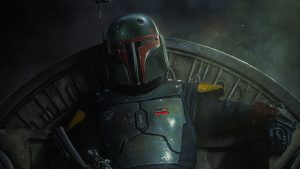
Lucas wrote a character named Boba Fett into the script for Star Wars‘ sequel, imagining a stoic Clint Eastwood-type and imagined him as the head of a unit of “super” Stormtroopers. A suit of armour was designed as a prototype for him, based on designs by designer Ralph McQuarrie, but proved too expensive to mass-produce, and thus Boba Fett became a one-of-a-kind bounty hunter.
Upon The Empire Strikes Back‘s debut in 1980, Boba Fett was an instant hit with fans, who wanted to know more about the man of few words who had hauled a frozen Han Solo off to face his debtors. Despite the fact that he barely spoke in the original, pre-Special Edition cut of the film, his mysterious, cool demeanor intrigued a generation.
Through the early Marvel comics, devoted fans learned Boba Fett was part of the Mandalorians, a warrior sect from the planet Mandalore. From there, other pieces of extended universe fiction slowly fleshed out the Mandalorians’ identity—but it all began with Boba Fett. So great was his appeal with fans, his supposed death in Return of the Jedi was staunchly disbelieved until the original Expanded Universe confirmed that he had, in fact, escaped his goofy fate.
Begun, The Mandalorians’ Resurgence Has
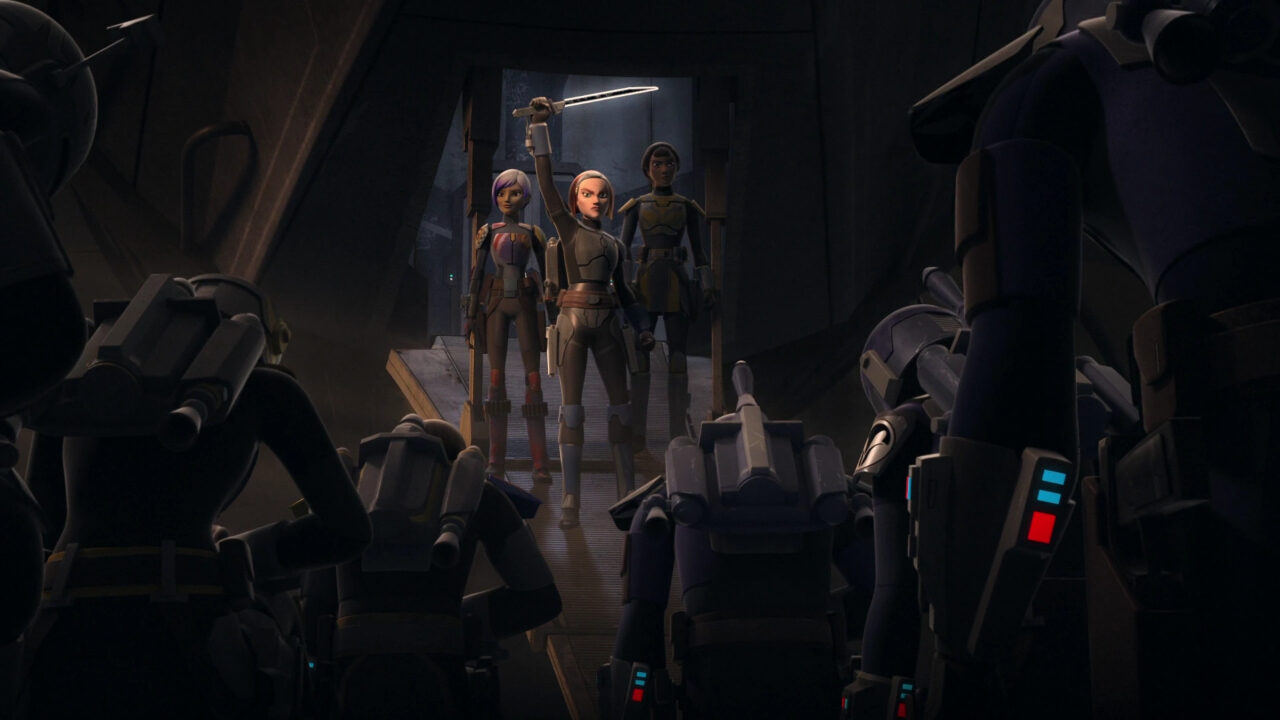
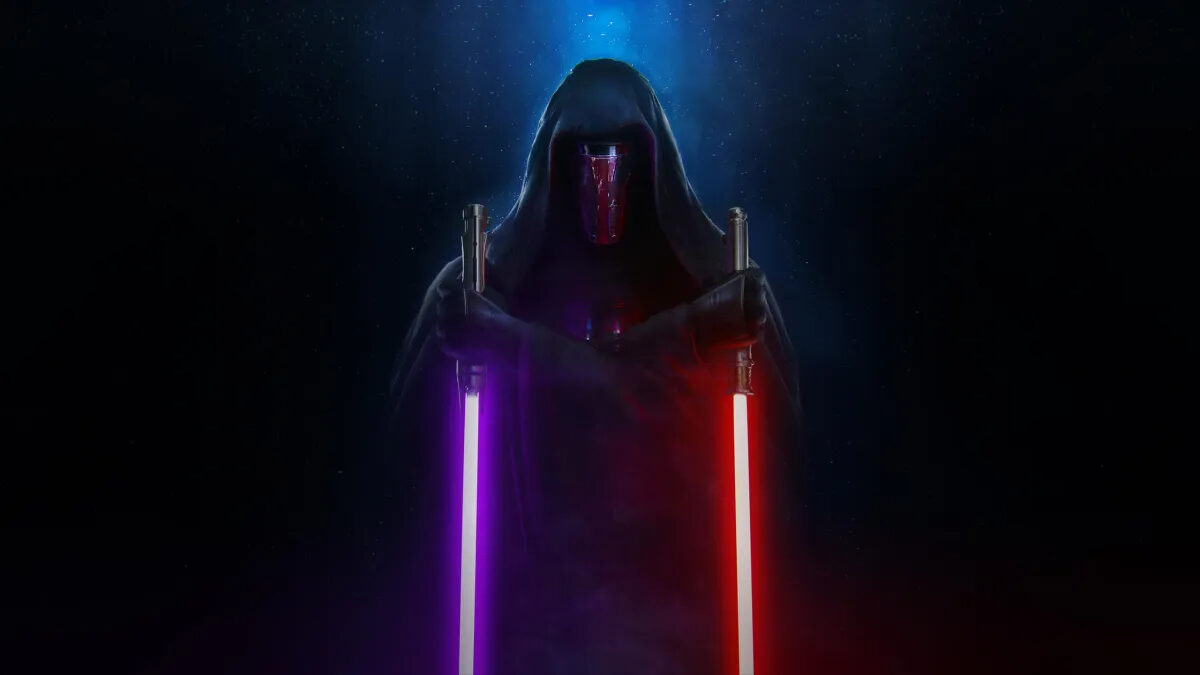
From there, authors and creators continued to weave the Mandalorians deeper into the fabric of Star Wars’ universe. Star Wars: Knight of the Old Republic delved further into their early history, helping establish them as a faction where anyone who followed their ways could become a proper member (and also creating Revan in the process). Lucas’ own Prequel movies put them front and center with Jango Fett, Boba’s dad—who was the genetic template for the Clone soldiers in the Clone Wars, and therefore the inspiration for the Empire’s Stormtroopers later on.
Then, the animated series The Clone Wars truly leaned into their appeal. Several story arcs actually take place on their homeworld, Mandalore, and they’re among the best storylines in the series, next to the Mortis arc. Here we saw the Mandalorians were about more than just armour; we saw a pacifistic movement in their society, infighting between the clans, and even a star-crossed romance between one of their leaders and Obi-Wan Kenobi.
“The Mandalorians embody all the best elements of Star Wars.”
After the Disney acquisition of Lucasfilm, Star Wars Rebels introduced fans to Sabine Wren, an unconventional Mandalorian who fought the Empire and decorated her gear with vivacious designs. And then came The Mandalorian, centered on Din Djarin—a member of a more passionate and uptight sect who never removed their helmets. The faction had the spotlight like never before, while also presenting its more codified and complex iteration to date.
The longer Star Wars exists, the more layers are added to this particular onion, and the richer their symbol becomes.
Engineered Opposition
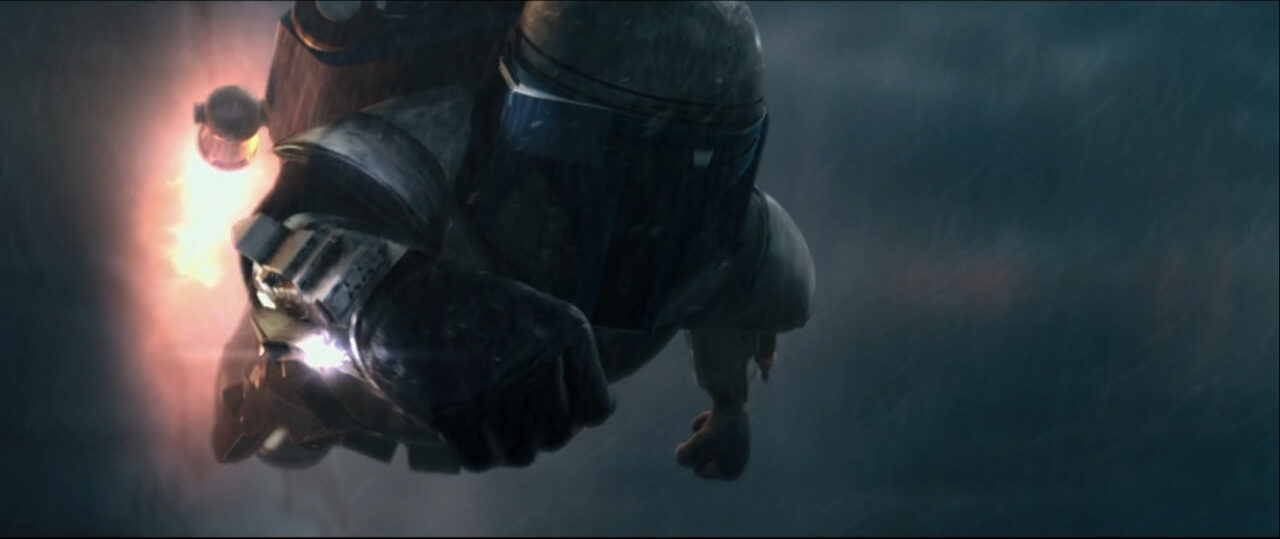
There’s more to the Mandalorians’ armour than just looking cool; they’re engineered for a certain purpose. Though the expanded lore has explored its true purpose, it’s remained somewhat subtextual in the films so far.
Sure, their gear makes them much tougher to kill overall, and that’s a huge advantage in itself—just look at the beating Mando takes on-screen. However, the real benefit of the Mandalorians’ gear is that it allows them to take on Force users. The tools built into their suits give them an edge over Jedi (or Sith), and even simulate their abilities in a way. Grappling lines to counteract Force pushes or pulls, Beskar plating to protect from lightsabers, jetpacks to keep up with Force-powered evasive maneuvers… If you can’t use the Force, a good suit of Beskar is the next best thing.
Star Wars movies and TV shows haven’t driven this point home too hard yet, aside from having Jango Fett get the better of Obi-Wan Kenobi in Attack of the Clones, but Force users and Mandalorians could potentially be the worst of enemies.
Only A Sith Deals In Absolutes
This leads to the ultimate point of the Mandalorians’ evergreen appeal: they’re the ultimate balance point.
The Jedi position themselves as the good guys, and the Sith as the bad guys; only a Sith deals in absolutes, but the dichotomy between these two groups is pretty stark. In the middle there are the regular people of the galaxy, as well as the scoundrels, from smugglers like Han and Lando to gangsters like Jabba to bounty hunters like Dengar and Greedo.
The Mandalorians typically live in this middle-ground too, swaying toward heroism or villainy at times, depending on your “certain point of view.” They aren’t claiming to be the stewards of the galaxy and getting blinded by their own self-righteousness, like the Jedi; nor are they seeking to seize the galaxy’s reins and rule with an iron fist like the Sith. Like Jango says, they are just simple folk trying to make their way.
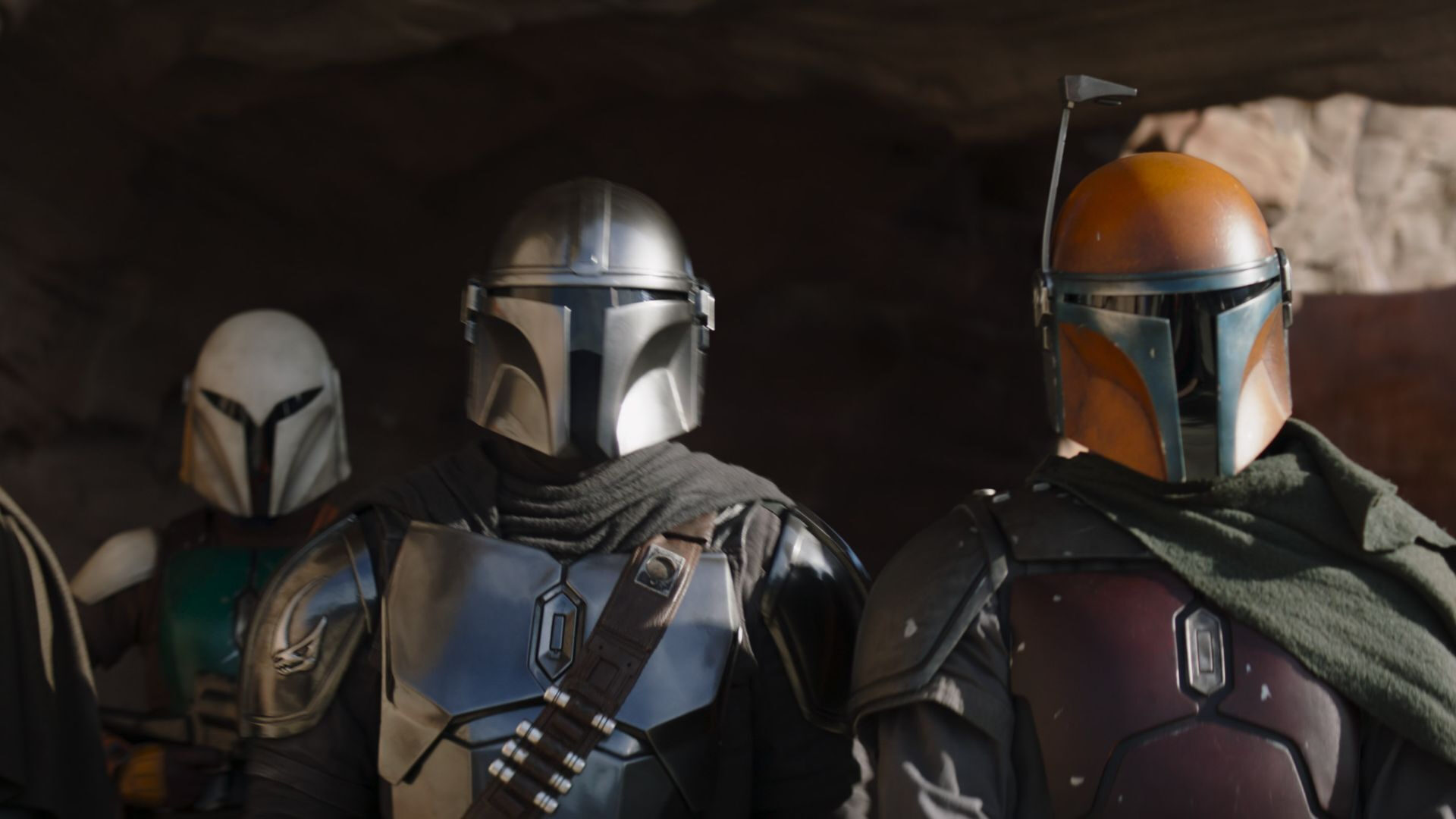
The Mandalorians embody all the best elements of Star Wars. They have iconic designs (rife for merchandising). They have codes, values, and honour (like the Jedi), but can also walk a fine line morally, like scoundrels and bounty hunters. And they have the same mystique as masked villains like Darth Vader, Kylo Ren, or even Stormtroopers—they have to use the same body language to express themselves through the armour. And plus, most Mandalorians are typically jacks of all trades, able to fight with blasters or melee weapons, pilot, and make repairs. They’re the ultimate power fantasy in Star Wars, a franchise known for its power fantasies.
The Mandalorians are arguably the most Star Wars thing about Star Wars—and what started with a design for a side character transformed over time into one of the franchise’s most fascinating groups, and endearing symbols.