

Open any modern game, and the first thing that stands out is how it looks: reflections on wet pavement, sunlight bending through a window, characters whose faces show real emotion. None of it appeared overnight. Every leap in graphics came from a specific piece of hardware or a clever technical workaround, and together they tell the story of how games learned to draw the world.
Sprites and Tiles
The earliest home consoles and arcade boards had very little memory, so developers worked within tight limits. The answer was the sprite, a small image that dedicated hardware could move around the screen without redrawing the whole picture. Backgrounds were built from reusable tiles, repeated like a mosaic to save space.
Nintendo’s 8-bit hardware, released in Japan in 1983 as the Famicom, leaned on this approach for games such as Super Mario Bros. (1985). Artists learned to express a character with a handful of colours on a tiny grid, and those limits shaped a visual language that is still recognized today.
Colour was often the biggest limit. Early systems could show only a small number of colours at once, so artists reused palettes cleverly, changing a few shades to turn a green bush into a cloud or a brick wall into a castle.
The 16-Bit Leap
Faster processors and larger colour palettes arrived with the 16-bit generation. Sonic the Hedgehog (1991) used speed and smooth scrolling backgrounds to create a strong sense of motion. Nintendo’s Super NES added a feature called Mode 7, which could scale and rotate a background layer to fake depth, as seen in F-Zero (1990).
These systems also allowed richer animation and layered backgrounds, known as parallax scrolling, where distant scenery moves more slowly than the foreground. It was a simple trick, but it made flat screens feel surprisingly deep.
Polygons Take Over

The mid-1990s changed the direction of graphics. Instead of drawing flat images, games began building scenes from polygons, shapes made from points in 3D space. Star Fox (1993) brought polygon graphics to the Super NES with the help of an extra chip inside the cartridge, while Doom (1993) used clever tricks to create a convincing sense of 3D on ordinary PCs. Quake (1996) then moved to fully 3D environments.
Dedicated graphics cards sped things up. The Voodoo card from 3dfx, released in 1996, took over the heavy work of drawing textured polygons and gave PC games smoother, sharper visuals.
Home consoles followed quickly. The original PlayStation (1994) and the Nintendo 64 (1996) placed 3D graphics hardware in living rooms, and a whole generation of games was designed around cameras, depth and movement through space.
Shaders and High Definition
In the early 2000s, programmable shaders gave developers direct control over how light and surfaces looked. Water could ripple, metal could shine, and skin could appear softer, all through small programs running on the graphics chip.
When the Xbox 360 and PlayStation 3 arrived in 2005 and 2006, high-definition output became the standard target for major releases. Sharper screens meant artists could add far more detail to textures, faces and environments.
Lighting also became a larger part of the design process. Techniques such as normal mapping let flat surfaces look rough, scratched or bumpy without adding extra polygons, which saved processing power for other details.
Ray Tracing Arrives
Ray tracing is a technique that simulates how rays of light bounce around a scene. For decades, it was far too slow for real-time games and was mostly used in film. In 2018, NVIDIA’s GeForce RTX cards introduced dedicated hardware for it, and Battlefield V was among the first major games to use it for reflections. AMD’s graphics cards and the latest consoles have since added support of their own.
Upscaling technologies such as NVIDIA’s DLSS and AMD’s FSR help by rendering a game at a lower resolution and then reconstructing a sharper image, which keeps frame rates high.
The practical result is more natural lighting. Shadows soften with distance, reflections show what is actually around them, and light bounces from one surface to another, effects that artists once had to fake by hand.
2D Never Went Away
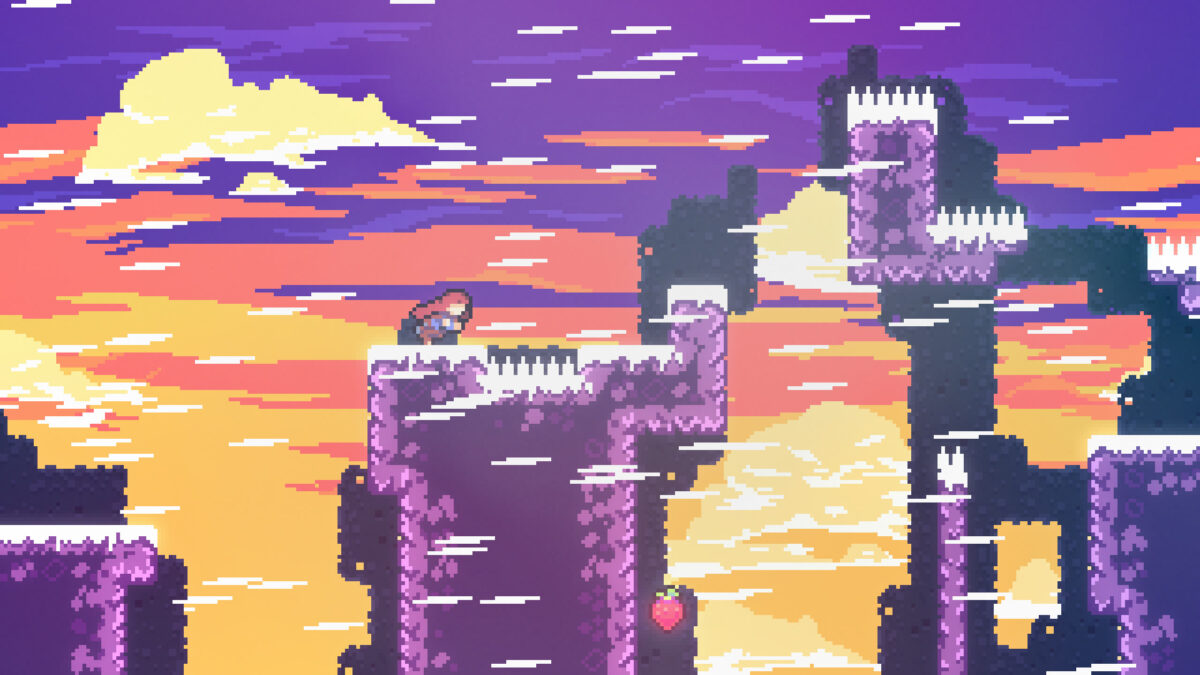
Despite all this progress, two-dimensional art stayed. Hollow Knight (2017) and Celeste (2018) show that hand-drawn and pixel-based styles can be as striking as any 3D engine. Two-dimensional animation is also common beyond consoles and PCs, from mobile puzzle games to browser titles and digital slot machines. This guide to online slots shows how layered 2D art and animation work in that format.
Looking Back
From a few pixels on an arcade screen to light that behaves much like it does in the real world, graphics have grown through one practical problem at a time. Each solution gave artists more room to create, and the best games still use technology to serve a clear visual idea.