
I was largely unaware of Expeditions: Samurai before getting the chance to see it back in June, because for the past year and a bit, the only game with the word “Expedition” in it that has completely dominated the cultural conversation has been Clair Obscur: Expedition 33. Much to my surprise, the Expeditions series has been going pretty strong and amassed a pretty large following, so I was genuinely excited to see why.
It would probably be fitting that my first foray into the franchise would be with Expeditions: Samurai, given my love of Ninjas and all things from the land of the rising sun—especially within historical contexts. I was already pretty impressed with what I had seen, but actually getting to play it was a totally different experience. This is a rock-solid RPG that feels tight and focused, while providing players a lot of room for experimentation.
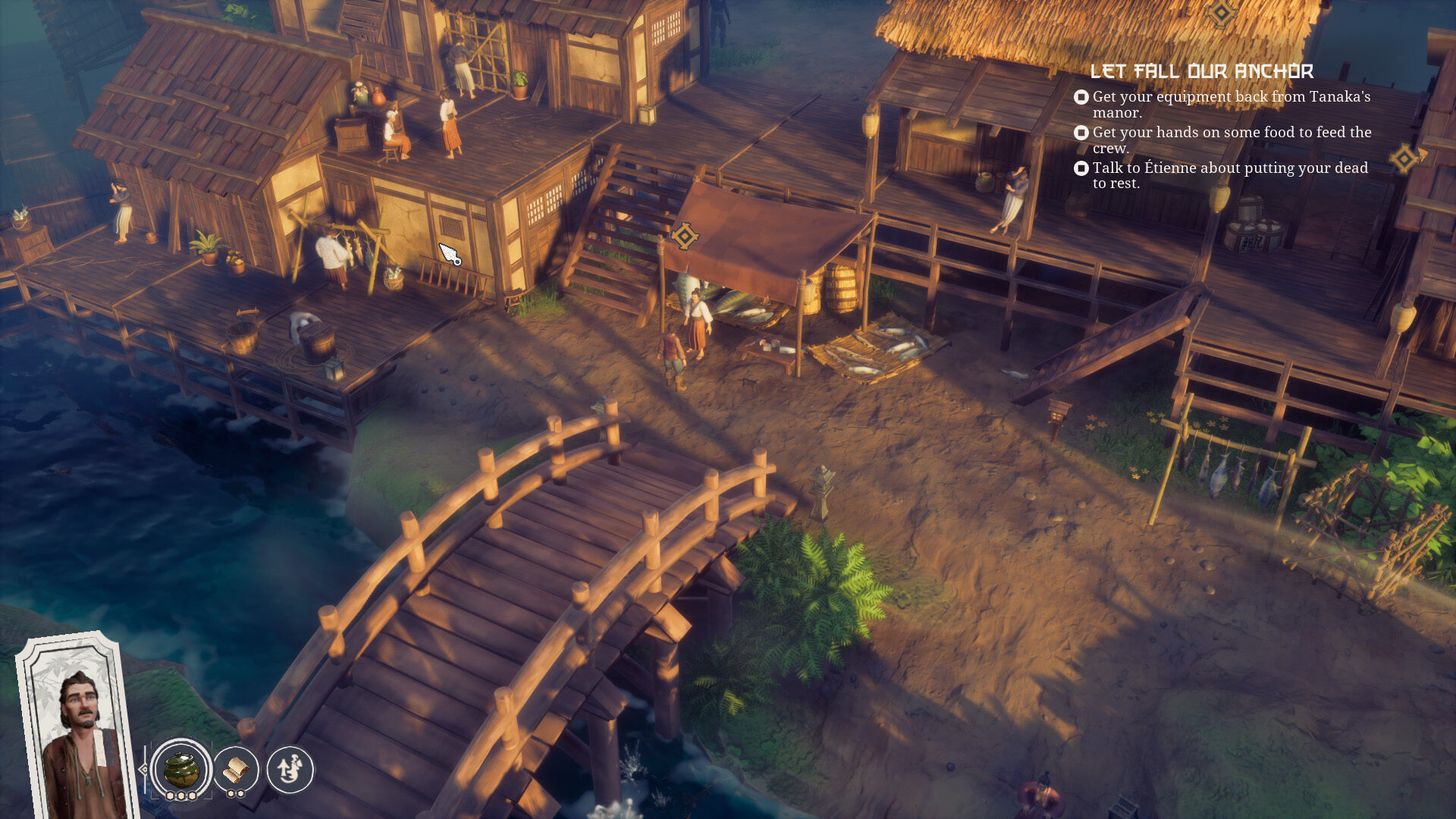
As I touched on in my preview, Expeditions: Samurai is based around the story of William Adams—a European navigator who was the first foreigner granted the title of Samurai. However, this time Adams never left England, and instead it is the player who will step in to fill that particular role in history. After some difficulty at sea, the player ends up on the shores of Japan with a rag-tag crew and little more than the shoes on their feet.
From there, they are granted the title of Captain and must rise up through both their words and their deeds, as every decision matters and changes how both your team and the figures you interact with view you. Despite its connection to actual history, Expeditions: Samurai does take the best elements of the golden age of RPGs and feels like a grounded and engaging story all on its own.
It has that great design where what choices you make in dialogue can have serious consequences, and there’s no knowing whether you’re making the correct decision outside of what knowledge you’re equipped with going in. You’re encouraged to scout around, talk to other people and approach each situation with a cool head and a steady hand. Of course, if you want to just go in swords slashin’ and guns blazin’, there’s that option too. Every route feels attainable, and options are constantly being given to the player.
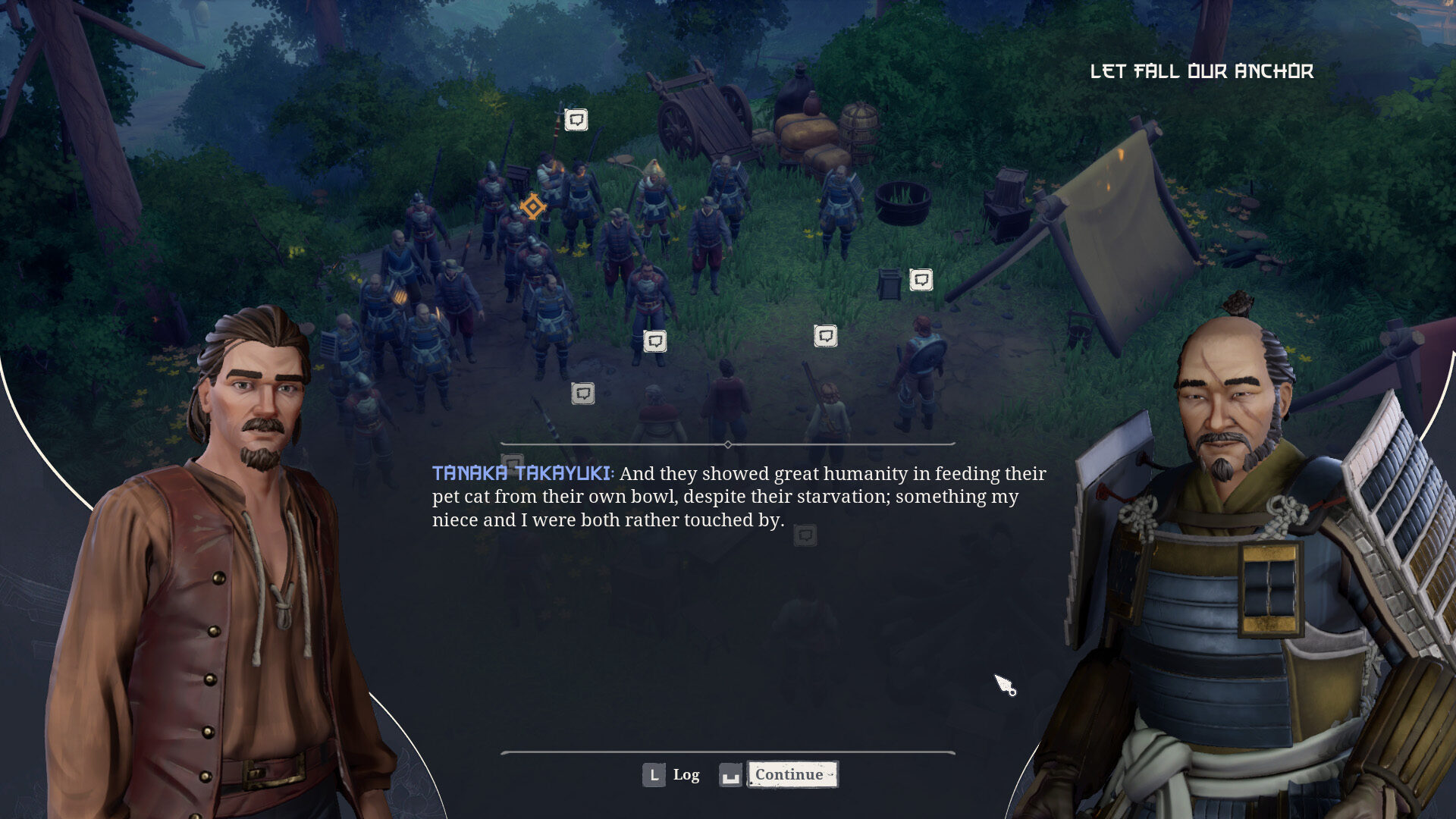
And what I like about Expeditions: Samurai is how contained it feels as an experience. Naturally, when jumping in, players are bound to draw comparisons to games like Baldur’s Gate or Icewind Dale. However, unlike those games that tend to throw you into a giant world and say “go have fun,” Expeditions: Samurai felt much more situational and focused. Every new story moment felt like it was placing me in a contained area with limited options for exploration and information gathering—and I don’t mean that as an insult.
It made the experience feel much more focused on a moment-to-moment gameplay basis, without really sacrificing the depth and complexity of the role-playing experience. Every new moment provided challenges where you could see how, if I had structured my character differently, or made different choices, I could have gone down those routes. Rather than give players a giant world to meander through, Expeditions: Samurai really wants to focus on the dual experiences of both diplomacy and combat.
“Expeditions: Samurai genuinely hooked me with both its gameplay and its presentation. It’s a deep and complex RPG that also never really feels slow or overly-bloated.”
Speaking of the combat, it is incredibly satisfying—offering a lot of depth and nuance, while also giving players a lot of freedom. Unlike other RPGs of this kind that usually factor “Initiative” into the experience, Expeditions: Samurai is more directly turn-based, allowing players to execute all their moves before the enemies get their turn. It gives players a lot more room to set up advantageous situations, while never really losing its depth or complexity.
And I’m definitely making it sound easy, but it certainly is not. Combat scenarios are often set up to put players at a slight disadvantage—as most good RPGs do—to get them to think carefully and consider their best options. Where Expeditions: Samurai also differs from other games in the series is that it’s the first to offer stealth as a combat alternative. Players can perform stealth takedowns—with the right stats and abilities—as well as split their party to place them in advantageous positions before battles start.
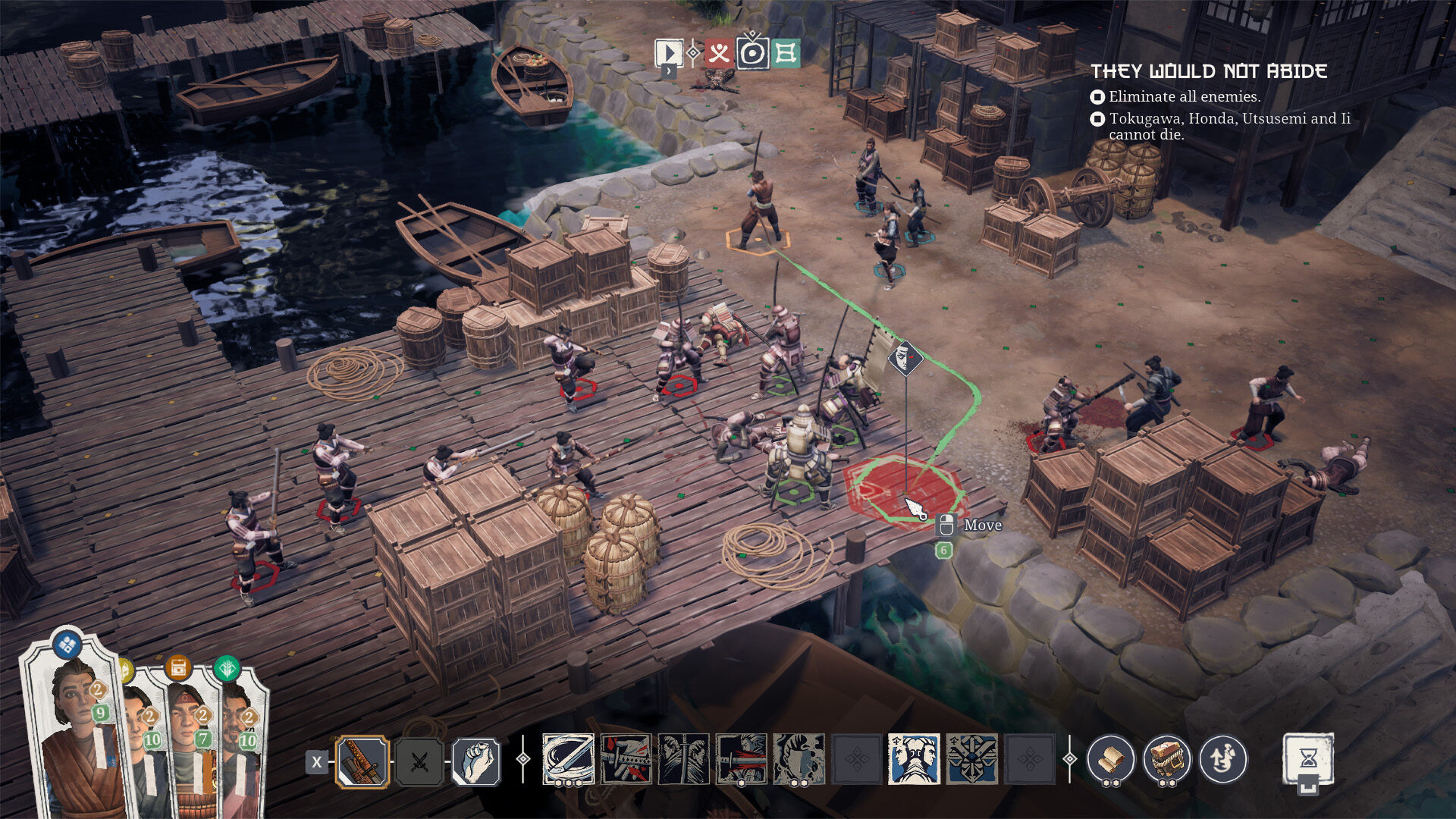
And it’s an interesting game because combat abilities aren’t really tied to each individual character, but rather based on equipped weapons, allowing for a bit more freedom and versatility while also making equipment a more important factor of each encounter. While characters have special abilities based on their class, they can always be rounded out by the right equipment, offering yet another layer of depth and consideration to how they’re built.
However, since this is an Early Access release, there is some jankiness to keep in mind. Certain characters are missing VO, and most VO will just continue playing over other conversations if it’s skipped. Character models for dead enemies will bug out, or repeat death animations if you pick up their bodies and drop them. It’s nothing particularly game-breaking, but it’s those little things that can make a player feel like the game lacks polish.
Expeditions: Samurai genuinely hooked me with both its gameplay and its presentation. It’s a deep and complex RPG that also never really feels slow or overly bloated. It maintains all the hallmarks of the best RPGs while also feeling new and innovative. With more time and polish, when this comes out of Early Access, it could be a new instant classic.