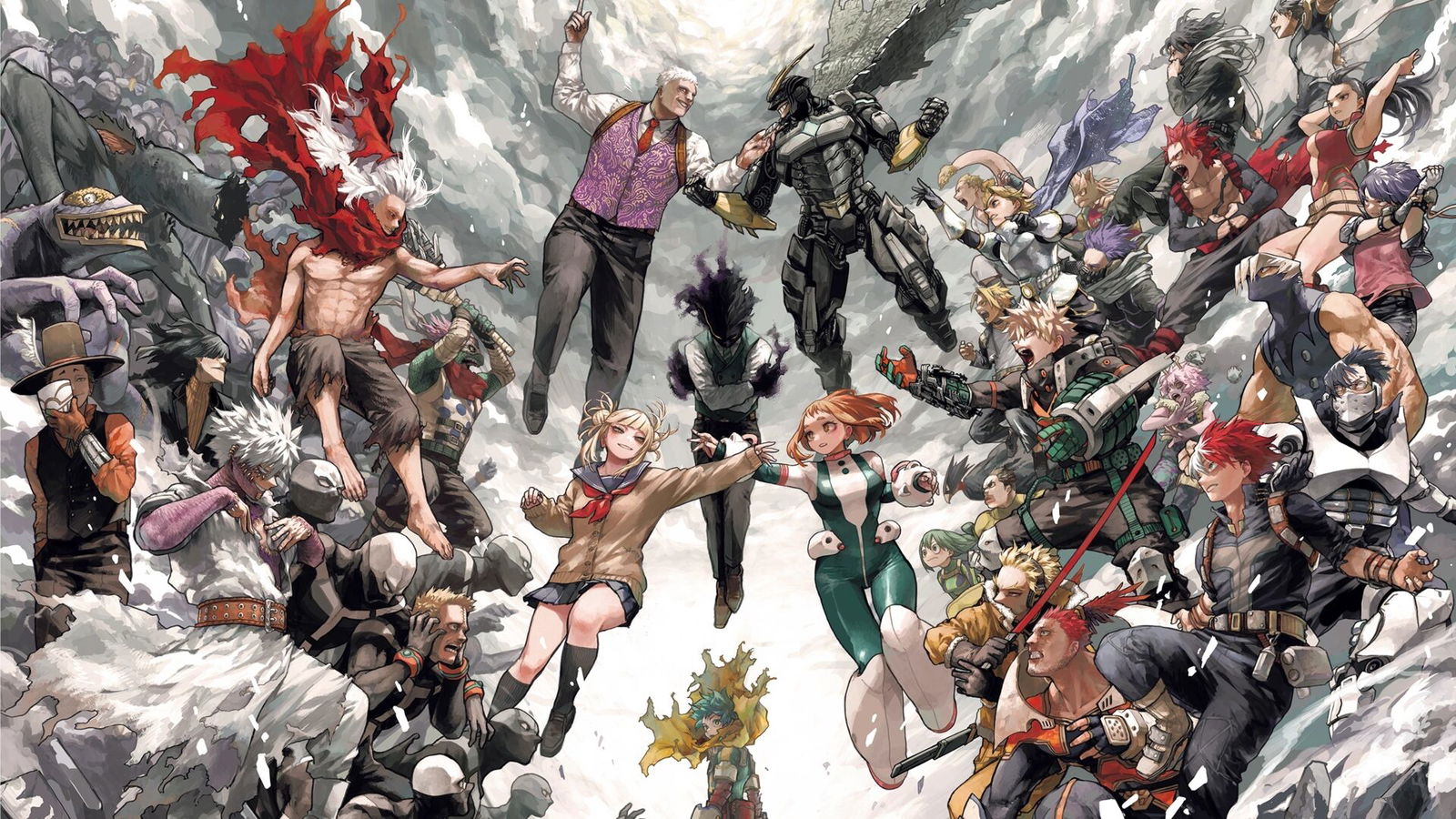
My Hero Academia is one of those series that even people who do not know much about anime know about this show. Or, it is one of the easiest entries for new anime watchers. The manga series was created by Kōhei Horikoshi, who has even worked on the spin-off series: My Hero Academia: Smash!!, My Hero Academia: Vigilantes, and My Hero Academia: Team-Up Missions. The main series ran for just over ten years on Shonen Jump, from July 7, 2014 – August 5, 2024—compiled into 42 volumes.
The series has also gone on to make video games, such as My Hero Academia: All’s Justice and My Hero One’s Justice. The manga and anime have also inspired game collabs in Overwatch 2 and Fortnite, going as far as collaborating with fashion brands like Uniqlo, Fira X Wear, and more. Even esports organization Team Solo Mid (TSM) created a merch line with t-shirts, hoodies, mousepads, and keycaps to celebrate the sixth season.
The anime series premiered on April 3, 2016, and its conclusion on Dec. 13, 2025, marks the end of an era. At Anime Expo 2025, with support from Crunchyroll, CGMagazine had a rare opportunity to sit down for a brief conversation with Daiki Yamashita, the Japanese voice actor for Izuku Midoriya, also known as Deku, to discuss his journey with the character. In addition, we were given the rare opportunity to speak virtually with an extensive roster of English voice actors from My Hero Academia, representing both heroes and villains, ahead of the series finale.

Here is the list of the English voice actors we spoke with for My Hero Academia:
- Justin Briner (Izuku Midoriya / Deku)
- Clifford Chapin (Katsuki Bakugo / Great Explosion Murder God Dynamight)
- Christopher Sabat (All Might / Toshinori Yagi)
- John Swasey (All For One)
- David Matranga (Shoto Todoroki / Shoto)
- Luci Christian (Ochaco Uraraka / Uravity)
- J. Michael Tatum (Tenya Ida / Ingenium)
- Colleen Clinkenbeard (Momo Yaoyorozu / Creaty)
- Justin Cook (Eijiro Kirishima / Red Riot)
- Patrick Seitz (Enji Todoroki / Endeavor)
- Christopher Wehkamp (Shota Aizawa / Eraserhead)
- Jason Liebrecht (Dabi/Toya Todoroki)
- Leah Clark (Himiko Toga)
For those who need a refresher on the general plot of My Hero Academia, the series is set in a world where superpowers (called “Quirks”) have become commonplace. The story follows Izuku Midoriya, a boy who was born without a Quirk but still dreams of becoming a superhero himself. He is scouted by the world’s greatest hero, All Might, who bestows his Quirk to Midoriya after recognizing his potential, and helps to enroll him in a prestigious high school for superheroes in training.
In our current world, there are so many forms of superhero media. The franchises range from the Marvel Cinematic Universe (MCU), The Boys, to Invincible. Some audiences argue the superhero genre is becoming stale, but My Hero Academia breaks those barriers—with amazing animation, artwork, and a supremely talented voice cast to back it all up.
Spending over 10 years with these characters, a little bit less for some, it takes a certain responsibility and privilege to play them. Hearing each of these actors’ stories behind the voicework is insane to think about all that has happened in their lives, and the lessons they have learned by working on My Hero Academia.
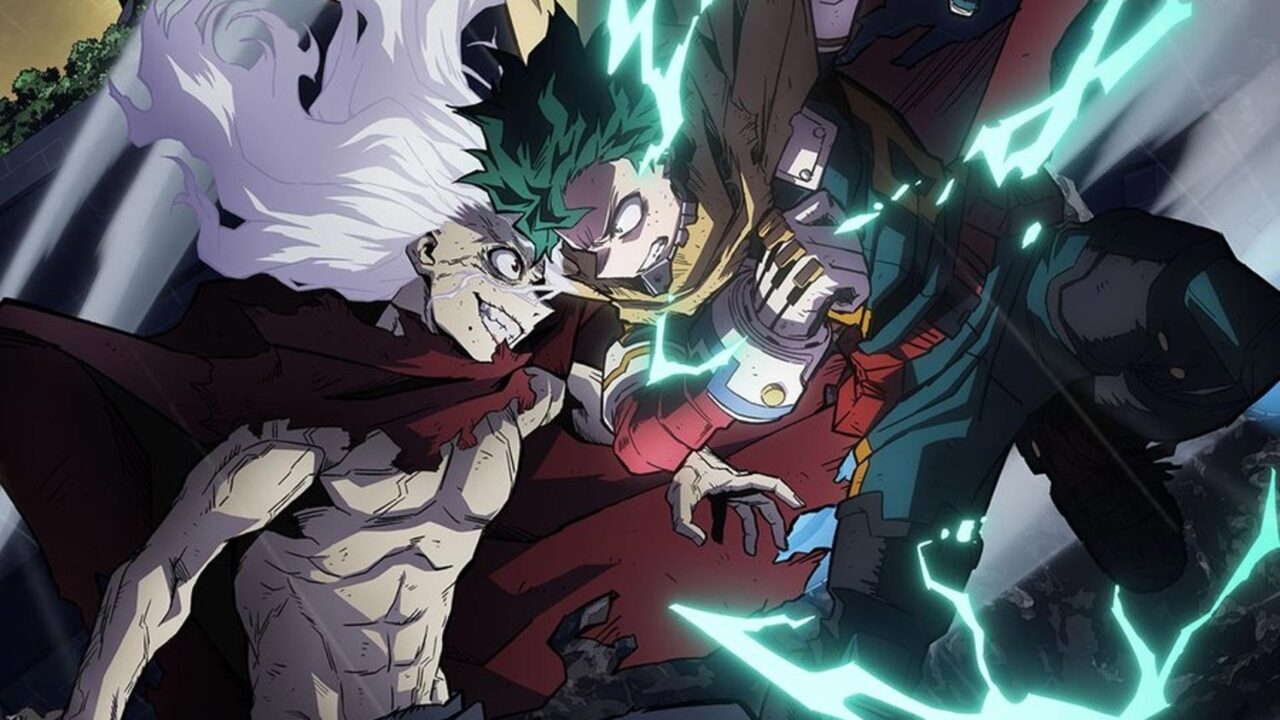
Clinkenbeard mentioned that she “watched her kid grow” throughout the decade she directed the voice cast and played Momo, and appreciated how much people can find themselves in each character. Wehkamp, Cook, and Tatum talked about how they learned about “how important the characters are to the fans” and their fascination with “watching the audiences grow with the show.”
Meanwhile, Liebrecht found playing a villain like Dabi to be “therapeutic” and has learned “to be a better father.” Liebrecht opened up about being a survivor of childhood abandonment and violence, in a stark similarity to his character. “I have found a way, in part through playing this character, to turn that trauma in my life into something I feel is akin to strength more than a weakness.” He continues to list all the many ways exploring Dabi’s story mimics the exploration of his own life while also feeling “cathartic” about the whole experience. But ultimately, he is happy being the best dad he can be and being the best person he can be.
Matranga also mentioned his self-realization and growth as a person by playing Shoto. “Some days you fail your provisional licensing exam, and some days you don’t…the perseverance, strength, and willingness to stay open have reminded me to pursue that in my own life.” Both Clark and Christian discussed “the power of understanding”, as their characters Ochaco and Toga finally reach an understanding with one another by the end of My Hero Academia Season 7.
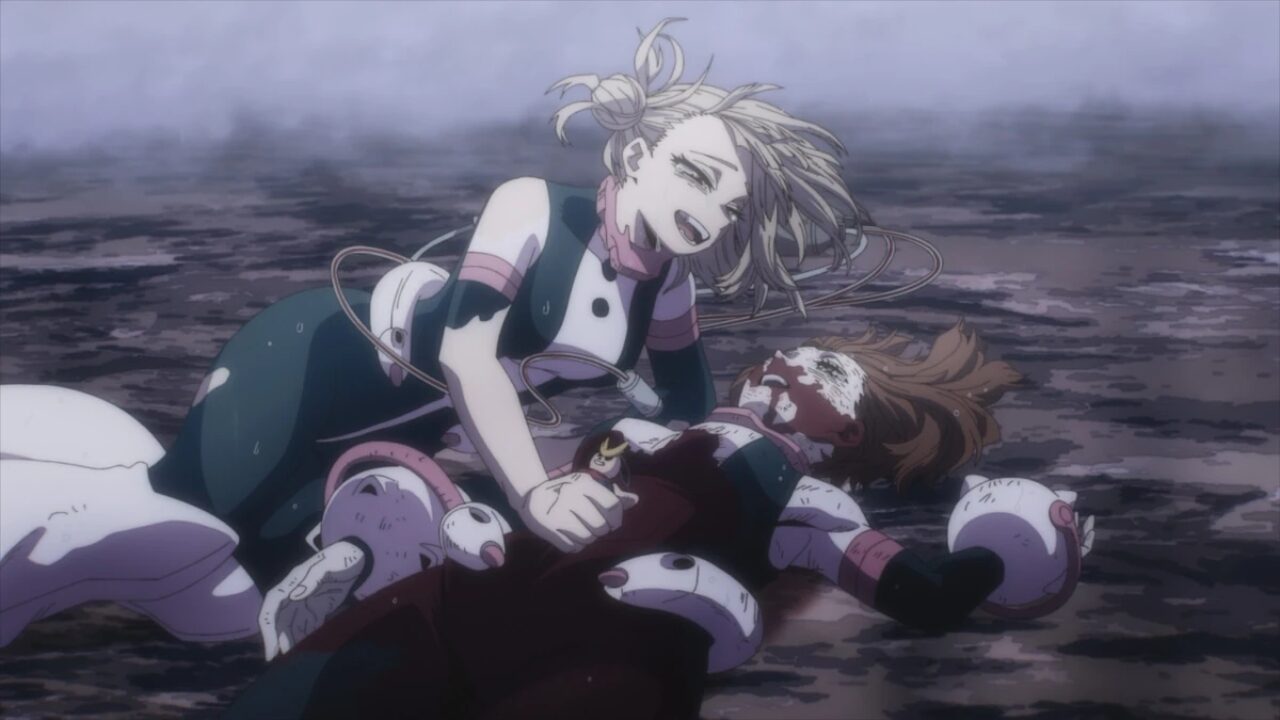
One of the takeaway lessons Christian loved seeing within Ochaco’s growth is how the more Ochaco “interacts with the real world and villains, the more cloudy things look. It’s not quite as clear as what’s good or bad—it’s messier. Those questions are valuable.” This is true about the real world, where about 99% of other human beings will not fully understand you. But there will always be those 1% of people who are open to seeing all of that.
“I sometimes struggle to ask for help, and Deku does as well initially—but he’s so much stronger when he finds the power to ask the people that he trusts for their help and expertise.”
For Clark, she mentioned how important having friends who are understanding is very important in life. She spoke about “how powerful it is when someone says, ‘No, you are okay. I’m here now, and I want to do all the things.’ It’s the small gestures that are a big deal and change people. That really spoke to me.” Everyone wants friends who understand them, but it takes a lot of work, conflicts, and patience to get there.
Yamashita and Briner both said something profound about Deku and what they took away from the character. “By meeting Deku, I was able to love myself a little more as well,” Yamashita shared. The crazy part is how Briner said something similar, “I sometimes struggle to ask for help, and Deku does as well initially—but he’s so much stronger when he finds the power to ask the people that he trusts for their help and expertise. So that’s something I try to be better at.”
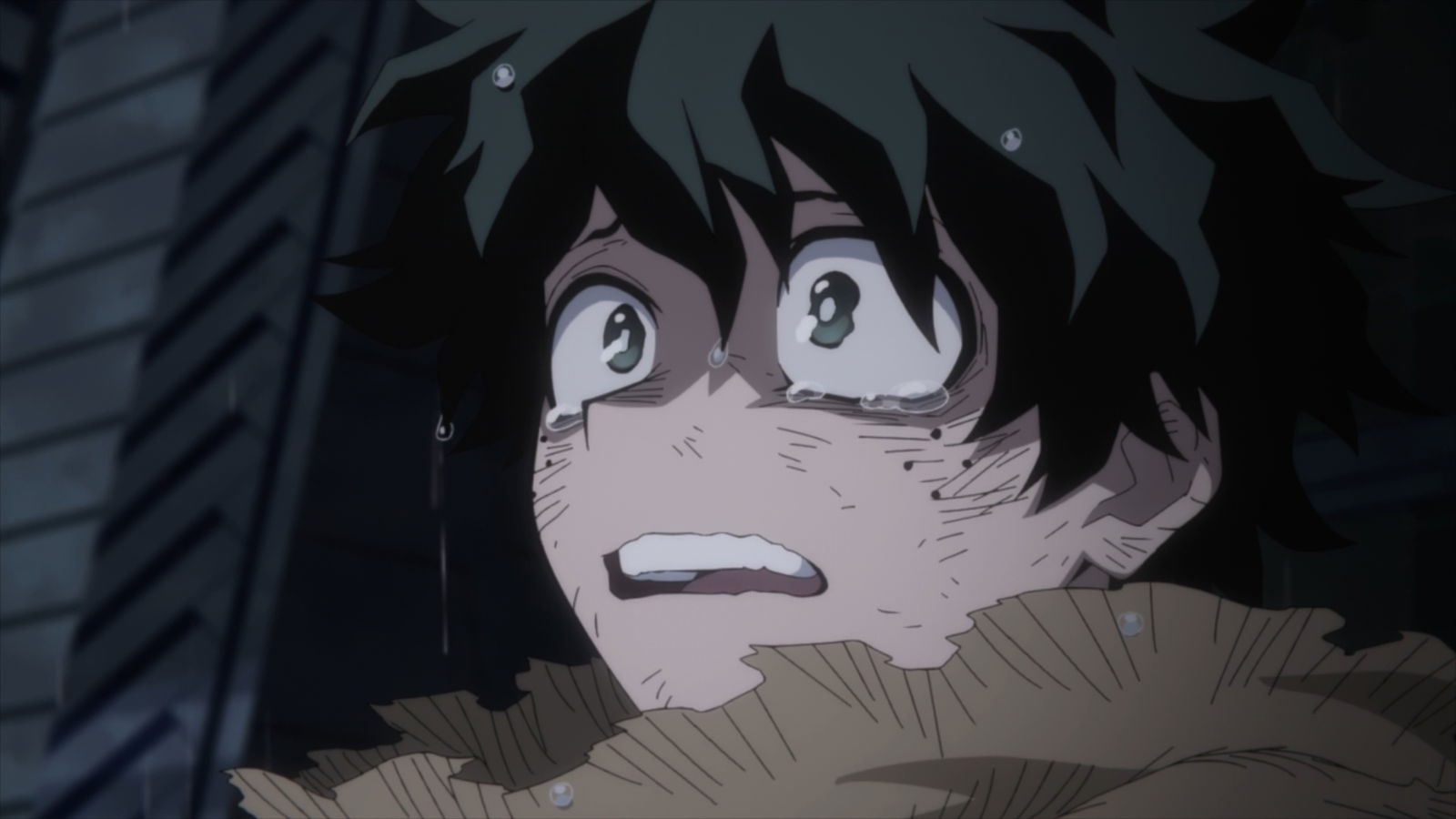
Watching My Hero Academia, I never once thought about why a lot of people would connect with Deku. But then, it dawned on me during the chat with Wehcamp. Wehcamp reminded me that Deku is Quirkless, like all humans in real life are. “The reason I think this show resonated so much, and will continue to resonate, is because it centers around a kid who doesn’t seem to have anything to offer. He doesn’t have any powers. The audience is able to put themselves in those shoes right away because nobody watching it has any powers either.”
In all of Class 1-A’s training arcs, I was stoked to go to the gym and put it all out in my basketball games. One of the drawbacks of playing sports is how much I push my body over its limits, and all the injuries I have overcome. Shows like this one made me allowed me to surpass my limits, and also inspired me to recover from injuries to play again. Without a doubt, it makes sense when the show does collabs with the NBA.
“Deku has become such a force of positivity and optimism, and I hear that from fans of his a lot. We’ll talk about how his growth has helped them or inspired them to get out of a dark place, take them out of a tough spot, or just make some positive change in their own life. As far as legacy goes, that’s really special. To be a small part of why this show is impacting culturally and personally for these people to better themselves, that’s super cool.” Briner said on Deku’s journey over the past decade has significantly changed real people’s lives for the better.
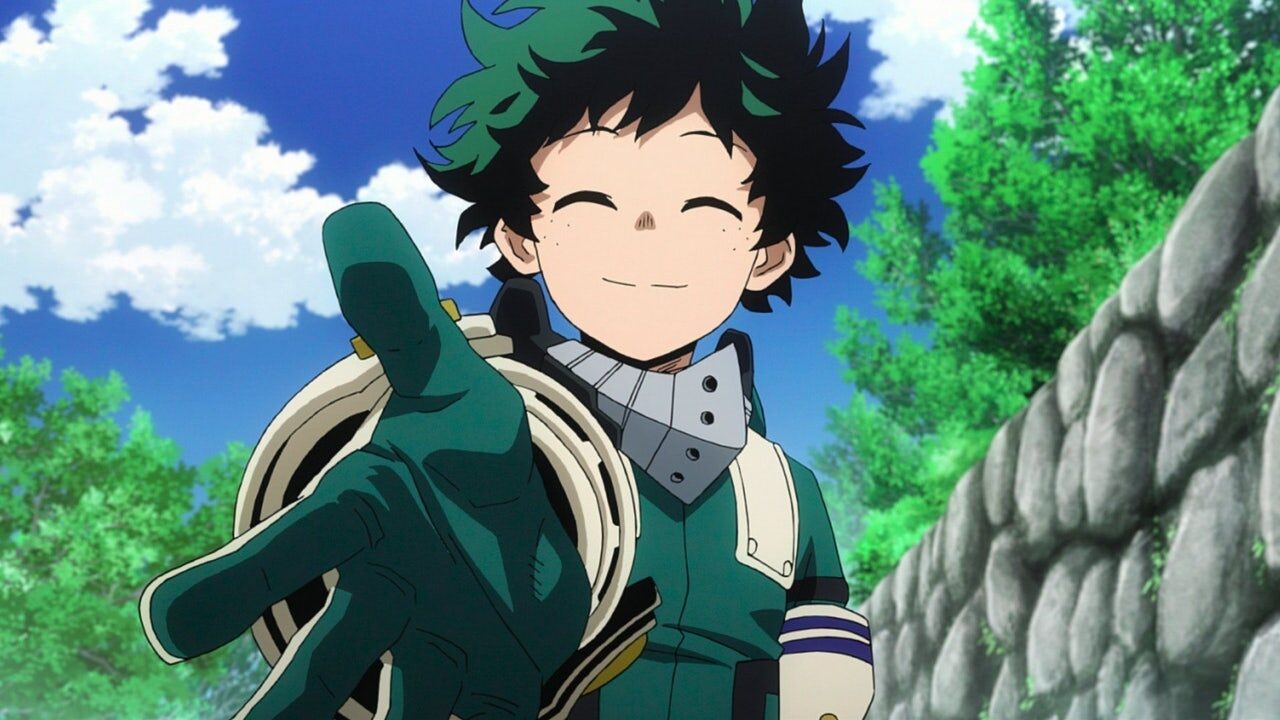
“The thing I love about working on Crunchyroll dubs, especially something like this show, is that everyone goes all out. Everyone goes as far as they can go. Clifford almost goes so far you almost have to pull him back. Sometimes you’re like, ‘Clifford, come on. Save some of your voice. Don’t leave all your flesh on the microphone or on the pop screen today.’ But I’m really proud of the work we all did because the one legacy we might leave from the show is that we worked really hard on it.” For Sabat to say this, you know they went Plus Ultra on this project—and it shows in everyone’s performances.
“The reason I think this show resonated so much, and will continue to resonate, is because it centers around a kid who doesn’t seem to have anything to offer.”
Chapin also added how Season 1 Bakugo sounds so much different than Season 8 Bakugo, and that is because “nine years of screaming that hard will do that to you.” Through the burning passion and love for each of their My Hero Academia characters and their craft, Chapin mentioned two important statements about the show that boiled down to the concept of how My Hero Academia is a “time capsule.”
He says to those who may watch this series for the first time 20 years from now, “I think it’s really awesome that people will be able to experience it, and if they really want to delve into it, they’ll get an interesting history lesson of what anime was like from 2016 to 2025.” Swasey also mentioned how the show is “timeless because it’s not dealing with anything topical as far as a time period that’s reflective of the real world.”
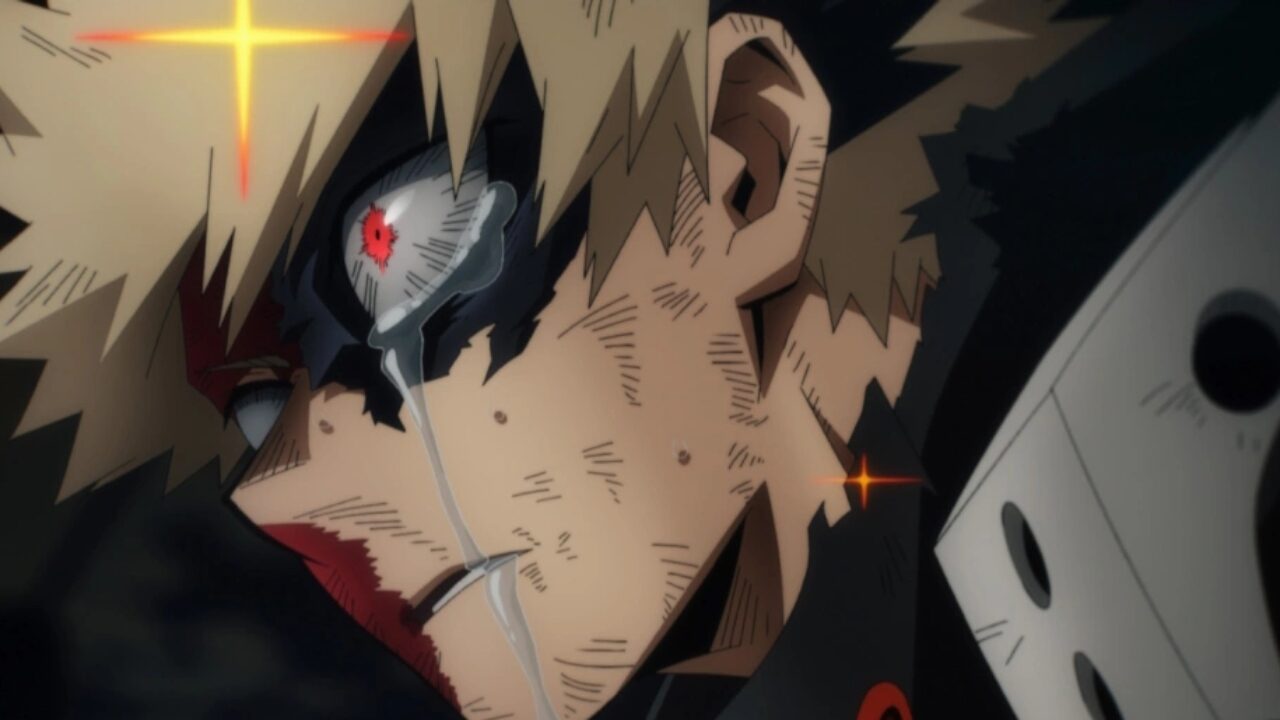
This is true since the manga and anime do not particularly give specific dates, but fans deduced that it is somewhere in the 2100s. Either way, this “classic story of good and evil” or “the hero’s journey”, as Swasey and Wehkamp put it well, is what immortalizes this series above all else.
To me, My Hero Academia will always withstand the test of time because of how the production took the time to flesh out most, if not all, of its main characters—sometimes going deep into side characters’ stories. Two of the side characters that I thought were amazing callbacks right to the end of the series are La Brava and Gentle Criminal. They are the epitome of people who commit crimes due to issues such as societal rejection.
Seitz took the words out of my mouth about how I feel about coming back to this series in the future: “I want to be able to go back to this in one year, five years, 10 years, and feel everything that I felt before again—and reconnect with friends.” While this journey comes to an end, it will leave all these lessons behind for those who come after.
Yamashita ended our chat at Anime Expo 2025, explaining how much he appreciates Deku because he believes that Deku “respects everyone’s Quirks, regardless of whether they’re friends or not.” He noted how that line about respecting Quirks “left a huge impact” on him because he also feels Deku is telling him how special he is too. “No matter what anyone says, I feel like I can be proud about whatever I love.”
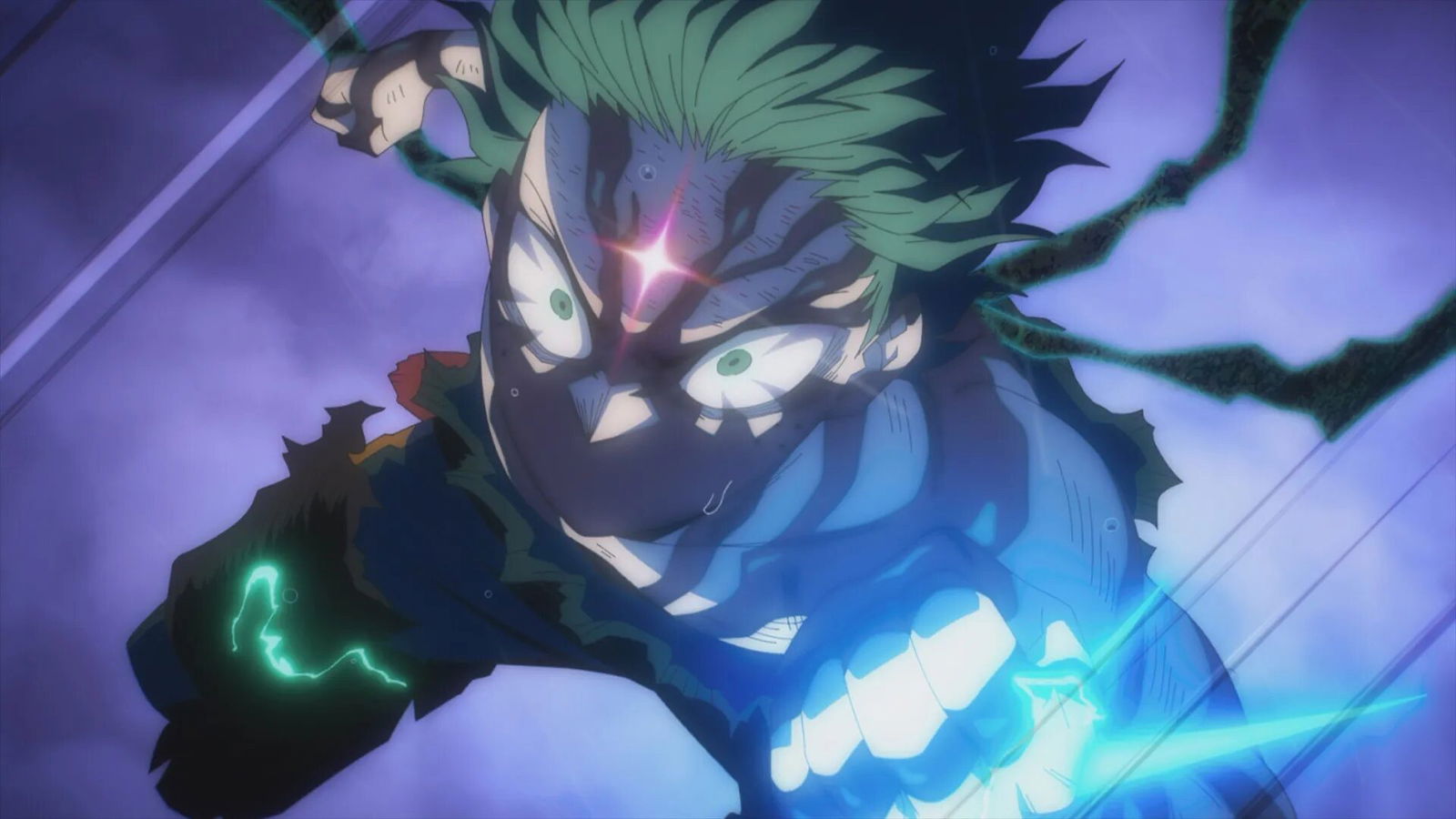
For better or worse, My Hero Academia came at the perfect time in my life because I was able to experience it year-to-year in my twenties. This show and the lessons I still carry with me today have left the biggest impact on both who I am and who I strive to be. All this is to say is that if you think the superhero genre is oversaturated and it has said all it needed to, I implore anyone who has not seen this show to give this one a watch. You will come out of the show a different person—hopefully, a better one.
To end on one final quote from Liebrecht: “For posterity and the future generations that end up watching [My Hero Academia], they too can use this [show] as a tool to help through moments that might be rough, help them feel seen, and that they can relate to. If that could continue, that’s way more than I ever anticipated.”
Thank you to everyone involved in My Hero Academia—staff, talent, and everyone in between! And thank you to Crunchyroll for these wonderful, rare opportunities. Everyone should live their lives, Plus Ultra!