

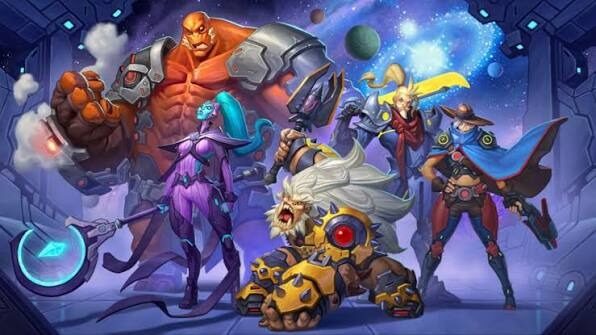
Few designers have shaped modern gaming like Richard Garfield. As the creator of Magic: The Gathering, he essentially invented the trading card game and is now bringing that genre-defining ambition to the digital space. Alongside Arka Ray, whose background includes work on XBOX Live, Garfield co-founded Popularium, a studio built around player choice, empowerment and fun.
Garfield serves as game design director, while Ray is president and technical director. Together, they are leading Chaos Agents, the studio’s debut title. Billed as the world’s first “Autobattler Royale,” the game combines the strategic planning of auto battlers with the scale and tension of battle royale. Its biggest twist is that every hero is one of a kind. Each Agent carries a unique name, appearance and skill map, and only one player at a time can take them into battle. Players act as Brokers, guiding their roster of Agents through matches that crown three winners: the player with the most kills, the last one standing and the top shard collector.
With Chaos Agents currently planning a playtest for late October and early access planned for 2027, we recently sat down with Garfield and Ray to talk about where the game came from, how its design has evolved and what players can expect next.
How did Chaos Agents come to be, and how did you get involved?
Richard Garfield: Well, it came to be because I had been obsessing over auto battlers. Auto battlers just hit a really nice chord for me with computer games. I love computer games, and obviously I love board and card games. But often, it felt like there was a big distance between them.
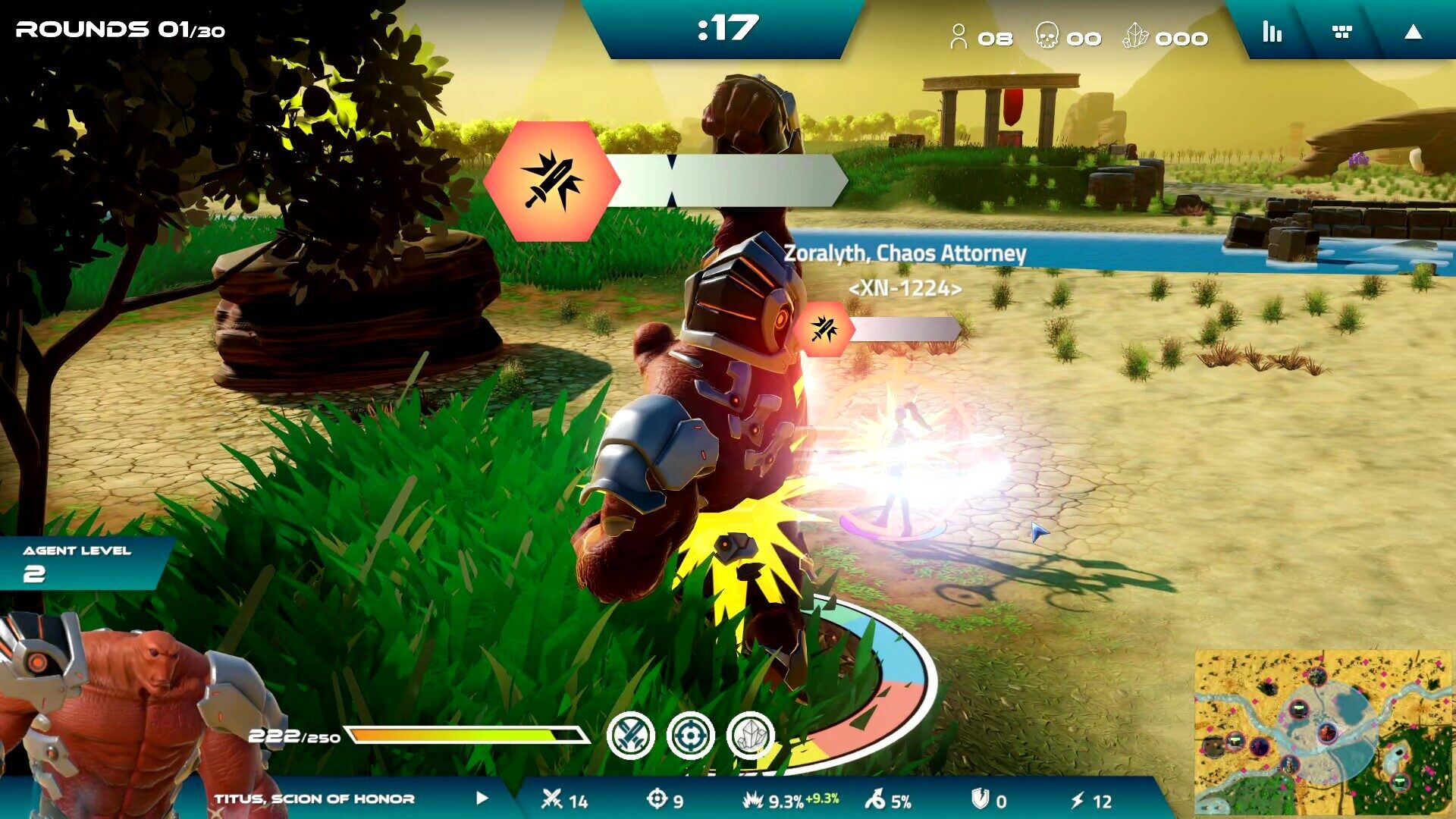
So, I’ve been working with Scaff for a long time and had been working with Arka a bit, and Scaff and Arka had been working together for a while. In talking about this, we talked about this idea of combining them with battle royale. One of the reasons I think they’re so popular is that people don’t go in with the belief that they can win every game or that they should get to win every game. Which is not the case when you’re going in on a team with two teams, or individually. And so, you get this more casual feel.
Auto battlers should be able to support as many people as you like in the same room. A lot of auto battlers were multiplayer, but they always broke it out into pairs, which seemed like a missed opportunity. You could actually get sort of this feeling of everybody sitting around the table playing together. You’d be able to make your moves and then, while watching the move, strategize or trash-talk or whatever. You could actually build a community.
How has Chaos Agents evolved from that starting concept you came in with to what you have now, which is close to an early-access-type situation?
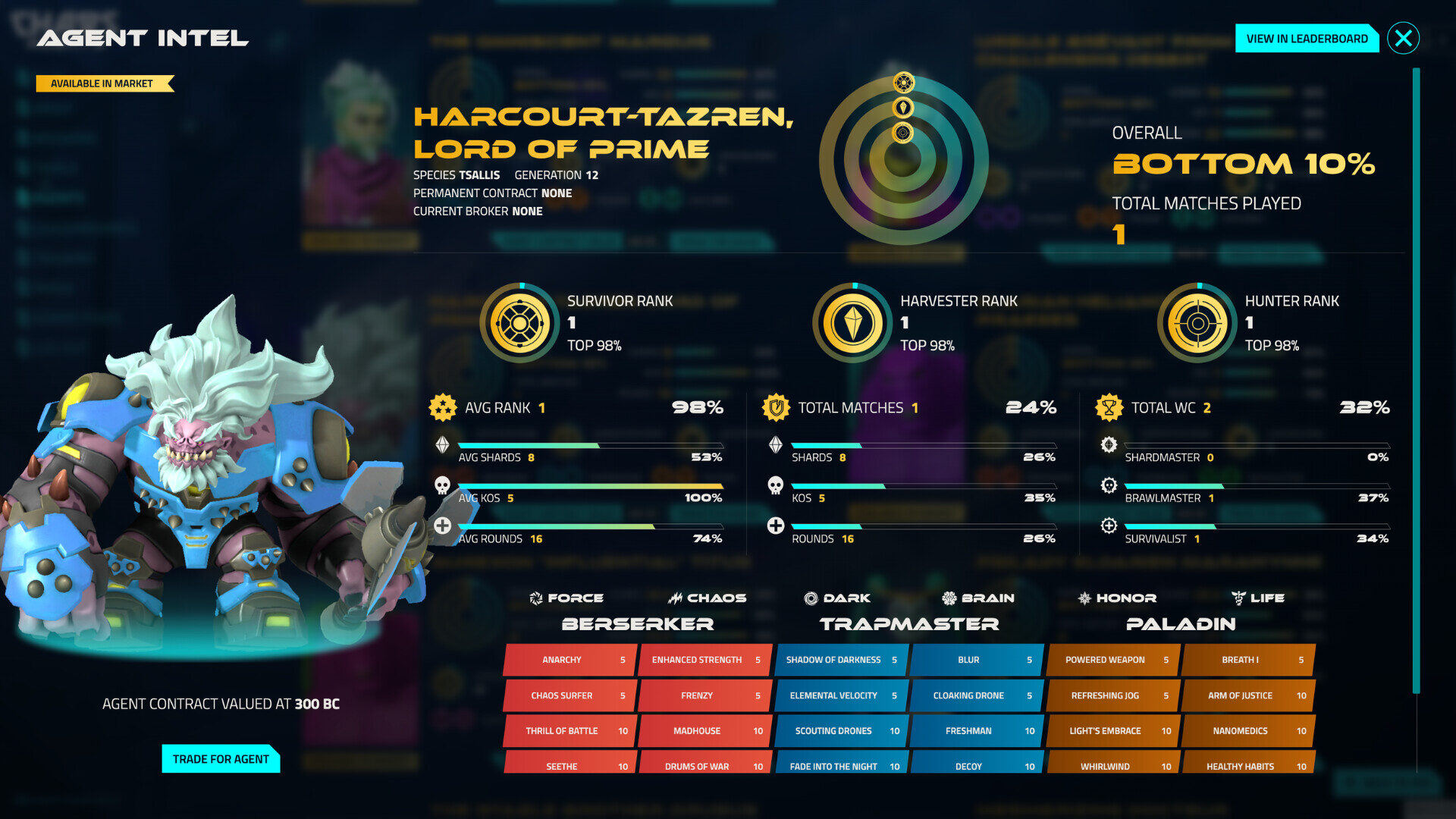
Richard Garfield: So, there is a third leg to this tripod. Otherwise, it would be a bipod, which is the unique decks. And so, the role of the unique decks is, we’re very attached to this idea of people having unique game assets because there’s a lot of things that bring to the table. Even though it sounds a little weird because there aren’t many games that do that, when you take a step back and look at sports, or really any game, if you start incorporating people’s capabilities, it becomes something where everybody has these unique assets.
Our experience in playing around with these things is that it really leaves players more room to play because, in competitive environments, there’s this tendency for people to build a very prescriptive meta, where if you are losing, you feel like the only way to change that is to go on and follow whatever the meta that the experts declare is the case. And it’ll usually be very—as I said—very prescriptive, where it’s: use these cards, choose this class, use these builds for this class, operate in this way.
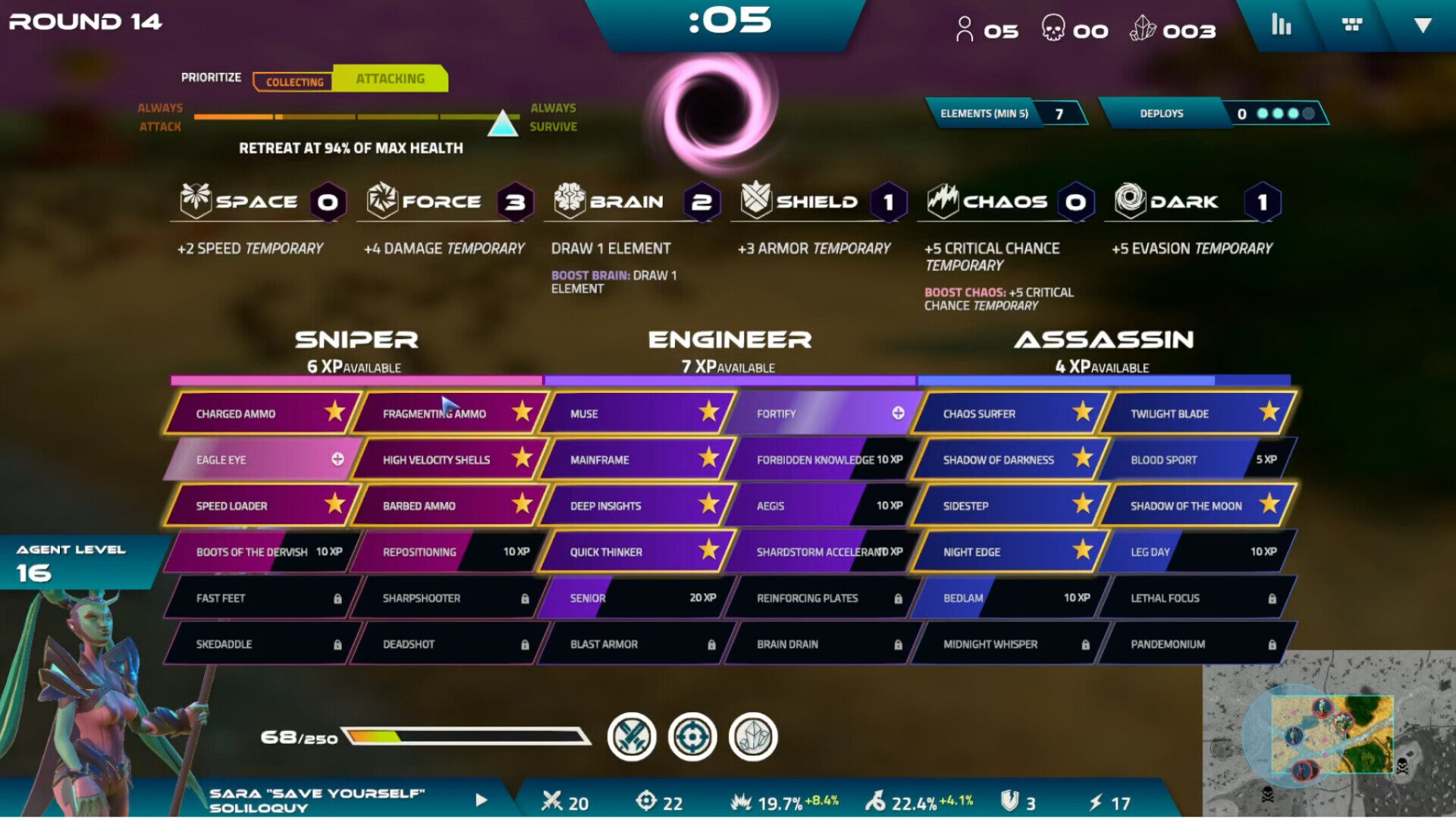
When you have unique assets, there still is this layer of expertise, but this sort of expertise has to be given in a way that leaves a lot more room for play. They can’t tell you what to build because they don’t know what you have, but they can tell you that these things work together, or you should look for these sorts of combos. But those are the sorts of things that leave you, as a player, with a lot of agency.
And so, in answer to your question, how this has gone, we first got a prototype much earlier than I would have expected. And it was, in fact, before we really had much of a representation of these unique decks. I was pleased and surprised to see how compelling and fun the game experience was at that point.
Since that point, we’ve been sort of fleshing out those mechanics, as well as getting the framework in good shape to really hold the number and range of skills that we’d like to see in the game.
Now, auto battlers appeal to a pretty wide range of players. Who are you targeting with Chaos Agents, and do you see it reaching a broader audience than what is currently on the market?
Richard Garfield: Yeah, I do see it as being more mass—more a broader audience. The way I really like to design my games is with as much breadth as possible. My formula for that is to make it so that there’s high-level skill—a very high skill cap—but that there’s enough variance in the way the game plays out that casual players feel like they can play casually and not just be smacked down all the time.
Arka Ray: Another very unique phenomenon we’ve seen is the point of accessibility that Richard made. One of the core demographics we’ve seen in our alpha is actually parents and children playing together, and that is very rare for a competitive PvP game, both in terms of accessibility and also in terms of, as Richard said, the scaling of the skill level. The highest-rated player in the world that we have is basically someone who plays with his dad.
Now, I do want to quickly touch back on the game design and what makes Chaos Agents different from other auto battlers that are currently in the wild. And if you were selling it to people who might not know auto battlers, how would you sell Chaos Agents to someone who might not know the genre?
Richard Garfield: It really is different in a lot of ways, but I’d say the main one right now is that you do get everybody in the same room. You all make a decision, and then you all watch in this one room, rather than pairing off, to see how things resolve. This really leans into one of the most charming elements of auto battlers, which is the chaos. The chaos in the games that are set up as one-v-one matches is delightful and a lot of fun.
But this opportunity to take that chaos and say, “Well, what if we were all in the same room?” sort of spirals out into a dimension that just doesn’t feel like it was there before.
What does the future look like for Chaos Agents? Where does the game go from here, and what can you talk about that players should look forward to?
Richard Garfield: I’d say that the main thing is we’re on the cusp of really getting to the place where the skills are acting the way we first scoped them out. And that is, I wanted every character to feel really exciting. When I play a role-playing game, one of the first things I like to do is open up that skill chart and see all the different ways that I can explore that chart. That’s what makes a game like Path of Exile so exciting.
And so, what I wanted to see in this game is that every time you open an agent, you see your own random skill chart, which is going to look like sort of a hex grid. The reason it’s structured that way is that I want a major part of the skill in playing to be deciding how you want to flesh that out each time. Do you want to develop your assassin skills? Do you want to develop your sniper skills? Do you want to do a mix?
And if we do our job in generating the skills as best they can be, then we’re looking at a situation where a player will have a favoured way to play their agent, but they will adapt based on circumstance and what they see going on around them. And I think that’s going to be a really exciting place to be, and that’s what I expect to see in the future.
Also, we’ll have the framework for this skill set in the future. The ability to make the skills themselves is also something that is being developed. For example, right now we don’t have the capability of summoning creatures, building turrets, or a lot of environmental effects. These are planned and will flesh the game out a lot. But as we develop them, I’m expecting a lot of interesting things to arise.
Arka Ray: I just wanted to add something to what Richard said in terms of what we’re looking at. As Richard mentioned, we have some systems to flesh out, which we believe, by the end of this year, will get to a point where the gameplay is really tight and working really well. But we also need to do some work to make sure that, you know, we’re giving people a really nice, packaged experience for the first 10 to 20 hours, so that they have a smooth experience to the point where they are then, you know, thrown out into the big ocean.
So, we are creating sort of a story campaign, et cetera, to teach you the game, as well as get you to acquire your first few agents, trade your first few agents, and so on and so forth. We are hoping to be in early access by the first half of ’27. Right now, we’re going to be in alpha through the end of this year.
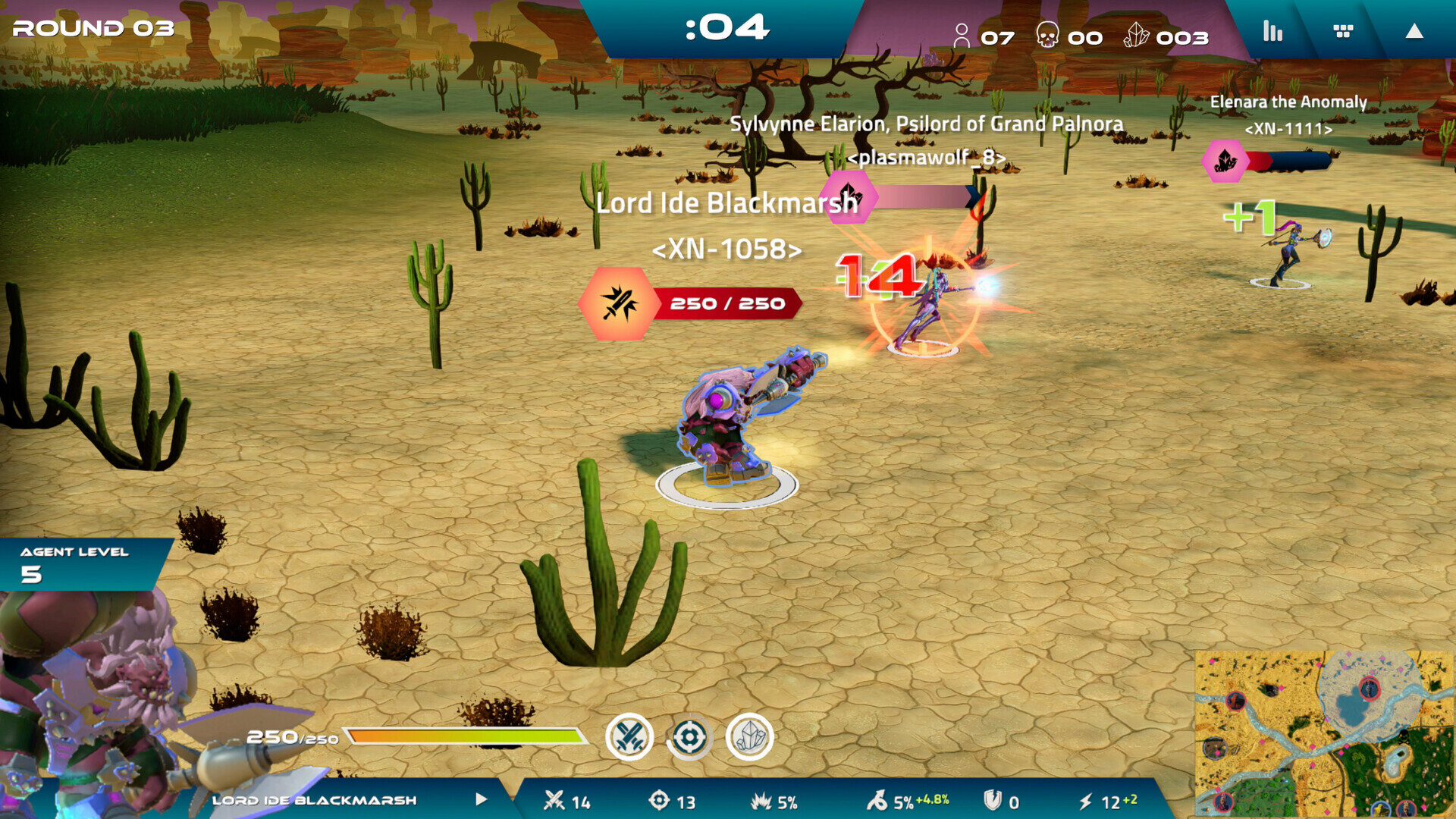
Richard Garfield: Yeah, and I would like to mention one other thing that is really unique about the game, which is worth pointing out to people who are looking at it for the first time: it is designed to be a battle royale, to have a lot of people in one match competing.
But it does bring one unique thing to the battle royale experience, which is that there’s not one winner, the survivor, but three winners. So, there’s the most kills, which, you know, people like to do, but it isn’t necessarily conducive to actually surviving. There’s the survivor, and then there’s the person who’s collected the most shards, which are sort of the in-game gems.
And this is one of the things that I think will make the game much broader in appeal, because people can engage with it in these three different dimensions. They can focus on one, they can try to balance themselves between them, or they can see what opportunity arises. It plays very well with the unique agents because, before we did that, we decided to make these co-equal winners. There was this idea that, even though we could get a lot of variety with the agents, in some ways they’re always being mapped down to this one dimension.
But by making it so that there are these three dimensions, you could have agents that are good at all three, really good at one, and not good at another. And it adds this layer of variation, which I think is the sort of thing that really develops a broad interest in the game.
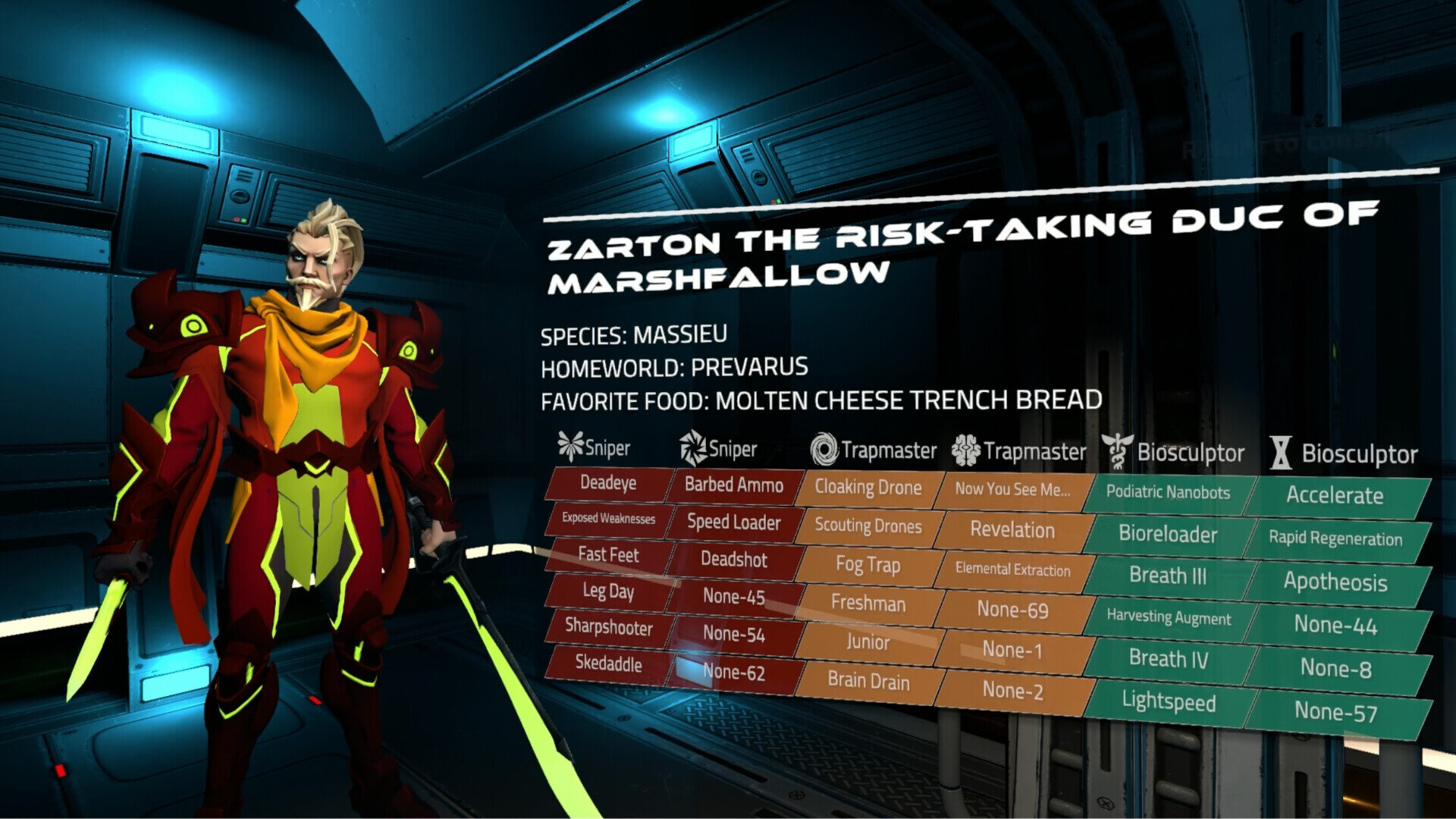
You mentioned that one agent could be good at all three aspects. How do you balance that so one agent does not dominate while others struggle to catch up?
Richard Garfield: The highest-level answer to that is that, first of all, there is automatically this presumption that we’re balancing the game for that. We are balancing the game to make it fun for as broad a range of people as possible, but we are not trying to make the agents equal to one another.
And you can look at real life for how people deal with that. In sports, you get that all the time. And in horse racing, where you’ll have better horses and not-so-better horses. You don’t want the best horses to be racing in the races with all the scrubs, because that just wouldn’t be any fun. Similarly, when you play a sport, you don’t want to have your NBA playing with your high school teams. But that doesn’t mean that the NBA and the high school teams don’t both play hard, play strategically, and have really interesting and fun games.
So, we’re looking for inspiration from these real-life examples of how we deal with unfairness in all areas of games, sports, and life.
So, we do want to see the agents being promoted into higher-echelon challenges, but having the medium- and low-echelon challenges still be interesting to play. One of the interesting things is that we are attaching the ratings to the agent, not the player. And this opens up a lot of possibilities because it means, as a player, I can play casually with one of my agents, seriously with another, or try experimenting. No matter how I engage with it, it doesn’t ding my ranking as a player.
I’m trying to get my agents to the place I want them. One of them might be, you know, top-notch; other ones might not be. And this gives me, as a player, an opportunity to play a wide range of different levels of challenge.
Sign up now for the Chaos Agents Playtest coming in late October.