
Last month, PlayStation Canada brought me out to Sony Headquarters in San Mateo to go hands-on with the highly anticipated game, SAROS. I knew this was going to be a major release from PlayStation, with Housemarque’s last game, Returnal, being extremely popular with players, even winning multiple awards like Best Action Game at The Game Awards.
SAROS is being called the “spiritual successor” to Returnal, and I was lucky enough to sit down with some of the team at Housemarque to learn more about what that means. I spoke with Housemarque’s Creative Director, Gregory Louden, and Art Director, Simone Silvestri, about all things SAROS. From working with a full ensemble cast, including the likes of Jane Perry and Rahul Kohli, to what exactly “spiritual successor” means to Housemarque, we dove deep into the making of SAROS and even got some advice for players once they jump into the world of Carcosa.
Can I just get you both to let us know who you are and a little bit about what you specifically did for SAROS?
Gregory Louden: I’m Gregory Loudon. I’m the Creative Director of SAROS. And yeah, I got to work with an amazing team and essentially drive them towards creating the most epic sort of Housemarque action game we could.
Simone Silvestri: Dayna, nice to meet you. I’m Simone Silvestri. I’m the Art Director at Housemarque, and a lot of my job is, you know, getting the creative direction from Greg and then translating that into the execution of art into the game.
What can you tell us about the overall story of SAROS, where that came from, what inspired it, and then what inspired the art that goes along with that story?
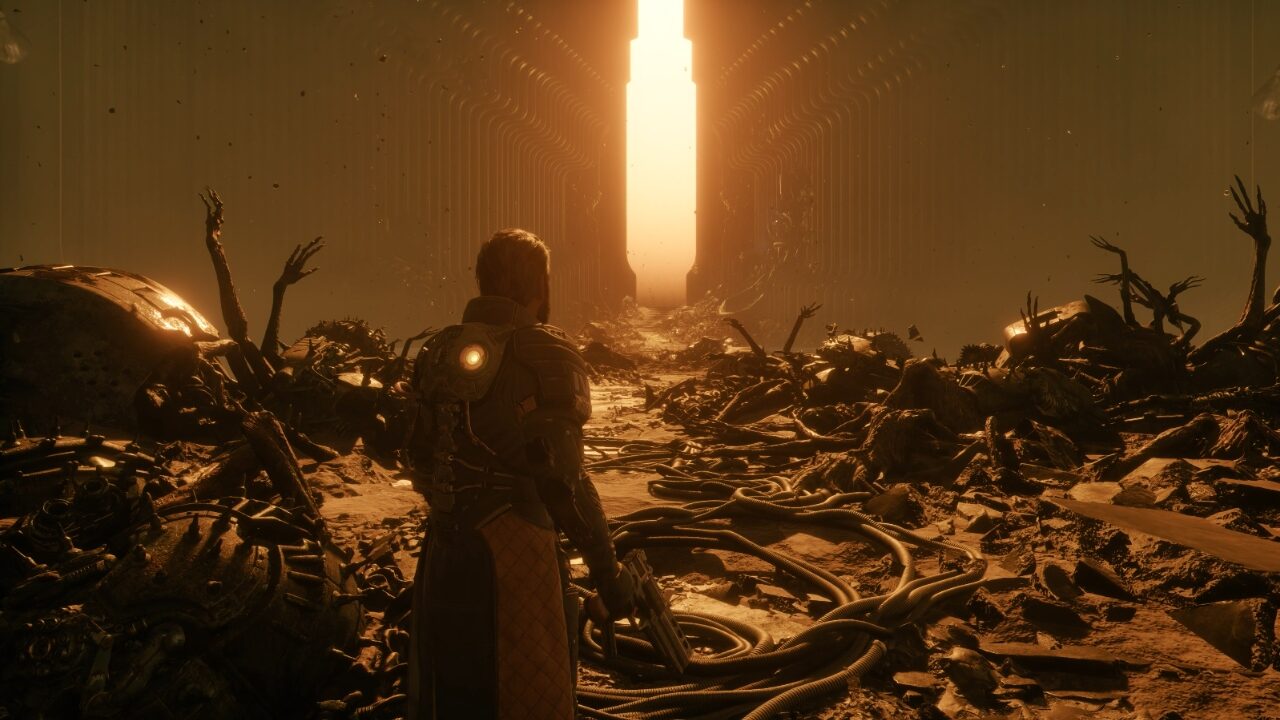
Gregory Louden: Yeah, so SAROS is the story of Arjun Devraj, who comes to this lost off-world colony, Carcosa, looking for someone. But this planet, unfortunately, has this sort of ominous eclipse that kind of corrupts the world. And it’s about the journey of Arjun looking for someone and a journey within himself, as well, as he continues on this hostile alien planet.
I’d say the general genesis for the project came from the idea of wanting to create another dark science fiction world, but also wanting to have a cast of characters for you to love and lose. So the idea of an ensemble cast with really brilliant, authentic and sort of realistic performances by great actors. And then adding in this eclipse, as mentioned, this sort of foreboding cosmic event, which washes over Carcosa and actually causes the planet to shape shift on every death of Arjun. It also corrupts people that he knows, and even Arjan himself.
So that was kind of, I’d say, the high level kind of inspiration point was this idea of a dark science fiction world, an ensemble cast of people, and then from there the idea of the eclipse as this kind of mix of the cocktail that creates this sort of cosmic horror and dark sci-fi world, but Simone, you want to jump into the art?
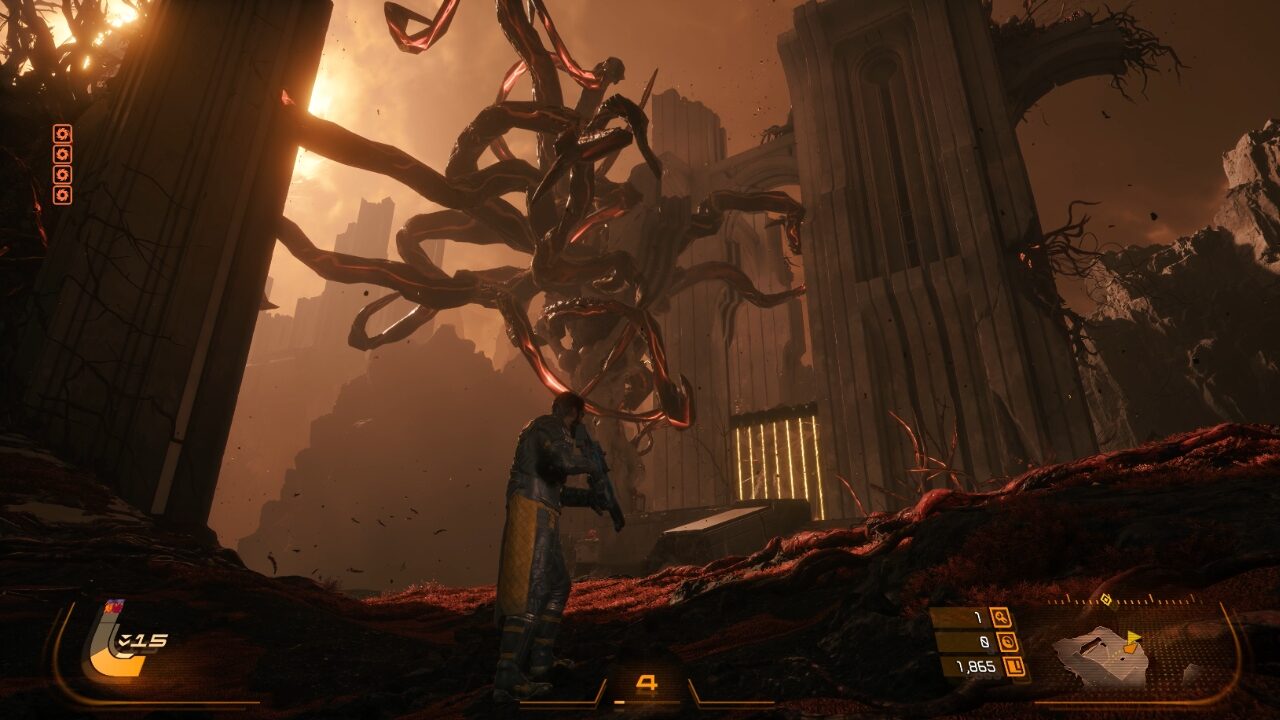
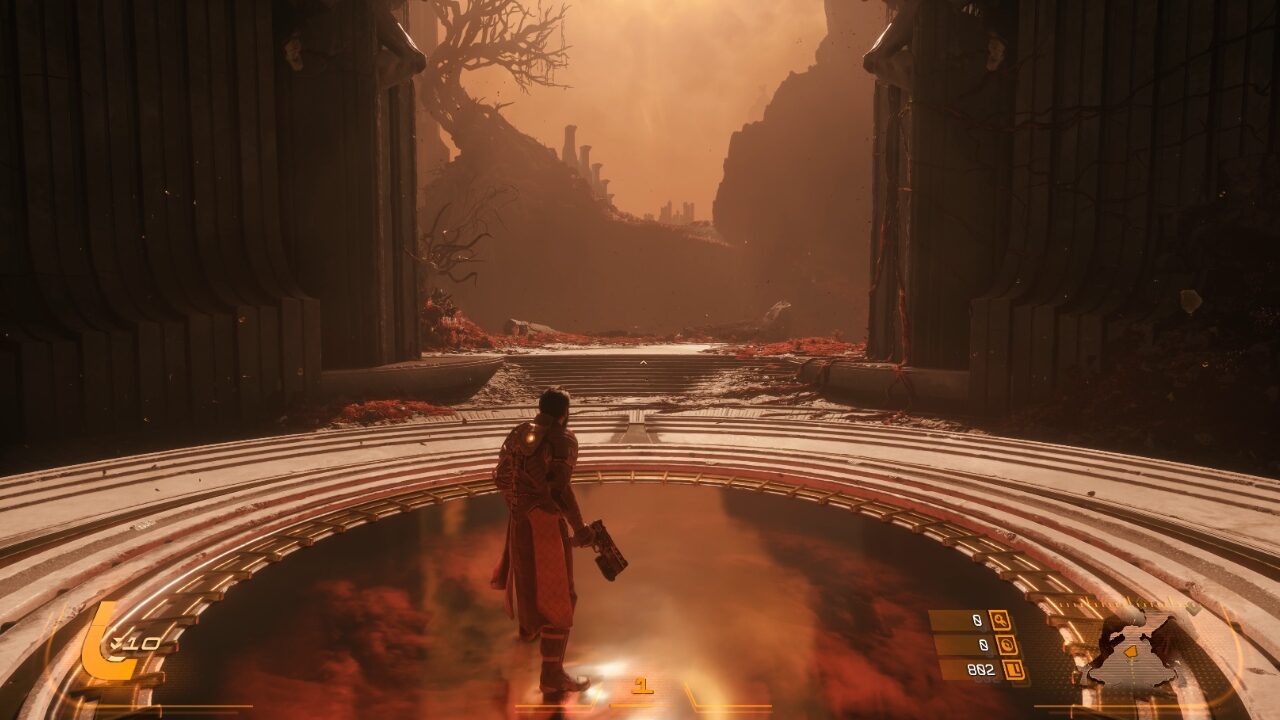
Simone Silvestri: For us, you know, everything is centred around the eclipse, and it’s a fantastic opportunity to be able to make an alien planet because you’ve got this very scary blank slate to deal with. But we are also a gameplay-first company, so we wanted to create something grounded that doesn’t get in the way of the gameplay too much. So we have to strip back a lot of elements, and we go to the essence, which is the eclipse.
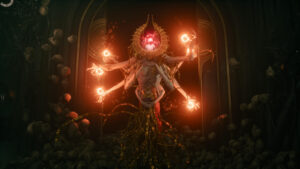
The eclipse transforms all, corrupts all. And so we wanted to describe this alien civilization that is about worshipping the eclipse itself. That started giving us our symbology, and we started looking into the world logic of how the eclipse interacts with all the biomes and how it transforms them, also into a player experience. So it was, for us, the main point of anchoring everything.
It served as a red thread throughout the entire artistic exploration. It’s awesome to be able to go deep into what architecture they would have and what kind of statues can we make to represent them. So it’s a lot of world-building that came through that first element that we really wanted to get.
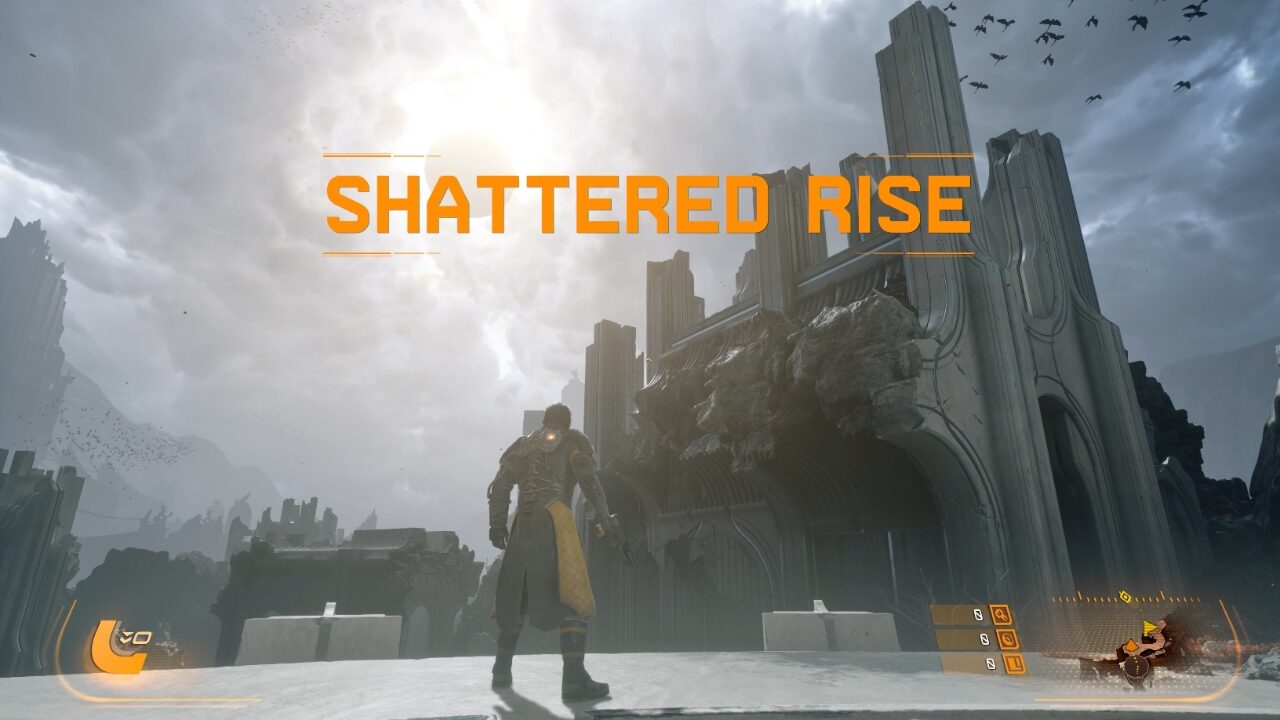
I have to say, there are some crazy statues when I just stopped to look around for a while. Man, some dark, really cool stuff in there. We’re talking about the eclipse. I was wondering if you could explain a little bit about how that works in the game. I know in my playthrough of SAROS, we had access to two biomes. I only got through the first one, but you’d hit a point where you trigger something, and then the eclipse starts. Is that always going to be the case, or does it trigger on its own sometimes?
Gregory Louden: So, in general, the idea of the experience is you go through Carcosa, and there are moments where you can call the eclipse. So, as you’ve noticed in the biomes that you played, it’s usually quite late in the first one, or it’s actually right at the beginning, we always give you the ability to choose when to call the eclipse. So in some biomes later in the game, it’s going to be a choice right from the get-go.
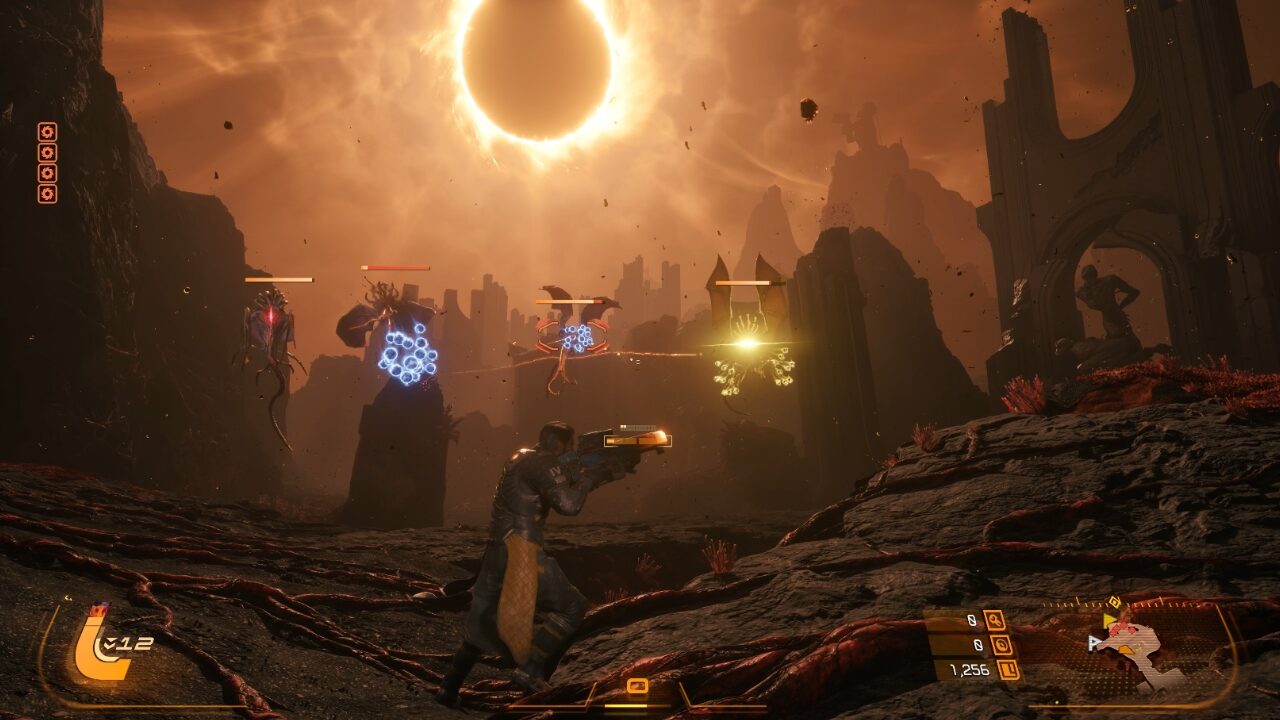
Do you just escalate the world? Do you change Carcosa to be burning red from the eclipse, to change the musical score when the eclipse washes over and also have the kind of eclipse escalation gameplay?
So that gameplay, even though it does add additional challenge, it also provides additional opportunity. The resources you collect to come back stronger, the way that you can overcome challenge, I don’t know if you noticed, but when you’re in the eclipse, you actually get more of that resource.
So it’s almost in your interest to get to the device, call the eclipse, collect all the resources you can, and then when you do succumb to the elements, you can essentially go back, upgrade yourself and then hit back hard and beat that boss. So our goal is to build something challenging and rewarding. So the idea of the eclipse was to kind of add that challenge, but also make sure that it kind of delivers the reward layer as well.
But yeah, that’s the general intent. So, as you do go deeper into the experience, it’s something you can choose when you want it to activate, but in the end, you’ll always need to call the eclipse to proceed.
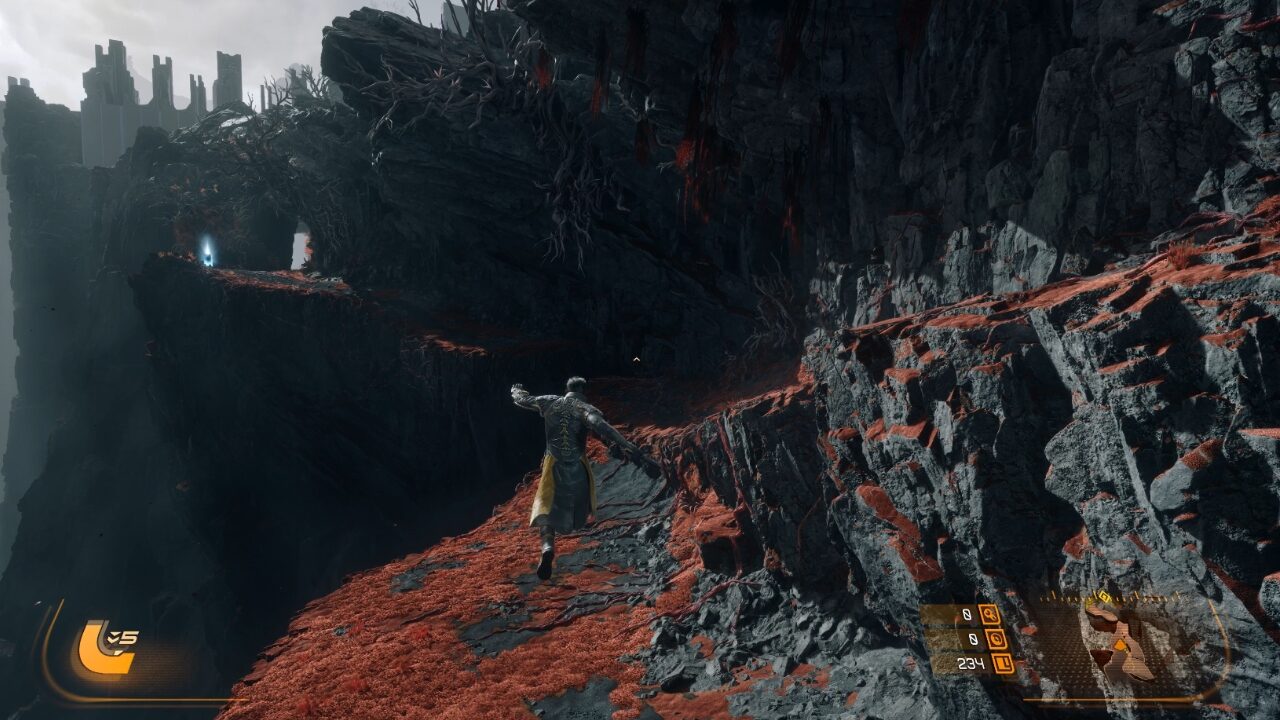
Now, more of a personal question for both of you. You have hosted a couple of previews. How does it feel to see people playing SAROS now, so close to release?
Gregory Louden: It’s been amazing, and I hope you had a great time. We were lucky enough to have some people here in Helsinki, and they loved it. And it was it’s really great to have something you’ll put so much passion into. We have a really, I have to say, it’s a dream project by a dream team.
We have so many amazing collaborators that contributed to this game, and then to have people play it and just be blown away by the world-building, by the gameplay, by the music, by the art, as you mentioned, the statues. It’s a really rewarding time after putting a lot of effort, and time, and thought into this game to finally let players discover it because we put so much detail, and layers, and mystery into this game.
So it’s a really exciting time now, as you mentioned, that players can finally play it, and then April 30 will have the whole world that’s able to discover SAROS and get lost in it. It’s a really special and rewarding aspect of building a game to finally do what it’s made to do, which is to be played by everyone across and hopefully inspired and hopefully moved by the game, because we’ve really set out to create something special for players. But Simone, how do you feel about it?
Simone Silvestri: Yeah, I think it’s just like the game, it is challenging and rewarding because we show our baby like, “Please love it!” It’s awesome because I mean, I’ve been playing this game myself for 200, 300 hours and making it every single day. I’m blind. Like, I think it’s a very good game. I think it has really cool art. But I need people like you to play and engage with it and then tell me, “Hey, this is actually interesting,” and then having that validation from everyone who flew here, but also everybody we talked to today.
It’s so awesome, and just finally we can talk about all these things. Finally, I can go into detail about all the little things that we did, and this was just the beginning, right? You haven’t even seen…it escalates quite a lot. So I’m keen for everybody to start discovering Carcosa. It’s something awesome.
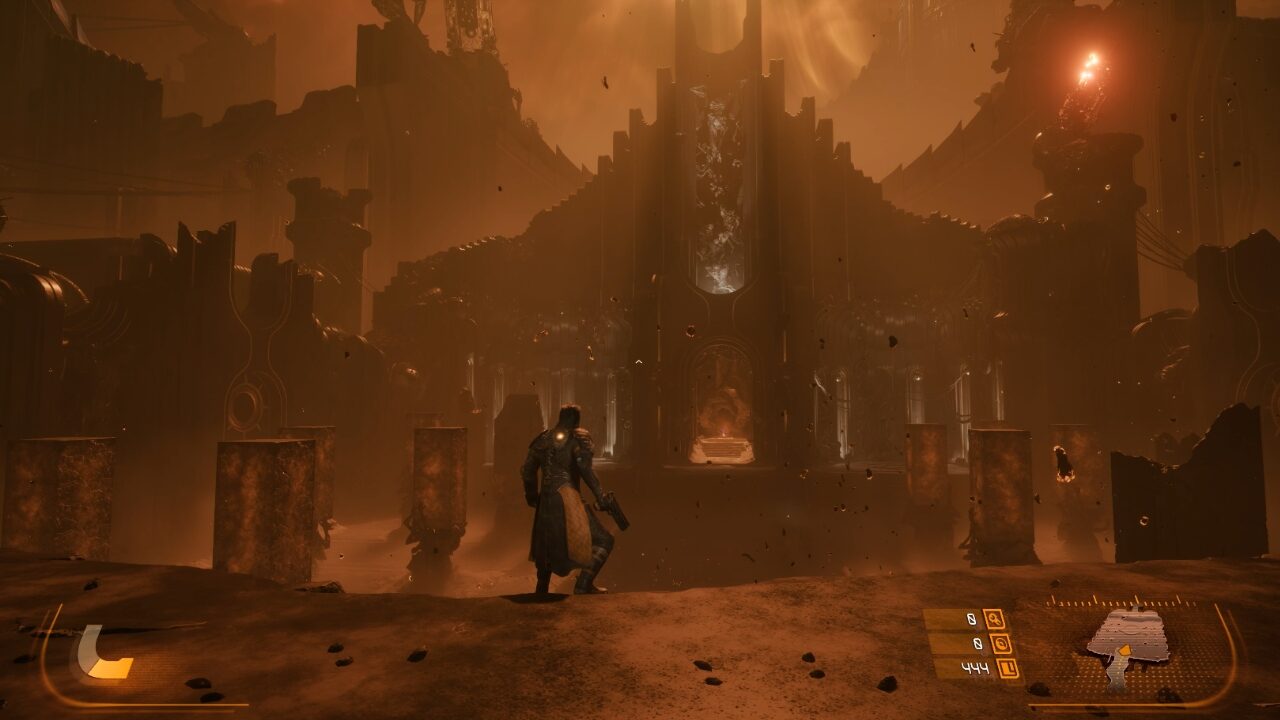
I can attest that it is really cool. I got my butt kicked—a lot. I was humbled, but I was pumped by the time I left. Housemarque really made something awesome. Now, as I said, I only made it through one biome, but I’m curious what you can tell us about the enemies and creatures in the rest of the game, and what it was like to design those and how they play into the overall story or SAROS.
Simone Silvestri: Yeah, the enemies and the creatures are one of the most interesting parts and challenges for art direction because we are gameplay first, and we have our arcade DNA roots, right? So we need to have all these bullets on the screen, and we need to do these crazy attacks. When you have to contextualize them into a creature, that’s such an interesting challenge because we want grounded creatures that belong in their environments, but they also have to be vehicles for this insane gameplay.
So when you have to match these two things, you end up with some very interesting designs and some very interesting thoughts and philosophies of how to get those through. And so to me, that was one of the most enjoyable parts of the journey. There’s a lot of collaboration with gameplay design where they’re like, “Oh, we want to make this shoot a laser,” I’m like, “What? How do I make these guys shoot lasers?”
And so it’s this contrast of things that creates this friction that makes that spark, that electricity of this unique thing. Very few games have such a grounded story with this many layers, and then this crazy, insane gameplay in the same package, and it’s an insane opportunity to be able to do that.
SAROS is being called the spiritual successor to Returnal. I’m sure you’ve gotten this question a lot, but what does that mean for you and Housemarque? And what goes into the story, the gameplay and the design with that in mind?
Gregory Louden: Yeah, I’d say for us it’s about building on a sense of strength. We love Returnal, and we loved many elements of it. So SAROS was the opportunity to take everything we loved and then question the formula of what Returnal was and, in essence, create something new, so the idea of an ensemble cast, the idea of the eclipse, the idea of more digestible sessions, the idea of a connected world with vistas that you could see, but then once again kind of evolve things.
So the haptics, we put a lot of attention to detail in Returnal, but we’ve taken it to the next level with this game, and we really want to wow players. They feel really immersed and pulled into the world of Carcosa, but also pulled into Arjun’s psyche. So we also use it to explore his emotions and how he’s feeling. So you literally have a physical experience as you inhabit Arjun.
So for us it was about building on our strengths, evolving kind of the basis to create something new and bold and then just continuing to try to push the hardware and push ourselves as a team to create something really special for players.
Simone Silvestri: I mean, Greg covered it. But for us, it’s like, trust our DNA. We know what we’re good at. We know where we thrive. And then with the artists, just keep being on that fringe, keep being on that weird extreme and respect the gameplay space with it. It’s just all about trusting ourselves.
Alright, something I am very excited about that you brought up a few times now is the ensemble cast. I mean, you have Jane Perry, who’s a video game legend. Personally, for me, I’m a huge Rahul Kohli fan, not just as an actor, but also on social media, and his all-around personality. What about him was the right choice, and what did he bring to the role that was special?
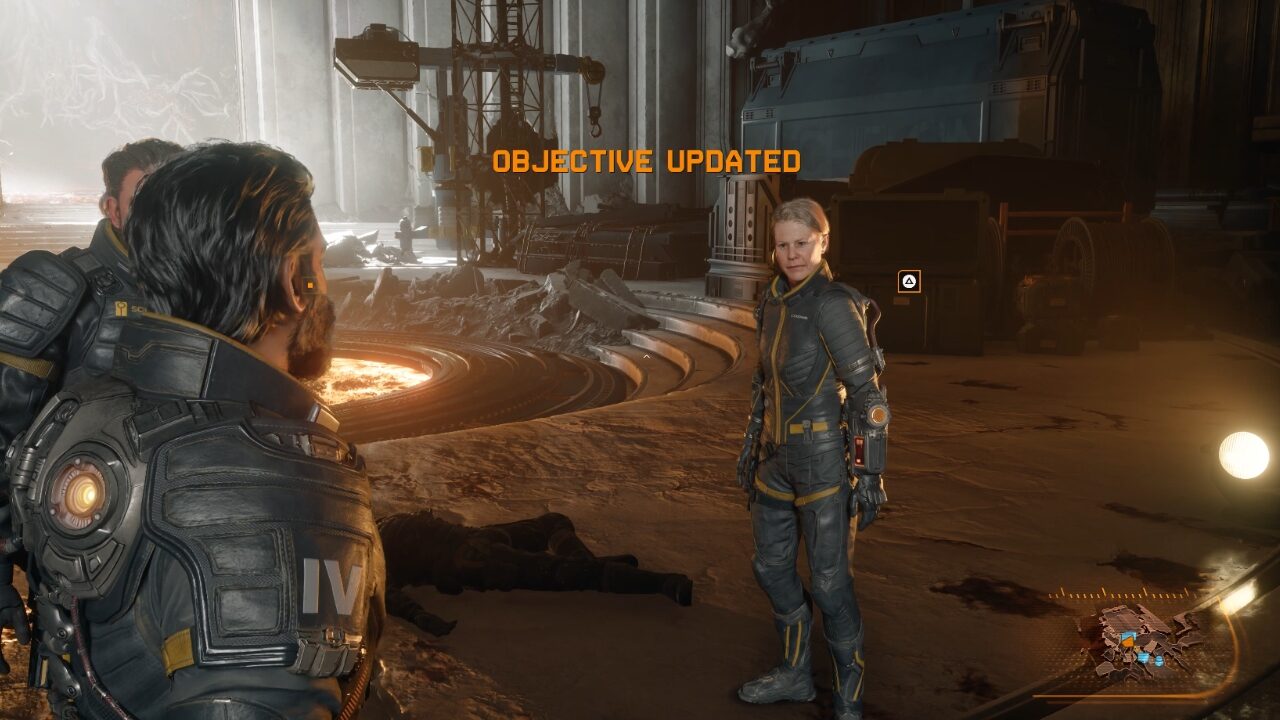
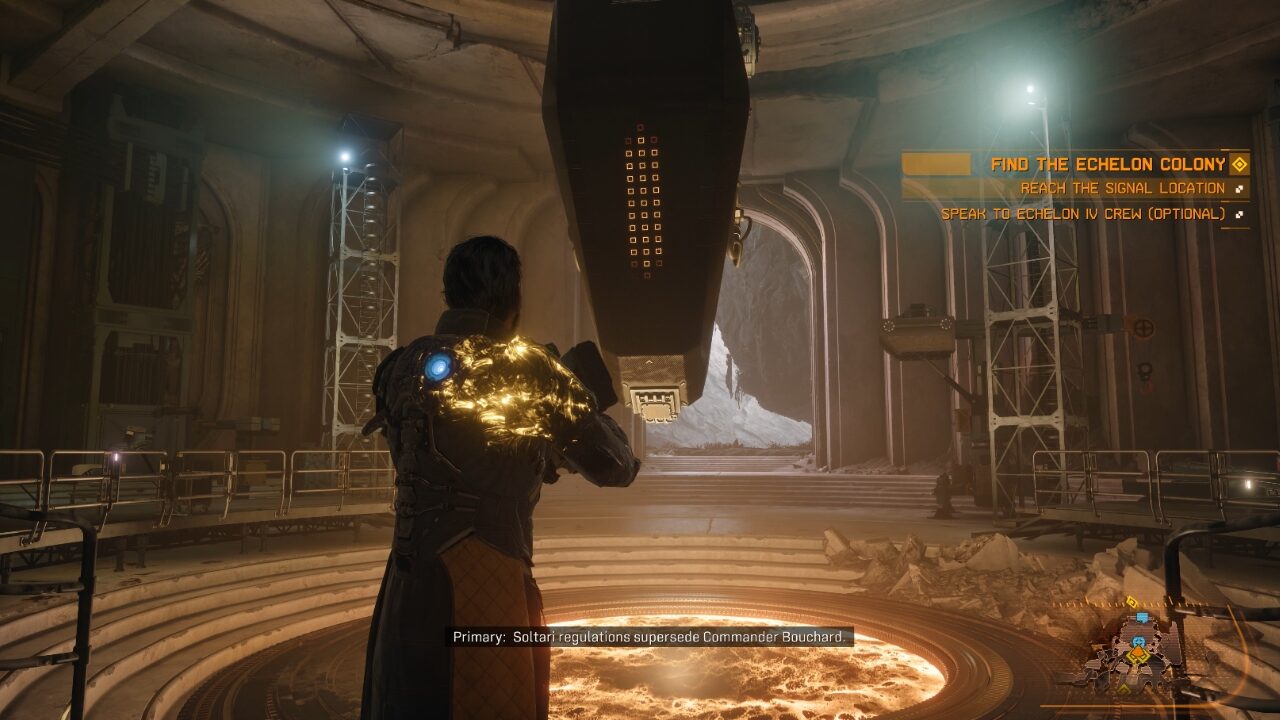
Gregory Louden: So, for starters, Jane Perry, obviously being Canadian, she’s wonderful, and we worked on Returnal together. When we were planning SAROS, and we knew we wanted a cast, it was important for a lot of us that we brought Jane back. Sheridan Bouchard is a Canadian Soltari, kind of, Enforcer, the leading commander there. It was really important that Jane was there, and we’re so glad she accepted.
Once again, she does her thing and creates this real authenticity, and she takes her role so seriously, and she’s been such a great collaborator and innovator, where she’ll look at the script and ask great questions and actually even push us to kind of really evolve.
But then, to Rahul, Rahul’s been amazing. I was a big fan as well, and I still am, and I feel really humbled and lucky we got to collaborate with him. He’s really been a dream collaborator. He, I think the story is— and he’s shared it, so I’m happy to share it with you—that we were really excited to get the opportunity to work with him, and before we even pitched the game to him, he just said, “I’m in. I love Returnal. I love Housemarque. I want to do this game. What am I doing?”
And then when we told him the full story arc, where Arjun goes through the experience, he was like, “Yeah, this is special. I really want to do this.”
I’ve got goosebumps!
Gregory Louden: And from there, he walked the walk, and he’s delivered a really powerful, authentic and very real, I think, performance, which feels really nuanced and detailed, and you only got to see a fraction of it. But then he’s a huge gamer who’s really challenged us, and vice versa. We challenged him to really up his game, and he provided great feedback on the gameplay. He wanted to look at everything in the game to bring the best performance possible for players, and I think Arjun would not be Arjun without Rahul. So I’m really…it’s been a real special collaboration.
It’s amazing, and I feel that when you get to see the full arc he goes on in the performance, it’s extraordinary. But I would like to shout out, we have so many other great actors in the cast, so they’re just two of the ones. But nonetheless, I think everyone we’ve had contribute has really brought a lot of themselves to the role and really pushed to create a better story for players that feels really special and kind of inhabits this tone and sort of dark science fiction world.
Rahul’s wonderful, and definitely the persona, everything that you see of him, it’s true. He’s a great person and a really great collaborator.
That makes me very happy to hear on a lot of levels. Now, why the choice to have him actually as the face of Arjun in SAROS rather than a different character design that doesn’t look like the voice, as you see in some other games?
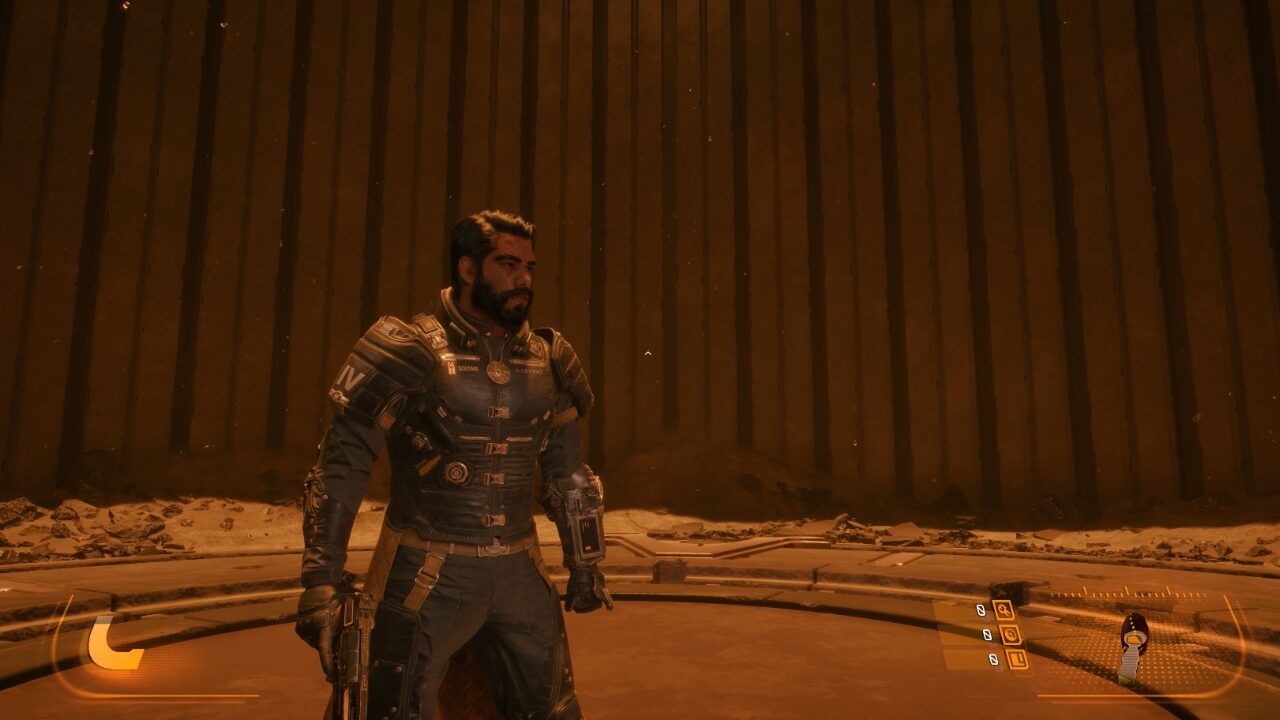
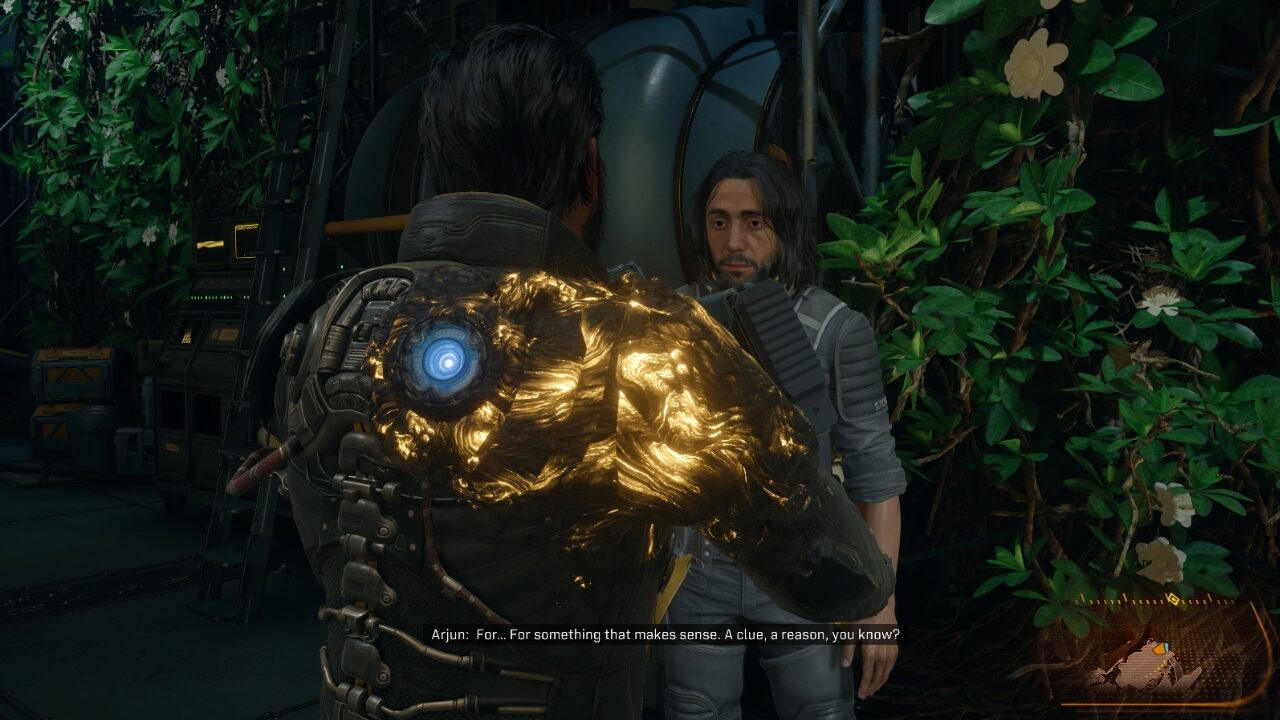
Gregory Louden: I think it was something that after Returnal, we just decided that if we could, we would like to have, and similar for Jane Perry, we actually have her face as well. So these are great actors, and we knew we wanted to do more performance capture than we’d done before. So we wanted to kind of allow them to animate their faces entirely through their facial expressions.
So in essence, yes, we could have done that, but we just wanted the one-to-one connection of a great actor doing a great performance that translates onto themselves. It is more than possible, but for us, it was just a creative decision we made that we didn’t just want Rahul’s voice. We wanted Rahul and his personality, his physical presence, even the way he walks, the way he runs. He contributed to the run and walk cycle. We wanted the type of experience for players, for Arjun.
It was, like I said, once again, a really great collaboration and even a small thing where when we first started working together, he said, “What accent do you want?” And I said, “We want you, we want your British accent, we want the London accent because that’s something you don’t traditionally hear in games.” We really want to allow players to kind of inhabit that, and let him get lost in the role; he didn’t have to perform his voice. He could just be Arjun and really explore it as a character.
Simone Silvestri: A little tiny story, that even when we were making the concepts of Arjun, and we tried a lot of things and we found some designs, etcetera, we put Rahul’s face on it before we knew we could cast him, and it just felt right. We knew that, “Okay, this is the guy that we want to play us.” And then we were so happy when he accepted because we had already made that, like it was just perfect.
It was meant to be! Do you each have a favourite character in the game? I don’t know how many people I came across in my playthrough. Is there someone you can tell us?
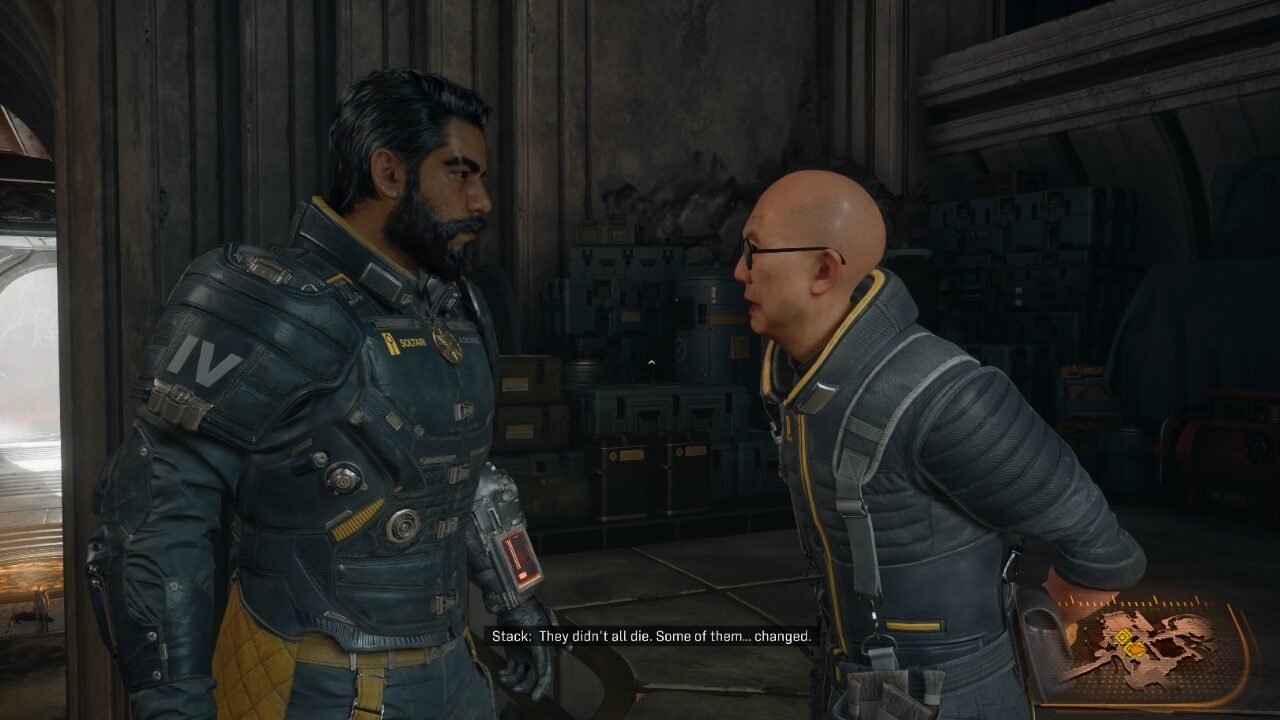
Gregory Louden: There are more characters. Yeah. It’s hard to always choose a favourite, but I think Arjun is a really special character, and it’s a really special journey we want you to go on with him. I also really love Stack, who you probably met in the passage. He’s the guy kind of painting on the wall in the corner. So I think he’s a really special character as well.
But I’d say, to me, it’s hard. I think Arjun, we really study and examine so much as a character in the game and let you inhabit him, that I think, to me, it would be Arjun. But yeah, Simone, how do you feel?
Simone Silvestri: I have a weird answer. My favourite character is Primary, the machine that comes down. And I mean, you haven’t seen where this character goes, but to me, there’s something so cool about that. And of course, I love all the other characters, and it’s difficult to pick, but there’s something about Primary that is really, really cool that I really like.
I was really into, I can’t remember his name, but when you go upstairs, and there are all the plants, there’s a guy up there. I was very interested in him and what their relationship is. There’s a cute little photo on the desk, so I’m looking for more on that later.
Gregory Louden: Oh, Sebastian, yeah. Sebastian’s great.
Something else that was said to us before the preview is that SAROS is meant to be easy to pick up, hard to master. I can confirm that’s true! Are there any tips for players who jump in to help them learn to master SAROS, and what they should know going into the game?
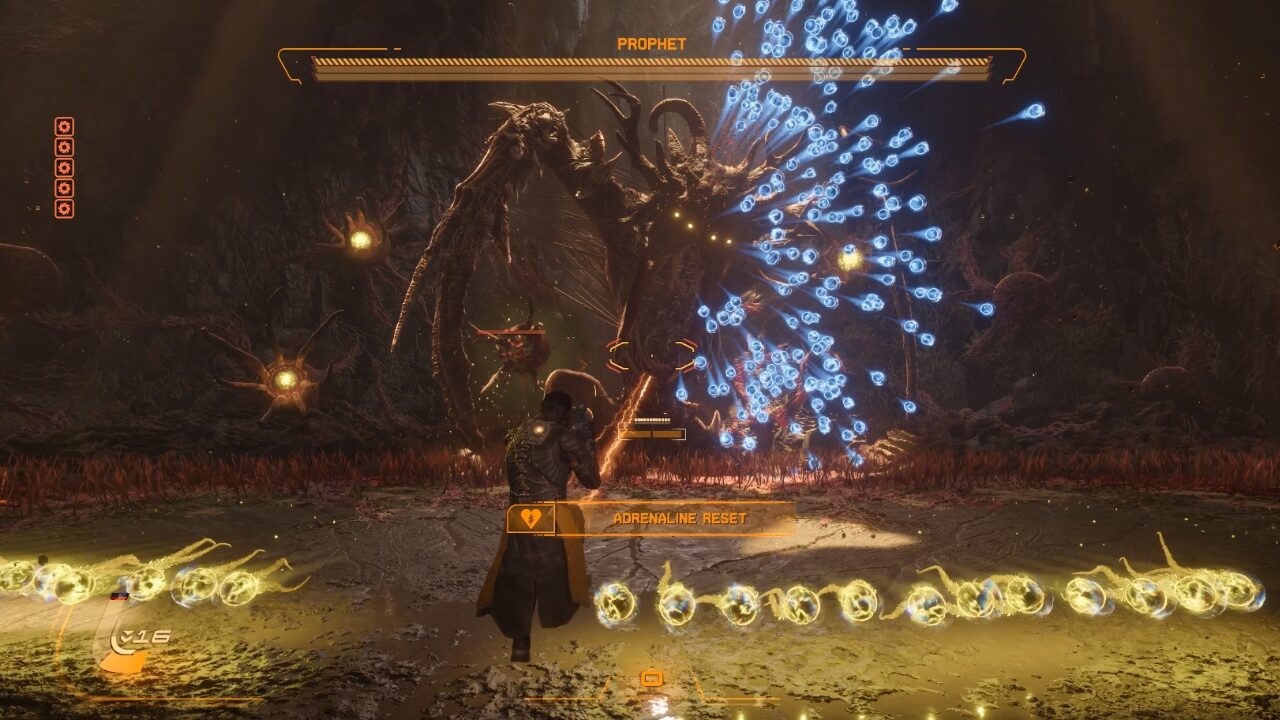
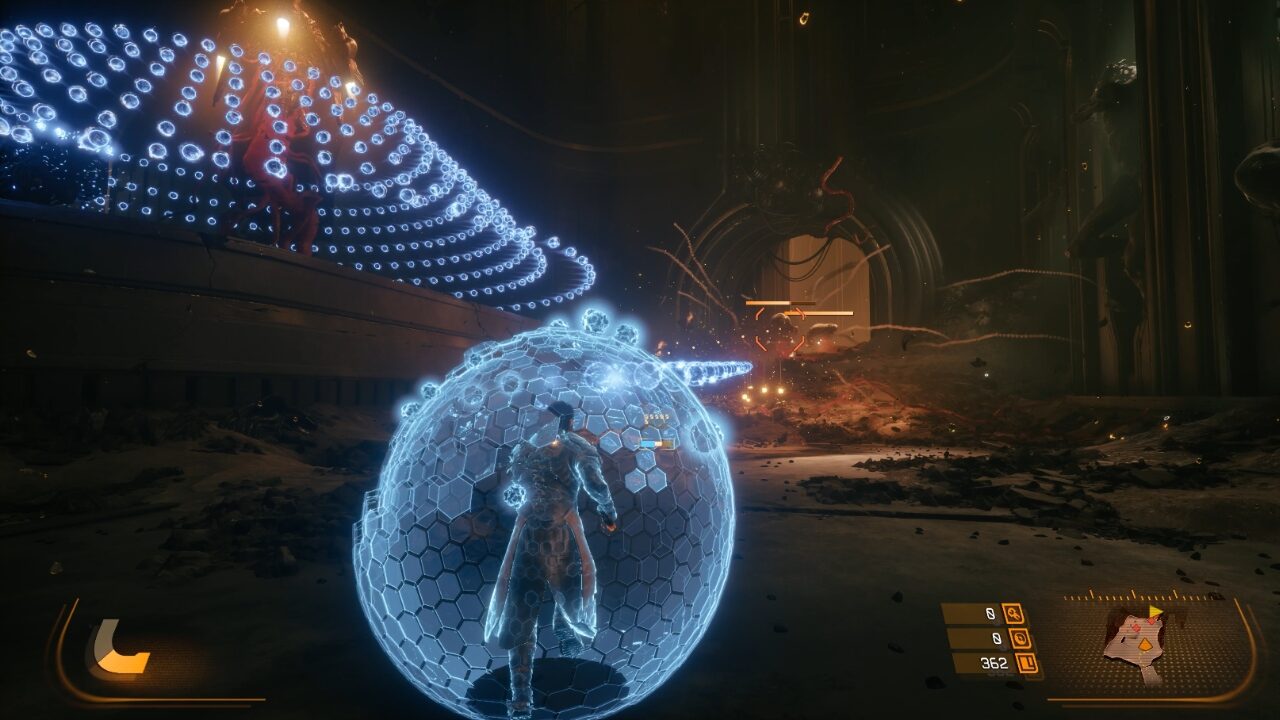
Gregory Louden: I would say a key thing is that in SAROS, we’ve developed this game to always…basically, it’s all about bullet interaction. In Returnal, it is about avoidance. This game is about running into the bullets and actually using them. So the biggest tip I have is do not be afraid of projectiles. They’re not danger. They’re actually opportunity. And once you know how to collect them, you can essentially use them to kind of use your power weapon and defeat them.
So even something like Prophet, the first boss that can seem incredibly challenging, once you view all of its attacks as opportunities, it’s actually giving you the answer to how to defeat it. You just need to discover it. So I would say go into SAROS ready for the bullet ballet and be ready to dance with the bullets. Don’t run away, run towards them. That would be my advice. But Simone?
Simone Silvestri: Yeah, to me, the advice is be curious. There’s a lot of depth that we put into the gameplay. So you know, there’s a lot of permanent progression that you can do. You will have access to even Carcosa modifiers that allow you to really tweak the level of friction that you’re comfortable with. But also all the tools that you will get, the more you progress, just try to use those in the way to express yourself within that combat space.
And it’s all about being comfortable in the eye of the storm and learning how to use all these things that we give you, but also all these things that come from the enemies. All these different bullets that you can see. So just be curious, experiment and look out for opportunities because there’s a lot. There’s a lot of depth in this game.
And then my last question for you, if you had a hard time picking your favourite character, this might be a struggle. What are you most excited to see people experience within SAROS, whether it is a specific character, a certain biome, a weapon or a story beat in SAROS?
Gregory Louden: I would say I’m looking forward—and I won’t spoil it—I’m looking forward to players reaching our final boss and kind of experiencing that moment and experiencing the story after that. That would be the big thing. Definitely push through to get towards the end because I think the end is really spectacular. But Simone?
Simone Silvestri: Because you’ve taken that one, I would say that that would be like the main thing, our ending is…yeah, but there is a biome level that is later in the game that you haven’t seen, and I’m really curious how players will react to it. It’s my favourite one, so I really want to see how this lands.
All right. Well, thank you very much. I know you’re very, very busy ahead of the SAROS launch. I really appreciate you taking the time to talk to me.
SAROS releases for PlayStation 5 on April 30, 2026.