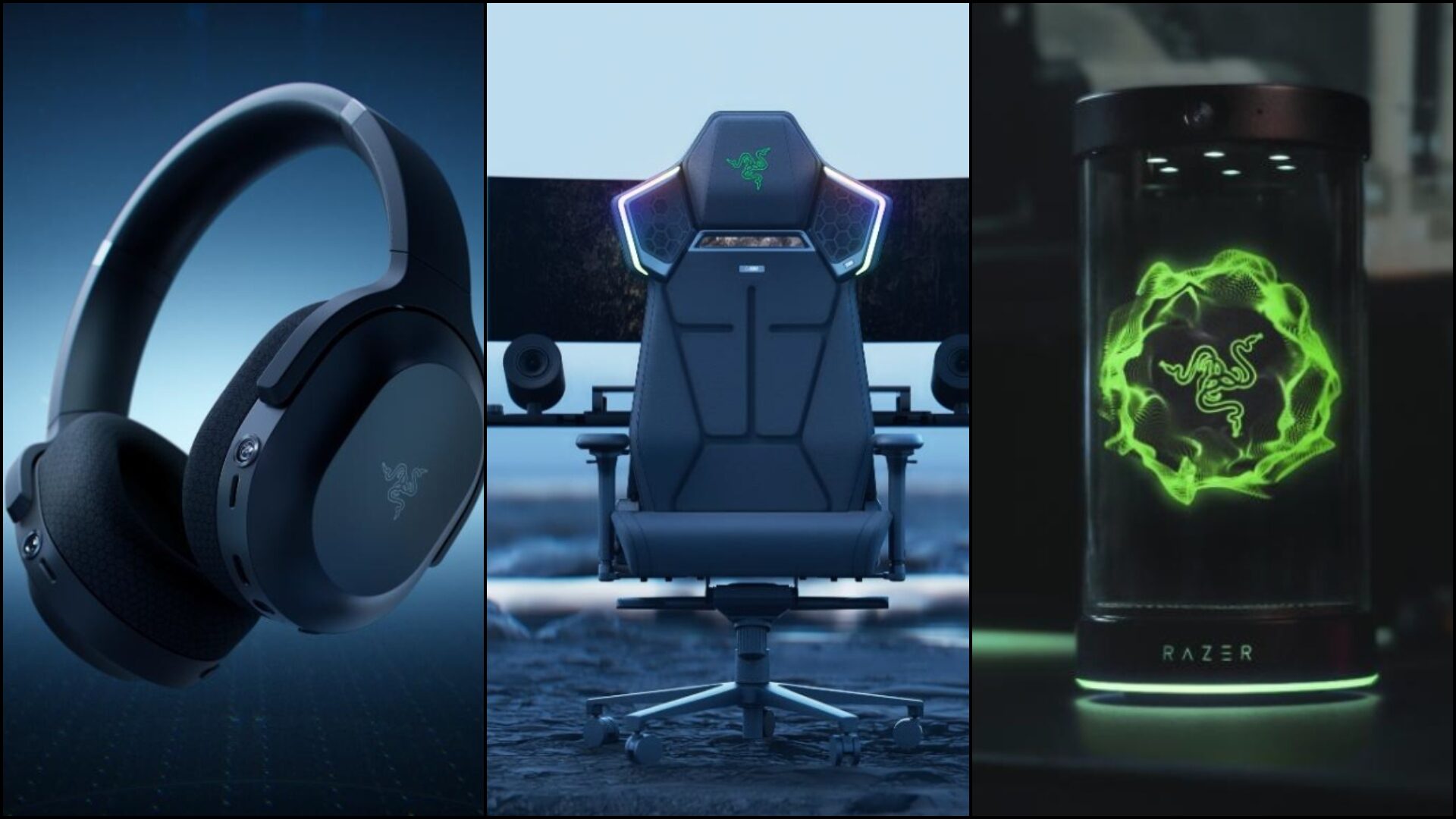
Razer always creates a stir at the Consumer Electronics Show, and CES 2026 is no different, with eight new announcements across their peripherals, chairs, concepts and the future of AI.
Razer walked into CES 2026 in a blaze, bringing announcements across several of its lines, including known names like the Wolverine and Iskur, plus a few interesting concepts. Though we won’t touch on them here, Razer has also been working hard in the world of AI to benefit developers, announcing the Razer AI Developer Ecosystem, including the Razer Forge AI Dev Workstation and the Razer AIKit.
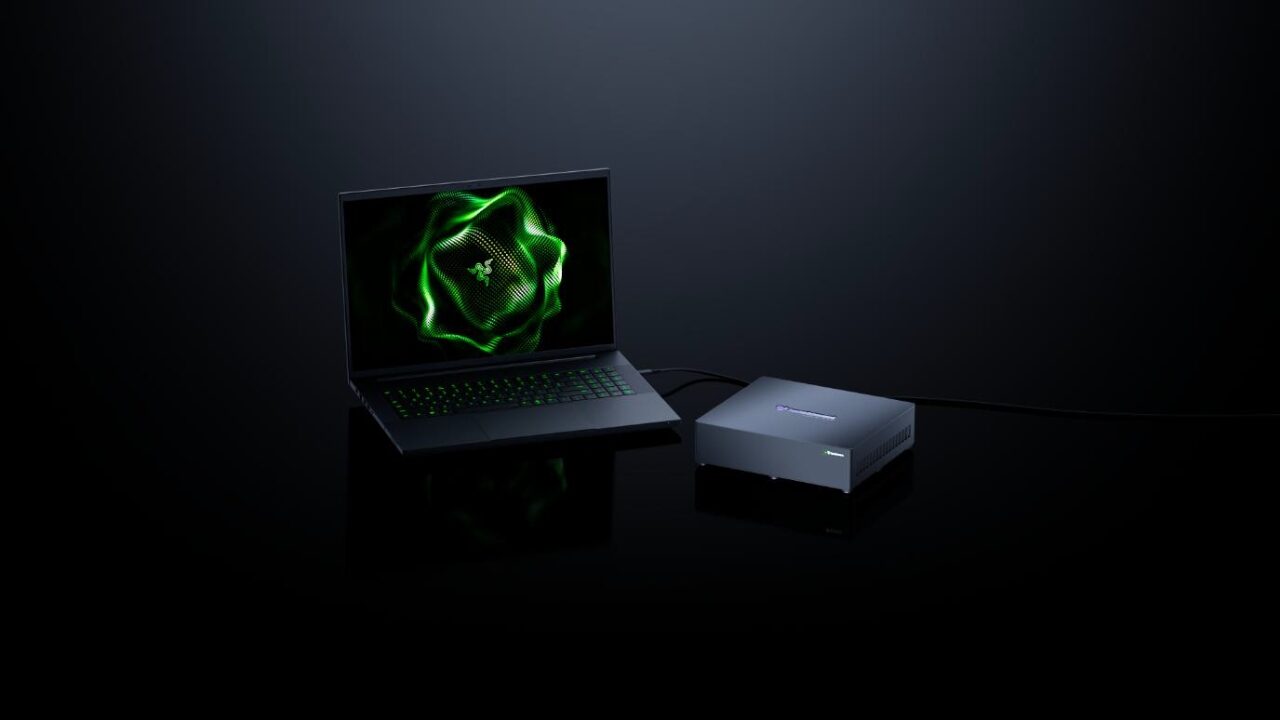
They also have partnered with Tenstorrent to bring us “Tenstorrent’s first-generation compact AI accelerator, designed in partnership with Razer, delivers powerful generative AI capabilities to any Thunderbolt 5, Thunderbolt 4 or USB 4 equipped system.”
Of course, the AI doesn’t stop there, with Razer blending AI-driven hardware and futuristic concept designs to give us a peek at the future of gaming. This year’s showcase wasn’t just about peripherals or performance upgrades; it was about redefining how gamers interact with technology.
“AI is transforming how we play, connect, and experience technology,” said Co-founder and CEO of Razer, Min-Liang Tan. “Our expansion into wearables, enterprise partnerships, and open-source innovation reflects our vision to build an AI gaming ecosystem that has applications in gaming and beyond. CES 2026 marks a defining moment in this journey, and we invite the global tech community to join us in shaping what comes next.”
Below you will find details on the devices and concepts that we think gamers will be eager to hear about.
Project AVA: Your AI Companion
Project AVA is back and promising more than ever, with a major evolution from last year’s “esports AI coach”. It seems the company is rebranding AVA, as it is now referred to as an AI desk companion, rather than fully pushing toward esports and coaching. Project AVA features a 5.5-inch holographic avatar with natural movement, expressive facial animation, eye‑tracking, and lip sync. Users can choose from Razer characters like Kira and Zane or even esports legends, and each avatar can be paired with a personality ranging from bold and sassy to calm and friendly.
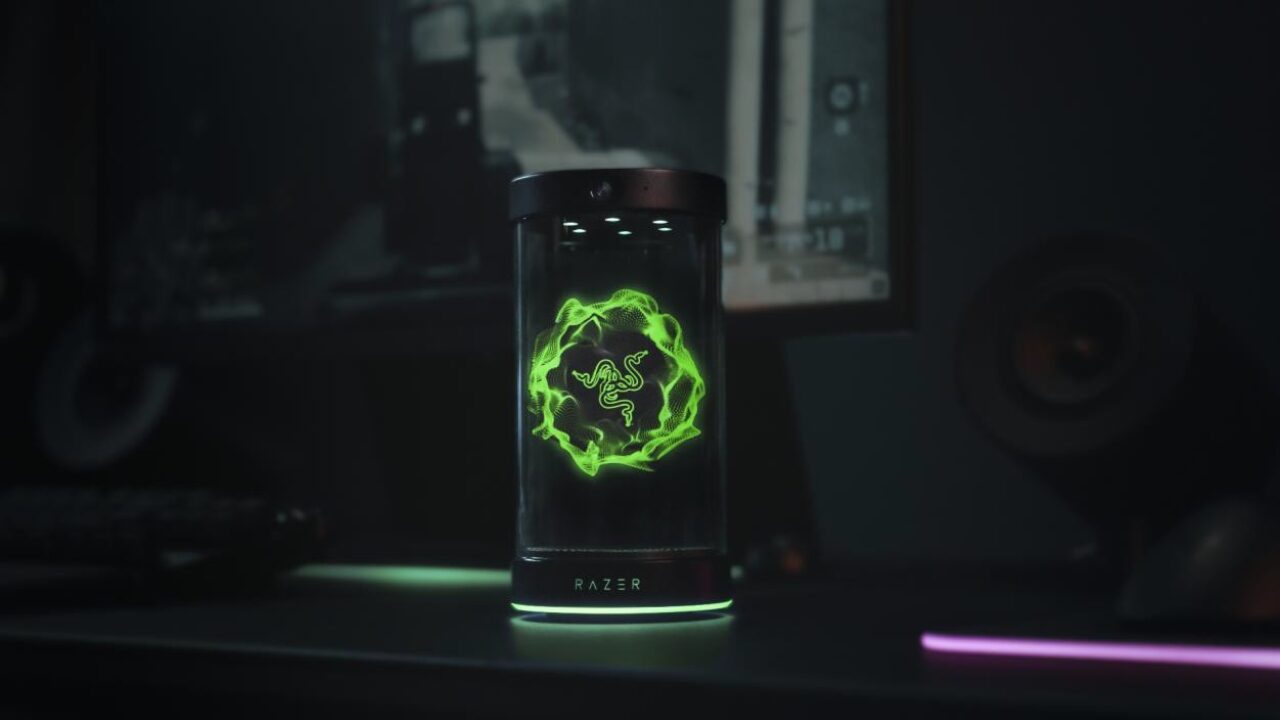
The real leap forward is AVA’s adaptive AI intelligence. It learns user habits, preferences, and routines, and uses contextual awareness through its HD camera and far‑field mic to interact more naturally. It’s new PC Vision Mode allows AVA to analyze what’s happening on your screen, offering real‑time gaming strategy, productivity support, or creative brainstorming. Beyond gaming, Razer suggests that AVA can help organize schedules, suggest outfits, plan meals, or act as a collaborative partner for problem‑solving.
Project AVA is closer than ever to being in gamers’ hands, as they can now reserve yours in the U.S. for a $20 refundable deposit, with availability expected in the second half of 2026. You can read more about Project AVA here.
Project Motoko: A Wearable AI Headset
Razer also introduced Project Motoko, an AI-native wireless headset concept all powered by Snapdragon. This headset will combine audio, vision, and contextual intelligence all in a wireless form factor right on your head.
Motoko includes two first-person-view cameras, which sit at eye level. These are used for real-time object recognition, text translation, and environmental cues. Razer claims they can help you navigate while out, track your workouts or even help with work on the PC. The purpose of Motoko is to keep up with modern multitasking. It also features dual far-field and near-field microphones to capture voice commands and environmental audio, and an audio feedback system to be your hands-free AI assistant.
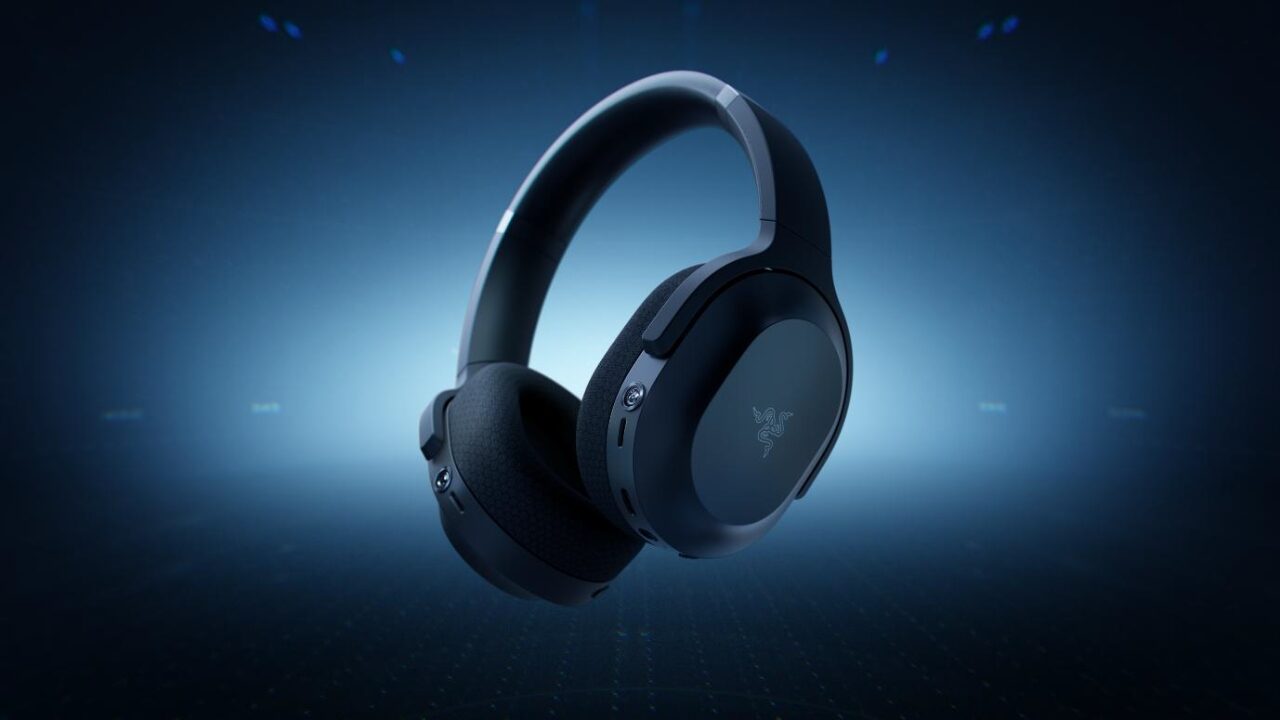
Project Motoko is compatible with major AI platforms like Gemini, Grok, and OpenAI. “Project Motoko is more than a concept; it’s a vision for the future of AI and wearable computing,” said Global Head of Mobile Console Division, Razer, Nick Bourne. “By partnering with Qualcomm Technologies, we’re building a platform that enhances gameplay while transforming how technology integrates into everyday life. This is the next frontier for immersive experiences.”
While it is still early, there is plenty more to learn about Project Motoko over on their official site.
Project Madison: A New Gaming Chair Concept
Razer also showcased Project Madison, a concept chair designed to deliver full-spectrum immersion by combining visual, auditory, and tactile feedback. The chair integrates Razer Chroma RGB lighting, THX Spatial Audio, and Razer Sensa HD Haptics into a single multi-sensory experience that reacts dynamically to in-game events.
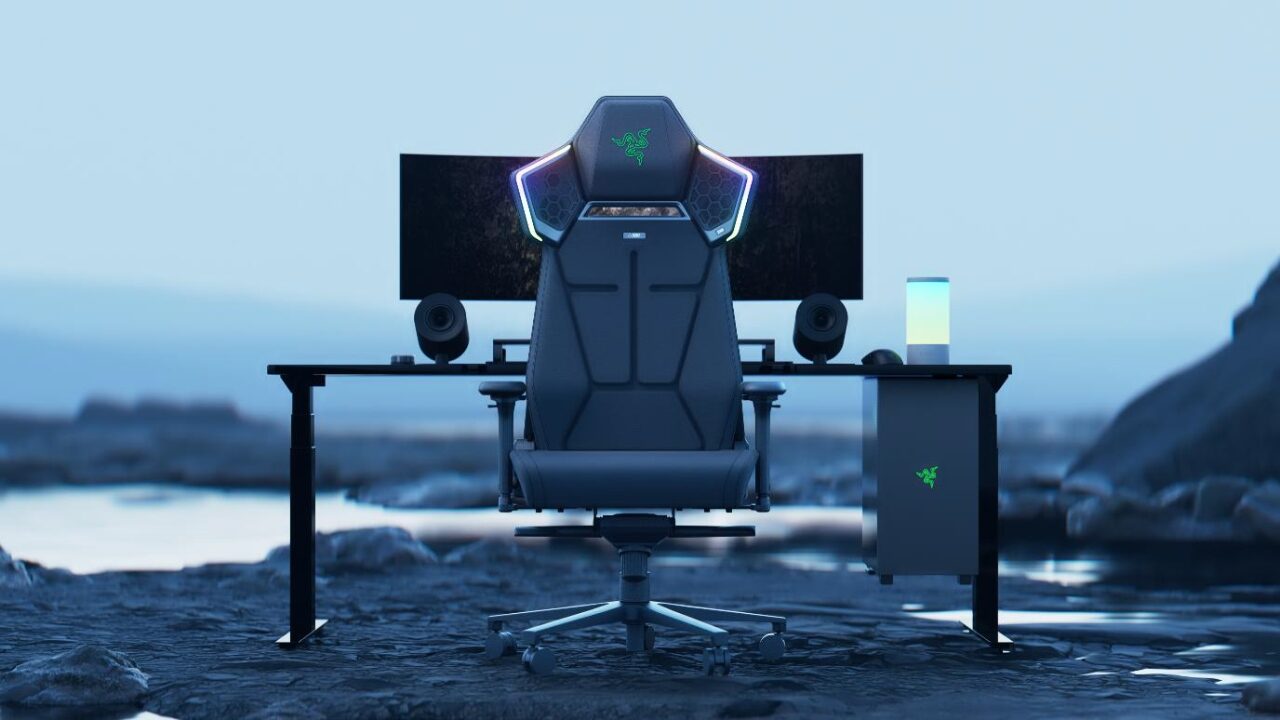
With multi-zone haptic actuators, users can feel impacts, directional cues, and even subtle sensations like heartbeats. The built-in audio system can serve as a primary speaker with crisp highs and deep bass, or it can pair with front speakers for a full surround setup. Project Madison aims to transform the gaming chair from a passive seat into an active part of the gameplay experience.
Razer Iskur V2 NewGen: Now Smarter!
The Razer Iskur has come in many versions, all of which we have checked out at CGM. CES 2026 brings us another edition, the Razer Iskur V2 NewGe, described as their new flagship chair. focuses on solving two major pain points for gamers: heat buildup and poor posture. It introduces the Razer HyperFlex Lumbar Support System, a fully adjustable 360° mechanism that adapts to posture changes in real time, offering unmatched back support.
Here are some updates to the Razer Iskur line:
- World’s First Razer HyperFlex™ Lumbar Support System: A fully adjustable, dynamic back support system that moves with the gamer. The proprietary 360° swivel design adjusts up, down, in, and out, tracking posture changes for unmatched coverage and comfort.
- Razer Gen-2 EPU Leather with CoolTouch™ Technology: Stay cool during marathon sessions. The chair’s material delivers high thermal effusivity, keeping it cool to the touch for hours of play. It is also 13x more durable than standard PU leather, delivering a premium feel and long-lasting performance.
- Dual-Density Cold-Cured Foam Seat Cushion: Engineered for optimal heat dissipation and pressure relief. Its structure channels heat away efficiently, while dual-density foam balances plush comfort with firm support for all-day gaming.
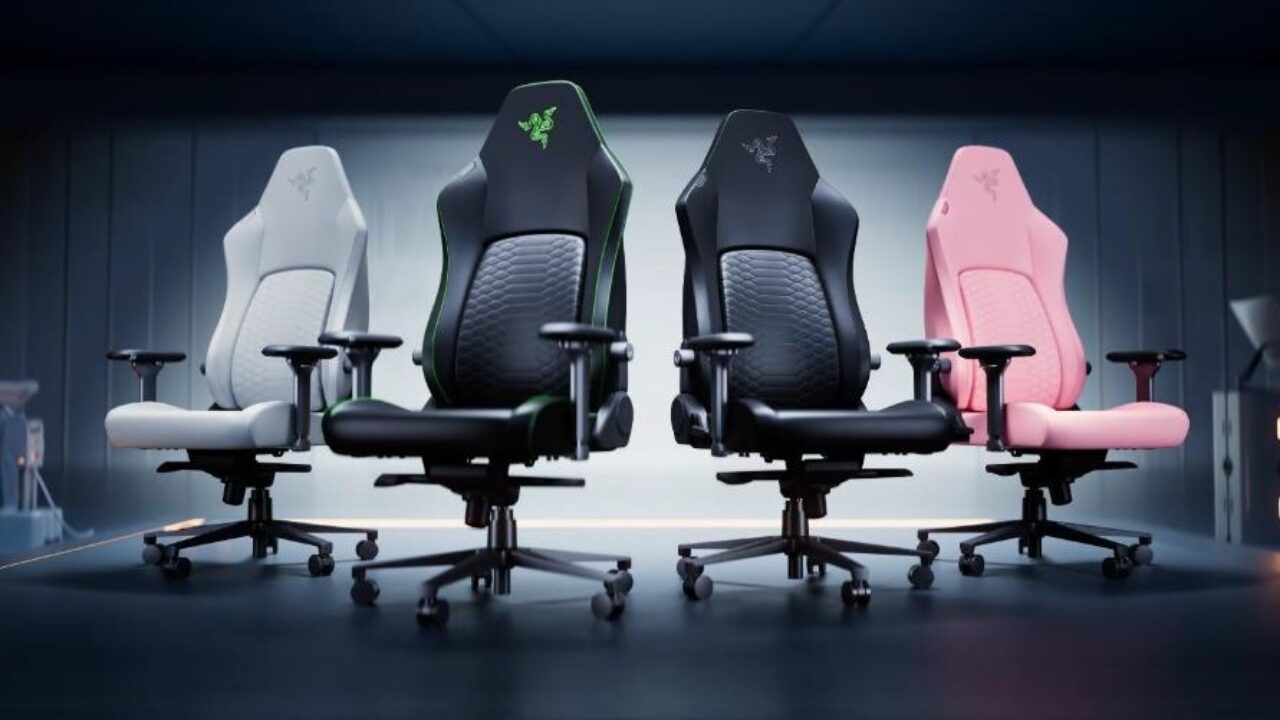
The chair comes in four colourways: Black/Green, Black, Quartz, and Light Gray, and starts at $649.99 USD, while the more affordable Iskur V2 X NewGen model starts at $349.99 USD.
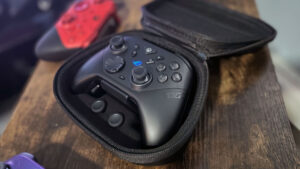
Razer Wolverine V3 Bluetooth: A Partnership with LG
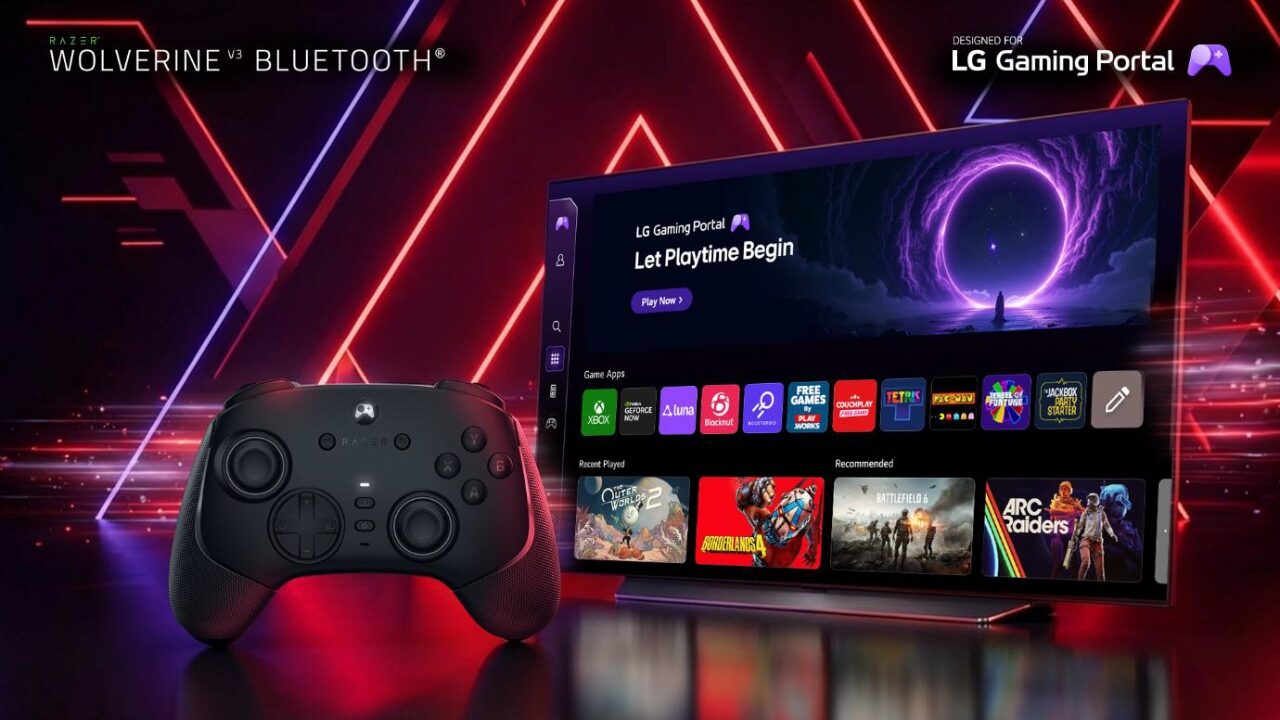
The Razer Wolverine V3 Bluetooth was announced in partnership with LG at CES 2026. This marks the first controller certified under LG’s new “Designed for LG Gaming Portal” program. Razer claims it’s the world’s fastest wireless gaming controller, with response times under 3ms when paired with compatible LG TVs.
The controller features ultra-low-latency Bluetooth, integrated TV controls, and pro-grade inputs. It is designed with cloud gaming in mind on LG’s webOS-powered TVs, including those that support 4K 120Hz HDR via GeForce Now.
“We are proud to introduce Wolverine V3 Bluetooth® as the first controller certified for LG Gaming Portal,” said head of the webOS Platform Business Center at the LG Media Entertainment Solution Company, Chris Jo. “The new controller will allow gamers to leverage the quick responsiveness and decisive control to keep up with fast-paced action and turn it into a big win on LG Gaming Portal.”
Stay tuned to CGMagazine on YouTube or TikTok to see videos of the Razer Wolverine V3 Bluetooth Controller in action later this week.
That wraps up the five new products Razer brought to CES 2026 for gamers, plus three developer-focused, AI devices. Stay tuned to CGMagazine for more CES 2026 news here.