
I was incredibly excited to review Metroid Prime 4: Beyond, since, as I’ve mentioned many times, not only is Metroid my favourite game series of all time, but Metroid Prime is my all-time favourite game. Since Metroid Prime 3: Corruption wrapped the Phazon saga up nicely, I was more than willing to accept that the series had been put to a well-earned rest, but getting a new one was a welcome treat I wouldn’t say no to.
After playing Metroid Prime 4: Beyond to completion, I am left somewhat conflicted. While I think it’s fair to say it’s a very good game, it also feels like one that was compromised—perhaps due in some part to its turbulent development. There’s a lot I like about this game, and a lot that I wish could have been better—if for nothing else, it felt more to me like Halo than Halo has felt since 2007.
Right off the bat, I’ll say this: Metroid Prime 4: Beyond is not really a Metroid game; it’s a shooter with some bare-bones exploration elements. It’s a fairly straightforward trek across four different areas, all of which are designed to be progressed through linearly, and maybe returned to for missile/energy expansions once you get some new abilities. But a different design ethos isn’t necessarily a bad thing and for what it’s worth, it’s still incredibly fun.
“After playing Metroid Prime 4: Beyond to completion, I am left somewhat conflicted.”
But let’s start where I always start my reviews, the story. As you may know from the various Nintendo Directs and promo material, Metroid Prime 4: Beyond finds Samus on the planet of Viewros after an encounter with Sylux—a fellow Hunter with a longstanding grudge against the series heroine. Once there, she encounters a hologram of the planet’s former inhabitants, the Lamorn. In order to escape the planet, Samus is gifted with psychic abilities and tasked with finding the five keys needed to activate the Master Teleporter.
However, this time, she’s not alone, as five Federation Troopers were teleported to Viewros alongside Samus and have been scattered across the planet. As part of her mission, she’ll need to locate and rescue them so they can all return home together. At its core, it’s an incredibly interesting story, particularly pertaining to the Lamorn Legacy and the fall of Viewros. However, it also stumbles in some weird ways that serve to make it weaker than it needed to be.
For starters, the plot generally feels kind of like it’s being rushed through and never really gives players a sense of genuine progression, particularly for what it’s trying to be. Unlike previous games where Samus is kind of thrown into the middle of a problem and is fighting not just to survive but to put it right, Metroid Prime 4: Beyond very clearly lays out its stakes and Samus’ mission, so there’s no real sense of mystery or discovery.
By contrast, I think having other humans to interact with is an interesting direction for a game that has long been defined by its isolating atmosphere. One way to build tension and loneliness is to give the player people to rely on, then suddenly take them away, which, to its credit, the game does at times. The problem with the presence of these characters, though, is Samus herself.
Samus doesn’t say a single word throughout this entire adventure, and given how many cutscenes there are of characters speaking to her and openly asking her questions, she comes across like a sociopath. So many moments that were meant to be emotional or impactful were made meaningless by Samus just staring through her mirrored visor—which was also weird because Metroid Prime 1, 2, and 3 let you see her eyes—and not reacting in any way.
Samus is a stone-cold badass, but she’s also a person and for how “cinematic” this game wants to be, it’s incredibly weird that our protagonist doesn’t interact with other people the way a human would. Again, people’s problem with Metroid: Other M wasn’t that Samus spoke; it was that she wasn’t given any personality, and everything she said was just a blatant reiteration of plot elements that were either spoken by other characters or easily inferred by context. And speaking of which…
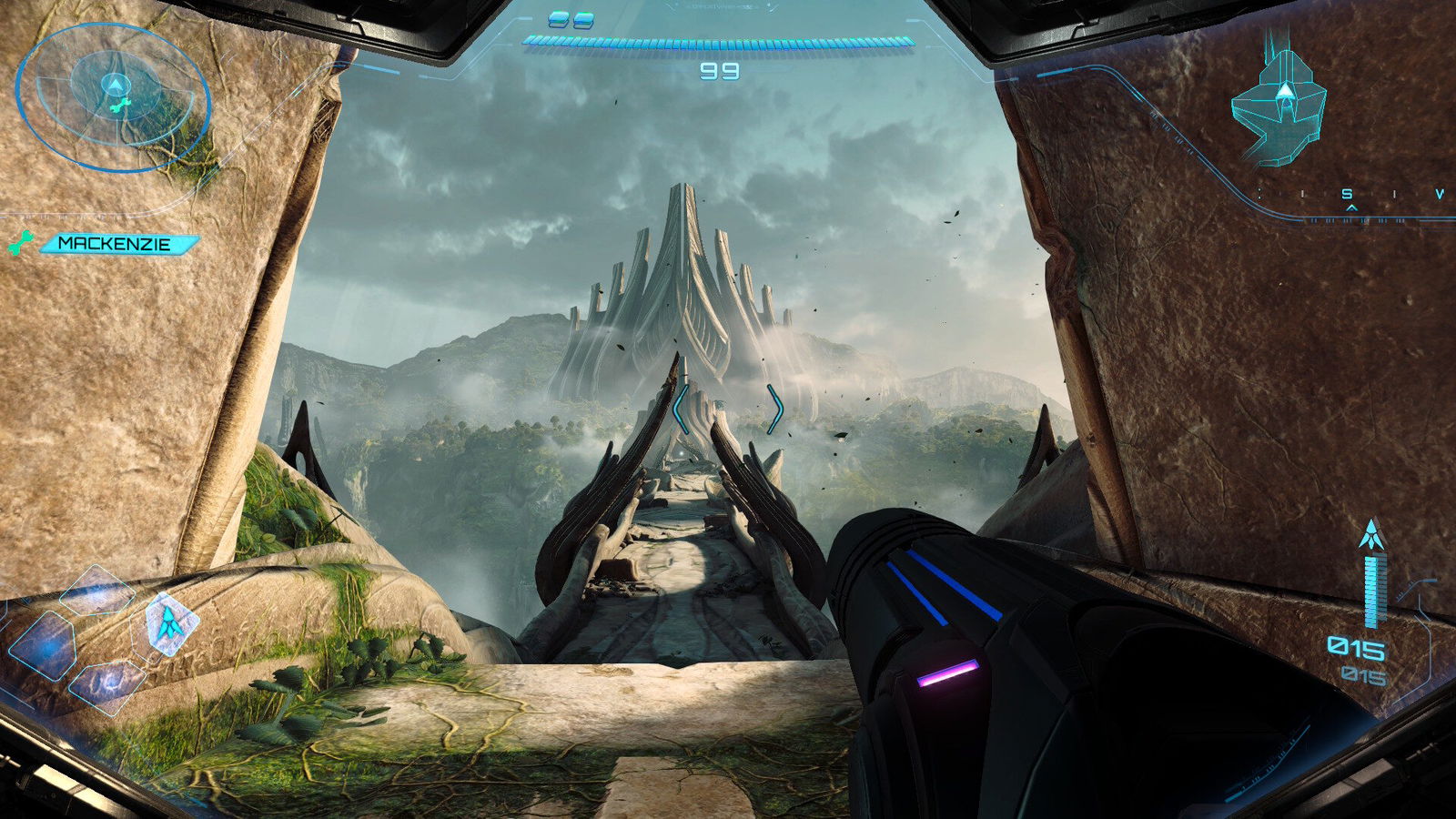
When I saw people genuinely overreacting to Myles MacKenzie within the first hour of the game, I was withholding my opinion until I got deeper into Metroid Prime 4: Beyond. I thought, “clearly they’re using him as a tutorial figure for new players,” so I wouldn’t have had an issue with Samus being given a goofy sidekick who hand-holds the player through the opening segment of the game if that’s where it stayed. Unfortunately, that’s not where it stayed…
Again, I want to reiterate that I’m not fundamentally against the idea of a game, even a Metroid guiding you forward—heck, Metroid Dread gives you a Navigation Room like every 10 steps to make sure you know exactly where to go next. Metroid is a genre, but it’s also allowed to experiment. What I am against, though, is a game that feels the need to constantly remind you where to go, after it specifically tells you to explore and check things out. The problem isn’t that the game gives Samus a goofy sidekick; it’s that it gives her a Navi.
“Metroid Prime 4: Beyond is an incredibly fun game.”
And it’s implemented in a way I’ve complained about so many times in the past. Every time you find a new upgrade for your Arm Cannon, you need to bring it to MacKenzie for him to install, which is a fine idea on its own—utilizing his unique skill as an engineer. But after every installation cutscene, players are not only given a text box to explain exactly what it does, but a continued cutscene of MacKenzie repeating exactly what they just read. Maybe it’s not as big a deal as I’m making out, but it always feels condescending to me.
It was particularly annoying once I got the Vi-O-La and began zipping around Sol Valley for Mack to get on the radio and say “Hey, there’s four areas you can check out however you want, no pressure,” only to come back on almost two seconds later to say, “There’s a lot of cool areas to check out, why not start with the volcano.” At first, I wrote it off as a helpful suggestion, only until four more calls pointed me toward the volcano, as if to say, “I know we said explore, but the volcano is Level One, so just go there.”
I don’t know why Nintendo didn’t make this an optional feature or something you can turn off in the settings. It’s even stranger because the map includes a radio button that lets you call MacKenzie if you get stuck, and he reminds you to use it constantly; so why not leave it at that? The hint function was theoretically optional, and I guess Nintendo was worried players wouldn’t use it, so they forced it instead.
But the reason I’m complaining so much about this issue is that, for me at least, it laid bare the problems that come with designing a game like Metroid with such rigid linearity. You start to notice it in the level design as well; despite having four areas in unique biomes, they’re all essentially a straight line to the end of a series of rooms, and then back again after the power’s been turned on. That isn’t to say Metroid Prime didn’t have a degree of linearity, but it knew how to create rooms with more than one door in them.
Not only that, but it diminishes the way players get Power Ups in Metroid Prime 4: Beyond because it’s pretending you have a choice in how you get them. Since I was ignoring Mack’s instruction to go to the Volcano and exploring, I saw by experience that one area required the Spider Ball ability, and the entrance to the Ice Belt was blocked by a giant ice wall. Once I finally went to the Flare Pool, I was almost immediately barred from entry, but given the Fire Shot. And I don’t mean I had to explore a whole side area to find the shot; the game literally pointed me toward it.
Before leaving, a giant lava wall blocked the entrance to the main area of the Flare Pool. Naturally, I was instructed to go to the Ice Belt, but with Fire Shot in hand, I knew I could do it. Through the process of going through the level, I was given the Grapple Beam, Ice Shot and the Boost Ball—both of which were needed for getting through the Flare Pool. It ended up feeling like an issue I’ve complained about before with Nintendo games, where levels are designed around a particular item or ability, rather than the ability being worked seamlessly into the whole game.
Areas aren’t really designed to be explored because they’re presenting roadblocks along the most obvious path and incentivizing investigation and discovery. Instead, they’re just individual levels in a shooter with the illusion of exploration because they’re not arranged in a straight line. Because you’re painfully guided to your next destination, the ability you gain feels more like a consolation prize than something you needed to find. Again, I’m not fundamentally against this design theory for Metroid, but the game needed to lean ALL THE WAY in.
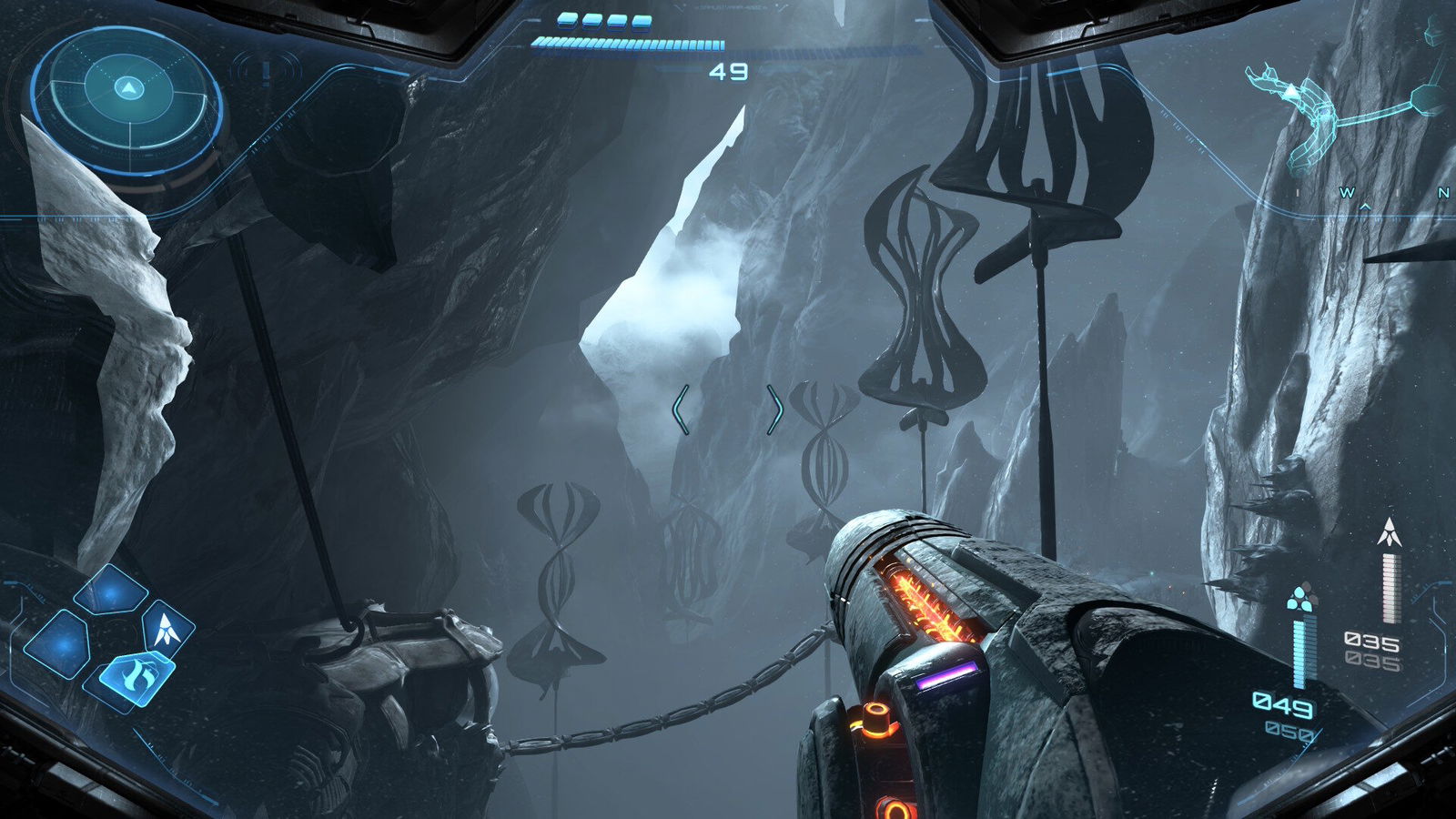
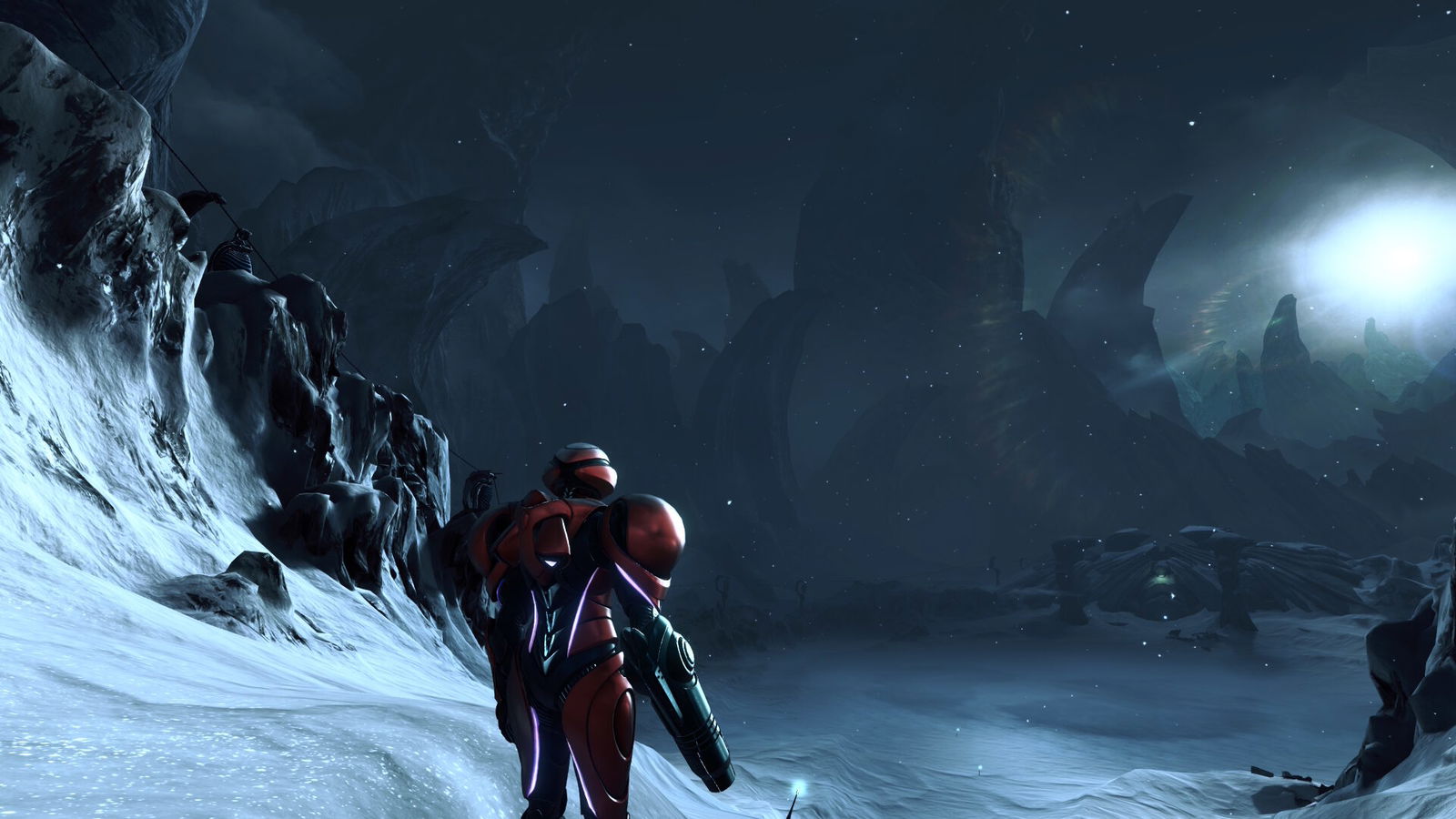
But that’s not to say that the levels in Metroid Prime 4: Beyond are bad in any way from a design standpoint. Each one does a really great job of building atmosphere and tension as you arrive, that become high-octane shootouts as you attempt to exit. The Ice Belt was a particular standout for me—beginning with an intense battle against a pack of Snow Wolves that gets more and more desperate as it becomes clear you’re not going to survive.
Samus is saved at the last moment by one of the Federation troopers she’s searching for, but because of an injured leg, he sends her to make the dive into a frozen laboratory alone. Her comms are unavailable, and the descent is marked by an eerie stillness and an unnerving atmosphere. This atmosphere breaks once you restore power and heat, and the entire area changes. Icicles become streams of water, frozen aberrations come to life and turn hostile, and the music shifts to a high-tempo mix of industrial and techno.
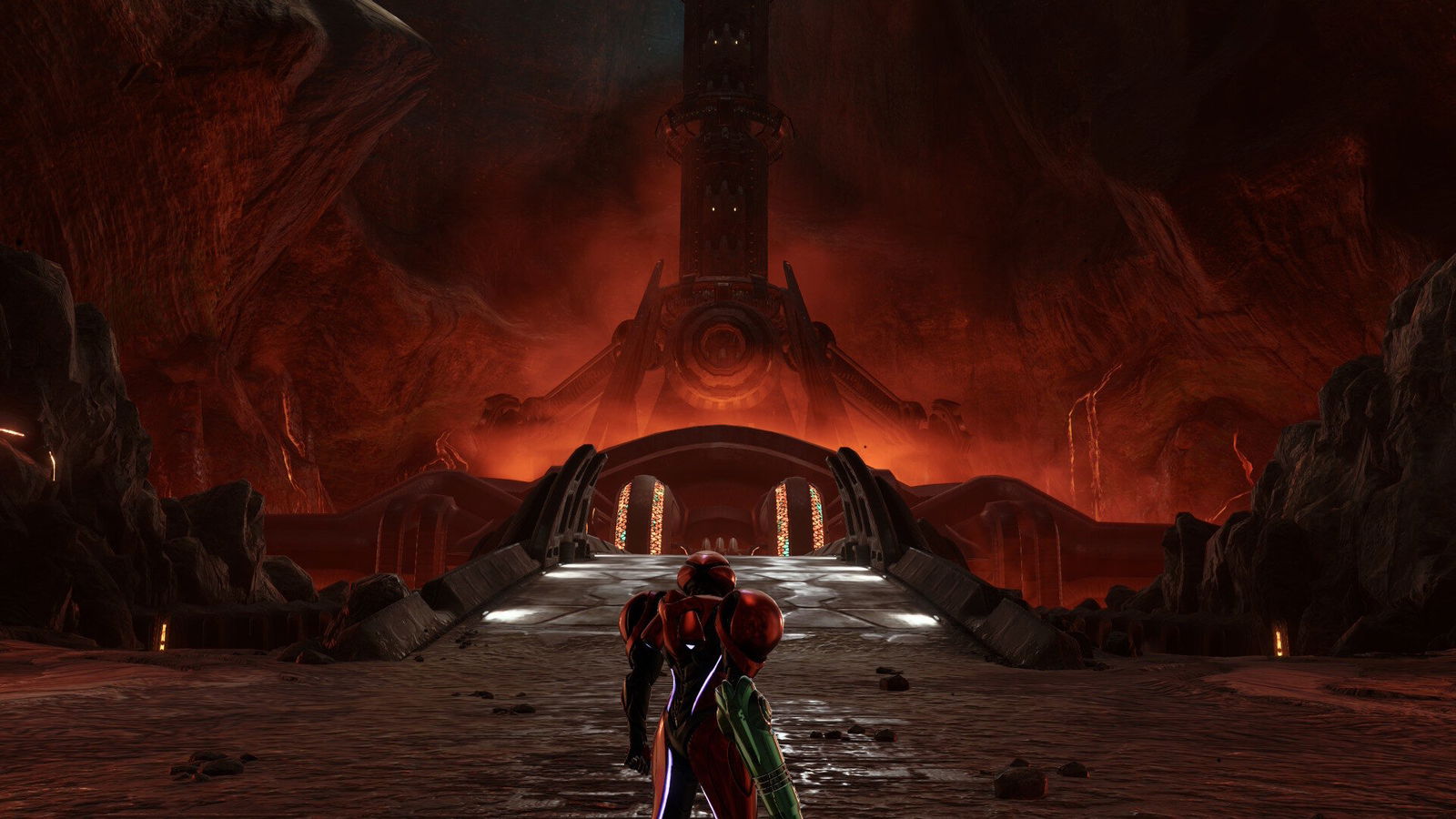
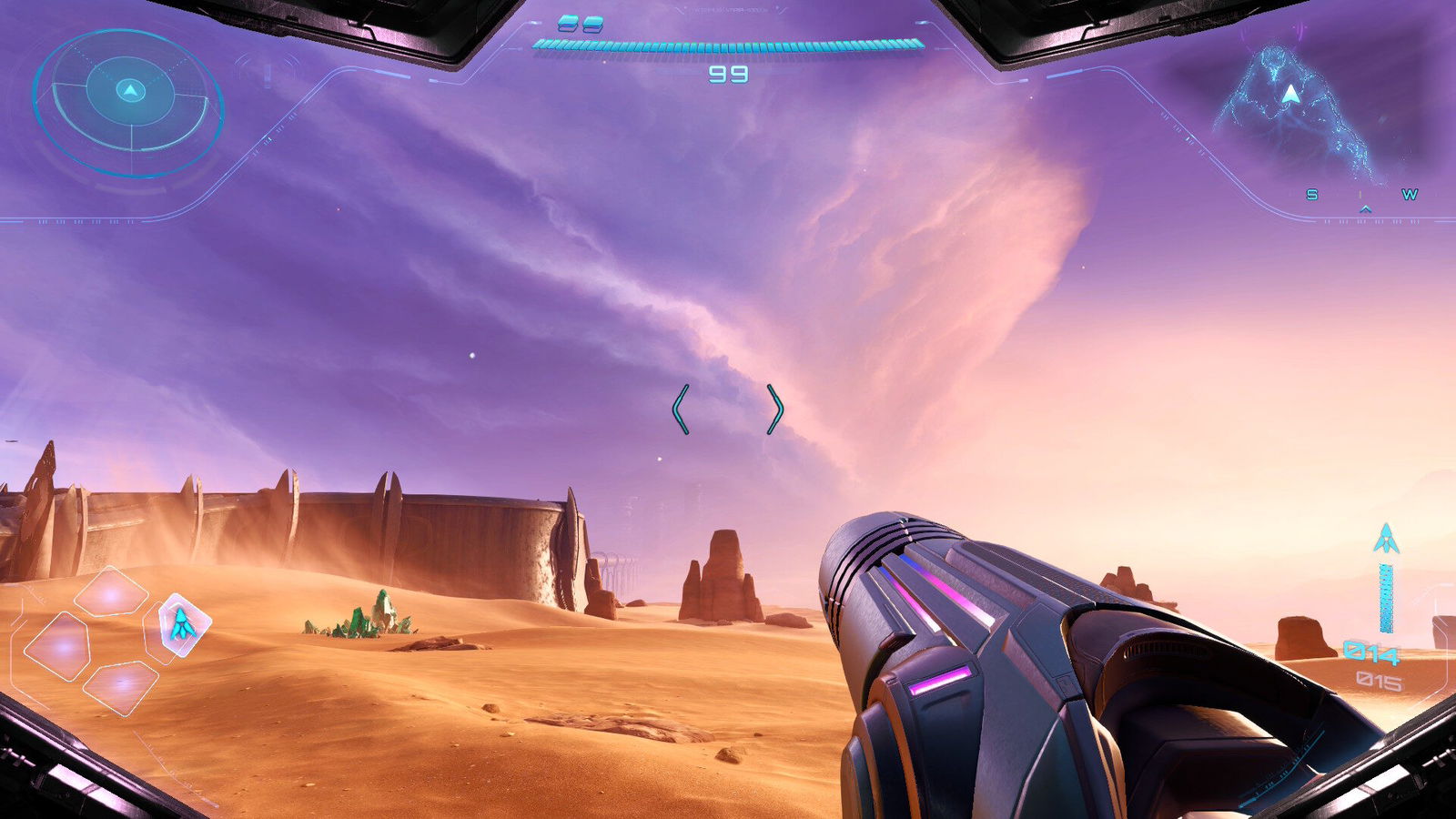
And all four of the areas outside Fury Green, which is essentially the tutorial area, are designed like this, and they’re all genuinely exciting and incredibly fun to run through—hence the comparison to Halo: Combat Evolved. What’s more, there’s a thematic conceit of arriving on this dead planet and needing to temporarily bring it to life, and the danger that comes with it, that adds an interesting layer of depth to the game’s world. The only real issue with them is that they’re separated by Sol Valley—a barren wasteland that is completely superfluous and adds nothing to the game.
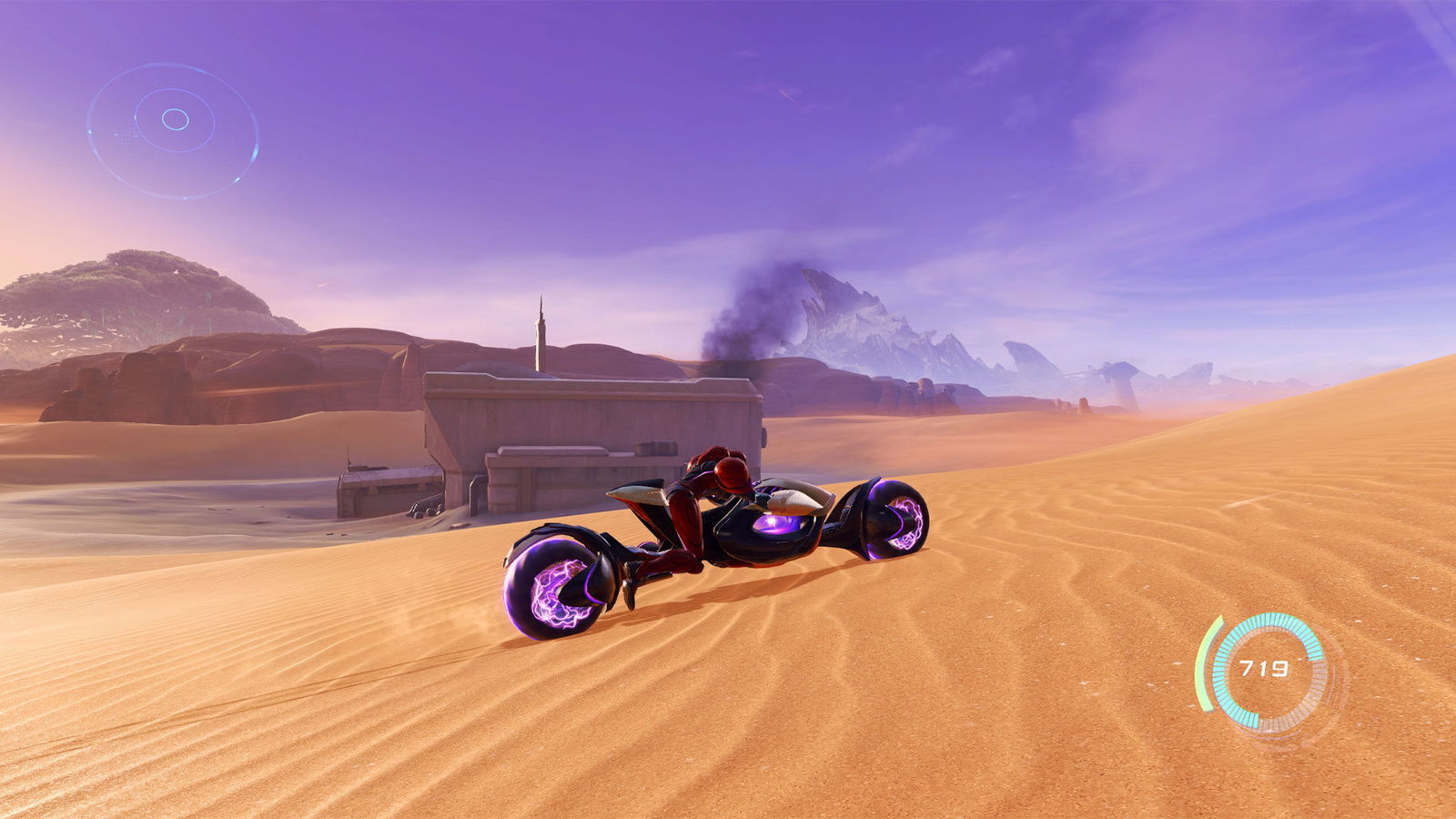
I’m mostly joking there, but it was kind of a shame to see how little Sol Valley had going on. I kept thinking about those moments in Halo: Combat Evolved where you’d drive from one area to the next, as a way of creating a sense of scale, and wishing Metroid Prime 4: Beyond had just done that. And controlling the Vi-O-La is genuinely fluid and tight, and it’s actually incredibly fun to blast around the area—I just wish there was more to it.
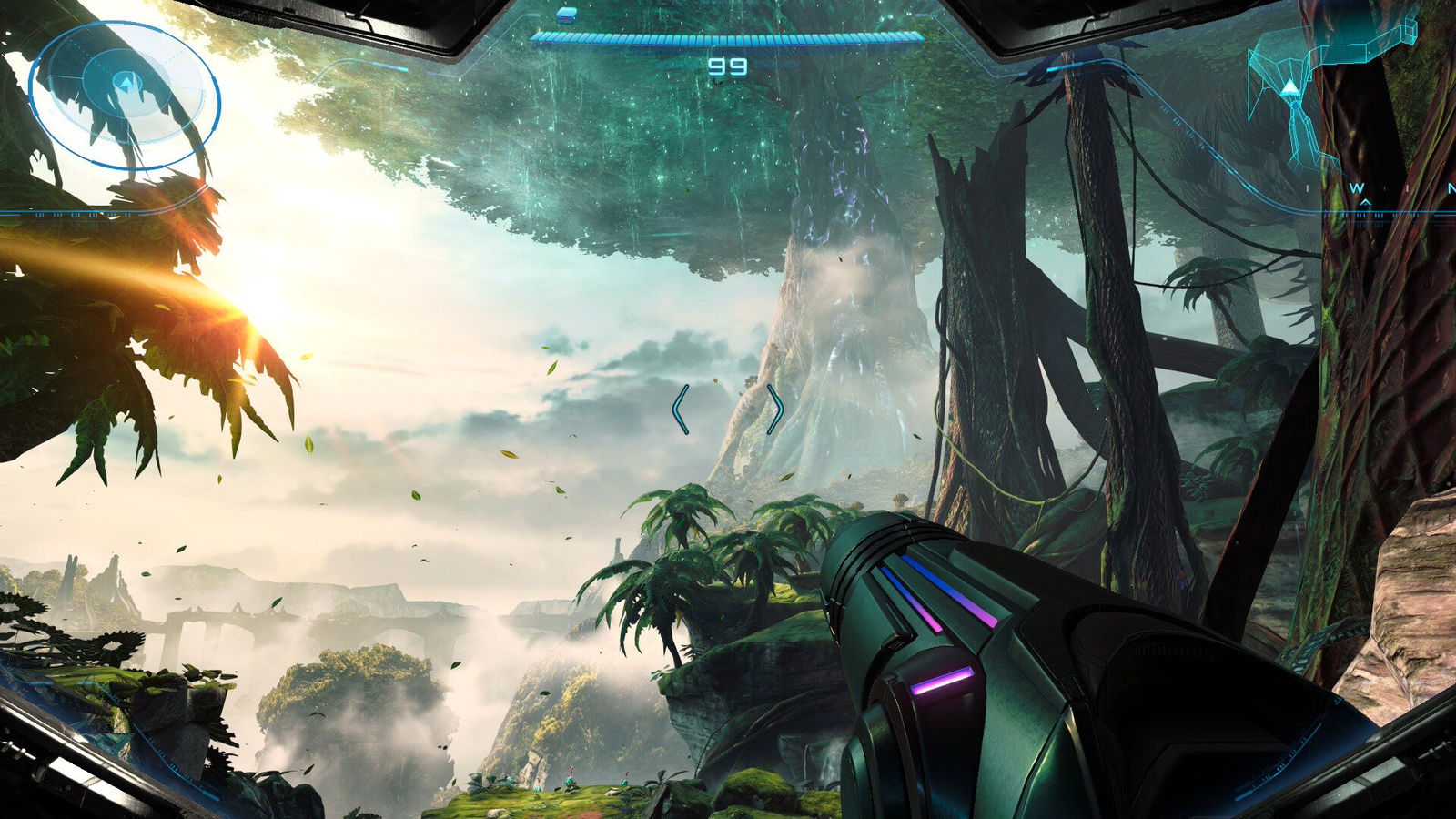
And it’s so conflicting because the nuts and bolts gameplay of Metroid Prime 4: Beyond is incredibly solid. Samus feels great to control in first-person, and a lot of work has been done to make the game feel modern while paying homage to some of the series’ design roots. Blasting enemies feels great and is fine-tuned by the inclusion of gyro and mouse controls—even though I would say mouse controls aren’t exactly the best way to experience this.
Which leads me to my biggest problem with the gameplay: just how much the game wants you to use the mouse controls, which is particularly evident in the boss fights. Almost every boss has VERY specific hit points that you can tell were meant to emphasize the precision of a mouse, but if you’re like me and playing the Switch 2 in every way that isn’t sitting at a desk, you’re never going to really get an optimal mouse experience. Thankfully, the gyro controls go a long way to cover for this.
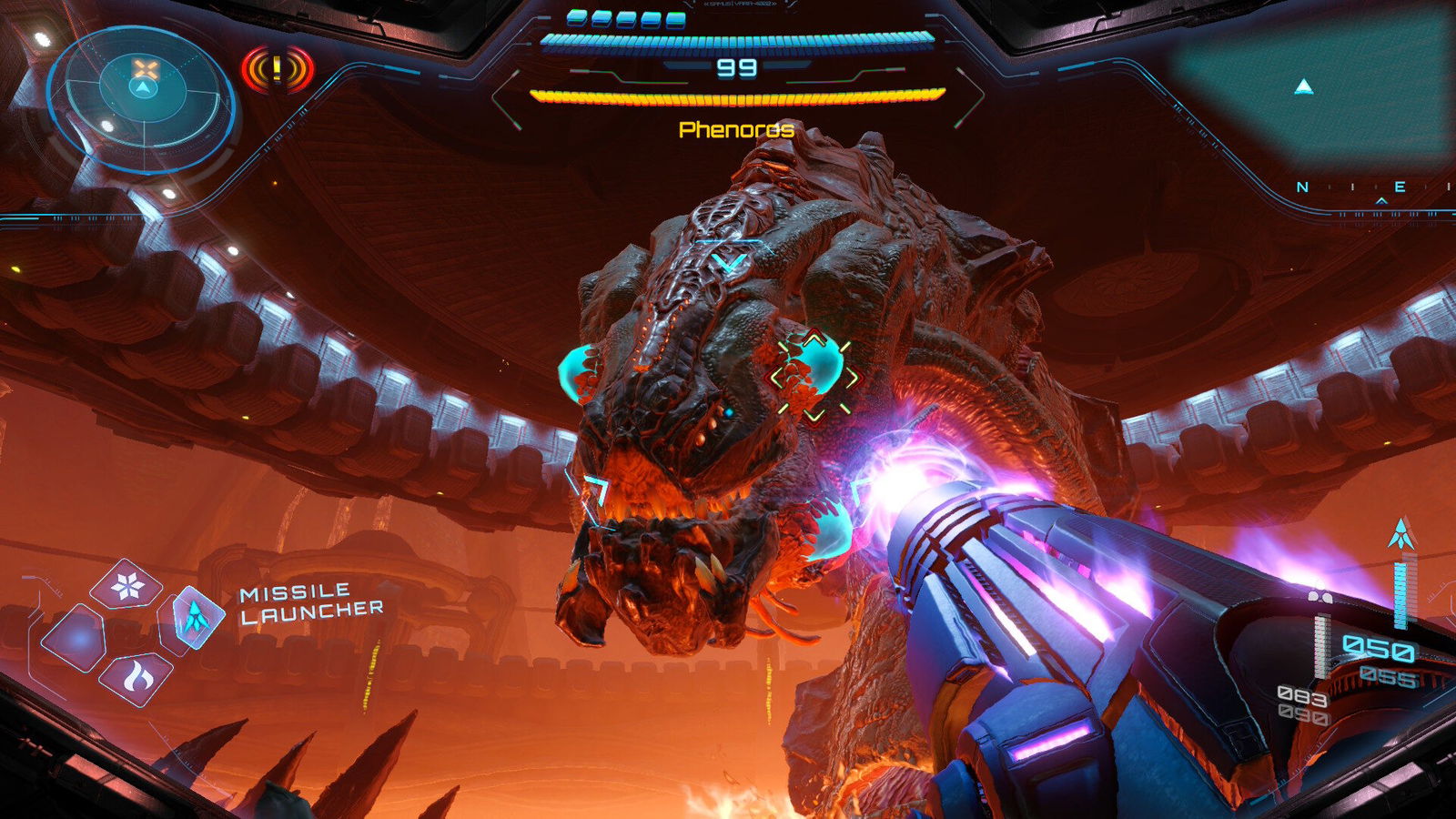
That being said, the boss fights do still manage to be incredibly intense and satisfyingly challenging. There’s a pretty incredible variety as well—from a giant plant monster, to a corrupted AI possessing discarded metals, to a massive lava dragon. There are fights that incorporate Samus’ psychic abilities, some that utilize newly acquired weapons, and that aforementioned lava dragon battle starts on the Vi-O-La, which is really cool.
Of course, players will also run into Sylux a few times, who is essentially standing in for the Dark Samus fights. Much like her corrupted counterpart, battles with Sylux are up close and personal, and he does a really good job of feeling incredibly distinct from Samus. If you played Metroid Prime: Hunters, you may even recognize a few of his attacks.
This review may seem like it’s leaning mostly negative, but I REALLY want to stress that Metroid Prime 4: Beyond is an incredibly fun game. At no point during my 13 hours playing did I ever really want to stop, nor were any of the more questionable choices really putting me off. As I said, I’m not fundamentally against a more straightforward experience if Nintendo wants to make an FPS Metroid; they just needed to commit to a single style. Despite my complaints, there’s still a lot to like about this game.
“Metroid Prime 4: Beyond is absolutely GORGEOUS and may be one of the best-looking games on the Switch 2.”
I really liked how the start of the game showed a Federation Trooper jumping into a Mech in a subtle nod to Metroid Prime: Federation Force—as if to say, “suck it crybabies, this is canon!” I really enjoyed all the characters that accompanied Samus throughout her adventure, from the loveable goober Myles, to the legit fangirl Armstrong, who spends most of her time fawning over Samus; and they are genuinely helpful during combat when they’re with you.
I also really like how, alongside missiles, the various elemental shots you get are tied to ammunition this time around, adding another layer of complexity to how you approach combat and utilize these elemental effects. Also, attacks have a really good sense of weight to them. Missiles in particular send enemies flying, and even when Samus gets hit, there’s a notable punch to it that really makes combat feel tangibly satisfying.
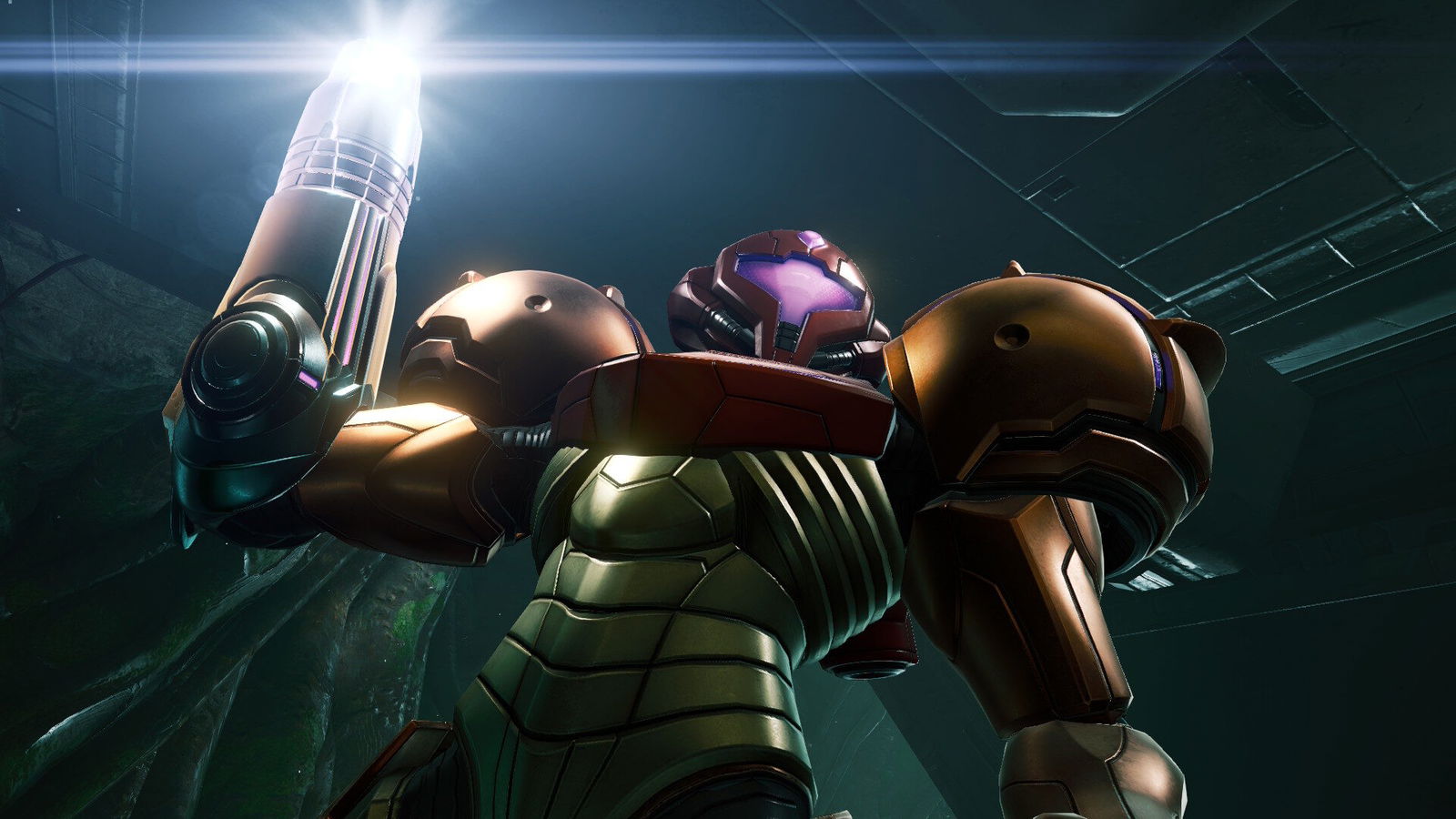
And Metroid Prime 4: Beyond is absolutely GORGEOUS and may be one of the best-looking games on the Switch 2. Environments are incredibly varied, richly detailed, and brought to life with modern lighting engines. Environmental details are used to great effect as well. You really get a sense of the cold and heat when entering the Ice Belt or Flare Pool from the fog and bloom effects. Even Sol Valley has a distinct beauty to it—with golden sand glittering as you drive along it, accented against a blue sky.
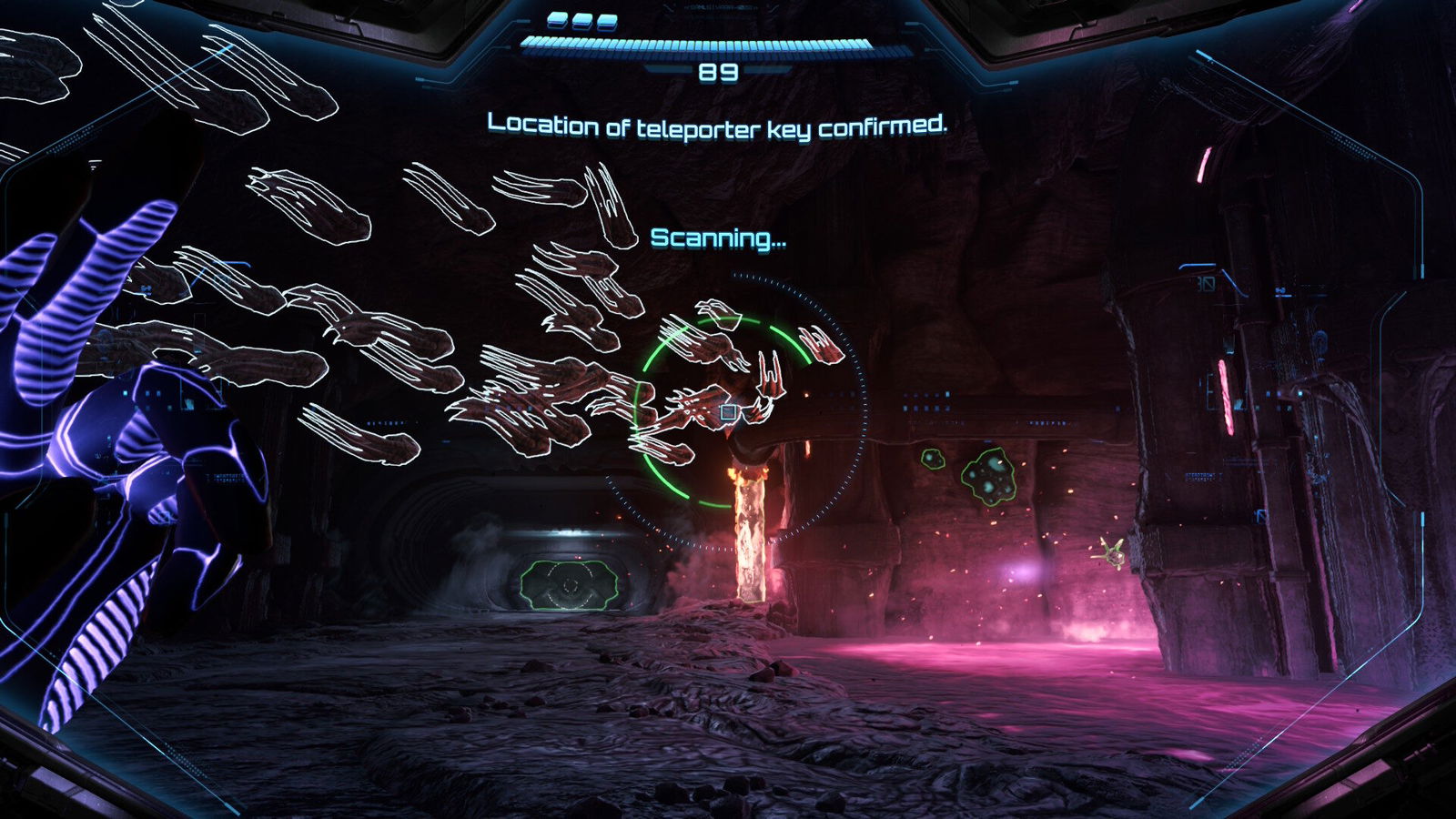
Also, I feel it deserves special mention how (the Nintendo Switch 2 version) is the first game I’ve ever played with Quality and Performance graphics options that are genuinely meaningful. In handheld, Quality keeps your game at 1080p, 60fps, while Performance drops the resolution to 720p, but bumps the framerate to 120fps. Docked, Quality runs at 4K resolution at 60fps, while Performance drops to 1080p at 120fps. It’s just nice to see a game that doesn’t slow to a crawl for the privilege of ray tracing.
And as I hinted at before, the soundtrack runs the gamut from tense and eerie to incredibly fun and exciting. It goes a long way in creating the game’s atmosphere in a way that pays homage to its roots, but distinguishes itself as a more action-focused, straightforward shooter. Fury Green sounds a bit like a mash-up of all the area themes in Metroid Prime; Flare Pool has the same bombastic drums and horns as the Magmoor Caverns—which itself was an enhanced version of Ridley’s Lair from Super Metroid—and Sol Valley has a silence that highlights the sense of size it’s trying to capture.
Lastly, as it’s only fair to mention, whether or not you’re willing to pay $69.99 for improved framerates is really going to depend on how much you care about them. In terms of what’s actually on offer in Metroid Prime 4: Beyond, it’s fun enough to justify its Switch price, but you might want to wait for the Switch 2 version to go on sale if a linear Metroid isn’t your thing.
In many ways, Metroid Prime 4: Beyond caused me to reexamine what it is I love so much about the original Metroid Prime, since it, too, was fairly linear in its execution in relation to other games in the series. What I came to see was: Metroid Prime feels like an FPS version of Super Metroid, whereas Metroid Prime 4: Beyond feels like an FPS version of Metroid Dread.
There is a lot of fun to be had, and the game certainly feels a lot bigger and more dynamic (or cinematic), but the experience is far more guided than Metroid used to be. And while that may be enjoyable for some, it may also be unforgivable for others.
The Nintendo Switch version of Metroid Prime 4: Beyond is available for $84.99 CAD, and the Nintendo Switch 2 version is available for $99.99 CAD.