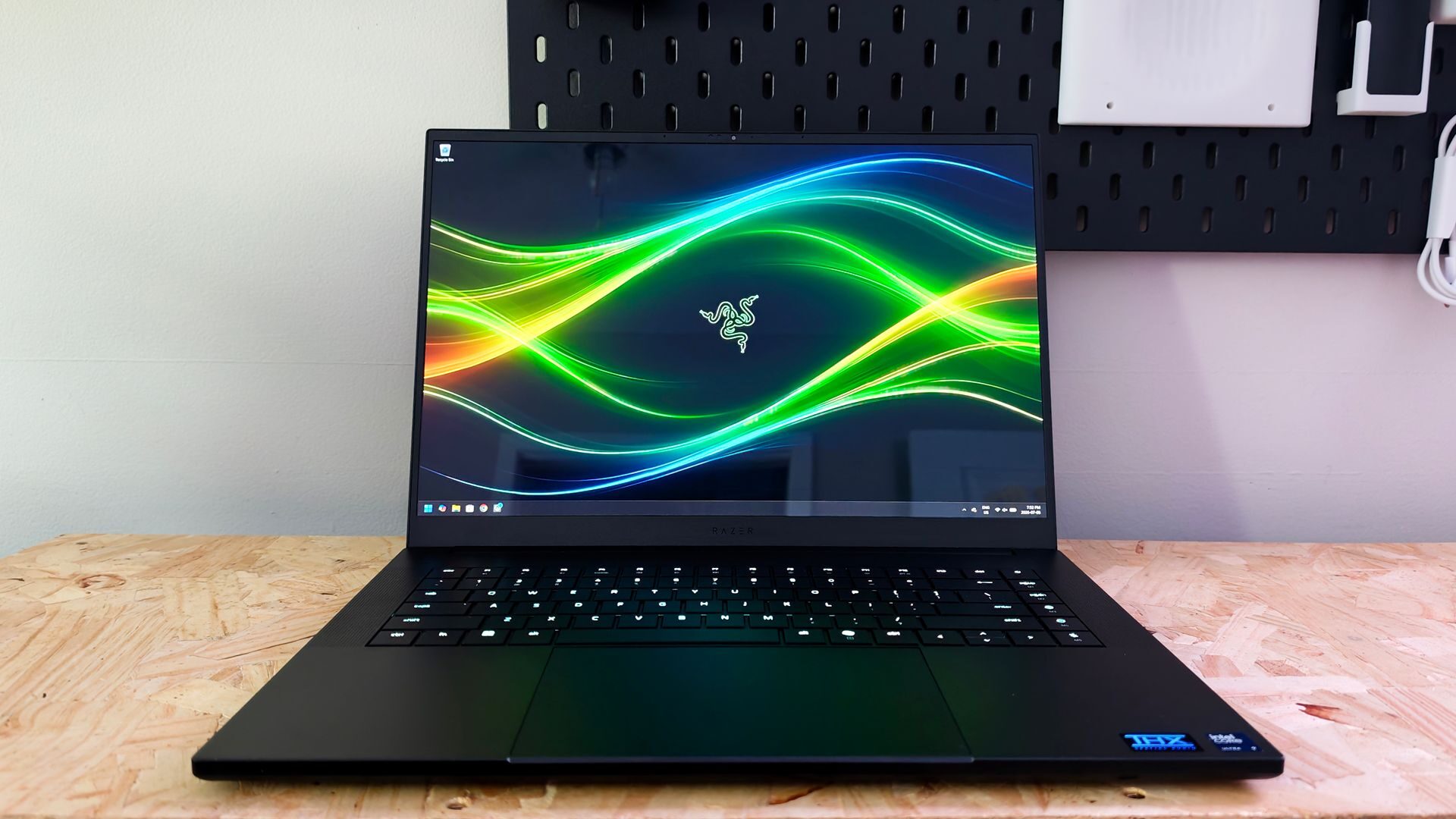


The Razer Blade series truly has become the gold standard for gaming laptops over the past few years. With some impressive laptops in the Blade lineup, the latest iteration of the Razer Blade 16 is one I’ve been eager to spend some time with. Promising impressive power gains over previous generations, better battery life, and the thinnest Blade 16 chassis to date, there is a lot to appreciate with the new Blade 16.
The Blade 16 2026 is, as noted, the thinnest iteration of the Blade 16 series. Measuring an impressively thin 14.9–17.4 x 250.5 x 335 mm (W x D x H), the Blade 16 is one of the thinnest gaming laptop form factors I’ve tested to date. Weighing 2.14 kg, it’s also relatively light considering the all-aluminium chassis.
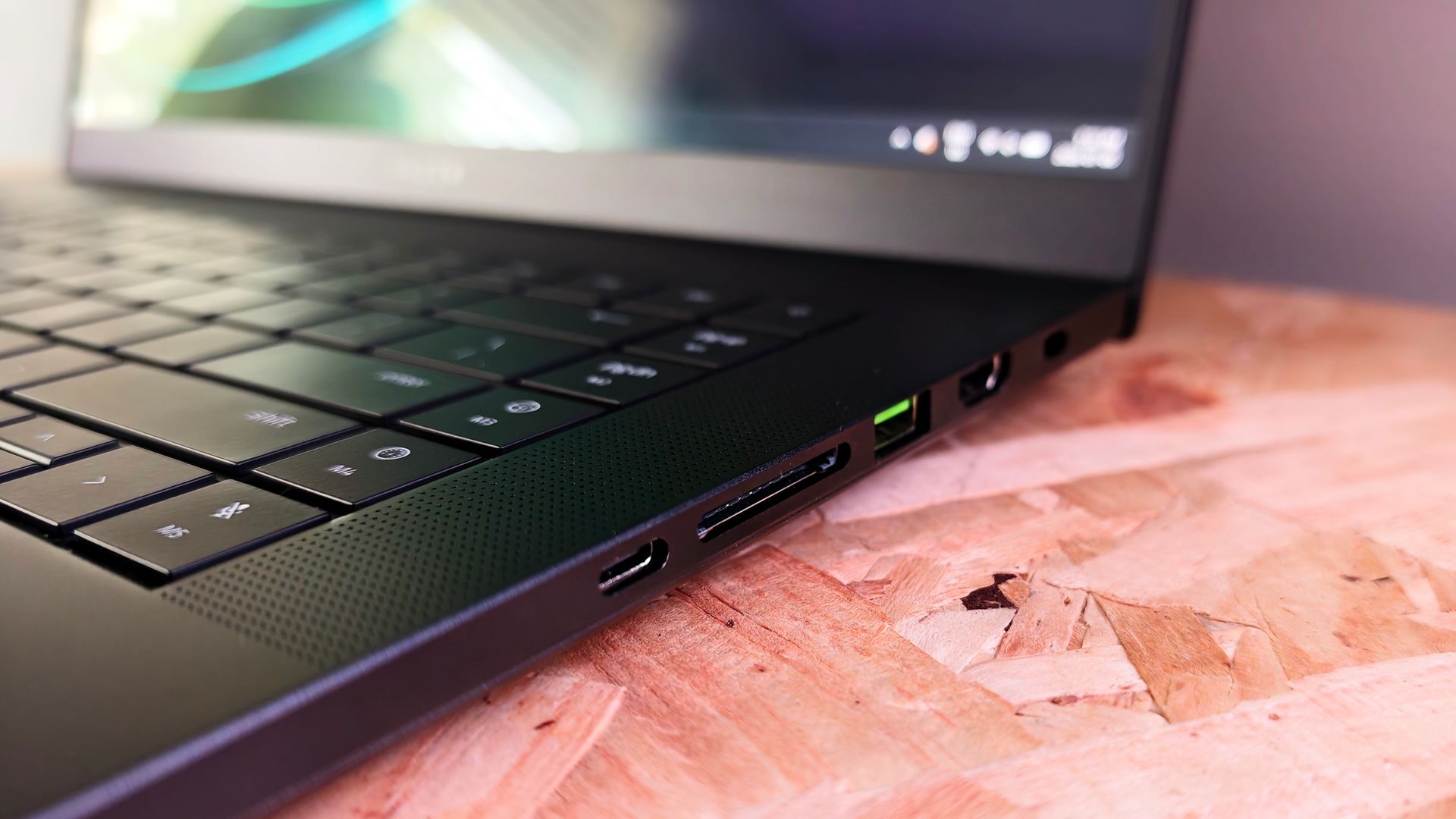
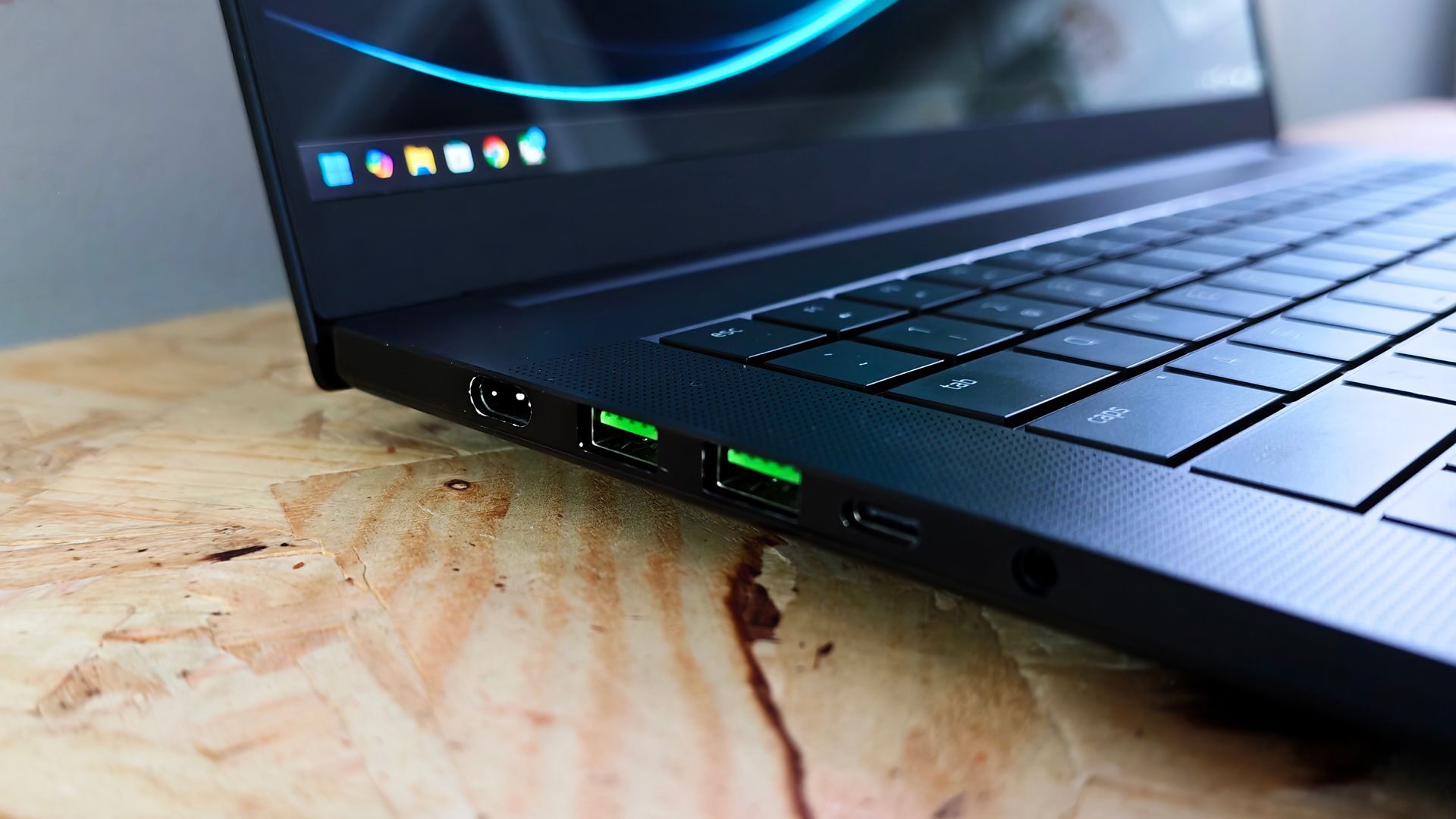
Following in the footsteps of its predecessors, such as the Blade 18 2025 and Blade 16 2025, the new Blade 16 2026 features the iconic matte black design, giving it a sleek finish. IO selection is quite robust on this latest iteration as well, featuring a solid lineup for gamers and creators alike. The standard 3.5mm audio combo jack, HDMI 2.1 FRL and SD Card Reader are all present and accounted for, as well as 3× USB-A 3.2, 1× Thunderbolt 5, and 1× Thunderbolt 4, both providing DisplayPort and power delivery.
“The Razer Blade series truly has become the gold standard for gaming laptops over the past few years.”
With the inclusion of Thunderbolt 5, gamers can take full advantage of the excellent Razer Thunderbolt 5 Dock Chroma, a game-changer for users wanting a full desktop experience from their gaming laptop. Though with the inclusion of the new QHD+ 240 OLED display, I’ve not found the need to game on a larger screen since testing the Blade 16.
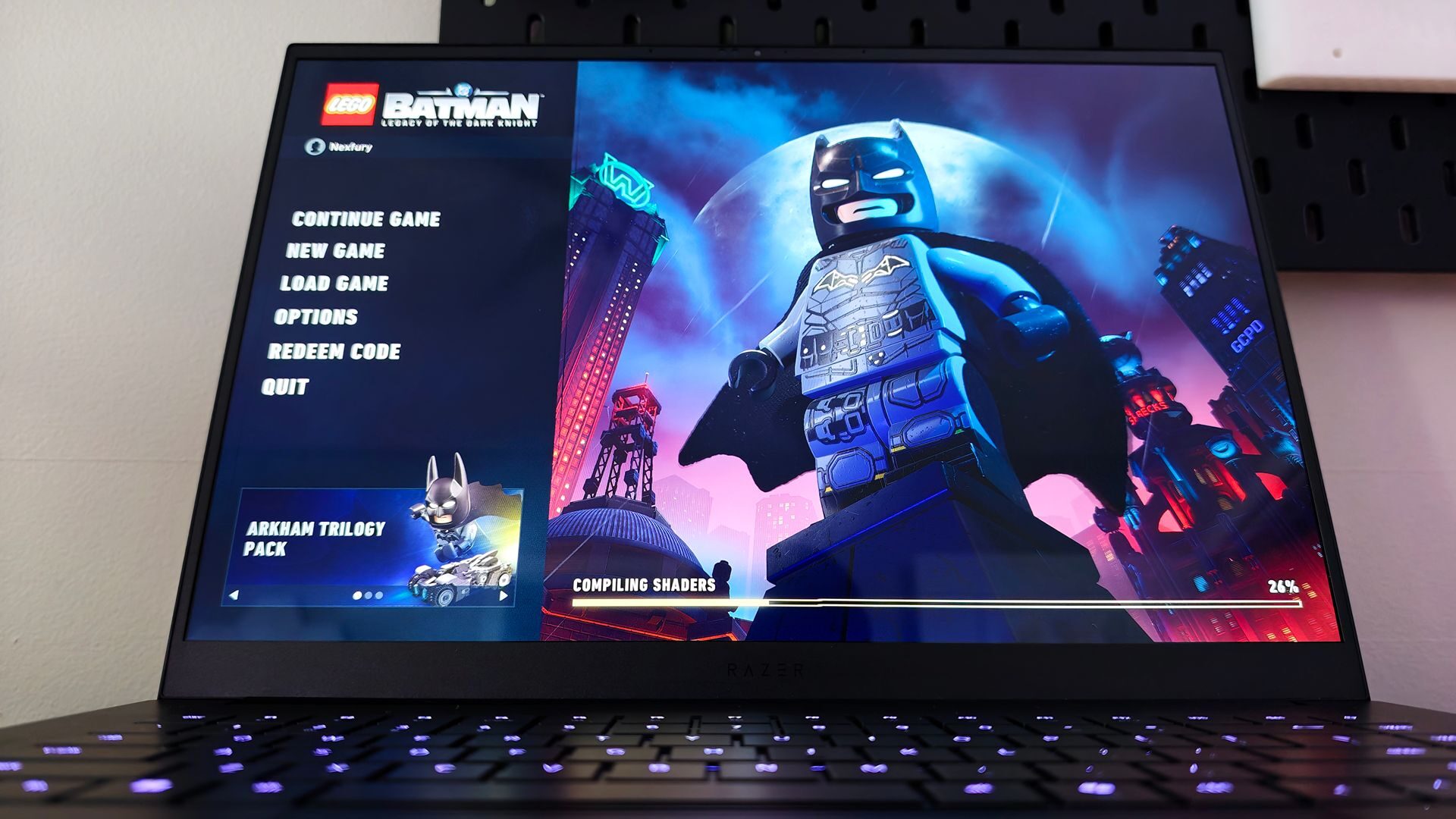
This beautiful 2560 x 1600p OLED brings impressive brightness and crispness to the images on screen thanks to DisplayHDR TrueBlack 1000 support. With a 0.2 ms response time, everything on display feels buttery smooth, whether you’re working on your latest spreadsheets or ripping and tearing your way through the latest DLC of DOOM: The Dark Ages. NVIDIA G-SYNC support also provides beautiful and consistent frame rates between the display and the GeForce RTX 5090 tucked under the hood (more on this in a moment).
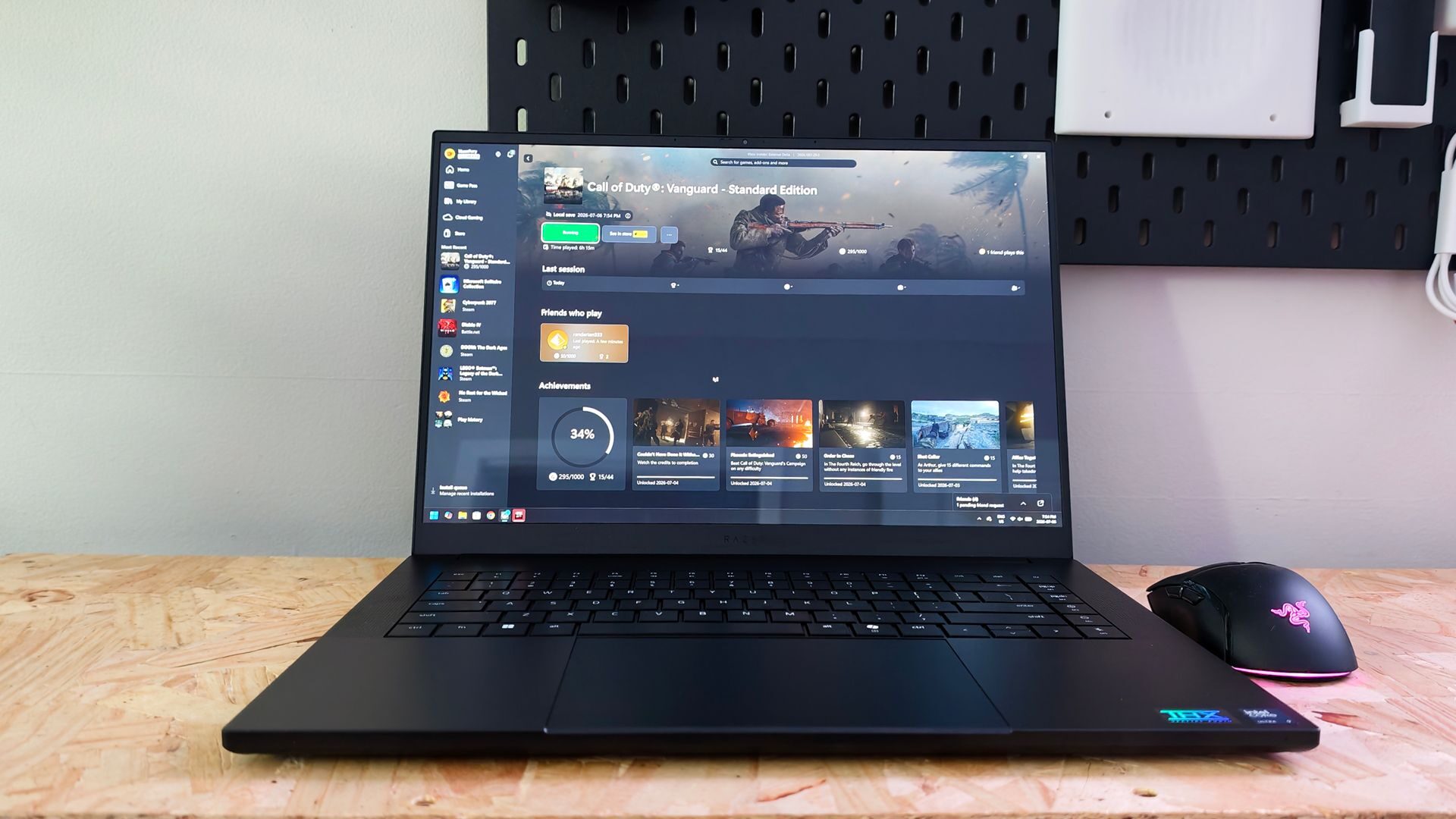
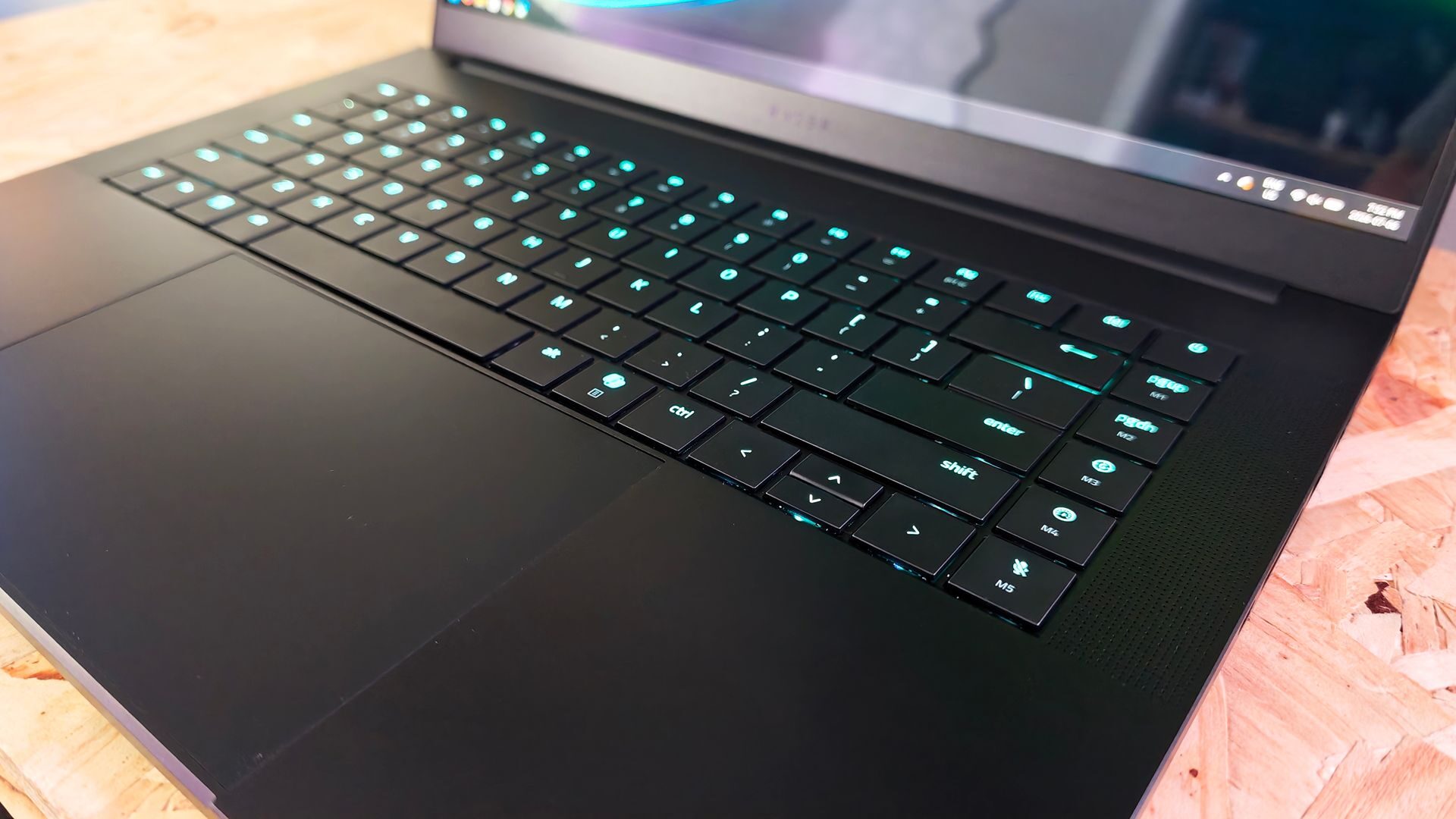
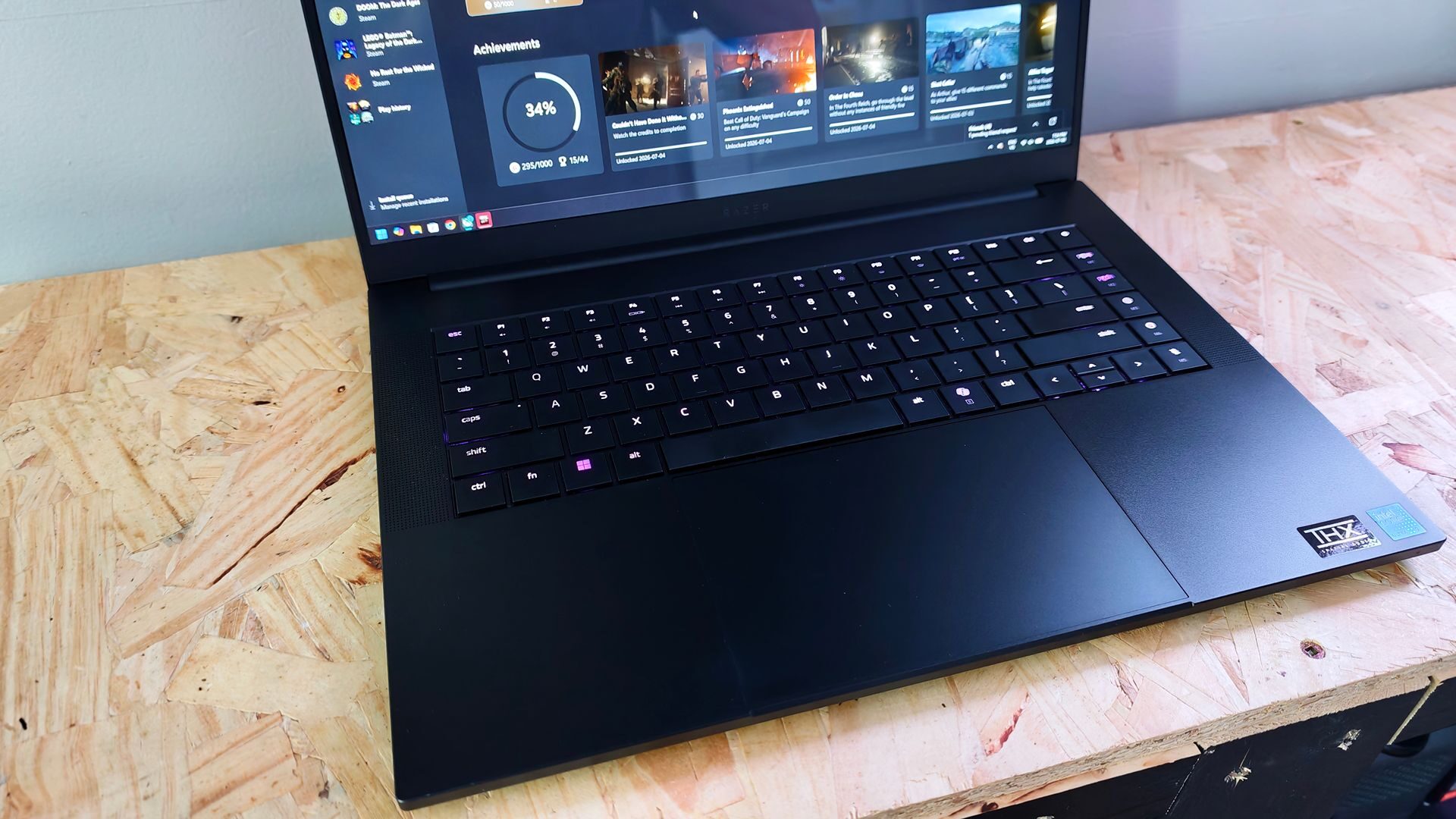
The keyboard on the Razer Blade 2026 has also seen a notable improvement over previous generations. In fact, even before perusing the spec sheets and the reviewer information sheet, I noted that the keys have better tactile response than on previous models of the Blade I’ve worked with. The typing experience specifically feels comfortable and responsive, less membrane and more mechanical in feel.
The per-key RGB lighting is also on full display here, offering a beautifully bright and sharp look for the Blade 16. Razer Synapse 4 gives users full reign over the look of each key. Of note is the secondary functions of keys when the FN key is engaged. It’s a subtle but useful quality-of-life feature that I appreciate so much, especially when gaming late at night with nothing but the laptop to illuminate the space.
Before diving into the performance and thermals of the Razer Blade 2026, I do want to note the speaker performance of the Razer Blade 16. While I’m not typically a fan of laptop speakers, the six-speaker system is actually quite impressive. While it still lacks the punchy low end present in a traditional audio setup, the clarity of the audio profile is beautiful and clean. The optional THX Spatial Audio+ is notable and provides directional clarity when engaged, and the overall sound profile feels well-rounded. It’s a noticeable improvement that, as an audio enthusiast, I appreciate.
Synapse 4 also allows for preset and custom EQing of the audio experience, and I have to say that it is notable when swapping from profile to profile. Overall, I’m quite impressed at how well the integrated speaker system performs. If you don’t have headphones or a larger audio setup in your space, the Blade 16 can still provide a solid audio experience for gaming, content creation, and media consumption.
“The Blade 16 is one of the thinnest gaming laptop form factors I’ve tested to date.”
Shifting to performance, the Razer Blade 16 2026 is sporting some seriously impressive hardware. While there are a few versions of this laptop to choose from, all feature the impressive Intel Core Ultra 9 386H processor. Built on the Intel 19A “Panther Lake” architecture, the Intel Core Ultra 9 386H processor is built around a 16-core processor that includes 4 P-Cores, 8 E-Cores, and 4 LP E-Cores. The latter cores provide some much-needed boosts in battery life (more on that later).
Pushing processing speeds up to 4.9 GHz, coupled with a 50 TOPS NPU, the Intel Core Ultra 9 386H processor is incredibly powerful. For comparison, when I look at benchmarks we took of Cyberpunk 2027 at 1440p at Ultra from the Blade 16 2026 to those of the Blade 16 2026, we see a significant boost of 26FPS (note that both models included an RTX 5090). Across the board on the multiple titles I tested, the Intel Core Ultra 9 386H processor easily performed above almost every other gaming laptop I’ve tested, except for last year’s Blade 18 2025.

This performance boost is, of course, also influenced by the impressive NVIDIA GeForce RTX 50 series cards that come with the Blade 16 series. While there are essentially three GPU models to choose from, the RTX 5070 Ti, RTX 5080 and RTX 5090, we were provided the RTX 5090 24GB series laptop for testing. As noted, with gaming benchmarks the Blade 16 2026 outperforms on every test, last year’s Blade 16 and almost every other gaming laptop we tested over the past year (tested based on 1440p with Ultra settings).
While the Blade 16 can be stuffed with up to 64GB of 9600 MHz LPDDR5X memory (soldered and non-upgradeable), the Blade 16 sent over for testing came with 32GB of RAM. While heavy multi-tasking will render video might see some improvements with the larger RAM selection, in testing I found the Blade 16 at 32GB of RAM to not even flinch when presented with load heavy tasks.
Real-world tests, in the form of video editing and gaming simultaneously (I do like to live dangerously), were impressive. While DaVinci Resolve ran a 4K video render in the background, I continued my playthrough of Call of Duty: Vanguard, and it was quite impressive in terms of performance. In fact, had I not been the one to run the render, I wouldn’t have noticed that it was happening in the background while gaming. The Blade 16 2026 is a performance powerhouse if it’s the perfect portable form factor.
The included 2TB SSD is welcome, considering the size of modern AAA titles, and I appreciate that Razer included a second SSD slot for potential upgrades down the line. Capping out at 8TB of SSD storage, and assuming you have the money to burn, gamers and content creators will have no problem storing a substantial amount of content on the Blade 16.
“The Razer Blade 16 2026 is sporting some seriously impressive hardware.”
I noted the improvement to battery life and wanted to unpack that briefly now. While gaming laptops are not specifically known for battery longevity, Razer has done a solid job of tuning the Blade 16 and its power consumption for everyday workloads. Following their recommended testing parameters for battery testing, I was able to average around 12 hours of usage between charges for everyday work tasks. This included programming, email, light video streaming, audio mixing and general performance tasks around the office. I’ve not been able to do that on a Blade series laptop to date and was quite impressed with the results.
This does require that the Blade 16 run at 45% brightness, which, while not my ideal, was fine for working and required the refresh to be set to 60 Hz as opposed to 240 Hz. Backlight keys were also disabled for testing. While perhaps not the prettiest of setups, being able to work all day without charging the laptop was a welcome change. For those times when you do need a quick charge, though, the 280 W AC adapter provides impressive fast charging up to 50% in thirty minutes and 80% in around 50 minutes.
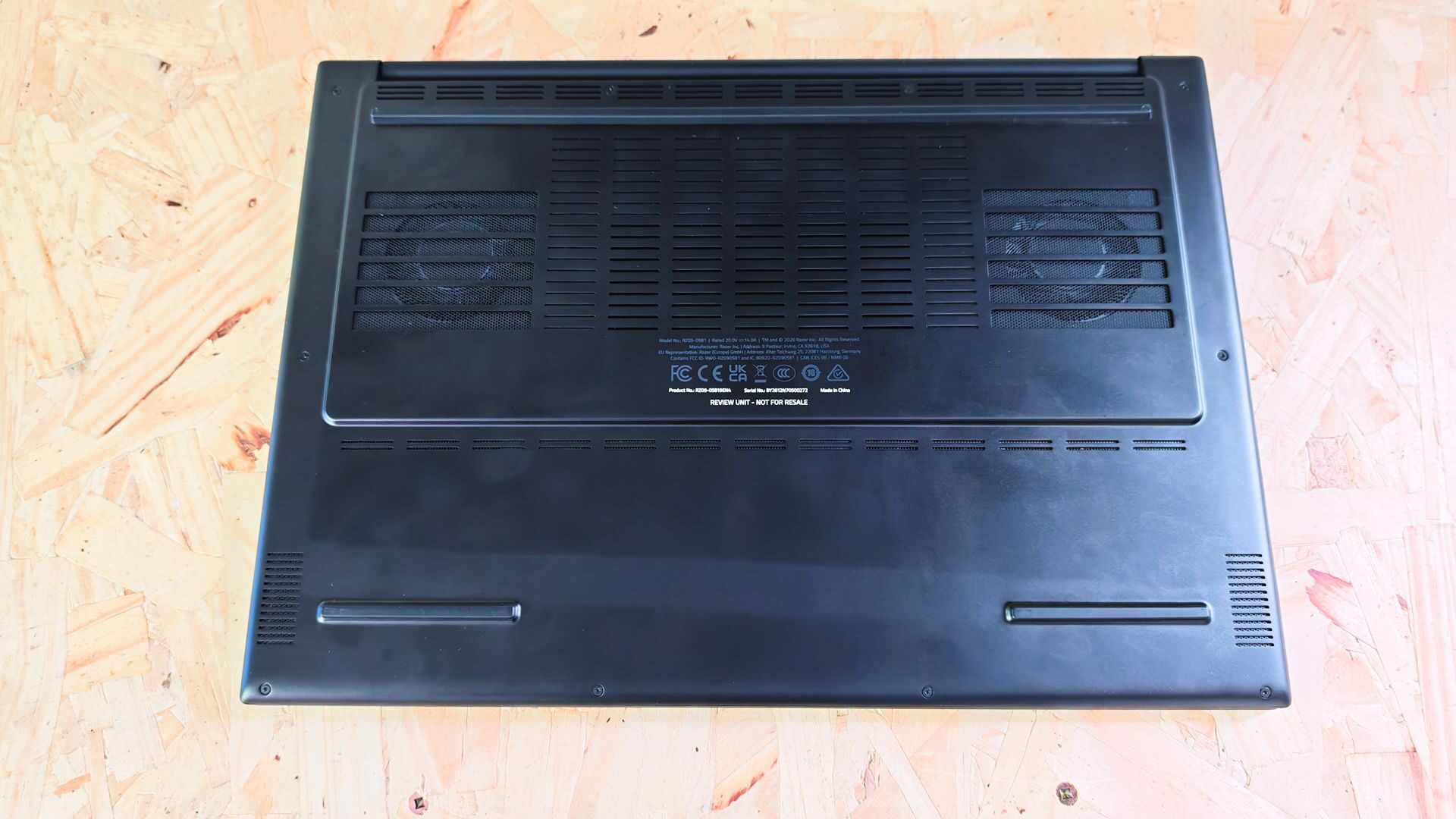
While I am thoroughly impressed with the power, performance, and portability of the Blade 16, I would be remiss if I didn’t speak to the thermals of the Blade 16. The redesigned thermal cooling system of the Blade 16 was first introduced back in 2025 and has been refined and slimmed down for this iteration. A dual fan setup provides an impressive 8.8 CFM of air to push through the system.
“The Razer Blade 16 2026 is my new favorite high-end gaming laptop, without exception.”
This is paired with Razer’s vapour chamber that covers about 57% of the motherboard. This vapour chamber is designed to dissipate heat quickly and more efficiently, and in testing, it does just that. There are two quick notes on the cooling system. The first is that the airflow tunnel is laid out so as not to generate heat where your hands naturally rest while gaming. This is a wonderful quality-of-life feature and one that every gaming laptop should adopt.
The other note is that, while it is efficient and keeps components cool, it is also quite loud. In fact, I am doubly thankful for the six-speaker audio solution, as it was needed to overcome the fans running at 4400RPM speed while in performance mode. It wasn’t overwhelmingly loud, but enough that I could hear it in the next room while grabbing coffee.
I had the opportunity to test the Blade 16’s cooling when paired with the Razer Laptop Cooling Pad. This newest iteration of the Blade 16 supports Razer HyperBoost, which essentially syncs the laptop and cooling pad fans so that they work in tandem. The result is a synchronized cooling solution that, in testing, helped not only keep things cool but also cool components more quickly overall.
The Razer Blade 16 2026 edition is an impressive leap forward for the series. The performance boost, thinner chassis and quality of life improvements make this one of the best Blade series laptops to date. While the cooling system is louder than I would like, I cannot knock its performance. The Razer Blade 16 2026 is my new favorite high-end gaming laptop, without exception.