


In The Housemaid, Sydney Sweeney plays Millie Calloway, a working-class woman who, in the film’s opening scene, is applying for a job as a live-in housemaid for wealthy socialite Nina Winchester (Amanda Seyfried) and her family. Nina is delighted by Millie’s glowing resume and her demure attitude. However, it’s quickly revealed afterward that Millie had lied on the entire resume. In fact, she’s actually on parole after a decade-long prison stint for reasons mostly kept unknown. To her surprise, Nina calls Millie shortly after to offer her the job, which she quickly accepts.
However, not even 24 hours after Millie moves in and explores the Winchesters’ huge estate, things go off the rails almost immediately. The kindness previously displayed by Nina is suddenly replaced with cruelty, giving her contradicting orders and undermining her at every turn. Nina’s daughter, Cecelia (Indiana Elle), is immediately stand-offish towards her. Even the groundskeeper (Michele Morrone) keeps suspiciously glaring at her.
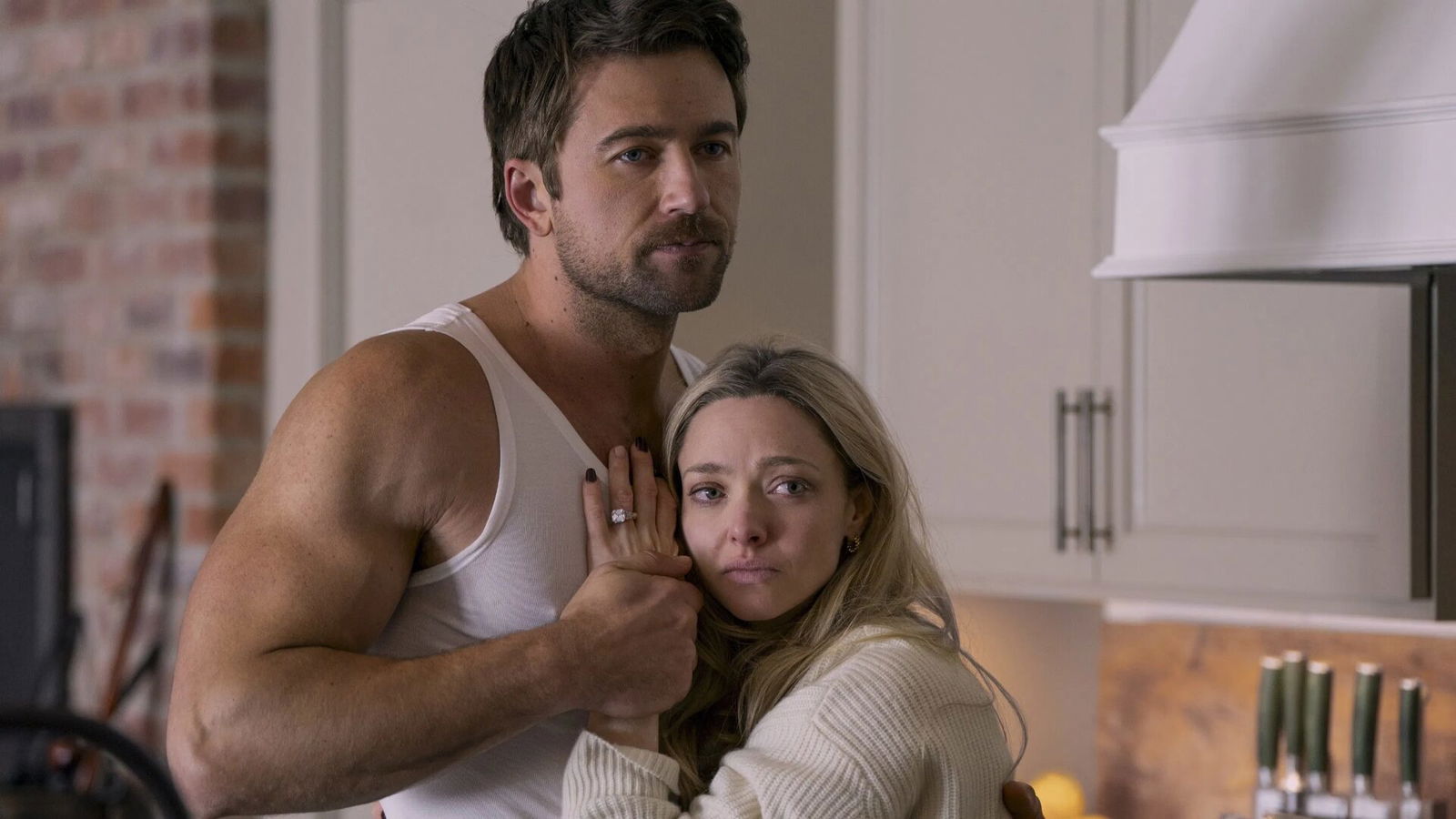
The only level-headed person in this rich family seems to be Nina’s husband, Andrew (Brandon Sklenar). The bread-winner of the family, he’s kind and charming, and naturally, there are immediate sparks flying between him and Millie. Of course, their growing attraction throws even more kerosene into the fire, and the film becomes a cat-and-mouse game on who can get the upper hand on the other.
Based on Frieda McFadden’s highly popular novel, The Housemaid is meant to be a modernized version of trashy ’90s thrillers, akin to The Hand That Rocks The Cradle, Fatal Attraction or the near entirety of Michael Douglas’ run in that decade. The problem is that while the film is an updated feminist take on it, Rebecca Sonenshine’s script doesn’t go to the level of pure campiness that makes those movies guilty pleasures.
Director Paul Feig was able to balance the camp and the suspense to surprisingly great effect when he made A Simple Favor. This time around, The Housemaid jumps tones so erratically that I spent half of the movie struggling to figure out whether the film wanted me to take it seriously or not.

For a film that’s meant to be a cat-and-mouse game between Millie and Nina, it feels decidedly one-sided in terms of which is the actually interesting character. For the most part, Amanda Seyfried is the only one to bring the movie the camp the film desperately needs; her wild emotional swings between rage and sympathy are giving the energy that Sydney Sweeney clearly lacks whenever she’s on-screen. Despite the initially interesting hook at the start, Millie isn’t all that interesting a character.
“The Housemaid is meant to be a modernized version of trashy 90s thrillers, akin to The Hand That Rocks The Cradle, Fatal Attraction or the near entirety of Michael Douglas’ run in that decade.”
Her desperation to keep the job is a convincing enough reason for her to withstand Nina’s chaos, but instead, it just feels like Sweeney is mostly bored the whole time she’s on screen. Additionally, Millie’s growing attraction to Andrew contains all the spice of a teen drama on the CW, all the way down to the awful needle drops. Brandon Sklenar is charming, but his character doesn’t feel grounded, just bland.

Although I don’t want to give too much away, there is a major plot twist halfway through that’s meant to reframe the entire film up to that point, but it’s one that’s pretty easy to telegraph and one whose major thematic through line feels well-intentioned but undercooked. The stakes suddenly ramp up, things start getting violent, and Sweeney and Sklenar’s performances become more dynamic, but still not ones I found interesting. The ending itself is also one that I found so utterly ridiculous, I couldn’t help but cackle. It builds into a potential sequel just like the book, but I just wanted it to end at that point.
In the right hands, The Housemaid could have been the type of film where I would gleefully hoot and holler throughout every wild plot twist or line delivery. Unfortunately, it instead feels like a film that should have been released straight-to-streaming but escaped containment.