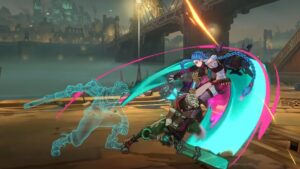

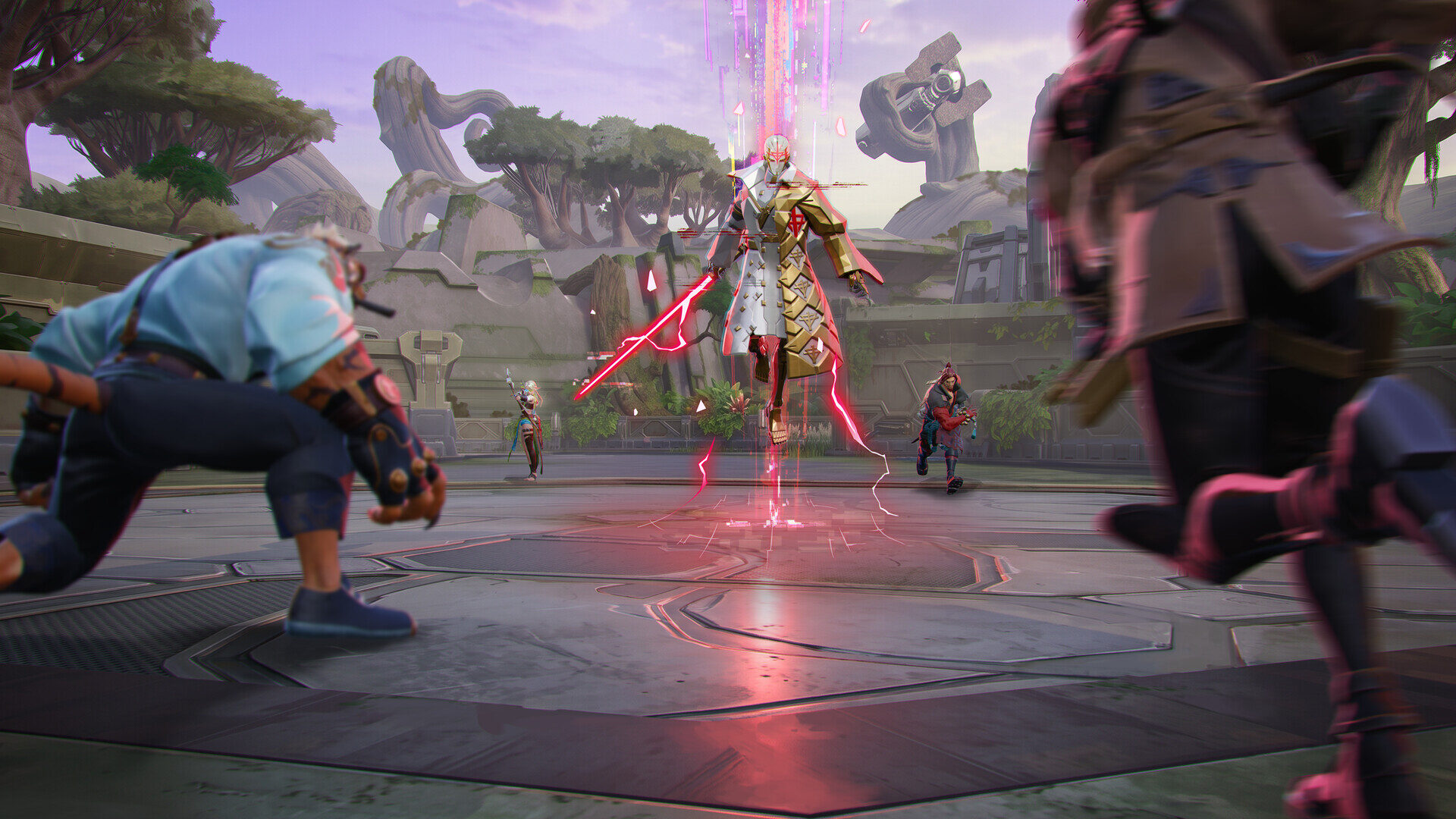
Project ZETA was something I was very unfamiliar with before I was asked to attend a preview at gamescom 2026. There was a lot of talk online when I searched, so I knew it was something I couldn’t pass up. The team at KRAFTON brought me into a room, sitting across from three Nirvanana developers while we watched just one round of the game, and they live-translated what was going on in front of me. It was a lot to take in all at once, but after it was over, I somehow absorbed the many mechanics of the game, and if enough people dive into it, I can certainly see Project ZETA having a pretty addictive gameplay loop.
The game starts with picking your character, and you have to choose one of four classes: Warrior, Mage, Assassin or Marksman. It was recommended by Nirvanana to go into each map with at least one Warrior, but said the others could vary. There is no pure tank or pure heal class, as everyone has offence and defence abilities, so you won’t need to worry about a DPS, Tank and Healer, for example.
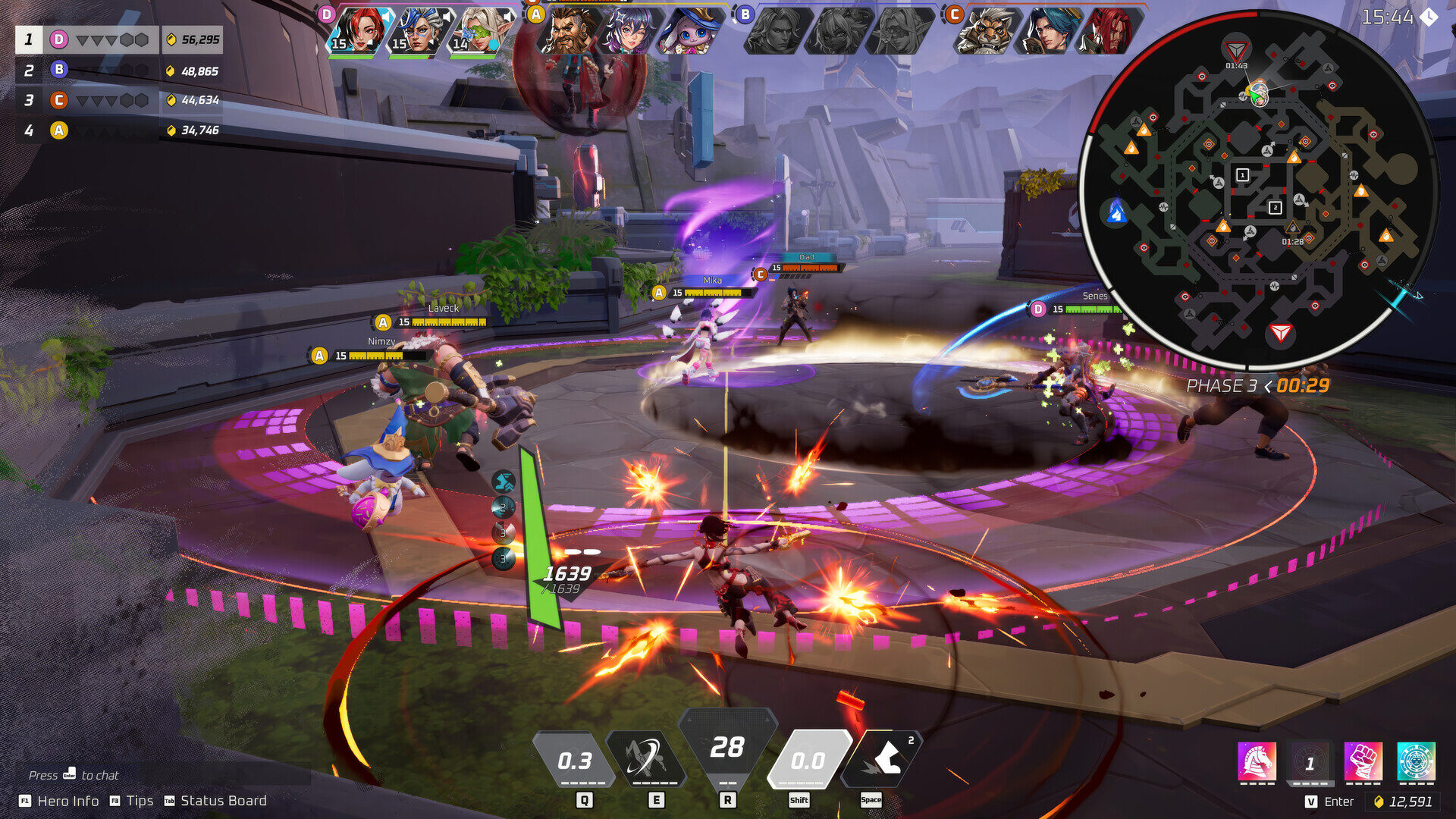
Through character models alone, I seem to be drawn to the Assassin class. I found them very sleek and sexy. The character designs in Project ZETA were something I liked more than I thought I would. Many times, I find characters in these games silly or over-the-top, but that wasn’t the case here.
“If enough people dive into it, I can certainly see Project ZETA having a pretty addictive gameplay loop.”
When I was asked who they should choose, I found myself saying “That one!” pointing to a very attractive blue-haired guy named Diad, then “No, that one!” looking at an utterly adorable bunny-like creature named Nimzy. I even noticed a tech-looking cat-person, who they told me had a backstory involving humans performing experiments on her, named Vesper. I like the idea that they have a story behind them, but from what I saw in the game, I am not sure if you will have a space to learn about them, or if it is just lore for fun.
The team couldn’t specify the number of characters coming to Project ZETA, sadly, but that is to be expected at this point. Right now, there are already 14 announced, with the newest addition being an Assassin named Azrakel. What they did tell me is, “The more characters, the better,” and there are definitely four more unannounced characters, and they confirmed that in their last game, they were able to launch a new character every two weeks. Seems like too much of a good thing to me, but if you like options, you’ll be eating well with Project ZETA.
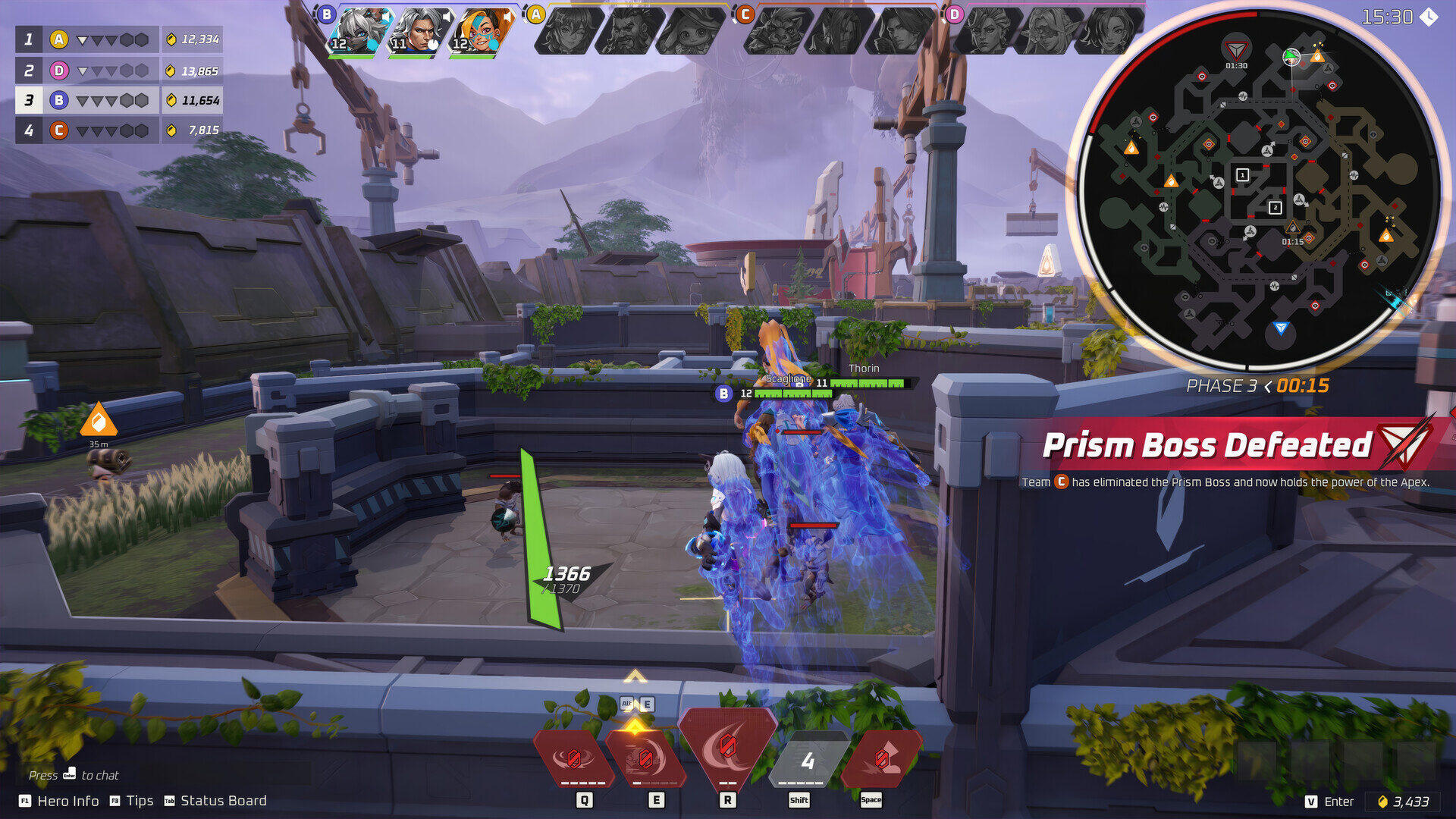
Now, let’s talk gameplay. Project ZETA implements a four-team, three-person gameplay session, with twelve players in total. The point of the game is to earn five points by claiming prisms, and that is a lot more complicated than it sounds. Each round has seven phases, with the first phase being the shortest, lasting only two minutes.
However, a game can be ended early if five prisms are claimed before the final phase ends. In each new phase, team locations are displayed on the mini-map for a short time, and XP increases. They used the word resources instead of XP, but I believe that may have been lost in translation, as I didn’t see anything resource-like, but don’t quote me on that.
There is always a ton going on in a match, and the mini-map is constantly blowing up with flashing colours and triangles giving you tips on where to go. The first round is meant to have your team take on the NPC enemies on the map, allowing you to start to level up your skills before you head into battle. After that, the team strongly suggested that teams take on more strategy in order to overtake the other teams. Communication seems key in Project ZETA, and a team with a plan might have an easier time coming out victorious.
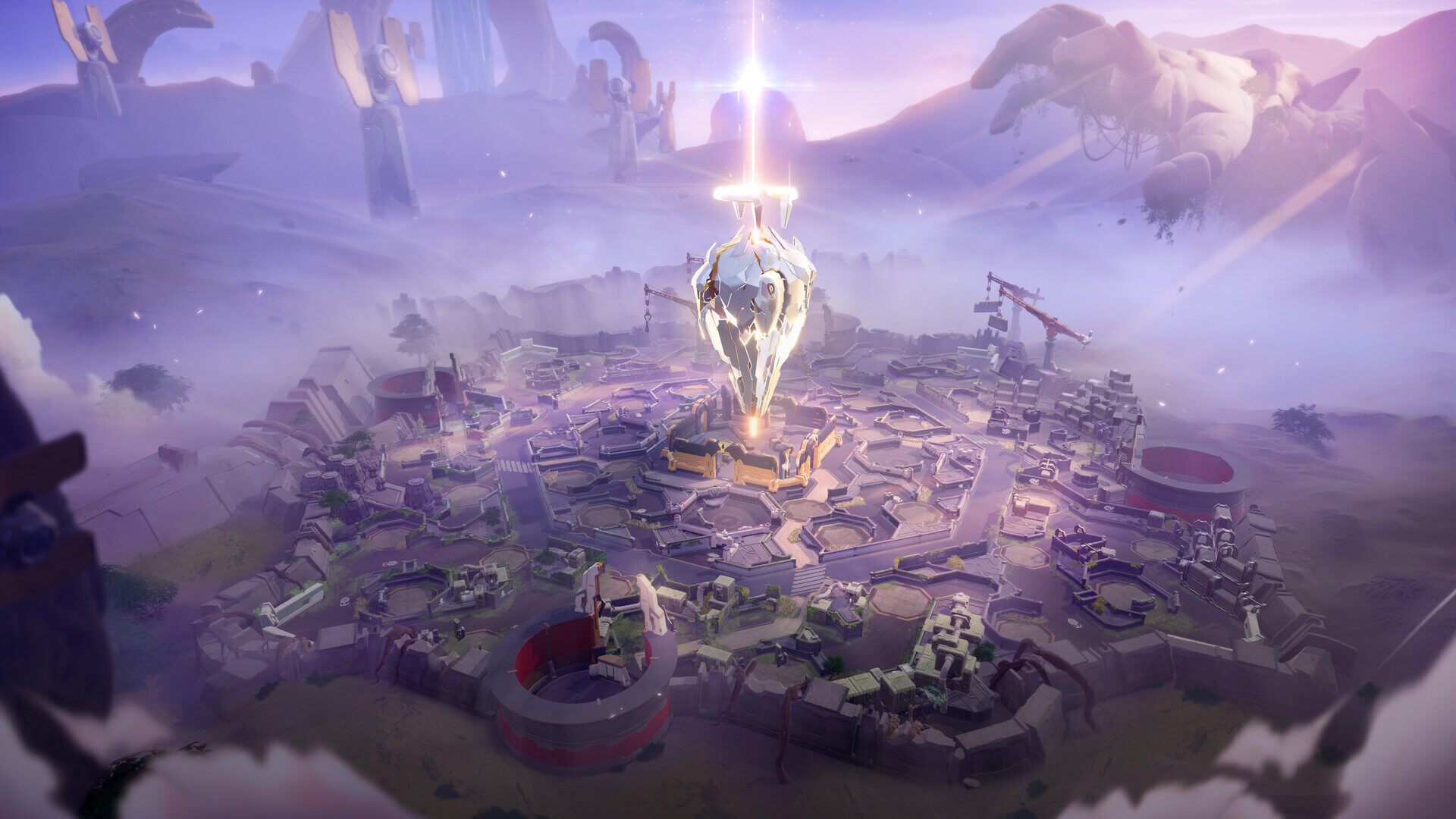
So what can you do in a match? It turns out, a lot. There are NPC enemies and nine enemy players at any given time. Respawn is also pretty fast, so things never slow down. If your team wipes another team, your team is automatically revived, too, so you are never really running around weakened. The NPC enemies help you level, but there are also a variety of bosses on the map that do a number of things.
The most important are the ones that drop prisms; kill them, get a prism, drop it off. However, other players can join the boss fight to try to take it from you, kill you and take it from you, and even fight you while you’re trying to drop it off, since you need to hold it in an area for a period of time.
There are two kinds of points which require two kinds of prisms, adding to five in total. The first two are a normal prism; the last three require another step. Once holding a normal prism, your team has to kill an enemy team to turn it into something called an S prism, and then you drop that off to get the point.
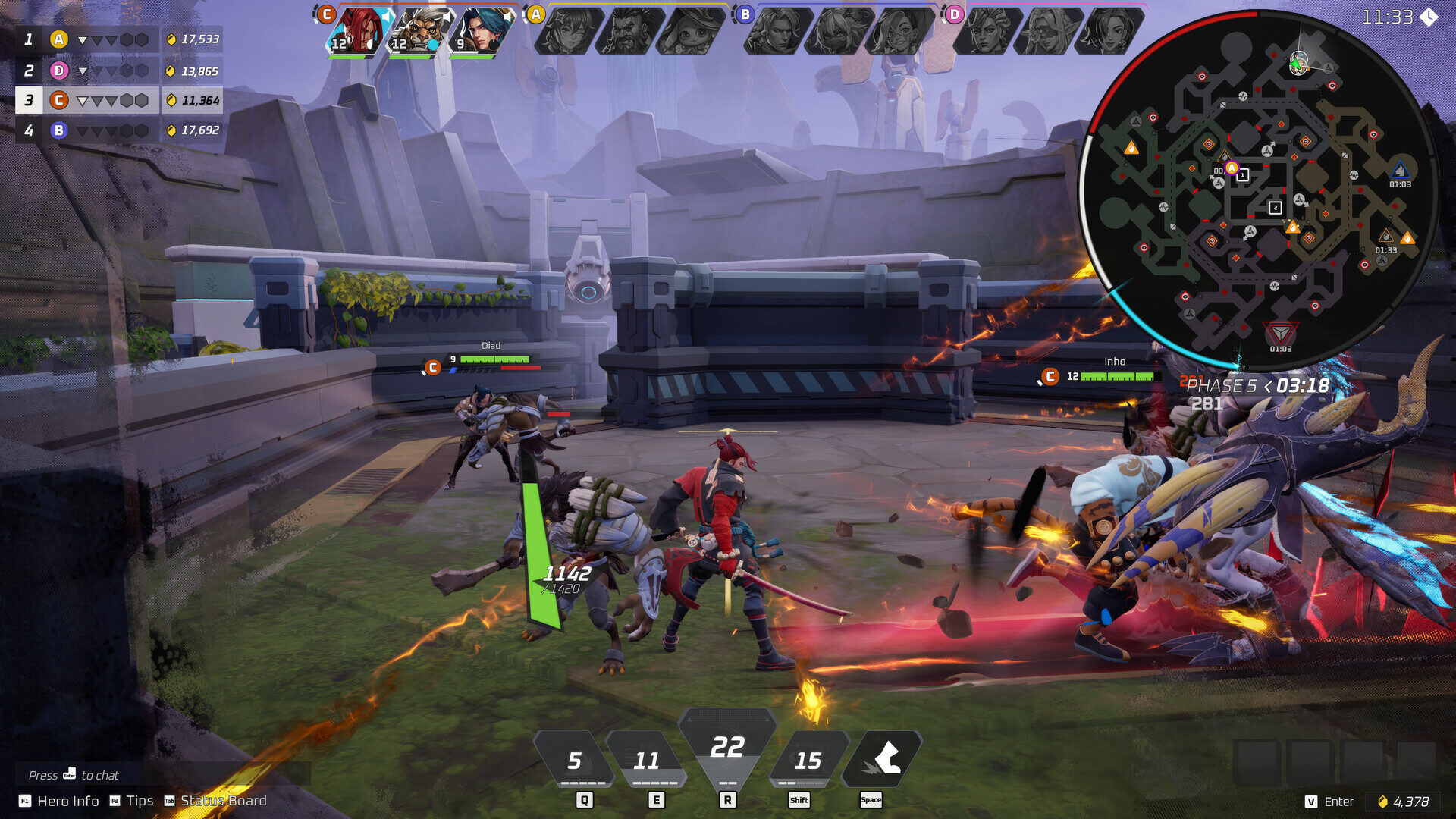
The strategy in Project ZETA comes in when you start considering things beyond enemy teams and prism bosses. XP is going to help make you stronger, so if you’re rushing for bosses and your enemies are rushing to power up, you’re going to have a rough end of the match. How you get that XP is up to you, but I would bet you will need to do a balance of activities on the map to succeed.
“Project ZETA is going to appeal to people who are looking for fast, frantic gameplay, as they have mastered the art of keeping things moving.”
As I mentioned, there are a lot of things on the mini-map to consider. There are other bosses marked by yellow triangles that will drop a lot of XP. Blue triangles are bosses that will temporarily show you the other players on the map. There is also a purple triangle that will be very important for teams who are behind or those looking to make that final push. These drop a regular prism AND a pre-made S prism, meaning you don’t have to take the extra PvP step, which could close the gap very quickly and change the course of the match.
I did get a chance to go hands-on in a battleground of sorts, but with only a few minutes and five people watching me from behind (and a PlayStation controller—I’m an XBOX girl), it didn’t go very well. As with any game, it will take a bit of time to get a hold of the moves and controls. The game is coming out for PC and console, and the team really emphasized how it was going to be optimized for controller as well as mouse and keyboard.
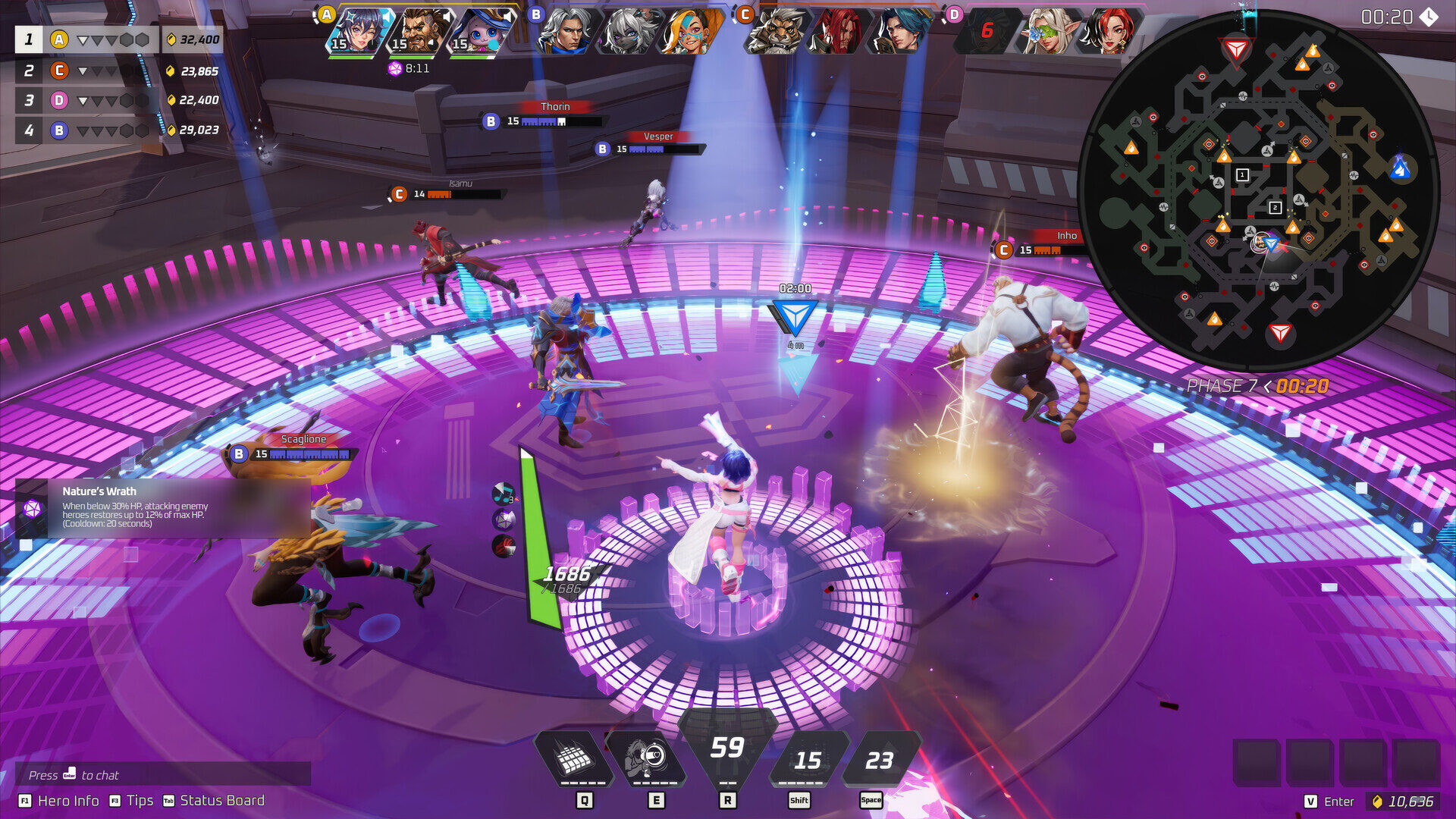
I went into my preview feeling like everything was very overwhelming and there was too much going on to take in, but as I sit here writing this, I have realized that by watching just one match with some brief explanation, I completely understand the name of the game. Project ZETA is going to appeal to people who are looking for fast, frantic gameplay, as they have mastered the art of keeping things moving.
My only concern is that there are so many games in this genre; even at gamescom alone, we previewed several PvP team fighters. It’s a saturated market, and though I think the gameplay loop is excellent, I worry that players are spread too thin, and I wonder what Project ZETA’s hook will be to put it above the rest. If they can get enough people in trios playing this game, I can see it becoming a very exciting title and a blast to play with friends.
You can check out Project ZETA from Nirvanana and KRAFTON on the official Steam page.