


Hellraiser has spent close to forty years with broken promises of becoming its own video game. From cancelled Konami games, the Wolfenstein 3D-esque Color Dreams game, to the unfinished 1996 Hellraiser: Virtual Hell. That’s basically the entire history of the license. Eventually you stop being surprised by it. Part of the problem is that Hellraiser was never going to slot easily into the genre the way Jason Voorhees did.
You can’t just drop Pinhead into a level and build a game around him the way you would a guy with a machete. The whole franchise runs on something stranger than a stalking killer. More like obsession, sexual desires and pure gore. Turning that into an interactive experience without sanding off everything interesting about it is a genuinely hard design problem, and for four decades almost nobody wanted to touch it.
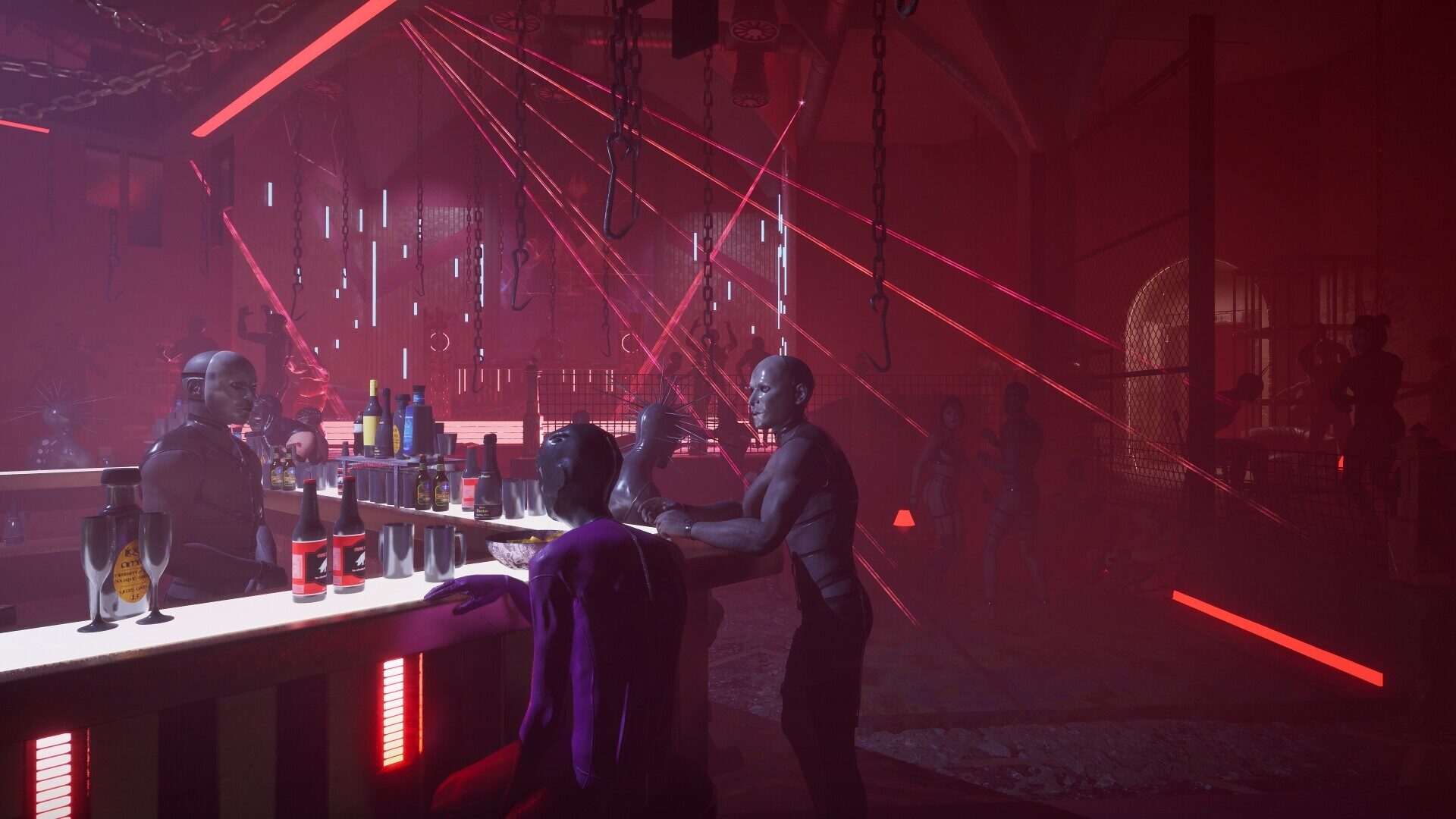
Having spent around half an hour with Clive Barker’s Hellraiser: Revival at Summer Game Fest, it feels like Saber Interactive might be the first studio that actually understands what they’re holding.
“A lot of what works well in the dual realities taking place in Hellraiser: Revival comes down to the great sound design.”
The broad shape of the game is that Aidan Lynch, an ex-convict roughly twenty years removed from the original film’s timeline, is trying to pull his girlfriend, Sunny, back out of the Cenobites’ grip. Barker himself is credited on the story, which apparently makes the events canon rather than a licensed cash-in running parallel to the films, and Doug Bradley is back in the role of Pinhead for the first time in almost two decades. That alone would have gotten my attention. What actually held it was the half-hour of gameplay built around that premise.
They dropped me into a BDSM-flavored cultist enclave. With leather, latex, a pistol, a shotgun, and the configuration, all in the name of revenge and understanding. Mechanically, the game leans hard into Resident Evil Village, but with less strict inventory management, and with the item scarcity cranked up to a ten, and that actually stings. Borrowing from such a juggernaut of horror isn’t a knock against it either.

Village remains one of the sharper things to happen to action horror recently, and Hellraiser: Revival isn’t pulling the wrong lessons from it. Ammo ran out fast during my demo, and healing was so scarce that I found myself backing out of fights I probably could have won, just because losing everything felt like a real possibility. That’s the kind of tension that changes how carefully you move through a space, and it was present in almost every room I walked into.
The real surprise was the Genesis Configuration, Revival’s version of the Lament Configuration puzzle box, which I’d assumed, going in, would be little more than a box you occasionally fiddle with to remind you which game you’re playing. It’s not that. It’s a full combat and traversal toolkit.
Pyrokinesis to set enemies aflame, telekinesis to hurl debris and furniture, chains that tear through anything within reach, and, later in the demo, the ability to physically reconfigure the geometry of a room around you to escape it, which plays out like a considerably more sinister take on Portal. There’s a stretch where the box shifts the world beneath Aidan’s feet to get him out of the Labyrinth, and while it seemed rather simple, mixing it with traps and Cenobites, I can only be excited about the possibilities. If the full game keeps expanding what the box can do, this could end up being the mechanic that actually justifies the property existing as a game.

Then there are the Cenobites themselves, which is the part I wasn’t exactly sure how Saber would handle, because you can’t just kill them; that would take the scare factor away. Pinhead hasn’t scared me in years, and it’s because he’s an icon, just as Freddy is, appreciated rather than feared. Revival showed that they are attempting to claw back some of that. Every time I thought I saw a Cenobite, I stopped thinking tactically and started thinking about getting out, especially to wrap up the demo when I can face Butterball face-to-face, because they’re framed as something the player fundamentally isn’t equipped to fight on equal terms.
“Village remains one of the sharper things to happen to action horror recently, and Hellraiser: Revival isn’t pulling the wrong lessons from it.”
A lot of what works well in the dual realities taking place in Hellraiser: Revival comes down to the great sound design; the voice acting is great, Doug Bradley as Pinhead especially, the ambient noises that imply things are just out of frame, and the entire soundscape shifts the instant we get into the Otherworld. I caught myself creeping through rooms I’d been striding through confidently ten minutes earlier, purely because the audio had changed under me.
Saber also isn’t softening the material to keep things comfortable, which is what I thought they would have to make a number of concessions to get the game released. The gore is extreme, and the sexuality is not just set dressing. Hellraiser has always lived in the space where pleasure and suffering stop being separate things, and that idea is baked into the environments and imagery that assaults players every step of the way.
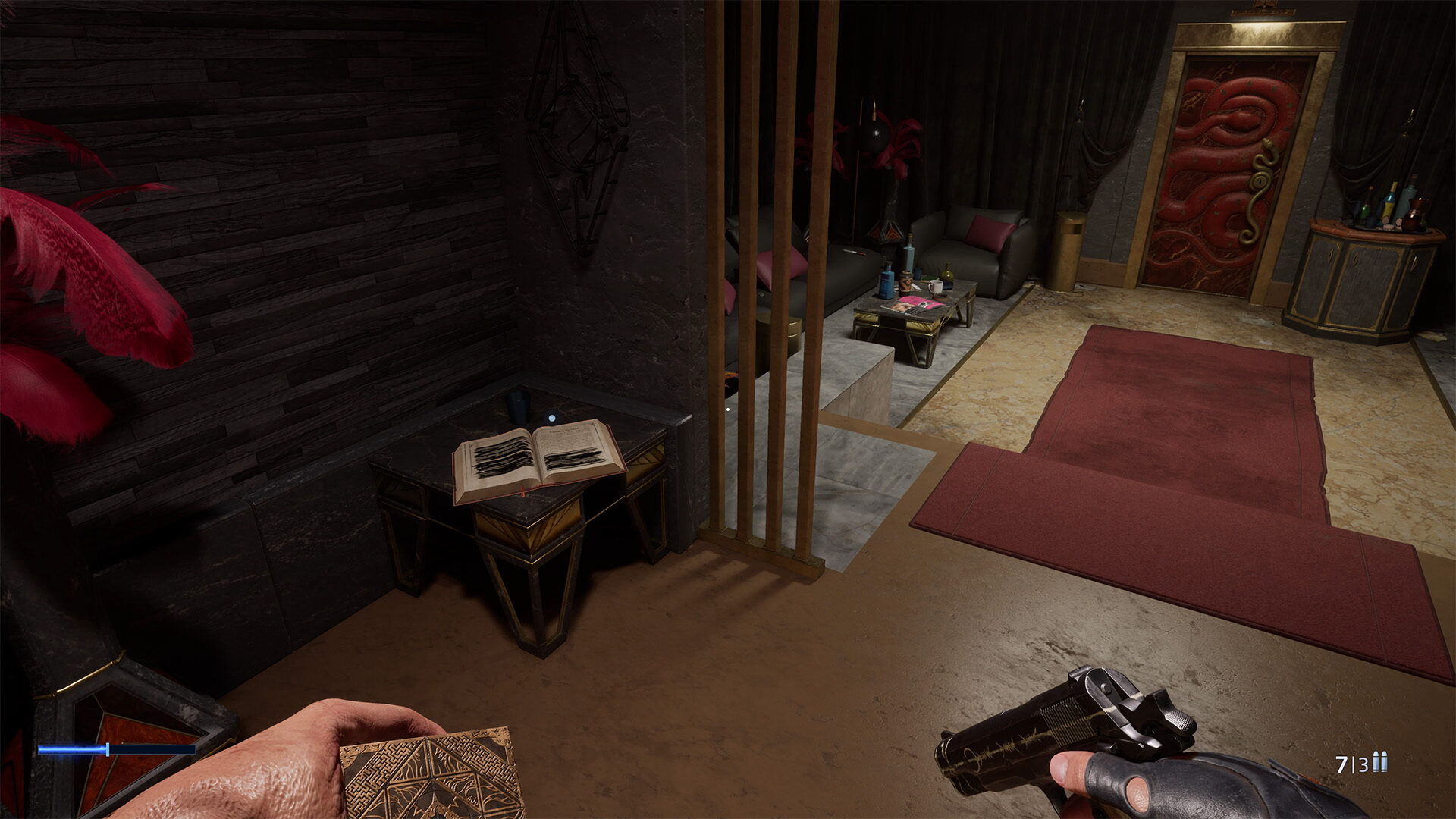
There was a later sequence in my demo of Hellraiser: Revival where a section of Aidan and Sunny’s home that loops back on itself with increasingly wrong details, that felt indebted to Kojima’s P.T. in the best way. All capping off with coming across Sunny, held in place by brutalist BDSM gear at the mercy of Butterball while seemingly getting their flesh rendered a bit.
None of this guarantees that the full game holds together across ten or fifteen hours rather than a curated half-hour slice, and Hellraiser’s track record warrants some skepticism. The Resident Evil and P.T. comparisons need room to fall away as Revival finds its own identity, and the Configuration’s ability list needs to keep growing, or the novelty wears off fast.
But what I actually played was a horror game that understood its source material well enough to be uncomfortable in exactly the right ways, built by people who clearly wanted to make this and not just license it. Clive Barker’s Hellraiser: Revival releases October 8 on PC, PlayStation 5, and Xbox Series X|S. After everything fans have sat through waiting for this, it’s a hell of a place to start.