
I have not been able to shut up about The Blood of Dawnwalker since I first saw it revealed. Back at gamescom 2025, I was able to sit in on a live demo of the game, controlled by developer Rebel Wolves, and the game looked absolutely beautiful. At Summer Game Fest this year, I sat down to interview the Game Director and Narrative Designer behind the game, which only fuelled my fire more.
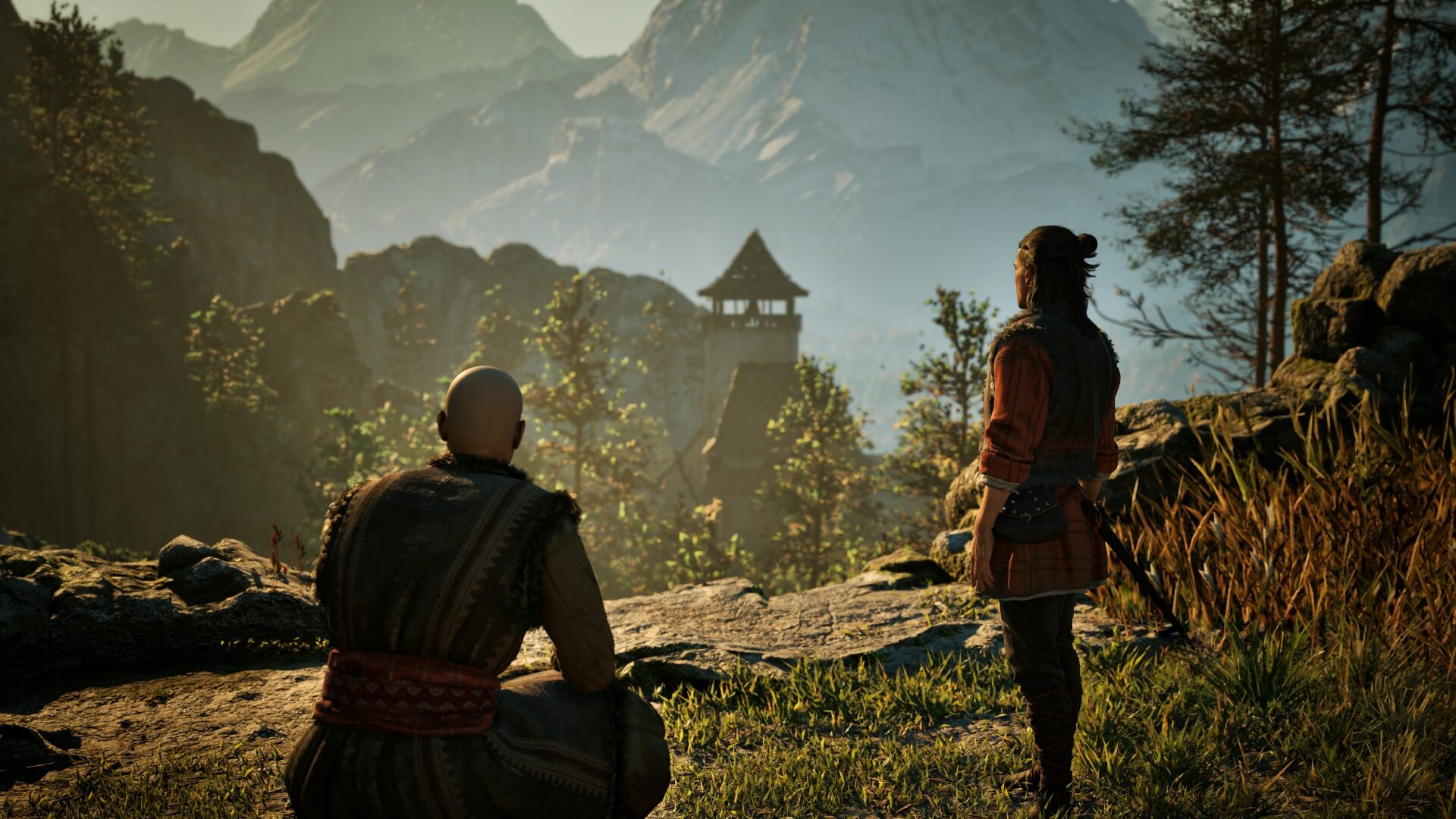
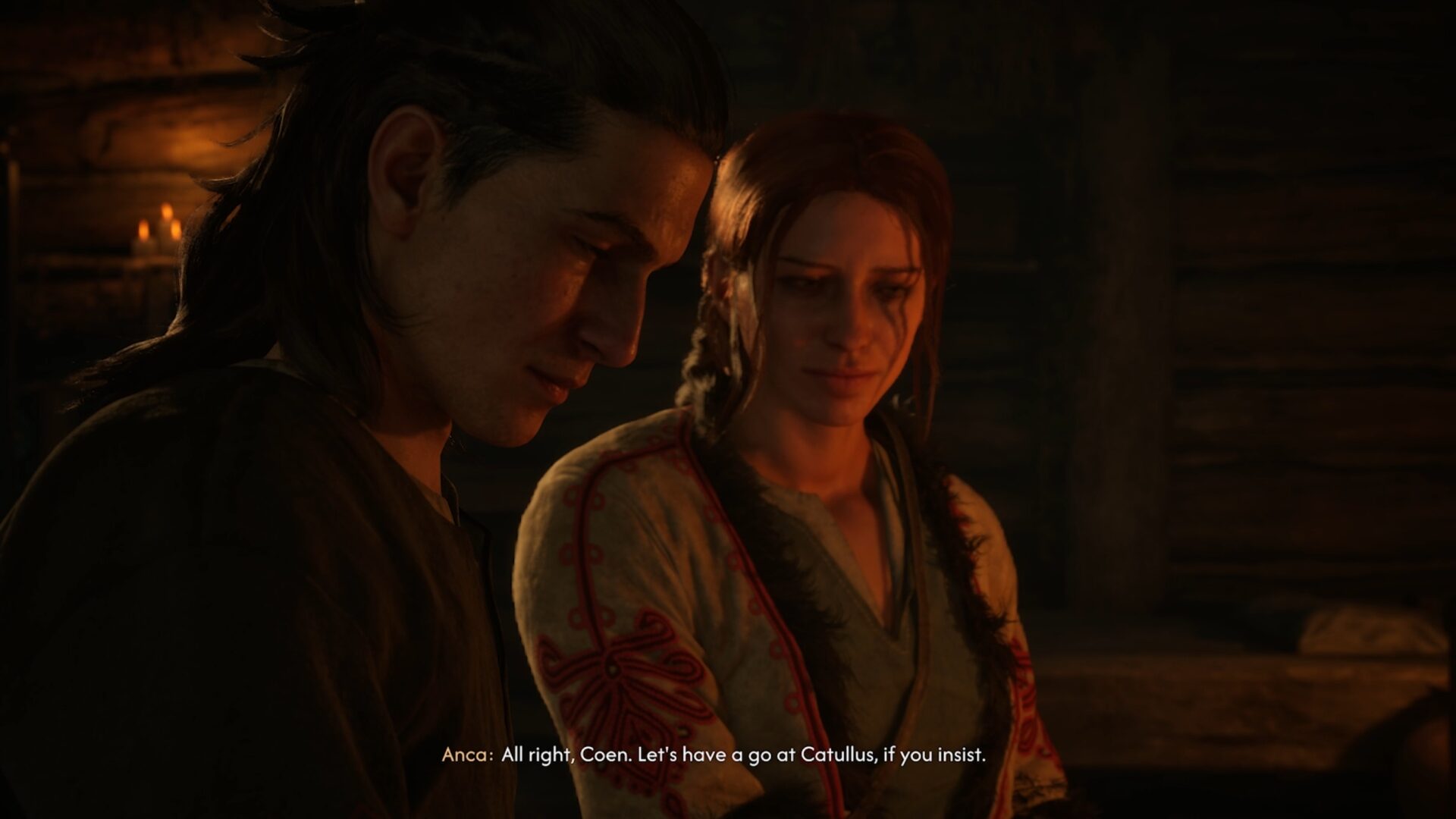
Just after SGF 2026, however, I was invited back to L.A. by Bandai Namco to finally go hands-on with the open-world RPG, and it’s everything I hoped it would be, but maybe a little more than I was bargaining for. The Blood of Dawnwalker is every bit as beautiful as I thought it would be. From the stunning world around you to the small details like goosebumps on Anca and Coen’s skin, Rebel Wolves has meticulously created something worth exploring here.
For our four-hour preview, we were treated to the entire prologue, and let me tell you, Rebel Wolves knows how to get players emotionally invested. My heart was ripped out a few times over, getting me attached to characters only to have them ripped away. The story centers on Coen, a young man in 14th-century Europe, whose family is taken by the Vrakhir (vampires) after a series of events lead him to become their enemy, mainly the leader, Brencis.
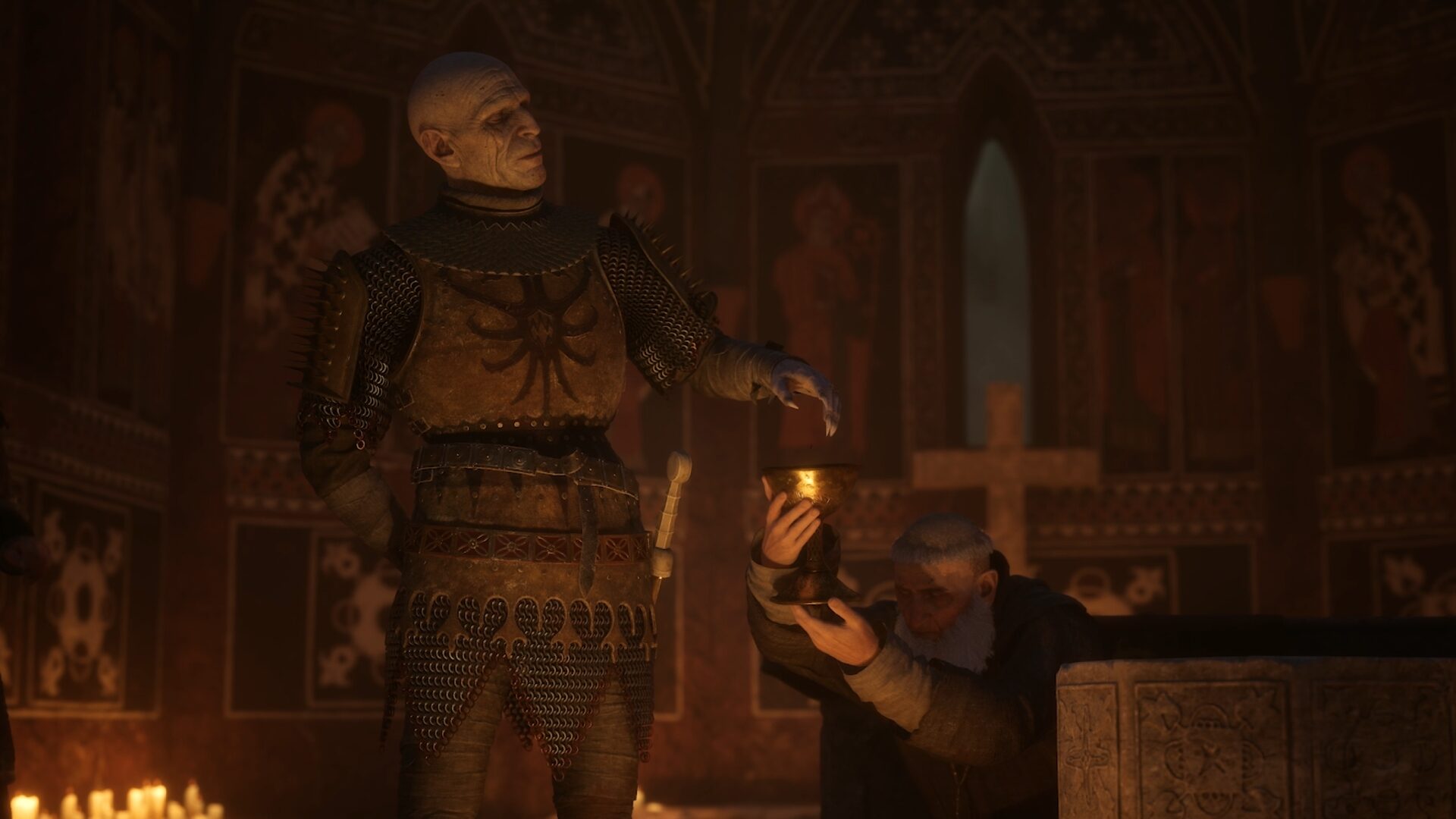
Coen begins as a man who only wants to do right, but once players take control of him, it is completely up to them who he becomes. Right out of the gate, the weight of the choices you make in The Blood of Dawnwalker is evident. Both I and other journalists and creators would hesitate while making choices, knowing full well that even the smallest decision or slip-up could have serious ramifications.
Even with one simple choice, four of us had three different outcomes for a single scene. Mine went horribly, and the story brought me to tears, making me think long and hard and read thoroughly before I made any more choices. Another choice led some players to learn there are more mythical creatures in the world, but those who didn’t make that choice left the preview not knowing this yet; I won’t spoil how it happens for you.
“The Blood of Dawnwalker is every bit as beautiful as I thought it would be.”
In many RPGs, you are aware that your choices can affect various aspects of the game. In The Blood of Dawnwalker, though, it isn’t just about being perceived as good or evil; what you do can change the outcome of your family or the game as a whole. And it isn’t just a good ending and a bad ending either; you can completely fail the main quest in The Blood of Dawnwalker and continue on with the rest of the game.
In my interview at SGF, they told me there are many, many endings, and to find them all will require plenty of playthroughs. I also learned during this preview that there are several romancable characters in the game, which was brand-new information to me. I thought Coen would just stan for Anca—when you meet her, you’ll get it—but I am very excited to find everyone I can sink my teeth into (get it?). And, again, this encourages multiple playthroughs—we know there have to be some crazy story beats with partners in the game.
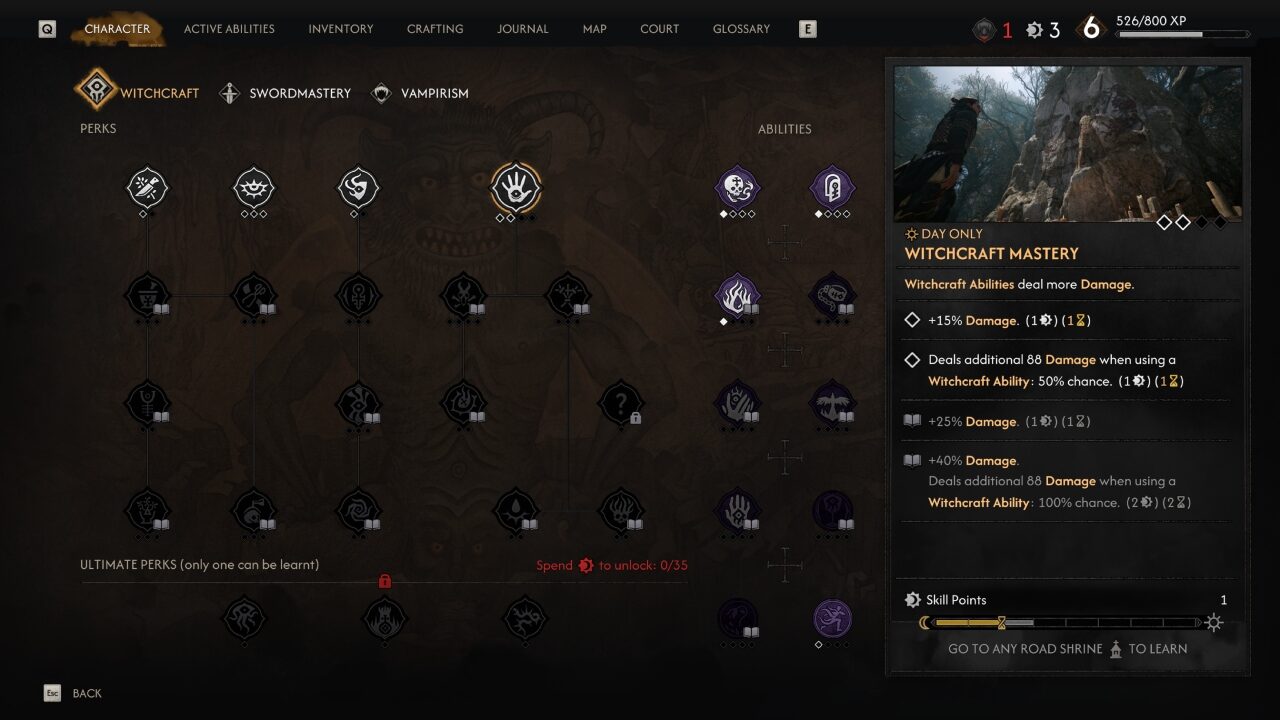
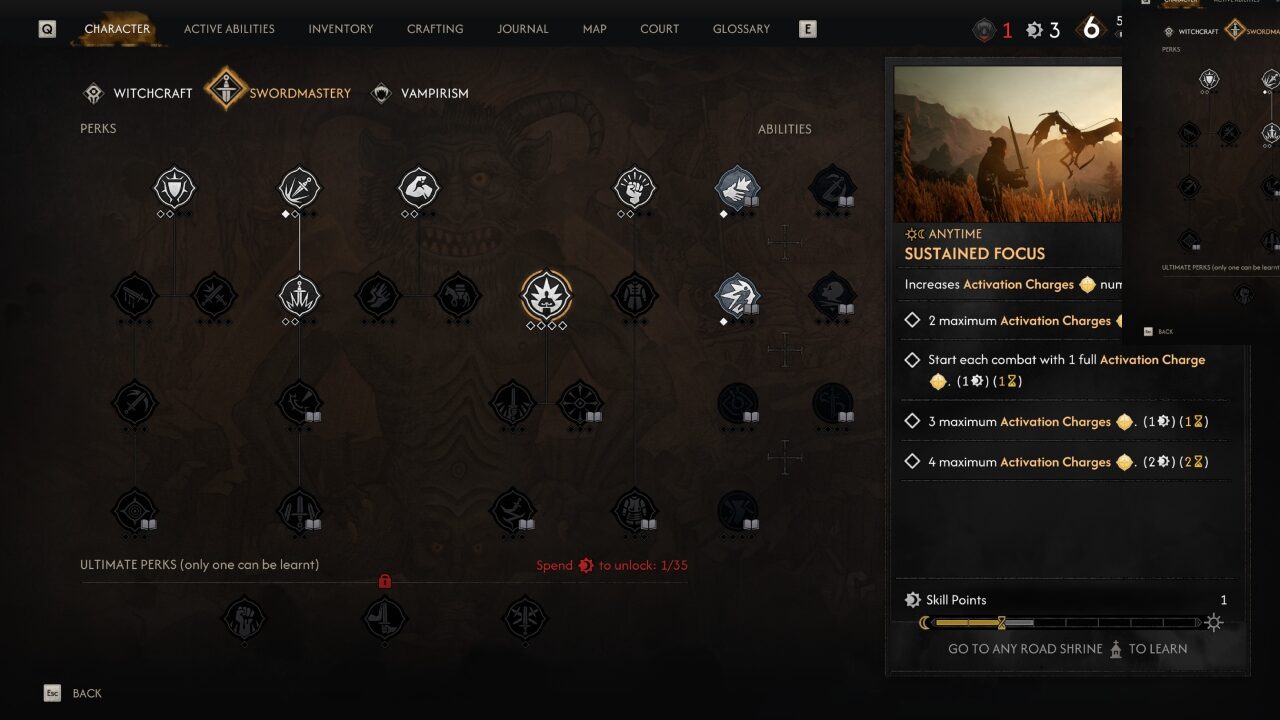
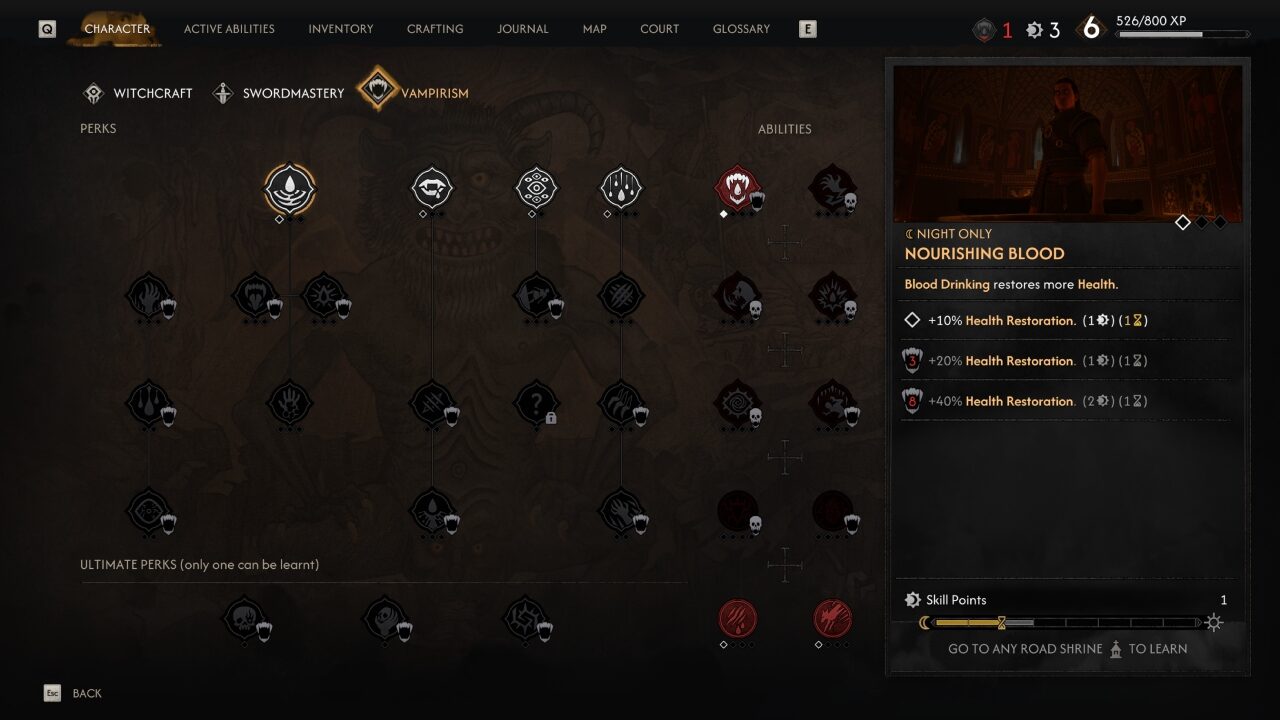
Even the skill trees in The Blood of Dawnwalker promote multiple playthroughs. There are three: one for your human form, vampiric form, and TWIST, your witchy abilities. You need to earn skill points called perks and head to a shrine to spec into what you want. These shrines can also be used to buy perks, fast travel, and access storage, which I love.
The catch, however, is that some skills in your vampiric tree will require a certain amount of corruption to purchase. So if you’re favouring your human side, you will be locked out of certain things. I believe that if you have too much corruption, you will be locked out of things on the human tree as well, but I wasn’t far enough to confirm it yet.
“Rebel Wolves knows how to get players emotionally invested.”
To experience everything The Blood of Dawnwalker has to offer, you will have to create different versions of Coen in different games, and I will be honest: I really struggled with anything on the aggressive side with him. He just seems so sweet and kind; I wasn’t ready to turn him into a ruthless monster.
Combat in The Blood of Dawnwalker is predominantly with some version of a one-handed weapon, like a sword, axe or club, as well as claws when you are a vampire. You can also switch between claws and a sword at night as well. As you play, you will unlock abilities to use during combat, though I didn’t get to see many offensive abilities, mainly just drinking blood from humans and animals to heal. I should have looked deeper into the witch tree, because as I think about it, I really want to be able to cause some elemental damage.
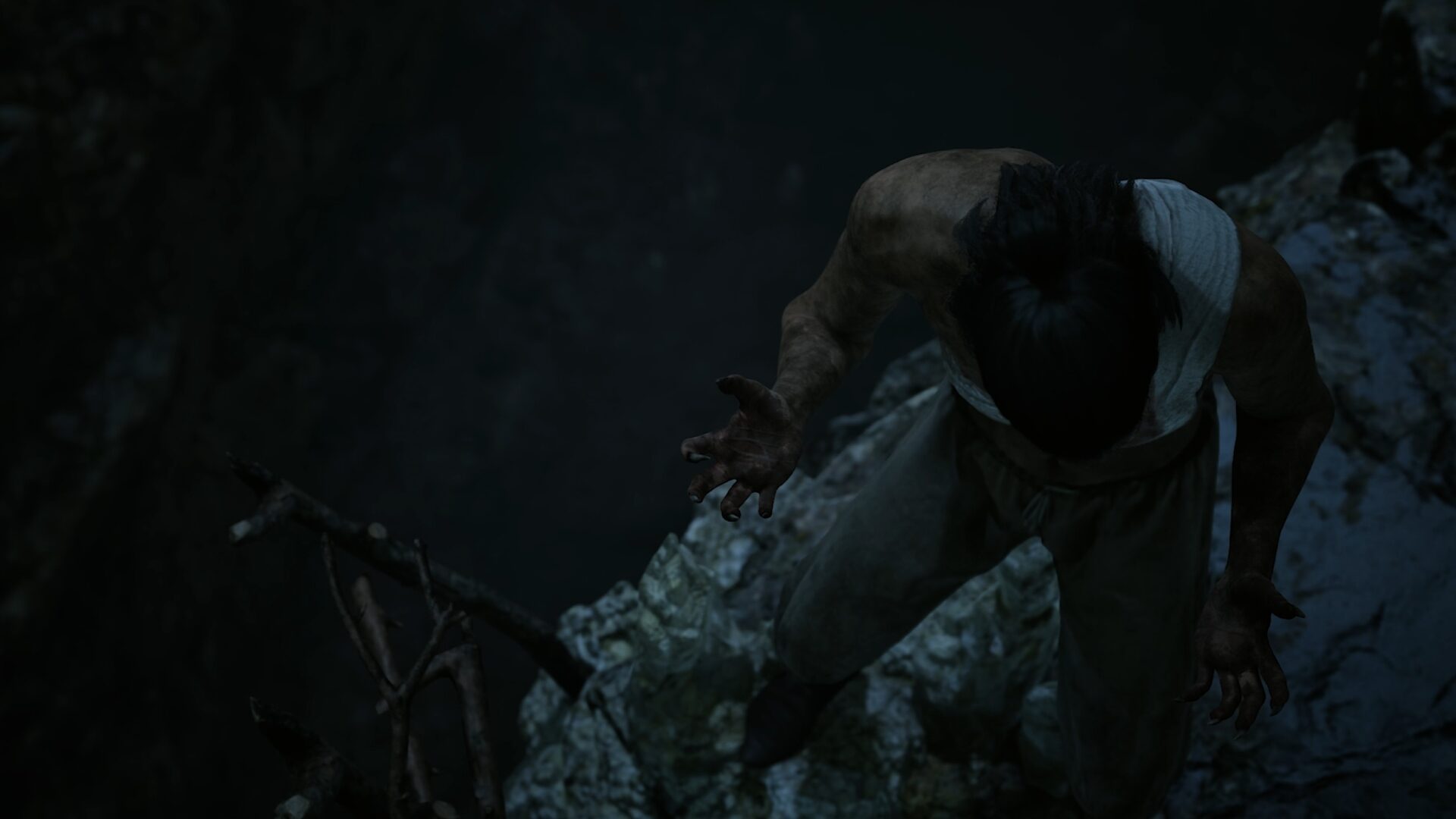
A Focus Stance is available to search for clues, items or people to interact with. This is especially helpful for locating enemies, or, at night, animals and unsuspecting people to feed on (one of the ways to gain corruption). Personally, I think the contrast on this could be a little higher, as the mild yellow was hard to see in things like green bushes.
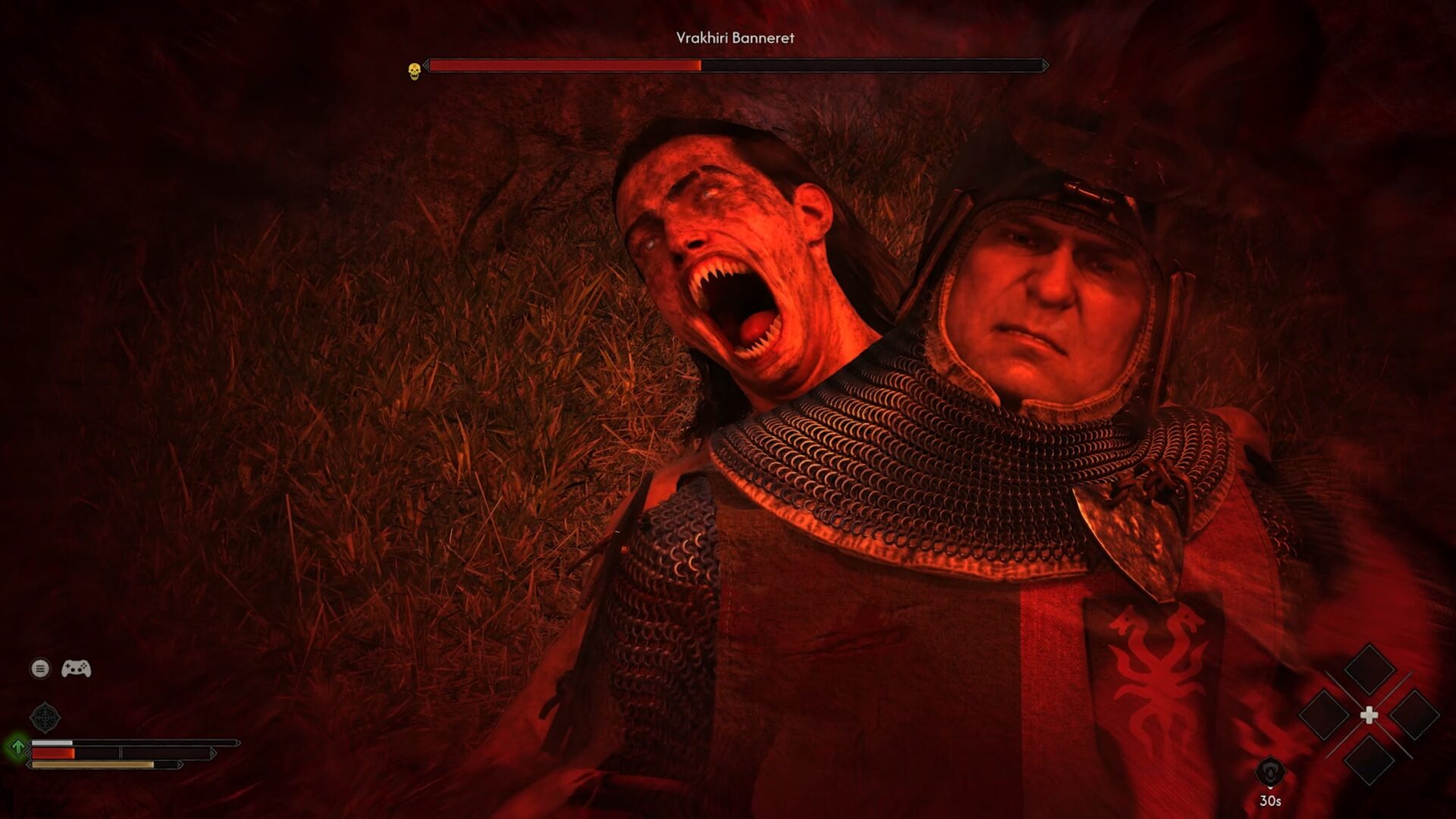
The main draw of The Blood of Dawnwalker lies in its uniqueness. There are two really creative things Rebel Wolves did with The Blood of Dawnwalker. First, they created this dual protagonist, a human by day and a vampire by night. With it, there will be multiple ways to take on the story and quests, as you can do them as a vampire, a human, or a bit of both. Each version of Coen has different abilities at its disposal, but also different perks.
“The main draw of The Blood of Dawnwalker lies in its uniqueness.”
As a human, he has access to hexes and might be a bit better liked overall, but he is generally squishier. As a vampire, he runs the risk of getting hungry. If his health is too low, there is a chance he will automatically drain a human he is speaking to. People may fear him, but he has some very cool vampiric abilities and is quite powerful. This again plays into supporting multiple playthroughs, seeing how many ways there are to complete each task.
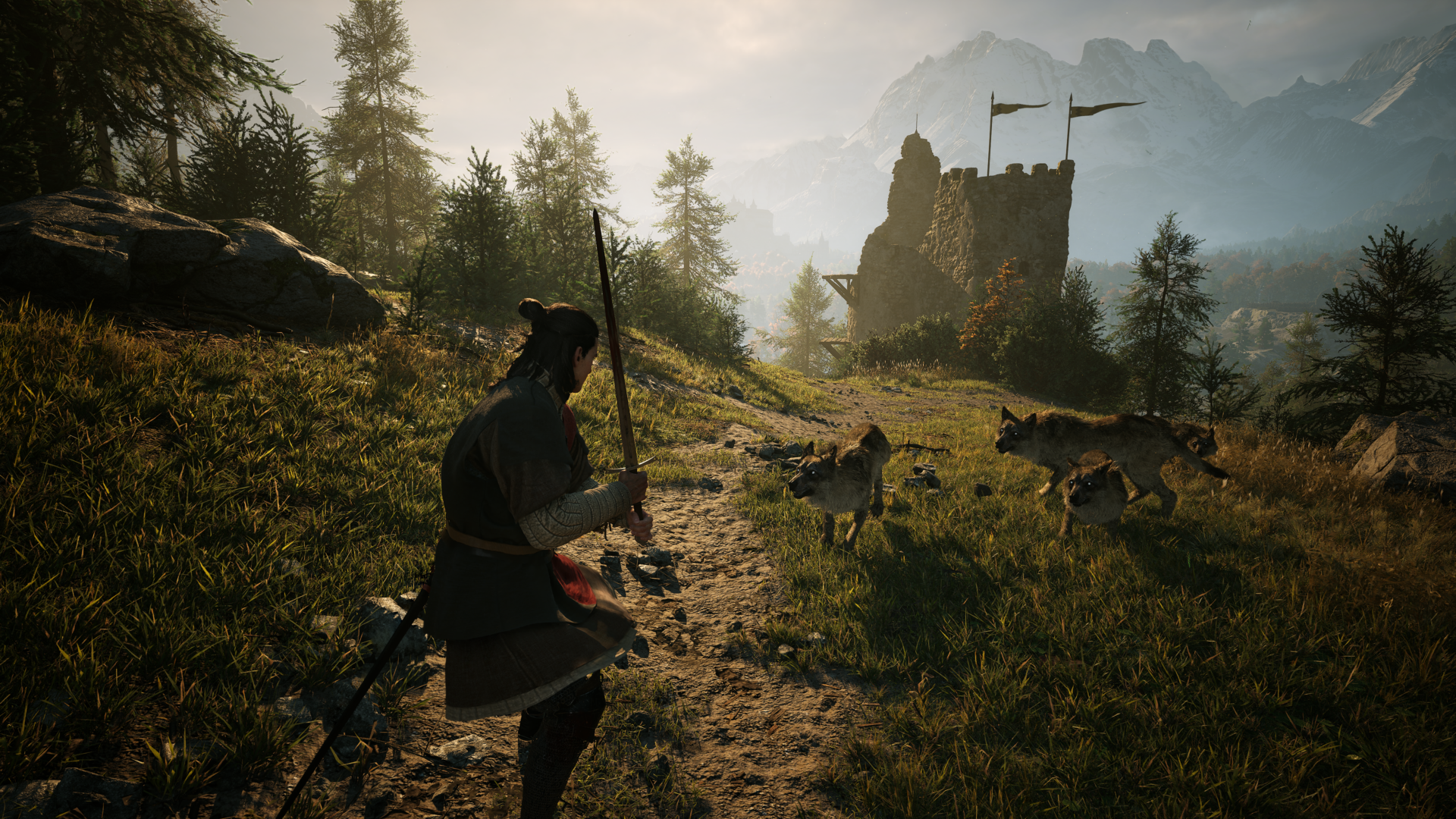
There will be moments in The Blood of Dawnwalker where fear and power will not get you through, or maybe your Shadowstep as a vampire could be especially helpful, so the duality of Coen is going to be an important part of The Blood of Dawnwalker.
The Rebel Wolves developers explained this to us a bit during a group interview at the event. Senior quest designer Patryk Fijalkowski detailed some of the appeal of our human Coen.
“It was a very conscious decision on our side that we wanted to have something that will adapt with human Coen. I think it works well because we have a lot of cool spells that we can use, and we have some gameplay elements that are only available during the day. So it is not like you just tap your feet and wait for the night to be super cool vampire Coen.
We believe that human Coen, with his magic abilities, is also cool. And he’s still a good swordsman. His father taught him well. So even without the claws and the agility and all that jazz, I think it’s fun to swing the sword because.”
Environment Artist, Adam Payet, also went on to talk about our vampire Coen, shedding light—and dark—on what he brings to the table,
“I think it’s also, story-wise, vampire Coen is geared towards brutality, and that won’t always solve every problem. So there are quests where you have to use your intelligence, where you have to investigate. Some people won’t want to talk to you when you’re a vampire. Some people you will not want to speak to when you’re a vampire, because there’s a risk you’ll just kill them if you happen to be hungry.
So it’s again giving you the agency to choose how you want to interact with the story and with those people. And even in the gameplay that we were showing previously, if you didn’t have the magic and the Speak to the Dead skill, you wouldn’t have learned a lot of the details about, for example, Xanthe having her rituals at the cathedral.
So you can do one or the other or focus on one or the other if you want, but it always comes at a cost. You always miss out. So I think it really balances itself out in terms of the type of content you see and the types of solutions for quests they come up with.”
The second thing Rebel Wolves brought to the table was a time system in The Blood of Dawnwalker. Many quests in The Blood of Dawnwalker will have an hourglass symbol next to them. This means they will progress time. Coen has 30 days and 30 nights to save his family, and the preparations you make will take time. As I said, you can completely fail this task and keep playing the game beyond 30 days, but time will still cycle between day and night.
“I have been excited for The Blood of Dawnwalker for over a year, and after going hands-on with it, I am just as enthusiastic as ever.”
Some quests might take zero time; most of what I saw took one or two time slots, but I also had one that took six. I also found a few that would say they’d take one slot, but as I progressed the quest, choice options could add another and another. You can always choose to stop at the next slot if you don’t want to keep wasting time, or come back later.
Once the tab is full, the day will turn to night or vice versa, forcing you to spend time in both versions of Coen. When asked about people preferring one version of Coen over another, the team at Rebel Wolves was positive everyone would have a favourite version of Coen, even on the team: “Oh, 100%. We already have people preferring one or the other internally,” said Payet.
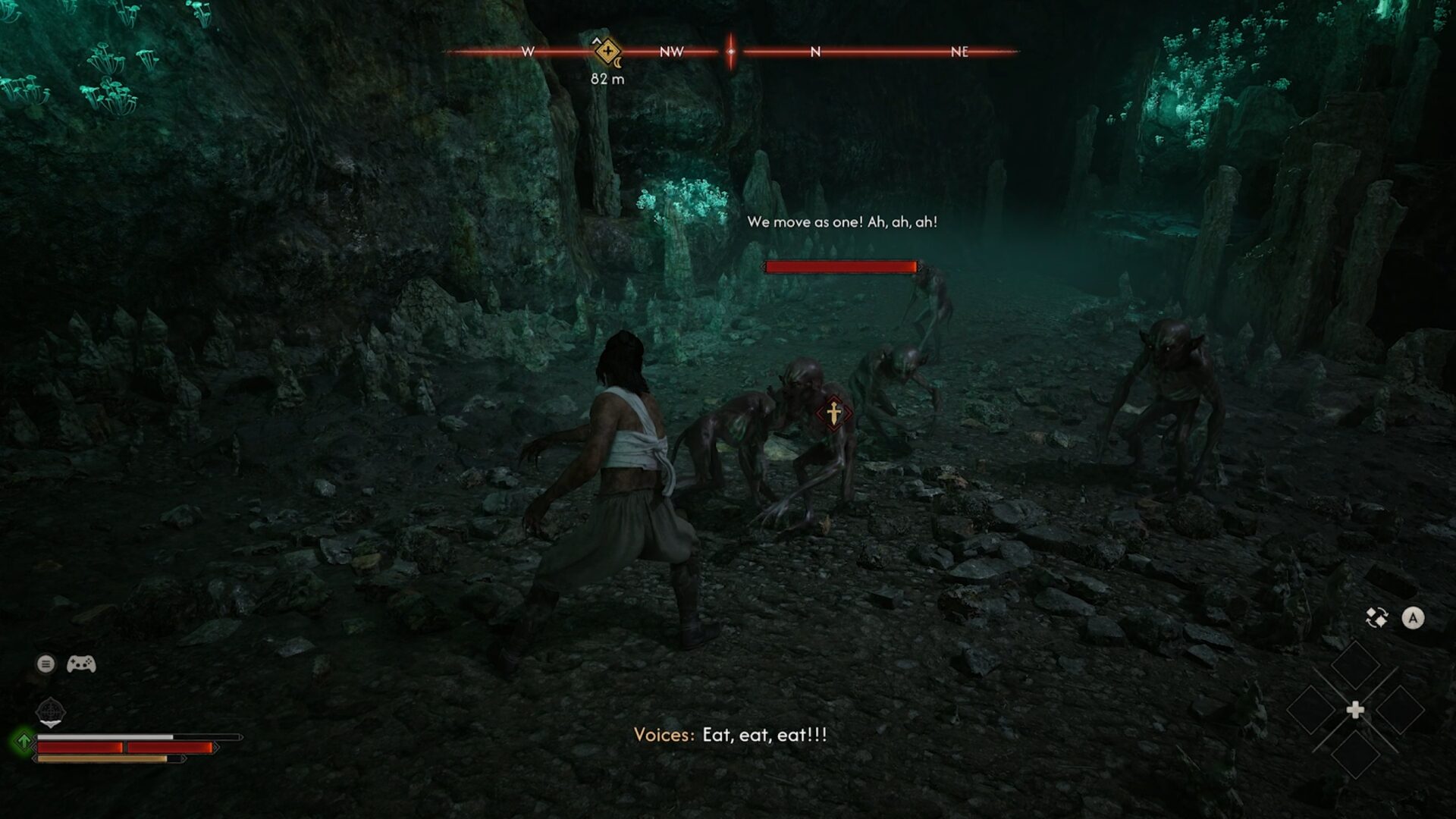
Everything I have touched on so far has been truly outstanding to me about The Blood of Dawnwalker. But…there’s a but. For reference, I am a lover of RPGs—The Elder Scrolls, Mass Effect, Fallout, Fable, Dragon Age; these are my favourite franchises of all time. However, they all give an opportunity to allow for accessible combat. The Blood of Dawnwalker doesn’t exactly do that, and I will be honest, I struggled.
Games like Elden Ring, Soulslikes and such don’t appeal to me; I don’t have patience and don’t enjoy hitting my head against a wall for the sake of a challenge. I will own that. This isn’t that, though. The combat in The Blood of Dawnwalker is not something I have experienced before, and there is absolutely a learning curve. There are several difficulty levels, but even on the easiest one, I was getting my little vampire butt kicked. I am well aware that this is a skill issue, and not a game issue, but it is worthwhile to note for other players like me.
Let me explain how it works. The Blood of Dawnwalker uses directional combat, so pointing in the direction you want to swing your sword: left, right, up or down as you swing. It also uses RB to swing, which is a new one for me overall, as I kept trying to smash X, which switches from swords to claws as a vampire. The directional combat wasn’t really an issue; it was the blocking that had me in a panic.
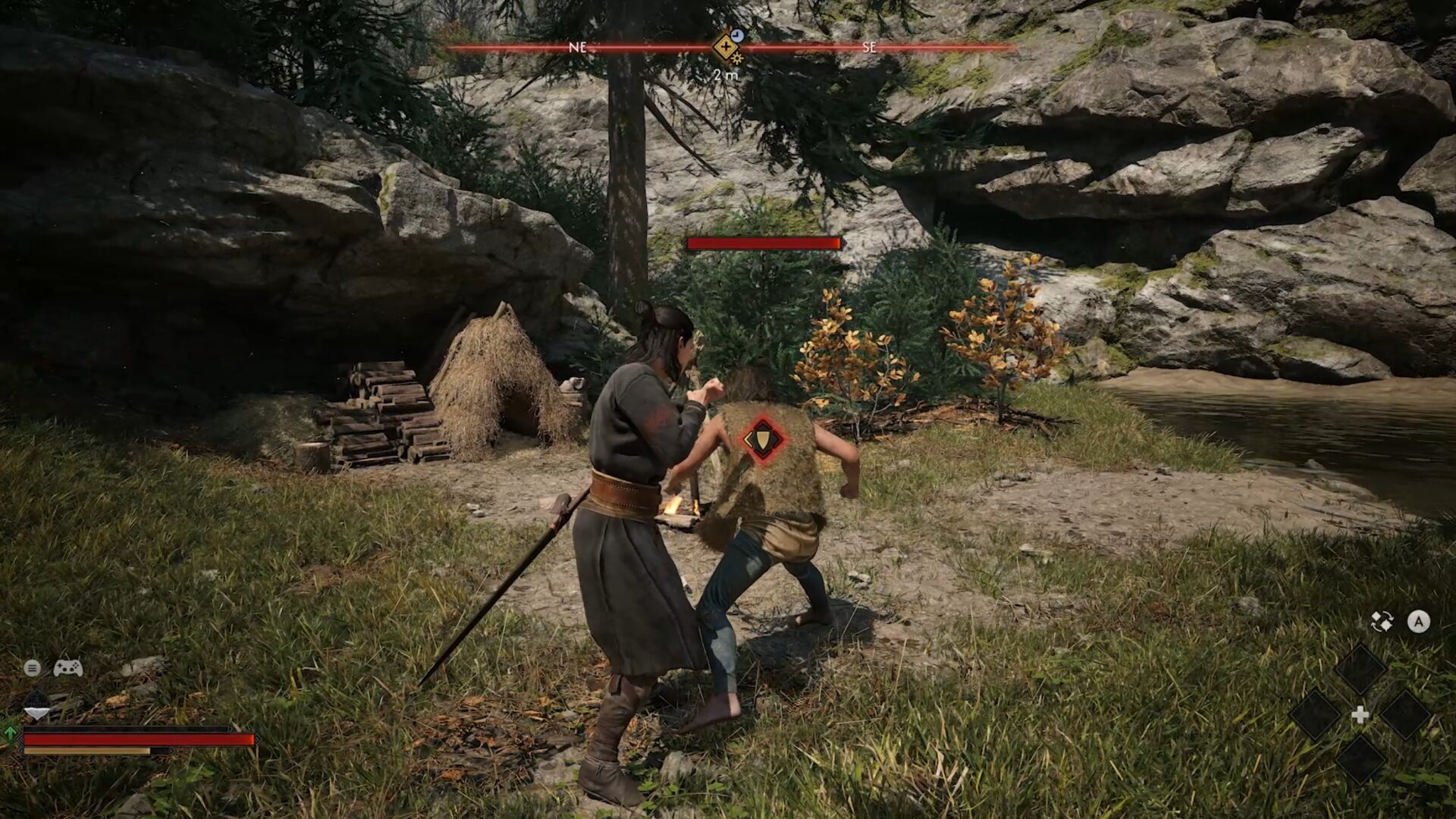
Directional blocking works the same way; you need to block the way the attack is coming from. There is a very, very small notification on screen to tell you which way to block, a slight arrow on the enemy UI markers, which you can turn off if you want more of a challenge. Realistically, I would like to put it somewhere more noticeable, so I didn’t have to watch so closely; I was missing other things on the screen.
If you don’t block these attacks, it is really hard to come back from. Once I got hit a single time, it was like I couldn’t recover, and then I would end up slaughtered on the battlefield. However, when I did block one, I could land some great hits that made for a really satisfying combination of hits.
The team at Rebel Wolves touched on this during our interview and before our playtime, saying that you could choose not to engage in the directional combat, and just use a standard block and swing and still get by. Payet explained,
“It’s a learning curve, and we are giving a lot of options in the options to adjust any combat settings you like. And I think our idea was you don’t have to engage in that directional combat, but we believe you will want to once you get the gist of it, because I think it’s fun, and a lot of us are turning off the indicators because we believe it’s well telegraphed how the enemies will attack. And I just feel like it’s a lot of fun and it’s satisfying.
It was from my conversations with the combat designers…their design philosophy was that we never want to punish the player for not engaging with the system. We want to reward the player for engaging with the system. So if you’re just doing omniblock and omniattack, you can play through the game. It’s fine.
But if you do engage with the directional, if you do engage with parries, with perfect blocks, perfect dodges, you’re rewarded with more combat options. So it’s not about taking away; it’s about giving. The more options, the better you get at it. But you don’t have to. You can still enjoy the game without.”
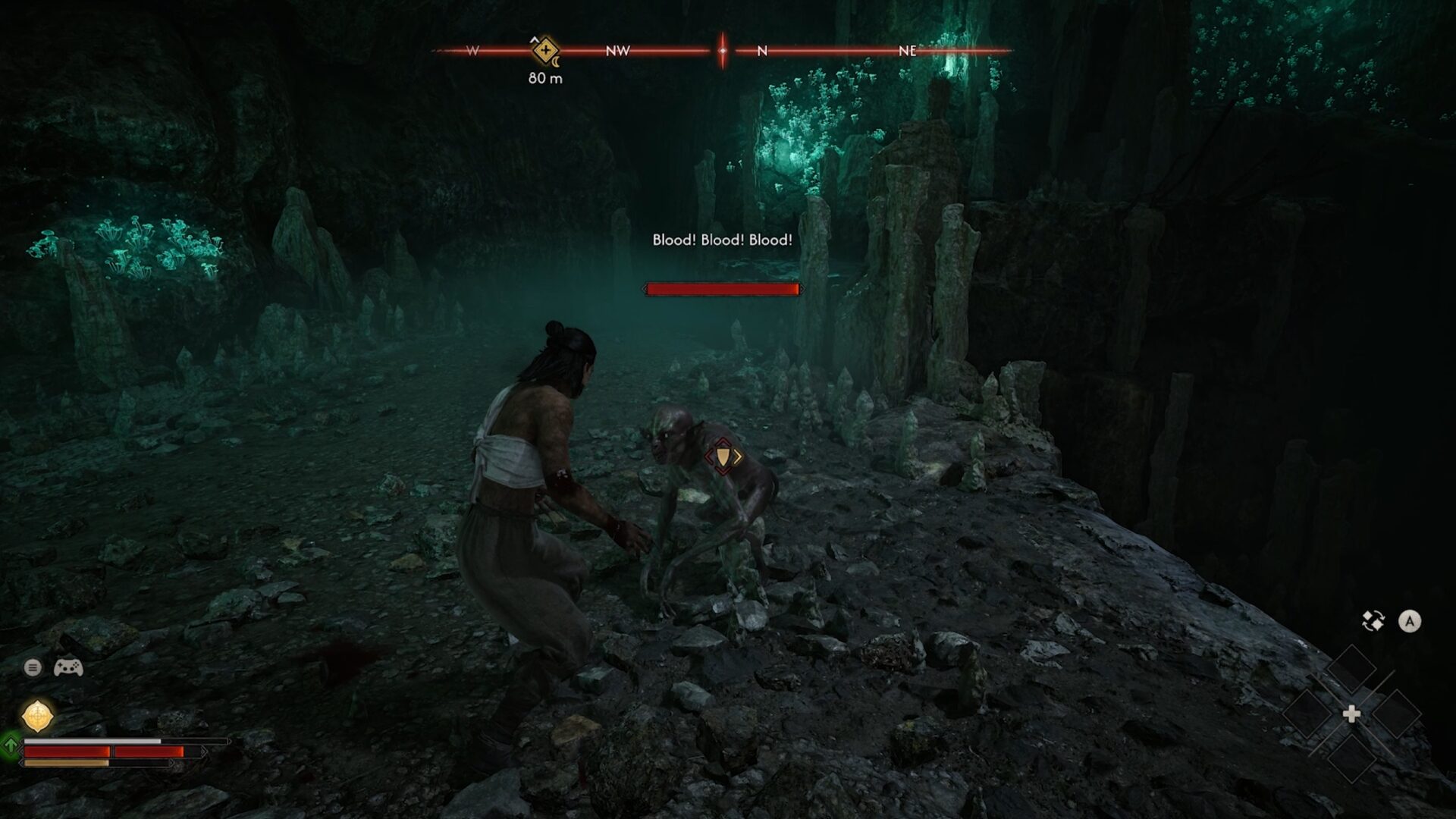
I want to believe them, but no matter what I tried, whether it was ignoring the directional combat or trying to engage with it, it was a tough go. I am holding out hope that as you gain more perks and abilities, the combat becomes more forgiving. I am also very willing to practice with the directional combat and get the swing of it; it is just something I have never experienced before. Four hours sounds like a lot of gameplay, but the fighting was few and far between when I was engaging with the story and side quests, so practice did not make perfect…yet.
I have been excited for The Blood of Dawnwalker for over a year, and after going hands-on with it, I am just as enthusiastic as ever. I do think the combat is going to give casual RPG players a run for their money, but I love the story, mechanics and world so much that I am willing to dig in and get the hang of it.
That is not something I do often for a game.
The Blood of Dawnwalker releases on September 3, 2026, on Steam, PlayStation 5 and XBOX Series X|S.