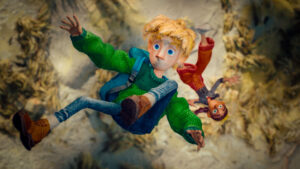

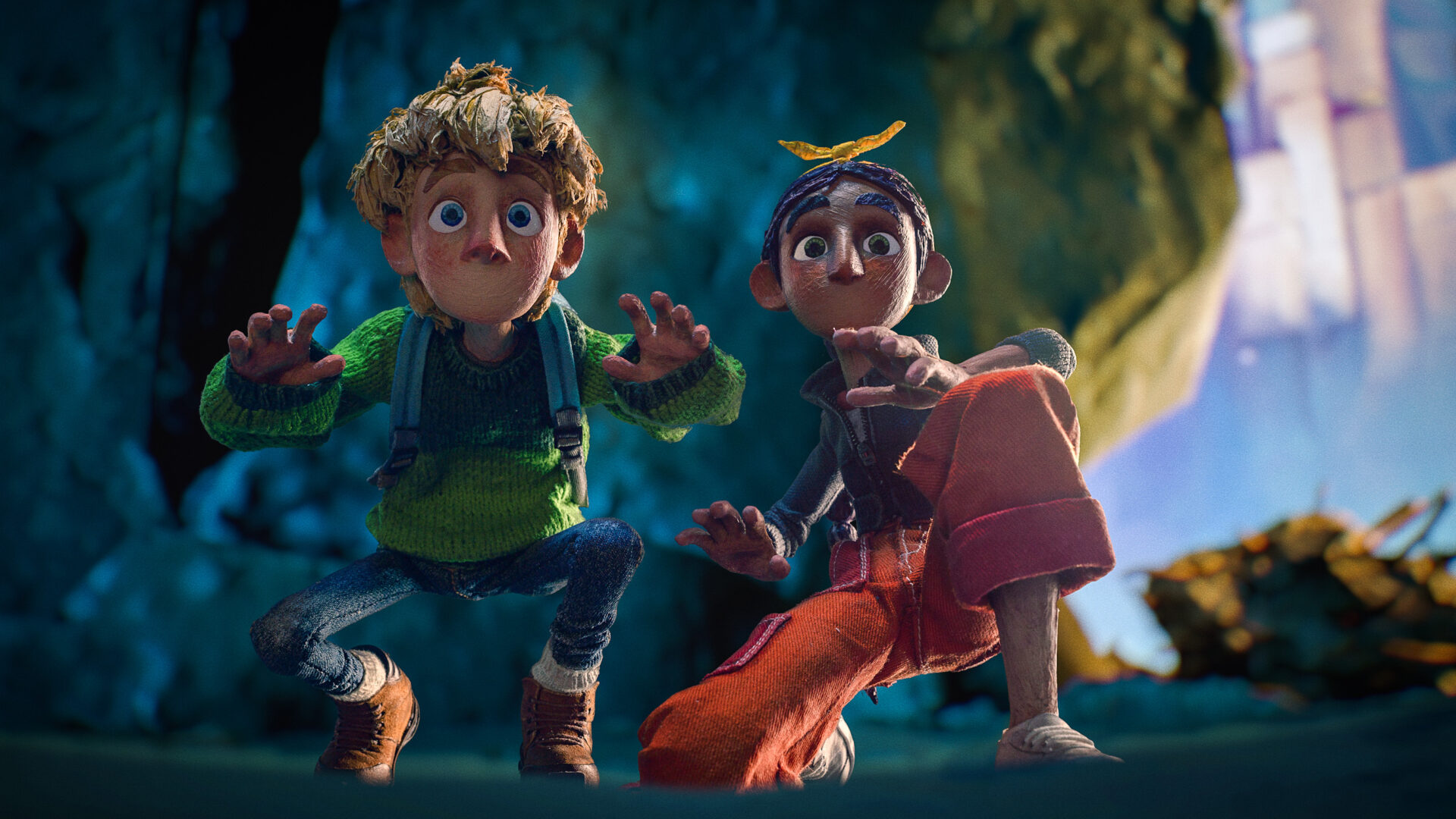
When I saw Out of Words last year at Summer Game Fest Play Days, I was struck by how visually distinct the game was and by the developers’ unmistakable passion. So when I saw it was returning this year, I was excited to try it again. It has such a simple concept, but the way it is brought to life through handcrafted stop-motion animation is staggering and beautiful. A coming-of-age story about finding the words to express how you feel becomes something magical and wondrous. It is a testament to creativity and to how the medium can elevate a concept we have seen countless times before.
Sitting down at SGF this year, I was excited to see more of Out of Words and to take some time to talk with Game Director at WiredFly, Johan Oettinger. Johan’s passion for the game is unmistakable, and he brings it to life in how he describes and designs each part of the experience.
This is a game built by hand as much as it is built on a computer. That attention to detail, along with the drive to create something exciting and unique, can be seen in every frame of animation and every level you play. That passion came through in the way Johan described the game, showing why Out of Words is such an exciting passion project to behold.
Can you tell us a little about Out of Words and what went into making it?
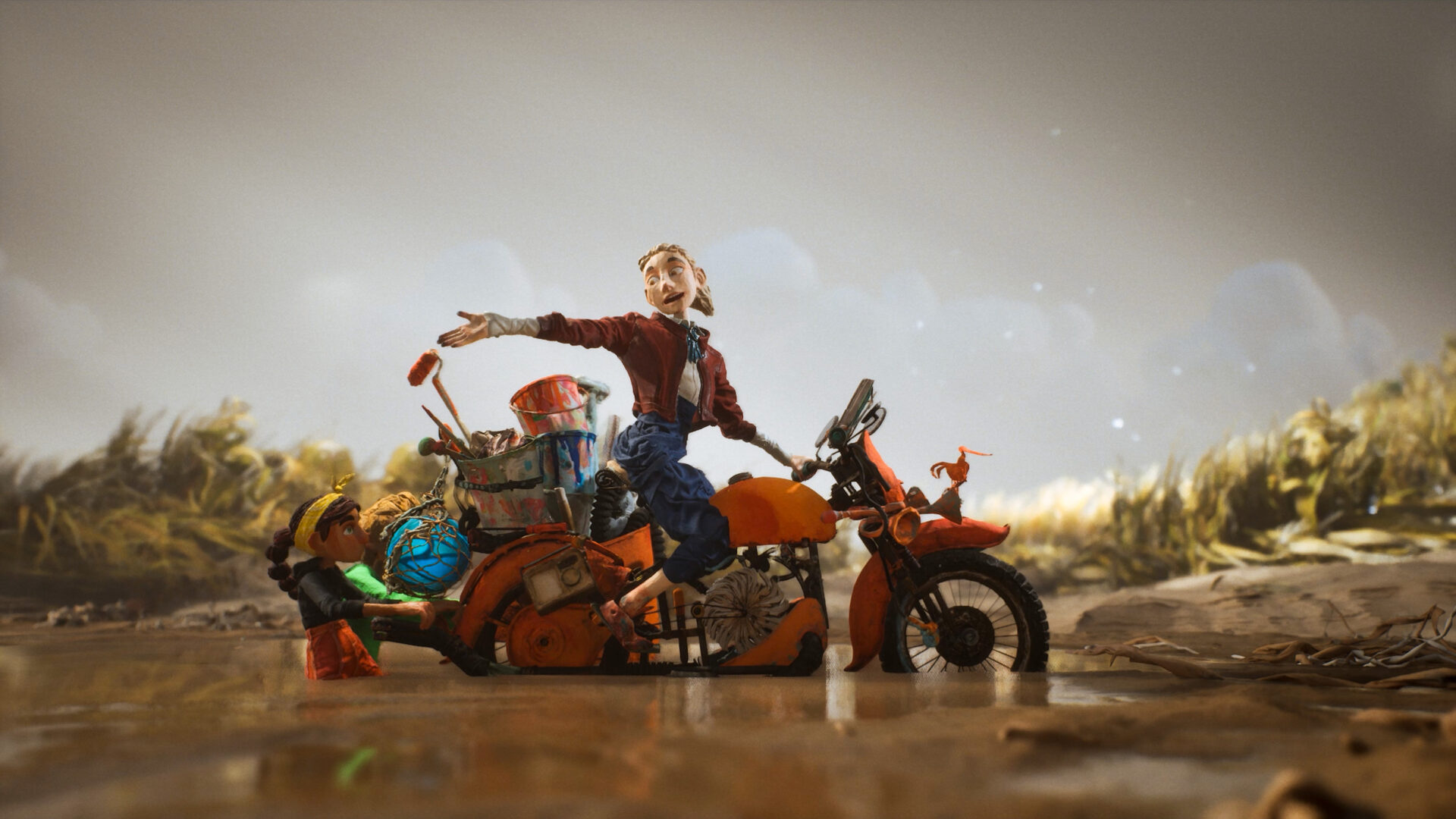
Johan Oettinger: This game is two-player co-op only, and it’s not about points or being the best. It’s about working together and discovering a story together through characters, and learning to get very, very connected, to reflect each other, to catch each other, to almost get in sync with some of the mechanics.
A lot of stuff goes wrong in the story, and a lot of it can get very dark. It’s a story about love and finding the right words to say. And I especially love coming-of-age stories, especially as an early teenager, that can be very dark. It’s very confusing. So a lot of things become very confusing.
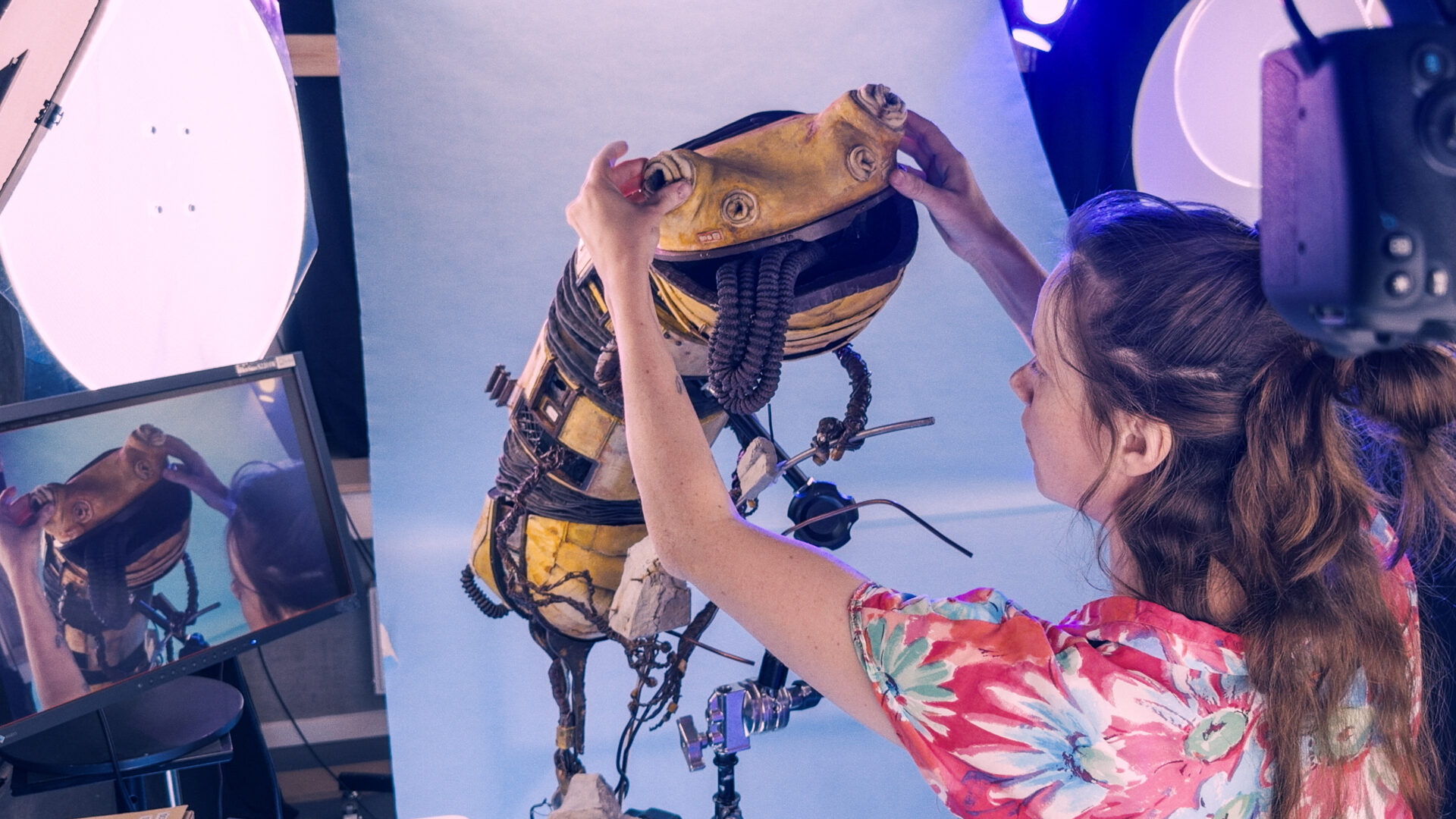
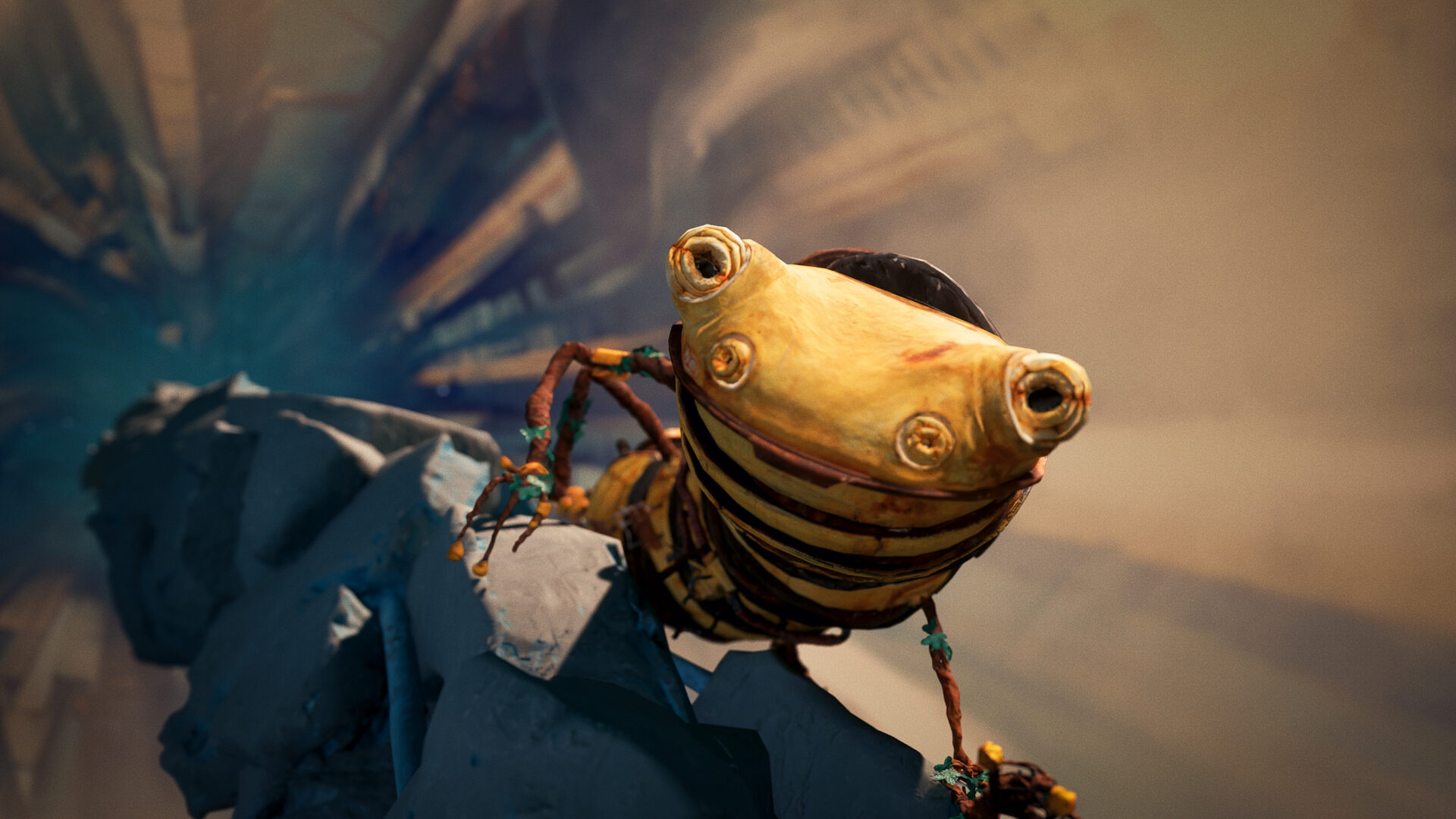
Everything you see in [Out of Words] is made by hand and is touched by a human hand, from the strands of grass to the characters to the environment. It’s all hand-fabricated, scanned in different ways, all in the service of the art direction to make it look like it’s on a stage in front of the camera.
Tell us a little about what went into making Out of Words. Looking at the puppets alone, it seems incredibly complex. I’d love to know how it all works.
Johan Oettinger: Well, my childhood dream was to make, specifically, stop-motion games, and I’ve had my stop-motion studio for 20 years, turning 20 this year, but this is my first game. So, for us in my studio, stop motion is what we do, and it’s what we’ve become good at. And then combining it with the game is, of course, a whole lot of challenge.
But a victory of mine is to make a real game. Like, it’s not limited to the animation technique itself, so it’s free from that. That has to be full of action and fully interactable, where you move the characters around.
So to answer your question, then, what goes into it, I think, for us, I could—I have no reference with my first game—but I could imagine it’s like any other game, whereas we just make things by hand. The challenge has been how to merge the two, and we have to develop our own custom techniques, how to scan it and get the pipeline actually feasible, because the project is visually very ambitious, the world is very vague, and how do we make that a very efficient thing?
Actually, we reached a point where our pipeline is matching, or maybe even more efficient than, a regular CG pipeline. In this fidelity, it is more efficient because we can take stuff where we just get gifts. Like, you can take a beautiful piece of fabric, right, and we can light-scan it with photography, and then we can add it onto simple computer-generated geometry.
And then we can make, like, the lizard tram, that carriage, that is very fast to make by hand. It’s very organic, but it takes so long to make in the computer. But then some things in the computer are very fast, like a table or a spherical object. Taking the good things about profiles just makes sense.
You mentioned Out of Words is a co-op-only game. How important was that from the start, making it something people have to play together?
Johan Oettinger: That is the dream for me, to make it co-op only, and we were very lucky to be in a time where that suddenly, without us actually, became something an audience would want. And because I play games with my siblings, my little sister, my big brother, always individually together, I have some of the fondest memories playing games with them and sharing those moments with them.
But to make a game that is actually co-op and a one-to-one moment, I’m best in one-to-one scenarios, and having a game where that’s why they lose the language too. It’s a love story, but it’s also to move the conversation from the main character to the sofa or online, and simple conversation like, “One, two, three, jump,” right, to more reflecting on what’s going on, the story, how are you feeling, and how can you relate?
That seems like a big part of the appeal: sharing those victory moments. When I played it with you, I found myself watching what you were doing almost more than what I was doing. I’d see you heading down one path, then something would move somewhere else. It really feels like a game built around watching and reacting to each other. It created this back-and-forth rhythm: I’d finish what I was doing, then shift my focus to you. It felt much more connected than a game where I’m off killing random aliens, and you’re doing your own thing.
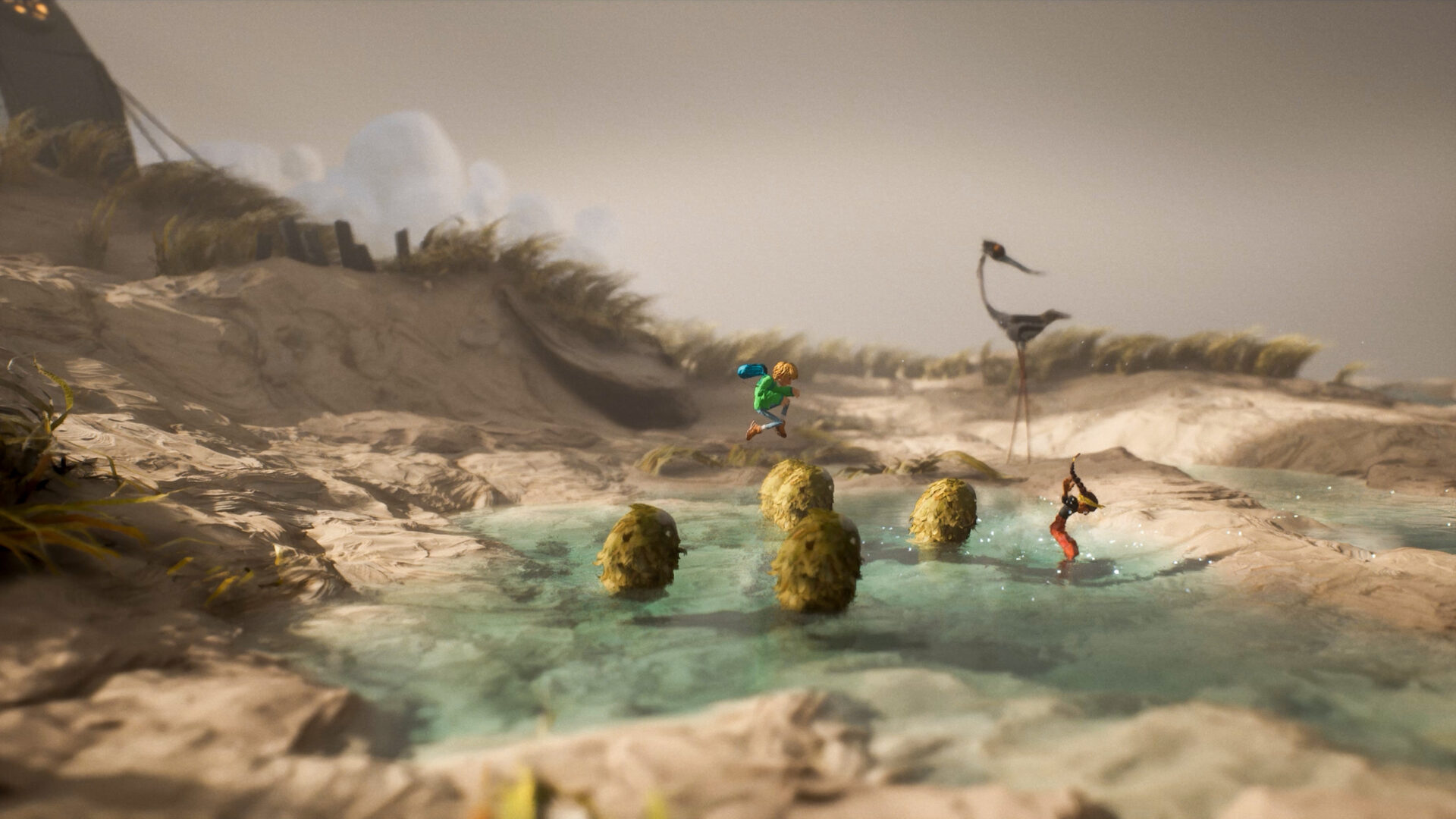
Johan Oettinger: So, yeah, that’s spot on. That’s the dream, and all there is. We played now two of the core mechanics. There’s a whole bunch of them that each take up a chapter in the three-act story, and almost all of them are very much developed to do that.
What you just described, for us to be very aware of each other, just by the core of it, wanting to be close, wanting to see each other, and almost at the end, I want you to almost stop talking together, because you’re just so in sync, and the last mechanic is about being in sync, going again.
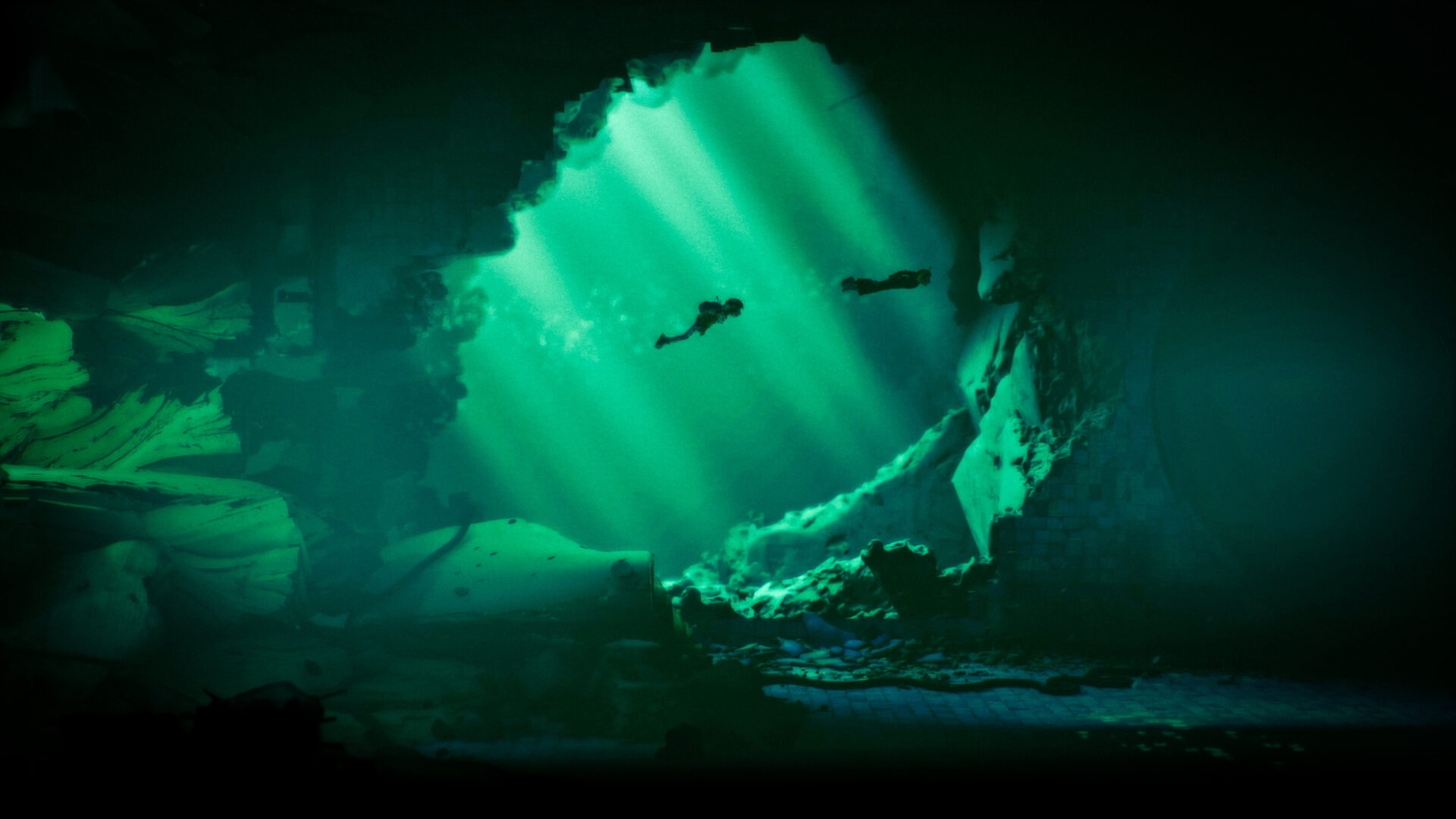
Then there are a few mechanics there where you get separated, and you suddenly don’t need each other anymore, and that’s important in those story moments. Each mechanic is very…I think we developed 200 mechanics or something, and there are only two hands full of them in Out of Words, to really calm down on that circuit. This is my first game, but taking games very seriously as a storytelling form.
The mechanics serve the story. They don’t feel like they were added just to create more gameplay moments.
Johan Oettinger: Yeah, it’s really a sum of its parts.
Who do you see as the ideal audience for Out of Words? Is it parents and children, or any combination of players?
Johan Oettinger: Yeah, that would be ideal, yeah, to make a game for me and my mother, for instance. I love games so much, and to have a game where I can play with my mother, and so this she will finally understand, this is why I love games so much. She will get it, and there is a lot of stuff for her there, which means it’s also very inviting.
The difficulty level is hard to get just right for it to be not too difficult. I really love platforming, because there’s something very simple about it. There’s something very distilled and pure, right? And there, you can actually make it more difficult than if you have a lot of stuff going on, so when we break away from that a little bit, the dream audience is basically two people. And that can be friends that start talking about new things, or it can even be two strangers who just met each other while doing another thing, and playing this together and getting to know each other quite well. That would be the dream.
And then in [Out of Words], there will be a lot of optional challenges too. Let’s say two gamers are playing; then I will say, to go through it linearly, it might be a little bit too easy for you, but then we put in a lot of optional challenges that you can just enjoy for each mechanic, and you can go in and get that. That’s where that kick is; that’s important for me.
Have you played Out of Words with your mother yet?
Johan Oettinger: No, I think I’m probably the generation where it’s a bit too late. My mother is too old, so she wouldn’t even know how to hold the controller. But I think for people now, yeah, if I were 12 years old and my mother were younger, that would be perfect.
Is there anything else you want to leave people with? For those who have seen the demo or watched the trailers, why should they pick up Out of Words?
Johan Oettinger: I think you should pick this up if you want something that is a total experience. It’s really, I’m taking the medium very seriously, and the story is particularly written to show through this medium, and as the sum of its parts, and having this piece where I really want to show you something special and invite you in.
It’s the kind of game where I want all the 12-year-old Johans in the world to find it out there. If I had found this game when I was that age, or even older, I mean, it’s for everyone. There’s no real age limit on this one. If I had found this, it would have changed my life. It would mean the world to me, and it’s something that stays with you forever
Out of Words releases sometime in 2027 on the Epic Games Store, Nintendo Switch 2, PlayStation 5 and XBOX Series X|S.